
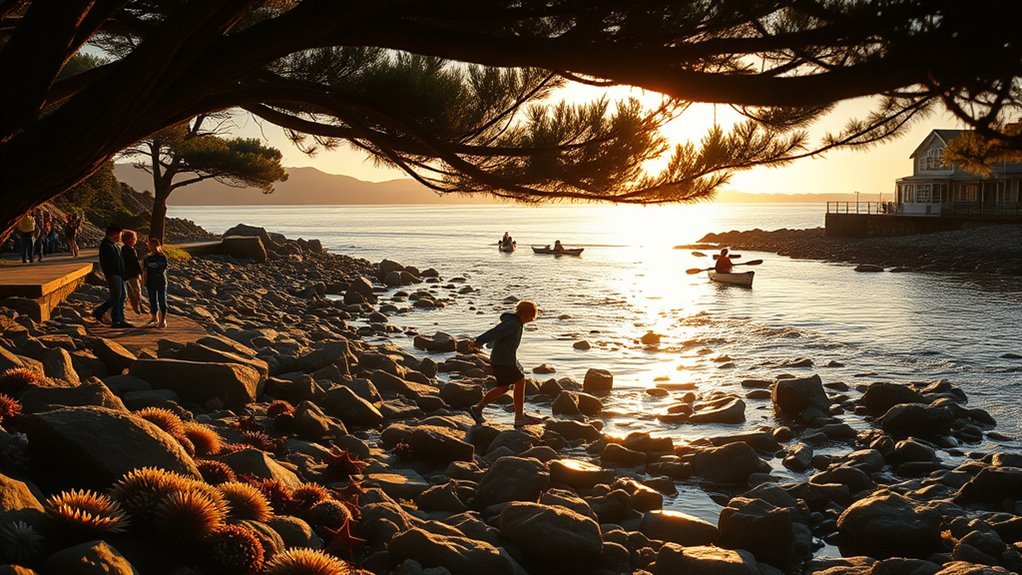
A lone gull circles like a small compass, pointing you toward the coast’s quiet treasures. You’ll find sandy picnic spots, coastal trails that beg to be walked or biked, and pockets of history tucked between salt-bleached buildings. Stroll from Cannery Row to Old Monterey, watch birds at Elkhorn Slough, or follow canyon roads that open onto ocean views—there’s more to uncover if you keep going.
Picnic on Monterey’s Beaches

Pack a blanket and your favorite snacks and head to Monterey’s sandy shores—places like Del Monte and Carmel Beach give you wide stretches of sand and scenic views for an easy, unforgettable picnic. You’ll claim a spot where the ocean’s rhythm drowns city noise and the sky opens up. Spread your blanket at Del Monte to lounge with family, letting kids race along long sands while you savor simple food and salt air. At Carmel Beach, build sandcastles, scan the surf for playful dolphins, and let waves frame your quiet conversation. Stroll Monterey State Beach to beachcomb for sea glass, turning found treasures into tiny tokens of freedom. Bring your own supplies, pick a spot in a designated picnic area, and set your own pace — no schedule, just tide and sunlight guiding you. This is a small, radical act: choosing leisure, connection, and the coast as your public sanctuary.
Walk or Bike the Monterey Bay Coastal Recreation Trail
You can stroll or pedal along the 18-mile Monterey Bay Coastal Recreation Trail and soak up constant, sweeping ocean views. The paved, family-friendly path makes it easy to bring kids and strollers or stop at spots like Lovers Point and Del Monte Beach for a rest. If you didn’t bring a bike, rental shops nearby mean you can start exploring without delay.
Scenic Ocean Views
While you stroll or pedal the Monterey Bay Coastal Recreation Trail, the ocean unfolds in a continuous ribbon of blues and grays, with rocky outcrops, sandy coves, and playful seals punctuating the view. You move freely along roughly 18 miles of shoreline, choosing pace and direction, feeling wind and salt on your face. Designated lanes keep walking and biking separate so you can focus on the horizon, watching otters dive and coastal birds wheel above. The trail links Cannery Row, Fisherman’s Wharf, beaches, and parks, so you can hop off where curiosity pulls you. Open year-round with no fee, it’s a simple, liberating way to claim Monterey’s seaside beauty—no map required, just your own sense of wonder.
Family-Friendly Path
Although the route stretches a full 18 miles, families can pick a short, kid-friendly section of the Monterey Bay Coastal Recreation Trail and still soak in ocean views, wildlife sightings, and easy access to beaches and picnic spots. You’ll move at your own pace—walk, push a stroller, or pedal gently—while horizon lines open and sea breeze clears your head. Kids will light up spotting sea otters, seals, and flocks of shorebirds near rocky coves. The path stays smooth and well-kept, with restrooms, picnic areas, and lookout points spaced for relaxed breaks. Choose a tiny stretch, claim a sandy patch, and let the coast loosen routines: freedom’s simple here, given one steady step after another.
Bike Rental Options
If you’d rather pedal than walk, several local shops line the bay offering bikes for every pace and party—standard cruisers and hybrids for casual riders, electric-assist models to tackle longer stretches without sweating, tandems for two, and kid-sized or trailer options for little ones. You’ll find day rentals usually $20–$40 depending on the model, and staff will fit you quickly so you can launch onto the 18-mile Monterey Bay Coastal Recreation Trail. The flat, well-maintained path invites steady cruising, brief stops for seals or surfing otters, and birdwatching from bluff to pier. Rent a lively e-bike or a pair of cruisers, break free of car constraints, and let ocean air turn a simple ride into a small, liberating escape.
Follow the Path of History in Old Monterey
You can follow the Path of History with a handy Historic Landmarks map that guides you to 55 marked sites across about two miles of Old Monterey. Stop at highlights like the Custom House and Colton Hall or join a free guided walking tour to hear vivid stories that bring the buildings to life. Interactive site stops and plaques make it easy to connect architecture, people, and events as you stroll.
Historic Landmarks Map
Wandering Old Monterey along the Path of History, you’ll cover about two miles and visit 55 landmark sites that tell the story of California’s early days. You’ll use a downloadable Historic Landmarks Map to steer through narrow streets, pause at the Custom House — California’s first Historic Landmark — and stand where delegates debated Colton Hall’s constitution. The map frames stories of Spanish adobe, American timber, and bold innovations like the Larkin House, the state’s first two-story home. As you move, observe architectural details, imagine everyday lives, and claim this public history as yours. The map frees you to set your own pace, choose which markers call to you, and leave with a clearer sense of Monterey’s role in shaping California.
Guided Walking Tours
Take a guided walking tour on weekends and let an informed local lead you through Old Monterey’s two-mile Path of History, stopping at 55 sites to hear the stories behind Colton Hall, the Custom House, historic adobes, and Spanish landing points. You’ll move at a human pace, tracing footsteps that shaped California’s beginnings while a guide points out architectural details and governance milestones with clear, vivid context. Grab the downloadable map afterward to roam independently, following plaques and hidden corners the guide mentioned. The experience frees you from hurried sightseeing — you’ll connect to place, understand early civic struggles, and reclaim history on your terms. It’s a compact, empowering way to learn and wander without cost.
Interactive Site Stops
A pocket map and a comfortable pair of shoes put Old Monterey’s Path of History within reach, letting you stop where the story grabs you. You’ll walk about two miles and choose among 55 sites—each plaque, doorway and courtyard invites you to learn at your own pace. Download the free map, then linger at the Custom House, California’s first Historic Landmark, or stand in Colton Hall where the 1849 constitution was drafted. Touch the Larkin House’s legacy as the state’s first two-story home, and peer into the Old Monterey Jail to feel how lives were once constrained. Weekends bring guided tours if you want richer context, but the self-guided route hands you freedom: pick your path, soak in history, move on.
Window Shop and Stroll in Carmel-by-the-Sea
Cobblestone streets and fairy-tale cottages invite you to wander through Carmel-by-the-Sea, where unique boutiques, cozy cafes, and art-filled windows make every block feel like a discovery. You’ll drift past storefronts that refuse sameness—no chains interrupt the rhythm—so each display feels personal, curated, a small rebellion against the ordinary. Peer into galleries showing local and international work; let paintings, ceramics, and sculpture speak to you without pressure to buy. The architecture itself is part of the spectacle: whimsical roofs, arched doorways, and historic facades frame your walk like a living storybook. Pause at a café window, sip the coastal air, and watch light shift on the ocean beyond town. Take side streets toward beaches and lookout points; those scenic backdrops make your stroll feel expansive, as if the town itself is opening toward freedom. You’ll leave lighter—recharged by beauty, choice, and the gentle joy of moving through a place that celebrates individuality.
Explore Cannery Row and Fisherman’s Wharf
Stroll Cannery Row and Fisherman’s Wharf to feel Monterey’s maritime past and lively present collide, with colorful storefronts, seafood-smelling air, and steady waves as your backdrop. You’ll wander a vibrant corridor of galleries, boutiques, and eateries where every window hints at story and craft; the proximity to the Monterey Bay Aquarium makes it easy to pair marine wonder with neighborhood exploration. On the wharf, you’ll sense the history of the sardine industry in weathered pilings and plaques while modern shops invite you to linger. Peer over railings for sea otters, seals, and diving birds—wildlife watching here feels immediate and free. Take slow steps, people-watch, listen to gull calls and boat engines, and let the coast loosen your pace. Sample the aroma of clam chowder without spending a dime by following the scent and choosing where you’ll treat yourself. This stretch of shore gives you room to breathe, roam, and reclaim a playful, unhurried day.
Take the Kids to Dennis the Menace Park
You’ll find Dennis the Menace Park is a playground wonderland with a wooden train, climbing wall, and giant slide that keep kids busy for hours. Spread a blanket in the shaded picnic areas and enjoy a relaxed meal while watching little ones race between swings and structures. Afterward, take a leisurely stroll along the landscaped paths to unwind and let the kids burn off any last bursts of energy.
Playground Highlights
Because kids can spend hours discovering slides, mazes, and a train-themed play area, Dennis the Menace Park is one of Monterey’s best spots for a family outing. You’ll find a giant slide that challenges bravery, inventive climbing structures that reward persistence, and a whimsical train zone that sparks imaginative journeys. The maze and broad sandpit invite collaborative problem-solving and castle-building, so kids lead the play while you step back and watch them claim little victories. Spread-out equipment across the park’s spacious layout keeps noise manageable and movement free, letting children roam without feeling boxed in. Best of all, entry’s free, so you can return whenever the urge for open-air play and unstructured exploration hits—no barriers, just wide possibilities.
Picnic & Strolls
After the kids expend energy on the giant slide and train, spread a blanket on the grassy banks beside Lake El Estero and savor a relaxed picnic with water views. You’ll watch them dart between imaginative climbing structures, squealing with the thrill of freedom while you lean back and breathe in salt-tinged air. The park’s free admission keeps plans simple: pack sandwiches, fruit, and a frisbee for impromptu games across wide green spaces. Stroll the lakeside paths when they need a break — the reflections, herons, and gentle ripples slow your pace and sharpen your senses. Dennis the Menace Park hands you an easy, liberating day: kids engaged, pocketbook untouched, and a small, essential escape into sunlit play and open sky.
Go Birding at Elkhorn Slough and Carmel River
Start your morning at Elkhorn Slough or Carmel River with binoculars in hand and expect to see a dazzling array of birds—herons, egrets, migratory waterfowl, shorebirds and songbirds all find refuge here. You’ll move quietly along marsh trails or glide in a peaceful paddle, watching reflective water mirror wingbeats and marsh grass tremble as rails and plovers slip through. Migration seasons electrify the shoreline; you’ll notice patterns of movement, sudden flocks, and the precise way a heron stalks its prey. Early mornings and late afternoons reward you with the most activity and the clearest light for noticing color and call. Carry binoculars and a field guide to identify species and deepen your connection to this living network. Whether you’re new to birding or sharpening skills, these habitats offer freedom: open skies, wild sounds, and the chance to translate patience into discovery. It’s restorative, low-cost, and fiercely liberating.
Hike and Sightsee at Jacks Peak and Fort Ord
Lace up your shoes and head to Jacks Peak or Fort Ord to soak up Monterey’s wild panoramas—Jacks Peak’s shaded trails climb through lush forests to sweeping ocean and peninsula views, while Fort Ord’s vast network winds across coastal scrub, grasslands, and oak woodlands for miles of discovery. You’ll choose trails that match your pace: Jacks Peak’s six-plus miles offer short climbs and longer loops with lookout points that make you breathe deeper and feel freer. At Fort Ord, you can roam parts of an 86-mile system, switch between singletrack and wide fire roads, and follow ridgelines that open to distant blue. Both parks are free, so you can wander without constraint, plug into birdsong, chase light through oaks, or pedal until the horizon pulls you onward. Bring water, wear layers, and let the landscape loosen whatever’s holding you back as you explore Monterey’s expansive, accessible wilds.
Watch Monarch Butterflies at Monarch Grove Sanctuary
If you visit Pacific Grove during winter, you’ll find Monarch Grove Sanctuary humming with the delicate flutter of thousands of Monarchs clustered in eucalyptus and Monterey pines. You step into a quiet pocket of the coast where wings pulse like living mosaics, and you can stand—free, unhurried—beneath the canopy as orange and black bodies cling and drift. Designated viewing areas guide your gaze without crowding the insects; interpretive signs invite you to learn how these travelers navigate, the threats they face, and why conservation matters. Entry is free, so you can bring family or come alone to reconnect with a larger world. During peak season, volunteer-led talks and occasional guided tours deepen your understanding and give practical ways to help. Watching the Monarchs, you’ll feel small but connected, inspired to protect the routes they depend on. It’s a simple, liberating reminder that ordinary places can harbor extraordinary migrations.
Drive the Scenic Big Sur and Carmel Valley Routes
Want to follow a road that feels like a moving postcard? Drive Highway 1 through Big Sur and let the coastline unroll: pullouts invite you to stop, breathe salt air, and photograph rugged cliffs where waves carve the shore. Cross Bixby Creek Bridge and feel small beneath its graceful span; wander Point Lobos’ edges for tide pools and quiet coves. Swing into Carmel Valley to trade ocean drama for rolling ranches and sunlit vineyards—parking on a dusty lane, you can sip a free sample at some tasting rooms or frame a perfect shot of rows fading into hills. Both routes put trails and picnic spots within reach, so you can hike a ridge, picnic on a bluff, and watch for sea otters playing below or migrating whales marking the horizon. These drives give you freedom to choose pace, pull over when your heart says stop, and let California’s wild beauty steer you toward feeling wide open and alive.
Frequently Asked Questions
Are Pets Allowed at the Beaches and Parks Listed?
Yes — you can bring pets to some beaches and parks, but rules vary: leash requirements, seasonal restrictions, and protected wildlife zones apply, so you’ll check signs or local regulations, respect habitats, and keep dogs under control.
Are Restrooms and Changing Facilities Available at These Sites?
Yes — most sites have restrooms and some changing facilities; yet you’ll sometimes find rustic spots without them, so pack a towel and patience, explore boldly, and plan ahead to keep your freedom and comfort intact.
Is Parking Free at the Trailheads and Attractions?
Mostly no — you’ll often pay for parking at popular trailheads and attractions, though some spots offer free or limited street parking. Scout early, use transit or bike, and you’ll reclaim more spontaneous, liberated time.
Are These Locations Accessible for Strollers and Wheelchairs?
Yes — most spots are stroller- and wheelchair-friendly, though a few trails get rugged. You’ll savor accessible boardwalks, ramps, and viewpoints; don’t hesitate to explore boldly, demanding ease and freedom everywhere you wander.
Do Any Sites Require Permits or Advance Reservations?
Mostly no — you won’t need permits for public beaches, trails, or parks, but you should check for special events, guided tours, or drone use that sometimes require reservations or permits so you can roam freely without surprises.
Conclusion
You’ll leave Monterey with sand between your toes and a map of small wonders in your head, like a modern-day Odysseus collecting gentle charms instead of storms. Wander beaches and trails, listen for sea lions and song, and let history’s footprints guide your steps through Old Monterey and Carmel’s storybook lanes. Whether you pause for birds at Elkhorn or watch monarchs dance, you’ll carry back a quiet, luminous soundtrack of the coast.