
Last Updated on July 30, 2026 by Daniel Globe
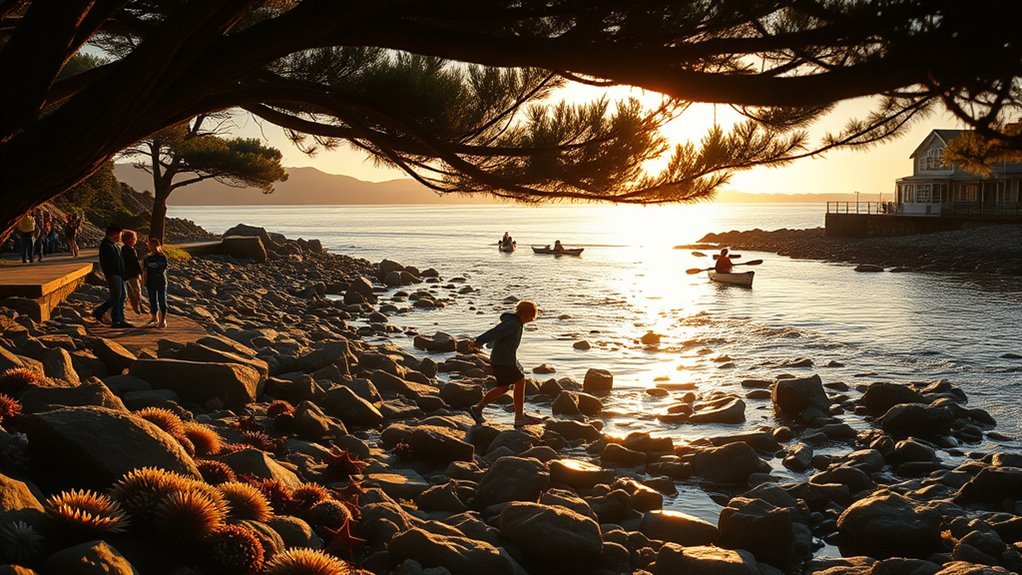
Monterey and the nearby communities around the peninsula offer plenty to enjoy without buying an attraction ticket. You can picnic beside the bay, walk an 18-mile coastal trail, follow Old Monterey’s historic markers, watch wildlife, explore waterfront districts, and visit a landmark playground. Some outings are completely free, while others may involve parking, fuel, food, or equipment-rental costs.
Quick Answer
The best free things to do in Monterey include walking the Monterey Bay Coastal Recreation Trail, exploring Cannery Row and Fisherman’s Wharf, following Old Monterey’s Path of History, visiting Dennis the Menace Playground, birding at Elkhorn Slough, and watching seasonal monarch butterflies in Pacific Grove. Parking, rentals, fuel, and some tours may cost extra.
Key Takeaways
- Many beaches, walking routes, historic sites, wildlife areas, and public parks have no general admission charge.
- “Free” does not always include parking, bicycle rentals, guided tours, food, fuel, or entry to nearby state reserves.
- Downtown Monterey’s coastal trail, Cannery Row, Fisherman’s Wharf, and Path of History can be combined into one mostly car-free day.
- Pet rules, hours, road conditions, and wildlife numbers change by location and season, so use the official links below before leaving.
At a Glance
| Beach Picnic | Free to enjoy; parking and food may cost extra. Fire, cooking, and dog rules differ by beach. |
| Coastal Recreation Trail | Free paved route covering 18 miles. Walking is free; bicycle and surrey rentals cost extra. |
| Old Monterey | The two-mile self-guided Path of History is free. Guided tours and building access depend on current schedules. |
| Elkhorn Slough | Free admission, walking trails, picnic tables, restrooms, and loaner binoculars or bird books. |
| Fort Ord National Monument | No admission fee. Stay on marked, authorized trails because closed areas may contain unexploded military ordnance. |
| Scenic Driving | Road access and public viewpoints may be free, but fuel, parking, and park-entry fees can apply. |
Note: The list covers Monterey plus nearby destinations in Carmel-by-the-Sea, Pacific Grove, Moss Landing, Fort Ord, and Big Sur. Travel time and parking costs vary.
Disclosure: As an Amazon Associate I earn from qualifying purchases. Some links on this page are affiliate links, at no extra cost to you.
Picnic on Monterey’s Beaches

Pack a blanket, reusable water bottles, and food from home for an inexpensive afternoon beside Monterey Bay. Del Monte Beach and the connected sections of Monterey State Beach offer long stretches of sand for walking, kite-flying, beachcombing, and watching the water.
Monterey State Beach is open for day use from 8 a.m. to sunset. California State Parks prohibits beach fires there. Leashed dogs are allowed only on the section south of the Monterey Tides Hotel; dogs are not allowed on the northern section.
Carmel Beach is another popular picnic destination a short drive from Monterey. The main Ocean Avenue access has parking and restrooms. Dogs may be off leash on the sand when under voice control, but they must be leashed on the Scenic Pathway and elsewhere in Carmel. Wood and charcoal fires are prohibited. The city permits cooking only with compliant propane equipment under its current rules.
Warning: Carmel Beach has no lifeguards. Cold water, breaking waves, undertow, and rip currents can be dangerous even on clear days. Keep children close and remain well back from unexpectedly large waves.
Beach access itself may be free, but nearby parking rules differ. Arrive early on sunny weekends, read all signs, and take every item of trash home if bins are full.
Walk or Bike the Monterey Bay Coastal Recreation Trail
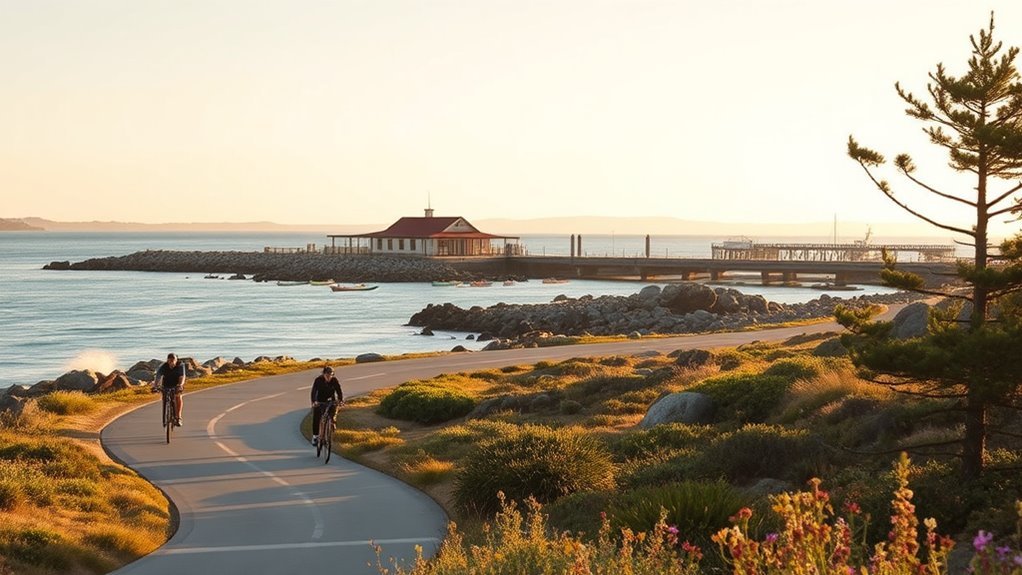
The Monterey Bay Coastal Recreation Trail stretches 18 miles from Castroville to Pacific Grove. The paved route passes beaches, parks, Fisherman’s Wharf, Cannery Row, historic sites, and other waterfront landmarks.
The 18-mile coastal trail connects many of Monterey Bay’s best free viewpoints, making it possible to build a full sightseeing day around one public path.
Scenic Ocean Views
You do not need to complete all 18 miles. A short central section between Fisherman’s Wharf and Cannery Row provides bay views, public art, beaches, harbor activity, and frequent chances to see sea lions, harbor seals, sea otters, and coastal birds.
The route is used by walkers, runners, cyclists, families, and commuters. Conditions vary along the path, so keep right, use an audible warning before passing, supervise children, and avoid stopping across the full width of the trail.
Family-Friendly Path
The paved surface works well for many strollers and mobility devices, particularly along the developed Monterey waterfront. Families can choose a short out-and-back route and stop at parks, beaches, or public viewpoints instead of committing to a long ride.
Restrooms are available at selected waterfront parks and attractions, but not at every point. Bring water, sunscreen, and a light layer. Monterey can remain cool and windy even when inland areas are warm.
Bike Rental Options
Several private businesses near the trail rent standard bicycles, electric bicycles, tandems, children’s equipment, and surreys. Rental prices vary by model, company, and duration, so renting is not a free activity.
Walking your preferred section costs nothing and often makes it easier to stop for wildlife, photographs, and historic markers. Cyclists should use a properly fitted helmet, control their speed in crowded areas, and yield when entering or crossing pedestrian spaces.
Pro Tip: Start near Fisherman’s Wharf, walk the coastal trail through Cannery Row, and return through Old Monterey’s Path of History. This combines several major sights without moving your car between stops.
Follow the Path of History in Old Monterey
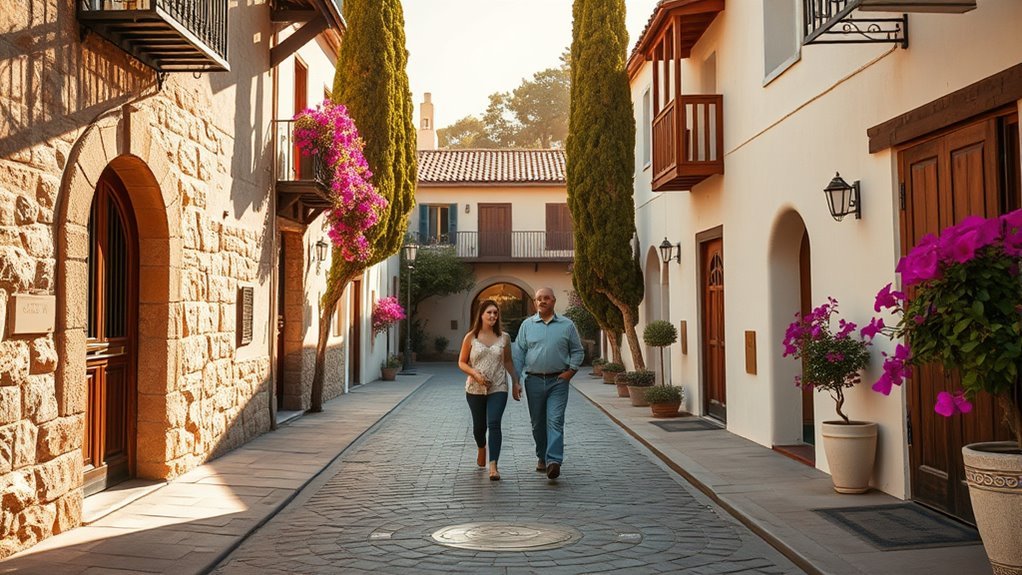
Old Monterey’s Path of History is a roughly two-mile walking route linking 55 marked sites. Yellow tiles in the sidewalk help visitors find historic adobes, gardens, civic buildings, and locations connected to California’s Spanish, Mexican, and early American periods.
Historic Landmarks Map
Begin at any point on the route or collect current visitor information near the Custom House and Pacific House museums. The California State Parks guide to Monterey State Historic Park also describes a free self-guided mobile-phone tour.
Highlights include the Custom House, described by California State Parks as the state’s oldest government building, and Colton Hall, where delegates drafted California’s first constitution in 1849. Historic gardens add quiet breaks between the better-known buildings.
Guided Walking Tours
Guided history and historic-house tours cover selected sites rather than all 55 locations. Schedules, capacity, building access, and possible ticket requirements can change. California State Parks currently directs visitors to obtain tour information at the Custom House and check its published schedule before visiting.
The self-guided outdoor route remains the most dependable free option. Some museums and gardens also have limited operating days or hours, so an exterior walking tour is useful when buildings are closed.
Interactive Site Stops
Read plaques, follow the yellow pavement markers, and compare the area’s adobe walls, wooden balconies, gardens, courtyards, and civic buildings. The route is compact enough to explore in sections.
Many historic structures have accessibility modifications, but the sites are spread across hilly streets and not every old building can offer identical access. Visitors using wheelchairs or other mobility equipment may benefit from planning a shorter route around Custom House Plaza and the more level waterfront area.
Window Shop and Stroll in Carmel-by-the-Sea

Carmel-by-the-Sea is enjoyable even when you do not enter a restaurant or buy anything. Walk the compact village center to see small courtyards, art galleries, independent shops, tiled stairways, hidden passages, and cottages with curved roofs and unusual details.
Ocean Avenue slopes toward Carmel Beach, while side streets reveal quieter gardens and architecture. Gallery windows provide a free look at paintings, photography, ceramics, and sculpture, although individual businesses set their own hours.
Devendorf Park offers benches, grass, restrooms, and a convenient place to pause near the village center. Dogs are not allowed in Devendorf Park, even though Carmel is known for dog-friendly businesses and off-leash access at Carmel Beach.
Street parking is often free but may be time-limited. Read signs carefully and avoid blocking residential driveways. The village becomes crowded on weekends, so mornings are generally calmer.
Explore Cannery Row and Fisherman’s Wharf
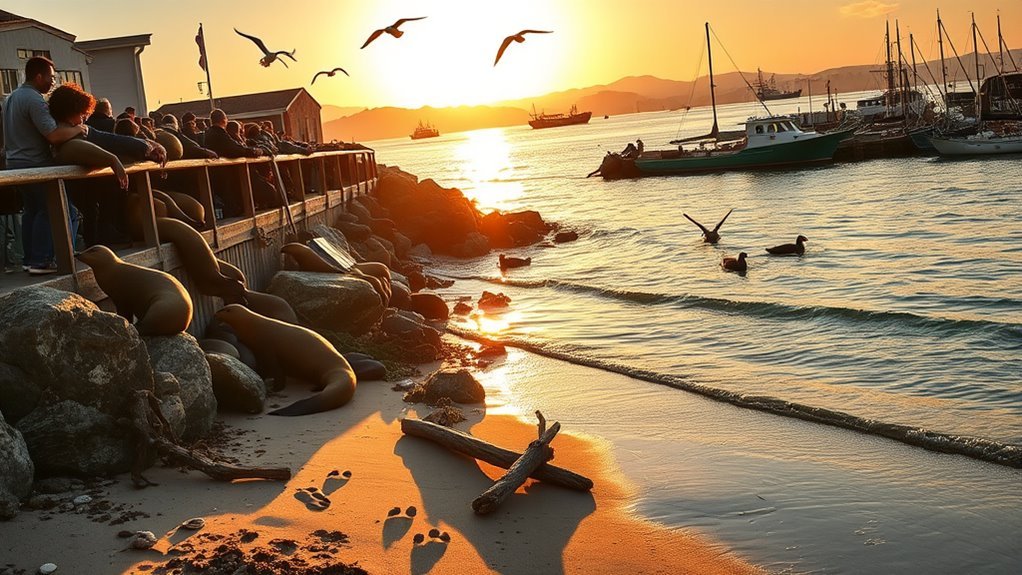
Walking Cannery Row and Old Fisherman’s Wharf costs nothing. Cannery Row mixes former sardine-industry buildings with shops, hotels, restaurants, public displays, and waterfront viewpoints. Fisherman’s Wharf adds working boats, harbor views, restaurants, and frequent sea-lion noise.
Look over the railings for sea otters, harbor seals, sea lions, pelicans, and diving birds. Wildlife sightings are never guaranteed, but the harbor and rocky shoreline provide regular opportunities.
The Monterey Bay Aquarium charges admission, so treat it as a separate paid attraction. You can still enjoy the surrounding waterfront, public trail, historic exterior, and nearby overlooks without entering.
Parking in the commercial waterfront area is usually not free. Walking from another part of downtown, using public transportation, or arriving by bicycle can reduce costs.
Take the Kids to Dennis the Menace Park
Dennis the Menace Playground sits within the 45-acre El Estero Park Complex. It is one of Monterey’s best-known public play areas and can anchor a low-cost family afternoon with open space, picnic facilities, lakeside paths, and nearby restrooms.
Playground Highlights
The playground includes varied climbing, sliding, balancing, and imaginative-play areas designed for different ages. The city has completed accessibility improvements, but caregivers should still inspect each feature before use and supervise children closely.
The historic steam engine remains at the park but is currently fenced off because it does not meet modern safety requirements. Families should not plan on climbing aboard it.
Current official hours are 10 a.m. to dusk. The playground is open daily from Memorial Day through Labor Day. From Labor Day through Memorial Day, it is closed on non-holiday Tuesdays.
Picnic & Strolls
Bring a simple lunch and use the nearby picnic space before walking around Lake El Estero. The park complex has group barbecue areas, an exercise course, restrooms, sports facilities, and a concession offering paid activities such as paddleboat rentals.
The approximately 1.2-mile route around the lake works well for a relaxed walk, although young children may prefer a shorter section. Keep children away from the water’s edge unless closely supervised, and do not feed wildlife.
Go Birding at Elkhorn Slough and Carmel River
Elkhorn Slough Ecological Reserve, near Moss Landing, offers free admission, a visitor center, picnic tables, restrooms, marsh overlooks, and nature trails ranging from just under one mile to a little over two miles.
Visitors may see herons, egrets, shorebirds, ducks, raptors, songbirds, and other wetland wildlife. Binoculars and bird books are available to borrow at no cost, and docent-led walks are offered on many weekends. Program schedules can change, so check the official calendar before making a special trip.
The visitor center has mobility-access features. The level Overlook Trail leads to a viewing deck with an accessible-height scope, and a trail-capable wheelchair may be borrowed without charge.
Carmel River State Beach and its lagoon provide another birding option closer to Carmel. Dogs are allowed there only on leash. Seasonal Western snowy plover resting areas require extra care, so stay outside closures and give birds plenty of space.
Note: A quiet observer often sees more. Keep voices low, never surround wildlife, remain on designated paths, and use a zoom lens instead of moving closer.
Hike and Sightsee at Jacks Peak and Fort Ord
Jacks Peak Park and Fort Ord National Monument offer very different trail experiences. Jacks Peak has shaded Monterey pine forest, picnic areas, and approximately 8.5 miles of hiking trails. Fort Ord has more than 86 miles of routes through grassland, oak woodland, chaparral, and rolling hills.
Jacks Peak does not allow bicycles on its trails. Its hours change by month, and wood or charcoal fires are prohibited; only permitted propane use is allowed under current county rules. The county’s visitor page does not support treating every possible visit or parking situation as universally free, so review current notices before departure.
Fort Ord National Monument has no admission fee and permits hiking, cycling, and horseback riding on authorized routes. Carry a current map because the trail network is large and intersections can look similar.
Warning: Remain on marked, authorized Fort Ord trails. Closed areas may contain unexploded military ordnance and fragile habitat. Never touch suspicious metal objects, ammunition, or military debris.
Bring more water than you expect to need, wear sun protection, check for ticks after hiking, and learn to identify poison oak. Fort Ord can become hot and exposed, while Jacks Peak may remain cool or foggy.
Watch Monarch Butterflies at Monarch Grove Sanctuary
Monarch Grove Sanctuary in Pacific Grove is open from sunrise to sunset, weather permitting. The usual overwintering season runs from October through February, when monarchs may cluster in sheltered trees.
Butterfly numbers vary dramatically from year to year and even from week to week. A previous season with thousands of monarchs does not guarantee the same display during your visit. Check current counts through the Pacific Grove Museum of Natural History before making a special trip.
The City of Pacific Grove’s sanctuary page lists current hours, closures, contacts, and viewing information. Dogs are not allowed in the sanctuary.
Stay in designated viewing areas, avoid shaking branches, keep voices low, and never handle a butterfly. Warm, sunny periods may produce more visible flight, while cool mornings often leave monarchs clustered and still.
Drive the Scenic Big Sur and Carmel Valley Routes
Highway 1 south of Carmel offers ocean cliffs, bridges, beaches, and roadside viewpoints. Carmel Valley Road trades the exposed coast for oak-covered hills, ranches, and inland scenery. The road itself has no sightseeing admission charge, but driving is not truly free once fuel, parking, food, and possible park fees are included.
Bixby Creek Bridge can be viewed from public areas, but parking is limited and traffic can be heavy. Never stop in a travel lane, cross the highway carelessly, stand on the bridge roadway, or park where signs prohibit it.
Point Lobos State Natural Reserve is a worthwhile stop but should not be described as universally free. California State Parks currently lists a vehicle day-use fee. Parking outside the reserve is limited, and pedestrians must use legal, safe routes without blocking traffic or damaging roadside habitat.
Highway 1 is vulnerable to landslides, storms, maintenance, and construction. Check Caltrans Highway 1 conditions on the day of travel. Turn around when roads are closed and never cross barricades.
Carmel Valley tasting rooms and restaurants are commercial businesses. Do not assume samples are free; policies and prices differ. A no-purchase outing can focus on the drive, public scenery, village streets, and legal roadside or park viewpoints.
Sources
- City of Monterey — Monterey Bay Coastal Recreation Trail — trail length, route, attractions, rentals, and wildlife viewing.
- California State Parks — Monterey State Historic Park — Path of History distance, 55 sites, tours, museums, and historic buildings.
- California Department of Fish and Wildlife — Elkhorn Slough Ecological Reserve — admission, trails, birding programs, facilities, and accessibility.
- Bureau of Land Management — Fort Ord National Monument — fees, trail access, directions, and maps.
- City of Pacific Grove — Monarch Grove Sanctuary — hours, seasonal interpretation, dog restriction, and current-count resources.
- California State Parks — Monterey State Beach — hours, beach-fire restrictions, recreation, and dog rules.
Frequently Asked Questions
Are Pets Allowed at the Beaches and Parks Listed?
Rules vary. Voice-controlled dogs may be off leash on Carmel Beach but must be leashed on the Scenic Pathway. Monterey State Beach permits leashed dogs only south of the Monterey Tides Hotel. Carmel River State Beach permits leashed dogs, while Monarch Grove Sanctuary prohibits dogs. Check posted rules at every entrance.
Are Restrooms and Changing Facilities Available at These Sites?
Restrooms are available at several major locations, including Carmel Beach’s Ocean Avenue access, El Estero Park, Elkhorn Slough’s visitor center, and selected waterfront parks. They are not available at every trailhead or viewpoint. Dedicated changing facilities should not be assumed.
Is Parking Free at the Trailheads and Attractions?
Sometimes. Free street or public parking can be found near certain beaches, neighborhoods, and trail access points, but time limits and restrictions apply. Commercial waterfront garages, Point Lobos vehicle entry, and other developed locations may charge. Read signs and never assume roadside parking is legal.
Are These Locations Accessible for Strollers and Wheelchairs?
The paved Monterey Bay Coastal Recreation Trail and developed waterfront areas are among the easiest choices. Elkhorn Slough has an accessible visitor center, level Overlook Trail, viewing scope, and trail-capable wheelchair. Historic buildings, beaches, bluff stairs, and natural trails vary, so consult each official accessibility page before visiting.
Do Any Sites Require Permits or Advance Reservations?
Ordinary walking, sightseeing, and small family visits usually do not require a permit. Reservations or permits may be required for organized groups, special events, professional photography, diving, reserved picnic areas, certain guided programs, drone operations, or commercial activities.
Conclusion
Monterey rewards travelers who slow down. A single day can include a beach picnic, an easy coastal walk, harbor wildlife, Cannery Row, Fisherman’s Wharf, and Old Monterey’s historic markers without buying an attraction ticket.
The best plan is to choose a compact area, bring layers and water, and confirm current rules before leaving. Treat “free” as free admission rather than a promise of free parking, transportation, food, or equipment. With that distinction in mind, the Monterey Peninsula offers an unusually rich mix of public coastline, history, wildlife, and open space.

