
Last Updated on July 25, 2026 by Daniel Globe
Food in London can be inexpensive if you plan around supermarkets, takeaways, lunch deals, and selected markets, but restaurant meals cost more than many older travel guides suggest. In 2026, a realistic budget is roughly £15–£25 or more for many casual restaurant mains, while a full street-food dish often falls around £8–£15. Drinks, service charges, and premium locations can push the total higher.
Quick Answer
For a 2026 London trip, budget about £20–£35 per person per day if you rely on supermarkets, takeaways, and cheap eats, or roughly £45–£75 for a mix of cafes and casual restaurants. Many sit-down mains cost £15–£25+, while fine-dining tasting menus can exceed £200 per person.
Key Takeaways
- A casual London restaurant main commonly needs a budget of about £15–£25 or more; £10–£15 is now better treated as the cheaper end rather than a citywide average.
- Many complete street-food meals cost around £8–£15, although smaller snacks and special deals can still come in below £10.
- For drinks, plan roughly £3–£5 for coffee, £2–£4 for many soft drinks, and £6–£8 for many pints. Cocktails are commonly in the low-to-mid teens and can cost much more at luxury bars.
- Restaurants often add a discretionary service charge, commonly around 12.5%. Check the bill before leaving an additional tip.
- Supermarket meal deals, lunch specials, tap water, and eating one main restaurant meal rather than three can cut a London food budget considerably.
Disclosure: As an Amazon Associate I earn from qualifying purchases. Some links on this page are affiliate links, at no extra cost to you.
Typical Meal Prices in London
A typical meal in London varies enormously by neighborhood and dining style. The important change for 2026 is that £10–£15 should no longer be treated as the normal price for every casual sit-down main. You can still eat for that amount, but many restaurant mains now sit closer to £15–£25, with central London and premium venues going higher.
For comparison, current London price data places an inexpensive restaurant meal around £20. At the budget end, supermarkets remain much cheaper: Tesco currently lists its standard lunch meal deal at £4.25, or £3.85 with Clubcard during its current promotion period. That makes supermarket food one of the easiest ways to keep lunch costs down.
| Food or Meal Type | Useful 2026 Budget |
|---|---|
| Supermarket meal deal | About £4–£6 |
| Street-food or takeaway meal | About £8–£15 |
| Casual restaurant main | About £15–£25+ |
| Casual meal with drink and service | About £25–£40+ |
| Mid-range dinner with several courses | About £40–£75+ per person |
| Luxury tasting menu | Often £150–£300+ per person before drinks |
London’s food scene includes fish and chips, pies, Sunday roasts, Indian food, Middle Eastern cooking, East and Southeast Asian cuisines, African restaurants, European cafes, and almost every other major food tradition. That range is useful for budgeting because inexpensive options are not limited to traditional British food.
Street-food markets and food halls can still deliver good-value meals, but popular destinations should not automatically be treated as cheap. At major markets, a complete dish can easily cost £10 or more.
London food prices are still moving: the Office for National Statistics reported that the broader UK restaurants-and-hotels CPIH category was 4.4% higher in June 2026 than a year earlier.
That inflation figure is UK-wide rather than London-specific, but it explains why older London food budgets can quickly become unrealistic. See the latest Office for National Statistics consumer-price data when planning a trip far in advance.
How Much to Budget for Food Per Day in London
Your daily food budget depends less on how much you eat than on where you choose to eat each meal. Someone buying breakfast from a supermarket and one takeaway meal can spend a fraction of what another traveler spends on a sit-down breakfast, restaurant lunch, cocktails, and dinner.
| Travel Style | Food Budget Per Person, Per Day | What It Usually Means |
|---|---|---|
| Budget | £20–£35 | Supermarket breakfast or bakery item, meal-deal lunch, inexpensive takeaway or street-food dinner, mostly tap water. |
| Mid-range | £45–£75 | Cafe breakfast, casual lunch, restaurant dinner, coffee or another drink, plus possible service charge. |
| Higher-end | £100+ | Multiple sit-down meals, premium restaurants, alcohol, cocktails, or tasting-menu dining. |
Pro Tip: Make lunch your cheapest meal. A supermarket meal deal or takeaway lunch can save £10–£20 compared with a sit-down meal, leaving more of your budget for a restaurant dinner.
Cost of Drinks and Beverages
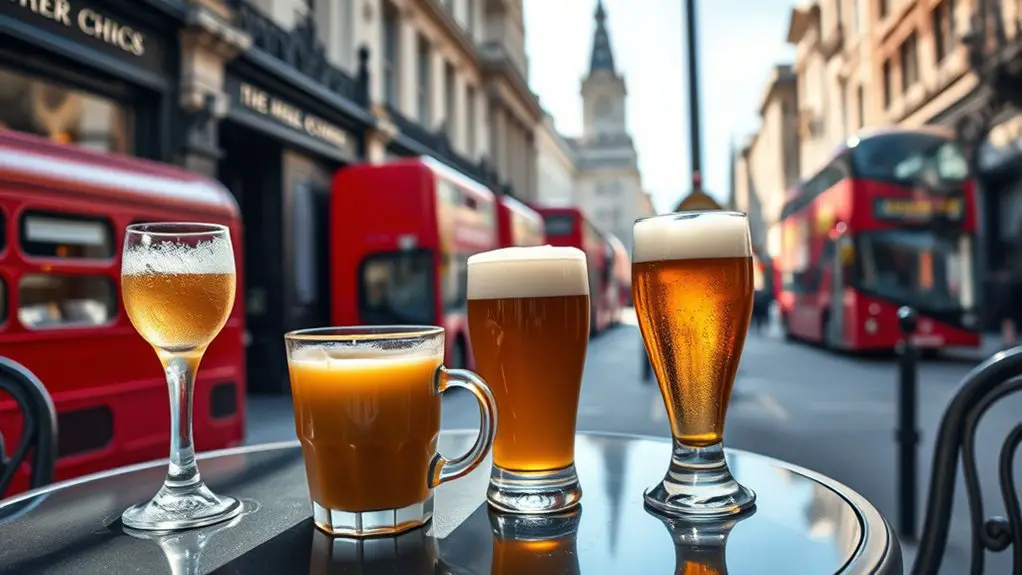
Drinks can add a surprising amount to the cost of eating out in London. A practical 2026 budget is around £3–£5 for many coffees, roughly £2–£4 for a soft drink, and approximately £6–£8 for many draught beers. Central or premium venues can charge more.
Cocktails have an especially wide range. Mainstream bars commonly price standard cocktails in the low-to-mid teens, while happy-hour promotions can reduce the cost substantially. Luxury hotel bars and high-end cocktail venues can go well beyond those figures.
If alcohol is not important to your trip, choosing tap water with restaurant meals can make a noticeable difference over several days.
Affordable Dining Options and Budget Tips
Looking to enjoy London’s diverse food scene without overspending? Street food is still useful, but it is no longer automatically the cheapest option. At popular markets, a full dish often costs around £8–£15, and especially elaborate dishes can cost more.
Borough Market, Camden Market, and Brick Lane remain popular places to sample different cuisines. Camden Market’s official food directory shows the huge range available, from falafel and Indonesian food to burgers, noodles, Venezuelan arepas, and desserts. Prices vary by trader, so look at several menus before joining the longest queue.
For the lowest predictable lunch cost, supermarkets can beat tourist markets. Tesco’s current 2026 promotion lists a regular meal deal at £4.25, or £3.85 with Clubcard, combining an eligible main, snack, and drink. See the current Tesco meal-deal range for an example of how low a grab-and-go lunch can go.
Other useful strategies include checking lunch menus, pre-theatre menus, weekday offers, bakery counters, and food-to-go sections. Restaurants often make lunch cheaper than dinner, although individual offers change frequently.
Bring a reusable water bottle rather than assuming you need to buy bottled water throughout the day. At on-licensed premises in England and Wales, free potable drinking water must be available to customers on request under mandatory licensing conditions.
Note: A famous food market is not necessarily a cheap food market. Visit Borough Market or Camden for the choice and atmosphere, but compare stall prices instead of assuming every dish is a bargain.
Where Food Costs More or Less in London
Location matters, but the difference is best understood as venue and neighborhood pricing, not separate prices for tourists and locals.
Areas with a high concentration of luxury hotels, premium restaurants, nightlife, theatres, or major attractions—such as Mayfair, Knightsbridge, parts of Chelsea, Covent Garden, and central Soho—can make it very easy to spend more. That does not mean every restaurant there is expensive, and it does not mean visitors are normally given a different price from London residents.
Likewise, Camden and other popular market districts have inexpensive choices but also highly priced tourist-facing food. For better value, compare menus rather than choosing a neighborhood solely because it has a reputation for “cheap eats.”
A good rule is to check the menu online before traveling across London for a particular restaurant. This also lets you confirm whether the venue adds a service charge and whether a lunch or set menu is available.
Splurging at Fine Dining Establishments
Fine dining in London can move far beyond ordinary restaurant budgets. Michelin-starred restaurants offer tasting menus built around premium ingredients, elaborate preparation, and lengthy multi-course service.
For a real 2026 example, CORE by Clare Smyth currently lists tasting menus at £265 and £275 per person, while its wine pairing is an additional £175. Its à la carte format is listed at £205 for lunch and £235 for dinner. The restaurant also states that a discretionary service charge is added.
Restaurant Gordon Ramsay provides another useful benchmark: current tasting experiences include menus around £210 and £260 before optional drinks and other extras. Prices at this level change with menus, so always check the restaurant’s own website before booking.
Advance reservations are often sensible for high-demand restaurants. Also read the cancellation policy: some luxury venues charge substantial per-person fees for late cancellations or no-shows.
Wine pairings can add almost as much as another casual meal—or considerably more—to each diner’s total, so check both the food price and drinks price before deciding what your splurge will cost.
Hidden Food Costs to Consider During Your Trip
Even when you’ve budgeted for meals, a few extras can raise the final bill. The most important one in London restaurants is the service charge. According to Visit London’s current tipping guidance, restaurant service charges are often around 12.5%. If the charge is already on your bill, an additional tip is normally unnecessary.
If no service charge is included and you received good table service, a tip of around 10–15% is a common guideline, but tipping is generally optional in London. Tipping is not normally expected for takeaway food or when ordering a drink directly at a pub bar.
Foreign-card costs are another possibility, but there is no universal “London fee.” Your bank or card issuer determines any foreign-transaction or currency-conversion charge, so check your own card terms before traveling.
UK consumer prices also work differently from places where sales tax is added at checkout. GOV.UK explains that VAT due on prices aimed at the general public is normally already included in the displayed price. A discretionary service charge can still appear separately.
| Cost Factor | Typical Impact | How to Manage It |
|---|---|---|
| Service charge | Often around 12.5% at restaurants | Check the menu and final bill before adding another tip. |
| Additional tip | Optional; commonly 10–15% when no service charge is included | Do not automatically tip twice. |
| Foreign-card fees | Depends on your bank/card | Check your issuer’s foreign-transaction terms before the trip. |
| Bottled water | Charged as a menu item | Ask for tap water where appropriate. |
| Delivery, packaging, or other extras | Venue or app-specific | Review the full checkout total before ordering. |
Warning: Do not add an automatic 15% tip to every London restaurant bill without reading it first. If a discretionary service charge is already included, adding another percentage can mean paying twice for the same service.
Frequently Asked Questions
How do food prices vary across different London neighborhoods?
Food prices vary mainly because different neighborhoods have different mixes of restaurants and rents. Luxury-heavy areas such as Mayfair and Knightsbridge make expensive dining easy to find, while value meals exist throughout London. Even popular areas such as Soho and Camden contain both cheap and expensive options, so comparing individual menus is more reliable than judging by neighborhood alone.
Are there seasonal changes affecting dining costs in London?
There is no reliable rule that ordinary London restaurant prices rise simply because it is peak tourist season. However, Christmas, Valentine’s Day, major events, and other busy periods can bring special set menus, minimum spends, or different offers at individual venues. Check the restaurant’s current menu for the date you plan to visit.
What are the average prices for street food in London?
For planning, around £8–£15 is a more useful 2026 budget for many complete street-food dishes. Smaller snacks, bakery items, and promotional dishes can cost less than £10, while large portions and premium ingredients can push a stall meal above £15.
How much should I budget for tips and service charges?
Many London restaurants add a discretionary service charge, often around 12.5%. Check your bill before tipping. If a service charge is already included, you normally do not need to leave an additional tip. If there is no charge and you received good table service, around 10–15% is a common guideline, but tipping is generally optional.
Do food prices differ for tourists versus locals in London?
Not usually. Restaurants generally display the same menu prices to visitors and residents. What travelers often experience as “tourist prices” is really location and venue selection: restaurants next to major attractions, luxury hotels, and high-rent central districts may cost more for everyone. Walking a few streets away or comparing menus can reveal better value.
How much should one person budget for food per day in London?
A careful traveler can target roughly £20–£35 per day by using supermarkets, bakeries, cheap takeaways, and tap water. Around £45–£75 gives more room for cafes and casual restaurants. Multiple sit-down meals, alcohol, premium restaurants, or tasting menus can easily push the daily total beyond £100.
Can I get free tap water in London restaurants and pubs?
At on-licensed premises in England and Wales, free potable drinking water must be available to customers on request. Bottled mineral or sparkling water is still a paid menu item, so ask specifically for tap water when that is what you want.
Conclusion
London can work with very different food budgets, but current prices make planning important. For 2026, treat £10–£15 as the cheaper end of a main meal rather than the default price for every casual restaurant. A budget traveler can keep food around £20–£35 per day with supermarket lunches and inexpensive takeaways, while £45–£75 per day gives much more room for cafes and restaurants.
Check menus before you go, watch for service charges, ask for tap water when you do not need bottled water, and save your biggest food spend for meals that genuinely matter to you. Those simple choices make it much easier to enjoy London’s huge range of food without letting restaurant bills take over your travel budget.
Sources
- Office for National Statistics — Consumer price inflation — current UK inflation data, including restaurants and hotels.
- Visit London — Tipping guide — London restaurant tipping and service-charge guidance.
- GOV.UK — Where you see VAT — explains how VAT is normally included in consumer-facing UK prices.
- Local Government Association — Licensing Act 2003 guidance — mandatory provision of free potable drinking water at on-licensed premises.
- Tesco — Lunch meal deals — current low-cost supermarket lunch benchmark.
- CORE by Clare Smyth — Current menus — current London fine-dining and wine-pairing price examples.
