
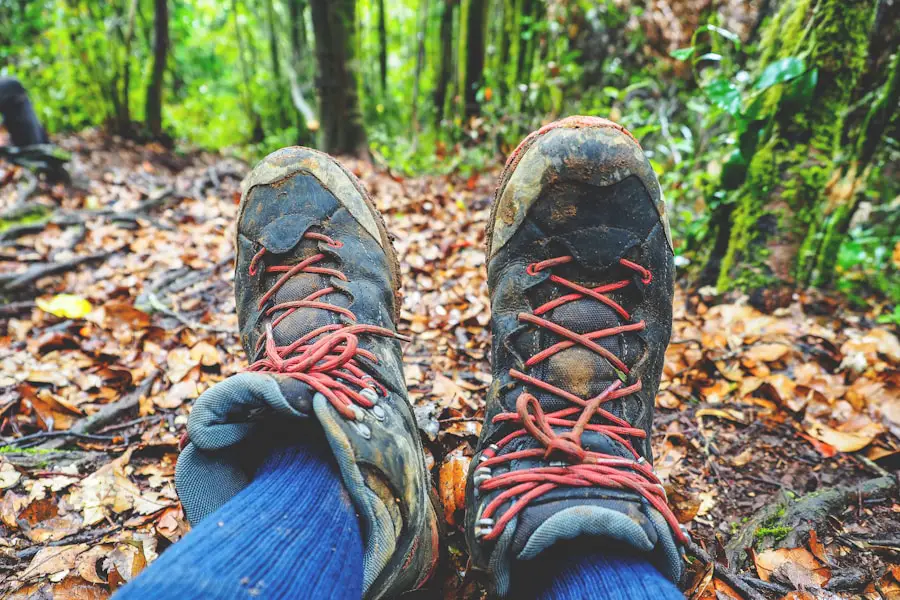
Last Updated on September 10, 2026 by Daniel Globe
Hiking shoes should feel secure around your heel and midfoot without squeezing your foot, while the toe box should leave enough room for your toes to move and for your feet to swell during a long day on the trail. Length is only part of the equation: width, internal volume, socks, foot shape, and the way the shoe behaves on slopes all matter.
Quick Answer
Hiking shoes should fit snugly at the heel and midfoot but never feel tight or painful. Leave roughly a thumb’s width of space beyond your longest toe, make sure your toes can wiggle, and avoid repeated heel slipping. Test the shoes late in the day with your normal hiking socks and walk on an incline before buying.
Key Takeaways
- Fit hiking shoes to your larger foot and judge the actual fit rather than relying only on the size printed on the box.
- Aim for about a thumb’s width of clearance beyond your longest toe while keeping the heel and midfoot secure.
- Check length, width, and internal volume; a shoe can be the correct length and still be the wrong shape for your foot.
- Try shoes with the socks and orthotics or insoles you plan to use on the trail, preferably later in the day.
- Technical terrain may call for more supportive footwear, but it does not mean sacrificing proper toe room by choosing a tighter size.
At a Glance
| Time Required | About 15–30 minutes to measure your feet and test several pairs properly |
| Difficulty | Easy |
| Tools Needed | Paper, pen or pencil, ruler or measuring tape, hiking socks, manufacturer size chart, and any insoles or orthotics you normally use |
| Cost | $0 for home measurement; specialty-store fitting is commonly available with shoe shopping |
Disclosure: As an Amazon Associate I earn from qualifying purchases. Some links on this page are affiliate links, at no extra cost to you.
How Should Hiking Shoes Fit?
A good hiking shoe should feel secure without feeling restrictive. REI’s current hiking-footwear guidance describes the ideal fit as snug but not tight, with enough space to wiggle your toes. The heel and midfoot should stay controlled as you walk, while the front of the shoe needs extra space so your toes do not hit the end during descents.
FootCareMD, an educational resource from the American Orthopaedic Foot & Ankle Society, recommends roughly 3/8 to 1/2 inch of space between the longest toe and the end of a general-purpose shoe. REI uses the practical hiking-specific rule of about a thumb’s width.
A useful starting point is about 3/8 to 1/2 inch—or roughly a thumb’s width—between your longest toe and the front of the hiking shoe while standing.
Length and Toe Room
Your longest toe should not touch the end of the shoe while standing, walking normally, or descending a slope. The toes should be able to wiggle without feeling crowded from the sides or top.
Too little length can lead to toe jamming, sore toenails, pressure, and discomfort on descents. Too much length can allow your foot to slide forward and backward, which can also create friction and blisters.
Width
The widest part of your forefoot should sit comfortably inside the widest part of the shoe. The upper should not squeeze the sides of your foot, but your foot also should not slide from side to side.
Do not automatically buy a longer shoe just because a model feels narrow. A wide version or a different shoe last may solve the problem without adding excess length. The American Academy of Orthopaedic Surgeons specifically advises choosing a different width or model rather than using unnecessary extra length to compensate for a narrow shoe.
Heel Hold, Midfoot Security, and Volume
Your heel should stay comfortably seated in the heel cup as you walk. Repeated lifting, rubbing, or sliding is a warning sign, especially if firm but comfortable lacing does not correct it.
Internal volume matters too. A low-volume foot may feel loose even when shoe length and width appear correct, while a high-volume foot may feel compressed across the top. REI notes that persistent empty space above the foot after proper lacing can indicate that the shoe’s volume is wrong for your foot.
Pro Tip: Remove the insole and stand on it while wearing your hiking socks. Your foot should sit comfortably within its outline, with roughly a thumb’s width of extra space beyond your longest toe. If your foot spills over the sides, consider a wider or differently shaped model rather than simply buying a longer size.
Why Foot Size, Shape, and Volume Matter
Foot size and shape strongly influence the comfort and performance of hiking shoes. Length is only one measurement. Feet also vary in width, heel shape, forefoot shape, instep height, arch shape, and overall volume.
A person with a narrow foot may find a standard-width shoe loose or unstable, while someone with a wider foot may feel pinching along the sides. The goal is to match the shape of the shoe to the shape of the foot rather than expecting the foot to adapt to an uncomfortable shoe.
Arch shapes also vary. Some people have high arches, while others have low or flat arches. These differences can change how a shoe feels, but arch shape alone does not prove that someone needs corrective footwear. FootCareMD notes that asymptomatic flat feet or high arches do not automatically require inserts or special correction.
Comfort, symptoms, foot mechanics, and the intended activity should guide the choice. Hiking shoes should support your feet without creating pressure points, numbness, rubbing, or forced positioning.
The Importance of Trying on Hiking Shoes
Trying hiking shoes before committing to them remains one of the most reliable ways to evaluate fit. Shoe sizing varies between brands and even between models from the same manufacturer, so the number printed inside the shoe should be treated as a starting point rather than a guarantee.
When possible, visit a specialty footwear or outdoor store where you can compare several lasts, widths, and sizes. Walk around and use an incline or test ramp if one is available. Pay attention to heel movement, toe clearance, forefoot pressure, arch comfort, and how the shoe feels across the top of your foot.
Shopping online can still work. Start with the manufacturer’s current size chart, choose a retailer with an appropriate return policy, and test the shoes indoors with your normal hiking socks before wearing them outside.
REI’s hiking-footwear guide, updated May 18, 2026, recommends spending time moving around in the footwear and checking for pinching, friction, pressure points, heel problems, excess volume, and toes contacting the front on an incline.
How to Measure Your Feet for Hiking Shoe Sizing
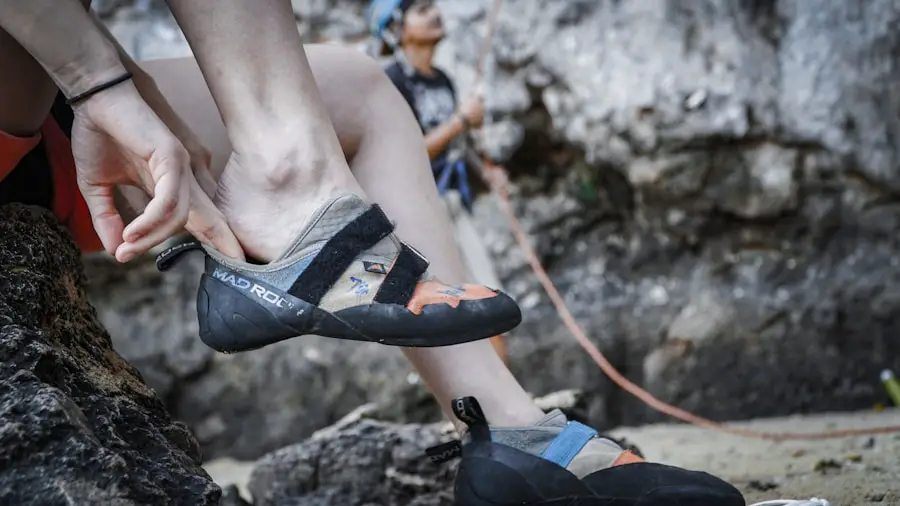
Accurate measurements give you a better starting point when comparing manufacturers. Measure both feet because one foot is commonly larger than the other, and fit your shoes to the larger foot.
1. Measure Later in the Day
Measure and try on hiking footwear later in the day, after you have spent time standing and walking. Feet normally become somewhat larger during daily activity, and long hikes can produce additional swelling.
2. Wear Your Hiking Socks
Put on the same type and thickness of socks you expect to wear on the trail. A thicker sock occupies more room and can change how the heel, forefoot, and instep fit.
3. Measure Both Feet
Place a sheet of paper on a hard, flat floor with one edge against a wall. Stand naturally with your heel against the wall and your weight on the foot being measured. Mark the point reached by your longest toe.
Measure from the wall edge to that mark. Repeat the process for your other foot and use the larger measurement when consulting the manufacturer’s size chart.
4. Check Width and Volume Too
Length alone cannot tell you whether a model will fit. Notice whether your forefoot needs a standard, wide, or narrow option and whether you have a low or high instep. The shoe should hold your foot without squeezing it.
5. Use the Manufacturer’s Size Chart
Translate your foot measurement using the current chart for the exact brand you are considering. Do not assume a size in one brand will fit the same way in another.
Note: If you normally wear prescription orthotics or a specific aftermarket insole, bring it when trying on shoes. Inserts take up space inside footwear and can change heel hold, volume, and toe clearance.
Factors to Consider When Choosing Hiking Shoe Size
| Factor | What to Look For |
|---|---|
| Toe Box Space | Your toes should wiggle freely without touching the front, sides, or top of the toe box. |
| Length | Aim for roughly a thumb’s width of clearance beyond your longest toe while standing. |
| Width | The widest part of your foot should sit naturally in the widest part of the shoe without squeezing or lateral sliding. |
| Heel Hold | The heel should remain secure without repeated lifting or rubbing as you walk uphill and downhill. |
| Foot Volume | The upper should wrap your foot securely without large empty spaces or excessive pressure across the instep. |
| Arch Comfort | Support should feel natural rather than creating a hard pressure point beneath the arch. |
| Socks and Insoles | Test the shoes with the same socks and any orthotics or insoles you expect to use while hiking. |
| Terrain | Choose an appropriate level of outsole grip, underfoot protection, stiffness, and upper support without making the fit unnecessarily tighter. |
The type of socks you plan to wear can meaningfully affect fit. Try hiking shoes with your normal trail socks rather than thin everyday socks. Check that the heel remains secure and that the toe box still provides adequate space.
Terrain also matters, but mainly when selecting the construction of the footwear. Rugged trails, loose rock, heavier loads, or technical terrain may justify a more structured shoe or boot. A difficult trail does not mean you should intentionally reduce toe clearance or squeeze your forefoot.
Current guidance from Salomon likewise separates fit from footwear type: the heel and midfoot should remain snug while the toes have room to move, with the shoe or boot height selected according to terrain, load, duration, and other trail demands.
Tips for Finding the Right Fit for Hiking Shoes
Take enough time to test several models. Different brands use different lasts—the foot-shaped forms around which shoes are built—so one model may fit your anatomy much better than another even when the labeled sizes are identical.
Use This Five-Point Fit Test
- Check your toes: Stand normally and confirm roughly a thumb’s width between your longest toe and the front.
- Check the sides: Your forefoot should not bulge over the platform or feel pinched.
- Check the heel: Walk normally and uphill. Repeated lifting or rubbing suggests poor heel hold.
- Walk downhill: Your foot should not slide forward far enough for your toes to strike the front.
- Keep moving: Spend at least 10–15 minutes walking in the shoes when possible and pay attention to pressure, numbness, seams, rubbing, and hot spots.
A small lacing adjustment can sometimes improve heel hold or reduce pressure across the instep. However, lacing should fine-tune an already suitable shoe; it should not be used to force an obviously too-wide, too-narrow, too-short, or too-low-volume model to fit.
Warning: Do not buy hiking footwear that is painfully tight and expect the size or shape to become correct after a break-in period. Stiff leather and heavy boots may soften with use, but break-in cannot reliably fix insufficient length, a crushing toe box, or the wrong shoe last.
Common Mistakes to Avoid When Sizing Hiking Shoes
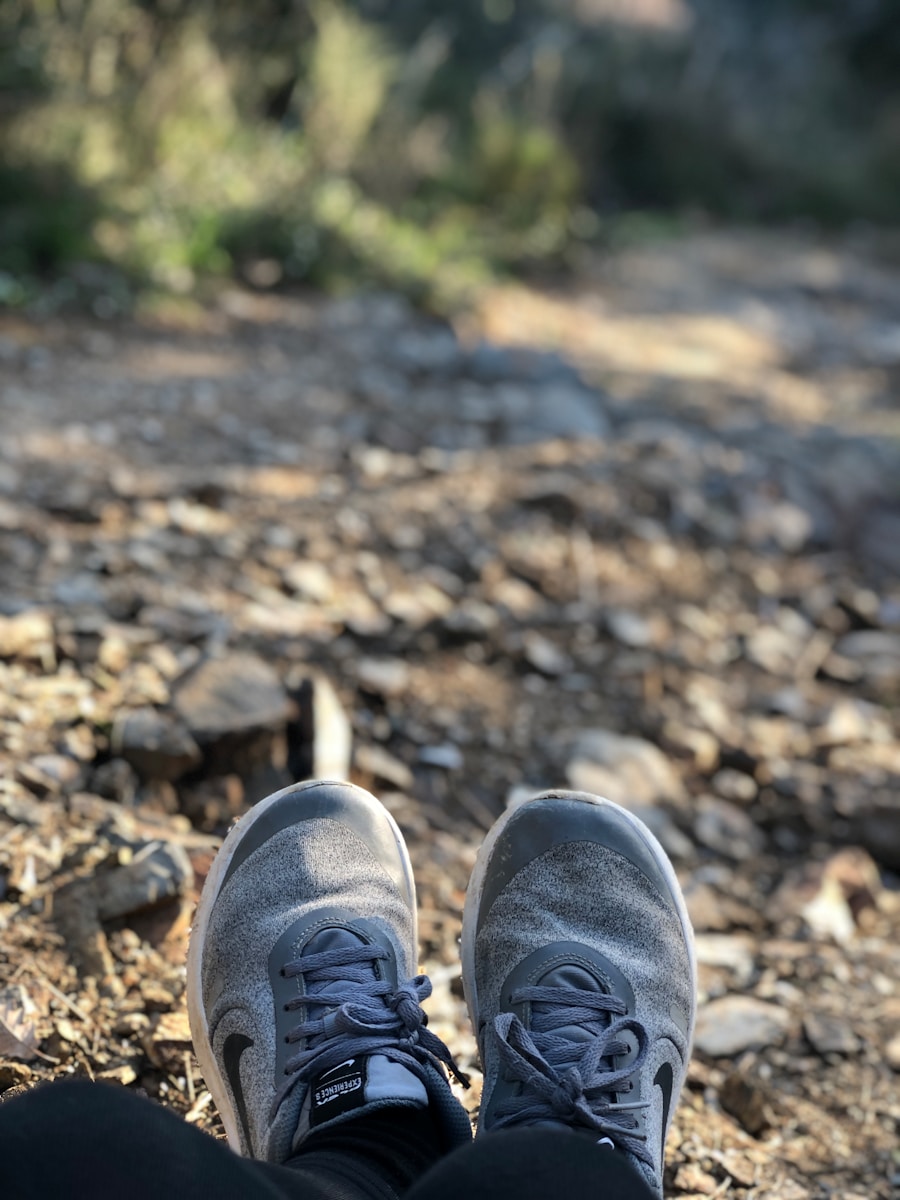
Expecting a Bad Fit to Break In
Some stiff hiking and backpacking boots benefit from gradual break-in before a long trip because their materials soften and flex with wear. That is different from expecting an incorrectly sized shoe to stretch enough to become safe or comfortable.
FootCareMD recommends buying shoes that fit well from the start, while REI recommends breaking in burlier hiking and backpacking boots before taking them into the backcountry. Both ideas can be true at the same time: choose the correct fit first, then break in the materials if the footwear requires it.
Ignoring Foot Swelling
Feet tend to become larger during the day and may swell further after hours of hiking. Trying shoes later in the day gives you a better sense of how they may feel several hours into a hike.
Automatically Going Up Half a Size
Some hikers do end up in a hiking shoe that is half a size larger than their everyday footwear, but that should be the result of measurements and fit testing—not a blanket rule.
If the smaller option crowds your toes and the next size provides proper clearance without allowing the heel or midfoot to slide, the larger option may be appropriate. If extra length creates movement, try a different width or model instead.
Buying for Only One Foot
Feet are often slightly different in size. Measure both and fit the larger foot. Lacing or an appropriate insole can sometimes fine-tune the fit of the smaller foot without forcing the larger foot into an undersized shoe.
Choosing Size Instead of Shape
A shoe that is long enough can still be wrong if its heel is too wide, toe box too narrow, instep too low, or overall volume too large. Changing brands or models is often more effective than endlessly changing sizes within a last that does not match your foot.
Men’s, Women’s, and Unisex Hiking Shoe Sizing
Men’s and women’s size labels use different numerical systems, and manufacturers may also use different lasts for men’s, women’s, or unisex versions. Those lasts can differ in heel dimensions, forefoot shape, instep volume, arch placement, or overall width, but there is no single construction rule that applies to every brand.
For that reason, do not choose solely according to the gender label printed on the box. Some hikers find a men’s model, women’s model, wide option, narrow option, or unisex last better matches their individual foot shape.
Use the manufacturer’s measurement chart for the exact model whenever possible and judge the final choice by toe clearance, width, heel hold, and volume rather than by a fixed men’s-to-women’s size conversion.
When to Consider Custom or Specialized Hiking Footwear
Most hikers do not automatically need custom footwear simply because they have high arches, low arches, or a particular foot shape. Start by finding a properly shaped shoe in the right length, width, and volume.
Aftermarket insoles may change cushioning, support, or volume. According to FootCareMD’s orthotics guidance, off-the-shelf inserts are often considered before custom devices, while custom orthotics may be appropriate when symptoms and a specific diagnosis warrant them.
Specialized footwear also becomes relevant when the activity itself changes. Mountaineering, winter hiking, trail running, backpacking with heavier loads, and technical approaches place different demands on the outsole, stiffness, insulation, protection, and upper construction.
Note: Persistent foot pain, numbness, recurrent blisters, significant deformity, or problems related to neuropathy or a diagnosed foot condition deserve professional evaluation. A footwear specialist can help with fit, while a podiatrist or foot-and-ankle specialist can assess medical problems.
Related Travel Gear to Consider
Proper hiking-shoe fit is only one part of preparing for an outdoor trip. For wet-weather travel and casual walking, this guide to waterproof sneakers for travel covers additional footwear options. Keep in mind that waterproofing by itself does not guarantee the traction, support, protection, or fit required for difficult hiking terrain.
Comfort between adventures matters too. The site’s guide to travel pillows for long flights can help with rest during travel days, while this guide to a solar-powered camping lantern covers a useful lighting option for camp after the hike.
Love travel? Join Our Facebook Community
Frequently Asked Questions
What are the key factors to consider when fitting hiking shoes?
Check length, width, heel hold, midfoot security, toe-box shape, internal volume, and overall comfort. Test the shoes with your hiking socks and any insoles or orthotics you normally use. You should also walk uphill and downhill to make sure your heel stays controlled and your toes do not strike the front.
How should hiking shoes fit in terms of length?
While standing, aim for roughly 3/8 to 1/2 inch, or about a thumb’s width, between your longest toe and the front of the shoe. Your toes should not hit the end when walking downhill.
How should hiking shoes fit in terms of width?
The widest part of your foot should sit comfortably in the widest part of the shoe. Your forefoot should not feel pinched, and your foot should not slide from side to side. If the shoe is too narrow, try a wide size or a differently shaped model instead of automatically buying extra length.
Why does hiking-shoe volume matter?
Volume describes the three-dimensional space inside the shoe. A shoe can have the correct length and width but still feel loose above a low-volume foot or painfully tight over a high instep. Proper volume helps hold your foot without pressure or excessive movement.
What are signs that hiking shoes do not fit properly?
Warning signs include toes hitting the front, pinching, numbness, obvious pressure points, repeated heel slipping, side-to-side movement, rubbing, hot spots, or persistent discomfort. A properly fitted hiking shoe should feel secure without requiring you to tolerate pain while it “breaks in.”
Why is it important for hiking shoes to fit properly?
A good fit improves comfort and foot control while reducing rubbing, pressure, toe jamming, and excessive movement inside the shoe. Proper fit is especially important on long hikes and descents, where small pressure points can become much more noticeable over time.
Should hiking shoes be a half size bigger?
Not automatically. Some hikers end up a half size above their everyday shoe size because the larger option gives proper toe clearance and accommodates swelling. Others do not. Use your foot measurements and the actual fit of the model rather than following a universal half-size rule.
How much heel movement is acceptable in hiking shoes?
Heel movement should be minimal and should not create rubbing. The heel should remain comfortably seated when walking normally and on slopes. If your heel repeatedly lifts despite appropriate lacing, the shoe may have the wrong heel shape or internal volume for your foot.
Sources
- REI Co-op — How to Choose Hiking Boots and Shoes — hiking-footwear fit, toe clearance, foot volume, socks, orthotics, late-day fitting, incline testing, and break-in guidance; updated May 18, 2026.
- FootCareMD — 10 Points of Proper Shoe Fit — shoe width, depth, heel hold, walking test, and 3/8- to 1/2-inch toe clearance.
- American Academy of Orthopaedic Surgeons — Shoes: Finding the Right Fit — measuring feet, brand-size variation, toe room, width selection, and late-day fitting.
- FootCareMD — Orthotics — off-the-shelf and custom orthotic guidance and the effect of inserts on shoe volume.
- Salomon — High, Mid, or Low-Cut Hiking Shoes: How to Choose — current hiking fit, toe-room, terrain, load, and footwear-height guidance; published June 29, 2026.

