

Last Updated on July 30, 2026 by Daniel Globe
A wet bar in a hotel room is a small refreshment area built around a sink and running water. Depending on the room, it may also include a counter, mini-fridge, microwave, coffee maker, glassware, or stocked drinks. Because hotels use the term differently, it is worth checking the exact room description before booking.
Quick Answer
A wet bar in a hotel room is a compact drink-preparation area with a sink and running water. It may also have a mini-fridge, microwave, coffee maker, counter, or glassware. A stocked minibar is different: its drinks and snacks may cost extra, even when they are placed beside the wet bar.
Key Takeaways
- The sink is the feature that makes a refreshment area a true wet bar.
- A refrigerator, microwave, coffee maker, and glassware may be included, but they are not guaranteed.
- A wet bar is not automatically a minibar or kitchenette, although one room may combine these amenities.
- Using the sink or counter is normally part of the room, while stocked food and drinks may be charged separately.
- Check for a price list or minibar sensors before moving any stocked product.
- Confirm refrigerator temperature before storing perishable food or temperature-sensitive medication.
What Is a Wet Bar in a Hotel Room?
The Cambridge Dictionary definition of a wet bar centers on a bar for serving drinks that includes a sink and running water. In a hotel room, it is usually a compact counter area placed in a suite, studio, living room, or entry area.
A hotel wet bar may include:
- A small sink with hot and cold running water
- Counter space for preparing drinks or simple snacks
- A mini-fridge or beverage cooler
- A microwave
- A coffee maker or electric kettle
- Cups, glasses, an ice bucket, or basic utensils
- Stocked drinks and snacks offered for purchase
Only the sink and water supply are central to the definition. The other features depend on the hotel, brand, property, suite category, and country.
Note: A room description that lists only a mini-fridge does not necessarily include a wet bar. Look for the words “sink,” “wet bar,” or “refreshment center,” and review the room photos when available.
The History of Wet Bars in Hotel Rooms
Drink-preparation areas existed before hotels began using the modern term “wet bar,” but there is no well-documented date for the first wet bar installed in a guest room. Claims that hotel wet bars began in the 19th century, early 20th century, or a particular postwar decade should therefore be treated cautiously unless they are tied to a named property and a reliable historical record.
Merriam-Webster lists 1967 as the first known use of the term “wet bar.” That does not prove that no similar bar-and-sink area existed earlier. It simply provides a documented reference point for the expression itself.
As suite-style accommodations expanded, wet bars became a useful way to give guests a separate place for drinks, coffee, ice, and light refreshments. Some hotels later combined the wet-bar area with a microwave and refrigerator, while luxury properties sometimes paired it with a stocked minibar or personalized food-and-beverage service.
The defining feature of a wet bar is not the alcohol, refrigerator, or glassware. It is the sink with running water.
The Benefits of Having a Wet Bar in a Hotel Room
A wet bar can make a hotel stay more convenient, especially in a suite with a separate living area. Guests can fill an ice bucket, rinse a reusable bottle, prepare coffee, mix a drink, or clean a small piece of glassware without using the bathroom sink.
Other practical benefits include:
- A separate refreshment area: Drinks and snacks stay away from the bathroom vanity and work desk.
- More convenient group stays: Families, couples, and colleagues can prepare simple refreshments without crowding the bathroom.
- Support for non-alcoholic drinks: A wet bar can be used for tea, coffee, juice, mocktails, infant-feeding supplies, or reusable water bottles.
- Light entertaining: A suite wet bar can support a small, quiet gathering when hotel occupancy and visitor rules allow it.
- Potential savings: Guests may be able to use their own permitted drinks and shelf-stable snacks instead of ordering every refreshment from room service.
A wet bar does not automatically make a room suitable for cooking. Unless the listing identifies the area as a kitchenette and provides approved cooking appliances, it should be treated mainly as a drink and light-refreshment station.
Different Types of Wet Bars Found in Hotel Rooms

There is no single standard layout for a hotel wet bar. The term can describe several setups.
Products Worth Considering
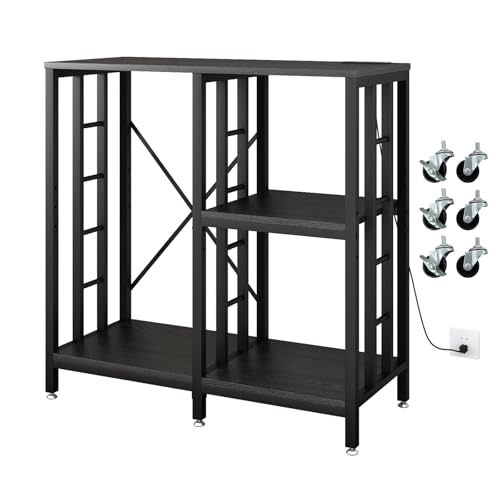
【Durable Wooden Construction】 Tired of wobbly, unstable mini fridge stands that put your appliances in danger? Stop risking damage to your valuable appliances! Our heavy-duty Kitchen Storage Rack is built with 20mm reinforced steel frames and a 15mm waterproof P2 board—each floor Kitchen Shelf firmly supports up to 200 lbs. With trapezoidal reinforcement and X-brace support, it eliminates shaking and prevents tipping, ensuring your mini fridge and microwave stay securely in place with rock-solid, perfectly level stability.

【Ultimate Mini Fridge & Appliance Hub】Designed with a spacious 35.4” × 19.7” nook, this heavy-duty kitchen organizers rack seamlessly accommodates most mini-fridges. It is the perfect space-saving solution for creating a "grab-and-go" beverage center or a compact dorm room kitchen tower. (Note: Fridge not included)

☕️ Neat Coffee Bar Solution: Built in power outlet lets you plug coffee makers and microwaves directly into the mini fridge stand. Six spacious tiers coffee bar cabinet with space organize mini fridges, snacks, and mugs seamlessly for magazine worthy stations in cramped dorms, office or studios
Basic Sink-and-Counter Wet Bar
The simplest version has a small sink and a short section of counter. It may include an ice bucket, disposable cups, or a coffee setup but no refrigerator or microwave.
Wet Bar With a Mini-Fridge and Microwave
This arrangement is common in suite-style properties. For example, Embassy Suites describes its suite wet bars as including a sink, microwave, and mini-fridge. The setup is useful for cold drinks and reheating permitted foods, but it may still lack a cooktop, cookware, or food-preparation utensils.
Wet Bar and Stocked Minibar Combination
Some hotels place a stocked refrigerator, liquor display, or snack tray beside the sink. In that case, the room contains both a wet bar and a minibar. The physical wet-bar amenities may be complimentary, while the stocked products are billed when consumed or removed.
Luxury or Entertaining Wet Bar
Larger suites may have a walk-in or full-length wet bar with cabinets, a refrigerator, microwave, coffee maker, serving space, and higher-quality glassware. One official Renaissance suite description, for example, lists a mini-fridge, microwave, sink, and coffee maker in its walk-in wet bar.
Wet Bar at a Glance
| Amenity | What It Means for Guests |
| Sink and Running Water | The defining wet-bar feature; useful for filling, rinsing, and drink preparation. |
| Mini-Fridge | Provides cold storage, but may be a stocked minibar or beverage cooler rather than an empty food refrigerator. |
| Microwave | Allows basic reheating when included; it is not a standard wet-bar feature. |
| Glassware and Bar Tools | May include cups, wine glasses, an ice bucket, opener, shaker, or utensils; availability varies. |
| Stocked Drinks and Snacks | Usually indicates a minibar service. Check the price list because products may cost extra. |
Wet Bar vs. Minibar vs. Kitchenette
These terms are often mixed together in booking descriptions, but they refer to different features.
Products Worth Considering

Excellent Structure: Premium 304 Stainless Steel Construction with superior strength and durability, 16GA Stainless Steel construction, stains, scratch and dents resistance. High temperature do not fade, 1.6 MM-Thick Stainless Steel for added durability.

【Slow Drop Bar Sink】 Adopting an innovative slow drop cover, the switch is smooth and noise free, integrating the sink and drainage area into one, with independent switch and left and right cold and hot adjustment.

Undermount bar sink exterior dimensions 9.5"x18",interior bowl dimension 7.5"x16",bowl depth is 8 inch,ideal for smaller areas,such as bar counter or preparation station
Wet Bar
A wet bar has a sink and running water. It is intended mainly for preparing and serving drinks. It may also include a refrigerator or microwave.
Minibar
A minibar is a supply of drinks or snacks placed in the room for guest use. It may be inside a small refrigerator, on a tray, or in a cabinet. Products may be complimentary, included in a package, or charged individually. A minibar does not need a sink.
Mini-Fridge
A mini-fridge is simply a compact refrigerator. It may be empty for personal use or stocked as a minibar. A mini-fridge alone is not a wet bar.
Kitchenette
A kitchenette is designed for at least limited food preparation. It generally provides more cooking capability than a wet bar and may include a sink, refrigerator, microwave, cooktop, toaster, cookware, dishes, or storage. The exact meaning still varies, so guests should check the appliance list rather than relying only on the word “kitchenette.”
How to Confirm a Wet Bar Before Booking
- Open the exact room-type description. Do not rely only on the hotel’s general amenities page.
- Look for a sink. A listing that mentions only a refrigerator or minibar may not include a wet bar.
- Review room photos. Confirm whether the refrigerator, microwave, sink, and counter are in the room category you plan to reserve.
- Check what is stocked. Find out whether the refrigerator is empty, complimentary, or operated as a paid minibar.
- Call the property when the amenity is essential. Ask the front desk to confirm the sink, microwave, refrigerator, and available utensils.
- Request accessibility details separately. Counter height, knee clearance, faucet controls, and appliance placement can vary even in accessible rooms.
Pro Tip: Take a screenshot of the room description when a wet bar, refrigerator, or microwave is important to your stay. It gives you a clear reference if the assigned room does not match the listed amenities.
How to Utilize the Wet Bar to Enhance Your Hotel Stay
A wet bar is most useful when you treat it as a tidy refreshment station rather than a full kitchen.
Check the Area Before Using It
Look for a minibar price list, sensor notice, refrigerator controls, and instructions for the microwave or coffee maker. If anything is unclear, call the front desk before moving products.
Set Up a Drink Station
Use the counter for bottled water, coffee, tea, juice, or permitted alcoholic drinks. Keep opened products sealed when not in use, and use a tray or towel to catch condensation.
Prepare Simple Snacks
If a microwave is supplied, follow its posted instructions and avoid foods with strong odors. Shelf-stable snacks, fruit that does not require refrigeration, crackers, and packaged items are easier to manage than full meals.
Use It for a Quiet Evening
A wet bar can support a relaxed cocktail or mocktail night with friends or family. Keep noise low, follow occupancy rules, and do not treat the suite as an event venue unless the hotel has approved the gathering.
Ask for Missing Items
Housekeeping or room service may be able to provide fresh glasses, an ice bucket, bottle opener, plates, or utensils. Availability and fees vary by property.
Warning: Do not lift or rearrange products in a sensor-equipped minibar simply to read a label or make room. At some hotels, moving an item can trigger an automatic charge. Call the front desk if you need the minibar emptied or want refrigerator space.
The Cost of Using the Wet Bar in a Hotel Room
The wet-bar fixture itself is normally included with the room. Guests are not usually charged separately for using the sink, counter, supplied microwave, or empty refrigerator. The main costs come from stocked minibar products, room-service orders, replacement of damaged items, or special restocking requests.
Hilton’s payment guidance, for example, lists minibar consumption among the incidental charges that may be settled in addition to the reservation payment.
Before consuming anything, check:
- The printed or digital price list
- Whether taxes or service charges are added
- Whether complimentary water is clearly marked
- Whether the minibar is included in an all-inclusive or club-level package
- Whether the refrigerator uses sensors
- Whether there is a fee to empty or restock the unit
At some properties, stocked products are counted manually at checkout. Others use electronic sensors. The Dream Downtown hotel FAQ, for example, states that removing or relocating items in its sensor-equipped minibar triggers an automatic room charge.
Note: Review the itemized folio before leaving the hotel. Report an incorrect minibar charge promptly, while the property can still inspect the room and inventory.
Food, Drink, and Child Safety
A wet bar can hold drinks and simple snacks, but not every in-room cooling unit is designed for safe food storage. Some are beverage coolers, and others are packed with minibar products that restrict airflow or leave no room for personal items.
The U.S. Food and Drug Administration recommends keeping refrigerated food at 40°F, or 4°C, or colder. If you cannot confirm the temperature, avoid storing meat, seafood, dairy products, prepared meals, or other perishables for extended periods.
Guests who need refrigeration for medication should contact the hotel before arrival. Ask whether the room refrigerator maintains the required temperature or whether the property can provide a medical refrigerator or another approved storage option.
When children are present:
- Keep alcohol, glass bottles, sharp tools, and chargeable products out of reach.
- Do not allow children to play with minibar items or refrigerator controls.
- Clean spills quickly to reduce slipping and broken-glass risks.
- Follow local drinking-age laws and the hotel’s alcohol policy.
Warning: Never use candles, open flames, personal hot plates, portable burners, or other unapproved cooking appliances at a hotel wet bar. Use only appliances supplied or specifically permitted by the property.
Tips for Stocking and Maintaining the Wet Bar in Your Hotel Room

If the hotel allows personal food and drinks, a small amount of planning can make the wet bar more useful without creating clutter.
Bring Only What the Room Can Support
Shelf-stable mixers, tea bags, instant coffee, packaged snacks, reusable cups, and sealed beverages are usually easier to manage than ingredients requiring cooking. Do not assume that a microwave, knife, cutting board, corkscrew, or dishware will be provided.
Ask Before Adding Personal Alcohol
Hotel rules, package terms, and local alcohol laws vary. Some resorts restrict outside alcohol, and some event or meeting rates have separate food-and-beverage rules. Confirm the policy rather than assuming that outside bottles are allowed.
Keep the Area Clean
Rinse used glasses, wipe spills, discard food waste, and keep the sink drain clear. Do not leave sticky mixers, open food, or wet towels on the counter. Request housekeeping assistance when a spill involves broken glass or a large amount of liquid.
Check Glassware Before Use
Inspect glasses and cups for lipstick marks, cracks, chips, dust, or odors. Ask for replacements when anything appears unclean or damaged.
Avoid Overloading the Refrigerator
Do not block vents or force personal items into a stocked minibar. If you need extra space, ask whether the hotel can provide an empty refrigerator or remove minibar products without a fee.
Other practical travel items can complement the room setup. A compact travel toothbrush keeps the sink area less crowded, a suitable travel adapter helps power permitted appliances, and softside carry-on luggage can be easier to store away from the wet-bar walkway.
The Evolution of Wet Bars in Hotel Rooms
Wet bars were once associated mainly with larger suites and luxury accommodations, but the feature now appears in several types of suite-style and extended-stay rooms. The design has also become more practical. Many modern versions focus less on displaying liquor and more on providing a sink, refrigerator, microwave, coffee setup, and flexible counter space.
Guest preferences have also broadened. A wet bar may be used for coffee, tea, filtered water, mocktails, infant-feeding supplies, or dietary needs rather than alcohol. Some hotels combine the area with complimentary refreshments, while others operate a traditional paid minibar.
There is still no universal hotel-industry definition covering every appliance. One property may advertise a sink and refrigerator as a wet bar, while another includes a microwave, glassware, cabinets, and coffee maker. This makes the exact room listing more reliable than the amenity name alone.
The Future of Wet Bars as a Hotel Room Amenity
Future wet bars may place more emphasis on flexible storage, lower-waste packaging, water-refill options, and easier ordering through hotel apps. Smart inventory systems may also help hotels track products and restock them more efficiently.
These developments are possibilities rather than universal standards. Some hotels may move toward highly automated refreshment centers, while others may remove stocked minibars and provide empty refrigerators that guests can use freely. Extended-stay properties may continue moving toward kitchenettes, while luxury suites retain larger entertaining bars.
The most useful wet bar will remain one that is described accurately, priced clearly, easy to clean, and suited to the guest’s needs. Whether it holds coffee, mocktails, snacks, or evening drinks, the sink and refreshment space can add real convenience when guests understand what is included and what may cost extra.
Frequently Asked Questions
What is a wet bar in a hotel room?
A hotel-room wet bar is a compact refreshment area with a sink and running water. It may also include a counter, mini-fridge, microwave, coffee maker, glassware, or stocked drinks.
What amenities are typically found in a wet bar?
The sink is the defining feature. Depending on the hotel, the area may also have a mini-fridge, microwave, coffee maker, ice bucket, cups, glasses, bottle opener, cabinets, or paid minibar products.
Is a wet bar the same as a kitchenette?
No. A wet bar is intended mainly for preparing drinks and is built around a sink. A kitchenette normally offers more food-preparation capability, such as a refrigerator, microwave, cooktop, cookware, dishes, or storage.
Is a wet bar the same as a minibar?
No. A wet bar is a physical area with a sink. A minibar is a supply of drinks and snacks that may be complimentary or sold to the guest. A hotel room can have one, both, or neither.
Are wet bars standard in all hotel rooms?
No. They are more common in suites, studios, extended-stay rooms, and some premium accommodations. Standard rooms may have only a coffee maker, empty mini-fridge, stocked minibar, or no refreshment area at all.
Do hotels charge guests to use a wet bar?
The sink, counter, refrigerator, and supplied appliances are usually included with the room. Charges generally apply to stocked minibar products, room-service items, damage, or special requests. Always check the price list and package terms.
Can moving a minibar item create a charge?
Yes, at some hotels. Sensor-equipped minibars may record an item when it is lifted or relocated. Check for a notice and call the front desk before moving stocked products.
Can I store my own food in the wet-bar refrigerator?
Possibly, but ask first if the unit is stocked or sensor-equipped. For perishable food, confirm that the refrigerator stays at or below 40°F or 4°C. A beverage cooler may not maintain a safe food-storage temperature.
Does every hotel wet bar include a microwave?
No. Some wet bars include only a sink and counter, while others add a refrigerator, microwave, or coffee maker. Review the exact room description or call the hotel when a microwave is essential.
Can the hotel empty a stocked minibar for me?
Some properties will remove the products or provide a separate refrigerator, but availability and fees vary. Request this before arrival when you need space for personal food, infant supplies, medication, or non-alcoholic drinks.
Sources
- Cambridge Dictionary: Wet Bar — definition of a wet bar as a drink-serving area with a sink and running water.
- Merriam-Webster: Wet Bar — documented first known use of the term.
- Embassy Suites by Hilton Fact Sheet — official example of suite wet bars with sinks, microwaves, and mini-fridges.
- Renaissance Schaumburg Convention Center Hotel Suites — official example of a walk-in wet bar with a refrigerator, microwave, sink, and coffee maker.
- Dream Downtown Hotel FAQs — official warning about automatic charges from a sensor-equipped minibar.
- U.S. Food and Drug Administration: Refrigerator Thermometers — safe refrigerator temperature guidance.
