
Last Updated on July 27, 2026 by Daniel Globe
Ljubljana packs a surprising amount into a compact, walkable capital. Its historic center brings together riverside promenades, Baroque facades, Jože Plečnik’s distinctive architecture, a hilltop castle, lively food markets and easy access to green spaces. For a first visit, most of the essential Ljubljana attractions can be explored comfortably on foot.
Quick Answer
The best things to do in Ljubljana include exploring Prešeren Square and Triple Bridge, visiting Ljubljana Castle, walking beside the Ljubljanica River, seeing Dragon Bridge, browsing Central Market, relaxing in Tivoli Park, visiting the National Gallery and taking a river cruise. Allow one full day for the highlights or two days for a more relaxed visit.
Key Takeaways
- Ljubljana’s compact Old Town, Prešeren Square, bridges and riverfront are easy to explore on foot.
- Ljubljana Castle combines city history with some of the best elevated views over the capital.
- Jože Plečnik’s architecture is central to Ljubljana’s identity, and a group of his city works has UNESCO World Heritage status.
- Tivoli Park provides an easy green escape close to the historic center, with walking paths, art and access toward Rožnik Hill.
- Central Market is one of the best places to see everyday local life and look for Slovenian produce and specialties.
- One day is enough for the essential sights, but two days gives you time for museums, Tivoli Park, a river cruise and nightlife.
Disclosure: As an Amazon Associate I earn from qualifying purchases. Some links on this page are affiliate links, at no extra cost to you.
Explore Ljubljana Old Town, Prešeren Square and Triple Bridge
Ljubljana’s Old Town is a mix of medieval street patterns, Baroque buildings, later bourgeois architecture and the work of Slovenian architect Jože Plečnik. Cobblestone lanes, pedestrian squares and the Ljubljanica River make this the natural place to begin exploring the city.
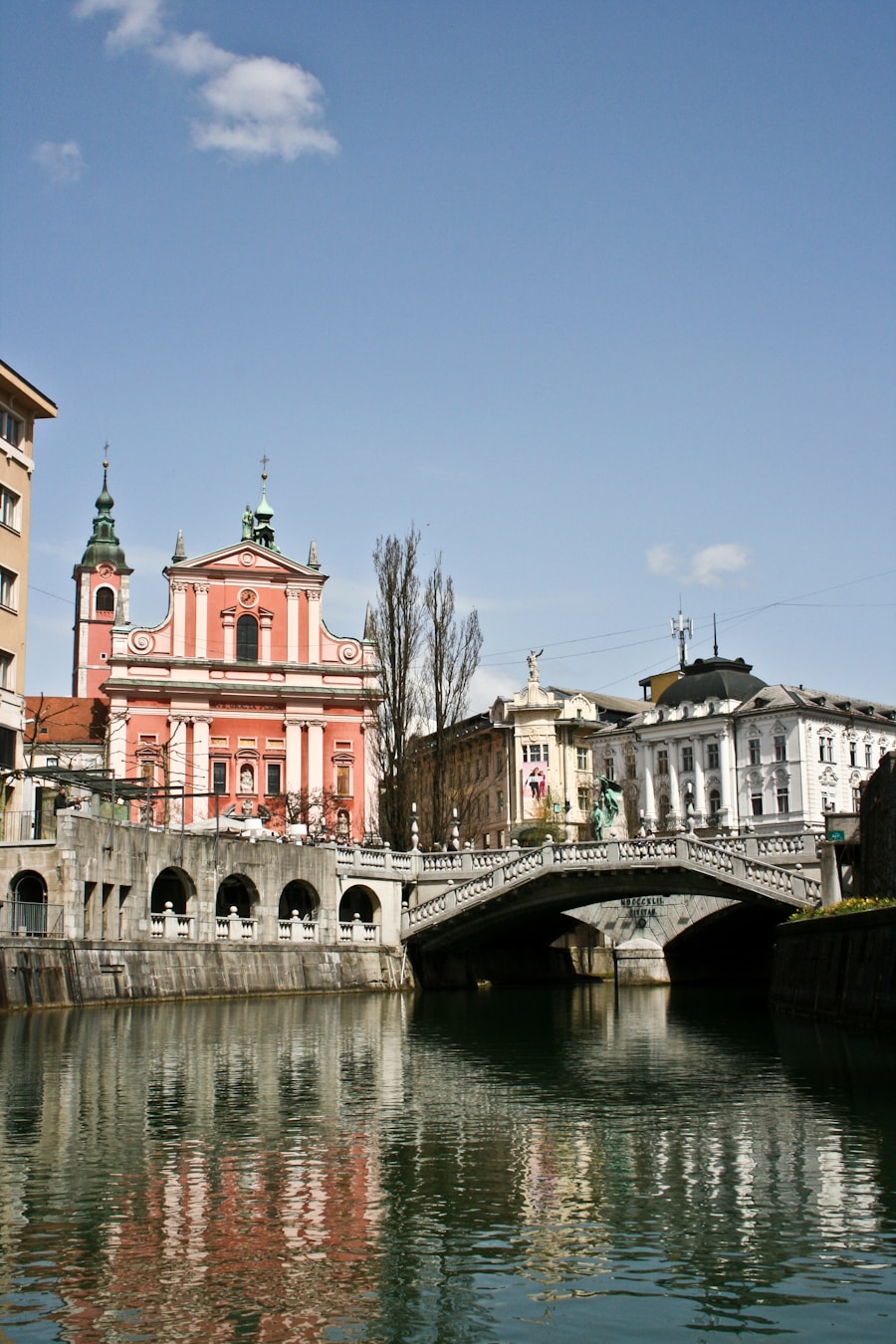
At the heart of the center is Prešeren Square, named after Slovenia’s celebrated Romantic poet France Prešeren. His monument stands near the pink Franciscan Church of the Annunciation and one end of Ljubljana’s famous Triple Bridge.
The Triple Bridge has a more layered history than its appearance suggests. Its central stone bridge opened in 1842. Between 1929 and 1932, Plečnik added two pedestrian bridges beside it, turning a river crossing into one of Ljubljana’s defining public spaces.
Cross toward the Old Town and you quickly reach the Central Market, Town Square and streets lined with cafes, shops and historic buildings. The short distances make this area particularly rewarding for travelers who prefer wandering without a rigid itinerary.
Visit Ljubljana Castle
Ljubljana Castle rises above the Old Town on Castle Hill and has watched over the city in different forms for centuries. Archaeological evidence shows much older settlement on the hill, while the castle’s official history notes that a first wooden castle was probably erected as early as the 11th century.
You can reach the castle on foot or use the funicular from near the Central Market. Walking is a pleasant option in good weather, while the funicular saves time and avoids the climb.
Inside the castle complex, visitors can explore exhibitions, courtyards and historic spaces such as the Chapel of St. George. The chapel dates from the 15th century and is especially notable for its painted coats of arms from 1747, along with surviving Gothic decorative elements.
The Viewing Tower is one of the castle’s biggest draws. From its elevated position you can look across Ljubljana and, in clear conditions, toward the surrounding Alpine ranges, including the Kamnik-Savinja Alps.
Pro Tip: Ljubljana Castle is open year-round, but castle and funicular hours vary by season. Check the official castle website shortly before your visit, especially if you plan to go late in the day.
Stroll Along the Ljubljanica River
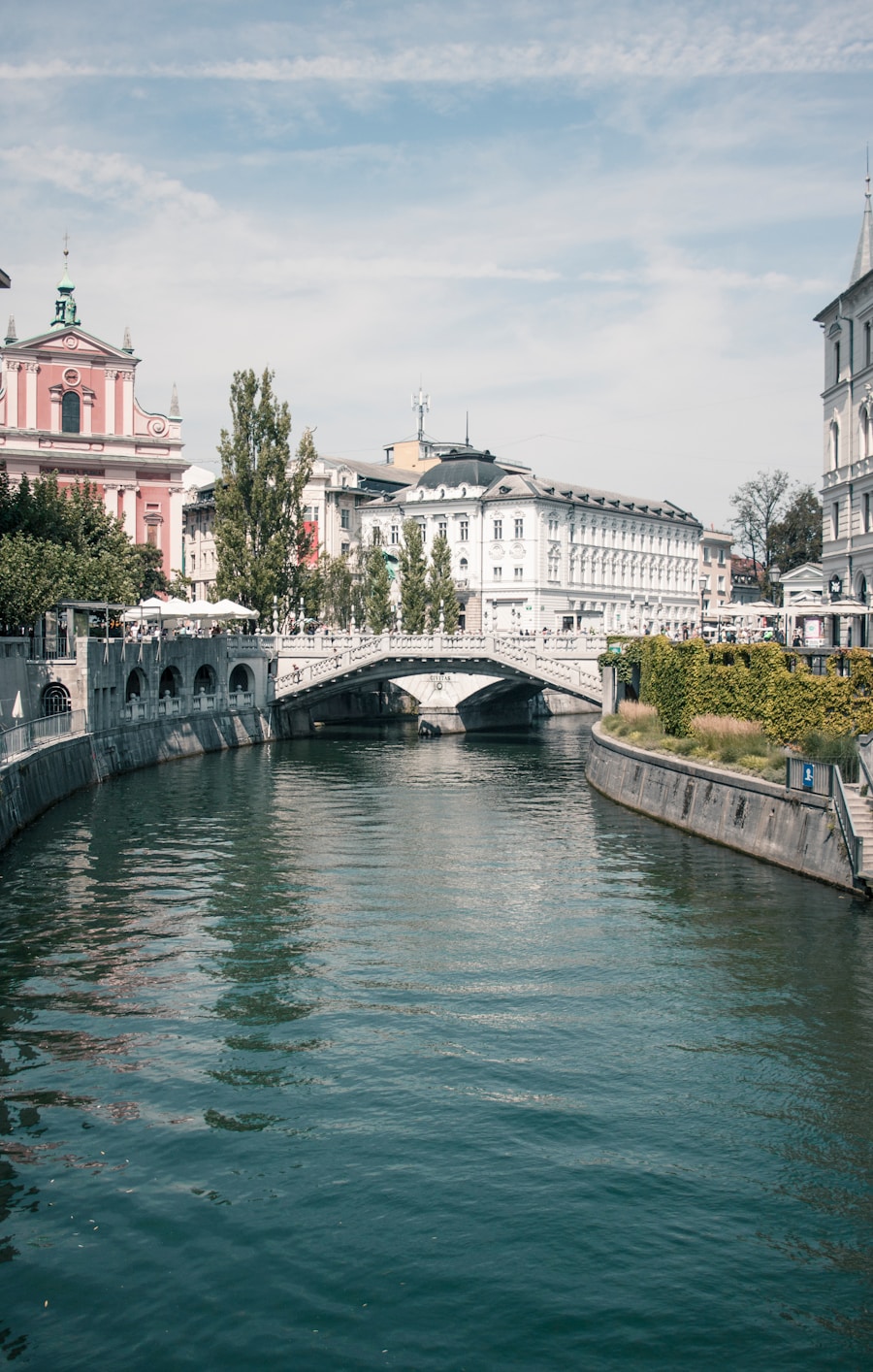
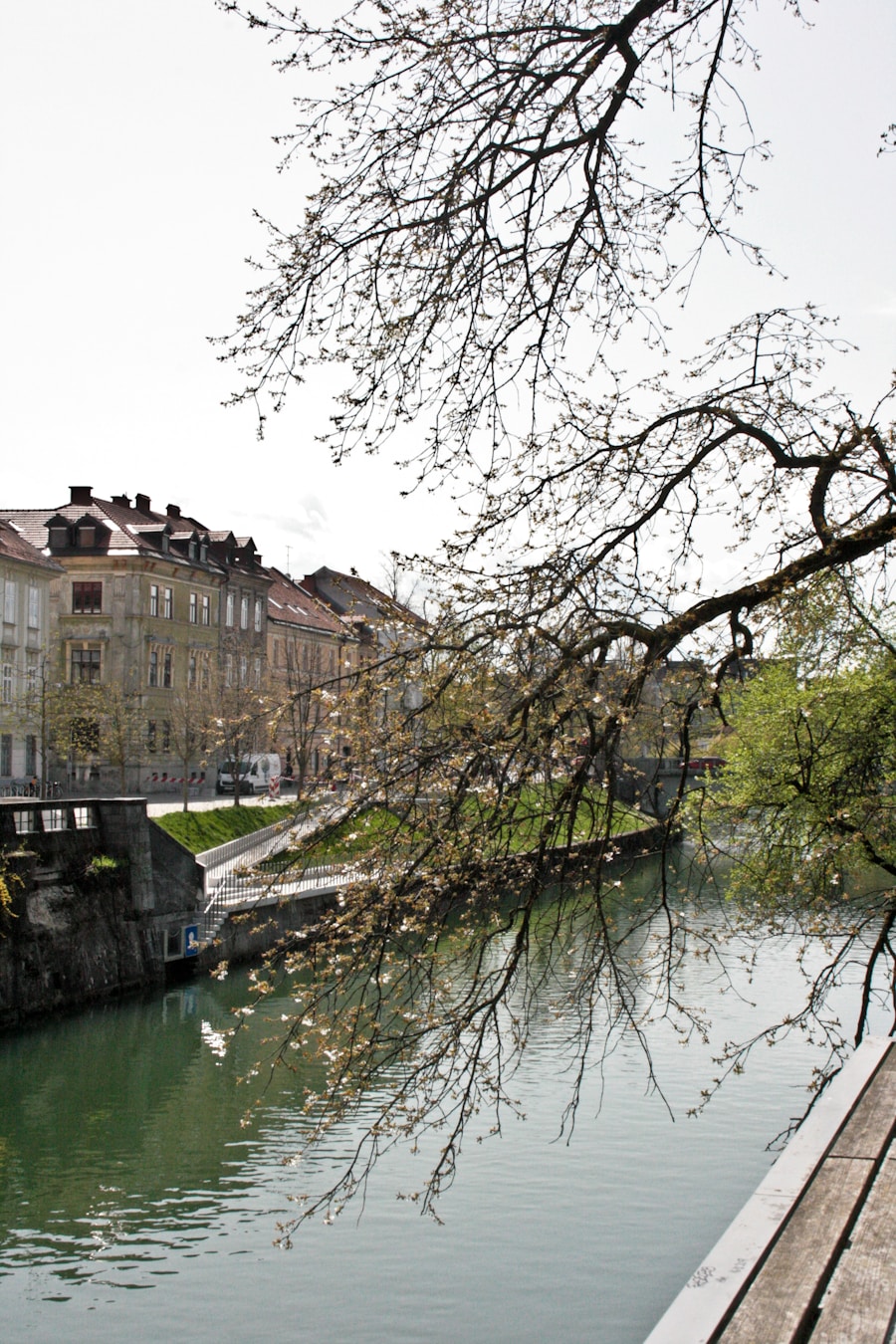
The Ljubljanica River runs through the heart of Ljubljana and gives the historic center much of its character. Riverside promenades are lined with cafes and restaurants, while bridges repeatedly connect the Old Town with the newer side of the center.
A relaxed walk along the embankments is one of the easiest free things to do in Ljubljana. You can stop for coffee, photograph the architecture or simply follow the water between the city’s best-known bridges.
See Dragon Bridge and Butchers’ Bridge
Dragon Bridge is one of Ljubljana’s most recognizable landmarks. Its four large dragon statues have become closely associated with the city’s dragon symbol, while the bridge itself is an important early reinforced-concrete structure from the turn of the 20th century.
Butchers’ Bridge has a very different personality. The modern pedestrian bridge is known for its sculptures and the many padlocks attached by couples. Together with Triple Bridge and Cobblers’ Bridge, it makes Ljubljana’s riverfront particularly rewarding to explore on foot.
Discover Plečnik’s UNESCO-Listed Ljubljana
Jože Plečnik did more than design individual buildings and bridges. During the period between the two world wars, he reshaped public spaces throughout Ljubljana, linking streets, squares, river embankments, markets, bridges and civic buildings into a distinctive urban design.
The works of Jože Plečnik in Ljubljana were inscribed on the UNESCO World Heritage List in 2021 for their distinctive human-centered approach to urban design.
The UNESCO property includes a series of Plečnik-designed public spaces and institutions rather than one isolated monument. For visitors, that means you experience his influence simply by walking through central Ljubljana. Triple Bridge, the Central Market area and the carefully designed riverfront are good places to start.
Explore Tivoli Park
| Setting | Ljubljana’s largest city park and the landscaped eastern section of the wider Tivoli, Rožnik and Šiška Hill Landscape Park |
| Origins | A park plan was prepared in 1813 by French engineer Jean Blanchard |
| Highlights | Jakopič Promenade, Tivoli Mansion, outdoor exhibitions, pond, Glasshouse, gardens and recreation areas |
| Wider protected area | 459 hectares including Tivoli Park and the forest areas of Rožnik, Šiška Hill and surrounding land |
| Best for | Walking, jogging, cycling, outdoor art, gardens, family recreation and continuing toward Rožnik Hill |
Tivoli Park is Ljubljana’s largest and best-known urban green space. Its landscaped paths, lawns, mature trees, flower beds, pond and outdoor art displays offer a quieter contrast to the nearby historic center.
The park traces its modern design history to 1813, when French engineer Jean Blanchard prepared a plan connecting existing estate gardens and the city. Plečnik later made his own mark through the broad Jakopič Promenade, which now regularly serves as an outdoor exhibition space.
One of the park’s main cultural attractions is Tivoli Mansion. Today it houses the International Centre of Graphic Arts, with exhibitions and collections focused on printmaking, artists’ publications and contemporary graphic art.
Visitors who want more exercise can continue from Tivoli into the forested Rožnik and Šiška Hill area. The broader protected landscape covers 459 hectares and provides an unusually quick transition from central-city streets to woodland paths.
Try Slovenian Cuisine at the Central Market
Ljubljana’s Central Market is both a shopping area and a traditional meeting place. It includes open-air stalls at Vodnik and Pogačar Squares, covered market areas and Plečnik’s riverside colonnade.
The stalls offer seasonal Slovenian fruit and vegetables alongside cheeses, cured meats, bread, pastries, oils and other regional foods. What is available changes with the season, so browsing is part of the experience.
Traditional Slovenian foods worth looking for during your stay include štruklji, rolled dumplings made with a variety of sweet or savory fillings, and potica, a rolled festive cake commonly filled with walnuts or other ingredients. Availability at individual Central Market stalls varies, so do not assume every specialty will be sold every day.
The market is also a social space where residents shop, eat and meet. That everyday atmosphere makes it more interesting than a conventional souvenir market.
Pro Tip: Visit the Central Market in the morning for the fullest market experience. During its seasonal run, Open Kitchen brings restaurant and street-food vendors to Pogačar Square on sunny Fridays; weather can cause cancellations.
Visit the National Gallery of Slovenia
The National Gallery of Slovenia is the country’s main museum for historic Slovenian fine art and is an excellent stop for visitors who want cultural context beyond Ljubljana’s streets and architecture.
Its collections trace Slovenian art across centuries, with especially important works from the 19th and early 20th centuries. Slovenian Impressionists such as Ivan Grohar and Rihard Jakopič are major names to look for.
The Gallery’s display is also freshly relevant in 2026. Its New Wing, which houses Slovenian art from 1870 onward, reopened on July 14, 2026 after a new installation, with major works returning from exhibitions abroad.
The museum also holds European art, while temporary exhibitions bring changing international and thematic material to Ljubljana. Check the current exhibition program before visiting rather than relying on lists of famous artists from past temporary shows.
Take a Boat Tour of Ljubljana
Seeing Ljubljana from the Ljubljanica gives you a different angle on the Old Town. Tourist cruises pass beneath or near several important bridges while offering views of the riverfront, Plečnik’s architecture and Ljubljana Castle above the city.
Current sightseeing cruises commonly last around 45 to 50 minutes, although routes, vessels and schedules vary by operator. Some cruises are guided, while others focus on sightseeing or use audio guides.
Standard sightseeing cruises do not automatically include food or drinks. Ljubljana also has specialist cruises and tasting experiences, so check exactly what is included when you book.
Note: River cruises can be cancelled when the Ljubljanica has high, fast or otherwise unsuitable water conditions. Confirm the departure on the day if heavy rain or flooding has affected the river.
Experience Ljubljana’s Nightlife
Ljubljana becomes livelier after dark without losing its compact scale. Riverside terraces and Old Town bars work well for a relaxed evening, while clubs and live-music venues offer later options, particularly toward the weekend.
For a more alternative scene, Metelkova Mesto is one of the city’s best-known cultural areas. The complex occupies former Austro-Hungarian military barracks and developed into an autonomous cultural center after activists occupied part of the site in 1993.
Today Metelkova hosts visual art, concerts, DJ nights, club events and other independent cultural activity. The program changes constantly, so the experience depends heavily on what is scheduled that evening rather than on the site alone.
Ljubljana’s broader nightlife ranges from electronic music and rock to jazz, live performances and casual late-night bars. Fridays and Saturdays generally provide the widest choice of club events.
Plan Your Ljubljana Visit
How Many Days Do You Need in Ljubljana?
One full day is enough to see Ljubljana’s essential center at a fairly active pace. You can walk through the Old Town, cross the main bridges, browse Central Market and visit Ljubljana Castle without traveling long distances.
Two days is more comfortable. A second day gives you time for Tivoli Park, the National Gallery, a boat cruise, longer meals and evening activities without rushing from attraction to attraction.
A Simple One-Day Ljubljana Itinerary
- Start at Prešeren Square and Triple Bridge.
- Walk through the Old Town and Central Market.
- See Dragon Bridge and the riverside.
- Ride the funicular or walk up to Ljubljana Castle.
- Return to the river for dinner and an evening stroll.
What to Do With Two Days
Use the first day for the historic center and castle. On day two, visit Tivoli Park and the National Gallery, return to the river for a sightseeing cruise, and spend the evening around the riverfront or Metelkova depending on your interests.
Best Time to Visit Ljubljana
There is no single best month for every traveler. Late spring offers comfortable walking weather and plenty of outdoor activity. Summer has long days, festivals and busy cafe terraces but usually brings more visitors and warmer temperatures.
Early fall is another good period for walking and outdoor dining. Winter is colder and has shorter days, but seasonal lights and events give the center a different atmosphere. Because many of Ljubljana’s main attractions are museums, galleries, markets and historic streets, the city remains a workable year-round destination.
Getting Around Ljubljana
Ljubljana’s historic center is highly walkable, and a large central area is closed to normal car traffic. For attractions farther from the center, visitors can use city buses, bicycles and taxis.
The official Ljubljana Card can also be useful for travelers planning several paid attractions. Current versions include entry to numerous sights along with benefits such as city bus travel, a castle funicular ride and selected sightseeing experiences. Compare the current inclusions with your itinerary before buying rather than assuming the card will automatically save money.
Note: Ljubljana Jože Pučnik Airport is outside the city center. Public buses, shuttles, taxis and rental cars connect the airport with Ljubljana, so allow transfer time when planning your arrival or departure day.
For travelers who also carry cigars, the site’s guide to the best travel humidor covers options for protecting cigars while on the move. It is a niche packing resource rather than a Ljubljana-specific attraction, but it may be useful for travelers who need that type of storage during a trip to Slovenia or elsewhere.
Frequently Asked Questions
What are the top things to do in Ljubljana, Slovenia?
Top things to do include exploring Ljubljana Old Town, crossing Triple Bridge and Dragon Bridge, visiting Ljubljana Castle, browsing Central Market, walking beside the Ljubljanica River, relaxing in Tivoli Park, visiting the National Gallery and taking a sightseeing boat cruise.
What is the best time to visit Ljubljana?
Late spring and early fall are especially comfortable for sightseeing on foot. Summer offers longer days, festivals and lively outdoor dining, while winter brings colder weather but seasonal lights and events. Ljubljana’s museums and compact historic center make it practical to visit year-round.
What are the most popular landmarks in Ljubljana?
Ljubljana Castle, Triple Bridge, Prešeren Square, Dragon Bridge, the Central Market and the riverside are among the city’s most recognizable landmarks. Many are close enough to combine during one walking route through the historic center.
What outdoor activities are available in Ljubljana?
Visitors can walk or cycle along the Ljubljanica River, explore Tivoli Park, continue into the wooded Rožnik area, take a river cruise or explore the wider Ljubljana Marshes. The city’s pedestrian center also makes ordinary sightseeing an easy outdoor activity.
What cultural experiences should I have in Ljubljana?
Visit the National Gallery of Slovenia, explore Plečnik’s architecture, see Ljubljana Castle’s exhibitions, attend a performance or concert, browse current gallery programs and visit Metelkova Mesto for Ljubljana’s alternative art and music scene.
How many days do you need in Ljubljana?
Plan at least one full day for Ljubljana’s main Old Town attractions and castle. Two days is better if you also want Tivoli Park, museums, a river cruise, longer meals and nightlife without rushing.
Is Ljubljana easy to explore without a car?
Yes. Most major sights in the historic center are within walking distance, and much of central Ljubljana is pedestrianized. City buses, bicycles and taxis are available for longer trips, so a car is not necessary for a typical city break.
Sources
- Visit Ljubljana — Top Things to Do in Ljubljana — official overview of major city attractions and experiences.
- Ljubljana Castle — History of the Castle — castle origins and historical development.
- Visit Ljubljana — Central Market — market layout, products and visitor information.
- UNESCO World Heritage Centre — The Works of Jože Plečnik in Ljubljana — UNESCO inscription and significance of Plečnik’s urban design.
- National Gallery of Slovenia — Renovated Permanent Collection — current 2026 permanent-collection information.
- Visit Ljubljana — Getting Around — official walking, public transport and local mobility information.
