
Last Updated on July 27, 2026 by Daniel Globe
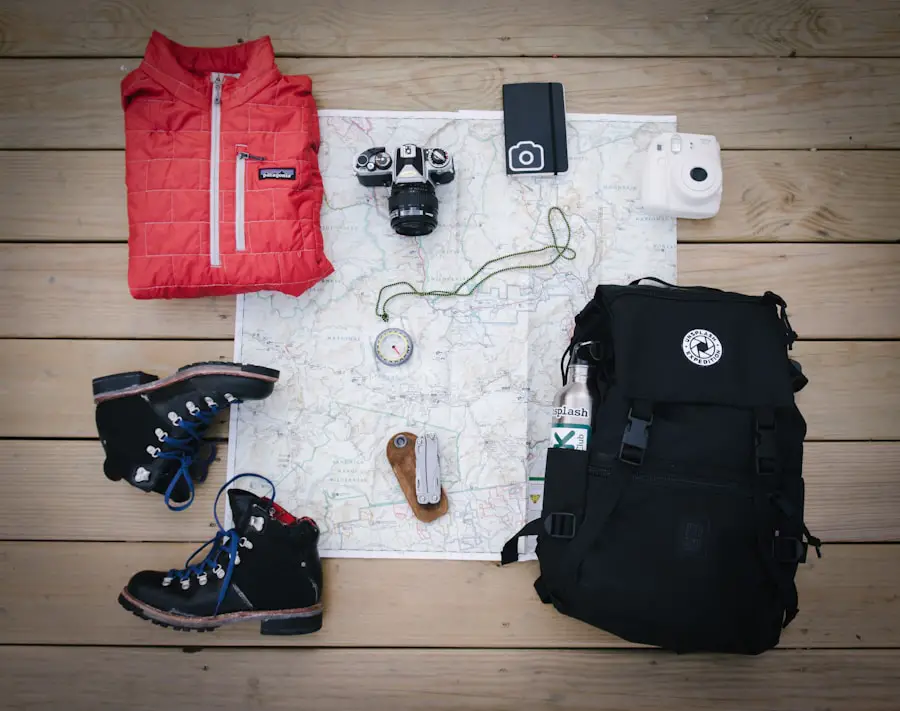
Knowing what to take hiking is less about carrying everything you own and more about preparing for the conditions you could realistically face. A comfortable backpack, suitable footwear, food, water, and weather-ready clothing matter, but a complete hiking kit should also cover navigation, first aid, illumination, emergency shelter, repairs, sun protection, and unexpected delays.
Quick Answer
For a typical hike, carry the Ten Essentials: navigation, sun protection, insulation, illumination, first aid, fire, repair tools, extra food, water plus treatment, and emergency shelter. Add a well-fitted pack, trail-appropriate footwear, weather-ready layers, and any extra gear required by the distance, terrain, weather, remoteness, and local hazards.
Key Takeaways
- Build your packing list around the National Park Service Ten Essentials, then adjust it for your route and conditions.
- Choose backpack capacity and footwear for the trip you are actually taking rather than following one universal size or style recommendation.
- Do not depend on a fixed water quantity. Heat, duration, exertion, elevation, refill opportunities, and your own needs all affect how much water you should carry.
- Treat uncertain backcountry water correctly. A filter, purifier, chemical disinfectant, and boiling do not provide identical protection.
- A phone or mobile hotspot is not a substitute for a wilderness emergency plan where cellular service is unreliable.
Hiking Essentials Checklist
The National Park Service organizes basic hiking preparedness into ten systems. You may need more gear depending on the season, terrain, remoteness, wildlife, and length of your trip.
| Navigation | Map, compass, GPS or offline navigation, plus the knowledge to use them |
| Sun protection | Sunglasses, sunscreen, hat, and protective clothing as conditions require |
| Insulation | Extra layers and rain protection suitable for the worst realistic weather |
| Illumination | Headlamp or flashlight with adequate battery power |
| First aid | Trip-appropriate first-aid supplies and personal medications |
| Fire | Lighter or waterproof matches and suitable emergency fire-starting material where legal |
| Repair tools | Multi-tool or knife where permitted, duct tape, and gear-specific repair items |
| Nutrition | Food for the planned hike plus an emergency reserve |
| Hydration | Enough water for the route plus treatment supplies if you may use natural sources |
| Emergency shelter | Emergency blanket, bivy, tarp, or another shelter appropriate for the environment |
Choosing the Right Hiking Backpack
Selecting the appropriate backpack is a fundamental step in preparing for an outdoor adventure. The pack carries your gear, but its capacity and fit also affect comfort and balance on the trail.
Backpack capacity is normally measured in liters. There is no single correct size: the ideal volume depends on trip duration, weather, how compact your equipment is, and how much food and water you must carry. Current backpack guidance from REI places efficient 1- to 3-night backpacking loads around 30 to 50 liters, many 3- to 5-night trips around 50 to 80 liters, and extended trips at roughly 70 liters or more. Short day hikes can often use much smaller packs.
Fit is just as important as capacity. A backpack should be sized primarily for your torso length rather than your overall height. A well-adjusted hip belt helps transfer much of the load to your hips, while shoulder straps, load lifters, and the sternum strap stabilize the pack. Try the pack with realistic weight inside it rather than judging an empty pack.
Pro Tip: Measure your torso before buying a larger hiking or backpacking pack. If the torso length is wrong, tightening the shoulder and hip straps cannot fully correct the fit.
Organization also matters. Water-bottle pockets, hydration-reservoir compatibility, quick-access pockets, compression straps, rain protection, and attachment points can make frequently used equipment easier to reach. More pockets are not automatically better, though; choose features that match how you actually hike.
Products Worth Considering
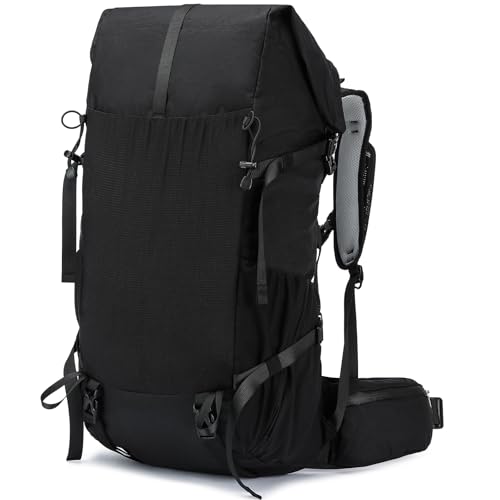
【Large Capacity & Multiple Compartment】The 40L to 50L large capacity camping hiking backpack can accommodate travel equipment for 1-2 people. The main bag can accommodate clothes, sleeping bags, and travel supplies; The external suspension system can be used to attach hiking equipment such as tents, picnic mats, and trekking poles; Two side pockets that can carry additional water bottles. Convenient and practical.

50L HIGH-CAPACITY: Include Main compartment, two zipped front pocket, sleeping bag compartment, mesh side pockets, you can put your tents, blanket,cooking gear and other equipment & accessories in this backpack, backpack internal layout clear classified easily, more convenience to you.
Footwear: Boots, Hiking Shoes, or Trail Runners?
Footwear directly affects comfort, traction, and protection. Hiking boots, hiking shoes, and trail runners can all work well when they match the terrain and fit your feet.
Hiking boots generally use a more substantial construction and often extend above the ankle. Many models are waterproof, but not every hiking boot is. Boots can be useful on rocky, rugged trails, in wet or cold conditions, or when you prefer a more protective and supportive platform.
Trail runners and lightweight hiking shoes are more flexible and breathable. They can reduce the weight on your feet and work especially well on maintained trails and in conditions where fast drying is more valuable than waterproofing. The tradeoff is typically less protection from rocks, mud, snow, and trail debris.
Current hiking-footwear guidance recommends choosing according to distance, terrain, expected conditions, and load. Whatever category you choose, prioritize a secure fit with enough toe room for descents and avoid starting a demanding hike in footwear that already creates pressure points.
Products Worth Considering
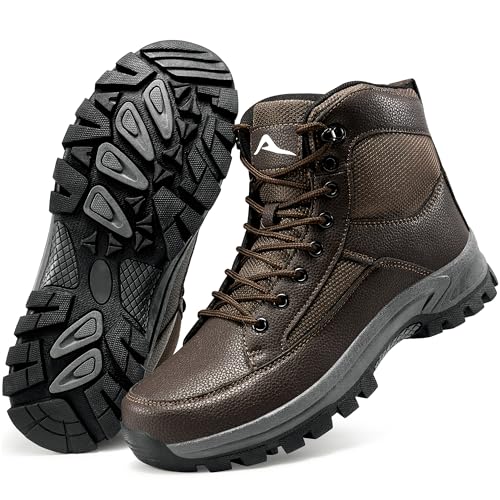
Worried about break‑in pain or blisters? Our boots feel like slippers from day one. Afraid water will get in? Nearly all buyers stand by this feedback "feet stay dry in rain & puddles. "Built‑in cushioning relieves heel fatigue. Trust what happy hikers say: “best weekend boot I’ve owned.”

WATERPROOF:The mens waterproof hiking boot features a HUMTTO-TEX advanced waterproof membrane construction,handle the entry of any water molecule.

Comfortableness: NORTIV 8 Men's Waterproof Hiking Boots certainly delivers on all-day comfort! Removable and shock-absorbent cushioned insoles offer the support for your feet.
Clothing: Layers and Protection
Layering makes it easier to adjust as weather and activity levels change. A practical system uses a moisture-managing base layer, an insulating layer when needed, and an outer shell for wind or precipitation.
Merino wool and synthetic fabrics such as polyester or nylon are common base-layer choices because they manage moisture better than absorbent cotton in cold or changeable conditions. Fleece and insulated jackets can provide warmth, while a waterproof shell helps protect against rain and wind.
Pack for the conditions you could encounter rather than only the temperature at the trailhead. A warm afternoon can become cold after sunset, at higher elevations, or when rain and wind arrive.
Sun and Weather Protection
Include sunglasses, sun-protective clothing, a hat, and sunscreen when exposure calls for them. Insects, snow, mud, or cold may justify additional items such as insect repellent, gaiters, gloves, a warm hat, or traction devices.
Warning: Check the forecast before leaving and be prepared to turn around. The National Weather Service warns that there is no completely safe outdoor shelter during lightning. Leave exposed peaks, ridges, and other high ground when thunderstorms threaten.
Do Not Forget Emergency Shelter
Emergency shelter is part of the Ten Essentials even on a day hike. A lightweight bivy, tarp, or emergency blanket can reduce exposure if an injury, navigation problem, storm, or unexpected delay keeps you outside longer than planned.
Navigation Tools: Maps, Compass, and GPS
Reliable navigation starts before you reach the trail. Review your route, junctions, elevation changes, water sources, bailout points, and expected turnaround time. A topographic map can help you understand terrain and contour lines rather than simply showing a line to follow.
GPS devices and smartphone apps are useful for confirming your location and following downloaded routes, but electronics can fail because of exhausted batteries, damage, or software problems. Carry an appropriate backup for the route and know how to use it. On remote trips, a paper map and compass provide valuable redundancy.
Note: Download maps before leaving cellular coverage and keep your phone adequately charged. A map or compass is only useful if you know how to interpret it.
Products Worth Considering
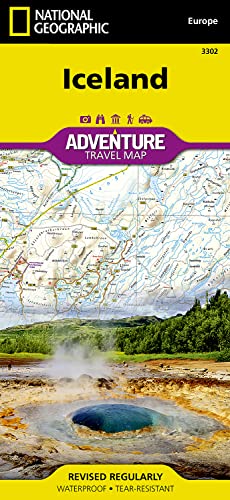
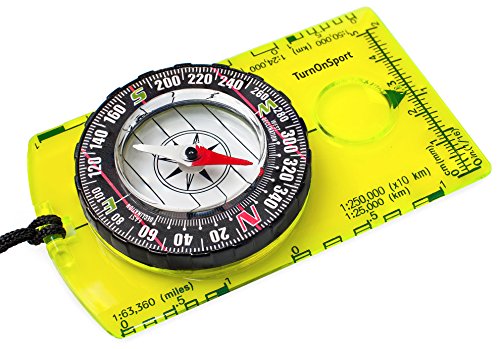
KEY FEATURES: This manual magnet compass consists of Acrylic Baseplate with Azimuth bearing and 360 degree rotating bezel. With the help of a magnetic needle which consists of a liquid-filled capsule (bubble free) helps to swing fast and freely point you towards north. The Magnifying Glass is used for reading and navigating geological maps. Along with this, it has the compass Ruler Scale of 1:24000 for precise route mapping
![Appalachian Trail: Georgia and North Carolina Map [Springer Mountain to Davenport Gap] (National Geographic Topographic Map Guide, 1501)](https://m.media-amazon.com/images/I/51yiSxLoBFL._SL500_.jpg)
AT, Springer Mountain to Davenport Gap [GA,NC,TN]
Hydration: Water Bottles, Reservoirs, and Treatment
| Product | Capacity | Material / Type | Manufacturer Price / Note* |
|---|---|---|---|
| Nalgene 32 oz Wide Mouth Water Bottle | 32 oz | Tritan Renew | Varies by color/edition; many current 32 oz variants are about $16.99–$19.99 |
| Hydro Flask 24 oz Standard Mouth | 24 oz | Stainless steel | $39.95 |
| LifeStraw Personal Water Filter | N/A | Membrane microfilter | $17.95 |
*Manufacturer information and prices checked July 27, 2026. Prices can change.
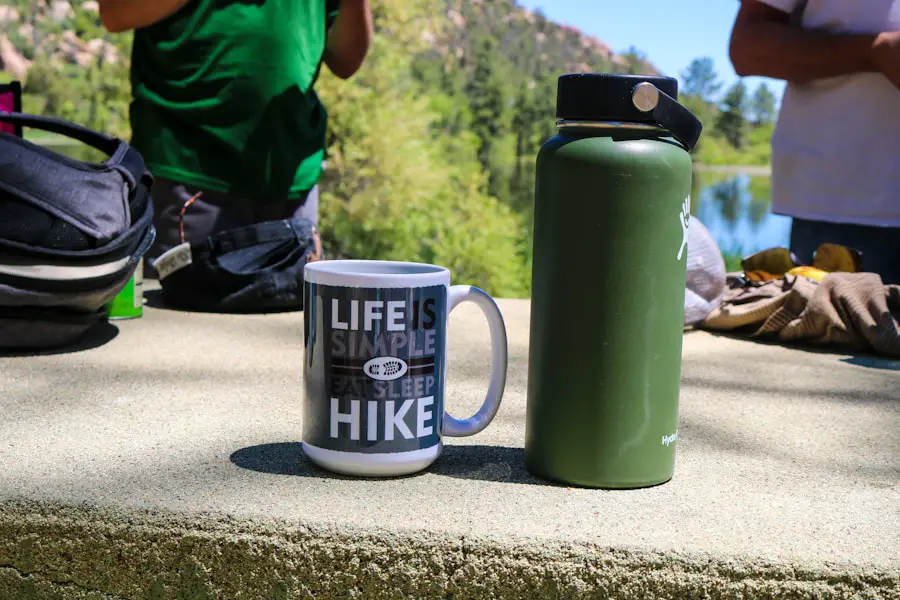
Water bottles are simple, durable, and easy to monitor. Hydration reservoirs let you drink through a hose without removing your pack, which can make frequent sipping easier. Choose whichever system encourages you to drink consistently and lets you carry enough water for the route.
How Much Water Should You Carry?
There is no safe universal rule that every day hiker should carry exactly two liters. Your needs change with hiking time, temperature, humidity, sun exposure, elevation, exertion, body size, and access to reliable refill points. Destination guidance can also differ considerably.
For example, current Great Smoky Mountains National Park guidance lists at least 1 liter per two hours of hiking, while hot desert locations may call for far more water and may require carrying your entire supply. Plan for the specific trail instead of treating any single number as universal.
Treat Natural Water Before Drinking
Clear-looking water can still contain disease-causing organisms. According to the CDC’s backcountry water-treatment guidance, boiling is the most reliable method for killing germs. When boiling is not possible, CDC recommends filtering and then disinfecting as the next-best approach.
Do not assume that every portable filter removes every microorganism. Many filters remove parasites and some remove bacteria, but standard microfilters generally do not remove viruses. A water purifier is designed for broader microbiological protection than a basic filter. Follow the treatment manufacturer’s instructions and choose a method appropriate for the water source and destination.
Warning: Boiling or disinfecting does not make water contaminated by harmful chemicals, toxins, or radioactive material safe to drink. Use another water source if chemical contamination is suspected.
Nutrition: Snacks and Meals
Food should be calorie-dense, easy to carry, and appropriate for the duration of your hike. Nuts, trail mix, energy bars, dried fruit, jerky, nut-butter packets, and other compact foods are convenient because they can be eaten without cooking.
For a longer day, bring enough food for your planned meals plus a reserve in case the hike takes longer than expected. The NPS recommends being prepared for changes in your plans and includes extra food among the Ten Essentials.
For multi-day trips, dehydrated meals are popular because they reduce weight and usually require only hot water. Instant oatmeal and other shelf-stable foods can also simplify meal preparation. Balance carbohydrates, protein, and fat rather than relying entirely on sugary snacks, and pack out wrappers and food waste.
Safety Essentials: First Aid, Emergency Gear, and Repairs
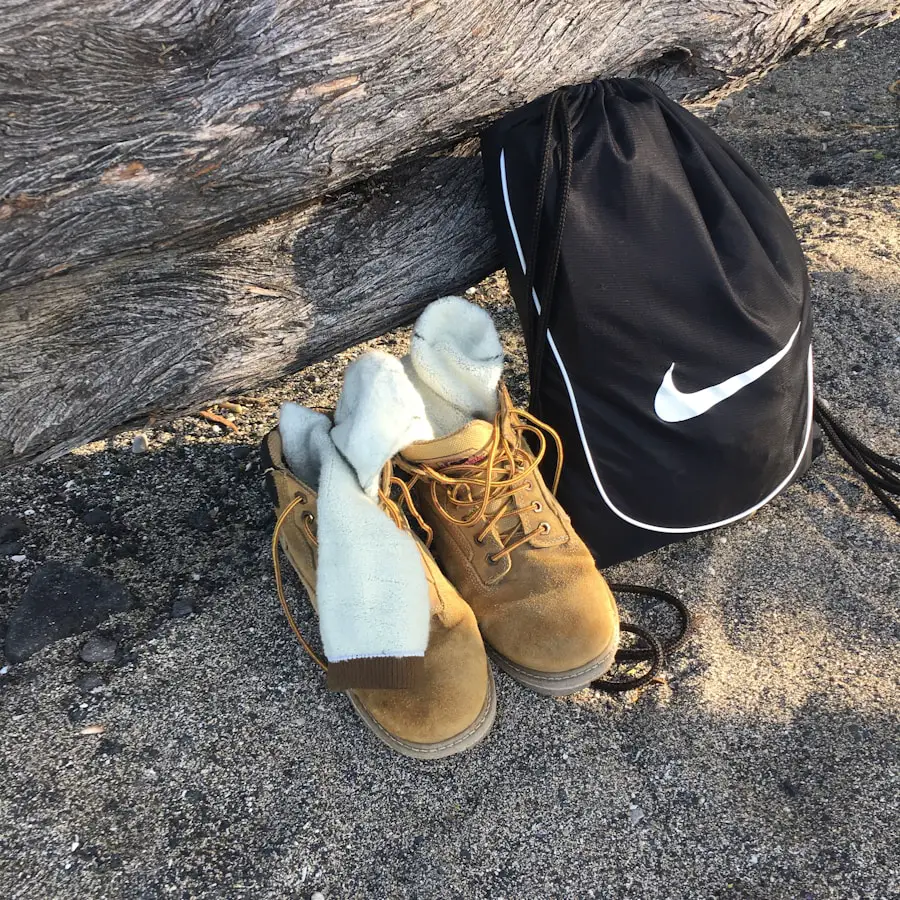
A first-aid kit should match the size of your group, trip duration, known medical needs, and distance from help. Common basics include adhesive bandages, gauze, medical tape, blister supplies, antiseptic supplies, gloves, and personal medications. Check the kit periodically so expired, damaged, or used items are replaced.
A repair kit can include duct tape, a multi-tool or knife where permitted, cord, patches, zip ties, or supplies specific to your stove, shelter, footwear, or other equipment. The goal is not to carry an entire workshop; it is to solve the most realistic equipment failures for your trip.
Other useful emergency equipment includes a whistle, emergency shelter, headlamp, spare power source where appropriate, and fire-starting material. Inform a trusted person of your route, trailhead, expected return time, vehicle information, and what they should do if you do not check in.
Warning: Carrying a lighter or fire starter does not mean you are allowed to build a fire. Check current land-manager rules, seasonal closures, and fire restrictions before your trip. During high fire danger, open flames may be prohibited.
Additional Gear: Trekking Poles and Headlamps
Trekking poles are optional, but many hikers find them useful for balance on loose ground, stream crossings, steep climbs, and long descents. They can also help distribute effort between the upper and lower body. Adjust pole length and technique for the terrain rather than simply carrying them at one fixed setting.
A headlamp is part of good emergency preparation even when you intend to finish before sunset. Delays caused by navigation mistakes, weather, injuries, or slower-than-expected travel can turn a daytime hike into a walk in darkness.
Look at brightness, beam pattern, runtime, controls, battery type, and weather resistance when choosing a headlamp. Before leaving, confirm that it works and that its battery has enough charge for an unexpected delay.
Plan the Hike Before Packing the Gear
Your packing list should follow the trip plan. Check trail distance, elevation gain, difficulty, weather, sunset time, closures, water availability, permit requirements, and known hazards. Adjust your equipment for the most serious realistic conditions, not just the conditions at your car.
The National Park Service Hike Smart guidance also recommends leaving your plan with a trusted person and preparing an emergency response before you go.
Trip-specific additions may include winter traction, insect repellent, a bear-resistant food container, wildlife deterrents where recommended or required, extra insulation, prescription medication, a power bank, or specialized navigation and communication equipment.
Phones, Mobile Hotspots, and Emergency Communication
A smartphone can store maps, weather information, contact details, and emergency information, but cellular coverage may disappear in mountains, forests, canyons, and remote parks. Searching continuously for a signal can also drain the battery.
For international travel, a portable WiFi hotspot can be useful near towns, trailheads, campgrounds, or other places where it has access to a compatible cellular or WiFi network. It cannot create internet service in a true coverage dead zone.
Note: For remote routes where ordinary cell service is unreliable, consider whether a satellite communicator or personal locator beacon is appropriate. Do not treat a phone or mobile hotspot as your only emergency plan.
Good hiking preparation combines a realistic route plan with equipment that covers both the expected hike and manageable emergencies. Pack enough to handle changing weather, delays, navigation problems, minor injuries, and loss of daylight without loading your backpack with equipment you neither need nor know how to use.
For another packing-focused article, see 5 Must-Have Minimalist Travel Backpacks for Spring Adventures 2025.
Love travel? Join Our Facebook Community For More Tips.
Frequently Asked Questions
What are the essential items to take when hiking?
Use the Ten Essentials as your baseline: navigation, sun protection, insulation, illumination, first aid, fire, repair tools, extra food, water and treatment supplies, and emergency shelter. Add suitable footwear, a comfortable pack, and any equipment required by the specific trail, weather, season, or local regulations.
Why should I bring a map and compass when hiking?
A paper map and compass provide navigation redundancy if a phone or GPS loses power, breaks, or becomes unreliable. They are most useful when you already know how to read the map, orient it, and use the compass before an emergency occurs.
How much water should I bring when hiking?
There is no universal amount for every hike. Consider duration, heat, humidity, elevation, exertion, your normal fluid needs, and whether dependable refill points exist. Check destination-specific guidance and carry more when conditions are hot, dry, strenuous, or remote.
What should I consider when choosing food to bring on a hike?
Choose food that is portable, calorie-dense, easy to eat, and suitable for the trip length. Include a mix of carbohydrates, protein, and fat, and carry an emergency reserve in case your return is delayed.
Why is it important to bring extra clothing when hiking?
Weather, wind, temperature, and activity level can change quickly. Extra insulation and rain protection can help you stay warm and dry if you are delayed, injured, caught in a storm, or outside after temperatures fall.
What should be included in a first-aid kit for hiking?
A basic hiking kit may include adhesive bandages, gauze, medical tape, blister supplies, antiseptic supplies, gloves, and any necessary personal medications. Adjust the contents for the group size, trip duration, destination, known medical needs, and distance from professional help.
Why bring a multi-tool or knife when hiking?
A compact tool can help with simple gear repairs, cutting cord or tape, and other trail tasks. Carry only tools you know how to use, and follow all rules that apply to knives or other equipment at your destination.
Why bring a headlamp or flashlight when hiking?
A light source lets you navigate safely if the hike lasts beyond daylight because of a late start, slower pace, route-finding problem, weather, or injury. A headlamp has the added advantage of keeping both hands free.
Why bring a fire starter when hiking?
Fire-starting supplies are traditionally part of the Ten Essentials because fire can provide heat or an emergency signal in some situations. However, fires may be prohibited because of wildfire danger or local regulations, so always check current rules and never start a fire where it is unsafe or prohibited.
Do I need emergency shelter for a day hike?
For anything beyond a very controlled front-country outing, lightweight emergency shelter is a smart precaution and is included in the NPS Ten Essentials. An emergency blanket, bivy, or tarp can help protect you from exposure if you unexpectedly cannot return before nightfall.
Can I rely on my phone or portable WiFi hotspot while hiking?
No. Phones and mobile hotspots rely on available networks and may lose service in remote terrain. Download important information before the trip, preserve battery life, carry appropriate navigation backups, and consider dedicated satellite or locator equipment when the route and remoteness justify it.
Sources
- National Park Service — Ten Essentials — core hiking preparedness categories, including navigation, shelter, food, hydration, illumination, first aid, and fire.
- National Park Service — Hike Smart — trip planning, emergency preparation, communication, food, water, and cell-service limitations.
- Great Smoky Mountains National Park — Hiking — current 2026 Ten Essentials and destination-specific hydration guidance.
- CDC — Water Treatment When Hiking, Camping, or Traveling — boiling, filtration, disinfection, and treatment limitations.
- National Weather Service — Outdoor Lightning Safety — forecast checks and lightning risk reduction outdoors.
- REI — Backpack Fit and Torso Size Guide — torso measurement, hip-belt positioning, and pack adjustment guidance.
