

Last Updated on July 27, 2026 by Daniel Globe
Packing a backpack for air travel is less about squeezing in the most items and more about meeting airline limits, passing security smoothly, protecting valuables, and keeping the load comfortable. A good system starts with the airline’s rules, then uses categories, compact organizers, balanced weight, and easy-access pockets to make the trip simpler from check-in to arrival.
Quick Answer
To pack a backpack for air travel, confirm the airline’s size and weight limits first. Place documents, medication, valuables, liquids, and electronics where you can reach them quickly. Use packing cubes, keep dense items close to your back, and carry spare lithium batteries and power banks in the cabin.
Key Takeaways
- Check the specific airline’s carry-on or personal-item limits before choosing a backpack.
- Organize clothing, toiletries, electronics, documents, and in-flight essentials by category.
- Packing cubes improve organization; compression bags reduce volume but do not reduce weight.
- Keep liquids, medication, travel documents, and electronics easy to remove or reach.
- Place dense items near the center of your back and balance side-pocket weight.
- Keep power banks and spare lithium batteries in carry-on baggage, even if the backpack is gate-checked.
At a Glance
| Time Required | About 20–40 minutes |
| Difficulty | Easy |
| Tools Needed | Packing list, measuring tape, luggage scale, packing cubes, and a clear liquids bag |
| Cost | $0–$40, depending on organizers you already own |
Note: The security details below focus on flights departing from U.S. airports. Other countries may use different screening and baggage rules, so check the departure airport and airline before every trip.
Disclosure: As an Amazon Associate I earn from qualifying purchases. Some links on this page are affiliate links, at no extra cost to you.
Choose the Right Backpack Size and Fit
Selecting the right backpack is the first step toward a comfortable trip, but capacity in liters does not determine whether a bag is allowed on a plane. Airlines set their own limits for carry-on and personal-item dimensions, weight, and quantity. The U.S. Department of Transportation notes that there is no single federal carry-on size standard.
A 20- to 30-liter backpack may work for a short trip or as a personal item, depending on its measurements and how fully it is packed. A 50- to 70-liter trekking pack can carry camping equipment, but many bags in that range are too tall or deep for cabin limits. Measure the backpack at its widest packed points, including bulging pockets, handles, and wheels or frames if present.
- Personal item: Must fit under the seat and usually needs to be smaller than a standard carry-on.
- Carry-on backpack: Must meet the airline’s cabin-bag dimensions and may also have a weight limit.
- Checked backpack: Can be larger, but straps should be secured so they do not snag during handling.
Fit matters as much as volume. A well-fitted travel or hiking backpack keeps the load close to your body and reduces pressure points. For framed packs, torso length and hip-belt position are especially important. A loaded fitting is more useful than trying on an empty bag; REI’s backpack-fitting guidance recommends adjusting the hip belt, shoulder straps, load lifters, and sternum strap in sequence.
Pro Tip: Pack the bag completely, weigh it, and wear it for 10–15 minutes at home. Walk stairs and turn through doorways. If it pulls backward, digs into your shoulders, or exceeds the airline’s limit, repack before travel day.
Products Worth Considering
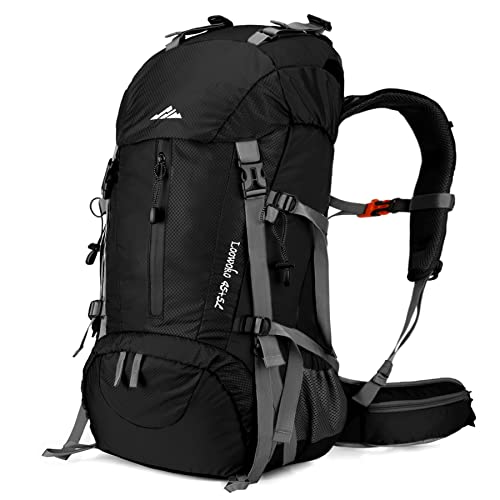
Cpmprehensive Upgraded Version - The Loowoko hiking travel backpack has been completely upgraded with better materials, stronger straps and more durable zippers, making it...
Organize Items by Category
Group Belongings by Category
Organizing by category makes packing faster and prevents you from emptying the entire backpack to find one item. Useful categories include clothing, sleepwear, toiletries, medication, electronics, documents, snacks, and destination-specific gear.
Keep items with similar uses together. Clothing can go in one or two packing cubes, charging cables in a small pouch, and toiletries in a leak-resistant bag. This approach also helps you see duplicates before they add unnecessary weight.
Streamline Retrieval and Reduce Frustration
Pack according to when you will need each item. Anything needed during check-in, security, boarding, or the flight should stay near the top or in an outside pocket. Items that will not be used until arrival can go deeper in the main compartment.
A simple zone system works well:
- Fast-access zone: Passport, wallet, phone, boarding information, medication, and headphones.
- Security zone: Liquids bag and any electronics you may be asked to remove.
- Main storage zone: Clothing, shoes, and destination items.
- Emergency zone: One change of clothes, basic hygiene items, and essential health supplies.
Create a Checklist for a Systematic Approach
Build the checklist around the trip length, weather, activities, laundry access, and airline restrictions. Check off each item as it enters the backpack, not when it is placed on the bed. Before closing the bag, compare the packed contents with the list one final time.
A useful checklist separates “must carry” items from “nice to have” items. If the backpack is too heavy or does not close easily, remove items from the second group first.
Use Packing Cubes or Compression Bags

Packing cubes are fabric organizers that divide the main compartment into clear sections. You can use one cube for shirts, one for pants, and another for underwear and socks. This keeps clothing contained, makes unpacking easier, and helps prevent small items from settling at the bottom of the bag.
Compression bags reduce the volume of soft items by squeezing out air. They can help with bulky jackets, sweaters, or spare bedding, but they do not reduce the bag’s weight. Over-compression can also create a hard, rounded bundle that fits poorly against your back or causes delicate clothing to crease.
Note: TSA permits vacuum-sealed clothing bags, but officers may need to open them if the contents cannot be cleared during screening. Use resealable compression bags and leave enough time to repack.
Products Worth Considering

All-in-One Organization for Your Travel Needs - This 9-piece set includes four compression cubes (S/M/L/XL) for systematic packing: S for underwear/socks, M for T-shirts and shirts, L for jeans and light sweaters, and XL for coats or bulky items. Also features two PVC toiletry/makeup bags, a machine-washable laundry bag, a shoe bag, and a multi-purpose zippered pouch—keeping your luggage tidy and efficient.

6 Set Compression Packing Cubes - If you'll be preparing multiple outfit options for your travel, you no longer have to sacrifice style for luggage space when you come across BAGSMART PACKING CUBES. Large for jackets, sweaters, and trousers, Medium for shirts, and blouses, Small for underwear, drawstring can be used as a laundry bag to separate your dirty/wet clothes or shoes.
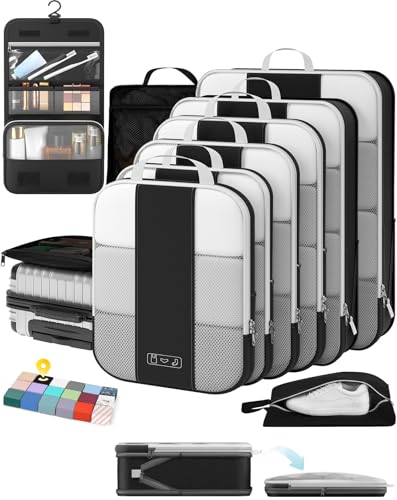
All-in-One Travel Storage Solution - Say goodbye to chaotic packing! This comprehensive set includes four compression packing cubes in varying sizes (XL, L, M, S) to accommodate everything from bulky coats to delicate tops. Plus, enjoy added convenience with a hanging toiletry bag, shoe bag, machine-washable laundry bag, and versatile pouch—all designed to keep your luggage perfectly organized and clutter-free.
Maximize Space With Rolling and Folding Techniques
| Method | Best For | Watch For |
| Rolling | T-shirts, leggings, underwear, and casual clothing | Loose rolls can unravel; very tight rolls may crease some fabrics |
| Flat folding | Button-down shirts, trousers, and structured clothing | Uneven stacks can leave unused gaps |
| Compression | Bulky, soft layers | Saves volume, not weight |
| Gap filling | Socks, belts, and small accessories | Do not hide items you will need at security |
Rolling can create compact bundles and makes casual clothing easy to see inside a top-opening bag. Flat folding is often better for structured garments. The most efficient method is usually a combination rather than one universal technique.
Use small gaps without making the backpack lumpy. Clean socks can go inside clean shoes, and a belt can follow the edge of a packing cube. Place shoes in a separate bag so their soles do not touch clothing. Do not stuff every space so tightly that the backpack exceeds its allowed dimensions or becomes difficult to inspect.
Pack Essentials in the Carry-On
Items that are difficult, expensive, or unsafe to lose should stay in the cabin with you. Pack these first so they are not forgotten:
- Passport or accepted identification, boarding information, and travel documents
- Wallet, keys, phone, glasses, and valuables
- Prescription medication and medically necessary supplies
- Laptop, tablet, camera, and protected charging cables
- Power bank and spare lithium batteries
- One change of clothes and basic hygiene items
- Headphones, snacks, an empty refillable bottle, and a light layer
Keep electronics in a padded compartment and arrange cords so they do not press against screens. Security procedures can vary by airport and screening lane, so make devices easy to remove when an officer asks.
Warning: The FAA requires spare lithium batteries and power banks to remain in carry-on baggage. Most consumer lithium-ion batteries are limited to 100 watt-hours per battery; batteries from 101 to 160 watt-hours require airline approval, and larger batteries are generally forbidden on passenger aircraft. Protect terminals from short circuits.
If an airline gate-checks your backpack, remove power banks, spare batteries, electronic cigarettes or vaping devices, medication, identification, valuables, and anything else you need during the flight. The FAA PackSafe lithium battery guidance explains the current cabin-baggage requirements.
Minimize Toiletries and Follow the Liquids Rule

Toiletries can add weight quickly, so pack only what the trip requires. Use travel-size containers, refillable bottles, or solid products such as bar soap, solid deodorant, shampoo bars, and toothpaste tablets when they suit your needs. Hotel toiletries vary, so confirm what the property provides instead of assuming.
For U.S. airport screening, liquids, aerosols, gels, creams, and pastes in a standard carry-on generally must be in containers of 3.4 ounces (100 milliliters) or less and fit inside one quart-size, clear, resealable bag. A half-full 6-ounce bottle is still a 6-ounce container and does not meet the standard rule.
Medically necessary liquids and certain infant or child nourishment items can qualify for exceptions. Tell the TSA officer about medically necessary liquids and remove them for separate screening when directed. Review the current TSA liquids rule before departure.
Pro Tip: Put the clear liquids bag near the top of the backpack and place each bottle in a small leak-resistant pouch. This limits damage if a cap opens and makes the bag easier to present for screening.
Pack for a Faster Security Screening
A neat, uncluttered backpack is easier to screen than one packed with loose, overlapping objects. Keep the liquids bag and larger electronics accessible, and avoid wrapping items in ways that are difficult to inspect. TSA advises travelers to pack belongings in neat layers, although the exact screening steps can differ by lane and traveler status.
Check unusual items before leaving home. The TSA “What Can I Bring?” tool lists whether common objects may go in carry-on or checked baggage. In general, pocket knives and many other sharp objects cannot go through the checkpoint in a carry-on. Some camping equipment also needs special handling; for example, tent stakes belong in checked baggage even when a tent or its poles may otherwise be permitted.
A security-friendly backpack has clear zones: documents in one pocket, liquids in one bag, electronics in one compartment, and loose metal objects contained in a small pouch.
Products Worth Considering
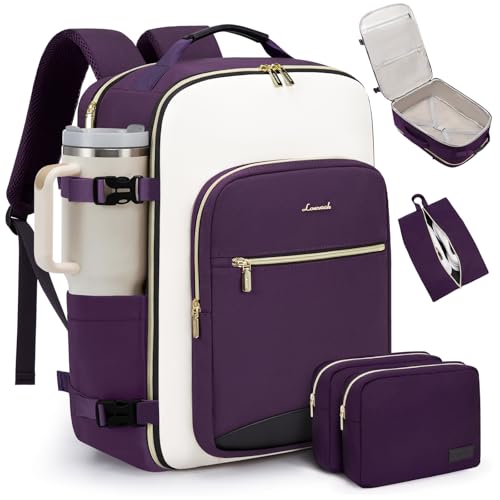
【Versatile & Airline Approved】Measuring 18*14*8 inches, this carry on backpack fits under the seat or in the overhead compartment, approved by Spirit, Frontier, JetBlue, and other budget-friendly airlines, making it the perfect personal item for air travel.

▶【Reliable After-Sales Support】: Fxcelets travel backpack includes dependable customer support to help with any questions or concerns. We are committed to providing a positive experience throughout your journey. (This product is not suitable for children aged 12 and under.)

✈【Airline Approved & TSA Friendly】: 18x14x8 inches travel backpack, this carry on backpack fits under the seat or in the overhead compartment, approved by Spirit, Frontier, JetBlue, and other budget-friendly airlines, making it the perfect personal item for air travel. Experience stress-free air travel with our carryon backpack. Travel backpack personal item size and airplane travel essentials.
Distribute Weight for Comfortable Carrying
Proper weight distribution keeps the backpack stable and reduces the backward pull on your shoulders. In a framed or structured backpack, place dense items close to the center of your back, roughly between the shoulder blades and upper hip area. Keep soft, lighter items at the bottom or farther from your back, and place frequently used items near the top.
Balance the left and right sides. If a full water bottle is in one side pocket, use the other side for a similar amount of weight or move the bottle to the center. Tighten compression straps so the load does not shift as you walk.
For cabin safety, avoid putting a very heavy backpack in an overhead bin if it can fit under the seat. The FAA advises stowing heavy carry-on items under the seat when possible and securing loose straps so they do not become a tripping or snagging hazard.
Ensure Easy Access to Important Items
Think through the trip in order: curb, check-in counter, security checkpoint, gate, aircraft seat, and arrival. Pack each item where you will need it during that sequence. A designated “go-to” pouch can hold a charging cable, headphones, pen, tissues, lip balm, and a small first-aid supply without mixing them into the main compartment.
Use outside pockets carefully. They are convenient but less secure, so do not place a passport, wallet, or phone in an open pocket. A zippered pocket against your back or an internal document sleeve is safer while moving through crowded areas.
Final Backpack Packing Checklist
- Confirm the airline’s bag dimensions, weight limit, and personal-item allowance.
- Measure and weigh the backpack while fully packed.
- Place identification, travel documents, medication, and valuables in a secure, accessible pocket.
- Keep liquids within the applicable screening limits and near the top.
- Carry power banks and spare lithium batteries in the cabin with protected terminals.
- Use packing cubes or pouches to separate categories.
- Keep dense items close to your back and balance both sides.
- Remove prohibited or restricted items and check unusual gear in the official TSA tool.
- Secure dangling straps and leave enough room to close the bag without forcing the zippers.
- Prepare for gate-checking by making critical items easy to remove.
Travelers who prefer a wheeled cabin bag can also review the guide to carry-on suitcases with USB charging features. Before choosing a smart suitcase, confirm that its battery is removable and follows current airline and FAA requirements.
Frequently Asked Questions
What items are allowed in a backpack for air travel?
Clothing, personal items, solid food, toiletries within the applicable liquid limits, medication, and most personal electronics are generally allowed. Some items have special conditions, so check the airline’s baggage policy and the official security rules for your departure country.
What items are not allowed in a carry-on backpack?
Explosives and many hazardous materials are forbidden. Pocket knives and many sharp tools are not allowed through a U.S. checkpoint in carry-on baggage, although some may be permitted in checked baggage when packed safely. Use TSA’s “What Can I Bring?” tool for the exact item.
How should I pack my backpack for air travel?
Start with airline limits, organize items by category, put dense items near your back, and keep documents, medication, liquids, and electronics accessible. Use cubes or pouches to control loose items, then weigh and test-carry the finished backpack.
Are there size or weight restrictions for backpacks on airplanes?
Yes. Each airline sets its own limits for carry-on and personal-item bags, and limits can vary by fare, route, cabin, and aircraft. Check the operating airline’s current policy and measure the bag after it is packed.
Can I bring a backpack as a carry-on item on a plane?
Usually, yes, provided the backpack meets the airline’s dimensions, weight, and bag-count rules. A smaller backpack may count as a personal item, while a larger one may count as the main carry-on or need to be checked.
Can I pack a power bank in my backpack?
Yes, but a power bank must remain in carry-on baggage and cannot go in checked baggage. Protect it from damage and short circuits. Check its watt-hour rating and the airline’s quantity limits before travel.
Do medications have to follow the 3.4-ounce liquids rule?
Medically necessary liquids can be allowed in larger quantities under TSA procedures. Tell the officer before screening and separate the items when requested. Keep essential medication in the cabin rather than in checked baggage.
What should I remove if my backpack is gate-checked?
Remove power banks, spare lithium batteries, electronic cigarettes or vaping devices, medication, identification, travel documents, valuables, and anything you need during the flight. Keep those items with you in the cabin.
Sources
- Transportation Security Administration: Liquids Rule — carry-on liquid limits and exceptions.
- Transportation Security Administration: What Can I Bring? — item-by-item carry-on and checked-baggage guidance.
- Federal Aviation Administration: PackSafe Lithium Batteries — battery placement, watt-hour limits, and short-circuit protection.
- Federal Aviation Administration: Carry-On Baggage Tips — safe stowage, loose straps, and gate-check precautions.
- U.S. Department of Transportation: Avoiding Baggage Problems — airline-specific size, weight, and bag-count limits.
- REI Expert Advice: Backpack Fit and Torso Size — loaded pack fitting and strap adjustment.
