
Last Updated on September 10, 2026 by Daniel Globe
A travel pillow may make motion sickness easier to manage by limiting unwanted head movement and helping you rest against the seat. However, it is a comfort aid, not a proven treatment or cure. The best results come from pairing good head support with a horizon view, less screen use, a lower-motion seat, fresh air, and suitable medicine when needed.
Quick Answer
Yes, a travel pillow may help some travelers by keeping the head steadier and improving comfort, but research does not show that the pillow itself treats motion sickness. Use it as part of a wider plan: look at the horizon, avoid reading, choose a smoother seat, breathe slowly, and consider suitable medicine before travel.
Key Takeaways
- A travel pillow may reduce head movement and neck strain, but it is not a medical treatment for motion sickness.
- Keep your head against the seat back and look toward the horizon or another distant, stable point.
- Avoid reading, scrolling, gaming, or watching videos while the vehicle is moving.
- Ginger evidence is mixed, and acupressure bands have not performed better than placebo in controlled studies.
- Ask a pharmacist or clinician before using motion sickness medicine, especially for children, pregnancy, glaucoma, urinary problems, or other health conditions.
Disclosure: As an Amazon Associate I earn from qualifying purchases. Some links on this page are affiliate links, at no extra cost to you.
Immediate Benefits of Using a Travel Pillow for Motion Sickness Relief
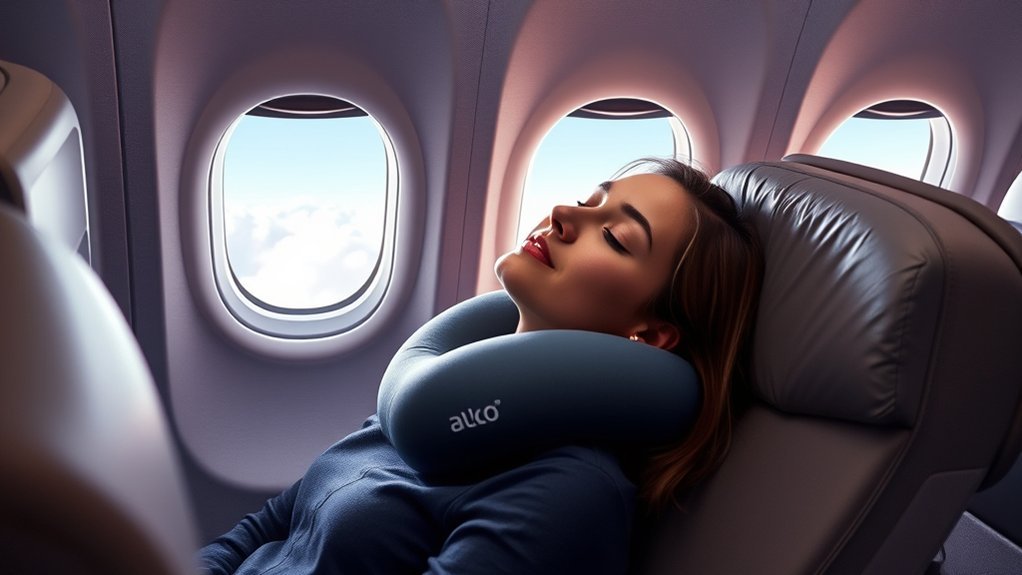
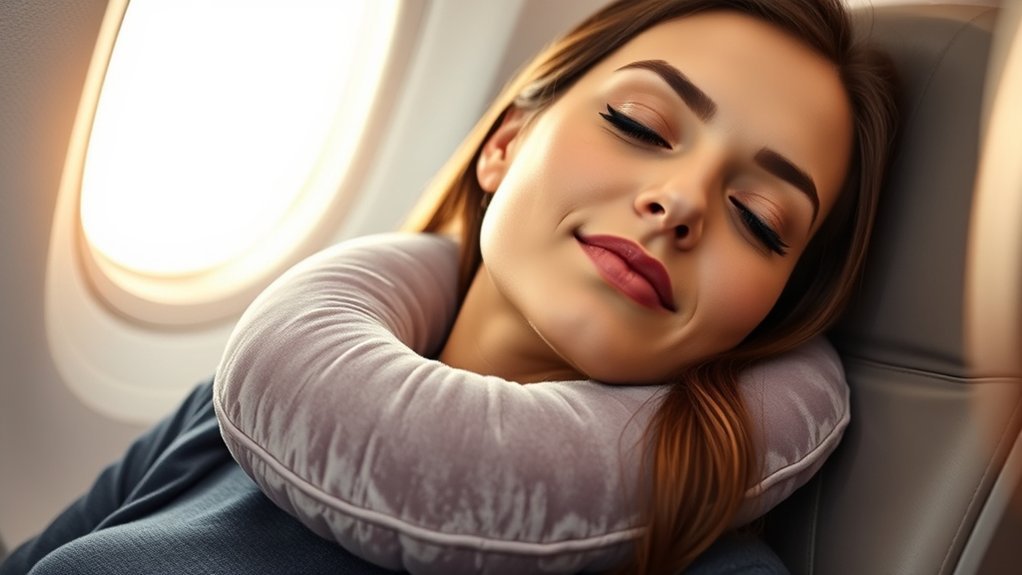
The main immediate benefit of a travel pillow is better support. It can fill the gap between your neck, head, and seat so your head does not sway as much. This may make it easier to follow the evidence-based advice to keep your head still and rest it against the seat back. Mayo Clinic includes head stabilization among its motion sickness first-aid tips.
A pillow may also reduce neck fatigue, make an upright seat more comfortable, and help you relax. Those benefits can improve the journey even when nausea does not fully stop. The effect varies by person, seat, vehicle, and pillow fit.
Note: A travel pillow can support a helpful behavior, such as limiting head movement, but there is no established clinical evidence that a neck pillow alone prevents or cures motion sickness.
The Science Behind Motion Sickness and Neck Support
Motion sickness usually develops when the brain receives mismatched information from the eyes, inner ear, and body. For example, your inner ear may sense a moving car while your eyes focus on a phone that appears still. The CDC Yellow Book describes this as sensory conflict or neural mismatch.
A travel pillow may help by reducing unwanted head movement, but the stronger evidence supports a full strategy that also includes a stable view, less visual scanning, and a lower-motion seat.
Neck support may help in three practical ways:
- It limits side-to-side movement. The CDC lists avoiding head movements as a behavioral countermeasure that can reduce motion sickness in several travel settings.
- It makes seat-back support easier. Resting your head against a stable surface can reduce extra movement during turns, turbulence, or waves.
- It improves comfort. Less neck strain may help you stay calm and maintain a forward gaze, although comfort improvement is not the same as proven nausea treatment.
A 2026 systematic review found a relationship between postural instability and motion sickness in many studies, but the authors said the evidence was not strong enough to prove cause and effect. That is why claims that a specific pillow design “treats” motion sickness should be viewed cautiously.
Essential Features for an Effective Travel Pillow
The best travel pillow is the one that supports your usual travel posture without pushing your head into an awkward position. Focus on fit rather than a single shape or material.
- Stable support: Choose enough firmness to limit head sway, but avoid a hard edge that creates pressure behind the jaw or ears.
- Proper height: The pillow should fill the space between your neck and the seat without forcing your chin toward your chest.
- Adjustable fit: Straps, snaps, inflatable chambers, or removable inserts can help you fine-tune support.
- Breathable material: Heat and strong odors can make nausea worse for some travelers, so a cool, low-odor fabric may be more comfortable.
- Washable cover: A removable cover makes routine cleaning easier after flights, bus trips, or long car journeys.
- Seat compatibility: The pillow must not block a seat belt, shoulder harness, or approved child restraint.
Warning: Do not use a travel pillow as a restraint, place it under a seat belt or harness, or add it to a child car seat unless the car-seat manufacturer allows that accessory. The pillow should never cover the mouth or nose or force the chin tightly onto the chest.
How to Pair Your Travel Pillow With Other Remedies
A travel pillow works best as one part of a broader motion sickness plan. Use the following steps before and during the journey:
- Choose a lower-motion location. Adults may feel better in the front passenger seat of a car, near the wings of an airplane, near the middle of a boat, or in a forward-facing train seat. Children must remain in the age-appropriate seat and restraint required for safe travel.
- Give your eyes a stable reference. Look toward the horizon or a distant stationary point. Avoid reading, close-up work, and screens.
- Keep the head supported. Rest your head against the seat back, then use the pillow to fill unsupported gaps rather than holding your head away from the seat.
- Use fresh air and slow breathing. Direct an air vent toward your face when possible. Slow, controlled breathing may also help.
- Eat lightly and stay hydrated. Small, simple meals are usually easier than heavy, greasy, or spicy food. Avoid alcohol and smoking before and during travel.
- Plan medicine before symptoms start. Some antihistamines and prescription scopolamine can prevent motion sickness, but they can cause drowsiness and other side effects. Follow the label and ask a pharmacist or clinician which option is safe for you.
Complementary remedies deserve a balanced view. The CDC reports weak and contradictory evidence for ginger and says acupressure bands have not performed better than placebo in laboratory trials. Peppermint or other pleasant scents may help some people relax, but essential oils are not established motion sickness treatments and strong smells can worsen symptoms for others.
Warning: Motion sickness medicines can cause sedation, dry mouth, blurred vision, confusion, or other side effects. Children need age-appropriate advice and dosing. Never use medication mainly to make a child sleep, and do not drive after taking a medicine that makes you drowsy.
Customize Your Travel Pillow for Optimal Comfort
Test the pillow in the position you will actually use during travel. A design that feels comfortable on a sofa may fit differently in an airplane, train, bus, or car seat.
- Sit fully back. Place your hips and shoulders against the seat and use the headrest when available.
- Identify the unsupported side. Notice whether your head tends to fall forward, left, or right.
- Rotate or adjust the pillow. Put the thickest support where your head needs it most. A U-shaped pillow does not have to face the same direction for every traveler.
- Check your chin and airway. You should be able to breathe, swallow, and turn your head without pressure on the throat.
- Test gentle movement. Lean slightly with the expected motion. The pillow should reduce sway without creating neck pain.
- Recheck after settling in. Inflatable pillows can soften, and memory foam can change as it warms.
Pro Tip: Keep your head in contact with the seat back whenever possible. Let the travel pillow fill the remaining gaps instead of using it as the only support.
Best Alternatives to Travel Pillows for Motion Sickness
If a travel pillow feels hot, bulky, or ineffective, use other strategies that directly reduce sensory conflict or motion exposure:
- Use the built-in headrest. Adjust it so the back of your head can rest against it without bending your neck.
- Choose a smoother seat. Sit where movement is usually lower, such as near an airplane wing or near the middle of a boat.
- Look outside. Face forward and watch the horizon or distant scenery rather than nearby moving objects.
- Close your eyes or lie down when safe. This may reduce conflicting visual information and head movement.
- Practice controlled breathing. Breathe at a slow, steady pace instead of taking rapid breaths when nausea begins.
- Use appropriate medicine. For frequent or severe symptoms, discuss preventive options with a pharmacist or clinician before departure.
The CDC identifies habituation, or gradual adaptation through repeated exposure, as the most effective behavioral countermeasure. However, it can take time, may be specific to one type of motion, and is not practical for every traveler.
Tips for Using a Travel Pillow Effectively During Your Journey
Use the pillow to support an evidence-based posture: head steady, body supported, and eyes aimed toward a stable reference. Do not tighten it so much that it becomes distracting or uncomfortable.
Choosing the Right Pillow
- Match the pillow height to your neck length and the shape of the seat.
- Choose support for the direction your head usually falls, including the chin if forward drop is your main problem.
- Use memory foam, microbeads, or an inflatable design based on comfort and packability, not claims that one material treats nausea.
- Check return policies when buying, because fit is highly personal.
Positioning for Maximum Support
Sit back first, place your head against the seat, and then position the pillow. Keep your face forward when possible. If the pillow pushes your neck forward, causes chin drop, blocks your view, or makes you feel hotter or more nauseated, loosen it, rotate it, or remove it.
Combining With Other Remedies
Before departure, choose your seat, prepare water and a light snack, and take any recommended medicine at the correct time. During travel, look outside, avoid screens, use fresh air, and breathe slowly. If symptoms start, stop reading immediately, keep your head still, close your eyes if looking outside is impossible, and sip fluids as tolerated.
User Reviews: What They Can and Cannot Tell You
User reviews can help you judge comfort, fit, heat, bulk, and ease of cleaning. They cannot prove that a pillow prevents motion sickness because symptoms vary with the person, route, vehicle, seat, meal, sleep level, and other remedies used.
Personal Experiences Shared
Give the most weight to reviews from people with a similar body size, travel posture, and mode of transport. A pillow that works against a tall airplane headrest may not work in a low car seat, and a design that supports a side sleeper may not control forward chin drop.
Notable Benefits to Look For
Useful review details include less head bobbing, lower neck strain, stable contact with the seat back, breathable fabric, and easy adjustment. Treat reports of reduced nausea as personal experience rather than medical proof.
Common Concerns to Check
- The pillow pushes the head forward or causes chin drop.
- The material traps heat or has a strong smell.
- The closure presses on the throat or jaw.
- The pillow is too bulky for the seat or interferes with a belt.
- The traveler feels comfortable but still develops nausea.
When a Travel Pillow Is Not Enough
Motion sickness usually improves when the motion stops. Speak with a healthcare professional if symptoms are frequent, severe, happen when you are not moving, or continue well after the journey. Repeated vomiting can cause dehydration and may make oral medicine harder to absorb.
Seek medical help: Get prompt advice for persistent vomiting, signs of dehydration, fainting, confusion, a new severe headache, weakness, trouble speaking, vision changes, chest pain, or symptoms that do not match your usual motion sickness.
Frequently Asked Questions
Can children use travel pillows for motion sickness relief?
Older children may use an age-appropriate pillow for comfort if it does not cover the face, push the chin down, or interfere with a seat belt or approved child restraint. Do not add an aftermarket pillow to a car seat unless the manufacturer permits it. The FAA recommends an approved child restraint system for young children on aircraft. Ask a clinician or pharmacist before giving motion sickness medicine to a child.
How do I clean my travel pillow?
Follow the care label. Remove and machine-wash the cover when allowed. Spot-clean foam inserts with a small amount of mild soap and water, avoid soaking memory foam, rinse away residue, and let every part dry fully before packing it.
Are specific travel pillow brands recommended for motion sickness?
No travel pillow brand is medically established as a motion sickness treatment. Compare fit, support direction, adjustability, heat, washable parts, and seat compatibility. A comfortable pillow that keeps your head steadier is more useful than a brand name or an unsupported anti-nausea claim.
Can travel pillows be used on different modes of transportation?
Yes. You can use one on a plane, train, bus, boat, or as a passenger in a car. The pillow must fit the seat and must not interfere with a seat belt, harness, child restraint, emergency instruction, or safe movement.
How long should I use a travel pillow during my journey?
Use it while seated if it remains comfortable and does not restrict breathing, swallowing, circulation, or movement. Remove or readjust it if you develop neck pain, numbness, headache, overheating, chin pressure, or worsening nausea. Change position and take safe movement breaks during long trips.
Can a travel pillow cure motion sickness?
No. A travel pillow may reduce head movement and improve comfort, but it does not correct every sensory signal that causes motion sickness. Use it with a stable view, less screen use, a smoother seat, controlled breathing, and appropriate medicine when needed.
Do ginger or acupressure bands work better with a travel pillow?
There is no good evidence that a travel pillow makes either remedy more effective. Ginger evidence is mixed, while controlled studies have not shown acupressure bands to outperform placebo. Some people still choose them because they are convenient, but they should not replace proven prevention or medical advice.
Conclusion
A travel pillow can be a useful comfort tool for motion sickness because it may help keep your head steadier and reduce neck strain. It should not be presented as a cure. Pair it with a horizon view, less screen use, a lower-motion seat, fresh air, slow breathing, light food, and appropriate medicine when needed. Stop using any pillow that affects your airway, posture, restraint fit, or comfort.
Sources
- CDC Yellow Book: Motion Sickness – sensory conflict, behavioral countermeasures, medicines, side effects, and child guidance.
- CDC Yellow Book: Complementary and Integrative Health Approaches – evidence for ginger, acupressure, breathing, and other complementary approaches.
- MedlinePlus: Motion Sickness – symptoms, causes, seating, and visual strategies.
- Mayo Clinic: Motion Sickness First Aid – head stabilization, seating, medicine, food, and travel precautions.
- PubMed: Relationship Between Motion Sickness and Postural Stability – 2026 systematic review of postural instability evidence.
- Federal Aviation Administration: Kids’ Corner – approved child restraint guidance for air travel.
