

Last Updated on July 28, 2026 by Ethan Caldwell
A child travel consent letter can prevent delays when a minor travels internationally with only one parent, alone, or with a grandparent, relative, teacher, or other adult. However, notarization is not a universal rule. The correct documents depend on the child’s citizenship, destination and transit countries, airline, custody arrangements, and method of travel.
Quick Answer
A child travel consent letter does not always have to be notarized. The United States generally does not require proof of both parents’ permission for a minor to leave, but a destination, transit country, airline, or custody order may require it. For international travel with one parent or a non-parent adult, notarization is the safest standard.
Key Takeaways
- Check the entry and exit rules for every destination and transit country; there is no single worldwide consent-letter rule.
- A letter should normally be signed by each non-traveling parent or legal guardian who has decision-making rights.
- Carry the original signed letter, the child’s passport or other required travel document, and proof of your relationship to the child.
- A consent letter does not replace a passport, visa, custody order, airline form, or separate medical authorization.
- When custody is disputed or consent cannot safely be obtained, review the court order and speak with a family-law attorney before traveling.
At a Glance
| Time Required | About 20–60 minutes for a routine letter, plus time for notarization, translation, or document authentication if required |
| Difficulty | Easy for routine trips; potentially complex when custody, guardianship, foster care, or dual nationality is involved |
| Tools Needed | Trip itinerary, parent or guardian identification, child’s travel documents, relevant court records, and a notary if required |
| Cost | Varies by state and provider; translation, apostille, authentication, legal review, and mobile or remote notarization may cost extra |
Note: This article provides general travel-document information, not legal advice. A custody order, parenting agreement, destination law, or airline rule may impose stricter requirements.
Disclosure: As an Amazon Associate I earn from qualifying purchases. Some links on this page are affiliate links, at no extra cost to you.
Is a Notarized Consent Letter Required for Child Travel?
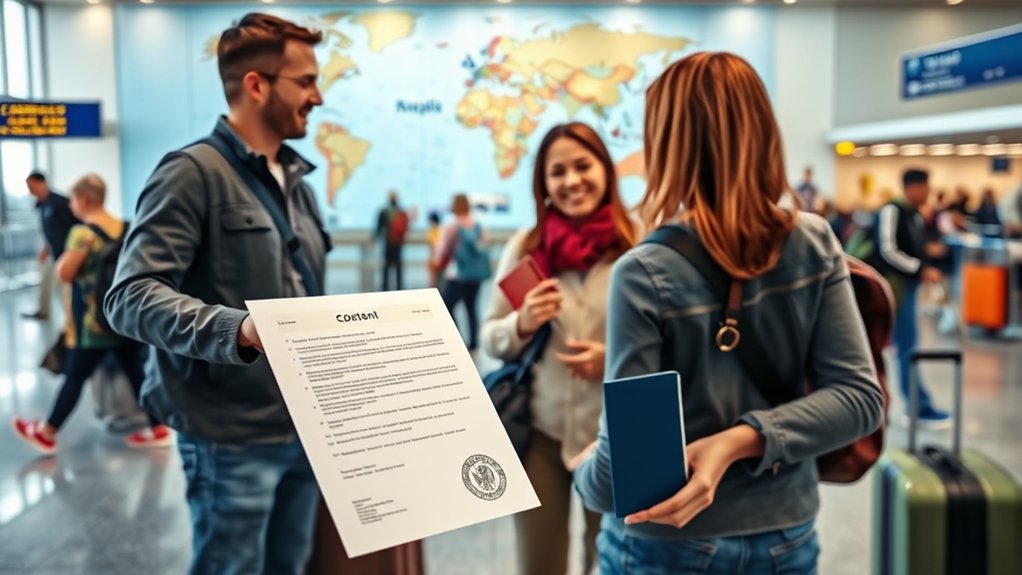
Not always. The U.S. Department of State says the United States does not generally require evidence of both parents’ permission for a minor to travel internationally. Other countries may require a signed and notarized letter from the non-traveling parent, proof of sole legal custody, or a country-specific authorization form.
A consent letter is most likely to be requested when a child travels:
- With only one parent or legal guardian
- Alone under an airline’s unaccompanied-minor service
- With grandparents, adult siblings, relatives, family friends, teachers, coaches, or group leaders
- With an adult whose surname differs from the child’s
- Across a border where local child-protection rules require formal parental authorization
Even where notarization is only recommended, it can make the signature easier for border or airline staff to authenticate. It does not guarantee entry, departure, or acceptance of the letter.
A notarized consent letter is evidence of permission—not a passport, visa, custody order, or guarantee that a border authority will allow the trip.
What Should Be Included in the Consent Letter?
A clear letter gives an officer enough information to identify the child, the adults involved, and the exact trip being authorized. Include:
- Child’s identity: Full legal name, date and place of birth, passport number and issuing country when appropriate
- Parent or guardian details: Full legal names, addresses, phone numbers, email addresses, and relationship to the child
- Accompanying adult: Full legal name, address, contact details, relationship to the child, and passport or identification details when useful
- Trip details: Departure and return dates, destinations, transit countries, flight or cruise information, lodging, and purpose of travel
- Direct authorization: A plain statement that the signer gives permission for the child to take the described trip with the named adult
- Emergency information: A reliable way to contact each non-traveling parent or guardian during the trip
- Signatures: Signatures and dates from each non-traveling person who has legal decision-making authority, unless a court order says otherwise
- Notarial certificate: The notary’s completed certificate, signature, seal, and commission details when notarization is required or chosen
The Government of Canada’s official consent-letter guidance also recommends specific travel dates, the accompanying adult’s contact information, and original signed letters. Its downloadable form can be a useful structure guide, but travelers must still follow the laws of their own destination and citizenship countries.
Pro Tip: Make the authorization trip-specific. A letter with exact dates, destinations, and adult contact information is easier to verify than an open-ended letter giving broad permission to travel anywhere.
Who Should Sign the Letter?
If one custodial parent travels with the child, the other non-traveling parent generally signs. If the child travels alone or with a non-parent adult, both custodial parents generally sign. A guardian, agency, or other person with legal decision-making authority may need to sign instead. Always follow current court orders and destination rules.
Do not assume that “both parents” always means two signatures. A single parent may have sole legal authority, one parent may be deceased, or another guardian or agency may hold decision-making rights. Carry proof that explains the legal arrangement.
Why Parental Consent Matters When Traveling
Border authorities use consent documents as one tool to identify possible international child abduction, trafficking, or custody violations. A signed letter can also help an airline or officer quickly contact the non-traveling parent and confirm that the trip is authorized.
The letter is especially important after divorce or separation, but it cannot override a parenting plan or court order. A notarized signature confirms the signer’s identity and acknowledgment; it does not prove that the trip complies with custody law or that every statement in the letter is true.
Warning: Never use a consent letter to travel against a custody order, restraining order, or another parent’s legal rights. A border officer may stop the trip, and unauthorized travel can create serious civil or criminal consequences.
U.S. Citizens: Key Travel Requirements for Children

U.S. citizen children generally need their own U.S. passport for international air travel and for travel to most countries. Depending on the destination, they may also need a visa, electronic travel authorization, proof of return travel, vaccination records, or additional documents for minors.
- International destinations: Review the destination’s entry, exit, and visa rules and contact its embassy or consulate when the minor-travel language is unclear.
- Travel with one parent or a non-parent: Carry a consent letter from each non-traveling parent or guardian with legal authority, preferably in English and notarized when the destination recommends or requires it.
- Canada or Mexico by air: According to USAGov, U.S. citizen children need a U.S. passport or qualifying Trusted Traveler Program card.
- Canada or Mexico by land or sea: A U.S. citizen under 16 may present a U.S. passport, an original or certified birth certificate, a Certificate of Naturalization, or a Consular Report of Birth Abroad. Travelers age 16 or older need a U.S. passport or qualifying Trusted Traveler Program card.
- Airline policies: Ask about age limits, nonstop-flight rules, forms, fees, escort procedures, and identification needed by the adults dropping off and collecting an unaccompanied child.
- Dual nationality: A U.S. citizen child must use a U.S. passport to enter the United States and may also have to use the other country’s passport when entering or leaving that country.
Note: A travel consent letter is different from Form DS-3053. DS-3053 is used in certain U.S. passport applications when a parent or guardian cannot appear; it is not a general replacement for a destination-specific travel authorization.
Domestic U.S. Travel With a Child
For domestic flights, the Transportation Security Administration does not require identification from children under 18. The airline may still request proof of age, an unaccompanied-minor form, or identification for the adult delivering or collecting the child.
A notarized parental consent letter is not a general TSA requirement for domestic travel. Still, a grandparent or other caregiver may find it useful to carry a signed permission letter, proof of relationship, emergency contacts, and a separate medical authorization. State laws and custody orders can affect what is required.
Traveling to the U.S.: Requirements for Non-U.S. Citizen Children
Every child, including an infant, needs the travel documents required for their nationality and immigration status. These may include a passport, visa, Electronic System for Travel Authorization approval, permanent resident card, refugee document, or other entry record. The child must also comply with the exit rules of the country they are leaving.
| Travel Documents | The child’s own passport and the visa, authorization, residency document, or other record required for entry |
| Letter of Consent | Recommended if the child travels alone, with one custodial parent, or with a guardian; notarization is preferred and may be required |
| Custody Documents | Relevant court orders, guardianship papers, death certificates, or other proof explaining why a second signature is unavailable |
| Home-Country Exit Rules | Any authorization, government form, court approval, translation, or authentication required for the child to leave that country |
| Airline Forms | Unaccompanied-minor forms, adult identification, contact details, fees, and routing restrictions set by the carrier |
Confirm requirements with the airline, the U.S. embassy or consulate, and the embassy or consulate of the child’s country of citizenship. A U.S.-style letter may not satisfy a foreign country that requires its own official form.
Notarization Essentials: What You Need to Know
A notary generally checks the signer’s identity, confirms willingness and awareness, and completes a notarial certificate under state law. The notary does not decide whether the travel is legally permitted or whether the letter will be accepted abroad.
- Complete the letter before the appointment; a notary may refuse an incomplete document.
- Ask the notary whether each signer must sign in the notary’s presence or may acknowledge an earlier signature.
- Bring current government-issued identification that meets the notary’s state rules.
- Use the signer’s legal name exactly as it appears on the identification and supporting records.
- Ask the destination whether it accepts remote or electronic notarization. An original paper letter with a wet signature is the safest option when rules are unclear.
- Check whether a translation, apostille, authentication certificate, consular legalization, or country-issued form is required.
Notary rules vary by state. For example, Florida law bars a notary from notarizing the signature of the notary’s spouse, son, daughter, mother, or father; it does not prohibit every possible relative. Verify the rule where the notarization occurs.
Does the Letter Need an Apostille or Translation?
Only when the receiving country requires it. An apostille or authentication certificate verifies the public signature or seal on a document; it does not approve the document’s content. The USAGov authentication guide explains that the country where the document will be used determines which process applies.
Ask the destination country’s embassy or consulate whether the letter must be translated, whether the translation must be certified, and whether the original or translation needs an apostille or other legalization. Also check any transit country that may inspect the child’s documents.
What Special Circumstances Should You Consider for Travel Consent?

Routine letters are simple, but family and legal circumstances can change what evidence you need.
- Grandparents or other caregivers: Carry consent from each non-traveling parent or guardian with legal authority, plus a separate medical authorization and the child’s insurance information.
- Sole custody: Carry a certified copy of the court order or another official record showing sole legal authority. Read the order carefully for travel-notice or geographic restrictions.
- Deceased parent: Carry a certified death certificate when it explains why consent cannot be obtained.
- Incarcerated, detained, missing, or unreachable parent: Do not assume a power of attorney is automatically required or sufficient. A court order, an institution-specific process, or legal advice may be needed.
- Custody dispute or safety concern: Do not pressure a parent to sign. Seek legal advice, especially if the child may not be returned or if obtaining consent could be unsafe.
- Guardianship, adoption, or foster care: Carry the court order, placement record, adoption decree, or agency authorization that identifies who can approve travel.
- Different surnames: Bring a birth certificate, adoption record, marriage certificate, or legal name-change document connecting the child and accompanying adult.
- Dual nationality: Check the passport and minor-exit rules of every country of citizenship. A foreign government may treat the child only as its citizen while the child is there.
- School, sports, religious, or tour groups: Complete the organization’s forms in addition to any government or airline requirements.
Medical Authorization Is a Separate Document
A travel consent letter proves permission to travel. It may not authorize a grandparent, teacher, or other caregiver to approve routine or emergency medical care. Carry a separate medical consent that states who may make healthcare decisions, lists allergies and medications, includes insurance details, and provides the child’s clinician and emergency contacts.
Ask the child’s healthcare provider, insurer, destination, and group organizer whether they require a specific medical form. Keep medicines in properly labeled containers and carry copies of prescriptions when traveling internationally.
How to Prepare Travel Permission Documents Smoothly
Prepare the documents in a set order so a missing requirement does not surface at check-in or the border.
- Check destination and transit rules. Read official entry and exit guidance and contact the embassy or consulate when the wording is unclear.
- Check the airline, cruise line, tour, and group organizer. Their forms and age rules are separate from government requirements.
- Review custody and guardianship documents. Confirm who has authority to approve the trip and whether advance notice or court permission is required.
- Draft a trip-specific consent letter. Use full legal names and exact dates, destinations, lodging, transportation, and contact details.
- Arrange signatures and notarization. Follow local notary rules and destination requirements; do not leave blanks in the signed document.
- Arrange translation or authentication only if required. Confirm the exact process before paying for an apostille or legalization.
- Build a travel document packet. Keep the original letter with the child or accompanying adult and store copies separately.
Essential Document Checklist
- Child’s passport and any required visa, travel authorization, or residency document
- Original signed and notarized travel consent letter when required or recommended
- Original or certified birth certificate or other proof of relationship
- Custody, guardianship, adoption, foster-care, restraining, or travel-permission orders that apply
- Death certificate or legal record explaining why a parent cannot consent, when relevant
- Airline, cruise line, school, camp, sports, or tour-group forms
- Separate medical consent, insurance details, medication list, and emergency contacts
- Trip itinerary, lodging addresses, return details, and contact information for the accompanying adult
- Certified translation, apostille, authentication, or country-specific government form when required
- Paper copies stored separately from the originals and secure digital scans for backup
Notarization Process Explained
First, complete the letter with no blank spaces that could later be altered. Confirm whether one or more parents, guardians, or agency representatives must sign. Each signer should bring acceptable identification and follow the notary’s instructions on when to sign.
The notary records the act and adds the required certificate, signature, seal, and commission information. Review every name, date, and passport number before leaving. If the document will be used abroad, ask the destination—not the notary—whether further translation or authentication is necessary.
Tips for Smooth Preparation
- Start several weeks before travel when custody records, passports, translations, or apostilles may be needed.
- Use the same spelling and order of names shown on passports and birth or custody records.
- List all countries on the itinerary, including airport or land-border transit points.
- Carry an original signed letter; photocopies and digital images may be questioned or rejected.
- Keep the non-traveling parent reachable during departure and arrival when possible.
- Check requirements again shortly before travel because airline and border rules can change.
What Are Common Travel Issues and How to Resolve Them?
Most problems come from incomplete documents, inconsistent names, overlooked transit rules, or conflicts with custody records. Correcting them before departure is far easier than trying to solve them at the airport or border.
Travel Documentation Delays
- Missing signature: Confirm that every non-traveling person with legal authority signed or that you have official proof explaining why a signature is not required.
- Names do not match: Add the birth, adoption, marriage, or name-change record that connects the documents.
- Letter is too vague: Add exact travel dates, destinations, adult information, and an express statement of permission.
- Only a copy is available: Ask the border authority or carrier whether it will accept the copy, but obtain the original whenever possible.
- Transit-country requirement was missed: Contact that country’s embassy or consulate and the airline before departure.
- Unaccompanied-minor form is missing: Contact the carrier because airline forms and fees are separate from the parental letter.
- Passport application is delayed: Use the current State Department process and the correct passport-consent form rather than substituting a travel letter.
If an officer questions the trip, stay calm, provide the original letter and supporting records, and make the non-traveling parent available by phone. An airline supervisor, border authority, or relevant consulate may be able to explain the applicable rule, but no official is required to overlook missing documents.
Custody Agreement Complications
Read the most recent signed order or parenting agreement. It may require the other parent’s written consent, advance notice, a detailed itinerary, a bond, court approval, or limits on destinations and trip length. A notarized letter cannot cure a violation of that order.
If the other parent refuses to consent, cannot be located, or may be unsafe to contact, do not create or sign on that person’s behalf. Seek legal advice about court authorization or another lawful option. Carry certified copies of any order that resolves the issue.
Resources for Parents: Where to Find Help and Information
Use official sources first. The U.S. Department of State, USAGov, U.S. Customs and Border Protection, the Transportation Security Administration, foreign embassies and consulates, and the airline provide the most relevant rules for a specific trip. State commissioning offices or secretaries of state explain local notary requirements.
Community forums and social media groups may offer useful experiences, but they are not legal authority and may describe outdated rules or a different traveler’s citizenship, custody arrangement, route, or destination. Verify every important claim against an official source.
Sources
- U.S. Department of State — Travel with Minors — destination-specific rules, proof of relationship, consent letters, dual nationality, and abduction-prevention guidance
- USAGov — International Travel Documents for Children — consent-letter guidance, Canada and Mexico document rules, non-U.S. citizen children, and airline forms
- U.S. Department of State — Apply for a Child’s Passport Under 16 — passport consent, Form DS-3053, custody evidence, and parent-appearance requirements
- Transportation Security Administration — Identification for Minors — domestic-flight identification rules for travelers under 18
- Government of Canada — Recommended Consent Letter for Children Traveling Abroad — letter contents, signatures, original copies, notarization, and special family circumstances
- USAGov — Authenticate an Official Document — apostilles and authentication certificates for documents used abroad
Frequently Asked Questions
Does a Permission to Travel Letter Need to Be Notarized for International Travel?
Sometimes. The United States does not impose a universal notarization rule, but the destination or transit country may require a notarized letter or a specific government form. Even when optional, notarization is often the safest choice for a child traveling with one parent or a non-parent adult.
Does a Travel Letter Need to Be Notarized for Domestic U.S. Travel?
Not as a general TSA rule. Children under 18 do not need identification for domestic TSA screening, but an airline, custody order, state law, school, camp, or group may require permission documents. A signed letter and separate medical authorization can still help a non-parent caregiver.
Can a Travel Consent Form Be Handwritten?
Yes, if it is complete, legible, signed, and accepted by the destination and carrier. A typed letter is easier to read and less likely to create spelling or interpretation problems. Do not leave blank spaces, and complete any required notarization correctly.
Can I Make My Own Travel Consent Form?
Usually, unless a country, airline, court, school, or tour operator requires its own form. A self-written letter should identify the child, parents or guardians, accompanying adult, trip, destinations, dates, contact details, and the exact permission being given.
Do Both Parents Have to Sign a Child Travel Consent Letter?
It depends on who is traveling and who has legal decision-making authority. One traveling parent generally carries consent from the other. If neither parent travels, both custodial parents generally sign. A sole-custody order, death certificate, guardianship record, or other legal document may change the requirement.
How Long Is a Child Travel Consent Letter Valid?
There is no universal validity period. A trip-specific letter should cover the exact departure and return dates. Some authorities or organizations may require a recently signed or notarized document, so confirm their rule and prepare a new letter for a later trip.
Should the Child Carry the Original Consent Letter?
Yes. The child or accompanying adult should carry the original signed letter because a photocopy or phone image may be questioned. Keep separate paper and secure digital copies for backup, but do not assume a copy will be accepted.
Does the Letter Need an Apostille or Certified Translation?
Only if the country using the document requires one. Ask its embassy or consulate whether the letter must be translated, certified, apostilled, authenticated, or legalized. Do not pay for these steps until the receiving authority confirms the exact process.
What if the Other Parent Cannot or Will Not Sign?
Review the custody order and destination rules. A court order, death certificate, guardianship document, or other official record may be accepted. If consent is disputed, the parent is unreachable, or contact could be unsafe, seek family-law advice instead of signing for that person or assuming a power of attorney will solve the issue.
Conclusion
A notarized child travel consent letter is not required for every trip, but it is often the safest document to carry when a minor travels internationally without every parent or legal guardian. Check the destination, transit country, airline, and custody rules; prepare a detailed trip-specific letter; and bring the original with passports and supporting records. Careful preparation reduces avoidable delays without overstating what the letter can legally do.

