
Last Updated on July 27, 2026 by Daniel Globe
Zurich packs a surprising amount into a compact city center: medieval lanes, landmark churches, major art museums, a famous shopping boulevard, Lake Zurich, and an easy-to-reach mountain viewpoint. Many of the best things to do in Zurich are close enough to combine on foot, while trams and trains make attractions such as Uetliberg simple to reach.
Quick Answer
The best things to do in Zurich include exploring the Old Town, walking along Lake Zurich, browsing Bahnhofstrasse, climbing Grossmünster’s Karlsturm, visiting Kunsthaus Zürich and the Swiss National Museum, relaxing at Lindenhof, and taking the train to Uetliberg for panoramic views.
Key Takeaways
- Start in Zurich’s Old Town, where Grossmünster, Fraumünster, Lindenhof, historic lanes, cafés, and shops sit within a walkable area.
- Make time for Lake Zurich, whether you prefer a waterfront walk, swimming in season, or a scheduled boat cruise.
- Bahnhofstrasse connects Zurich Main Station with the lake and is convenient to combine with the Old Town.
- Choose Kunsthaus Zürich for fine art and the Swiss National Museum for Swiss cultural history.
- Save Uetliberg for clear weather when the city, lake, and Alps are most likely to be visible.
Disclosure: As an Amazon Associate I earn from qualifying purchases. Some links on this page are affiliate links, at no extra cost to you.
Historic Old Town (Altstadt)
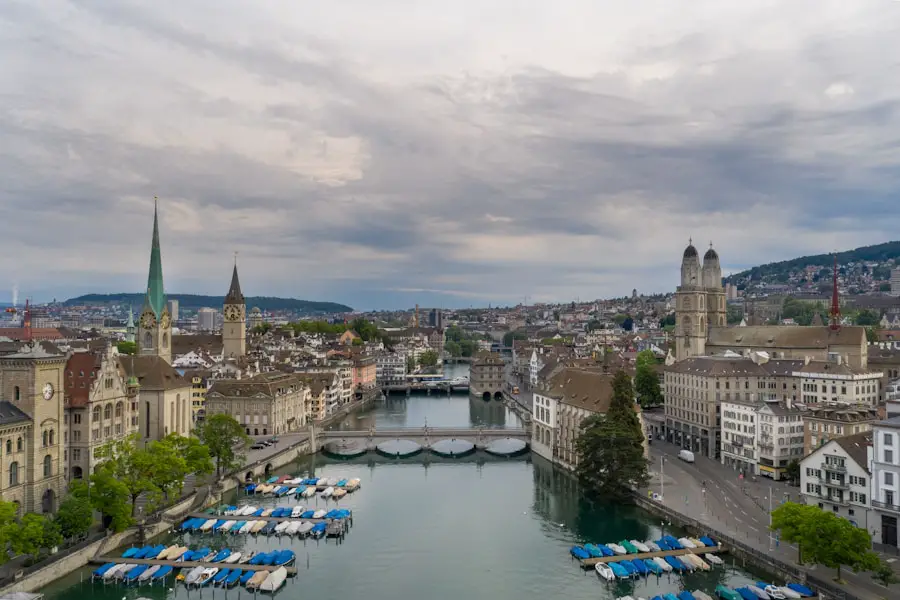
Zurich’s historic center, known as the Altstadt, spreads across both sides of the Limmat River. Rather than belonging to one architectural period, the district contains layers of Roman, medieval, Renaissance, and later Zurich history. Narrow lanes, guild houses, church towers, small squares, cafés, and independent shops make it an ideal place to begin exploring the city.
The Old Town is more than an architectural backdrop. Its streets remain part of everyday Zurich life, with restaurants, shops, cultural venues, and gathering places mixed among historic buildings. Niederdorf on the east bank is particularly lively, while the west side puts you close to Lindenhof, Bahnhofstrasse, Fraumünster, and the lake.
One of the district’s major landmarks is Fraumünster Church. Founded in 853 as part of an influential convent, it is now especially famous for its stained glass. Marc Chagall created the five-part window cycle in the chancel and a rosette in the southern transept, while Augusto Giacometti also contributed stained glass to the church.
Pro Tip: Explore the Old Town early in the day, then walk through Lindenhof and down toward Bahnhofstrasse and the lake. This keeps several major sights in one compact route and reduces unnecessary tram rides.
Lake Zurich
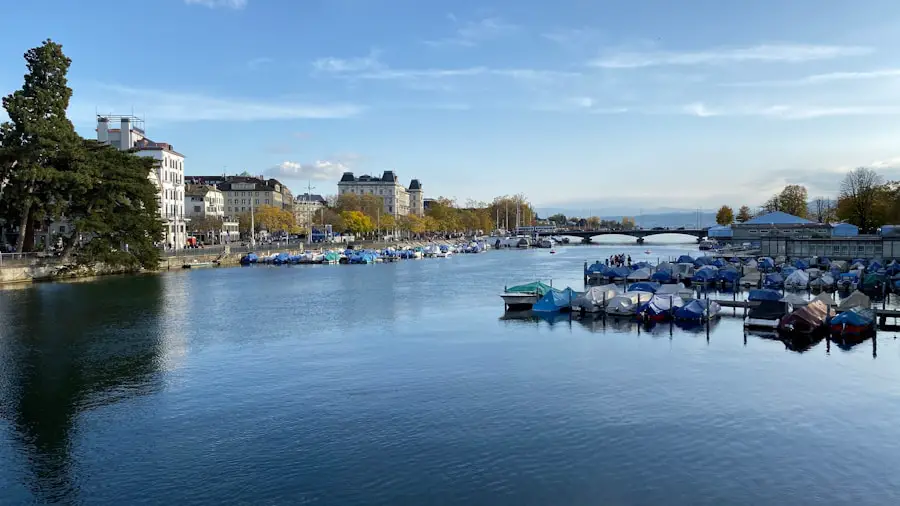
Lake Zurich is one of the city’s defining natural features and a popular place for walking, picnicking, swimming, sailing, and boating. The waterfront is especially lively in warm weather, when locals make use of lakeside parks and public swimming facilities.
You do not need to commit to a long excursion to enjoy the water. A walk around Bürkliplatz and the nearby promenade gives you lake views within minutes of the Old Town. Travelers with more time can take a scheduled cruise operated by the Lake Zurich Navigation Company. Depending on the season and timetable, options range from shorter sightseeing trips to longer journeys toward Rapperswil.
Zurich Tourism lists swimming, sailing, boating, paddle sports, and picnicking among the lake’s popular activities. The shoreline and surrounding waters also support a range of wildlife, so the lake is both a recreation area and an important part of the region’s natural environment.
Note: Older Zurich guides may refer to Züri Fäscht as a recurring lakefront festival. The City of Zurich says the 2023 event was the last Züri Fäscht in its previous form, and work on a new city-festival concept is ongoing. Check the city’s current event calendar rather than planning a trip around an assumed recurring date.
Bahnhofstrasse
Bahnhofstrasse is Zurich’s best-known shopping boulevard, running between Zurich Main Station and Lake Zurich. According to the official Zurich visitor guide, the street stretches for about 1.4 kilometers (0.87 miles).
The boulevard developed after construction of the railway station in the 19th century, replacing an area once occupied by city fortifications and a moat. Today it is lined with international fashion brands, Swiss watch and jewelry stores, department stores, cafés, and financial institutions around Paradeplatz.
Walking along Bahnhofstrasse is worthwhile even if luxury shopping is not on your itinerary. Side streets such as Rennweg and Augustinergasse lead directly back into the Old Town, so the boulevard works naturally as part of a sightseeing walk between Zurich HB, Lindenhof, and the lake.
The atmosphere also changes with the season. Window displays, café terraces, and pedestrian activity make it busy throughout much of the year, while winter brings festive lighting and nearby Christmas markets.
Grossmünster Church
| Aspect | Details |
|---|---|
| Location | Zurich Old Town, Switzerland |
| Architectural Style | Predominantly Romanesque |
| Karlsturm Climb | 187 steps from the nave to the viewing platform |
| Historical Period | The church has major surviving elements dating from the medieval period; its cloister dates from the late 12th century. |
| Reformation Significance | Closely associated with Huldrych Zwingli and the Zurich Reformation |
| Notable Art | Stained glass by Sigmar Polke and Augusto Giacometti, plus historic bronze doors and the Romanesque crypt |
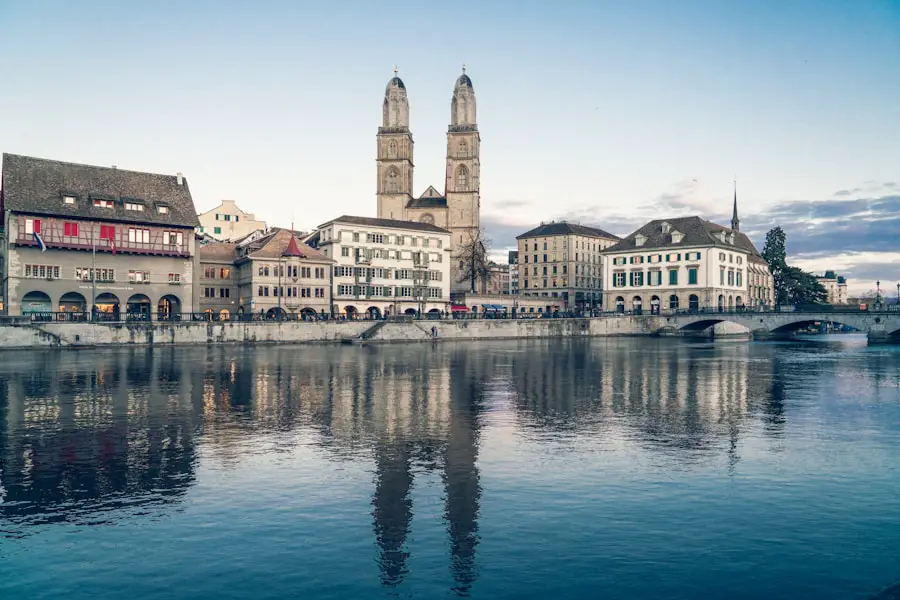
Grossmünster is one of Zurich’s most recognizable landmarks, with its twin towers forming a key part of the Old Town skyline. Tradition links the church with Felix and Regula, Zurich’s patron saints, while its medieval architecture and later role in the Reformation give it significance far beyond its appearance.
The interior includes the Romanesque crypt, stained-glass works by Augusto Giacometti and Sigmar Polke, bronze doors by Otto Münch, and exhibits connected with the Reformation. Huldrych Zwingli preached at Grossmünster during the early 16th century, making the church a central site in the history of the Swiss Reformation.
For many visitors, the highlight is the Karlsturm. Official visitor information states that 187 steps lead from the nave to the viewing platform, where large windows provide views across the Old Town and toward Lake Zurich.
Warning: The Karlsturm climb uses steep stairs and is not suitable for everyone. Travelers with limited mobility, balance problems, or a strong fear of confined stairways may prefer to enjoy the church and surrounding viewpoints at ground level.
Kunsthaus Zürich
Kunsthaus Zürich is one of Switzerland’s leading art museums. Its history needs one important distinction: the art society behind the institution traces its roots to a group founded in 1787, while the main Kunsthaus building at Heimplatz opened in 1910.
The museum has since expanded considerably. Its collection now spans more than 800 years of art history, from the Middle Ages to contemporary work. According to Kunsthaus Zürich, major strengths include Alberto Giacometti, Edvard Munch, Impressionism, Classical Modernism, and works by artists such as Claude Monet, Vincent van Gogh, Pablo Picasso, and Marc Chagall.
That breadth makes Kunsthaus useful for both dedicated art enthusiasts and visitors who only have time for one major art museum. Temporary exhibitions rotate alongside the collection, so checking the current program before visiting can help you decide how much time to allow.
The museum also runs guided tours, educational programs, talks, and other activities designed to make the collection accessible to a wider audience. Visitors interested in Alberto Giacometti in particular will find one of the institution’s most important strengths here.
Uetliberg Mountain
Uetliberg is Zurich’s local mountain and one of the easiest ways to add an outdoor experience to a city break. At 871 meters (2,858 feet) above sea level, it rises above Zurich and offers wide views over the city and Lake Zurich, with the Alps visible in suitable weather.
The mountain can be reached on foot or by public transportation. For most short-term visitors, the train is the simplest choice, followed by a walk from the upper station toward the summit area. Zurich Tourism highlights walking and mountain-biking trails as major activities.
Once near the summit, several paths continue through forest and open viewpoints. Spring and summer bring green woodland and wildflowers, while autumn can produce particularly clear views. Winter offers a very different experience, with snow possible and a toboggan route operating when conditions allow.
Mountain biking is another option for experienced riders using appropriate routes. Adventure activities such as paragliding in the wider Zurich region should be arranged with qualified local providers, with current launch rules and weather conditions checked before booking.
Pro Tip: Check the visibility forecast before going to Uetliberg. The trip is most rewarding on a clear day, and late afternoon can be especially attractive when you can stay for changing light over the city and lake.
Swiss National Museum
The Swiss National Museum, also called the National Museum Zurich or Landesmuseum Zürich, is one of the best places to understand Swiss history beyond the familiar images of mountains, watches, and chocolate. It stands beside Zurich Main Station in a historicist building designed by Gustav Gull.
The museum opened in 1898. A modern extension opened in 2016, creating a striking contrast between the older castle-like structure and contemporary architecture.
The Swiss National Museum reports a collection of more than 870,000 objects covering Swiss cultural history, craftsmanship, archaeology, decorative arts, photographs, manuscripts, and other material from the country’s beginnings to the present.
Permanent and temporary exhibitions examine subjects ranging from archaeology and medieval society to political development, migration, identity, and everyday life. Multimedia displays and interpretive exhibits make the museum accessible even if you do not arrive with a detailed knowledge of Swiss history.
With more than 870,000 objects in its wider collection, the Swiss National Museum offers far more than a quick display of national souvenirs—it is a deep record of Switzerland’s cultural history.
Lindenhof Hill
Lindenhof is a quiet elevated square in the heart of the Old Town and one of Zurich’s most rewarding free viewpoints. From here you can look across the Limmat toward Grossmünster, the university area, City Hall, and surrounding historic rooftops.
The site has a much longer history than its peaceful appearance suggests. According to the official Zurich visitor guide, a Roman fort stood here in the 4th century. In the 9th century, a royal palace was built on the same hill.
Lindenhof continued to function as an important gathering place in later centuries. Today, benches and mature linden trees make it a useful place to rest during an Old Town walk. A large outdoor chess area is another familiar feature, and local players can often be seen using it.
Because Lindenhof is close to Bahnhofstrasse, the Limmat, and several major churches, it fits naturally into almost any central Zurich itinerary without requiring a special journey.
How to Spend One Day in Zurich
A first-time visitor can cover many of Zurich’s highlights in one full day without rushing between distant neighborhoods.
- Morning: Start near Zurich Main Station and enter the Old Town. Walk through Niederdorf, see Grossmünster, and cross the river toward Fraumünster.
- Late morning: Walk up to Lindenhof for views of the Old Town, then continue toward Bahnhofstrasse.
- Lunch: Stop for a Zurich or Swiss specialty in the center before heading toward Bürkliplatz.
- Afternoon: Walk beside Lake Zurich or take a short scheduled cruise. On a rainy day, replace the lake time with Kunsthaus Zürich or the Swiss National Museum.
- Late afternoon or evening: Take public transportation toward Uetliberg if the weather is clear and finish the day with a panoramic view.
Note: Trying to visit both major museums, take a long lake cruise, fully explore the Old Town, shop on Bahnhofstrasse, and visit Uetliberg in one day will feel rushed. With two days, divide the major museums and outdoor experiences between separate days.
Getting Around Zurich
Central Zurich is highly walkable, and several headline attractions are clustered around the Old Town, Bahnhofstrasse, the Limmat, and the northern end of Lake Zurich. For longer journeys, trams, buses, trains, and boats form an integrated public transportation network.
The Zurich Transport Network (ZVV) uses a zone-based fare system. Within the zones and validity period covered by a ticket, travelers can use the applicable public transportation services and transfer between them as needed.
For visitors planning frequent transportation plus several paid attractions, the Zürich Card is worth comparing with individual tickets. It is offered in 24-hour and 72-hour versions and includes unlimited second-class transportation within its designated area, along with benefits at numerous museums and attractions. The included transport area covers the airport connection, the Uetliberg trip, and selected lake and river cruises.
Pro Tip: Do the math before automatically buying a city pass. Travelers who mostly walk and visit only one paid museum may spend less with individual tickets, while a museum-heavy itinerary with airport transport and Uetliberg can make the Zürich Card more valuable.
Best Time to Visit Zurich
Zurich works as a year-round city break, but each season changes what you are likely to enjoy most.
- Spring: Comfortable for Old Town walks and parks, with increasingly long daylight hours.
- Summer: Best suited to swimming, lakefront picnics, outdoor dining, boating, and long evenings beside the water.
- Autumn: A good period for walking and Uetliberg, with cooler temperatures and changing foliage.
- Winter: Better for museums, cafés, shopping, seasonal lights, and Christmas-market atmosphere, with the possibility of snow on higher ground.
Weather can shift quickly, particularly when combining city sightseeing with Uetliberg, so a light waterproof layer and comfortable walking shoes are useful in more than one season.
Try Zurich Food and Chocolate
Sightseeing is only part of the Zurich experience. Local food provides another way to understand the city. One of the best-known dishes is Zürcher Geschnetzeltes, thin strips of veal served in a creamy sauce and traditionally paired with rösti.
Zurich Tourism’s guide to local specialties also highlights foods such as Bircher muesli and Luxemburgerli. Chocolate shops, tastings, workshops, and chocolate-focused attractions add another easy activity for visitors of different ages.
A traditional meal works particularly well between an Old Town walk and an afternoon museum visit. Travelers who prefer something lighter will also find cafés, bakeries, vegetarian restaurants, and international food throughout central Zurich.
Packing for Zurich and Nearby Outdoor Trips
If you’re planning a trip to Zurich, having the right gear can make long sightseeing days more comfortable. For walking the Old Town, exploring the lakefront, or heading to Uetliberg, comfortable shoes and socks that manage moisture are useful. One option to consider is a pair of odor-resistant Merino wool travel socks, which you can learn more about in this related article.
Travelers building Zurich into a longer activity-focused trip may need more specialized equipment. Golf enthusiasts traveling with their own clubs should use a protective golf travel bag, while hikers continuing into Switzerland’s mountain regions may benefit from lightweight backpacking equipment such as an ultralight tent when their itinerary includes permitted overnight camping.
For a city-only Zurich visit, however, there is little need to overpack. Comfortable walking footwear, a compact rain layer, a refillable water bottle, and a small day bag will cover most sightseeing days.
Frequently Asked Questions
What are the top things to do in Zurich?
Top things to do in Zurich include exploring the Old Town, visiting Grossmünster and Fraumünster, walking along Lake Zurich, seeing Lindenhof, browsing Bahnhofstrasse, visiting Kunsthaus Zürich or the Swiss National Museum, and taking a trip to Uetliberg.
What are some popular outdoor activities in Zurich?
Popular outdoor activities include hiking and mountain biking around Uetliberg, walking or cycling beside Lake Zurich, swimming at designated lakeside facilities in season, taking boat trips, and relaxing in parks and viewpoints such as Lindenhof.
What cultural attractions can be found in Zurich?
Major cultural attractions include Kunsthaus Zürich, the Swiss National Museum, Museum Rietberg, Zurich Opera House, Fraumünster, Grossmünster, and smaller museums and galleries throughout the city.
What are some family-friendly activities in Zurich?
Families can visit Zurich Zoo, the FIFA Museum, the Botanical Garden, the Swiss National Museum, Lake Zurich, and Uetliberg. Boat trips and short Old Town walks can also work well with children when the day’s pace is kept flexible.
What is the best way to get around Zurich?
Walk within the compact city center and use Zurich’s integrated trams, buses, trains, and boats for longer trips. ZVV uses zone-based tickets, while the Zürich Card can be useful for visitors combining frequent public transportation with participating attractions.
Is Zurich easy to explore on foot?
Yes. The Old Town, Lindenhof, Bahnhofstrasse, Grossmünster, Fraumünster, and the northern end of Lake Zurich are close enough to combine on foot. Public transportation is more useful for places such as Uetliberg and attractions outside the central sightseeing area.
How many days do you need in Zurich?
One full day is enough for the Old Town, Bahnhofstrasse, the lakefront, and one additional attraction. Two days are better if you want to visit a major museum, take a boat trip, and spend time on Uetliberg without rushing.
Sources
- Zurich Tourism — Zurich’s Old Town — Old Town attractions, historic landmarks, and visitor context.
- Zurich Tourism — Lake Zurich — boating, swimming, sailing, and lakeside recreation.
- Kunsthaus Zürich — The Collection — museum scope, collection strengths, and major artists.
- National Museum Zurich — Collection — collection size and Swiss cultural-history holdings.
- Zurich Transport Network (ZVV) — fare zones and public transportation validity.
- City of Zurich — New City Festival — current status of the successor concept to the former Züri Fäscht.
