
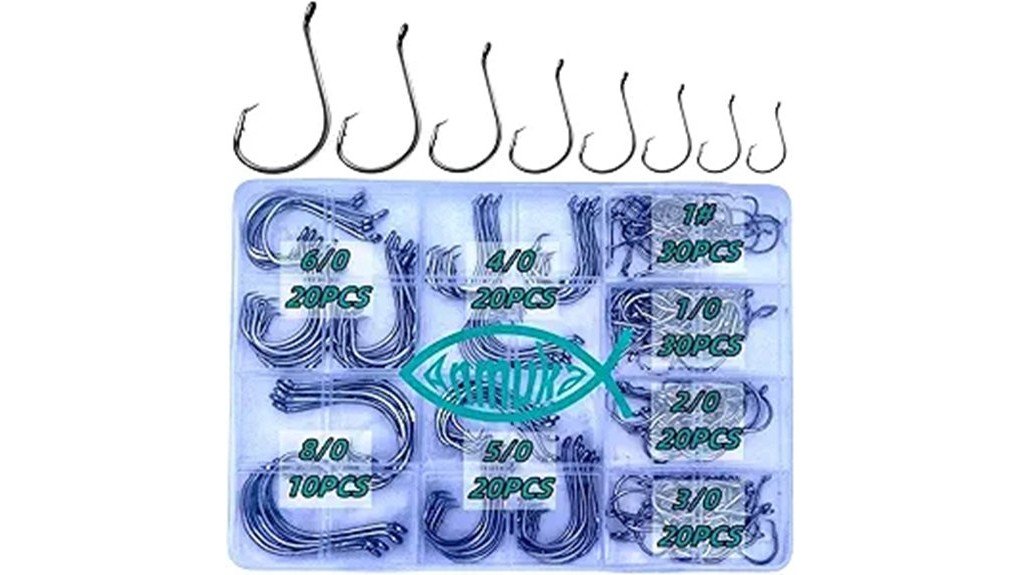
Circle hooks are an excellent choice for anglers, crafted from high carbon steel to guarantee strength and durability against corrosion in both freshwater and saltwater. Their unique design features, such as sharp offset points and a loop eye, enhance bait attachment and improve catch efficiency for species like tuna and catfish. With safety considerations in mind, use protective gear when handling, and keep hooks out of children’s reach. For more insights on performance and versatility, further exploration is recommended.
Material and Durability of Circle Hooks
When it comes to fishing hooks, the material and durability play an essential role in determining their effectiveness and longevity.
The circle hooks are crafted from high carbon steel, ensuring impressive hook strength, which translates to reliable performance when battling fish. This material also provides exceptional corrosion resistance, making these hooks suitable for both freshwater and saltwater environments.
Anglers can appreciate the added features of tensile force, elasticity, hardness, and abrasion resistance. Collectively, these attributes enhance the hook’s overall durability, allowing for extended use without compromising functionality.
Consequently, selecting the right material is critical for successful fishing experiences.
Design Features and Versatility
Building on the strong foundation established by high carbon steel regarding material, the design features of circle hooks greatly contribute to their effectiveness in various fishing scenarios.
Their unique shape enhances hook efficiency, reducing the likelihood of fish escaping. The thick flat body and sharp offset point guarantee a secure catch, while the loop eye allows for easier bait attachment.
Additionally, these hooks demonstrate remarkable bait compatibility, working well with artificial lures, worms, or live bait. Their versatility makes them suitable for both freshwater and saltwater environments, targeting species such as tuna, bass, and catfish with impressive results.
Safety Considerations and Customer Support
Safety considerations are paramount when using circle hooks, especially given their sharp offset points. Anglers must practice essential safety precautions to prevent injuries, such as keeping hooks out of children’s reach and using protective gear when handling them.
Additionally, customers are encouraged to measure hooks manually, as slight variations may occur.
For any queries or suggestions, reliable customer assistance is readily available to address concerns, ensuring a smooth experience. This support can enhance confidence in using the product effectively, allowing anglers to focus on their fishing endeavors while prioritizing safety and satisfaction.
Frequently Asked Questions
How Do I Choose the Right Hook Size for My Fishing Needs?
Choosing the right hook size depends on target species and fishing techniques. Smaller hooks work for panfish, while larger hooks suit bigger species. Consider bait type and local regulations to guarantee ideal compatibility and effectiveness.
Can I Use These Hooks for Catch and Release Fishing?
Yes, these hooks are excellent for catch and release fishing. Their design minimizes injury to fish, enhancing catch techniques. The sharp point and offset barb promote quick releases, ensuring fish can return safely to their habitats.
What Is the Best Way to Store Circle Hooks?
The best way to store circle hooks involves effective hook organization. Utilizing storage solutions like tackle boxes with compartments helps prevent tangling, ensuring easy access and preserving the hooks’ integrity for future fishing trips.
How Often Should I Replace My Fishing Hooks?
Ironically, one might think hooks last forever; however, diligent hook maintenance suggests replacing them regularly for peak performance. Regular checks can enhance hook longevity, ensuring effective fishing experiences without the frustration of weakened gear.
Are There Specific Knots Recommended for Circle Hooks?
Specific knots recommended for circle hooks include the Palomar and improved clinch knots. These knot tying techniques guarantee a secure connection, enhancing hook performance and reducing the likelihood of fish escape during the catch.
Conclusion
In summary, circle hooks represent a crucial tool in an angler’s arsenal, much like a well-sharpened knife in a chef’s kitchen. Their high carbon steel construction guarantees durability, while their unique design promotes sustainable fishing practices by reducing fish injury. Available in multiple sizes and quantities, these hooks cater to diverse fishing styles and environments. By choosing circle hooks, anglers can enhance their success rates and contribute to responsible fishing, making them a smart choice for both novice and seasoned fishermen alike.
