Last Updated on September 10, 2026 by Daniel Globe
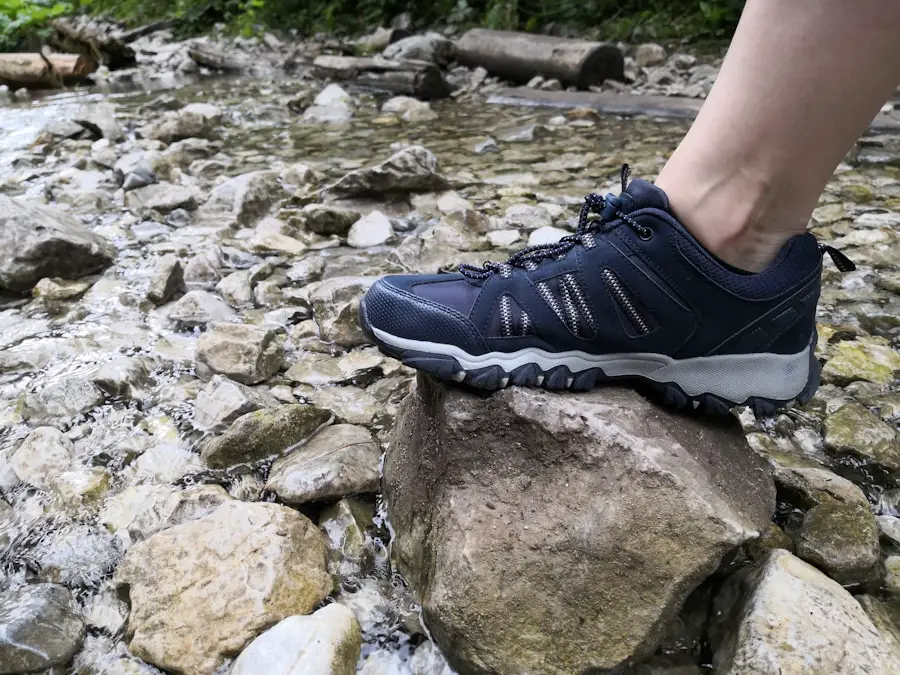
Yes, you can wear running shoes for some hikes, but the type of running shoe and the trail matter. Lightweight footwear can feel comfortable and agile on easy routes, while rough ground, mud, sharp rocks, cold weather, heavy packs, and unstable footing may call for trail-running shoes, hiking shoes, or boots with more grip, structure, and protection.
The biggest mistake is treating all running shoes as the same. A road-running shoe built for pavement is very different from a trail-running shoe with lugged rubber, a tougher upper, and protection from rocks and roots. Choosing between running shoes and hiking footwear should come down to terrain, weather, fit, pack weight, and your own history of foot or ankle problems.
Quick Answer
Running shoes can work for paved paths and easy, dry hikes, while trail-running shoes are usually the better lightweight choice on dirt, gravel, roots, and rocks. For rugged terrain, cold or wet conditions, heavy loads, or extra foot protection, hiking shoes or boots may be the safer and more durable option.
Key Takeaways
- Road-running shoes are best reserved for pavement and very smooth, dry, low-risk paths.
- Trail-running shoes are much better suited to normal hiking trails because they usually add lugs, tougher uppers, and more protection.
- Boots can provide more structure, durability, weather protection, and physical protection, but a high collar does not guarantee freedom from ankle sprains.
- Fit matters as much as footwear category: your heel should stay secure, your toes should not hit the front on descents, and there should be enough room for normal foot swelling.
- Choose footwear for the hardest conditions you reasonably expect on the hike, not just the easiest section of trail.
Disclosure: As an Amazon Associate I earn from qualifying purchases. Some links on this page are affiliate links, at no extra cost to you.
Can You Wear Running Shoes for Hiking?
For many easy day hikes, yes. Lightweight footwear can work well when the trail is dry, maintained, and not especially rocky or steep. The answer changes as soon as traction, foot protection, weather, or stability become more important.
The National Park Service recommends choosing footwear for the walking surface and specifically points hikers toward sturdy, rubber-soled hiking footwear for dirt and gravel routes. That does not mean every dirt trail requires a heavy leather boot, but it does show why ordinary pavement shoes should not automatically be treated as trail shoes.
A better rule is simple: road shoes are for road-like surfaces, while trail-running shoes are the lightweight option designed for genuine trails.
Road Running Shoes vs. Trail Running Shoes for Hiking
Road and trail shoes may look similar, but their construction can be very different. Current trail-footwear guidance emphasizes traction, underfoot protection, durable uppers, and stability on uneven ground.
| Situation | Better Starting Choice |
| Paved greenway or urban nature path | Road-running shoes can work well. |
| Smooth, dry, maintained dirt trail | Trail-running shoes or lightweight hiking shoes. |
| Loose gravel, roots, rocks, or moderate mud | Trail-running shoes with suitable lugs or hiking shoes. |
| Sharp rock, scree, rough off-trail terrain, or a heavier backpack | Rugged trail shoes, hiking shoes, or supportive hiking boots. |
| Snow, ice, very cold conditions, or routes requiring traction equipment | Weather-appropriate hiking or mountaineering footwear compatible with the conditions and required traction equipment. |
Why Trail Shoes Handle Dirt Better
Trail-running shoes commonly use lugged outsoles that bite into dirt, gravel, loose soil, and mud. Deep, widely spaced lugs are especially useful on soft or muddy surfaces, while shallower lugs can work well on hard-packed trails.
Many models also add reinforced toe areas, tougher uppers, and rock plates that help shield the underside of the foot from sharp stones. These features are major reasons a trail runner can be a practical hiking shoe even when a normal road trainer is not. The differences are explained in detail in current trail-running shoe guidance from REI and Salomon’s road-versus-trail footwear guide.
Pros of Wearing Running Shoes for Hiking
Lightweight and Freedom of Movement
Weight is one of the strongest reasons hikers choose running shoes or trail runners. A lighter shoe can feel less bulky and more responsive, especially on long, smooth routes where heavy protection is unnecessary.
Flexible trail runners can also make it easier to move naturally over changing ground. This is appealing to fast hikers and people who dislike the stiff feel of traditional boots.
Breathability and Comfort
Many running and trail-running shoes use mesh or other ventilated uppers. That airflow can be valuable during hot-weather hikes and can help moisture escape from around the foot.
Breathability does not mean the shoe will keep water out. A highly ventilated non-waterproof shoe can become wet quickly during a stream crossing or rainstorm. The advantage is ventilation rather than waterproofing.
Cushioning and Underfoot Comfort
Running shoes are designed around underfoot cushioning, and many hikers find that cushioning comfortable on long days. Some trail models range from minimal cushioning to thick, soft midsoles, so the best choice depends on the hiker and terrain.
Cushioning changes impact mechanics, but it should not be treated as a guarantee against knee, ankle, or other injuries. Research on running footwear shows that shoe construction affects biomechanics while the relationship between footwear and injury remains much more complex.
Note: Comfort is useful information. A shoe that causes heel movement, toe pressure, rubbing, numbness, or pain during a short test is unlikely to become a good hiking shoe simply because it has more cushioning.
Cons of Wearing Running Shoes for Hiking
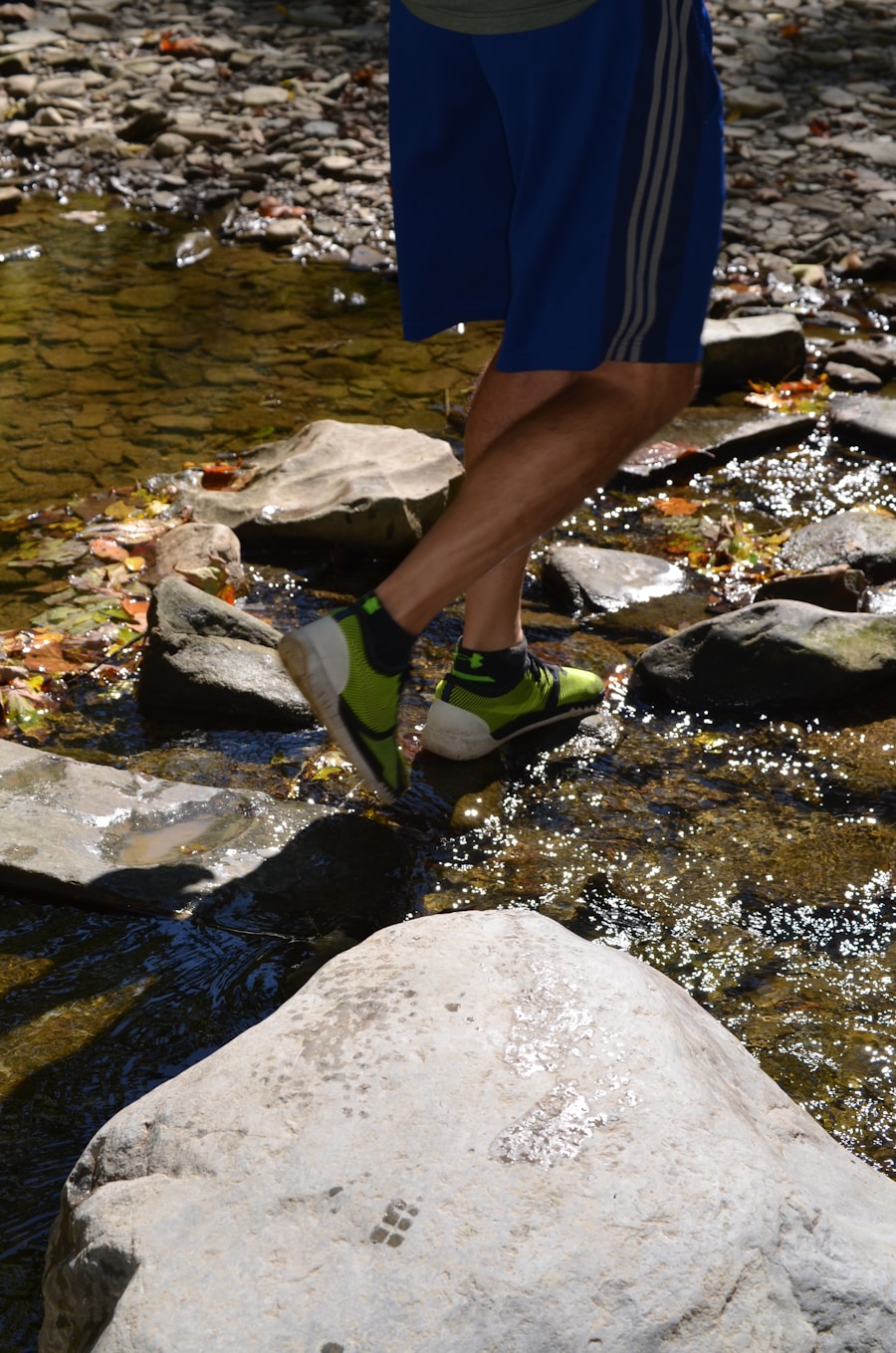
Running shoes also have limitations. The most important are usually traction, protection, durability, structure, and weather resistance rather than one simple question about ankle height.
Less Protection on Rough Ground
A soft road shoe can leave your toes and the bottom of your feet more exposed to sharp rocks, roots, and debris. Trail-running shoes often improve this with toe guards, stronger uppers, thicker rubber, or rock plates, while hiking shoes and boots typically go further.
Durability Can Be Lower
Lightweight construction comes with tradeoffs. Mesh uppers, exposed midsole foam, and lightweight outsole designs can wear faster when they are repeatedly scraped against rock, scree, roots, and brush.
For occasional hiking this may not matter. For frequent rugged hiking or backpacking, tougher hiking footwear can make more sense.
Ankle Support Is More Complicated Than It Looks
Low-cut running shoes do not surround the ankle the way a mid- or high-cut boot does. Higher footwear can provide more physical coverage and can change how the ankle moves during a sudden inversion.
However, saying that a high boot automatically prevents ankle sprains goes beyond the available evidence. A 2026 laboratory study of high- versus low-top footwear found that higher collars reduced inversion angle and velocity during controlled simulated inversion, but that study did not prove that hikers wearing boots experience fewer sprains in the real world.
The American Academy of Orthopaedic Surgeons also lists several ankle-sprain risk factors, including previous sprains, poor balance, slippery soles, and footwear that does not provide suitable support for the activity. Footwear is therefore only one part of the picture.
Warning: If you have chronic ankle instability, repeated ankle sprains, numbness, or persistent foot or ankle pain, do not rely on a shoe collar as treatment. Consider advice from a qualified medical professional before tackling difficult terrain.
Traction Varies Enormously
A road shoe may grip pavement well but perform poorly on loose dirt or mud. Trail-running shoes can have aggressive tread, but even trail shoes differ. Deep lugs are useful in soft terrain, while rubber compound, lug pattern, and surface area can change performance on rock and hard ground.
No outsole grips perfectly on every wet rock, root, patch of mud, or icy surface. Slow down when footing becomes uncertain.
Considerations for Choosing the Right Running Shoes for Hiking
| Consideration | What to Look For |
| Fit | A secure heel, no rubbing or pinching, and enough toe room for swelling and downhill movement. |
| Support | A stable platform that matches your foot, terrain, pack, and previous injury history rather than automatically choosing the highest collar. |
| Traction | A durable outsole with a lug pattern suited to packed dirt, loose soil, mud, rock, or mixed terrain. |
| Waterproofing | Choose waterproof footwear when keeping outside moisture out is a priority; choose breathable non-waterproof footwear when ventilation matters more. |
| Weight | Lighter shoes can feel more agile, while heavier footwear often adds structure, durability, and protection. |
| Toe Protection | A reinforced toe cap or bumper is useful where rocks, roots, and trail debris are common. |
| Underfoot Protection | A rock plate or stiffer midsole can make sharp, rocky trails more comfortable. |
| Pack Weight | A heavier backpack can make a stable, structured shoe more useful, especially on uneven ground. |
Start With the Terrain
Terrain should be the first filter. A paved route does not need the same outsole as a muddy mountain trail. Once rocks, loose soil, roots, and steep grades become common, a trail-specific outsole becomes far more useful.
For rugged or technical trails, look beyond lug depth. A secure upper, stable midsole, toe protection, and underfoot protection can matter just as much.
Get the Fit Right
A hiking shoe should feel snug enough to control the foot without squeezing it. Your toes need room to move, and they should not strike the front of the shoe when walking downhill.
Current trail-shoe fitting guidance recommends trying footwear later in the day, when feet are larger from normal swelling, and allowing about a thumbnail’s length of room ahead of the longest toe. Try both shoes because one foot may be slightly larger than the other.
Wear the same type of socks you expect to use while hiking. If you already use an orthotic or specific insole successfully, bring it when testing shoes because it changes the fit.
Pro Tip: Test the shoes on an incline before a long trip. Walk downhill and make sure your toes do not strike the front. Walk uphill and check that your heel is not repeatedly lifting and rubbing.
Consider Your Pack
A light daypack places different demands on footwear than a fully loaded backpack. A heavier load can make a wider, stiffer, more stable platform feel more secure on uneven terrain.
This does not create a universal pack-weight cutoff where everyone suddenly needs boots. Body size, experience, foot strength, trail difficulty, shoe construction, and individual comfort all matter.
A published study of long-distance hikers found that footwear category was not significantly associated with musculoskeletal injuries after adjustment, while pack weight was associated with reports of paresthesia. That is another reason not to reduce the decision to “boots safe, running shoes unsafe.” The study is available through PubMed.
Think About Weather Before Waterproofing
Waterproof shoes and boots can be valuable in cold rain, shallow snow, wet vegetation, and other conditions where keeping outside moisture away from the foot matters.
Non-waterproof mesh shoes prioritize ventilation. They can let rain or stream water in quickly, but they may feel cooler in hot weather. Neither approach is universally better.
For snow, ice, mountaineering terrain, or any route requiring specialized traction equipment, make sure the footwear is compatible with the conditions and equipment rather than assuming an ordinary running shoe will work.
When Running Shoes Are a Poor Choice for Hiking
Running shoes become a weaker choice as the consequences of poor traction, limited protection, or footwear failure increase.
- Deep mud: smooth road outsoles can lose traction quickly.
- Sharp scree or broken rock: soft uppers and flexible soles provide less protection.
- Cold, wet conditions: lightweight breathable shoes may not provide enough warmth or weather protection.
- Snow and ice: appropriate winter footwear and traction devices may be required.
- Heavy backpacking loads: some hikers prefer the more structured platform of hiking shoes or boots.
- Repeated ankle instability: footwear should be selected with your injury history in mind rather than relying on a generic recommendation.
- Off-trail travel: brush, sharp rock, unstable ground, and side-hilling can demand substantially more protection.
The best hiking footwear is not automatically the lightest shoe or the tallest boot. It is the shoe that fits your foot and matches the hardest terrain and weather you expect to encounter.
Tips for Making Running Shoes Work for Hiking
You do not normally need to “break in” a flexible running or trail-running shoe the way you might break in a stiff backpacking boot. A running shoe should feel comfortable from the start.
You should, however, test any new pair before committing to a long hike. Start with a walk or short trail outing and pay attention to heel movement, pressure points, toe contact, traction, and foot fatigue.
Wear Hiking-Appropriate Socks
The National Park Service recommends wool or synthetic socks that wick moisture for longer hikes. Avoid assuming a thick sock can fix a shoe that is the wrong size. Sock thickness changes fit, so test the combination together.
Carry a spare pair when wet feet are likely. Stop when you first notice a hot spot rather than waiting until it becomes a blister.
Use Lacing to Improve Fit
Lacing can help secure a loose heel or reduce pressure over a sensitive area. A runner’s-loop style lace pattern is one option for improving heel hold in a shoe that otherwise fits correctly.
Lacing cannot rescue a shoe that is fundamentally too long, too narrow, or the wrong shape for your foot.
Use Insoles Only When They Solve a Real Need
Do not assume that every hiker needs more arch support. Use the stock insole if it is comfortable, or use an aftermarket insole or orthotic that you already know works for you.
Persistent pain, numbness, or instability deserves individual assessment rather than trial-and-error increases in arch support.
Inspect the Shoes Before Longer Trips
Check the outsole for worn or missing tread, the upper for tears, and the midsole for obvious breakdown or uneven compression. Replace footwear when loss of grip, structure, or comfort becomes noticeable rather than relying on one universal mileage number.
Alternatives to Running Shoes for Hiking
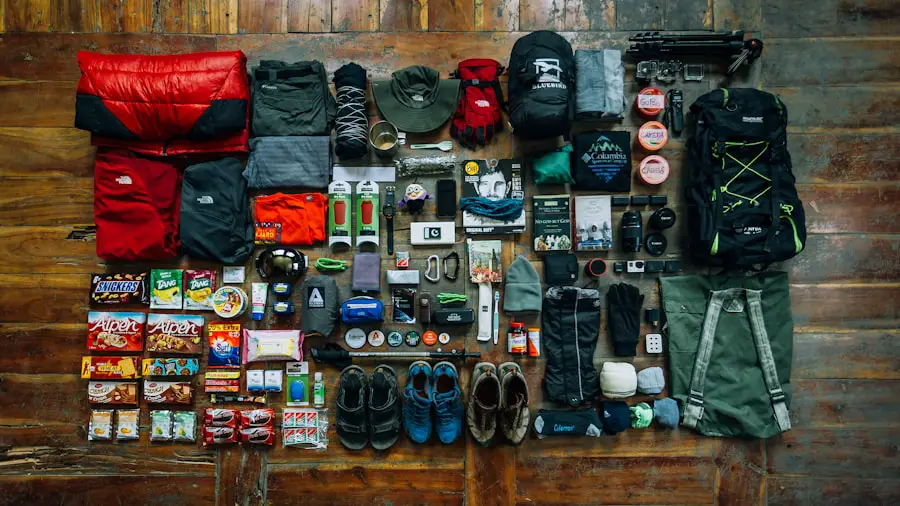
If normal running shoes do not match the terrain, several alternatives provide different combinations of weight, traction, weather protection, and durability.
Trail-Running Shoes
Trail runners are the natural middle ground for hikers who like the feel of running shoes. They remain relatively light and flexible but usually add trail-focused tread and stronger construction.
Some models include toe guards, rock plates, stiffer midsoles, or reinforced uppers. Most standard trail runners are still low-cut, so do not confuse underfoot stability with the ankle coverage of a boot.
Low-Cut Hiking Shoes
Hiking shoes can look much like trail runners but are generally designed around walking durability and stability. They are a strong option for hikers who want trail protection without a boot-height collar.
Lightweight Hiking Boots
Modern lightweight boots provide more coverage and structure without necessarily having the weight and stiffness associated with older traditional boots.
Waterproof versions can be useful in cold and wet conditions, while non-waterproof versions usually emphasize ventilation. Choose the version for the conditions rather than assuming waterproof is always better.
Hiking Sandals
Secure hiking sandals can work in certain warm-weather, low-risk environments or around frequent water crossings. They provide less protection from rocks, sticks, cold, and debris, and open-toe footwear is not a good general-purpose choice for difficult hiking terrain.
Expert Advice on the Topic
The most defensible expert advice is not that every hiker needs boots or that every hiker should switch to trail runners. Footwear should match the person and route.
The National Park Service emphasizes sturdy footwear and appropriate tread for hiking surfaces. AAOS identifies previous ankle sprains, slippery soles, poor balance, and inadequate activity-specific support as relevant ankle-sprain risk factors. Current trail-footwear guidance emphasizes fit, traction, protection, and terrain rather than shoe category alone.
For a day hike on an easy, dry trail with a light pack, a comfortable trail-running shoe can be an excellent option. For a rough multi-day route carrying more gear, a durable hiking shoe or boot may provide a more suitable platform and better protection.
New hikers should not feel obligated to buy the heaviest footwear available. They should instead choose a shoe that fits well, has enough grip and protection for the route, and feels predictable underfoot.
Making the Best Decision for Your Hiking Adventures
Running shoes can absolutely have a place on hiking trails, but the strongest choice is usually a trail-running shoe rather than an ordinary road trainer once the route leaves pavement.
Lightweight footwear offers breathability, agility, and comfort. Hiking shoes and boots generally offer more durability, structure, weather protection, and protection from rocks and debris. Neither category is automatically best for every person.
Before leaving, consider the trail surface, steepness, weather, pack weight, distance, your foot shape, and any history of ankle problems. Make sure the outsole still has useful tread, the heel stays secure, and your toes have room for descents and normal swelling.
The result should be footwear that lets you move confidently without rubbing, slipping, pinching, or forcing your feet to fight the shoe for the entire hike.
If your hiking trip also involves air travel, the existing guide to the best carry-on luggage for international travel can help with planning the rest of your travel gear.
Love travel? Join Our Facebook Community For More Tips.
Frequently Asked Questions
Can you wear running shoes for hiking?
Yes. Road-running shoes can work on paved paths and especially smooth, dry routes, while trail-running shoes are usually a better choice for dirt, gravel, roots, and rocks. Rugged terrain, bad weather, or a heavier pack may justify hiking shoes or boots.
What are the benefits of wearing running shoes for hiking?
Running shoes are often lightweight, flexible, breathable, and well cushioned. Those features can make them comfortable on easy hikes. Trail-running models add traction and protection that make them more suitable for off-pavement use.
Are there any drawbacks to wearing running shoes for hiking?
Yes. Road-running shoes may have limited grip, toe protection, underfoot protection, durability, and weather resistance compared with trail shoes or hiking footwear. Low-cut shoes also provide less ankle coverage than boots.
What should I consider when choosing running shoes for hiking?
Consider the terrain, weather, traction, fit, toe protection, underfoot protection, pack weight, and your history of foot or ankle problems. For actual dirt trails, a trail-running shoe is generally more appropriate than a road-running shoe.
Can I wear running shoes for hiking in wet conditions?
You can in some conditions, but check the outsole and upper. Non-waterproof mesh shoes ventilate well but let water in easily. Waterproof trail shoes or hiking footwear can provide more protection in cold rain, wet vegetation, mud, or shallow snow.
Are trail-running shoes better than road-running shoes for hiking?
Usually, yes. Trail-running shoes are designed for uneven off-road surfaces and commonly use lugged outsoles, stronger uppers, and protective features such as toe guards or rock plates. Road shoes are optimized mainly for pavement and other smooth surfaces.
Do hiking boots prevent ankle sprains better than running shoes?
Higher collars can provide more coverage and can limit some ankle-inversion movement in laboratory testing, but that does not prove that boots prevent all hiking ankle sprains. Previous injury, balance, terrain, traction, fit, and footwear stability also affect risk.
Sources
- U.S. National Park Service — Hike Smart — footwear, hiking socks, equipment, and trail-safety guidance.
- American Academy of Orthopaedic Surgeons — Sprained Ankle — ankle-sprain risk factors and prevention guidance.
- PubMed — High-Top Shoes Reduce Ankle Inversion Injury Risk — 2026 biomechanical evidence concerning shoe-collar height and ankle inversion.
- PubMed — The Impact of Footwear and Packweight on Injury and Illness Among Long-Distance Hikers — hiking-specific observational evidence on footwear and pack weight.
- REI Co-op — Trail-Running Shoes Buying Guide — trail-shoe traction, protection, construction, and fitting guidance.
- Salomon — Differences Between Trail Running and Road Running — manufacturer guidance on tread, protection, stability, and road-versus-trail footwear.