
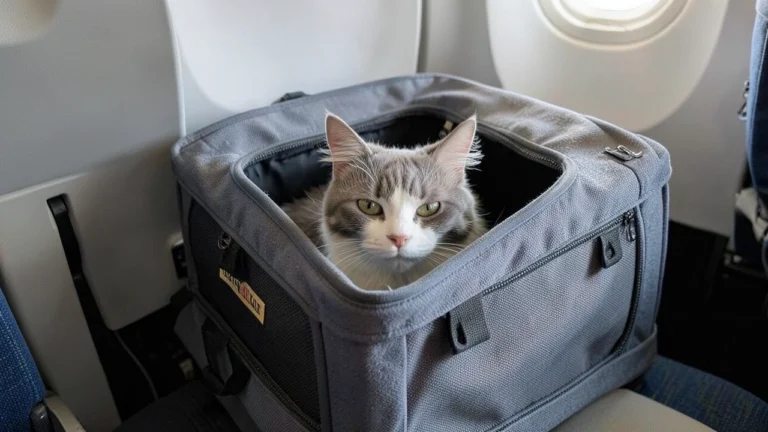
Flying with a cat takes more planning than flying alone, but it is very doable. If you are asking can you bring a cat on a plane, the answer is yes on most major U.S. airlines, in the cabin, in an approved carrier that fits under the seat in front of you. You pay a pet fee, you follow carrier size rules and your cat stays in the carrier for the whole flight.
This guide explains how booking works, what carrier you need, how TSA screening handles a cat, what paperwork is needed and how to keep your cat calm.
Quick Answer
Yes. Most U.S. airlines allow cats in the cabin in a soft-sided carrier that fits under the seat, for a pet fee that is typically around $100 to $150 each way. Cats count as your carry-on or personal item on many airlines, must stay in the carrier and may need a health certificate for some routes. Book early, because airlines limit the number of pets per flight.
Key Takeaways
- Cats fly in the cabin on most U.S. airlines in a carrier that fits under the seat.
- Expect a pet fee each way, and confirm the amount with your airline.
- Airlines cap the number of pets per flight, so reserve a spot as soon as you book.
- At TSA, you carry the cat through the metal detector while the empty carrier goes through the X-ray.
- International trips need vaccination records, a microchip and often a government-endorsed health certificate.
Airline Rules for Cats
Policies vary by airline, but the pattern is consistent. Cats travel in the cabin in a ventilated carrier that stays under the seat for the whole flight, including takeoff and landing. Most airlines require the pet to be at least eight weeks old and fully weaned, and many require advance reservation by phone or online. The carrier counts as your personal item or carry-on, so check the bag allowance for your fare type.
A few airlines do not accept pets in the cabin on certain routes or aircraft, and some do not carry pets in the cargo hold. Always check the airline’s pet policy page before you buy a ticket, and call to add the pet right after booking.
Choosing the Right Carrier
Airlines publish maximum carrier dimensions, often around 18 inches long, 11 inches wide and 11 inches tall for soft-sided carriers, although the exact figure differs by airline and aircraft. A soft-sided carrier that can compress slightly fits under the seat more easily than a hard case. Your cat must be able to stand up, turn around and lie down in a natural position.
| Carrier feature | What to look for | Why it matters |
|---|---|---|
| Size | Within airline’s under-seat limit | Gate agents measure carriers |
| Material | Soft-sided, with mesh ventilation | Compresses to fit under the seat |
| Closure | Secure zippers with locking tabs | Prevents escapes |
| Bottom | Waterproof and padded | Handles accidents |
| Access | Top and side openings | Easier to remove at security |
| Label | Name and phone number | Helps if you are separated |
Practice at home for several weeks. Leave the carrier open with a blanket and treats so that your cat treats it like a safe space.
How TSA Screens a Cat
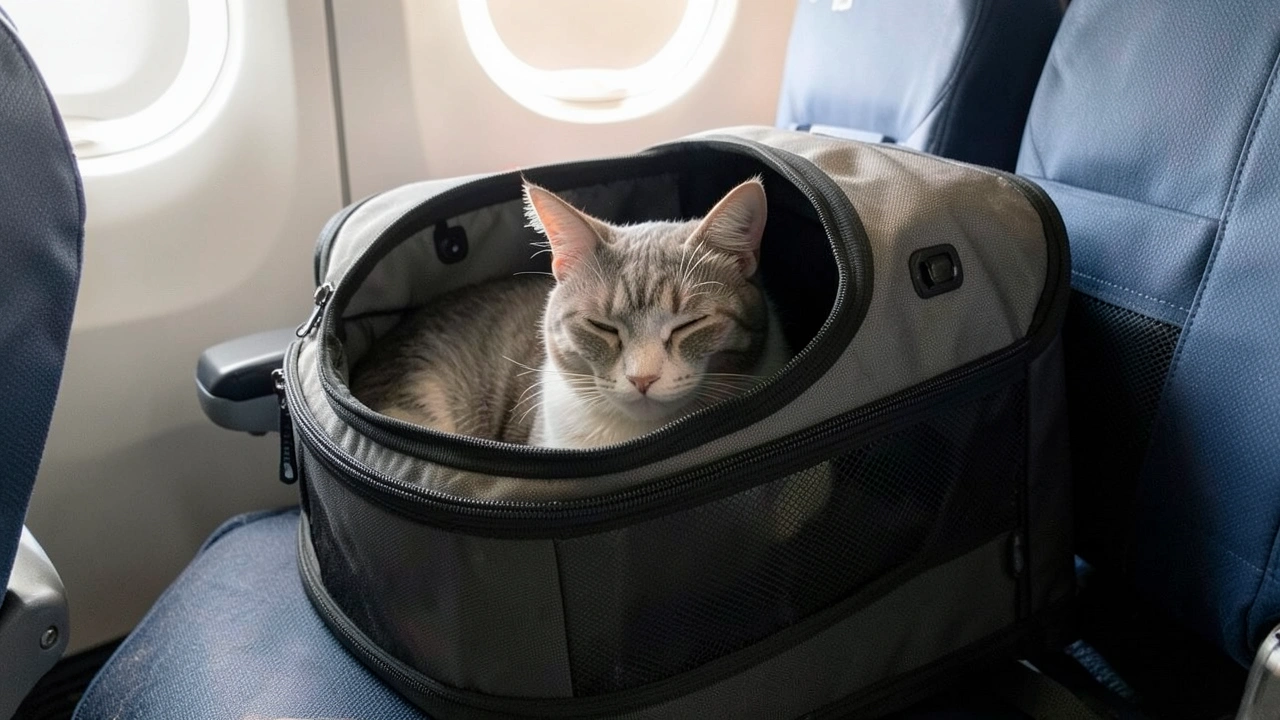
Pets cannot go through the X-ray machine. At the checkpoint, you take your cat out of the carrier and carry it through the metal detector or walk-through scanner while the empty carrier is X-rayed. A harness and leash help prevent a bolt, and many travelers ask for a private screening room if the cat is anxious. Do this in a quiet area and keep a firm, gentle hold. Do not let the cat walk through on the leash.
For other security tips, see how to speed through airport security and the TSA bag rules, which also apply to the bag you carry.
Health Certificates and International Rules
For domestic flights, many airlines do not require a health certificate, but some states and a few airlines do, and a recent vet visit is smart anyway. For international travel, you will need a microchip in most cases, up-to-date rabies vaccination, a health certificate from a veterinarian that is endorsed by the government agency in your country, and sometimes a waiting period or blood test. Hawaii and some island countries have strict quarantine rules. Start planning weeks or months before departure.
Keeping Your Cat Calm
- Do not sedate your cat unless your veterinarian specifically advises it, because sedatives can be risky at altitude.
- Feed a light meal about four to six hours before the flight and offer water before boarding.
- Line the carrier with an absorbent pad and a familiar blanket.
- Use a calming spray or a pheromone wipe on the blanket if your vet recommends it.
- Choose a direct flight, to cut down on handling and delays.
Frequently Asked Questions
Can you bring a cat on a plane in the cabin?
Yes, on most U.S. airlines, in a carrier that fits under the seat. Check the airline policy and book the pet spot early.
How much does it cost to fly with a cat?
Most airlines charge a pet fee each way, typically around $100 to $150. Confirm with your airline, since fees change.
Can a cat sit on your lap on a plane?
No. The cat must stay in the carrier under the seat for the whole flight.
Do you need a health certificate to fly with a cat?
It depends on the airline, state and destination. International travel nearly always requires one.
Can cats fly in cargo?
Some airlines allow it and others do not. The cabin is generally safer and more comfortable for cats.
Conclusion
So, can you bring a cat on a plane? Yes. Book the pet spot early, choose a soft carrier that fits under the seat, practice at home and plan for the TSA handoff at the checkpoint. For international trips, start the paperwork well ahead.
Keep Reading
- Speeding Through Airport Security: Tips for Faster Screening: Security tips
- TSA Rules for Backpacks: Quick Guide & Helpful Tips: Carry-on rules
- Can You Bring a Blanket on a Plane? Rules and Tips: Comfort items for the flight
- How Many Oz Can You Bring on a Plane? Liquid Limits: Liquids for the trip
