
Last Updated on September 10, 2026 by Daniel Globe
SAGUARO makes several types of minimalist or barefoot-style hiking footwear, and their ability to handle water depends on the exact model. Some current SAGUARO hiking shoes are specifically marketed as waterproof, while others are not waterproof and are designed to dry relatively quickly after getting wet. That distinction matters before you head into rain, mud, wet grass, or stream crossings.
Quick Answer
Yes, SAGUARO hiking shoes can get wet, but not every model is waterproof. SAGUARO currently identifies its Brave hiking series as waterproof, while other hiking models may use quick-drying materials instead. For repeated immersion or water sports, a dedicated SAGUARO water shoe is generally a better choice.
Key Takeaways
- Do not assume every SAGUARO hiking shoe is waterproof; check the exact model before buying or heading into sustained rain.
- SAGUARO says its Brave hiking series has static-waterproof protection and reports laboratory testing involving 4 cm of water for 4 hours.
- Other SAGUARO hiking models may be non-waterproof but quick-drying, which can work well when getting wet is acceptable.
- Many SAGUARO hiking shoes are minimalist, with flexible zero-drop construction and less traditional cushioning or support than conventional hiking shoes.
- After cleaning or soaking a pair, remove the insoles when appropriate and air-dry the shoes away from dryers, radiators, and other strong heat sources.
Warning: “SAGUARO hiking shoes” describes several different designs. A waterproof claim for one model should never be assumed to apply to another model. Check the current product description before relying on a pair for prolonged wet conditions.
Disclosure: As an Amazon Associate I earn from qualifying purchases. Some links on this page are affiliate links, at no extra cost to you.
Material and Design of SAGUARO Hiking Shoes
SAGUARO hiking footwear differs from many traditional hiking shoes because much of the range follows a barefoot or minimalist design. The brand’s current barefoot shoes commonly emphasize a wide toe box, flexible construction, a relatively thin sole, and zero heel-to-toe drop rather than heavy cushioning and rigid support.
Materials also vary by model. SAGUARO lists materials such as mesh, Oxford fabric, microfiber suede, and other synthetic uppers across its footwear range. Its hiking models can therefore differ substantially in breathability, drying time, weather protection, and durability. The safest approach is to check the specifications of the exact model rather than treating every SAGUARO shoe as having the same construction.
The outsole is another important difference. SAGUARO says its outdoor-oriented soles are designed to provide traction while preserving flexibility and ground feel. That can be attractive to hikers who prefer minimalist footwear, but it is not the same experience as a conventional hiking shoe with a thick foam midsole, stiff shank, substantial heel cushioning, and structured lateral support.
Note: If you normally hike in thick, supportive footwear, a barefoot-style SAGUARO shoe may feel dramatically different. Research on transitions to minimalist footwear supports increasing exposure gradually rather than abruptly switching all of your walking, running, or hiking mileage at once.
Water Resistance Features of SAGUARO Hiking Shoes
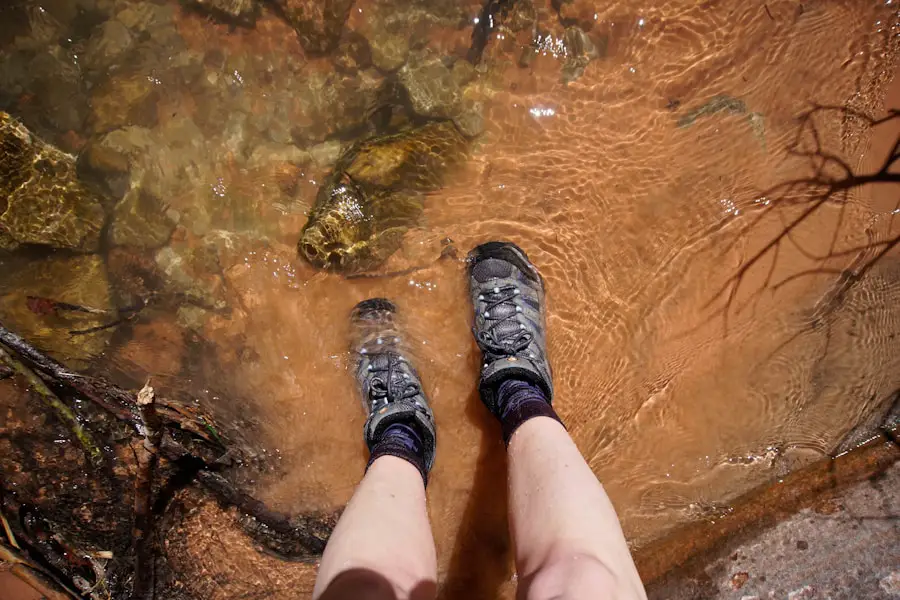
The most important fact is that water protection is model-specific. According to SAGUARO’s current hiking-shoe information, its Brave series has what the company describes as static-waterproof functionality. Other hiking series are described as non-waterproof and rely instead on quick-drying materials.
SAGUARO currently markets models such as the Brave I and Brave IV as waterproof footwear. The company states that its Brave waterproof construction has been tested by placing the shoes in 4 cm of water for four hours without water penetration.
SAGUARO reports that its Brave series remained dry during a static test involving 4 cm of water for four hours. That is a manufacturer-reported test, not a guarantee that water can never enter a shoe during real-world hiking.
That distinction is important. Moving through water puts footwear through flexing, abrasion, mud, pressure changes, and repeated wetting that a static test may not reproduce. Water can also enter from above the collar of a low-cut shoe even when the upper itself resists penetration.
The original claim that SAGUARO commonly uses GORE-TEX membranes should not be relied upon. Current SAGUARO hiking product information does not identify GORE-TEX as a standard technology in this range. When a manufacturer uses genuine GORE-TEX footwear technology, it is normally identified specifically as such.
Performance of SAGUARO Hiking Shoes in Wet Conditions
| Condition | What to Expect |
| Light rain and wet grass | A waterproof Brave model is the better choice when keeping socks dry is important. Non-waterproof models may eventually wet through. |
| Mud and damp trails | Outdoor-oriented soles can provide useful traction, but no hiking shoe can guarantee grip on wet rock, roots, algae, ice, or deep mud. |
| Shallow puddles | Waterproof models should offer better protection as long as water remains below the opening of the shoe. |
| Repeated stream crossings | A quick-draining water shoe may be more practical than trying to keep a low-cut hiking shoe completely dry. |
| Prolonged immersion | Do not assume ordinary hiking footwear is intended for swimming, kayaking, or continuous immersion unless the exact model is made for that purpose. |
For wet trails, the choice between waterproof and quick-drying footwear depends on how you hike. Waterproof shoes can be useful in rain, dew, mud, and shallow standing water because they delay water entering through the upper. However, once water pours into a waterproof shoe from the top, it can take longer to escape.
A breathable, non-waterproof model takes the opposite approach. Your feet may get wet sooner, but a lightweight upper can dry faster afterward. This can make sense in warm weather, during frequent shallow crossings, or on trips where avoiding water altogether is unrealistic.
Traction also deserves realistic expectations. Tread can improve grip, but wet rock, slick roots, algae, ice, and clay mud can overwhelm almost any outsole. Slow down, shorten your steps, and test uncertain surfaces before committing your full weight.
Pro Tip: Before a wet hike, look up the exact SAGUARO model name printed on your order or shoe and confirm whether its current product page says “waterproof,” “water-resistant,” or “quick-drying.” Those terms should not be treated as interchangeable.
Tips for Maintaining Water Resistance of SAGUARO Hiking Shoes
Proper cleaning and drying can help preserve the materials and construction of your shoes. SAGUARO’s published care guidance distinguishes between machine-washable and non-machine-washable models, so check the instructions for your specific pair before washing it.
1. Remove Loose Dirt First
After a muddy hike, let heavy mud loosen or dry enough to brush away without grinding grit deeper into the upper. Use a soft brush for the outsole and upper where appropriate.
2. Follow the Correct Washing Method
For models that SAGUARO identifies as machine washable, its guidance calls for removing the laces and insoles, using cold water and mild detergent on a gentle cycle, and placing the shoes in a delicate wash bag or similar protective bag.
For non-machine-washable models, SAGUARO recommends gentle hand cleaning with a soft brush, warm water, and a small amount of mild detergent, followed by wiping away excess cleaning solution with a damp cloth.
3. Air-Dry the Shoes
Remove the insoles when appropriate and allow the shoes to air-dry at room temperature. Avoid a tumble dryer, radiator, hair dryer, or other concentrated heat source. Strong heat can damage adhesives, coatings, synthetic materials, and shoe shape.
4. Be Careful With Aftermarket Waterproofing Products
Do not automatically apply wax, silicone spray, or another waterproofing chemical to every SAGUARO model. Treatments that work well on one upper material may alter the breathability, appearance, flexibility, or finish of another. Follow the care recommendations for the exact shoe material before adding a coating.
Comparison With Other Water-Resistant Hiking Shoes
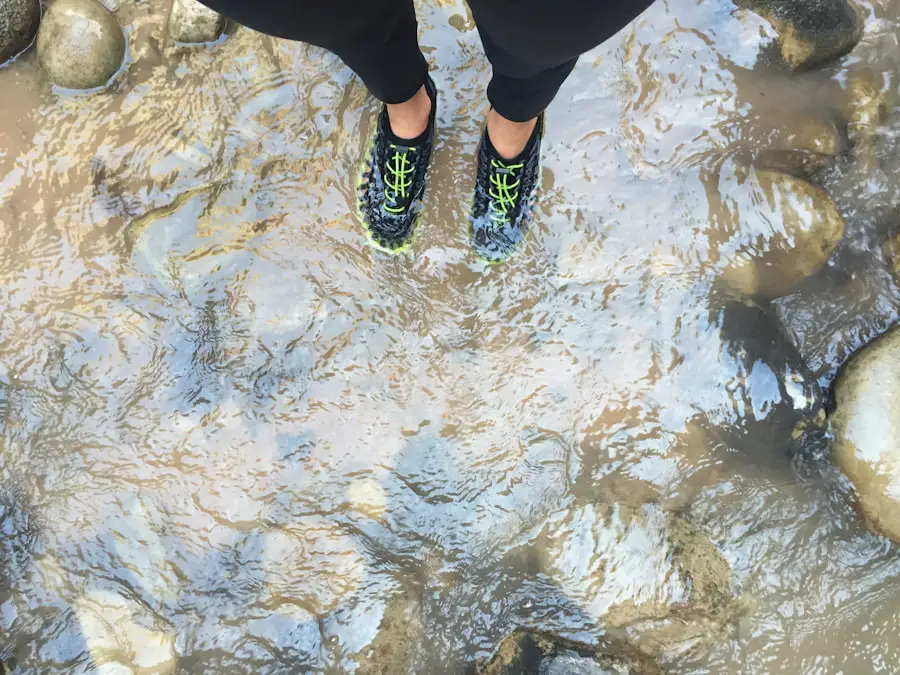
SAGUARO occupies a different part of the hiking-footwear market from many conventional models sold by Merrell, Salomon, and Columbia. The difference is not simply price or waterproofing; it is also how the shoe is intended to interact with your foot.
For example, the current Merrell Moab 3 Waterproof uses a waterproof membrane, cushioning, an arch shank, and an 11.5 mm heel-to-toe drop. The Salomon X Ultra 5 GORE-TEX uses a GORE-TEX membrane, structured stability features, cushioning, and an 11 mm drop.
SAGUARO’s barefoot hiking footwear generally moves in the opposite direction: wider toe space, zero drop, flexibility, lower weight, and less conventional support. Neither design philosophy is automatically best for everyone. The right choice depends on your experience with minimalist footwear, foot comfort, pack weight, terrain, distance, and how much protection you want underfoot.
Note: Minimalist footwear can change how loads are distributed through the feet and lower legs. A systematic review of transitions to minimalist footwear found that studies generally introduced exposure progressively rather than switching participants immediately to full-time minimalist use.
Customer Reviews and Feedback on SAGUARO Hiking Shoes’ Water Resistance
Customer reviews can be useful, but they should be read model by model. SAGUARO updates and rotates its footwear lineup, and two shoes sold under the same broad “barefoot” or “hiking” category may have very different uppers, soles, insulation, and water protection.
When reading reviews, look for details that match how you plan to use the shoes. A report that a pair stayed dry while walking across wet grass tells you much less about prolonged rain or a stream crossing. Likewise, one person’s positive experience on packed trails does not prove that the outsole will provide the same grip on slick rock or steep mud.
Pay particular attention to the exact model name, weather conditions, water depth, length of exposure, and whether water entered through the upper or simply poured over the collar. Those details are more useful than broad statements such as “completely waterproof” or “great in all conditions.”
Can SAGUARO Hiking Shoes Handle Water?
Yes, but the answer depends on the model. SAGUARO’s current Brave hiking shoes are specifically marketed as waterproof, and the company reports static testing in 4 cm of water for four hours. Other SAGUARO hiking models are not necessarily waterproof and may instead rely on lightweight, quick-drying construction.
For ordinary wet trails, rain, damp grass, and shallow puddles, a waterproof Brave model is the logical choice when keeping your feet dry is the priority. For frequent water crossings where the shoe is likely to become soaked anyway, a quick-drying or purpose-built water shoe may make more sense.
SAGUARO also sells barefoot water shoes specifically for environments such as beaches, pools, rivers, and other wet activities. Some models incorporate drainage-oriented designs, making them better suited to repeated immersion than ordinary hiking footwear.
Winter is also model-dependent. Rather than assuming all SAGUARO shoes are unsuitable for snow, look for footwear designed specifically for cold and wet conditions. For example, the company’s Rise IV is marketed as a waterproof winter barefoot boot for rain and snow.
If wet weather is only one part of a longer backpacking trip, footwear is just part of staying comfortable. Keeping your sleep system protected from moisture matters as well; see this guide to the best sleeping bag for backpacking travel.
Love travel? Join Our Facebook Community
Sources
- SAGUARO Barefoot Hiking Shoes & Boots — current hiking lineup and Brave-series waterproof guidance.
- SAGUARO Brave I — current waterproof model information and manufacturer care guidance.
- SAGUARO Brave IV — current waterproof barefoot hiking model information.
- SAGUARO Barefoot Water Shoes — water-specific, quick-drying footwear options.
- PubMed: Transitioning to Minimal Footwear — Systematic Review — evidence supporting progressive exposure when transitioning to minimalist footwear.
- SAGUARO Rise IV Winter Barefoot Boots — current waterproof winter model intended for rain and snow.
Frequently Asked Questions
What are SAGUARO hiking shoes?
SAGUARO hiking shoes are generally minimalist or barefoot-style outdoor shoes. Depending on the model, they may feature a wide toe box, zero-drop platform, flexible rubber outsole, lightweight upper, quick-drying construction, or waterproof protection.
Can SAGUARO hiking shoes get wet?
Yes. They can physically get wet, but whether your feet stay dry depends on the model. SAGUARO currently markets its Brave hiking series as waterproof, while other hiking models may be non-waterproof and quick-drying.
Are all SAGUARO hiking shoes waterproof?
No. SAGUARO’s current hiking guidance specifically identifies the Brave series as having its static-waterproof functionality. Other hiking series are described as non-waterproof and quick-drying, so always verify the exact model.
How waterproof are SAGUARO Brave shoes?
SAGUARO reports that its Brave series remained free of water penetration during a static test involving 4 cm of water for four hours. Treat this as a manufacturer test rather than a guarantee of unlimited waterproofing during moving-water crossings or situations where water can enter over the shoe collar.
How should I care for SAGUARO hiking shoes after they get wet?
Follow the instructions for your exact model. SAGUARO recommends gentle hand cleaning for non-machine-washable shoes and cold, gentle washing for models specifically identified as machine washable. Remove insoles when appropriate and air-dry the shoes at room temperature rather than using a dryer, radiator, or direct high heat.
Are SAGUARO hiking shoes suitable for water activities?
Ordinary hiking models are not necessarily the best option for swimming, kayaking, or repeated immersion. SAGUARO has a separate water-shoe range designed for wet environments, including quick-drying models and designs with drainage features.
Can I wear SAGUARO shoes in the snow?
It depends on the model. Lightweight summer or low-cut hiking shoes should not automatically be treated as winter footwear. SAGUARO also sells dedicated waterproof winter barefoot boots, including the Rise IV, which the company markets for winter rain and snow.
Do SAGUARO hiking shoes provide the same support as traditional hiking shoes?
Generally, no. Many SAGUARO hiking models deliberately use minimalist construction with zero drop, high flexibility, and less conventional cushioning or structural support. Hikers accustomed to supportive boots should introduce minimalist footwear gradually and judge comfort on easier terrain before attempting long or technical hikes.

