
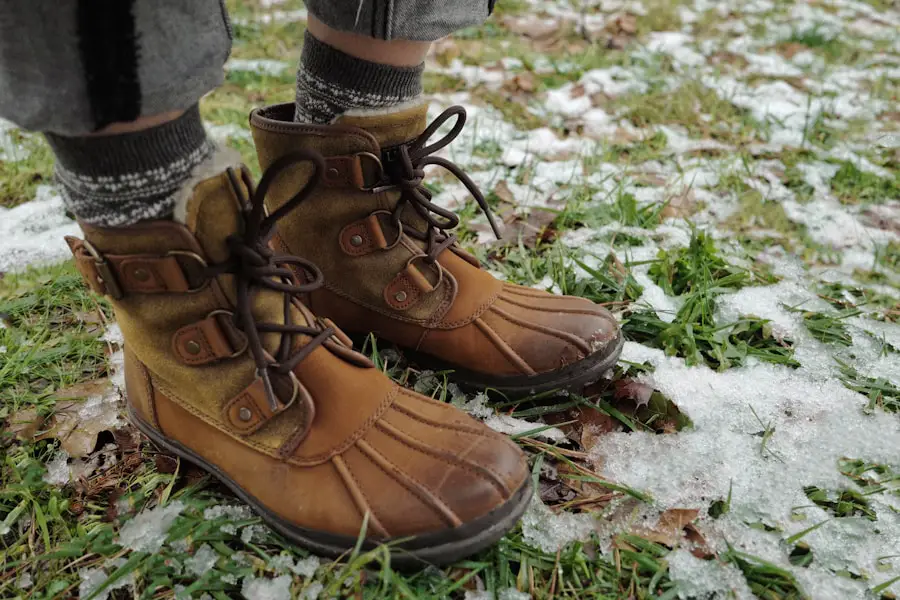
Last Updated on July 27, 2026 by Daniel Globe
Hiking boots can work very well in snow, but the right choice depends on how deep the snow is, how cold it is, and whether the trail is soft, packed, or icy. A waterproof summer hiking boot may be enough for a short walk through shallow snow, while cold temperatures, deep snow, or steep ice can require insulated winter footwear and additional traction.
Quick Answer
Yes, you can use hiking boots in snow if they fit well, keep your feet dry, and provide enough warmth for the conditions. For packed snow or ice, add an appropriate traction device. Deep snow may also require gaiters or snowshoes, while steep alpine snow and ice can require crampon-compatible mountaineering boots.
Key Takeaways
- Waterproof hiking boots can work well in shallow or packed snow, but waterproofing does not automatically mean the boot is warm enough for severe cold.
- Deep lugs help in snow, but normal boot tread should not be relied on as the only protection against hard ice.
- Use over-the-shoe traction on icy trails and reserve technical mountaineering crampons for terrain and footwear designed for them.
- For deep snow, gaiters help keep snow out of your boots, while snowshoes improve flotation when you would otherwise sink.
- Winter boots should fit snugly without squeezing your toes or compressing thick socks enough to restrict circulation.
Disclosure: As an Amazon Associate I earn from qualifying purchases. Some links on this page are affiliate links, at no extra cost to you.
What Makes Hiking Boots Suitable for Snow?
Hiking boots are designed to protect the feet on rough terrain using a combination of a durable upper, supportive midsole, protective toe area, and lugged outsole. Compared with casual shoes, many hiking boots also provide greater protection from rocks, mud, moisture, and trail debris.
The upper may use leather, synthetic fabric, or a combination of materials. The midsole provides cushioning and affects how flexible or stiff the boot feels, while the outsole supplies contact with the trail. According to REI’s hiking-footwear guidance, the appropriate level of support, waterproofing, and stiffness depends on the terrain, trip length, and intended use.
For snow, pay particular attention to four things: waterproofing, warmth, outsole traction, and fit. The more technical the terrain becomes, the more important boot stiffness and compatibility with external traction equipment also become.
Choose Footwear and Traction for the Snow Conditions
| Trail Condition | Footwear | Extra Equipment | Main Concern |
|---|---|---|---|
| Light or shallow snow | Waterproof hiking boots may be sufficient | Gaiters if snow enters over the cuff | Keeping feet dry |
| Packed snow | Waterproof hiking or winter hiking boots | Traction device when the surface becomes slick | Slipping |
| Icy hiking trail | Secure hiking or winter boots | Over-the-shoe traction suited to the trail | Ice cannot be treated like ordinary snow |
| Deep, soft snow | Warm waterproof boots | Gaiters and often snowshoes | Flotation and snow entering the boots |
| Steep hard snow, glacier travel, or technical ice | Appropriate mountaineering boots | Compatible mountaineering crampons and technical skills | Technical fall and terrain hazards |
The Importance of Traction in Snow and Ice
Snow changes the way a hiking boot interacts with the ground. Deep, widely spaced lugs can bite into soft or packed snow and help shed material from the outsole. Rubber formulation also matters because outsole compounds can behave differently as temperatures fall.
However, an aggressive hiking outsole is not the same thing as an ice traction device. Even a high-quality boot can slip on hard, polished ice. The National Park Service recommends over-the-shoe traction devices when walking on ice and snow.
Some manufacturers use winter-specific rubber compounds. For example, Vibram Arctic Grip All Terrain is specifically designed to improve grip on wet ice and mixed winter surfaces. That does not mean every outsole carrying the Vibram name has the same ice performance.
Warning: Do not rely on boot tread alone for steep or heavily iced trails. Carry traction appropriate for the route, check current trail and weather conditions, and turn around if conditions exceed your equipment or experience.
Traction Cleats, Microspike-Style Devices, and Crampons
Not all traction devices serve the same purpose. Lightweight over-the-shoe devices are commonly used on icy hiking trails and packed snow. More aggressive chain-and-spike systems can offer considerably more bite than a normal outsole while remaining practical for walking.
Technical mountaineering crampons are different. They use larger metal points and are designed for steeper snow, glaciers, mountaineering, and ice-oriented terrain. Their compatibility depends on both the crampon binding and the boot.
Insulation and Waterproofing Features

Waterproofing is one of the most useful features for hiking through snow because body heat can melt snow against the boot. Waterproof membranes such as GORE-TEX footwear technology are designed to keep liquid water out while allowing water vapor to escape.
Waterproofing and insulation are not the same thing. A waterproof three-season hiking boot can still feel cold when temperatures fall. For colder outings, an insulated winter hiking boot or mountaineering boot may be more appropriate.
Some winter boots list insulation in grams. Within the same insulation family, more insulation generally provides greater thermal resistance, but the number should not be treated as a universal temperature rating. 3M’s Thinsulate footwear information, for example, includes several insulation weights with different thermal values, while the warmth of a finished boot also depends on its complete construction.
Note: A boot’s insulation weight is useful for comparing similar models, but it cannot tell you by itself the lowest temperature at which your feet will remain comfortable. Activity level, socks, wind, moisture, fit, circulation, and individual cold tolerance all matter.
Do You Need Gaiters?
Waterproof boots cannot keep your feet dry if loose snow repeatedly falls over the top of the cuff. Gaiters cover the gap between your pants and footwear and are especially useful in deep, loose, or windblown snow. REI’s cold-weather hiking guidance recommends gaiters for keeping snow out of boots in deep conditions.
Compatibility with Crampons and Snowshoes
Crampons and snowshoes solve different winter problems. Crampons increase bite on hard snow and ice. Snowshoes spread your weight over a larger area so you do not sink as deeply into soft snow.
Crampon Compatibility
Do not assume that every hiking boot accepts every crampon. Binding systems vary.
- Universal or strap-style systems: Designed to fit a wider range of footwear and may work with boots that do not have dedicated heel or toe welts.
- Semi-automatic systems: Typically require a compatible heel welt and use a flexible front attachment.
- Automatic systems: Normally require purpose-built mountaineering boots with the appropriate toe and heel interfaces.
Petzl’s current crampon system includes configurations for footwear with and without welts. The key is to follow the crampon manufacturer’s compatibility instructions and test the exact boot-crampon combination before relying on it outdoors.
Purpose-built mountaineering footwear illustrates the difference. The La Sportiva Nepal Cube GTX, for example, uses a stiff midsole graded for crampon attachment and is intended for winter mountaineering and ice climbing.
Snowshoe Compatibility
Snowshoe bindings are generally less dependent on boot welts or rigid soles. What matters most is whether the binding securely fits the size and shape of the winter footwear without creating painful pressure points or allowing the foot to shift.
Try the snowshoe binding with the exact boots you intend to wear. The boot should be warm and waterproof enough for the conditions, and its sole should sit securely in the binding.
Pro Tip: Test snowshoes, traction devices, and crampons with your winter boots at home before the trip. Check sizing, strap length, heel security, and whether the hardware interferes with the boot.
Proper Fit for Snowy Conditions
Boot fit becomes especially important in winter because thicker socks and insulation take up space. A winter hiking boot should feel secure without squeezing your foot. Your toes should have room to move, and they should not hit the front of the boot when walking downhill.
REI recommends hiking footwear that is snug but not tight, with room for the toes. It also suggests checking fit with the socks you intend to wear.
Do not automatically solve cold feet by adding increasingly thick socks to the same boot. If the combination becomes too tight, circulation can be restricted, which can make your feet colder. Wool or synthetic hiking socks are generally preferable to cotton because they manage moisture more effectively.
Feet can also change volume over a long day of walking, so evaluate the fit after spending time on your feet rather than judging the boot only during the first few minutes.
Winter Boot Fit Checklist
- Wear the winter socks you expect to hike in.
- Make sure your toes can wiggle freely.
- Check that your heel remains reasonably secure while climbing.
- Walk down an incline and confirm your toes do not hit the front.
- Watch for pressure points across the instep or sides of the foot.
- Confirm gaiters or traction devices do not make the boot uncomfortably tight.
When Regular Hiking Boots Are Not Enough
Regular waterproof hiking boots are often adequate for mild winter hikes on maintained trails. They become a poorer choice as cold, snow depth, exposure, and terrain difficulty increase.
Consider an insulated winter hiking boot when you expect prolonged snow exposure or temperatures low enough that an uninsulated boot cannot keep your feet comfortable. Consider mountaineering boots when the route involves glaciers, steep snow, technical ice, or crampons that require dedicated boot interfaces.
The National Park Service notes that winter trail conditions can change the required equipment: deep fresh snow may call for snowshoes, while heavily packed trails can become icy enough that additional traction is necessary.
The best winter footwear is determined by the trail surface, temperature, snow depth, and terrain—not simply by whether the product is labeled a “hiking boot.”
Maintaining Hiking Boots After Snow
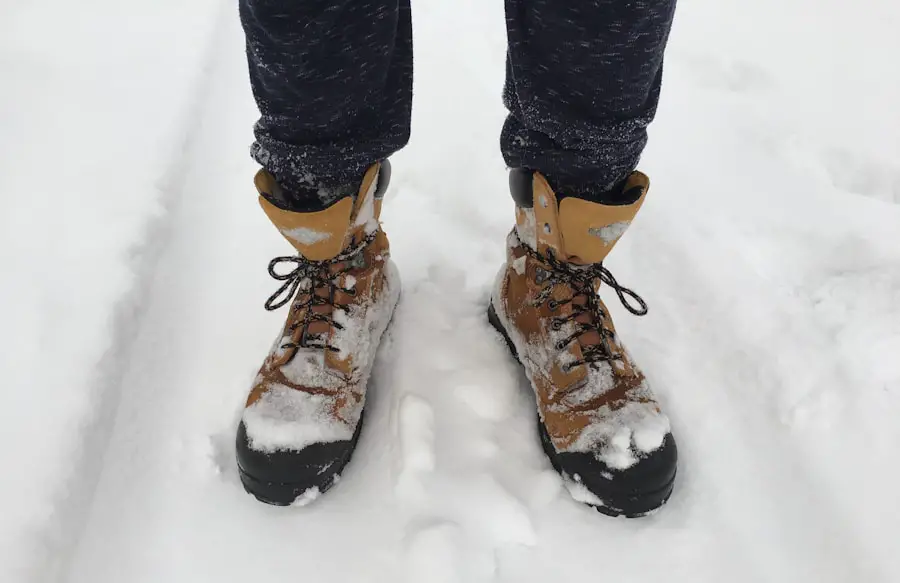
Snow, mud, road salt, and grit should not be left on hiking boots indefinitely. After a winter hike, remove the laces if necessary and use a soft brush to clear dirt and debris from the upper and outsole.
For a deeper cleaning, use a product appropriate for the boot material. REI’s hiking boot care guidance recommends cleaning away accumulated dirt and avoiding washing machines and harsh detergents that can damage footwear.
Water-repellent treatments also wear down over time. When water stops beading on the exterior material and begins soaking into the upper, renew the treatment with a product designed for that material and follow the boot manufacturer’s instructions.
Full-grain leather may also need occasional conditioning when it becomes dry. Suede, nubuck, fabric, and membrane-equipped boots have different care requirements, so do not apply a generic leather wax or conditioner to every boot.
After cleaning, remove the insoles and let the boots dry at normal room temperature in a ventilated location. Avoid campfires, radiators, heaters, or other strong heat sources because excessive heat can damage leather and adhesives.
Alternatives to Hiking Boots in Snow
Hiking boots are not the only option for snowy conditions. The best alternative depends on the type of trip.
Insulated Winter Boots
For cold walks, snow-covered campsites, and less technical winter terrain, insulated winter boots can provide more warmth than standard hiking footwear. Choose a model that still offers enough walking comfort, heel security, and outsole traction for the distance you plan to cover.
Mountaineering Boots
Mountaineering boots are considerably stiffer than ordinary hiking footwear and are designed for snow-covered peaks, glaciers, and technical terrain. Many models offer specific compatibility with semi-automatic or automatic crampons.
Trail Running Shoes
Trail running shoes can be useful on short, well-packed winter routes when temperatures are mild and the user accepts less insulation and weather protection. Waterproof versions and gaiters can help manage moisture and loose snow, but this lightweight setup is not equivalent to a true winter boot in deep snow or severe cold.
Snowshoes
Snowshoes are not a substitute for boots; they attach over suitable footwear. Their purpose is to provide flotation in snow deep or soft enough that normal walking becomes inefficient. Wear warm, weather-resistant footwear that fits the snowshoe binding securely.
Using Hiking Boots in Snow
Hiking boots can be an excellent choice for winter trails when their capabilities match the conditions. Waterproofing helps manage melting snow, suitable insulation keeps cold from overwhelming your feet, and a secure fit supports comfortable movement. On icy trails, add appropriate traction instead of assuming an aggressive outsole is enough.
For deeper snow, consider gaiters and snowshoes. For steep alpine snow or ice, move beyond ordinary hiking footwear and use properly matched mountaineering boots and crampons.
Warning: Winter trail conditions can change quickly. Check the weather, current trail information, and avalanche conditions where relevant. Carry navigation and emergency gear, and be prepared to turn around if the terrain becomes more technical than your footwear, traction equipment, or experience can safely handle.
Socks are another important part of a winter footwear system. Merino wool and synthetic hiking socks can provide insulation while managing moisture better than cotton. For more detail, see this guide to merino wool travel socks. Choose sock thickness based on the available space inside your boots rather than assuming thicker is always warmer.
Frequently Asked Questions
What are hiking boots?
Hiking boots are outdoor footwear designed for walking on trails and uneven terrain. Depending on the model, they may provide durable uppers, protective toe areas, supportive midsoles, lugged outsoles, higher cuffs, and waterproof membranes.
Can I use hiking boots in snow?
Yes. Waterproof hiking boots can work well in shallow or packed snow when they provide enough warmth for the temperature. Deeper snow may require gaiters or snowshoes, while icy trails often require an additional traction device.
What features should hiking boots have for use in snow?
Look for a secure fit, weather protection, adequate warmth, and an outsole designed for the terrain. A higher cuff can also help with snow and debris. For icy routes, treat a traction device as separate equipment rather than expecting the outsole alone to provide dependable grip.
Are all hiking boots suitable for snow?
No. Breathable non-waterproof boots can become wet quickly in melting snow, and uninsulated boots may not provide enough warmth in very cold conditions. The correct choice depends on snow depth, temperature, trail surface, exposure, and trip duration.
Can I use regular hiking boots in light snow?
Often, yes. A well-fitting waterproof hiking boot can be sufficient for shallow snow during a mild winter hike. Monitor your foot warmth and trail traction, and carry additional traction if packed snow could become icy.
Do hiking boots need to be insulated for snow?
Not always. Insulation depends more on temperature, duration, activity level, and individual cold tolerance than on the presence of snow alone. Mild conditions may be comfortable in waterproof uninsulated boots with suitable socks, while colder conditions can justify insulated footwear.
Do I need crampons for hiking in snow?
Not for every snowy hike. Ordinary snowy or icy trails may call for lighter over-the-shoe traction. Technical mountaineering crampons are intended for more demanding hard-snow, glacier, alpine, or ice terrain and must be compatible with your boots.
Sources
- U.S. National Park Service — Winter Hiking Tips — winter footwear, traction, trail conditions, navigation, and safety.
- REI — Cold-Weather Hiking Tips — boots, socks, gaiters, insulation, fit, and circulation.
- REI — How to Choose Hiking Boots and Hiking Shoes — boot construction, terrain selection, waterproofing, and fit.
- Petzl — Crampons and Binding Systems — crampon attachment systems and footwear compatibility.
- GORE-TEX — Footwear — waterproof and breathable footwear technology.
- 3M — Thinsulate Insulation — footwear insulation technology and thermal-performance context.

