
Last Updated on September 10, 2026 by Daniel Globe
Whether you can carry a gun while hiking in California depends on much more than simply owning a firearm or having a concealed-carry license. The exact trail, who manages the land, whether the firearm is concealed or openly carried, local restrictions, and current court orders can all change the answer. California firearm law also changes frequently, so hikers should verify the rules for their exact destination before leaving home.
Quick Answer
You cannot assume that carrying a gun while hiking in California is legal simply because you own the firearm or have a CCW license. Public parks and most California state park and Fish and Wildlife property are currently sensitive places for licensed concealed carry. National forests, BLM land, refuges, and national parks follow different overlapping rules.
Key Takeaways
- A California CCW license is not blanket permission to carry on every hiking trail.
- California’s current sensitive-place rules prohibit licensed concealed carry in public parks and on most property controlled by the California Department of Parks and Recreation or Department of Fish and Wildlife, subject to limited exceptions.
- California’s restrictions on open carry remain in effect while the Ninth Circuit continues to consider Baird v. Bonta.
- National parks, national forests, BLM lands, and wildlife refuges have different federal rules layered on top of California and local law.
- Bear spray may be useful where legal, but some California destinations—including Yosemite and Sequoia & Kings Canyon National Parks—prohibit it.
- Because firearm law changes quickly, verify the exact trail and land manager immediately before your trip.
Legal warning: This article provides general educational information, not legal advice. Firearm laws can change through new statutes, court orders, local ordinances, emergency closures, and land-manager rules. Legal status was reviewed July 27, 2026. Check current California DOJ guidance and the agency managing your specific trail before carrying a firearm.
At a Glance
| Time Required | About 10–15 minutes to verify the exact trail, land manager, and current firearm restrictions before a trip |
| Difficulty | Moderate to high because state, federal, local, and land-specific rules can overlap |
| Tools Needed | Exact trail location, California DOJ guidance, the land manager’s current rules, and your license information if carrying under a CCW |
| Cost | Free to check official rules; CCW application, training, and local processing fees vary |
Disclosure: As an Amazon Associate I earn from qualifying purchases. Some links on this page are affiliate links, at no extra cost to you.
California Gun Laws That Matter Before a Hike
California regulates firearm purchases, transfers, possession, transportation, storage, and public carry. According to the California Department of Justice firearm FAQs, most firearm purchases and transfers—including ordinary private-party transfers—must go through a licensed California firearms dealer using the Dealer’s Record of Sale process. California also generally imposes a 10-day waiting period before delivery.
California also restricts assault weapons, large-capacity magazines, and firearm possession by people who fall within specified prohibited categories. Those rules are separate from the question of whether a firearm may be carried on a particular hiking trail.
One important correction to a common misconception is that California does not simply require every firearm in the state to be registered. California DOJ maintains the Automated Firearms System, which receives records from dealer transactions, specified firearm registrations and ownership reports, CCW records, and law-enforcement entries. Older firearms may lawfully exist without a current ownership record in that system, depending on how and when they were acquired.
Permits and Regulations for Carrying Firearms
California generally prohibits carrying a concealed handgun in public without a valid Carry Concealed Weapon license unless a specific statutory exception applies. A standard CCW license allows the license holder to carry approved concealable firearms subject to the restrictions printed on the license and the locations where California law prohibits carry.
The old rule requiring applicants to demonstrate “good cause” is no longer the current California standard. Under Penal Code section 26150, the licensing authority shall issue a license when the applicant satisfies the applicable statutory requirements and is not disqualified.
For a new license, Penal Code section 26165 currently requires at least 16 hours of approved training. The training includes firearm safety and handling, shooting technique, safe storage, transportation, where permit holders may carry, permissible firearm use, and self-defense law. Renewal training is at least eight hours.
California also does not generally recognize an ordinary concealed-carry permit issued by another state. As of January 1, 2026, California law provides a process through which qualifying nonresidents may apply for a California CCW license rather than relying on an out-of-state permit.
What About Open Carry?
Do not assume that openly carrying a handgun is a legal alternative when a trail does not permit concealed carry. California’s open-carry restrictions remain in force.
A three-judge Ninth Circuit panel ruled against portions of California’s open-carry laws in Baird v. Bonta on January 2, 2026. However, the Ninth Circuit later granted rehearing en banc and vacated that panel opinion. In an April 16, 2026 California DOJ information bulletin, the Department advised that California’s existing restrictions on open carry and open-carry licensing remain in effect while the case continues.
Note: Firearm ownership, a Firearm Safety Certificate, or a California CCW does not automatically authorize every manner of carry in every location. Carry and possession must be analyzed separately for the exact land you are entering.
Where Can You Carry While Hiking in California?
The land manager is often the most important fact. A trail may pass through several jurisdictions in a single day, and a rule that applies on one side of a boundary may not apply after you cross it.
| Land Type | General Rule to Know | What to Verify |
| City or county public park | California’s sensitive-place law currently prohibits licensed concealed carry in a park open to the public, subject to statutory exceptions. | Park rules, local ordinances, adjacent-property rules, and any current court order. |
| California state park or most CDFW property | Most property under the Department of Parks and Recreation or Department of Fish and Wildlife is currently a sensitive place for CCW licensees. Statutory exceptions include certain designated hunting or shooting areas where firearm possession is otherwise lawful. | The exact state property, hunting designation, permit conditions, and current rules. |
| National park | NPS firearm possession follows applicable state and local law. California’s park carry restrictions therefore matter. Federal law separately prohibits firearms in many federal facilities. | The park’s current firearms page and superintendent’s compendium before entering. |
| National forest | National forest land is not automatically governed by the same rule as a California state park, but California carry law, county discharge rules, federal regulations, closures, and site-specific orders still apply. | Forest orders, developed recreation-site restrictions, fire-season rules, county ordinances, and your manner of carry. |
| BLM land | BLM California allows firearm use on public lands where consistent with California law, but developed sites, closure areas, fire restrictions, and local rules may prohibit particular activities. | Current BLM field-office rules and seasonal fire or target-shooting restrictions. |
| National wildlife refuge | Possessing, transporting, or carrying firearms must comply with state and local law. Discharge is separately limited by refuge regulations. | The individual refuge’s regulations, hunting rules, building restrictions, and California law. |
The most directly relevant statute for many recreational trails is California Penal Code section 26230. It lists locations in which CCW licensees may not carry. For hikers, the most important provisions include public parks and most real property controlled by the Department of Parks and Recreation or Department of Fish and Wildlife.
Those park-related provisions were initially affected by litigation, but California DOJ’s March 27, 2025 sensitive-place bulletin explains that the Ninth Circuit’s ruling made the park, state-park, playground, library, casino, stadium, amusement-park, zoo, and museum restrictions enforceable against CCW licensees.
National Parks Require Extra Care
The National Park Service states that firearm possession within National Park System units is governed by the law of the state in which the park is located. Federal law separately prohibits firearms in federal facilities such as many visitor centers, government offices, ranger stations, fee buildings, and maintenance buildings.
That means a California CCW does not create blanket permission to carry on a national-park trail. For example, Sequoia & Kings Canyon National Parks specifically advise visitors that California law prohibits concealed carry within the parks and that federal facilities have additional firearm restrictions.
Discharge is a separate issue. Even where possession might otherwise be lawful, the National Park Service generally prohibits firearm discharge except where specifically authorized.
National Forest and BLM Trails
Federal lands managed by the U.S. Forest Service or Bureau of Land Management should not automatically be treated like California state parks. The BLM California firearms guidance says firearm use is allowed on public lands as provided by California law, while developed recreation sites, closure areas, local rules, and temporary fire restrictions may impose additional limits.
National forests likewise can have site-specific orders affecting firearm discharge, especially during periods of extreme wildfire danger. A trail may also enter an incorporated area, developed recreation site, campground, private parcel, or county area with different rules.
Pro Tip: Look up the trail on an official map before the hike and identify every land-management boundary you will cross. Then check the current firearms, closures, and superintendent or forest orders for each agency—not just the rules at the trailhead.
Transporting a Firearm to the Trailhead
How you legally transport a firearm to a hike can be different from how it may legally be carried after you leave the vehicle.
California DOJ’s firearm transportation guidance states that a handgun transported under the ordinary statutory transportation exemption must be unloaded and locked in the vehicle’s trunk or in a locked container. A glove compartment or utility compartment does not qualify as the required locked container.
Ordinary rifles and shotguns are not generally subject to California’s concealed-handgun transportation rule, but they must be unloaded during transportation, and other laws may require locked storage in particular circumstances.
If a handgun is left in an unattended vehicle, California law requires specified secure storage. In general, that means locking it in the trunk or an appropriate locked container and, when required, keeping the container out of plain view. Local ordinances may impose stricter requirements.
Warning: Do not arrive at a prohibited trail and assume that leaving a firearm loose in a parked vehicle solves the problem. California has specific unattended-vehicle storage requirements, and some sensitive places have additional parking-area rules.
Safety Considerations for Hiking with a Gun
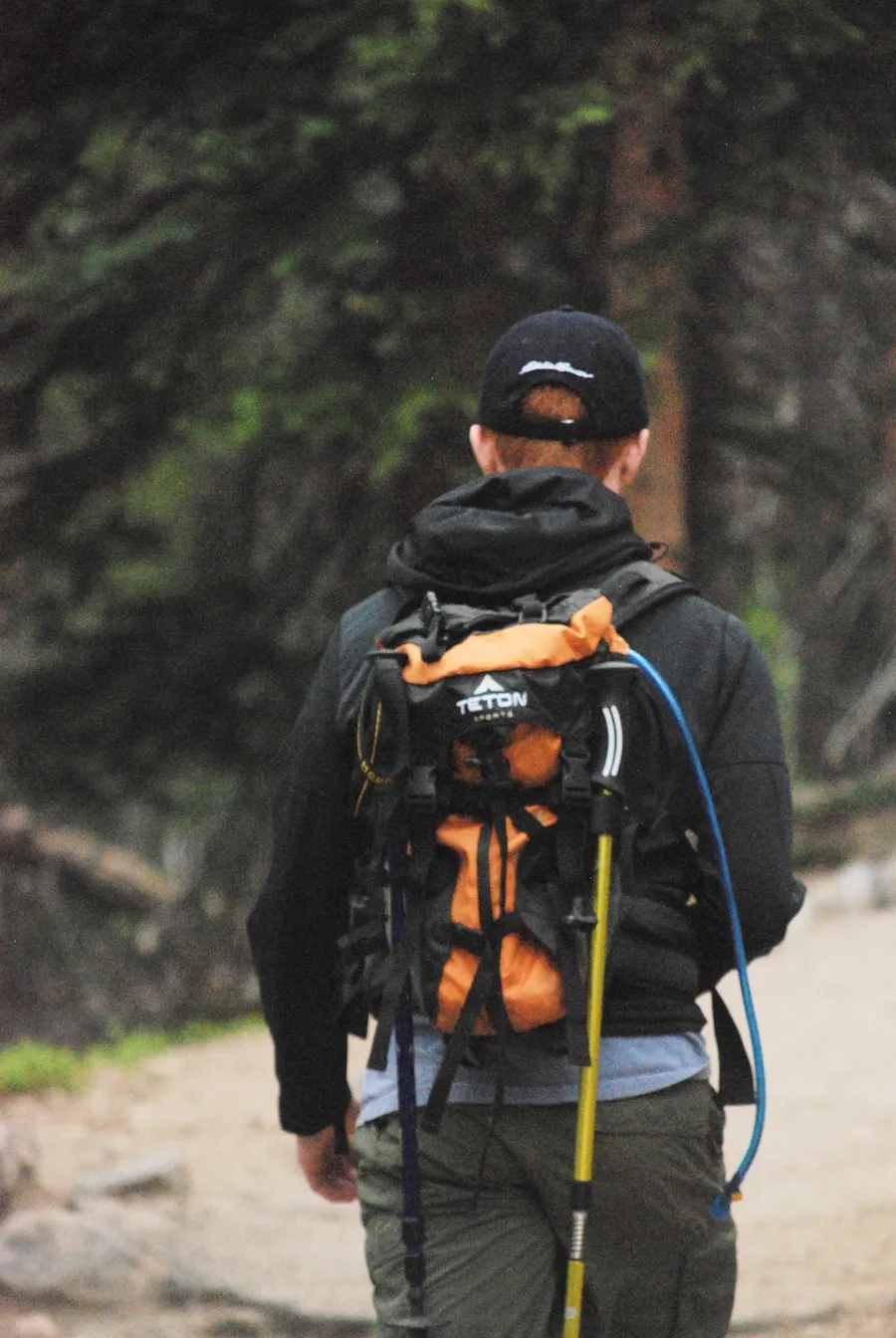
When firearm possession is lawful at your destination, safe handling remains essential. A suitable holster should retain the firearm securely and cover the trigger area so normal hiking movements, backpack straps, branches, falls, or gear cannot contact the trigger.
Keep the firearm under your control at all times and follow the basic safety practices published by the California Department of Justice: treat every firearm as loaded, keep it pointed in a safe direction, keep your finger off the trigger until appropriate to fire, and be certain of the target and what lies beyond it.
Hiking introduces extra hazards that are uncommon on a shooting range. You may slip on loose rock, scramble over obstacles, remove a backpack, cross streams, crawl beneath fallen trees, or share narrow trails with strangers and dogs. Secure retention is therefore more important than simply having convenient access.
Do not draw or display a firearm merely because another hiker, dog, or wild animal makes you uncomfortable. California Penal Code section 417 can criminalize drawing or exhibiting a firearm in a rude, angry, or threatening manner in another person’s presence except where lawful self-defense applies.
Wildlife Encounters
California hikers sometimes consider firearms because of black bears or mountain lions, but prevention and wildlife-specific behavior are usually the first line of defense.
The California Department of Fish and Wildlife black-bear guidance advises hikers to stay aware, make their presence known, secure food and scented items, keep pets controlled, and avoid running from a bear. If a bear is encountered, CDFW advises backing away slowly and giving the animal space to leave.
For mountain lions, CDFW recommends staying alert, keeping pets leashed and children close, never approaching a lion, not running, facing the animal, making noise, and trying to appear larger. CDFW also advises against hiking or jogging alone at dawn, dusk, or night in mountain-lion habitat.
Potential Risks and Legal Consequences
| Category | Potential Risk | Possible Legal Consequence |
| Prohibited location | Entering a public park, state park, government property, school area, or another sensitive place while armed | Citation, arrest, criminal prosecution, license consequences, or firearm restrictions depending on the statute and circumstances |
| Unlawful manner of carry | Assuming open carry or concealed carry is lawful without the required license or exception | California has separate criminal statutes governing concealed firearms, loaded firearms in public, and open carry |
| Brandishing or negligent discharge | Drawing a firearm in a threatening manner without lawful justification or firing it grossly negligently | Potential misdemeanor or felony prosecution depending on the conduct and resulting harm |
| Vehicle storage | Leaving an unsecured handgun in an unattended vehicle | California Penal Code section 25140 provides penalties for violating its unattended-vehicle storage requirements |
An accidental or negligent discharge can cause severe injury or death and may expose the person responsible to criminal and civil consequences. California Penal Code section 246.3 specifically addresses willful firearm discharge in a grossly negligent manner that could result in injury or death.
Brandishing is another serious concern. Except in lawful self-defense, California law can punish drawing or exhibiting a loaded or unloaded firearm in a rude, angry, or threatening manner in another person’s presence.
Even when someone believes a firearm was used lawfully in self-defense, the incident may still be investigated. Statements, witness accounts, video, physical evidence, the location, and whether the person was legally carrying the firearm can all become important.
Alternatives to Carrying a Gun While Hiking
Many hikers prefer preventive and non-firearm safety measures. Depending on the destination, these can include hiking with others, carrying a whistle or personal alarm, bringing satellite or emergency communication equipment for remote routes, leaving a trip plan with someone, carrying a first-aid kit, and learning the wildlife-response guidance for the animals found in that area.
Bear spray is another option where the land manager allows it. California Department of Fish and Wildlife discusses bear spray in its black-bear safety recommendations, but that does not make bear spray lawful everywhere.
For example, Yosemite National Park prohibits pepper spray, including bear spray. Sequoia & Kings Canyon National Parks also prohibit bear spray and other compressed-gas irritant devices. Always check the specific park rather than assuming a safety product that is lawful elsewhere is permitted at your destination.
The best trail-safety plan starts before the hike: identify the land manager, check current restrictions, learn local wildlife behavior, carry reliable emergency equipment, and make sure someone knows your route and expected return time.
Resources for Learning More About Gun Laws in California
The best starting point is the California Department of Justice rather than social media, an old forum post, or a generic national carry chart. DOJ publishes firearm FAQs, transportation guidance, information bulletins, and summaries of new firearm laws.
For the statute itself, use California Legislative Information. For a hiking destination, then check the current rules published by the agency managing the land. National Park Service units, national forests, BLM field offices, wildlife refuges, California state parks, and local park districts can each publish location-specific regulations or closures.
A Simple Pre-Hike Legal Check
- Identify the exact trail and land manager. Do not rely only on the nearest city or the name used by a hiking app.
- Determine whether the trail is a public park or state-managed property. California’s sensitive-place restrictions may apply even to a valid CCW licensee.
- Check your manner of carry. Concealed carry, loaded public carry, and open carry are governed by different statutes.
- Read current agency rules. Check federal facilities, developed recreation areas, superintendent’s compendiums, forest orders, fire restrictions, and refuge rules.
- Check local ordinances. County and city restrictions may matter, particularly for firearm discharge and vehicle storage.
- Recheck immediately before departure. Court orders and emergency restrictions can change faster than older articles or printed guides.
Tips for Responsible Gun Ownership and Use
Responsible firearm ownership extends beyond having the correct permit. Regular training helps owners maintain safe handling habits and understand the firearm they possess. California’s CCW training requirements specifically cover safe handling, storage, transportation, lawful carry locations, and use-of-force law.
Secure storage is equally important. Beginning January 1, 2026, California law requires firearms in a residence to be securely stored when they are not being carried or readily controlled by the owner or another lawful authorized user. California also has separate rules governing firearms accessible to children or prohibited persons and handguns left in unattended vehicles.
When hiking, keep the firearm under your control rather than placing it loosely in a backpack compartment that other people can access. If you remove a pack at a rest stop, campsite, vehicle, or water crossing, make sure the firearm remains secured and compliant with the law that applies at that location.
Making Informed Decisions About Carrying a Gun While Hiking
Carrying a firearm while hiking in California is a location-specific legal question, not a simple statewide yes-or-no decision. A valid California CCW can authorize concealed carry in many circumstances, but it does not override sensitive-place laws, federal-facility restrictions, private-property rights, local ordinances, or land-manager regulations.
Public parks and most California state Parks and Fish and Wildlife property are especially important for hikers because California’s current sensitive-place rules restrict licensed concealed carry there. Other federal lands, including national forests, BLM parcels, and wildlife refuges, require a different analysis based on California law plus the federal agency’s own restrictions.
Safety decisions should receive the same care as legal ones. Learn the wildlife response recommended for your destination, use secure firearm retention when carry is lawful, avoid unnecessary handling, carry reliable emergency equipment, and tell someone where you are going.
If your travel plans also extend beyond California, the existing seasonal guide to the Maldives can help with planning a very different type of trip.
Frequently Asked Questions
Is it legal to carry a gun while hiking in California?
Sometimes, but not on every trail. The answer depends on the exact land, the manner of carry, your license or statutory exemption, and current state, federal, and local restrictions. California currently treats public parks and most property controlled by the Department of Parks and Recreation or Department of Fish and Wildlife as sensitive places for CCW licensees, subject to limited exceptions.
Do I need a concealed-carry permit to hike with a handgun?
California generally requires a valid CCW license to carry a concealed handgun in public unless a specific exemption applies. A CCW still does not authorize carry in every location. Open carry is governed by separate laws, and California’s existing open-carry restrictions remain in effect as of July 27, 2026.
Can I carry a gun in a California state park with a CCW?
Generally not simply because you have a CCW. Penal Code section 26230 currently prohibits licensed concealed carry on most real property controlled by the California Department of Parks and Recreation or Department of Fish and Wildlife. The statute contains exceptions for certain designated hunting areas, shooting grounds, and locations where firearm possession is otherwise expressly permitted.
Can I carry a firearm in a California national park?
Do not assume so. National Park Service firearm possession follows applicable state and local law, which means California’s carry restrictions matter. Federal law also prohibits firearms in many federal facilities, and individual parks publish additional guidance. Check the current rules for the exact park before entering.
What about national forest or BLM hiking trails?
Those lands are not automatically treated the same as a California state park. California firearm law still applies, and federal agencies may restrict firearm discharge or possession in developed recreation sites, closure areas, or during certain emergency conditions. County ordinances and your manner of carry can also matter.
Can I carry a firearm on a national wildlife refuge?
Federal wildlife-refuge rules do not create a blanket nationwide ban on firearm possession. People possessing, transporting, or carrying firearms on National Wildlife Refuge System lands must comply with state and local law. Firearm discharge is separately regulated by refuge rules, so check the specific refuge before your trip.
Does California recognize my concealed-carry permit from another state?
California does not generally recognize an ordinary concealed-carry permit issued by another state. California established a statutory process for qualifying nonresidents to apply for a California CCW beginning January 1, 2026.
Is bear spray a good alternative to a firearm?
It can be part of a wildlife-safety plan where it is legal, but check your destination first. California Department of Fish and Wildlife discusses bear spray in its black-bear guidance, while Yosemite and Sequoia & Kings Canyon National Parks prohibit bear spray and similar irritant devices.
What are the penalties for violating California gun regulations while hiking?
The consequences depend on the statute and facts. Unlawful concealed or loaded carry, prohibited-location violations, brandishing, grossly negligent discharge, and improper vehicle storage are governed by different laws and can carry different fines, jail or prison exposure, firearm restrictions, confiscation consequences, and CCW-license consequences.
What should I check immediately before hiking with a firearm?
Confirm the exact land manager, current California DOJ guidance, Penal Code section 26230, your CCW restrictions if applicable, the agency’s current closures or compendium, local ordinances, and firearm transportation or vehicle-storage rules. Recheck shortly before departure because court orders and emergency restrictions can change.
Sources
- California Department of Justice — Firearms Frequently Asked Questions — purchasing, transfers, waiting periods, registration records, CCW recognition, and general firearm law.
- California Legislative Information — Penal Code §26230 — current sensitive-place restrictions affecting CCW licensees.
- California DOJ Information Bulletin 2025-DLE-06 — current enforcement status of park and other sensitive-place provisions.
- California DOJ Information Bulletin 2026-DLE-10 — current status of California’s open-carry restrictions and Baird v. Bonta.
- National Park Service — Firearms in National Parks — state-law interaction, federal-facility restrictions, and firearm-discharge rules.
- Bureau of Land Management — California Hunting and Recreational Shooting — state-law compliance, developed-site limits, closures, and BLM firearm rules.

