

Last Updated on July 27, 2026 by Daniel Globe
Yes, you may be able to bring hiking sticks or trekking poles on a plane, but the answer depends mainly on the tip and how you pack them. Under current TSA guidance, blunt-tipped hiking poles may travel in carry-on or checked baggage. Sharp-tipped hiking poles are not allowed in carry-on bags and should be checked. Your airline can also impose its own size and stowage limits.
Quick Answer
TSA currently allows blunt-tipped hiking poles in both carry-on and checked baggage. Sharp-tipped hiking poles are not allowed in carry-on bags. Collapsibility does not override the tip rule, and your airline can still require a pole to be checked if it cannot meet its carry-on size or stowage requirements.
Key Takeaways
- TSA allows blunt-tipped hiking poles in carry-on and checked baggage.
- Sharp-tipped hiking poles are not allowed in carry-on baggage and should be placed in checked luggage.
- A pole being collapsible does not automatically make it acceptable at a TSA checkpoint.
- Airlines may impose separate size, weight, and stowage requirements even when TSA permits the item.
- A cane used as a genuine mobility aid is treated differently from an ordinary recreational trekking pole.
- For international trips, check the security rules at every departure and connection airport, not only TSA rules.
Current TSA Rules for Hiking Sticks and Trekking Poles
The most important distinction is not whether your hiking pole is made from aluminum, carbon fiber, or wood. It is not even whether the pole collapses. Under the current TSA hiking-pole guidance, the key carry-on distinction is whether the pole has a blunt or sharp tip.
| Type of Pole | Current U.S. TSA Guidance |
| Blunt-tipped hiking pole | Allowed in carry-on and checked baggage, subject to screening and the TSA officer’s final decision. |
| Sharp-tipped hiking pole | Not allowed as a carry-on item. Pack it in checked baggage. |
| Collapsible or folding pole | Collapsibility helps with packing but does not replace the blunt-tip requirement for carry-on travel. |
| Cane used as a mobility aid | Canes and qualifying assistive devices are generally permitted, subject to security screening and safe aircraft stowage. |
Warning: Do not assume that adding a removable rubber cap over an otherwise sharp trekking-pole tip guarantees carry-on acceptance. TSA’s public hiking-pole guidance does not provide a detailed test for every tip design, and the TSA officer at the checkpoint makes the final decision.
For U.S. security screening, tip design—not simply whether a trekking pole folds—is the key TSA carry-on distinction.
Types of Hiking Sticks and Their Allowance on Flights
Hiking sticks come in several forms, including traditional wooden staffs, telescoping trekking poles, folding Z-style poles, and lightweight carbon-fiber models. These differences affect how easily a pole fits into luggage, but they do not by themselves determine whether TSA permits the pole in a carry-on bag.
Products Worth Considering

SUPER COMFORTABLE:EVA Foam Handle with wrist strap, sweat-absorbent, skid resistance groove design,and super comfortable for long time use.International Standard Length of 49.2" long, and 13.4" when folded, fitting perfectly in your backpack

Compact & Portable - Our foldable hiking poles collapse down to 15 inches, fitting easily into any bag. These collapsible walking sticks for hiking are perfect for travel, offering lightweight portability for any outdoor adventure.

BUILT TO LAST: Whether you're hiking on rugged terrain or snowshoeing on fresh powder, you need hiking gear that can keep up! Trailbuddy trekking poles are built tough enough for the long haul.
Collapsible Trekking Poles
Collapsible poles are convenient because they can fit inside many backpacks and suitcases. If a collapsible pole has a blunt tip, current TSA guidance allows it through a U.S. checkpoint as a carry-on item. If it has a sharp tip, collapsing the pole does not make it carry-on eligible.
There is also a separate airline issue. The Federal Aviation Administration recommends checking your airline’s carry-on requirements because airlines determine the number and dimensions of items they accept in the cabin. A pole that clears security may still be too long to store safely.
Traditional Wooden Hiking Sticks
A solid wooden walking stick is often longer than a collapsible trekking pole. TSA’s published hiking-pole guidance focuses on the tip rather than the material, but a long rigid stick can create practical stowage problems. Check its length against your airline’s requirements before relying on it as a carry-on item.
Carbon-Fiber and Aluminum Poles
Carbon-fiber and aluminum trekking poles are common because they are lightweight and easy to transport. The material does not create a special TSA exemption. Check the tip first, then check the collapsed length against your airline’s baggage rules.
Canes and Medical Mobility Aids
A cane that a passenger uses as an assistive device is a different category from ordinary recreational hiking equipment. TSA lists canes as permitted in carry-on and checked baggage, subject to screening. The U.S. Department of Transportation also states that qualifying assistive devices such as canes generally may be carried in the aircraft cabin without counting against the passenger’s normal carry-on allowance, as long as safety and stowage requirements can be met.
Travelers who depend on a cane should review the Department of Transportation’s assistive-device guidance. Do not assume that calling an ordinary recreational trekking pole a mobility aid automatically changes how a sharp tip will be evaluated at security.
Tips for Packing Hiking Sticks for Air Travel
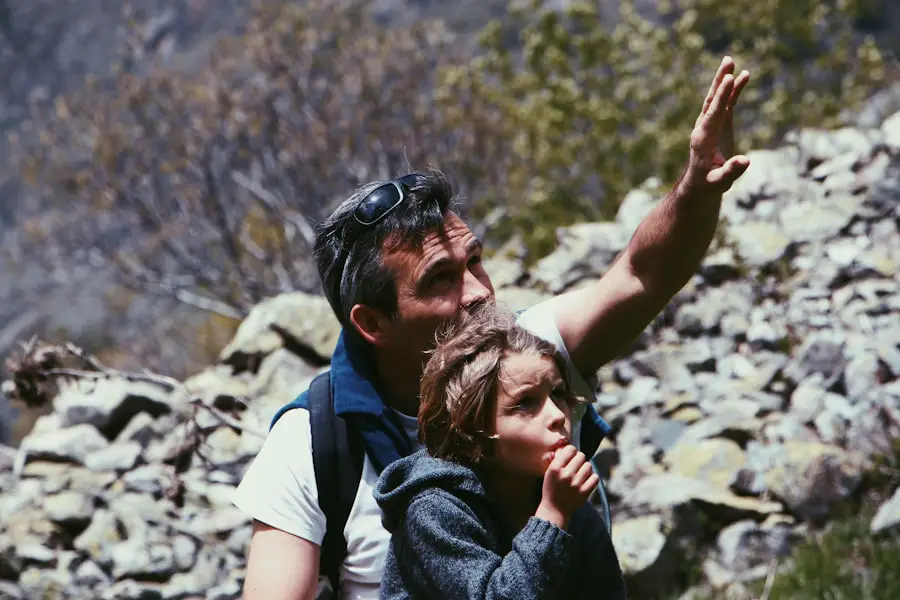
Good packing protects your poles and makes airport screening easier. Start by determining whether the tips are suitable for carry-on travel under the current TSA rule.
- Collapse or disassemble the poles: Shorter sections are easier to fit securely inside a suitcase or backpack.
- Secure the sections: Use the manufacturer’s straps or another secure method so the pole cannot extend unexpectedly.
- Protect the equipment: Place poles in a padded sleeve or wrap them in clothing to reduce scratching and bending.
- Keep tips contained: When checking sharp-tipped poles, cover or wrap the tips so they cannot damage the bag or surrounding items.
- Label expensive equipment: Add your contact information to the case or bag rather than relying on a loose tag attached directly to a pole.
- Check the airline’s dimensions: A TSA-permitted pole can still be too long for an airline’s cabin-baggage program.
Pro Tip: Check the TSA hiking-pole page again shortly before departure and save the current guidance on your phone. Rules can change, and TSA states that its officer still makes the final checkpoint decision.
Products Worth Considering

★ Best Folding Trekking Pole, Made of aerospace grade 7075 aluminum alloy, premium quality ABS and EVA foam handle, provides this cane with an incredibly durability and safety.

Increase Your Foot Print! Trek-Z Ergonomic Trekking Poles (set of 2) give you reason to increase the steps you take. Providing extra support and walk comfortably with these hiking poles. EVA grip wicks away sweat from hands keeping them drier. Firmer grip in muddy areas with added mud stops. EVA foam shafts allow for a strong grip in extreme all terrain environments. Trek-Z poles are the perfect gift for outdoor hikers who enjoy light and compact gear!
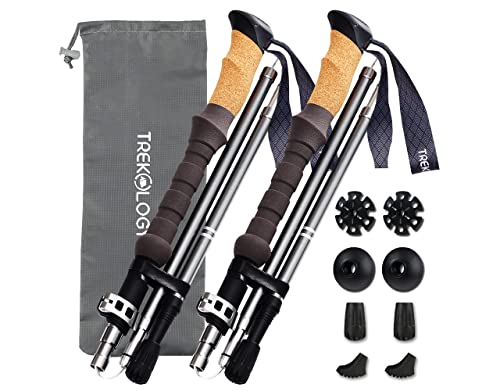
Natural Cork Grip Handle: Cork grips naturally absorb hand moisture to keep your grip dry on long hikes. Note: cork grips have a slight rotational flex; this is an anti-torque ergonomic feature, not a defect. Paired with lightweight aluminum shafts and EVA foam lower grips for stability on rugged terrain. Trekking poles must be checked in as luggage (not carry-on) per TSA and most airline rules. Set of 2 with carry bag included.
Potential Issues with Bringing Hiking Sticks on a Plane
| Issue | What It Means |
| Sharp Tip | Sharp-tipped hiking poles are not allowed as carry-on items under current TSA guidance. Check them instead. |
| Additional Screening | Even a generally permitted item may receive extra screening, and the TSA officer makes the final decision at the checkpoint. |
| Storage | A long pole may not fit safely under a seat, in an overhead bin, or within the airline’s approved cabin-baggage dimensions. |
| Weight or Bag Limits | Airline baggage limits vary by carrier, fare, aircraft, and route. A checked or separately packed pole may also affect baggage charges. |
| Connecting Airports | A connection that requires another security screening can expose the poles to a different country’s or airport authority’s rules. |
What If a TSA Officer Does Not Allow the Pole?
TSA makes clear that its officers have the final decision about items presented at a checkpoint. If an officer will not allow your hiking pole through, do not argue or assume the published general rule guarantees entry.
Depending on the airport, airline, and available time, your practical choices may include returning to the ticket counter to check the item, placing it in other checked baggage, giving it to someone who is not traveling, or surrendering it. Plan for that possibility before entering the security line, especially if your pole design could reasonably be viewed as sharp.
Alternatives to Bringing Hiking Sticks on a Plane
If your trekking poles have sharp carbide or metal tips and you do not want to check luggage, renting or buying poles at your destination may be simpler. Outdoor outfitters near popular hiking areas often rent or sell trekking equipment.
Another option is to travel with a compact, blunt-tipped pole that satisfies both TSA and airline requirements. A folding design can save space, although the tip still needs to meet the TSA carry-on rule.
Some hikers use naturally fallen branches as temporary walking aids. Only do this where local park or land-management rules permit it, and do not cut live vegetation. A found stick may also be unsuitable for air travel, particularly on an international return trip involving agricultural inspection.
Checking Hiking Sticks as Luggage

Checking your hiking sticks is the safest option when they have sharp tips or when their length makes cabin storage impractical. Pack them inside a durable suitcase, trekking-pole case, or other protective bag. Collapse adjustable poles when possible and secure loose sections so they do not move around during handling.
Checking the poles does not bypass TSA security. Checked baggage is also screened. The advantage is that sharp-tipped hiking poles are permitted in checked baggage under the TSA hiking-pole guidance.
You normally do not need to make a special declaration to airline staff merely because ordinary hiking poles are inside a checked suitcase. However, you should review the airline’s baggage dimensions, weight rules, and fees before arriving at the airport. An unusually long separate pole case could be treated as an additional or oversized checked item depending on the carrier.
Note: TSA determines security-screening eligibility, while your airline determines issues such as baggage size, cabin stowage, checked-bag allowance, and applicable baggage fees.
Ensuring Hiking Sticks Meet TSA Guidelines
Use this pre-flight check before taking trekking poles to a U.S. airport:
- Inspect the tip. Determine whether the pole is genuinely blunt or has a sharp trekking tip.
- Use checked baggage for a sharp-tipped pole. Do not rely on collapsibility alone.
- Review the current TSA listing. Check the official rule close to your departure date.
- Measure the collapsed pole. Compare its packed length with your airline’s cabin-baggage restrictions.
- Secure loose components. Prevent adjustable sections from extending during handling.
- Protect sharp tips in checked bags. Cover them so they cannot puncture your luggage or damage other belongings.
- Plan a backup. Know what you will do if a checkpoint officer does not permit the item through.
TSA’s general What Can I Bring? guidance also warns that an otherwise permitted item may require additional screening or may not be permitted through the checkpoint if it raises a security concern.
Safety Considerations for Bringing Hiking Sticks on a Plane
Whether you carry or check your hiking poles, pack them so they cannot extend, fall out, or expose a tip during handling. Keep adjustable sections locked or bundled together and protect any protruding ends.
Inside the aircraft cabin, an accepted pole must be stored safely when required. FAA guidance notes that carry-on items must comply with the airline’s approved baggage program and available stowage space. Do not leave a pole projecting into the aisle or where it could interfere with passengers or crew.
If you will need the pole immediately after landing, a blunt-tipped model that your airline accepts in the cabin may be more convenient than checking it. If you depend on a cane because of a disability or mobility limitation, review the airline’s assistive-device procedures instead of treating the device as ordinary recreational baggage.
Communicating with Airline Staff About Hiking Sticks
TSA and airline rules answer different questions. TSA decides whether an item may pass through a U.S. passenger-security checkpoint. The airline decides whether the item can be carried and safely stored aboard its aircraft.
Before departure, contact the airline when:
- your collapsed pole is longer than normal carry-on baggage;
- you plan to carry the pole separately rather than inside a bag;
- you need the device as a mobility aid;
- you are unsure whether the aircraft has suitable storage space; or
- you want to know whether checking a separate pole case will create a baggage fee.
If the pole is a qualifying assistive device, tell airline personnel that you use it for mobility so they can apply the carrier’s accessibility procedures. The U.S. Department of Transportation’s Airline Passengers with Disabilities Bill of Rights explains federal protections for travelers with disabilities and assistive devices.
International Travel Considerations for Hiking Sticks
TSA rules apply to U.S. security screening. They do not control what airport-security authorities in another country will allow through their checkpoints. This matters when you depart from another country or pass through a connection where you must clear security again.
Before an international trip, check:
- the security authority for your departure country;
- any country where you must clear security during a connection;
- the operating airline’s baggage rules; and
- customs or agricultural restrictions if the stick contains untreated natural material.
Natural wooden sticks deserve extra attention when crossing borders. Plant and wood products can be subject to agricultural controls intended to prevent pests and plant diseases. When returning to the United States with a natural wooden item collected or purchased abroad, review current USDA APHIS guidance for international travelers and souvenirs and declare agricultural items when required.
Note: Approval on your outbound U.S. flight does not guarantee that the same pole will be accepted through security for your return flight from another country.
Making Informed Decisions About Bringing Hiking Sticks on a Plane
For U.S. flights, the simplest rule is to check the tip first. A blunt-tipped hiking pole may be carried through TSA screening, while a sharp-tipped hiking pole belongs in checked baggage. Then check the airline’s size and stowage rules, because TSA permission alone does not guarantee that a long pole can travel in the cabin.
Collapsible designs remain useful because they are easier to pack, but folding is not a substitute for the TSA tip requirement. Travelers using a genuine cane or other mobility aid should follow the separate assistive-device procedures available through TSA and the airline.
If checking your poles is inconvenient, renting or buying poles at your destination is a practical alternative. International travelers should also check local security rules before the return journey rather than assuming U.S. TSA standards apply worldwide.
If you’re planning a hiking trip and also travel with sleep-apnea equipment, you may be interested in this guide to the best travel CPAP machines for portable sleep support while away from home.
Frequently Asked Questions
Can I bring hiking sticks on a plane?
Yes, depending on the tip. Current TSA guidance allows blunt-tipped hiking poles in carry-on and checked baggage. Sharp-tipped hiking poles are not allowed in carry-on baggage and should be checked. Your airline may impose additional size and stowage restrictions.
Are there restrictions on bringing hiking sticks on a plane?
Yes. TSA permits blunt-tipped hiking poles in carry-on bags but does not permit sharp-tipped hiking poles as carry-on items. In addition, the TSA officer makes the final checkpoint decision, and airlines can enforce their own baggage dimensions and storage requirements.
How should I pack hiking sticks for a flight?
Collapse or disassemble the poles when possible, secure the sections, and place them in a protective sleeve or inside your luggage. Protect sharp tips carefully when using checked baggage. For carry-on travel, confirm that the poles are blunt-tipped and meet your airline’s size requirements.
Can I bring collapsible hiking sticks in my carry-on?
A collapsible design by itself does not determine TSA eligibility. A blunt-tipped collapsible hiking pole can generally be carried on under current TSA guidance, while a sharp-tipped collapsible pole is not allowed as a carry-on item.
Does putting a rubber cover over a sharp trekking-pole tip make it TSA compliant?
Do not treat a removable rubber cover as a guaranteed workaround. TSA’s published hiking-pole guidance distinguishes blunt-tipped and sharp-tipped poles but does not provide a detailed public definition for every tip and cover combination. When the underlying pole has an obviously sharp trekking tip, checking it is the lower-risk option.
Can I carry a cane that I need for mobility?
Yes. TSA lists canes as permitted in carry-on and checked baggage subject to screening. Qualifying mobility aids also receive protections under U.S. Department of Transportation accessibility rules. Tell the airline when you need a cane as an assistive device so staff can apply the appropriate procedures.
Are there additional fees for bringing hiking sticks on a plane?
TSA does not set airline baggage fees. A pole packed inside baggage you are already permitted to carry or check may not create a separate charge, but normal checked-bag, additional-bag, or oversize fees can apply depending on the airline, fare, route, and way the poles are packed.
Do TSA hiking-pole rules apply on international return flights?
Not necessarily. TSA controls U.S. security screening. A foreign airport or national aviation-security authority can apply different rules when you depart or connect abroad. Check the relevant authority and airline for every part of an international itinerary.
Sources
- Transportation Security Administration — Hiking Poles — current carry-on and checked-baggage guidance for blunt- and sharp-tipped hiking poles.
- Transportation Security Administration — What Can I Bring? — general screening guidance and TSA officer final-decision policy.
- Federal Aviation Administration — Carry-On Baggage Tips — airline carry-on dimensions and stowage considerations.
- U.S. Department of Transportation — Stowing Assistive Devices — cabin treatment of canes and other qualifying assistive devices.
- USDA APHIS — International Traveler: Souvenirs — agricultural considerations for certain wood and natural-material products entering the United States.
