
Last Updated on September 11, 2026 by Daniel Globe
Manganese is an essential mineral, but the amount in bottled water and other drinks still matters. It usually comes from the source water, natural ingredients, or deliberate nutrient fortification. The often-quoted figure of 0.05 mg/L is not a universal toxicity cutoff. It has different regulatory meanings, so you need to consider the agency, purpose, and person using the water.
Quick Answer
Manganese in bottled water usually comes from the source aquifer. In the United States, 0.05 mg/L is an FDA quality standard for most bottled water and an EPA aesthetic guideline, not a proven toxicity threshold. WHO’s provisional health-based guideline is 0.08 mg/L, with bottle-fed infants receiving special consideration.
Key Takeaways
- Natural groundwater is usually the main source of manganese in bottled water.
- The FDA and EPA use 0.05 mg/L mainly as a quality or aesthetic benchmark, not as a line where neurological harm automatically begins.
- WHO’s provisional health-based guideline is 0.08 mg/L, or 80 micrograms per litre.
- Infants who receive formula mixed with water are the group requiring the most caution.
- Laboratory testing and treatment verification are more reliable than judging water by taste, colour, or branding.
Disclosure: As an Amazon Associate I earn from qualifying purchases. Some links on this page are affiliate links, at no extra cost to you.
What Manganese Is
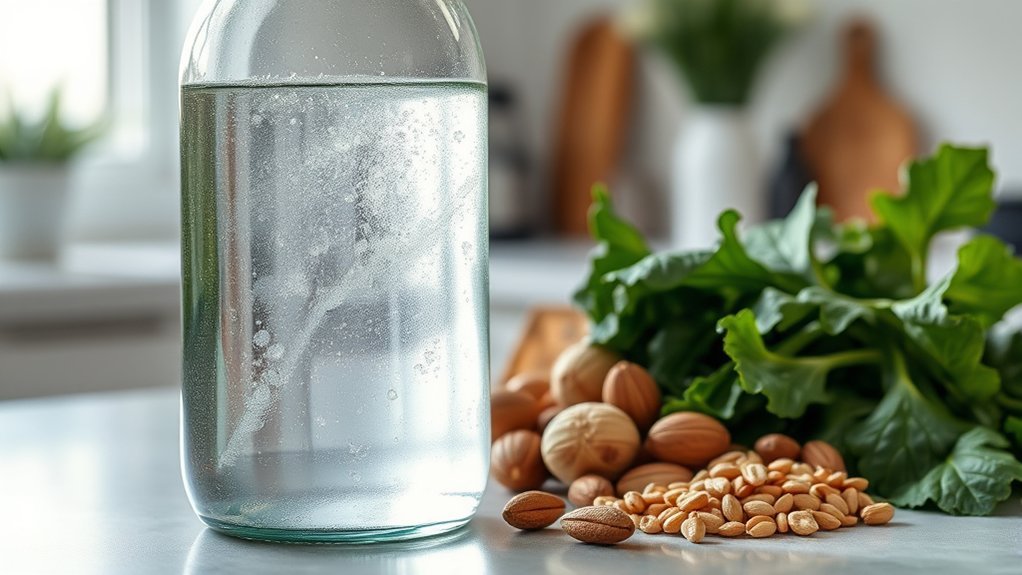
Manganese is a naturally occurring trace mineral. Your body uses small amounts to support normal metabolism, bone formation, wound healing, and antioxidant enzymes.
The National Institutes of Health Office of Dietary Supplements sets an Adequate Intake of 2.3 mg per day for adult men and 1.8 mg per day for adult women. These are general intake targets rather than exact daily requirements for every person.
Nuts, whole grains, leafy vegetables, legumes, tea, and other foods provide most dietary manganese. Normal food intake is not the same as exposure to unusually high concentrations in drinking water or industrial air. You generally should not eliminate nutritious manganese-containing foods because of a water result.
Excessive exposure can affect the nervous system. The strongest evidence of severe manganese poisoning comes from workers who repeatedly inhale high concentrations of manganese-containing fumes or dust. Long-term ingestion of elevated manganese in drinking water is also a concern, especially for infants and children, but the risk depends on concentration, duration, age, nutrition, and individual health.
Note: Do not start iron supplements or remove major food groups solely to change manganese absorption. Discuss supplements with a qualified clinician, particularly if you have a diagnosed deficiency, liver disease, or an unusual exposure.
Where Manganese Comes From in Bottled Water
Manganese in bottled water most often begins in the source water. Groundwater can dissolve manganese as it moves through mineral-rich rock and soil. Concentrations are affected by local geology, acidity, oxygen levels, and the amount of time the water remains underground.
Deep wells and some springs may contain more manganese than well-oxygenated surface water. The source can also change over time because of seasonal conditions, pumping patterns, or changes in the aquifer.
Bottlers may use oxidation, filtration, ion exchange, or other treatment before filling containers. However, a label such as “spring water,” “purified water,” or “mineral water” does not tell you the final manganese concentration. A laboratory report or manufacturer’s quality report provides more useful evidence.
The World Health Organization’s drinking-water guidelines identify natural source water as the most important origin of manganese in drinking water. This makes source selection and treatment more important than assumptions based on the bottle material.
How Manganese Gets Into Drinks
Manganese can enter a bottled drink through several pathways:
- Source water: Groundwater or spring water may naturally contain dissolved manganese.
- Natural ingredients: Tea, fruit, grains, herbs, and plant extracts can contribute manganese already present in the raw ingredients.
- Intentional fortification: Some nutrition drinks, meal replacements, and supplements contain added manganese. Check the Nutrition Facts or Supplement Facts panel.
- Production equipment or storage: Poorly controlled corrosion, sediment, or sanitation problems can occasionally affect a finished product, although this is a quality-control issue rather than the usual source.
The available evidence does not support treating plastic bottles or aluminum-can linings as the normal source of manganese in commercial drinks. Claims that BPA-containing linings or sugar routinely cause significant manganese migration require product-specific evidence. For bottled water, source-water chemistry remains the more credible explanation in most cases.
Health Risks of Manganese Exposure
Manganese risk depends heavily on how it enters the body. Drinking-water exposure is different from inhaling fine particles during welding, mining, or metal production. Dose and duration also matter. A single number cannot describe every route or population.
Warning: If laboratory testing shows elevated manganese, do not use that water to prepare infant formula until you have followed guidance from your local public-health authority or pediatrician. Boiling does not remove manganese and can concentrate minerals as water evaporates.
Neurological Effects
Long-term, high occupational exposure can cause manganism, a neurological disorder associated with movement problems, tremor, stiffness, poor coordination, mood changes, and slowed responses. The CDC’s National Institute for Occupational Safety and Health notes that inhaled manganese can bypass some of the body’s normal controls on manganese absorbed from food.
Studies of children have also reported associations between elevated manganese in drinking water and changes in learning, memory, attention, or behaviour. These findings support caution, but they do not prove that every person exposed above 0.05 mg/L will develop cognitive problems.
| Exposure route | What the evidence shows | Main concern |
|---|---|---|
| Repeated workplace inhalation | Strong evidence that sufficiently high exposure can damage the nervous system | Manganism and impaired motor control |
| Long-term elevated drinking-water exposure | Studies report developmental and behavioural associations, although the exact dose-response relationship remains uncertain | Infant and child development |
| Normal food intake | Usually controlled by absorption and elimination in healthy people | Essential nutrient rather than a typical toxicity source |
Infants deserve particular attention because formula prepared with water can provide a large manganese dose relative to body weight. Young infants also handle absorbed manganese differently from healthy adults.
Respiratory Irritation
Welding and metal-production fumes can irritate the respiratory tract and cause coughing, wheezing, chest discomfort, or shortness of breath. These fumes contain a mixture of gases and metal particles, so respiratory symptoms should not automatically be attributed to manganese alone.
Metal fume fever is also associated with exposure to certain freshly formed metal oxides. It is more accurate to describe it as a possible effect of mixed welding or metal fumes rather than a manganese-specific illness.
Workers should use engineering controls, local exhaust ventilation, safe work practices, and correctly selected respiratory protection. Anyone who develops persistent breathing problems, tremor, coordination changes, or mood symptoms after workplace exposure should seek occupational-health evaluation.
Exposure Sources
The main manganese-exposure routes are:
- Food: The normal and generally beneficial source for most people.
- Drinking water: A potential concern when concentrations are elevated, particularly for formula-fed infants.
- Supplements and fortified drinks: A source that can add to total intake and should be checked on the label.
- Occupational air: A high-concern route in welding, mining, smelting, battery production, and similar work.
Skin contact is not considered a major exposure route. Only a very small amount of manganese passes through intact skin, and manganese does not readily enter the body through shower vapour.
Manganese Limits in Bottled Water
Manganese numbers can be confusing because agencies use different values for different purposes. Some address taste and staining, while others are intended to protect health.
One milligram per litre, written as mg/L, equals 1,000 micrograms per litre, written as µg/L. Therefore, 0.05 mg/L equals 50 µg/L, and 0.08 mg/L equals 80 µg/L.
| Agency or standard | Manganese value | What it means |
|---|---|---|
| FDA bottled-water standard of quality | 0.05 mg/L 50 µg/L |
A quality standard for most bottled water, not an FDA health advisory. Bottled products labeled as mineral water are exempt from this specific manganese standard. |
| EPA Secondary Maximum Contaminant Level | 0.05 mg/L 50 µg/L |
A non-enforceable federal guideline addressing black or brown colour, staining, and bitter metallic taste. It is not a federal primary health standard. |
| EPA lifetime health advisory | 0.3 mg/L 300 µg/L |
A non-enforceable health-advisory value published in 2004. It is not a legal Maximum Contaminant Level. |
| EPA one-day and ten-day advisory | 1 mg/L for most people | A short-term advisory, not a chronic threshold. EPA’s 2004 document applied the lower 0.3 mg/L value to infants younger than six months even for short-term exposure. |
| WHO provisional health-based guideline | 0.08 mg/L 80 µg/L |
A health-based provisional guideline intended to protect all age groups, including bottle-fed infants. |
A result above 0.05 mg/L may cause staining or taste problems, but 0.05 mg/L is not a proven neurological-effect threshold.
- The United States has no federal primary Maximum Contaminant Level for manganese in public drinking water.
- The FDA’s 0.05 mg/L bottled-water figure is a standard of quality rather than an FDA health advisory.
- The EPA’s 1 mg/L value is short-term guidance, not the concentration at which chronic effects begin.
- Product testing, lot controls, treatment records, and recall monitoring still matter because contamination can vary among sources and production batches.
Note: A legal or quality-compliant product is not automatically the best choice for every person. When water will be used for infant formula, apply the most protective relevant health guidance and seek local professional advice when results are elevated.
How to Check Manganese in Bottled Water and Other Drinks
A standard bottle label may not show manganese because it is not always listed as a nutrient or contaminant. Use the following checks when you need more certainty:
- Identify the water type and source. Look for terms such as spring water, purified water, artesian water, or mineral water. Remember that source type alone does not reveal the concentration.
- Request a quality report. Ask the manufacturer for its latest water-quality report, certificate of analysis, or finished-product test result for manganese.
- Check the unit. Confirm whether the result is listed in mg/L, µg/L, parts per million, or parts per billion. For water, 1 mg/L is approximately 1 part per million, while 1 µg/L is approximately 1 part per billion.
- Review fortified-drink labels. Nutrition drinks and supplements may list manganese as a percentage of Daily Value or as milligrams per serving.
- Check the lot number and recalls. A general brand report may not represent every production lot.
- Use a certified laboratory when needed. This is the best option for private wells, home treatment verification, or a bottled product for which the manufacturer cannot provide adequate data.
Black or dark-brown staining can suggest manganese in household water, but colour and taste cannot tell you the concentration. Clear water can still contain dissolved manganese.
How to Reduce Manganese Exposure
Focus on the exposure source rather than avoiding normal food. For most households, this means testing drinking water, using suitable treatment, and reviewing unnecessary manganese-containing supplements. Workplace exposure requires a separate set of controls.
Avoid Inhalation Exposure
Inhalation can be a major route of harmful manganese exposure in welding, metalworking, mining, and other dusty industrial settings. Use engineering controls before relying only on personal protective equipment.
- Position local exhaust ventilation so fumes move away from your breathing zone.
- Use a properly selected and fitted respirator when engineering controls cannot keep exposure adequately controlled.
- Inspect, clean, and replace respiratory equipment according to its instructions and workplace safety requirements.
- Reduce unnecessary time near active fume or dust generation and follow the employer’s exposure-control plan.
A basic nuisance-dust mask may not provide suitable protection from welding fumes. Respirator selection should follow the measured hazard, applicable workplace rules, and a proper respiratory-protection program.
Limit Home Contamination
Workers can carry metal-containing dust home on clothing, boots, tools, skin, and vehicles. To reduce secondary household exposure:
- Change contaminated work clothing before entering living areas when possible.
- Keep work boots and equipment away from kitchens, bedrooms, and children’s play areas.
- Store and wash work clothes separately when workplace procedures recommend it.
- Use damp cleaning or a suitable high-efficiency vacuum instead of dry sweeping contaminated dust.
- Shower after dusty work and before close contact with young children.
These steps address dust carried home from work. They are separate from bathing in manganese-containing water, which is generally not considered a meaningful manganese exposure route.
Test Water Sources
Testing is especially important for private wells because they are not regulated and monitored in the same way as public water supplies. The EPA recommends using a state-certified laboratory for private-well testing.
- Collect the sample using the laboratory’s container and instructions.
- Compare the result with both the relevant quality benchmark and health-based guidance rather than relying on 0.05 mg/L alone.
- If manganese is elevated, use a safe alternative source for drinking and infant-formula preparation until an appropriate solution is in place.
- Test again after treatment installation and periodically thereafter to confirm that the system continues to work.
Black staining on sinks, toilets, laundry, or plumbing may justify testing, but it does not replace a laboratory measurement.
Choose the Right Treatment
No single filter works equally well for every manganese problem. Treatment depends on whether the manganese is dissolved or particulate and on the water’s pH, hardness, iron content, oxygen level, and organic matter.
- Reverse osmosis: A point-of-use reverse-osmosis system can reduce manganese in water used for drinking and cooking when correctly selected and maintained.
- Ion exchange or water softening: These systems may reduce dissolved manganese under suitable water conditions, but competing hardness and iron can affect performance.
- Oxidation followed by filtration: Air, chlorine, permanganate, ozone, or other oxidation methods can convert dissolved manganese into particles that a properly designed filter can remove.
- Oxidizing media or biological filtration: Greensand-type media and other specialized systems may be appropriate for whole-house treatment after professional water analysis.
Do not assume that an ordinary activated-carbon pitcher removes manganese. Carbon systems are mainly designed for substances such as chlorine, taste, odour, and selected organic compounds unless the manufacturer specifically certifies manganese reduction.
Pro Tip: Test both the untreated and treated water. A filter’s advertised capability does not prove that it is working under your home’s water conditions, and exhausted media can allow manganese to pass through again.
Frequently Asked Questions
Is water with manganese safe to drink?
Low concentrations are common, but safety cannot be judged from the EPA’s 0.05 mg/L aesthetic value alone. Consider the measured concentration, duration of use, and who will drink it. WHO’s provisional health-based guideline is 0.08 mg/L. Infants receiving formula prepared with the water require particular caution.
What are the guidelines for manganese in drinking water?
The EPA secondary guideline is 0.05 mg/L for staining, colour, and taste. EPA’s 2004 lifetime health advisory is 0.3 mg/L, while WHO’s current provisional health-based guideline is 0.08 mg/L. These are guidance values, not a single enforceable federal drinking-water limit.
Can you shower in water high in manganese?
Bathing and showering are generally considered safe because very little manganese passes through skin and it does not readily enter the body through shower vapour. The water may still stain fixtures, clothing, or hair. Ingestion, especially through infant formula, is the greater concern.
What is manganese bad for?
Manganese is not inherently bad because your body needs it. Excessive exposure can damage the nervous system and affect movement, coordination, mood, memory, or development. The risk is clearest with heavy occupational inhalation and is also a concern when infants or children repeatedly ingest elevated concentrations in water.
Does manganese usually come from the bottle?
No. In bottled water, naturally occurring manganese in the source aquifer is usually the more likely origin. Other drinks may also contain manganese from tea, grains, fruit, plant extracts, mineral ingredients, or deliberate fortification. Packaging should not be blamed without product-specific migration evidence.
What should you do if a water test shows high manganese?
Use a suitable alternative for drinking and infant-formula preparation while you investigate the source. Ask a water-treatment professional or local public-health authority to interpret the full water analysis, select treatment based on the water chemistry, and test the treated water before relying on it.
Conclusion
Manganese in bottled water usually comes from the source water rather than the container. Other drinks can also contain manganese from natural ingredients or deliberate fortification. The key is to interpret each laboratory result correctly: 0.05 mg/L is mainly a U.S. quality or aesthetic benchmark, while WHO’s provisional health-based guideline is 0.08 mg/L.
Infants receiving formula prepared with water deserve the most caution. For private wells or uncertain bottled products, obtain a laboratory result, use a certified treatment method when needed, and verify performance with follow-up testing. Normal manganese-containing foods remain part of a healthy diet, while unnecessary supplements and occupational inhalation require separate consideration.
Sources
- Electronic Code of Federal Regulations: 21 CFR § 165.110 — FDA bottled-water quality standard and mineral-water exemption.
- U.S. EPA Secondary Drinking Water Standards and EPA Drinking Water Health Advisory for Manganese — aesthetic guideline and health-advisory values.
- World Health Organization Guidelines for Drinking-water Quality — provisional 0.08 mg/L health-based guideline, source information, and treatment methods.
- NIH Office of Dietary Supplements: Manganese — dietary roles, intake levels, food sources, and toxicity information.
- CDC/NIOSH: Welding Fumes and Manganese — occupational inhalation risks and workplace controls.
- Health Canada: Manganese in Drinking Water — bathing guidance, treatment choices, testing, and infant exposure information.
