
Last Updated on July 28, 2026 by Daniel Globe
Turkey (Türkiye) can feel like several destinations in one country. The Mediterranean and Aegean coasts have hot, dry summers, Central Anatolia has larger temperature swings, the Black Sea coast is greener and wetter, and eastern Türkiye can see cold, snowy winters. That means the best time to visit Turkey depends as much on where you are going as on the month.
Quick Answer
For most first-time trips to Turkey, the best months are April–May and September–October. These shoulder-season periods usually give you comfortable sightseeing weather without the intense midsummer heat. Choose June–September for beach trips, December–March for skiing, and late spring through early autumn for the widest range of activities.
Key Takeaways
- Best overall: April–May and September–October for sightseeing, comfortable temperatures, and a better balance of crowds and weather.
- Best for beaches: June–September along Antalya, Bodrum, Fethiye and much of the Aegean and Mediterranean coast.
- Best for Istanbul and Cappadocia: spring and early autumn, when walking and outdoor sightseeing are usually more comfortable.
- Best for skiing: winter, with resorts such as Uludağ and Erciyes operating according to snow and weather conditions.
- Best for lower crowds: much of November–March outside ski areas and major holiday periods.
- Plan by region: Turkey has several distinct climate zones, so conditions in Antalya, Istanbul, Cappadocia and eastern Türkiye can be very different on the same day.
Disclosure: As an Amazon Associate I earn from qualifying purchases. Some links on this page are affiliate links, at no extra cost to you.
Turkey’s Climate and Weather by Region
Turkey’s geography creates major regional climate differences. The Turkish State Meteorological Service distinguishes continental, Mediterranean, Marmara transitional and Black Sea climate types. The country is bordered by the Black, Aegean and Mediterranean seas and also contains the Sea of Marmara.
Along the Aegean and Mediterranean coasts, summers are generally hot, sunny and dry, while winters are milder and wetter. Central Anatolia, including much of the area around Ankara and Cappadocia, has a more continental climate with colder winters, hot summers and larger differences between daytime and nighttime temperatures.
The Black Sea region has a wetter climate and receives rainfall throughout the year, which helps create its famously green landscapes. Eastern Türkiye has higher elevations and can experience long, cold winters with substantial snowfall. These differences are why a single nationwide temperature or “best month” can be misleading.
Best Time to Visit Turkey by Month
| Months | What to Expect | Best For |
|---|---|---|
| January–February | Cold inland, wetter in many western areas, snow possible in Istanbul and common at elevation. | Skiing, lower crowds, winter city breaks. |
| March–April | Spring arrives unevenly; weather can change quickly, but sightseeing becomes increasingly comfortable. | Istanbul, Cappadocia, cultural trips, spring scenery. |
| May–June | Warm days across much of the country. Beach weather improves as June approaches. | Multi-city trips, ruins, hiking, early beach holidays. |
| July–August | Peak summer heat, particularly along the south coast and in inland areas. Coastal resorts are busy. | Swimming, resorts, sailing and nightlife. |
| September–October | Warm conditions linger while the strongest summer heat eases. Early autumn is excellent for mixed itineraries. | Sightseeing, beaches, Cappadocia, Ephesus, Pamukkale. |
| November–December | Cooler, wetter weather returns in many regions; snow becomes increasingly likely inland and at elevation. | Lower-crowd city visits, cultural travel and the start of ski season. |
Pro Tip: For a classic Istanbul–Cappadocia–Ephesus–coast itinerary, late April through May or mid-September through October usually gives you a better balance than July or August. You avoid much of the strongest summer heat while keeping plenty of outdoor options open.
Best Time to Visit Turkey by Destination and Activity
Istanbul
Spring and autumn are especially comfortable for Istanbul because much of a visit involves walking between historic districts, waterfront areas, bazaars and museums. April and May bring spring weather, while September and October usually combine mild conditions with a busy cultural calendar.
Summer offers long days and lively evenings but can be hot and crowded. Winter brings shorter days, more rain and occasional snow, yet it can be rewarding for travelers who value museums, food and fewer peak-season tour groups.
Cappadocia
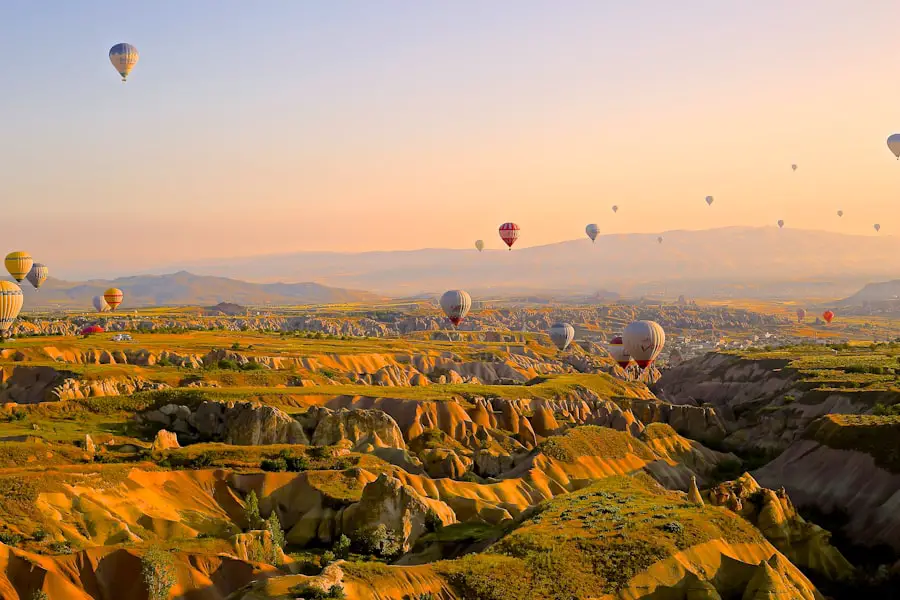
April–May and September–October are strong choices for Cappadocia because hiking through the valleys is generally more comfortable than during the hottest part of summer. Winter can be striking when snow covers the fairy chimneys, but temperatures can drop sharply.
Hot-air balloons operate under aviation rules and safe-weather requirements. The Directorate General of Civil Aviation regulates commercial balloon operators in Türkiye, and weather can cause a scheduled flight to be postponed or canceled. If a balloon ride is a major reason for your trip, spending more than one night in Cappadocia gives you a better chance to rebook after a weather cancellation.
Antalya, Bodrum and Fethiye
For a beach-focused trip, June through September is the main season along the Mediterranean and Aegean coasts. July and August bring the hottest conditions, the busiest resorts and strong demand for beachfront accommodation.
May, September and early October can be especially appealing when you want both sightseeing and beach time. Conditions vary from year to year, so check the local forecast and sea conditions shortly before traveling.
Ephesus and Pamukkale
Ancient sites such as Ephesus and the exposed travertine terraces at Pamukkale involve a great deal of walking with limited shade in some areas. Spring and autumn are therefore more comfortable for many visitors than midsummer afternoons.
If you visit in July or August, start early, carry water, wear sun protection and leave the hottest part of the afternoon for shaded or indoor activities.
Black Sea and Eastern Turkey
The Black Sea region stays greener and wetter than much of the rest of the country. Late spring through early autumn works well for road trips, mountain scenery and outdoor exploration, although rain is possible throughout the year.
Eastern Türkiye experiences colder winters because of its elevation and continental climate. Summer is generally the easiest season for broad regional sightseeing, while winter travel requires preparation for snow, ice and possible transport disruption.
Ski Resorts
Winter reverses Turkey’s normal coastal tourism pattern. Resorts such as Uludağ near Bursa and Erciyes near Kayseri attract skiers and snowboarders once snow conditions permit. Uludağ’s strongest ski period is generally late December through late March, while exact opening and closing dates vary with weather.
Peak Tourist Seasons in Turkey
The main nationwide high season is summer, especially from June through August. Coastal resorts such as Bodrum, Antalya and Fethiye are at their busiest as travelers arrive for beaches, swimming, sailing and nightlife. Temperatures frequently rise above 30°C (86°F) in warm regions, and July and August can feel much hotter during heat waves.
Summer is not automatically the best season for a sightseeing-heavy trip. Spending hours at archaeological sites, walking through Istanbul or hiking in Cappadocia can be tiring during periods of intense heat.
Spring and autumn are better described as shoulder seasons rather than a single national peak season. April–May and September–October are popular because temperatures are often more comfortable and visitors can combine city sightseeing, cultural sites and outdoor activities more easily.
For the widest mix of comfortable sightseeing weather and manageable crowds, April–May and September–October are usually Turkey’s strongest all-around travel windows.
Off-Peak Tourist Seasons in Turkey
For many sightseeing destinations, the lower season runs roughly from November through March, although ski resorts are an important exception. Winter visitors can find a quieter atmosphere in Istanbul, Cappadocia, Ephesus and other heavily visited places, but shorter daylight hours and less predictable weather are part of the trade-off.
Winter can also reveal a very different side of the country. Snow transforms inland landscapes, while ski destinations such as Uludağ and Erciyes become active. Along parts of the Mediterranean coast, winters are milder than in Central or Eastern Anatolia, but swimming and resort activity are far more limited than in summer.
Hotels may offer better value outside major holidays and special events, but there is no universal low-season discount. Prices vary by destination, weekend demand, exchange rates, events and how far ahead you book.
Festivals and Events in Turkey
Turkey has a busy cultural calendar, but festival dates can change from year to year. The table below uses verified 2026 dates rather than assuming an event falls in the same week every year.
| Event | Location | Verified 2026 Date |
|---|---|---|
| 45th Istanbul Film Festival | Istanbul | April 9–19, 2026 |
| 95th İzmir International Fair | İzmir | September 5–13, 2026 |
| 63rd International Antalya Golden Orange Film Festival | Antalya | October 24–31, 2026 |
| Mevlana Şeb-i Arûs International Commemoration Ceremonies | Konya | December 7–17, 2026 |
The Istanbul Film Festival brings together films from Türkiye and abroad each spring. In September, the İzmir International Fair combines trade, entertainment and cultural programming at Kültürpark. Antalya’s long-running Golden Orange festival turns the Mediterranean city into a major cinema destination in October.
Konya’s December ceremonies commemorate Mevlana Jalal al-Din Rumi and include the Mevlevi sema tradition commonly associated with the “whirling dervishes.” It is better described as a spiritual and cultural commemoration than simply a Whirling Dervishes Festival.
Cappadocia has also hosted arts gatherings such as Cappadox, but it should not be treated as a guaranteed annual May event unless current dates have been confirmed by the organizer. For any festival-centered trip, verify the year’s schedule before buying nonrefundable transportation or accommodation.
Popular Tourist Destinations in Turkey
Istanbul is the country’s most famous city destination, bringing together Byzantine, Ottoman and modern Turkish history. Major sights include Hagia Sophia, the Blue Mosque, Topkapı Palace and the Grand Bazaar. The city’s neighborhoods, ferry routes and food scene reward travelers who allow time beyond the headline landmarks.
Cappadocia is known for fairy chimneys, valleys, underground settlements, rock-cut churches and sunrise balloon flights. Even when balloon operations are canceled by weather, the region offers hiking, viewpoints, cave architecture and historical sites.
Pamukkale is famous for its white travertine formations and the neighboring ruins of Hierapolis, while Ephesus is one of the country’s most important ancient archaeological destinations. Antalya combines beaches with an atmospheric old town and access to ancient sites along the Mediterranean coast. Bodrum and Fethiye are popular choices for beaches, boating and coastal holidays.
Budget-Friendly Travel Tips
Traveling in Turkey can be more affordable when you avoid the busiest resort weeks and major event dates. Public transportation is extensive in large cities, while intercity buses connect many destinations. Local minibuses known as dolmuş are also common in numerous towns and resort areas.
For accommodations, compare hotels, hostels, pensions and locally run guesthouses rather than assuming the lowest advertised room price is the best value. Location matters: paying slightly more for a property near public transportation can reduce daily taxi costs.
Local restaurants, bakeries, markets and neighborhood cafés can offer better value than dining only beside major tourist attractions. Because prices and exchange rates can change quickly, avoid relying on old blog posts for exact daily budgets.
Note: Spring can be excellent for Turkey, but unrelated travel-gear articles should not be used as evidence for seasonal weather claims. A separate TakeTravelInfo guide covers travel-trailer batteries for spring adventures if your wider trip involves camper or trailer travel.
Safety and Security Considerations
Warning: Travel conditions can change. As of June 9, 2026, the U.S. Department of State rates Türkiye Level 2: Exercise Increased Caution and advises against travel within 10 km (6 miles) of the Syrian and Iraqi borders. A worldwide caution issued July 22, 2026 also warns of possible regional travel and flight disruptions. Check your government’s latest advisory shortly before departure.
Travelers should review the current Türkiye Travel Advisory or the equivalent advice from their own government rather than relying on a general statement that every part of the country has the same risk level.
In busy tourist areas, keep phones, wallets and passports secure and stay alert in crowded transport hubs, markets and major events. Avoid demonstrations and follow instructions from local authorities.
Summer also brings environmental hazards. Very hot weather can cause heat illness, and Türkiye can experience wildfires, floods, earthquakes, storms and heavy snowfall depending on the region and season. During hot periods, schedule demanding outdoor sightseeing earlier in the day, stay hydrated and take breaks in shade.
For health preparation, the CDC’s Türkiye traveler guidance recommends checking routine vaccines and destination-specific health advice before departure. Food and water conditions can vary, so choose clean food and safe drinking water according to local conditions. Use sealed bottled or properly treated water whenever you are unsure about a water source rather than assuming every tap-water supply is identical.
Entry Requirements and Pre-Trip Checks
Visa requirements depend on nationality, passport type and purpose of travel. Some visitors can enter visa-free, while others require an e-Visa or a visa issued through a Turkish diplomatic mission. Check the Republic of Türkiye Ministry of Foreign Affairs visa information before booking your trip.
Also confirm passport-validity requirements, travel insurance coverage, airline schedules and any destination-specific advisories shortly before departure. Entry rules can change independently of seasonal travel conditions.
What to Pack for Turkey by Season
Spring: Pack layers, a light rain jacket and comfortable walking shoes. Morning and evening temperatures can feel much cooler than the afternoon, especially inland.
Summer: Choose breathable clothing, sun protection, a reusable water bottle and comfortable shoes. Add modest clothing that covers shoulders and knees for religious sites.
Autumn: Early autumn can still feel summery on the coast, while evenings become cooler inland. Layers work better than packing only hot-weather clothing.
Winter: Bring a warm waterproof outer layer and shoes with useful traction. Travelers heading to Cappadocia, Central Anatolia or eastern Türkiye should prepare for freezing temperatures and snow.
Cultural Etiquette and Customs
Turkish hospitality is an important part of the travel experience, and even simple courtesies help. “Merhaba” means hello, and a polite greeting is appreciated when entering smaller shops, restaurants or guesthouses.
When visiting a mosque, dress modestly and follow the rules posted at that specific site. Visitors are generally expected to cover shoulders and knees, and women may be asked to cover their hair. Shoes are removed before entering carpeted prayer areas, so socks are useful.
Do not walk through active prayer areas unnecessarily or photograph worshippers without permission. Some mosques restrict tourist access during prayer services, so be prepared to wait or return later.
When entering a private home, watch what your host does; removing outdoor shoes is common. If you are invited for a meal, a small gift such as sweets can be a thoughtful gesture. Sharing food and tea is an important part of social life, and taking time for conversation is often appreciated.
Frequently Asked Questions
What is the best time to travel to Turkey?
For most first-time sightseeing trips, April–May and September–October offer the strongest balance of comfortable weather and manageable crowds. Beach travelers may prefer June–September, while skiers should look to winter.
What is the weather like during the best months to visit Turkey?
Spring and autumn generally bring milder conditions than midsummer, but weather varies greatly by region. Istanbul, Cappadocia, Antalya and eastern Türkiye can experience very different temperatures at the same time, so check a local forecast for each stop.
What is the best time for beaches in Turkey?
June through September is the main beach season on the Aegean and Mediterranean coasts. May and early October can also work for travelers who prefer lighter crowds, although water and air temperatures vary by location and year.
When is the best time to visit Cappadocia?
April–May and September–October are especially good for hiking and sightseeing. Balloon flights operate throughout different seasons but depend on safe weather, so no date guarantees a flight.
Are there festivals during the best time to visit Turkey?
Yes. In 2026, the Istanbul Film Festival ran April 9–19, the İzmir International Fair is scheduled for September 5–13, and the International Antalya Golden Orange Film Festival is scheduled for October 24–31. Festival dates change annually, so verify the current year’s program before booking.
What is the cheapest time to visit Turkey?
For many city and sightseeing destinations, late autumn and winter can bring lower demand than summer, although ski areas, holiday periods and special events are exceptions. Compare live hotel and airfare prices because exchange rates and local demand can change quickly.
What destinations are best in spring and autumn?
Istanbul, Cappadocia, Ephesus and Pamukkale are particularly well suited to spring and autumn because much of the experience involves walking outdoors. Antalya, Bodrum and Fethiye can also be excellent in late spring and early autumn when beach conditions overlap with more comfortable sightseeing weather.
Sources
- Turkish State Meteorological Service — Türkiye Climate — official climate classifications and regional weather context.
- U.S. Department of State — Türkiye Travel Advisory — current security guidance and regional travel restrictions.
- CDC — Türkiye Traveler View — health, food, water and outdoor-safety guidance.
- Republic of Türkiye Ministry of Foreign Affairs — Visa Information for Foreigners — official entry and visa guidance.
- Istanbul Foundation for Culture and Arts — 45th Istanbul Film Festival — verified 2026 Istanbul festival dates.
- International Antalya Golden Orange Film Festival — verified 2026 Antalya festival dates.
