

When you’re looking for the best synthetic insulated jacket for cold weather, take a close look at the RefrigiWear PolarForce Water-Repellent Fleece Jacket. It combines high-quality insulation with water-resistance and a comfortable fit, ensuring warmth and mobility. Durability is also key, with reinforced seams and abrasion-resistant materials. Don’t forget about safety visibility features and handy pockets for storage. If you want to learn more about top picks and what makes a jacket stand out, keep going!
| RefrigiWear PolarForce Water-Repellent Fleece Jacket |  | Best for Extreme Cold | Insulation: 400 gram polyester bonded fleece | Water-Repellent: Yes | Visibility: Reflective HiVis orange piping | VIEW LATEST PRICE | Read Our Analysis |
More Details on Our Top Picks
RefrigiWear PolarForce Water-Repellent Fleece Jacket
If you’re tackling extreme winter conditions, the RefrigiWear PolarForce Water-Repellent Fleece Jacket is your go-to choice. Designed for harsh climates, this unisex jacket keeps you warm in temperatures as low as 20°F. Its 400-gram polyester fleece outer shell and 100% polyester taffeta lining guarantee peak heat retention while fending off rain, snow, and ice. The reflective HiVis orange piping enhances visibility, making it safe for outdoor work. With two zippered hand-warmer pockets and a water-resistant chest pocket, you’ll have both warmth and storage. Plus, the abrasion-resistant panels provide durability, making sure you stay focused on your tasks.
- Insulation:400 gram polyester bonded fleece
- Water-Repellent:Yes
- Visibility:Reflective HiVis orange piping
- Pockets:2 hand-warmer pockets, 1 chest pocket
- Temperature Rating:Effective in temperatures as low as 20°F
- Durability:Abrasion-resistant panels
- Additional Feature:High-visibility design
- Additional Feature:Abrasion-resistant panels
- Additional Feature:Water-resistant chest pocket
Factors to Consider When Choosing a Synthetic Insulated Jacket: Top Picks for Cold Weather Performance
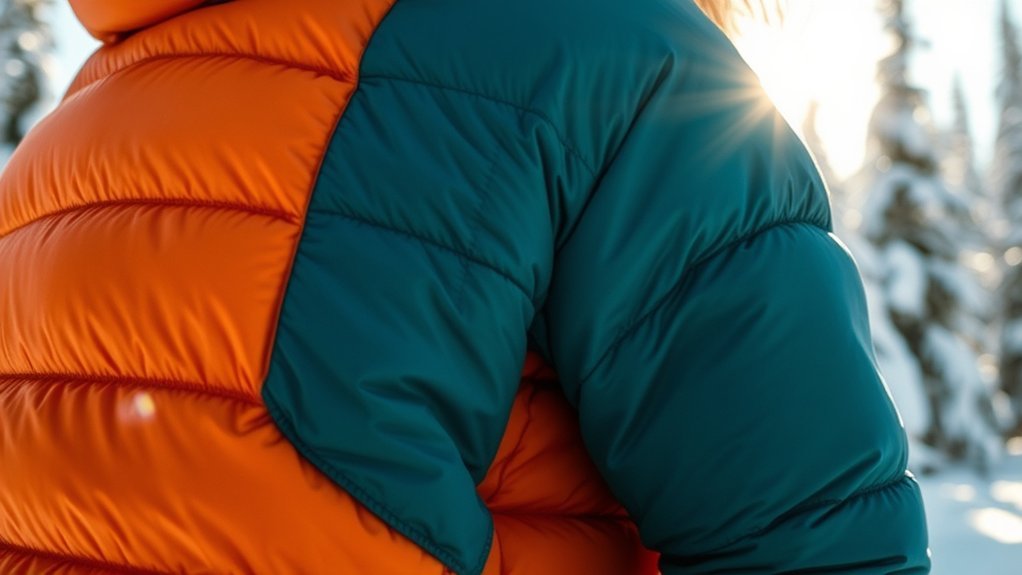
When choosing a synthetic insulated jacket, you should focus on several key factors to guarantee you stay warm and comfortable. Consider the quality of insulation material, weather resistance features, fit, and durability to find the perfect match for your needs. Weight and packability can also make a big difference, especially if you’re planning to travel or hike.
Insulation Material Quality
Choosing the right insulation material can make all the difference in a synthetic insulated jacket’s performance. High-quality synthetic fibers deliver better warmth-to-weight ratios, so look for jackets made with polyester bonded fleece or similar materials for superior thermal efficiency and durability. Pay attention to insulation thickness and density; a well-constructed jacket can keep you warm in extreme temperatures, often rated for use as low as 20°F. Additionally, water-repellent finishes on insulation materials help prevent moisture absorption, which can sap warmth. Finally, consider abrasion-resistant panels that protect against wear and tear in high-friction areas, prolonging your jacket’s lifespan and ensuring consistent performance when you need it most.
Weather Resistance Features
While staying warm is essential, equally important is ensuring your synthetic insulated jacket can withstand the elements. Look for jackets with water-repellent finishes to protect against rain and snow, helping maintain warmth and comfort in wet conditions. A wind-tight design is vital, as wind can notably lower perceived temperatures and increase hypothermia risks. Choose materials that balance insulation and breathability, allowing moisture to escape while keeping you warm during physical activities. Abrasion-resistant panels in high-wear areas enhance durability, extending your jacket’s lifespan in harsh environments. Finally, reflective features improve visibility in low-light situations, making it safer for outdoor adventures during early mornings or late evenings. Prioritize these weather resistance features for peak performance.
Fit and Comfort
Finding the right fit and comfort in a synthetic insulated jacket is essential for maximizing your outdoor experience. Look for a jacket that allows for layering without being too loose, so insulation stays effective while you maintain mobility. Features like adjustable cuffs and hems are critical, as they seal in warmth and keep cold air out. Confirm the jacket accommodates movement, especially in the shoulders and arms, to support your active pursuits. Breathability is also important; a well-fitted jacket should let moisture escape while keeping you warm. Finally, consider how the jacket’s weight and bulk impact comfort during extended wear, as a lighter design can considerably enhance your overall experience in cold weather.
Weight and Packability
When it comes to synthetic insulated jackets, weight and packability can make a significant difference in your outdoor experience. Lighter jackets are easier to carry and more comfortable for extended wear in cold conditions. Packability is essential; you’ll appreciate jackets that compress into a small size for effortless storage in your backpack or luggage. Look for options with a high warmth-to-weight ratio, meaning you get excellent insulation without excessive bulk. Many high-performance jackets feature compressible insulation that retains warmth even when damp, making them versatile for unpredictable weather. Always check the pack size specifications, as some designs neatly fold into their own pockets or include a stuff sack, ensuring convenient transport wherever your adventures take you.
Durability and Longevity
Choosing a synthetic insulated jacket involves more than just considering weight and packability; you also need to think about durability and longevity. The quality of materials plays an essential role—look for abrasion-resistant fabrics that withstand wear and tear in harsh environments. High-quality insulation, like polyester, helps maintain warmth and loft over time, enhancing the jacket’s lifespan. Reinforced seams and construction techniques can greatly boost durability, ensuring your jacket can handle outdoor adventures. Additionally, a water-repellent finish protects against moisture, preventing insulation from getting wet and losing its effectiveness. Finally, proper care and maintenance, such as washing and storing your jacket correctly, can further extend its life and keep it performing well through countless cold-weather outings.
Safety Visibility Elements
Safety visibility elements are vital features to evaluate in a synthetic insulated jacket, especially if you’ll be out in low-light or extreme weather conditions. Look for jackets that incorporate reflective materials or piping, as these enhance your visibility and reduce accident risks. High-visibility colors like HiVis orange or yellow assure you’re easily seen against snowy or dark backgrounds, which is essential for safety. Jackets with strategically placed reflective strips or logos boost visibility from multiple angles, ideal for outdoor or industrial settings. Always check for compliance with safety visibility standards relevant to your industry to secure adequate protection. Prioritizing these elements can greatly enhance your safety in hazardous environments.
Pocket and Storage Options
A well-designed synthetic insulated jacket should offer practical pocket and storage options to enhance your outdoor experience. When choosing, consider the quantity and accessibility of pockets. Multiple zippered pockets can securely store your essentials. Look for hand-warmer pockets that not only provide warmth but also add comfort during cold-weather activities. Water-resistant or water-repellent pockets are essential for protecting your items from moisture, especially in unpredictable weather. Make sure pocket placements don’t interfere with mobility or layering, allowing you to move freely and comfortably. Additionally, jackets with abrasion-resistant panels on pockets can withstand wear and tear, making them durable in rugged environments. Prioritizing these features will guarantee your jacket meets your storage needs effectively.
Maintenance and Care Tips
When it comes to getting the most out of your synthetic insulated jacket, proper maintenance and care are crucial. Always follow the manufacturer’s care instructions for washing and drying to protect the insulation and water-repellent properties. Use a gentle detergent and skip fabric softeners, as they can harm the jacket’s breathability. Wash your jacket on a delicate cycle with cold water and avoid high heat in the dryer to prevent damage. Regularly check for tears or abrasions and repair them promptly to maintain performance. Finally, store your jacket in a cool, dry place, ideally hanging instead of folded, to preserve its shape and insulation efficiency. Taking these steps guarantees your jacket lasts through many cold adventures.
Frequently Asked Questions
How Do Synthetic Insulated Jackets Compare to Down Jackets?
Synthetic insulated jackets typically offer better moisture resistance and maintain warmth when wet, while down jackets provide superior warmth-to-weight ratio. You’ll find synthetic options more versatile, especially in damp conditions, but down excels in dry, cold weather.
Can Synthetic Jackets Be Machine Washed?
Yes, you can machine wash synthetic jackets. Just use a gentle cycle with cold water and a mild detergent. Avoid fabric softeners, and always check the care label for specific washing instructions before proceeding.
What Is the Lifespan of a Synthetic Insulated Jacket?
A synthetic insulated jacket typically lasts 5 to 10 years, depending on usage and care. If you maintain it properly, you can extend its lifespan and enjoy its warmth for many winters to come.
Are Synthetic Jackets Eco-Friendly?
Synthetic jackets can be eco-friendly, depending on their materials and production processes. Look for brands that use recycled fibers and sustainable practices. You can make a positive choice by researching the environmental impact before purchasing.
How Should I Store My Synthetic Insulated Jacket?
Store your synthetic insulated jacket in a cool, dry place, avoiding compression. Hang it on a padded hanger or fold it loosely in a breathable bag. This keeps its insulation loft and prolongs its lifespan.
Conclusion
To summarize, when choosing the best synthetic insulated jacket for cold weather, keep these key factors in mind: insulation quality, weather resistance, fit, durability, safety visibility, and storage options. The RefrigiWear PolarForce jacket stands out for its performance and features. By prioritizing these aspects, you’ll guarantee you stay warm, comfortable, and protected during those chilly days. Don’t settle for less—invest in a jacket that meets your needs and keeps you cozy all winter long!
