

Last Updated on November 4, 2026 by Mason Reed
The best sleeping bags for bikepacking should keep you comfortable without taking up too much space on your bike. Weight, packed size, and realistic temperature ratings matter more than impressive product names. Whether you’re planning a summer overnight ride or a chilly multi-day trip, choosing the right sleeping bag makes a big difference.
For most bikepackers, the Teton TrailHead 20°F Mummy Sleeping Bag offers a practical balance of weight, packed size, and comfort. The ECOOPRO Warm Weather Sleeping Bag is a lighter choice for summer rides. If you expect colder nights and have more luggage space, the Teton LEEF 0°F Mummy Sleeping Bag deserves consideration.
Disclosure: As an Amazon Associate I earn from qualifying purchases. Some links on this page are affiliate links, at no extra cost to you.
Quick Answer: Which Sleeping Bag Is Best for Bikepacking?
Best Overall: Teton TrailHead 20°F Mummy Sleeping Bag. It weighs approximately 2.9 lbs and has a compact mummy design suitable for many bikepacking setups.
Best Lightweight Warm-Weather Pick: ECOOPRO Warm Weather Sleeping Bag. At approximately 1.7 lbs, it helps reduce your load on mild summer trips.
Best for Chilly Nights With Extra Packing Space: Teton LEEF 0°F Mummy Sleeping Bag. It provides more insulation, but the regular version weighs approximately 4.2 lbs and takes up considerably more space.
Key Takeaways
- Choose the right warmth level: Match your sleeping bag to the lowest expected overnight temperature, not the daytime forecast.
- Compare packed dimensions: A sleeping bag can be lightweight but still too bulky for your handlebar roll or seat pack.
- Understand temperature ratings: A bag labeled 0°F or 20°F may have a much warmer recommended comfort range.
- Protect your insulation: Use a suitable waterproof dry bag when carrying sleeping gear on your bike.
- Consider your complete sleep system: Your sleeping pad, shelter, clothing, and personal cold tolerance affect overnight comfort.
Our Top Sleeping Bag Picks
| Sleeping Bag | Product Image | Best For | Temperature Guidance | Weight | Size and Packability | Amazon | Details |
|---|---|---|---|---|---|---|---|
| Teton Lightweight Mummy Sleeping Bag for Adults and Kids |  |
Best Overall Balanced weight and packability |
20°F advertised rating Manufacturer comfort guidance: approximately 45–50°F |
Approximately 2.9 lbs Regular 20°F version |
In use: 87 x 32 inches Packed: approximately 14.5 x 7.75 x 7.25 inches |
Check Price on Amazon | Read Our Analysis |
| ECOOPRO Warm Weather Sleeping Bag for Adults | 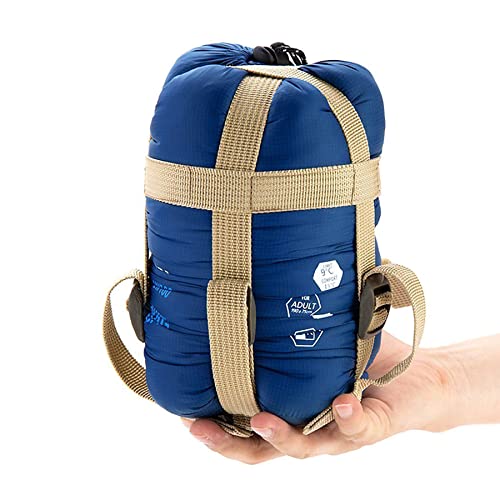 |
Best for Warm Weather Lightweight summer option |
Warm-weather use Listed range: 16–30°C (61–86°F); not a verified ISO comfort rating |
Approximately 1.7 lbs | In use: 83 x 30 inches Packed: approximately 11 inches tall; confirm full packed dimensions |
Check Price on Amazon | Read Our Analysis |
| Teton LEEF Lightweight Mummy Sleeping Bag – 0F |  |
Best for Chilly Trips More insulation, more bulk |
0°F advertised rating Manufacturer comfort guidance: approximately 25–30°F |
Approximately 4.2 lbs Regular bag; size and packed-kit weight vary |
Design: Mummy Packed: roughly 16–18 inches long and 10–11 inches across, depending on version |
Check Price on Amazon | Read Our Analysis |
More Details on Our Top Picks
-
Teton Lightweight Mummy Sleeping Bag for Adults and Kids
The Teton TrailHead 20°F Mummy Sleeping Bag is a practical choice for bikepackers who want reasonable weight and packed size without moving to more expensive ultralight equipment.
At approximately 2.9 lbs for the regular 20°F version, it is manageable for many overnight and multi-day rides. Its mummy design reduces unnecessary fabric, while the synthetic PolarLite insulation and hood help retain warmth.
The regular version measures approximately 87 x 32 inches when laid out. Its published packed dimensions of about 14.5 x 7.75 x 7.25 inches make it easier to plan where it will fit on your bike.
The biggest consideration is its temperature label. Although the model is advertised as 20°F, Teton’s current comfort guidance is around 45–50°F. You should not assume that it will provide comfortable sleep at 20°F.
Why You’ll Like It
The relatively manageable packed dimensions, synthetic insulation, hood, and draft-control features make this a useful option for riders who want straightforward equipment for milder conditions.
Who Should Buy This?
Choose this bag if you want a mummy sleeping bag for summer outings, mild spring or autumn trips, or bikepacking routes where nighttime temperatures are comfortably above freezing.
Who Should Avoid This?
Avoid relying on this model for freezing nights or harsh winter conditions based on its 20°F product label. Also check the available lengths if you are especially tall or prefer extra room for sleeping on your side.
- Advertised Temperature Rating:20°F
- Manufacturer Comfort Guidance:Approximately 45–50°F
- Weight:Approximately 2.9 lbs for the regular 20°F version
- Dimensions:Approximately 87 x 32 inches
- Material:Polyester ripstop outer shell with polyester lining
- Insulation:PolarLite synthetic insulation
- Portability:Approximately 14.5 x 7.75 x 7.25 inches packed
- Use Cases:Bikepacking, backpacking, and milder-weather camping
- Additional Feature:Mummy hood and draft-control features
- Additional Feature:Anti-snag zipper design
- Additional Feature:Stuff sack included
-
ECOOPRO Warm Weather Sleeping Bag for Adults
The ECOOPRO Warm Weather Sleeping Bag is worth considering if you enjoy summer bikepacking and want to keep your luggage relatively light. At approximately 1.7 lbs, it weighs noticeably less than the other options in this comparison.
It measures approximately 83 x 30 inches and uses a nylon outer material with polyester lining and synthetic insulation. Its envelope-style design provides a less restrictive feel than a snug mummy bag.
The manufacturer-listed temperature range is 16–30°C (61–86°F). However, this should be treated as general warm-weather guidance rather than a verified ISO comfort rating. Actual comfort depends on your sleeping pad, shelter, clothing, and personal tolerance for cold.
The bag comes with a carrying sack and is described as compressible, making it convenient for transporting inside bikepacking luggage. Its packed height is listed at approximately 11 inches, but you should confirm the full packed dimensions before buying.
Why You’ll Like It
The main benefit is its combination of low weight, simple design, and comfortable room for mild nights. It can be a sensible option for occasional summer camping without carrying unnecessary winter insulation.
Who Should Buy This?
Choose the ECOOPRO if your rides involve predictable warm weather, summer campgrounds, or mild overnight conditions where extra insulation is not necessary.
Who Should Avoid This?
Skip this model for cold mountain routes, near-freezing temperatures, or unpredictable shoulder-season weather. It should not be used as a substitute for a properly rated cold-weather sleep system.
- Listed Temperature Range:16–30°C (61–86°F); not a verified ISO comfort rating
- Weight:Approximately 1.7 lbs
- Dimensions:83 x 30 inches
- Material:Nylon outer and polyester lining
- Insulation:Synthetic polyester filling
- Portability:Compressible; packed height approximately 11 inches
- Use Cases:Warm-weather bikepacking, hiking, and camping
- Additional Feature:Roomier envelope-style construction
- Additional Feature:Smooth zipper closure
- Additional Feature:Carrying sack included
- Important Limitation:Not recommended for reliably cold overnight temperatures
-
Teton LEEF Lightweight Mummy Sleeping Bag – 0F
If your bikepacking routes include chilly nights, the Teton LEEF 0°F Mummy Sleeping Bag offers more insulation than the lighter warm-weather options in this article.
Its mummy construction uses PolarLite Micro synthetic insulation, a hood, and zipper draft-control features to help reduce heat loss. The roomier mummy shape may appeal to riders who find narrow sleeping bags restrictive.
However, its advertised 0°F rating is not a promise of comfortable sleep at 0°F. Teton’s published comfort guidance for the 0°F LEEF is approximately 25–30°F. Your actual comfort also depends on your sleeping pad and overall shelter setup.
The regular bag weighs approximately 4.2 lbs. Its packed size varies across versions, with published measurements roughly 16–18 inches long and 10–11 inches across. This makes the LEEF a bulky choice for small bikepacking bags, even though it includes a compression sack.
It makes more sense for riders who have a larger handlebar setup, luggage rack, or additional storage capacity and need extra warmth rather than the smallest possible sleeping bag.
Why You’ll Like It
The main advantages are its warmer insulation, roomier mummy construction, hood, and draft-control features. It also comes with a compression sack, and Teton offers a limited lifetime warranty subject to its terms.
Who Should Buy This?
Consider this model for cooler-weather trips where your bike has enough space to accommodate its packed dimensions and additional weight.
Who Should Avoid This?
Avoid it if you need a truly ultralight sleeping bag, have limited handlebar or seat-pack space, or expect a 0°F comfort guarantee. For subfreezing trips, carefully assess your complete sleep system and use a bag with suitable verified comfort guidance.
- Advertised Temperature Rating:0°F
- Manufacturer Comfort Guidance:Approximately 25–30°F
- Weight:Approximately 4.2 lbs for the regular bag; packed-kit weight may differ
- Dimensions:Mummy shape; size-specific measurements vary
- Material:Polyester ripstop shell with brushed polyester lining
- Insulation:PolarLite Micro synthetic insulation
- Portability:Compression sack included; comparatively bulky
- Use Cases:Chilly-weather camping, backpacking, and bikepacking with sufficient storage
- Additional Feature:Roomier mummy construction
- Additional Feature:Hood and zipper draft-control features
- Additional Feature:Multiple size options available
- Warranty:Teton limited lifetime warranty, subject to terms
Factors to Consider When Choosing Sleeping Bags for Bikepacking
The right sleeping bag for bikepacking depends on more than its advertised warmth. You must also consider how much space it occupies, where you’ll carry it, and whether its insulation suits your route.
Weight and Packability
Weight and packed volume are two of the most important considerations for bikepacking. A bulky sleeping bag can make it difficult to carry a tent, sleeping pad, food, clothing, and bike repair supplies.
A bag weighing less than 2 lbs may be attractive for warm-weather rides. A bag around 3 lbs can still be practical, especially when it packs into a compact shape. Heavier options may be reasonable for cold conditions, but only if your luggage system can handle them.
Don’t judge a sleeping bag by weight alone. Compare the full packed dimensions against the usable space inside your handlebar roll, seat pack, or rack-mounted dry bag.
Temperature Rating
Temperature ratings deserve careful attention because they do not all represent the same level of comfort.
A sleeping bag’s advertised number may be a manufacturer’s general rating rather than its recommended comfortable sleeping temperature. Some bags also have separate comfort, lower-limit, and extreme ratings.
When available, independent EN or ISO comfort ratings provide a better basis for comparing products. An extreme or survival rating should never be treated as the temperature at which you can expect comfortable sleep.
For example, Teton currently gives a comfort range of approximately 45–50°F for its TrailHead 20°F bag and approximately 25–30°F for its LEEF 0°F bag. Those differences matter when planning your overnight route.
Choose a sleeping bag based on the coldest reasonable nighttime forecast, with an additional margin for your personal comfort and unexpected conditions. You can learn more in REI’s guide to sleeping bag temperature ratings.
Material Durability
Your sleeping bag may spend hours compressed inside a bikepacking bag and may be exposed to moisture, dust, and vibration during transport.
Look for durable fabrics such as ripstop polyester or nylon. Ripstop construction can help limit the spread of small tears, although it does not make the material puncture-proof.
Pay attention to zipper quality, stitching, and reinforced stress points. A jammed zipper can become especially frustrating when you are setting up camp after a long ride.
Also remember that a water-resistant sleeping bag shell is not the same as a waterproof storage system. Keep your sleeping bag inside suitable waterproof luggage or a dry bag during wet rides.
Insulation Type
The two main sleeping bag insulation categories are down and synthetic. Each has benefits and limitations for bikepacking.
Down insulation generally offers excellent warmth relative to its weight and can compress into a small space. That makes it attractive for riders with limited storage. However, ordinary down loses much of its insulating performance when wet and needs careful moisture protection.
Synthetic insulation is often less expensive, easier to care for, and better at retaining some warmth when damp. Its main disadvantage is that it typically takes up more space for a similar level of insulation.
The three sleeping bags reviewed here use synthetic insulation. They may suit riders who value straightforward care and moisture tolerance, but none should be stored wet or left exposed to rain.
Design Features
Sleeping bag shape affects warmth, comfort, and packing efficiency.
Mummy sleeping bags use a tapered shape that reduces excess material around your body. This can improve thermal efficiency and reduce packed bulk. They are a useful option for bikepacking, especially in cooler weather.
Rectangular or envelope-style sleeping bags offer more room to move. They may feel more comfortable for warm-weather camping, although their shape can result in extra fabric and heat loss.
Useful features include adjustable hoods, zipper draft tubes, insulated footboxes, smooth zippers, and carrying sacks. Prioritize the features that solve your actual sleeping problems rather than choosing a bag with the longest feature list.
Sleeping Bag Size and Fit
A sleeping bag should provide enough length and shoulder room for you to sleep comfortably without compressing its insulation excessively.
Check the manufacturer’s recommended user height, shoulder width, footbox dimensions, and available size variations.
If you are a side sleeper, look for a slightly roomier mummy bag or an envelope-style design. If you move frequently during sleep, a very narrow mummy bag may feel restrictive.
For family bikepacking trips, choose each person’s sleeping bag based on their individual height, age, and sleeping conditions. Do not assume that every adult-sized bag is suitable for a child simply because a product listing mentions family use.
Sleeping Pad and Ground Insulation
Your sleeping bag is only one part of the system that keeps you warm overnight. The insulation underneath you is equally important.
When you lie on a sleeping bag, your body compresses the insulation beneath you. A suitable insulated sleeping pad helps reduce heat loss to the ground.
For mild summer conditions, a lightly insulated pad may be adequate. Cooler and freezing conditions require greater ground insulation. Check the pad’s tested R-value and choose one suitable for your expected temperatures.
For further planning, see the Bikepacking.com packing guide, which covers sleeping bags, pads, shelters, and other overnight essentials.
Weather Protection and Storage
Rain can create serious problems for your sleep system, even when your sleeping bag has a water-resistant outer shell.
Use a waterproof dry bag or suitable sealed bikepacking luggage for transporting your sleeping bag. Check closures and attachment straps before riding.
When you reach camp, avoid placing your sleeping bag directly on wet ground. Allow it to regain loft after unpacking and keep it protected from condensation whenever possible.
After your trip, dry the bag completely and store it loosely rather than leaving it tightly compressed for extended periods.
Budget and Long-Term Value
The cheapest sleeping bag is not always the best value. A product that does not fit your bike or provide suitable warmth may need to be replaced after only a few outings.
For occasional warm-weather trips, a simple synthetic sleeping bag may meet your needs. Frequent bikepackers may benefit more from equipment with a better balance of weight, warmth, packed dimensions, and durability.
Before spending more, check whether the improvement solves a real problem. Lower weight can be valuable, but only if the sleeping bag also fits your body and expected nighttime conditions.
Before You Buy: Bikepacking Sleeping Bag Checklist
Use this checklist before ordering:
- Check the lowest forecast nighttime temperature for your route.
- Confirm the manufacturer’s actual comfort guidance.
- Compare sleeping bag weight with the rest of your bikepacking equipment.
- Measure your luggage and check the bag’s packed dimensions.
- Make sure the sleeping bag fits your height and sleeping position.
- Choose an insulated sleeping pad suitable for the conditions.
- Plan how you will keep your sleeping bag dry during rain.
- Confirm the selected Amazon size, variation, included accessories, warranty terms, and current price.
Frequently Asked Questions
How Do I Clean and Maintain My Sleeping Bag?
Always check the manufacturer’s care label first. Some synthetic sleeping bags can be machine-washed on a gentle cycle, but washing requirements vary.
Use an appropriate detergent, rinse thoroughly, and dry the bag completely according to its instructions. Avoid high heat unless the manufacturer specifically allows it.
Between trips, air out your sleeping bag and store it loosely in a dry place to help preserve its insulation loft.
What Is the Best Sleeping Bag Shape for Bikepacking?
A mummy sleeping bag is often the better choice when warmth and packing efficiency matter. Its tapered design reduces excess material and can improve heat retention.
However, a rectangular or envelope-style bag may be more comfortable for warm-weather riders who prefer extra room. The best shape depends on your sleeping habits, luggage capacity, and expected weather.
Can I Use a Sleeping Bag Liner for Added Warmth?
Yes. A sleeping bag liner can provide a small amount of additional warmth, improve comfort, and help keep your sleeping bag cleaner.
However, the amount of added insulation depends on the liner material and your overall sleeping setup. Do not rely on a liner to make an unsuitable warm-weather bag safe for freezing conditions.
How Do I Pack My Sleeping Bag Efficiently?
For most synthetic sleeping bags, gently stuffing the bag into its supplied sack is practical. Follow the manufacturer’s instructions for any compression straps.
Place the compressed bag inside waterproof storage and position it where it will not interfere with steering, cables, or pedaling.
Avoid leaving your sleeping bag tightly compressed between trips. Loose storage helps preserve insulation loft.
What Are the Benefits of Down vs. Synthetic Insulation?
Down generally provides excellent warmth-to-weight performance and compresses well, making it attractive for riders with limited space.
Synthetic insulation generally tolerates damp conditions better, dries more easily, and often costs less. However, a synthetic bag can be heavier or bulkier for similar warmth.
Choose based on your weather conditions, storage capacity, budget, and willingness to protect the insulation from moisture.
What Sleeping Pad R-Value Do I Need for Bikepacking?
The appropriate sleeping pad R-value depends on the expected ground temperature and your sleeping system.
For warm summer camping, an R-value below 2 may be enough in suitable conditions. Cooler nights often call for greater insulation, while freezing conditions commonly benefit from pads rated around R-4 or higher. Very cold conditions can require R-5.5 or greater.
These are general guidelines, not guarantees. Match your sleeping pad, sleeping bag, and shelter to the actual conditions of your route.
Can I Carry a Sleeping Bag on My Handlebars?
Yes, provided your sleeping bag fits inside a properly secured handlebar bag or dry-bag harness.
Check that the packed bag does not contact your front tire or interfere with brake hoses, cables, lights, or steering. Allow room for the suspension to compress if your bike has a suspension fork.
Some larger sleeping bags may be better suited to rack-mounted luggage rather than compact handlebar rolls.
Do I Need a 0°F Sleeping Bag for Bikepacking?
Not necessarily. The right rating depends on the coldest conditions you expect to encounter.
A warm-weather bag may be suitable for mild summer trips, while a more insulated option may be needed for chilly routes.
Remember that a 0°F product name does not always indicate a 0°F comfort rating. Check the manufacturer’s published comfort guidance and consider the complete sleeping system before choosing a cold-weather bag.
Conclusion
The best sleeping bag for bikepacking is one that fits your bike, suits your expected overnight temperatures, and allows you to sleep comfortably without carrying unnecessary weight.
For many riders, the Teton TrailHead 20°F Mummy Sleeping Bag is a practical overall option for milder conditions. The ECOOPRO Warm Weather Sleeping Bag offers lower weight for summer rides, while the Teton LEEF 0°F Mummy Sleeping Bag provides an option for chillier trips when you have sufficient packing space.
Before buying, compare real comfort guidance, weight, packed dimensions, and sleeping bag fit. Pair your choice with an appropriate insulated sleeping pad and waterproof storage. With a well-matched sleep system, you can spend less time worrying about your camping gear and more time enjoying your bikepacking adventure.
