
Last Updated on September 10, 2026 by Daniel Globe
Disclosure: As an Amazon Associate, we earn from qualifying purchases. If you click a link on this page and make a purchase, we may receive a small commission at no extra cost to you.
Packing for a winter alpine trip usually means facing the same problem: you need serious warmth, but every extra ounce in your bag works against you on the climb. A jacket that’s too bulky gets left behind, and one that’s too thin leaves you cold at the belay station or on a wind-exposed ridge. This guide breaks down what actually matters when you’re choosing a Rab winter jacket, starting with our top pick.
| Rab Men’s Mythic Alpine Light Down Jacket | Best Lightweight Insulator | Insulation Type: 900FP down + PrimaLoft Gold synthetic blend | Water Resistance: Nikwax hydrophobic treatment, fluorocarbon-free | Weight: Ultralight, around 11 oz (men’s medium) | Check Price on Amazon | Read Our Analysis |
More Details on Our Top Picks
-
Rab Men’s Mythic Alpine Light Down Jacket
The Rab Men’s Mythic Alpine Light Down Jacket pairs 900-fill-power European goose down with PrimaLoft Gold synthetic insulation for a warm, packable jacket built for alpine use. The down sits at the core for maximum warmth, while the synthetic fill covers the sides, cuffs, shoulders, and hood base, areas most prone to moisture and compression. A 10-denier Pertex Quantum outer shell, made from 100% recycled material, blocks wind and sheds light precipitation without adding bulk.
Rab treats the down with a Nikwax hydrophobic finish, so it keeps lofting and insulating even if it gets damp, a common issue with untreated down jackets. Unlike single-insulation jackets that either overheat you in dry cold or lose warmth when wet, this hybrid down-and-synthetic layout holds performance across a wider range of conditions. Precurved, articulated sleeves and a stitch-through construction let you move freely while climbing or hiking, and a single-sided hem adjustment keeps cold air out.
The jacket includes a lightweight stuff sack, so it compresses down small enough for a backpack‘s side pocket or crampon pouch. A YKK center-front zip with a fleece-lined chin guard adds comfort during long days outside. It’s a top-rated choice on Amazon among alpine insulated jackets, and for its warmth-to-weight ratio, it’s a worthwhile investment if you’re logging serious mileage in cold terrain.
Pick this if: you want one jacket that handles both dry alpine cold and damp mountain weather without switching layers.
- Insulation Type: 900FP down + PrimaLoft Gold synthetic blend
- Water Resistance: Nikwax hydrophobic treatment, fluorocarbon-free
- Weight: Ultralight, around 11 oz (men’s medium)
- Packability: Includes stuff sack for compact storage
- Environmental Considerations: 100% recycled Pertex Quantum shell fabric
- Design Features: Stitch-through construction with precurved, articulated sleeves
- Additional Feature: Zoned insulation, down at core, synthetic at high-wear areas
- Additional Feature: YKK center-front zip with fleece-lined chin guard
- Additional Feature: Down-filled hood with elasticated opening and stiffened peak
Frequently Asked Questions
Is down or synthetic insulation better for a Rab alpine jacket?
It depends on conditions. Pure down offers the best warmth-to-weight ratio in dry cold, but hybrid jackets like the Mythic Alpine Light use synthetic insulation in high-wear, moisture-prone zones so performance holds up even if you sweat or get caught in wet weather.
Will a Nikwax-treated down jacket still keep me warm if it gets wet?
Yes, to a point. The hydrophobic finish helps the down resist moisture and continue lofting in damp or humid conditions better than untreated down. It’s not fully waterproof, so pair it with a shell in sustained rain or wet snow.
How small does this jacket pack down for a backpack?
The included stuff sack compresses the jacket to roughly the size of a large water bottle, making it easy to stash in a pack’s side pocket or summit pack without eating into your load capacity.
Should I size up or down in an alpine down jacket like this one?
Rab’s alpine jackets run close to a standard athletic fit, designed to layer over a base layer and fleece. If you plan to wear it over a thick midlayer regularly, consider sizing up one size for comfortable movement.
How do I care for a hydrophobic down jacket to keep it performing well?
Wash it occasionally with a down-specific detergent and tumble dry on low with clean tennis balls to restore loft. Avoid fabric softeners and standard detergents, which can strip the hydrophobic treatment over time.
Factors to Consider When Choosing Rab Winter Jackets: Top Picks for Cold Weather
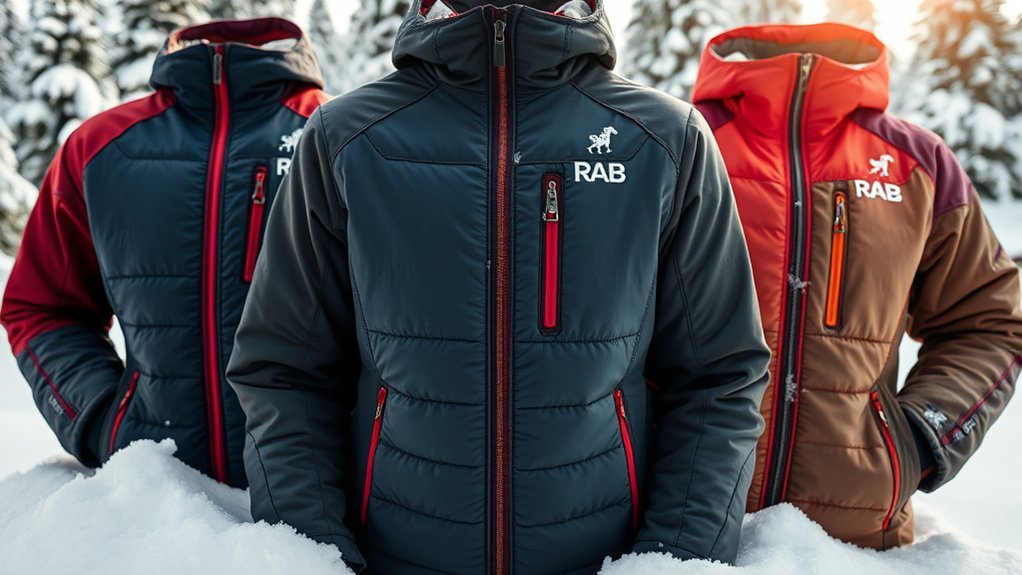
When you’re choosing a Rab winter jacket, weigh a few key factors that shape real-world performance. Consider the insulation type, weight, and packability, along with weather-resistance features that keep you warm and dry. Check the fabric’s sustainability credentials, and make sure the fit and comfort suit how you’ll actually use the jacket.
Insulation Types Explained
The right insulation makes a real difference in cold-weather comfort. Down insulation offers an excellent warmth-to-weight ratio, which is why it shows up in lightweight jackets built for hiking and climbing. If you choose down, look for hydrophobic treatments like Nikwax, which help it retain warmth even when wet. Synthetic insulation, such as PrimaLoft Gold, holds up better in consistently wet conditions since it keeps insulating even when damp. Your choice often comes down to your environment: down works best in dry, cold settings, while synthetic or hybrid builds handle variable weather better. Sustainability matters too, so look for recycled fabrics and eco-friendly treatments.
Weight and Packability
Weight and packability matter as much as warmth when you’re picking a Rab jacket. Lighter jackets, especially those with high fill-power down, improve mobility and cut down on fatigue during long days outside. Pay attention to how easily a jacket compresses. Options that pack down small are easier to stow in a backpack while traveling or climbing. Jackets that include a stuff sack make storage simpler still. If you’re focused on alpine activities, prioritize lightweight materials built for that dynamic use, and remember that hydrophobic treatments on down can further improve packability by keeping the jacket effective even after it gets damp.
Weather Resistance Features
To stay warm and dry on winter adventures, check a jacket’s weather-resistance features closely. Look for water-resistant treatments, like fluorocarbon-free finishes, that repel moisture without harsh chemicals. Hydrophobic down or synthetic insulation keeps you warm even in damp conditions. Also consider the shell fabric’s breathability, which lets perspiration escape while still blocking wind and light precipitation. Features like articulated sleeves and stitch-through construction improve mobility, which matters for climbing or hiking. Compact storage options, like an included stuff sack, make it easy to carry the jacket without wasting pack space.
Fabric Sustainability Practices
Fabric sustainability is worth weighing when you shop for a winter jacket. Look for jackets made from recycled materials, which cut down on waste and environmental impact. Fluorocarbon-free water-resistant treatments align with eco-friendly practices by avoiding harmful chemicals. Check for ethically sourced down insulation that maintains warmth while supporting animal welfare standards. Jackets with synthetic insulation like PrimaLoft Gold offer strong moisture resilience while still being manufactured sustainably. Brands with transparent supply chains help ensure materials are sourced responsibly, so you can stay warm while keeping your impact in check.
Fit and Comfort
Fit and comfort matter just as much as insulation type. A snug fit holds in warmth while still leaving room to layer underneath. Look for articulated sleeves and designs that allow a full range of motion during outdoor activities. Adjustable cuffs and hems matter too. They help lock in the fit and keep cold air from sneaking in. A lighter jacket also improves comfort during extended wear, especially if you’re active. Finally, make sure the jacket breathes well, since that lets moisture escape while keeping warmth in and prevents overheating during high-output outings.
Versatility for Activities
Think about how a winter jacket performs across different activities before you buy. Look for jackets that work whether you’re hiking, climbing, or just wearing them casually. Lightweight insulation matters here too, since it packs easily and holds up for year-round alpine use. Jackets that combine down and synthetic insulation resist wet weather better, which helps on unpredictable winter days. Articulated sleeves and stitch-through construction improve mobility for active pursuits. Compact storage, like a small stuff sack, makes the jacket easy to transport on longer trips.
Design and Functionality
Design and functionality shape how a Rab jacket performs in cold conditions. Stitch-through construction adds warmth while keeping the jacket lightweight and easy to move in. Articulated sleeves matter for a full range of motion, especially if you’re using trekking poles or climbing tools. Adjustable hoods and cuffs help you dial in a snug fit that traps body heat. Compact storage solutions, like a small stuff sack, make the jacket easy to pack and organize when it’s not in use. Water-resistant treatments improve wet-weather performance without sacrificing breathability.
Price vs. Performance
Balancing price and performance is key when you’re comparing Rab winter jackets. Start with the fill power of the down insulation. Higher ratings mean a better warmth-to-weight ratio without extra bulk. Look for hydrophobic treatments like Nikwax that keep you warm even in wet conditions. Weigh the benefits of a lighter jacket that packs easily against the insulation you actually need for alpine activities. Recycled fabrics support sustainability while often improving water resistance and durability. Finally, look for articulated sleeves and similar design features that improve mobility during active use.
Frequently Asked Questions
Are Rab Jackets Suitable for Extreme Cold Temperatures?
Yes, Rab jackets are suitable for extreme cold temperatures. They’re designed with high-quality insulation and weather-resistant materials, so you stay warm and protected during harsh conditions. You’ll notice the difference in both warmth and performance in frigid weather.
How Do I Clean and Maintain My Rab Winter Jacket?
Machine wash your Rab winter jacket on a gentle cycle with a down-specific detergent. Tumble dry it on low with tennis balls to restore loft, and skip fabric softeners since they can damage the insulation’s performance.
What Is the Warranty Policy for Rab Jackets?
Rab jackets typically come with a lifetime warranty against defects in materials and workmanship. If you notice any issues, contact their customer service for assistance, and keep your receipt handy to speed up the process.
Do Rab Jackets Come in Women’s Sizes?
Yes, Rab jackets come in women’s sizes. The brand offers a range of fits designed specifically for women, so you’ll find options suited to different activities and weather conditions.
Can Rab Winter Jackets Be Used for Hiking and Climbing?
Yes, Rab winter jackets work well for hiking and climbing. Their insulation and weather-resistant features provide warmth and protection, making them a solid choice for outdoor adventures in cold conditions.
Conclusion
If warmth-to-weight ratio is your top priority for alpine climbing or mountaineering, start with the Rab Men’s Mythic Alpine Light Down Jacket and its 900FP down and PrimaLoft Gold hybrid insulation. For damp or variable winter weather, its Nikwax-treated down and Pertex Quantum shell keep performance steady even when conditions turn wet. And if packability matters most for your trip, the included stuff sack compresses it down small enough for any backpack. Pick the version that matches your main use case, and get it broken in before your next alpine outing.
