
Last Updated on July 27, 2026 by Daniel Globe
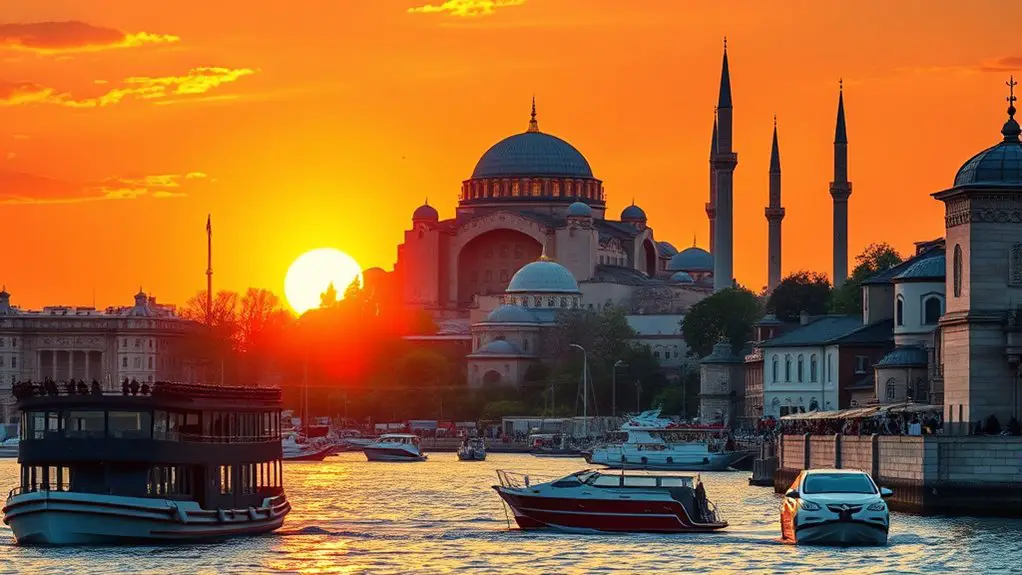
Istanbul rewards travelers who mix its headline landmarks with its markets, waterfronts, mosques, palaces, and neighborhoods. Start in the Historic Peninsula with Hagia Sophia, Topkapi Palace, the Blue Mosque, and the Basilica Cistern, then cross the Golden Horn for Galata and make time for the Bosphorus and Asian side. The key is grouping sights by area instead of racing across the city.
Quick Answer
The best places to visit in Istanbul include Hagia Sophia, Topkapi Palace, the Blue Mosque, Basilica Cistern, Grand Bazaar, Spice Bazaar, Süleymaniye Mosque, Galata Tower, Dolmabahçe Palace, and the Bosphorus. First-time visitors should allow at least three full days and group attractions by neighborhood to avoid wasting time in traffic.
Key Takeaways
- Sultanahmet is the first-stop cluster: Hagia Sophia, the Blue Mosque, Basilica Cistern, Topkapi Palace, and the old Hippodrome sit close together.
- Hagia Sophia is an active mosque: tourist access and worship access are managed separately, and restoration work can affect what you see.
- Topkapi needs more time than it looks: its courtyards, treasury, Sacred Relics galleries, Harem, and Bosphorus views can fill several hours.
- Do not limit the trip to monuments: the Grand Bazaar, Spice Bazaar, Karaköy, Kadıköy, and a public ferry ride reveal a different side of Istanbul.
- Plan by neighborhood: Istanbul is huge, and grouping nearby attractions saves far more time than building a list based only on popularity.
Disclosure: As an Amazon Associate I earn from qualifying purchases. Some links on this page are affiliate links, at no extra cost to you.
Plan Your Istanbul Sightseeing Before You Start
Istanbul stretches across Europe and Asia, so the easiest sightseeing days are built around compact areas. The Historic Peninsula contains many of the city’s most important Byzantine and Ottoman monuments, including sites recognized within the UNESCO Historic Areas of Istanbul.
For your first day, focus on Sultanahmet. Save Galata, Karaköy, İstiklal Avenue, and Taksim for another day. Use a third day for the Bosphorus, Dolmabahçe Palace, and the Asian side.
Pro Tip: Check official opening days before locking in your itinerary. Topkapi Palace is currently closed on Tuesdays, while other museums and palaces follow different weekly schedules.
Hagia Sophia
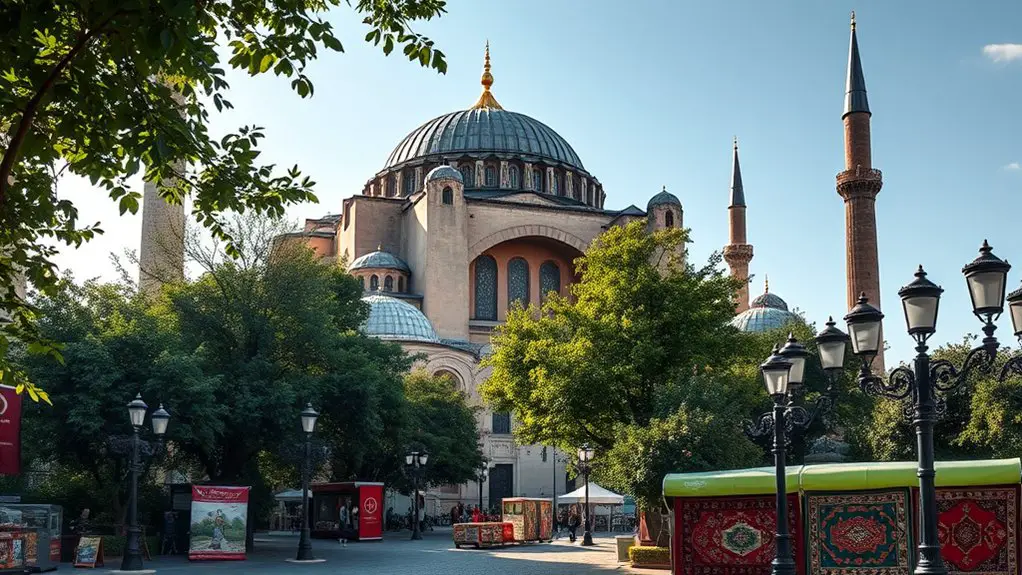
Hagia Sophia is one of Istanbul’s defining monuments. Completed in the sixth century as a Byzantine church, it later became an Ottoman mosque, served as a museum during the 20th century, and returned to mosque use in 2020.
Its enormous central dome, marble surfaces, Byzantine mosaics, Ottoman calligraphy, and later Islamic additions show how the building changed across centuries. UNESCO identifies Hagia Sophia as one of the architectural masterpieces within Istanbul’s World Heritage areas.
Few places in Istanbul show the city’s Byzantine and Ottoman layers as clearly as Hagia Sophia.
There is one important modern detail: Hagia Sophia remains an active mosque. The Turkish Directorate General of Foundations explains that sightseeing visitors are directed through the upper gallery, while the main prayer area is managed for worship. Official visitor information should be checked before your trip because access arrangements can change.
Warning: Hagia Sophia is undergoing long-term restoration and strengthening work. Scaffolding or temporary structures may affect interior views. Dress modestly, follow staff instructions, and do not assume that a sightseeing ticket provides access to worship-only areas.
Topkapi Palace
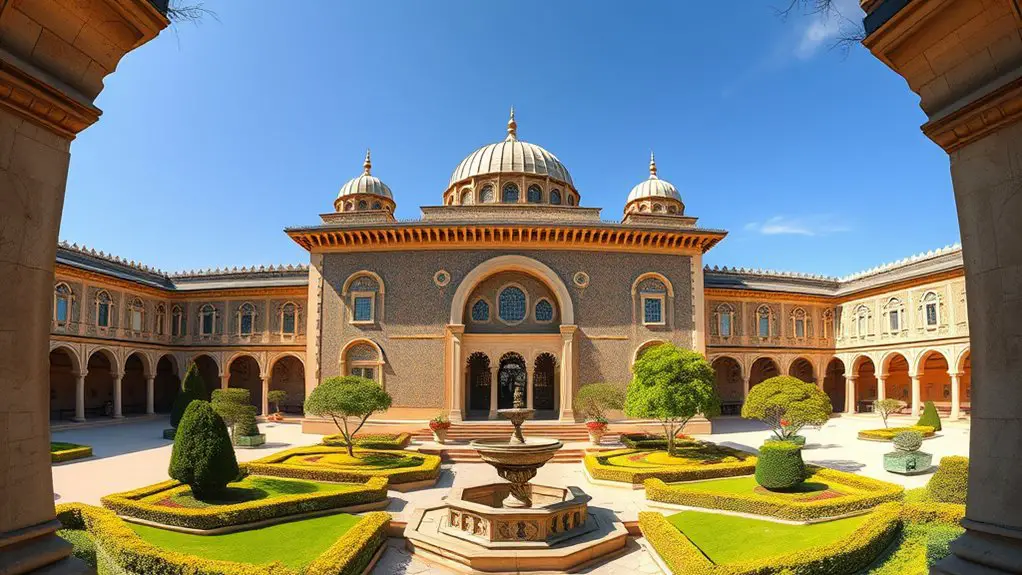
Topkapi Palace was both an imperial residence and a center of Ottoman government. Rather than one enormous palace building, the complex unfolds through gates, courtyards, chambers, gardens, pavilions, and terraces overlooking the Bosphorus.
Allow several hours if you want to explore it properly. The official Milli Saraylar visitor page currently lists Tuesday as the palace’s closed day, so check the latest schedule before going.
Historical Significance of Topkapi
The palace gives you a clearer sense of how the Ottoman court functioned than a quick exterior visit ever could. Its spaces served ceremonial, administrative, educational, residential, and religious purposes.
Highlights include:
- The palace courtyards and monumental gates.
- The Imperial Treasury and palace collections.
- The Harem, with its richly decorated residential spaces.
- The Sacred Relics galleries, where objects of major importance in Islamic tradition are preserved.
- Pavilions and terraces with views toward the Bosphorus and Golden Horn.
Milli Saraylar describes the Sacred Relics collection as including the Hırka-i Saadet and other objects traditionally associated with the Prophet Muhammad and Islamic history.
Architectural Highlights to Explore
Topkapi’s architecture developed over centuries rather than following one single plan. That layered character is part of its appeal: ceremonial gates lead into increasingly private courtyards, while tiled chambers and pavilions reveal changing Ottoman tastes.
| Feature | What You See | Why It Matters |
|---|---|---|
| Harem | Private apartments, tiled chambers, passageways, and courtyards | Shows the residential side of palace life |
| Imperial Gate | Monumental entrance to the palace grounds | Introduces the ceremonial layout of the complex |
| Audience Chamber | Formal reception space | Connected palace ceremony with affairs of state |
| Sacred Relics | Religious objects preserved in the Has Oda area | One of the palace’s most important religious collections |
| Fourth Courtyard | Pavilions, gardens, and terraces | Combines palace architecture with wide city views |
Blue Mosque
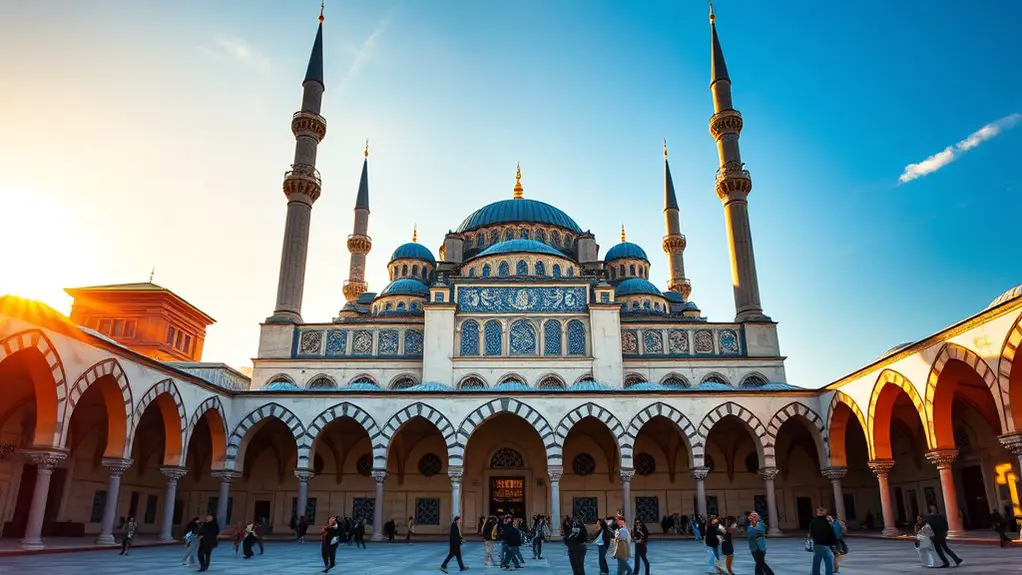
Facing Hagia Sophia across Sultanahmet Square, the Blue Mosque, or Sultan Ahmed Mosque, is one of the most recognizable monuments in Istanbul.
Built in the early 17th century, it is known for its cascade of domes, six minarets, large courtyard, and extensive İznik tile decoration. Türkiye’s official Culture Portal identifies the blue tiles lining its interior as the source of its popular English name.
What Makes the Blue Mosque Special
- Domes: A layered series of domes and semi-domes creates its distinctive silhouette.
- İznik tiles: Blue, green, and white ceramics decorate much of the interior.
- Six minarets: They make the mosque instantly recognizable from Sultanahmet Square.
- Courtyard: The large arcaded courtyard reinforces the symmetry of the complex.
The mosque combines established Ottoman forms with the architectural setting created by neighboring Hagia Sophia. It is better described as one of the defining monuments of later classical Ottoman architecture than as the single “zenith” of the style.
Visiting Respectfully
The Blue Mosque remains a functioning place of worship. Sightseeing access can pause around prayer times, and visitors should follow the instructions posted at the entrance.
Wear clothing that covers shoulders and knees. Women should be prepared to cover their hair when entering the prayer space. Shoes are removed before stepping onto the carpeted interior.
Note: Hagia Sophia, the Blue Mosque, Basilica Cistern, and the ancient Hippodrome area are close enough to combine on foot. Topkapi Palace is nearby too, but it deserves a larger block of time.
Basilica Cistern
A few minutes from Hagia Sophia, the Basilica Cistern gives you a completely different view of Byzantine Istanbul. The underground reservoir is filled with rows of columns, reflections, atmospheric lighting, and two famous Medusa-head column bases.
The cistern has been restored as a museum and cultural space. Istanbul’s official destination portal describes it as one of the Historic Peninsula’s major surviving heritage sites. See the current Basilica Cistern visitor information before arriving.
It is especially useful to pair the cistern with Hagia Sophia and the Blue Mosque because all three are in the same compact sightseeing area.
Grand Bazaar
The Grand Bazaar, or Kapalıçarşı, is as much a historical experience as a shopping stop. Its covered streets contain jewelry shops, carpet dealers, leather goods, ceramics, textiles, lamps, souvenirs, and countless smaller specialty stores.
GoTürkiye describes it as one of the world’s oldest and largest covered markets, with a network of dozens of covered streets and thousands of shops.
Look for:
- Jewelry: Gold, silver, and contemporary designs.
- Carpets and kilims: Compare several shops before committing to a large purchase.
- Ceramics: İznik-inspired bowls, tiles, and decorative pieces.
- Textiles: Towels, scarves, fabrics, and homewares.
- Leather goods: Jackets, bags, belts, and accessories.
Pro Tip: Treat bargaining as a conversation, not a contest. Compare prices first, decide what the item is worth to you, and walk away politely when the numbers do not work.
Warning: Do not assume every souvenir is locally handmade simply because it is sold inside the Grand Bazaar. Ask about materials, origin, shipping, and return terms before making an expensive purchase.
Bosphorus Cruise
A Bosphorus cruise shows Istanbul from the water and makes the city’s geography much easier to understand. Europe lies on one side of the strait and Asia on the other, with palaces, mosques, waterfront mansions, fortifications, bridges, and hillside neighborhoods lining the route.
A ferry ride is not just transportation in Istanbul; it is one of the easiest ways to understand how the city fits together.
From the water you can see landmarks such as Dolmabahçe Palace, Ortaköy, waterfront mansions, and historic Rumeli Fortress. Sunset adds beautiful light, but daytime trips are often better for actually seeing architectural detail.
You do not need a private yacht to enjoy the Bosphorus. Istanbul’s municipal ferry operator, Şehir Hatları, publishes current ferry lines and dedicated Bosphorus-tour schedules.
Spice Bazaar
Near Eminönü and the New Mosque, the Spice Bazaar—also known as the Egyptian Bazaar or Mısır Çarşısı—is smaller and easier to navigate than the Grand Bazaar.
Its shops sell far more than spices. You will also see tea, dried fruit, nuts, lokum, coffee, sweets, cheeses, cured foods, soaps, and gift items. GoTürkiye’s Spice Bazaar guide traces the present market to the 17th century and describes its long association with food and spice trading.
Good things to look for include:
- Turkish delight: Ask to taste before buying when samples are offered.
- Dried fruit and nuts: Compare freshness and price between stalls.
- Tea and spice blends: Check ingredients instead of buying only by color or display.
- Turkish coffee: Freshly ground packages make compact souvenirs.
After leaving the covered market, explore the surrounding Eminönü streets. Many food shops and stalls continue outside the main bazaar building.
Süleymaniye Mosque
The Süleymaniye Mosque is an essential stop for travelers interested in Ottoman architecture but is sometimes overshadowed by the Blue Mosque.
Designed by the great Ottoman architect Sinan for Sultan Süleyman I, the complex dates to the 16th century. UNESCO specifically cites Süleymaniye as one of the masterpieces defining the Historic Areas of Istanbul.
The mosque sits on one of the city’s hills, giving the surrounding terraces broad views over the Golden Horn and Bosphorus. The complex is also valuable because it shows how an imperial mosque functioned as more than a prayer hall: the historic ensemble included educational, charitable, medical, and service buildings.
As with other working mosques, dress modestly and avoid disrupting prayers.
Galata Tower and Karaköy
Galata Tower is one of the best-known viewpoints north of the Golden Horn. The present tower was built by the Genoese in the 14th century and later served several roles under Ottoman rule, including use as a fire lookout.
Today it operates as a museum. The official Galata Tower Museum page provides current opening information and confirms that the tower is open to visitors.
The surrounding neighborhood is as important as the tower itself. Walk downhill through Galata toward Karaköy for cafés, historic streets, the waterfront, and easy access to the Galata Bridge. Walk uphill and you eventually reach İstiklal Avenue and Taksim.
Note: The tower is worth paying for when panoramic views are a priority, but you can still enjoy Galata’s street atmosphere without entering it.
Dolmabahçe Palace
Dolmabahçe Palace offers a sharp contrast with Topkapi. Where Topkapi spreads through courtyards and pavilions, Dolmabahçe presents the ceremonial scale and European-influenced decoration of the later Ottoman period.
The palace was completed during Sultan Abdülmecid’s reign in the 19th century and became an important imperial residence on the Bosphorus. It later had an important role in the early Turkish Republic and is also remembered as the place where Mustafa Kemal Atatürk died in 1938.
The official Milli Saraylar Dolmabahçe page currently lists Monday as the closed day, so do not schedule it automatically on the same day as other attractions without checking.
Kadıköy and the Asian Side
Crossing to the Asian side gives you a break from Istanbul’s monument-heavy sightseeing. Kadıköy is a good choice for food markets, cafés, neighborhood streets, restaurants, and a more everyday urban atmosphere.
The ferry ride is part of the experience. Regular municipal routes connect the European and Asian shores, making it easy to combine sightseeing with time on the water.
Walk through the market area, continue toward Moda for a slower pace, or simply use Kadıköy for dinner after a full day of museums and monuments.
A Practical 3-Day Istanbul Route
You can see the major sights without constantly crossing the city by organizing your days like this:
| Day 1 | Sultanahmet: Hagia Sophia, Blue Mosque, Basilica Cistern, Hippodrome area, and Topkapi Palace. Move Topkapi to Day 2 if you prefer a slower pace. |
| Day 2 | Bazaars to Beyoğlu: Grand Bazaar, Süleymaniye Mosque, Spice Bazaar, Galata Bridge, Karaköy, Galata Tower, and İstiklal Avenue. |
| Day 3 | Bosphorus: Dolmabahçe Palace, Beşiktaş or Ortaköy, a ferry or Bosphorus tour, then Kadıköy or Üsküdar on the Asian side. |
Frequently Asked Questions
What Is the Best Time to Visit Istanbul?
Spring and fall are popular because temperatures are usually easier for long sightseeing days than peak summer heat. April through June and September through October are especially practical for walking. Cultural-event dates change from year to year, so check the current İKSV calendar instead of assuming a festival always falls in the same month.
How Many Days Do You Need in Istanbul?
Three full days are enough for the major first-time sights if you plan by neighborhood. Four or five days gives you a more comfortable pace and leaves room for Kadıköy, Balat, museums, hammams, or a longer Bosphorus trip.
How Do I Navigate Public Transportation in Istanbul?
Use trams and metro lines for major sightseeing corridors and ferries for journeys across the Bosphorus. The official İstanbulkart system includes physical transit cards, while İstanbulkart Mobil also supports QR-based public-transport payments. Check the latest fare and card rules before your trip because prices and products can change.
Which Istanbul Attractions Should You Plan Ahead For?
Plan extra time for Hagia Sophia, Topkapi Palace, Basilica Cistern, Dolmabahçe Palace, and Galata Tower, especially during busy travel periods. Check official websites for closure days, restoration notices, current visitor routes, and ticket rules before buying third-party packages.
What Should You Wear When Visiting Mosques in Istanbul?
Dress modestly, with shoulders and knees covered. Women should carry a scarf for covering their hair where required. Shoes are normally removed before entering carpeted prayer areas. Follow posted rules because access arrangements can differ between mosques.
Are There Any Local Customs Tourists Should Know?
A friendly “Merhaba” is an easy greeting. Speak quietly in mosques, avoid walking directly in front of people who are praying, and ask before photographing people at close range. In restaurants, check whether a service charge has already been added before deciding whether to leave an additional tip.
What Is the Currency Used in Istanbul?
Türkiye uses the Turkish lira, abbreviated TRY or shown with the ₺ symbol. Cards are useful in many hotels, restaurants, and stores, but carrying some lira is practical for markets, small purchases, and places where card payment is unavailable. Compare the displayed exchange rate and fees before changing money.
Is It Safe to Travel in Istanbul?
Millions of visitors travel to Istanbul, but conditions can change and no city should be described as risk-free. As of June 9, 2026, the U.S. Department of State advises travelers to exercise increased caution in Türkiye and specifically recommends staying alert in crowded public places, tourist areas, markets, transportation hubs, and places of worship. Check the latest advice issued by your own government before departure, protect valuables in crowds, avoid demonstrations, and stay aware of your surroundings.
Conclusion
The best Istanbul trip combines its famous monuments with the life unfolding between them. Start with Hagia Sophia, Topkapi Palace, the Blue Mosque, and Basilica Cistern, then explore the Grand Bazaar, Süleymaniye, Galata, and the Bosphorus. Dolmabahçe shows a later chapter of Ottoman history, while Kadıköy gives you a welcome look beyond the city’s biggest tourist sights.
Most importantly, resist the urge to cross Istanbul repeatedly in one day. Group attractions by neighborhood, check official opening information before setting out, and leave enough time to sit by the water, ride a ferry, or explore a street that was never on your list.
Sources
- UNESCO World Heritage Centre — Historic Areas of Istanbul — historical significance of Hagia Sophia, Topkapi Palace, Süleymaniye Mosque, the Blue Mosque, and the Historic Peninsula.
- Türkiye Directorate General of Foundations — Hagia Sophia Restoration — current restoration and strengthening work.
- Milli Saraylar — Topkapi Palace — official visitor information and palace details.
- GoTürkiye — Istanbul Historic Peninsula — official destination overview of key historic attractions.
- Şehir Hatları — Istanbul Ferry Timetables — current municipal ferry and Bosphorus-tour routes.
- U.S. Department of State — Türkiye Travel Advisory — current safety and security guidance for U.S. travelers.
