
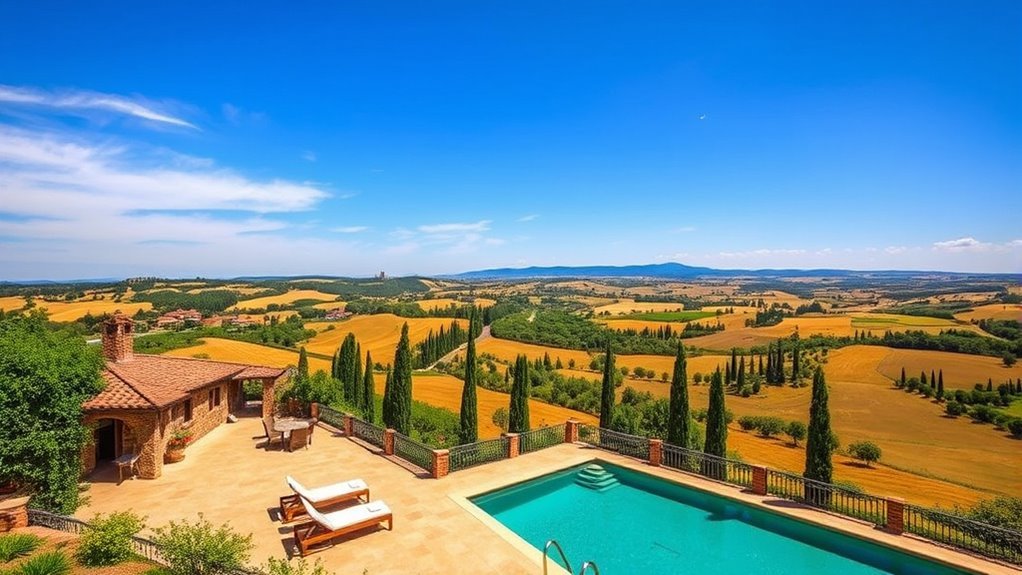
Last Updated on July 29, 2026 by Daniel Globe
Choosing where to stay in Tuscany depends less on finding one “perfect” property and more on matching your base to the trip you want. Florence works well for art and car-free sightseeing, while Chianti, Val d’Orcia, Siena, and San Gimignano suit countryside stays. Villas offer privacy; agriturismos add a working-farm setting; coastal rentals put the sea within reach.
Quick Answer
Stay in Florence for museums and easy train travel, Siena or San Gimignano for medieval atmosphere, Chianti or Val d’Orcia for vineyards and rural scenery, and the Tuscan coast for beaches. Choose a hotel for service, a villa for space and privacy, or an agriturismo for a genuine farm-based stay.
Key Takeaways
- Florence is the easiest base without a car; rural Tuscany is much easier with one.
- An agriturismo is a regulated farm-hospitality business, but meals, tastings, and classes are not automatically included.
- Check the full price, cancellation terms, pool dates, air conditioning, stairs, parking, and the property’s CIN before paying.
- Reserve large villas and prime summer stays early; shoulder-season rooms and smaller properties usually allow more flexibility.
Disclosure: As an Amazon Associate I earn from qualifying purchases. Some links on this page are affiliate links, at no extra cost to you.
The Allure of Tuscany: Why Choose This Region?
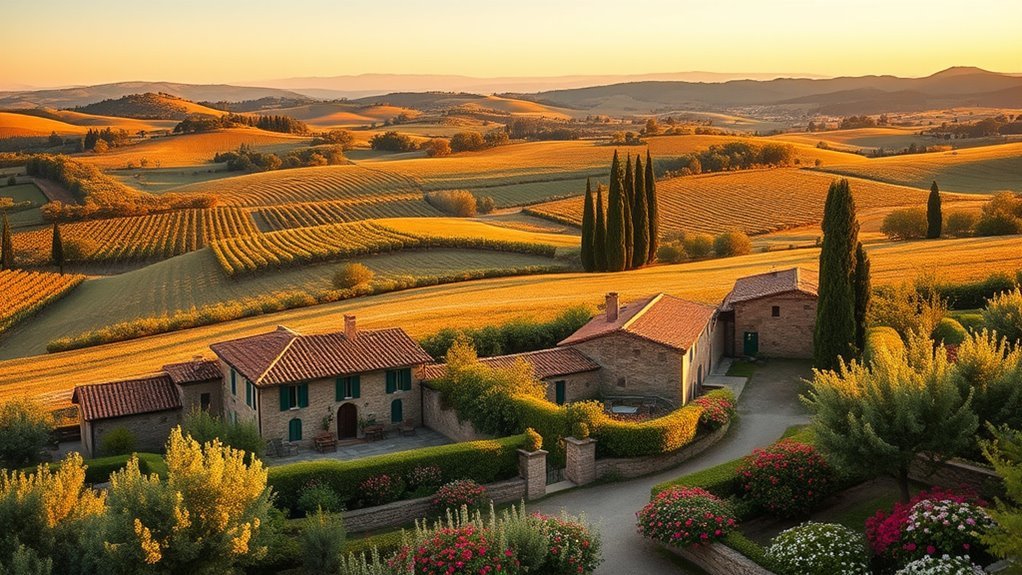
Tuscany combines Renaissance cities, medieval hill towns, vineyard country, thermal areas, and a long coastline. That variety lets you build very different trips within one region: a museum-focused city break, a food-and-wine escape, a family villa week, a quiet farm stay, or a beach holiday with inland day trips.
The best base depends on how you plan to move. Florence, Pisa, Lucca, and Arezzo are practical for rail travel. Siena has useful bus links but no station in the historic center. Smaller hill towns and country estates can be difficult to reach without a car, especially at night or with luggage.
| Best for | Strong base | Why it works |
| Art and car-free travel | Florence | Walkable historic center, major museums, and strong rail links |
| Wine and villa scenery | Chianti | Vineyards, villages, and country properties between Florence and Siena |
| Medieval atmosphere | Siena or San Gimignano | Historic streets, evening ambiance, and countryside access |
| Quiet landscapes and photography | Val d’Orcia | Open countryside, small towns, and scenic drives |
| Beach time | Versilia or the Etruscan Coast | Coastal towns, beaches, and access to northern or western Tuscany |
Florence: Your Cultural Hub With Top Accommodations
Florence is the strongest first-time base for travelers who value art, restaurants, and simple transportation. Its historic center is a UNESCO World Heritage Site, and many major sights are within walking distance. Michelangelo’s David is at the Galleria dell’Accademia, while the Uffizi houses major works by Botticelli, Leonardo, Raphael, Michelangelo, and other masters.
Stay near Santa Maria Novella for train access, around the Duomo for a central first visit, or in Santo Spirito and San Frediano for an Oltrarno setting with markets, workshops, restaurants, and evening activity. The center can be noisy, so light sleepers should check whether a room faces a street, square, courtyard, or internal garden.
Hotels provide reception and daily service, while apartments can offer kitchens and more room for families. Before booking an apartment in an older building, confirm the floor, elevator access, luggage storage, check-in procedure, and whether air conditioning reaches every bedroom.
Pro Tip: Do not keep a rental car while staying in central Florence unless your property gives precise parking and restricted-zone instructions. Use trains for city-to-city travel, then collect a car when you leave for the countryside.
Luxurious Villas: Indulge in Opulence Among Tuscan Landscapes
A Tuscan villa works best for families, groups, celebrations, and travelers who want privacy. Villas range from restored farmhouses to historic estates and contemporary homes. Some are fully serviced; others operate like self-catering rentals with only check-in and periodic cleaning.
Unique Architectural Styles
Traditional properties may feature terracotta floors, exposed beams, thick stone walls, shutters, and separate buildings around a courtyard. Those details add character, but they can also mean steps, low lighting, uneven floors, smaller windows, or bedrooms spread across several levels.
Read the floor plan rather than relying only on wide-angle photos. Confirm how many bedrooms have private bathrooms, whether annexes are connected to the main house, and whether every sleeping room has the promised heating or cooling. A “historic villa” can be elegant without functioning like a modern hotel.
Private Pools and Gardens
Private pools and outdoor dining areas are major reasons to rent a villa, but the details vary. Ask for the pool’s opening dates, depth, fencing, heating policy, and any extra fee. “Heated pool” does not always mean year-round swimming, and many country pools close outside the warmer months.
- Outdoor space: Check shade, seating, lighting, barbecue rules, and the distance between the house and pool.
- Safety: Families should ask about gates, alarms, pool covers, steep drops, unfenced ponds, and road access.
- Maintenance: Confirm when gardeners, pool staff, cleaners, or owners may enter the grounds during the stay.
Gourmet Culinary Experiences
Some villas can arrange a private chef, grocery delivery, cooking lessons, or an in-house wine tasting. These are usually optional services, not part of the nightly rate. Request a written menu, price, cancellation policy, dietary options, and whether ingredients, service, and cleanup are included.
For a more independent stay, look for a well-equipped kitchen and a nearby town with a supermarket, bakery, and restaurants. Rural distances can look short on a map but take longer on narrow roads, so check the drive time before assuming you can walk to dinner.
Authentic Agriturismos: Genuine Experiences in Nature
An agriturismo is more than a rustic-looking hotel. In Tuscany, the term is reserved for hospitality connected to an agricultural business. That may mean vineyards, olive groves, livestock, grain fields, or other farm activity. Accommodation can be in rooms, apartments, or restored farm buildings.
Farm meals, tastings, cooking classes, and harvest activities are possible, but they are not guaranteed. Some properties serve breakfast and dinner; others are self-catering. Some welcome guests into daily farm life, while others offer a quiet countryside stay with limited interaction.
- Ask what is operating during your dates: Restaurant days, tastings, classes, and harvest activities can be seasonal.
- Check access: Gravel roads, steep lanes, and remote locations may be difficult without a car.
- Confirm comfort: Ask about air conditioning, insect screens, Wi-Fi coverage, laundry, and heating before booking.
Note: “Farm-to-table” does not mean every ingredient is grown on the property. A responsible host should be able to explain what comes from the farm and what is sourced from nearby producers.
Chianti: Best Vineyards for Scenic Stays
Chianti is a broad wine-and-countryside area between Florence and Siena. It suits travelers who want vineyard views, small towns, scenic drives, and easy access to wine estates. A car is usually the most practical choice, although selected towns have bus service.
Towns and Wine Estates to Visit
Castello di Brolio is a historic wine estate associated with the Ricasoli family. Greve in Chianti and Radda in Chianti are towns, not individual vineyards, but both make useful bases for visiting surrounding producers. Other well-known estates include Castello di Ama and Antinori nel Chianti Classico.
Book tastings directly with the estate and check whether the experience includes a cellar tour, vineyard walk, food pairing, or only a guided tasting. Do not assume walk-in availability, especially during weekends, harvest season, and major events.
Scenic Villa Accommodations
Chianti has boutique hotels, agriturismos, rental villas, and wine-estate rooms. The best choice depends on whether you want restaurant service or a self-catering base. Staying near Greve, Panzano, Castellina, Radda, or Gaiole can reduce daily driving, but exact travel times still depend on the property’s road access.
Look beyond the view. Ask whether dinner is available, how late check-in is allowed, whether taxis serve the property, and who drives after a tasting. Rural taxis can be limited and should be arranged in advance.
Wine-Tasting Experiences Available
- Estate tours: Often combine a guided tasting with information about vineyards, cellars, and production.
- Agriturismo tastings: May feature wine, olive oil, or products made on the farm.
- Town-based tasting rooms: Useful for travelers who prefer to park once or avoid driving between estates.
- Seasonal events: Dates, access rules, and ticketing change each year, so verify details on the organizer’s official site.
Warning: Do not plan to drive after drinking. Use a designated driver, prearranged transfer, private tour, or tasting room that you can reach safely from your accommodation.
Siena: Historical Charm in Unique Lodgings
Siena’s historic center is a UNESCO World Heritage Site known for Piazza del Campo, the Palazzo Pubblico, and the Duomo. It is a strong base for travelers who want a smaller city than Florence while keeping restaurants and major sights close.
The traditional Palio races are scheduled for July 2 and August 16, although weather or exceptional circumstances can affect events. Accommodation demand rises sharply around Palio dates, and access, parking, and crowd conditions change. Book early and read official local instructions before arrival.
Inside the walls, boutique hotels and apartments offer atmosphere but may involve stairs, restricted vehicle access, and a walk with luggage. Countryside properties outside Siena provide parking, views, and more space, though they usually require a car or planned transfer.
San Gimignano: Cozy Stays Near Iconic Towers
San Gimignano’s UNESCO-listed historic center is famous for its medieval towers and preserved urban layout. Staying overnight lets you experience the streets before day visitors arrive and after many tour groups leave.
Unique Accommodations Available
- Historic-center rooms: Best for walking to restaurants and sights, but parking and luggage access need planning.
- Nearby agriturismos: Good for views, pools, and farm settings; meals and activities vary by property.
- Villas and apartments: Useful for families and longer stays, especially when kitchen and laundry facilities matter.
For sustainability claims, look for specific evidence such as solar power, water-saving systems, local food sourcing, waste reduction, or a recognized certification. General phrases such as “eco-friendly” reveal little on their own.
Proximity to Major Attractions
San Gimignano can be combined with Volterra, Siena, and parts of Chianti, but travel time depends on traffic and the exact route. The town does not have a train station, so visitors commonly arrive by bus, car, driver, or an organized tour.
A stay inside the walls favors atmosphere and walking. A rural stay favors parking, space, and countryside views. Choose based on what you want to do after dinner, not only what looks most scenic in daytime photos.
Montepulciano: Exclusive Villas in a Renaissance Gem
Montepulciano combines Renaissance architecture, steep historic streets, countryside views, and a strong wine identity. The town is associated with Vino Nobile di Montepulciano, while the surrounding area offers villas, agriturismos, country hotels, and apartments.
- Historic-center stay: Choose this for restaurants and evening walks, but confirm parking, stairs, and luggage access.
- Countryside villa: Choose this for a pool, outdoor space, and privacy, with a car for groceries and sightseeing.
- Wine-focused stay: Ask whether tastings are on-site, included, or available only by reservation.
Montepulciano also works well in a southern Tuscany itinerary with Pienza, Bagno Vignoni, and the Val d’Orcia area. Avoid scheduling too many hill towns in one day; parking, walking, meals, and scenic stops take time.
Val d’Orcia: Tranquil Retreats Amid Picturesque Landscapes
Val d’Orcia is a UNESCO World Heritage cultural landscape known for cultivated hills, farmhouses, cypress-lined approaches, and towns such as Pienza, Montalcino, San Quirico d’Orcia, and Castiglione d’Orcia. It is one of Tuscany’s strongest choices for a quiet rural stay.
Scenic Beauty and Photography
The landscape changes with weather, farming, and season. Green fields, harvested land, mist, wildflowers, and autumn colors are never guaranteed on a specific date. For photography, leave room in the schedule for changing light instead of racing between fixed viewpoints.
- Stay near your priority: Pienza for a walkable town, Montalcino for Brunello-focused visits, or a rural property for sunrise and sunset access.
- Respect private land: Many famous-looking lanes and fields belong to working farms or residences.
- Drive carefully: Narrow roads, farm vehicles, cyclists, wildlife, and gravel entrances can slow travel.
Authentic Local Experiences
Local experiences may include pecorino tastings near Pienza, wine visits around Montalcino, thermal bathing in designated facilities, cooking lessons, farm meals, and walks through historic towns. Book the experiences that matter most rather than assuming they are included with the room.
Some properties use “Val d’Orcia” loosely in marketing even when they sit outside the UNESCO property. Check the map if being inside the landscape is important to you.
Coastal Villas: Beachfront Properties in Tuscany
Tuscany’s coast includes very different settings, from the established resorts of Versilia to the Etruscan Coast and southern Maremma. Viareggio and Forte dei Marmi suit travelers who want beach services, dining, and town life. More rural coastal areas can provide quieter surroundings but may require more driving.
- Confirm what “beachfront” means: It may describe a sea view, a short walk, or direct access.
- Check beach arrangements: Ask whether loungers, umbrellas, parking, or access to a private beach club are included.
- Match day trips to the coast: Versilia is practical for Lucca and Pisa; southern coastal bases are better for Maremma and nearby inland towns.
For family groups, ask about railings, pool security, road crossings, bedroom layout, and the distance to groceries. Coastal demand peaks in summer, so cancellation terms and minimum-stay rules deserve close attention.
Essential Amenities in Tuscan Accommodations: Pools and Local Cuisine
A beautiful view cannot make up for missing essentials. Older buildings, rural locations, and seasonal operations mean travelers should verify amenities more carefully than they might for a standard city hotel.
| Amenity | What to confirm |
| Pool | Opening dates, heating, depth, fencing, shared or private use, towels, and extra fees |
| Air conditioning and heating | Which rooms are covered, operating hours, controls, and energy surcharges |
| Kitchen | Oven, stovetop, refrigerator size, dishwasher, coffee equipment, basic cookware, and dining capacity |
| Internet | Coverage by room, measured speed if working remotely, and mobile signal as backup |
| Meals | Breakfast inclusion, restaurant days, advance booking, dietary needs, and nearest alternatives |
| Accessibility | Step-free route, elevator, bathroom setup, door widths, parking surface, and distance from room to shared areas |
For local cuisine, distinguish between a property that serves food, one that arranges outside cooks, and one that simply provides a kitchen. If a private chef or class matters, secure it before arrival and obtain the total price in writing.
Family-Friendly Stays: Villas and Agriturismos for All Ages
Families often benefit from villas and apartments because they provide bedrooms, kitchens, laundry, and outdoor space. Agriturismos can add animals, gardens, or farm activities, but parents should ask what is actually available during the stay.
- For babies and toddlers: Confirm cribs, high chairs, stair gates, blackout curtains, pool barriers, and laundry.
- For older children: Look for a suitable pool, games, safe outdoor space, and manageable drives between activities.
- For multigenerational groups: Check bedroom distribution, bathroom access, steps, separate annexes, and quiet areas.
A large property is not automatically child-friendly. Ask for recent photos of fences, stairs, terraces, ponds, driveways, and pool access when safety details are unclear.
Romantic Getaways: Intimate Accommodations for Couples
Couples can choose a city hotel for restaurants and culture, a small wine estate for tastings, or a countryside suite for privacy. Val d’Orcia, Chianti, San Gimignano, and the area around Montepulciano all offer scenic options, but the best choice depends on whether you want to drive each evening.
May and September are often described as shoulder-season months, yet both can be popular and expensive in Tuscany. April, late October, and winter may bring better value, but weather, daylight, pool operation, and restaurant schedules are less predictable. Compare actual rates and availability rather than relying on a fixed “off-peak” label.
For a special stay, prioritize one or two meaningful features—such as a terrace, spa access, private dinner, or walkable town—rather than paying for a long list of amenities you may not use.
Budget-Friendly Options: Affordable Stays With Charm
Budget travelers can often find better value outside Florence’s most central streets and outside the most photographed rural areas. Arezzo, Lucca, Volterra, and smaller towns may offer guesthouses, apartments, and agriturismos at a wider range of rates, but prices still change by date and event.
- Use rail-friendly bases: Avoiding a rental car can reduce fuel, parking, toll, and rental costs.
- Compare the total: Cleaning, heating, pool, pet, late-arrival, and local tax charges can change which property is cheapest.
- Stay longer in fewer places: This can reduce transfer costs and may unlock weekly rates.
- Book slightly outside a famous town: A nearby village can cost less, but check the last bus, parking, and restaurant access.
Self-catering can save money, although a remote villa may require a car and a larger grocery shop. Balance the nightly rate against transportation and time.
Car-Free or Rental Car: How to Get Around
When a Car-Free Stay Works
Florence, Pisa, Lucca, and Arezzo are practical rail bases. Regional trains also connect many larger towns, while buses fill some gaps. A car-free itinerary works best when you sleep near a station, pack lightly, and limit countryside lodging.
Siena and San Gimignano can be reached by public transportation, but routes may be slower and less frequent than city-to-city trains. Check the final connection for your exact date rather than assuming late-evening service.
When a Rental Car Helps
A car is valuable for Chianti, Val d’Orcia, remote agriturismos, villas, wineries, and small villages. Ask the property for a precise route and parking instructions because the final approach may include gravel, steep grades, narrow lanes, or an entrance that navigation apps miss.
Warning: Historic centers often have limited-traffic zones known as ZTLs. Florence’s official visitor guidance explains that cameras read license plates at controlled entrances. Never enter because another vehicle does; follow current signs and obtain written instructions from your hotel or parking facility.
How Many Nights to Stay in Tuscany
Three nights are enough for one focused base, while seven to ten nights allow a city-and-countryside combination without constant packing. Travelers with two weeks can add the coast or southern Tuscany at a slower pace.
- 3 nights: Choose Florence, Siena, or one countryside area and keep day trips limited.
- 5 to 7 nights: Split between Florence and Chianti, Siena, or Val d’Orcia.
- 8 to 10 nights: Use two or three bases, such as Florence, central Tuscany, and the coast.
- Family villa week: Stay in one property and plan alternate sightseeing and rest days.
A good split avoids one-night stops. Tuscany’s appeal includes meals, walks, and unplanned viewpoints, so slower routes often feel more rewarding than checking off the largest number of towns.
Tips for Booking Your Tuscany Stay: Securing Your Dream Accommodation
Start with location, transportation, and must-have amenities. Then compare the complete price and the written terms. Large villas, wedding properties, and prime summer weeks may need to be reserved six to twelve months ahead. Standard hotels and smaller properties for spring or fall are often available three to six months ahead, while flexible travelers may find later options.
| Booking check | What to verify |
| Legal listing | Italian accommodation and short-rental advertisements should show a National Identification Code, or CIN. Verify it through the official database when possible. |
| Total cost | Nightly rate, cleaning, taxes, heating or cooling, pool heating, pets, extra guests, deposits, and payment fees |
| Cancellation | Refund deadlines, nonrefundable deposits, damage terms, and what happens if the property cancels |
| Arrival | Check-in window, late-arrival fee, key collection, luggage storage, parking, and final road access |
| Property details | Exact bedroom layout, bathroom count, stairs, noise, air conditioning, Wi-Fi, pool dates, and meal availability |
Use a traceable payment method and keep the listing, invoice, cancellation policy, and host messages. Be cautious if a new contact asks you to move payment off the booking platform, wire money to a different name, or act urgently without updated written terms.
Pro Tip: Before the free-cancellation deadline, recheck recent reviews, transportation plans, pool operation, restaurant schedules, and the final price. This gives you time to correct a poor fit without losing the booking.
Frequently Asked Questions
What is the best time to visit Tuscany for accommodations?
Spring and early fall offer mild conditions, but May and September can still be busy. Summer suits pool and beach trips but brings heat and high demand. Winter can provide lower rates in cities, while some rural properties, pools, restaurants, and activities close or reduce service.
Are pets allowed in Tuscan villas and agriturismos?
Some properties accept pets, but policies are property-specific. Confirm the number and size allowed, fees, restricted rooms, fencing, nearby animals, vaccination requirements, and whether pets may be left alone. “Pet-friendly” does not guarantee a fully enclosed garden.
How far in advance should I book my stay?
Reserve large villas, event dates, and prime summer weeks about six to twelve months ahead when possible. For ordinary hotel rooms and smaller properties in spring or fall, three to six months is often reasonable. Flexible dates and locations may allow later booking.
What local experiences can I expect at agriturismos?
Depending on the farm and season, an agriturismo may offer meals, wine or olive-oil tastings, cooking lessons, garden visits, animal experiences, or harvest activities. None should be assumed. Ask what is available on your dates, what costs extra, and whether advance booking is required.
Do accommodations offer transportation services or car rentals?
Some hotels, villas, and agriturismos can arrange an airport transfer, driver, taxi, or car-rental delivery, usually for an extra charge. The accommodation itself may not operate the service. Request the provider, price, cancellation terms, luggage capacity, and pickup details in writing.
Do I need a car in Tuscany?
Not for a Florence-centered city trip, and not necessarily for an itinerary built around major rail-connected towns. A car is strongly helpful for villas, remote agriturismos, Chianti, Val d’Orcia, wineries, and small villages. Avoid driving into restricted historic-center zones without clear authorization.
Are private pools open and heated all year?
Usually not. Pool seasons vary by property and weather, and heating may be unavailable or charged separately. Ask for written opening dates, the heating method, the target temperature, the fee, and whether the owner can close the pool during poor conditions.
How can I check whether a Tuscany rental is legitimate?
Check that the advertisement displays a CIN, compare the property name and address across sources, review recent guest feedback, use a traceable payment method, and verify the code in Italy’s official accommodation database when possible. Do not send money after an unexplained request to change the payment channel or recipient.
Conclusion
The best place to stay in Tuscany is the one that supports your daily plans. Choose Florence for art and easy rail travel, Siena or San Gimignano for historic atmosphere, Chianti or Val d’Orcia for a countryside escape, and the coast for beach time. Then verify transport, total cost, legal listing details, pool operation, accessibility, and cancellation terms before paying. A well-matched base leaves more time for the meals, landscapes, and slow moments that make Tuscany memorable.
Sources
- Visit Tuscany: Where to Sleep — official regional accommodation directory and trip-planning resource.
- Visit Tuscany: Vacation on a Farm — overview of agriturismo stays and their connection to agricultural activity.
- Regione Toscana: National Identification Code (CIN) — official rules for identification codes in accommodation advertisements.
- Feel Florence: Florence ZTL — official visitor guidance on restricted traffic zones and camera-controlled access.
- UNESCO World Heritage Centre: Italy — official listings for Florence, Siena, San Gimignano, Val d’Orcia, and other Italian World Heritage properties.
- Galleria dell’Accademia di Firenze: Michelangelo’s David — official location and museum information for the sculpture.
