

Last Updated on August 26, 2026 by Daniel Globe
If you’re exploring Naples with a sweet tooth, start with sfogliatella, the city’s crisp or shortcrust ricotta-filled classic, and a syrup-soaked babà al rum. Then try fragrant pastiera, cream-topped zeppole di San Giuseppe, fluffy fiocco di neve, torta Caprese, struffoli, and a warm graffa. Some sweets are everyday favorites while others are closely tied to Easter, Christmas, or St. Joseph’s Day.
Quick Answer
The must-try pastries in Naples are sfogliatella riccia or frolla, rum-soaked babà, pastiera, fiocco di neve, and zeppole di San Giuseppe. Also look for torta Caprese, delizia al limone, struffoli, graffa, biscotto all’amarena, roccocò, and Scaturchio’s Ministeriale. Sfogliatella is the best place to start.
Key Takeaways
- Sfogliatella is Naples’ signature pastry and comes in crisp, layered riccia and tender shortcrust frolla versions.
- Babà is traditionally soaked in rum syrup, so ask before ordering if you avoid alcohol.
- Pastiera, zeppole, struffoli, and roccocò have strong seasonal traditions, although some pastry shops sell them beyond their traditional periods.
- Torta Caprese and delizia al limone belong to the wider Campanian pastry tradition: Caprese is associated with Capri and delizia with Sorrento.
- For the best texture, eat sfogliatella, fiocco di neve, babà, and graffa as fresh as possible and check current bakery hours before making a special trip.
Disclosure: As an Amazon Associate I earn from qualifying purchases. Some links on this page are affiliate links, at no extra cost to you.
Why Naples Pastries Are So Famous
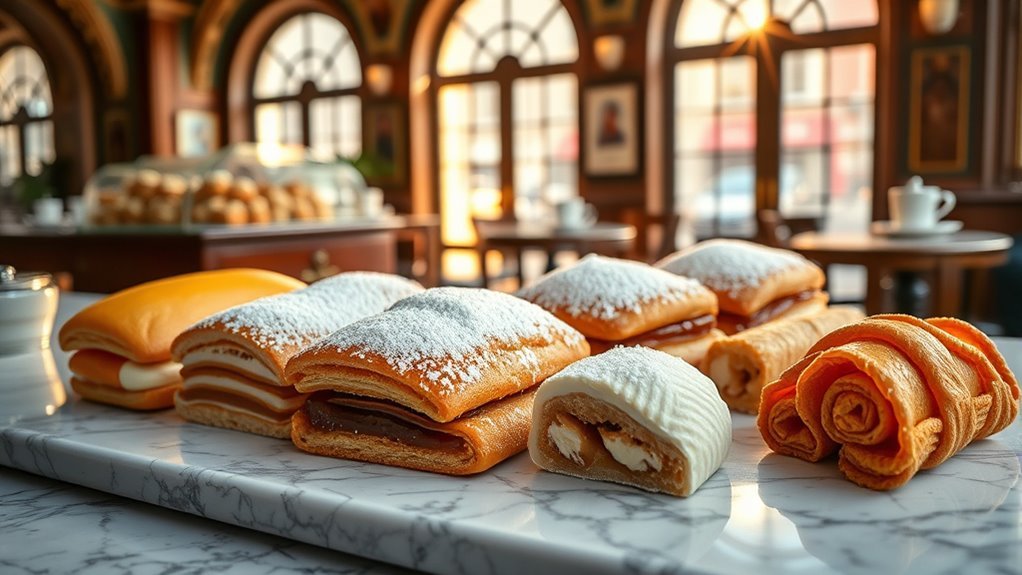
Naples’ pastry tradition stands out because it combines distinctive textures with flavors that recur across generations of local baking. A single pastry counter may hold crisp layered sfogliatelle, syrup-soaked babà, ricotta-filled cakes, custard-topped zeppole, fried dough, and intensely chocolatey torta Caprese.
Several sweets also carry strong links to the calendar. Pastiera is especially associated with Easter, zeppole di San Giuseppe with March 19, and struffoli and roccocò with Christmas. The Campania Region’s traditional-food records include many of these pastries among the region’s recognized specialties.
The flavors are equally distinctive. Ricotta, semolina, candied citrus, orange-blossom aroma, almonds, chocolate, honey, pastry cream, amarena cherries, and rum appear repeatedly in different combinations. The result is a pastry culture that ranges from crisp and delicate to rich, creamy, boozy, or deeply chocolatey.
Note: Not every sweet in this guide originated inside Naples itself. Torta Caprese comes from the island of Capri, while delizia al limone is associated with Sorrento. Both are part of Campania’s wider dessert tradition and are easy to encounter in Naples.
Which Naples Pastry Should You Try First?
If you have limited time, use this quick guide to choose by texture and flavor.
| Pastry | What It’s Like | Traditional Time |
|---|---|---|
| Sfogliatella riccia | Crisp, extremely layered shell with ricotta, semolina, and candied citrus filling | Year-round |
| Sfogliatella frolla | Crumbly shortcrust with the same style of creamy filling | Year-round |
| Babà al rum | Soft yeast cake saturated with sweet rum syrup | Year-round |
| Fiocco di neve | Very soft brioche filled with delicate milk-and-ricotta cream | Year-round |
| Zeppola di San Giuseppe | Fried or baked choux pastry with pastry cream and amarena cherry | Especially around March 19 |
| Pastiera | Ricotta-and-wheat tart scented with orange blossom and candied fruit | Especially Easter |
| Torta Caprese | Dense almond-and-dark-chocolate cake made without wheat flour in the traditional recipe | Year-round |
| Delizia al limone | Soft sponge, lemon cream, and limoncello-scented syrup | Year-round, especially refreshing in warm weather |
| Struffoli | Small fried dough balls coated in honey and decorated with colorful sprinkles | Christmas |
| Graffa | Soft fried doughnut-style ring coated in sugar | Year-round |
Pro Tip: If you can try only one pastry, order a sfogliatella while it is still fresh. If you have time for two, compare a riccia with a frolla—the filling may be similar, but the crust changes the experience completely.
Sfogliatella: The Must-Try Classic
When you try sfogliatella in Naples, you’ll find two main versions: the shatteringly crisp riccia and the softer, crumbly frolla. Both usually enclose a fragrant filling built around ricotta, semolina, sugar, and candied citrus. The combination of warm pastry, creamy filling, and citrus aroma makes sfogliatella one of the most recognizable sweets in Naples.
The pastry’s history is connected with the older Santa Rosa pastry from Conca dei Marini on the Amalfi Coast. Accounts collected by Visit Naples describe how Pasquale Pintauro later adapted that tradition in Naples, helping shape what became the Neapolitan sfogliatella.
Riccia And Frolla
No pastry captures the contrast in Neapolitan baking quite like sfogliatella. The two classic forms share a similar filling but have very different shells:
- Riccia — thin layers of pastry form a shell-like exterior that becomes crisp and flaky when baked.
- Frolla — a smoother shortcrust shell gives the pastry a tender, crumbly bite rather than a sharp crunch.
- Santa Rosa — the older Amalfi Coast pastry that helped inspire the Neapolitan sfogliatella; it is traditionally finished more elaborately and should be understood as a predecessor rather than simply a third Naples version.
Try both riccia and frolla if you can. Many travelers expect the filling to be the biggest difference, but the real contrast is the texture of the shell.
Signature Neapolitan Filling
Inside a traditional sfogliatella, the filling commonly combines ricotta with cooked semolina, sugar, candied citrus, and aromatic flavorings. Pintauro’s current description of its classic sfogliatella also identifies ricotta, semolina, and candied fruit as defining ingredients.
The riccia surrounds that filling with many crisp layers; the frolla uses a compact shortcrust instead. Both are usually best soon after baking, when the crust is fresh and the filling is fragrant.
Best Places To Try
Several long-established or well-known Naples pastry shops specialize in sfogliatella:
- Sfogliatelle Attanasio, at Vico Ferrovia near Napoli Centrale, is a convenient stop when arriving by train and is especially associated with freshly baked riccia and frolla.
- Pasticceria Pintauro 1785, at Via Toledo 275, is historically associated with Naples’ sfogliatella tradition. Its restored Via Toledo shop reopened in March 2026.
- La Sfogliatella Mary, inside Galleria Umberto I, is a handy central stop for a takeaway sfogliatella while exploring Via Toledo and the surrounding sights.
You can also try sfogliatella at Scaturchio, Carraturo, and other traditional pasticcerie throughout the city. Because opening days and holiday closures change, check the bakery’s current information before traveling across Naples specifically for one shop.
Fiocco Di Neve and Cream-Filled Buns
Among Naples’ newer pastry successes is the Fiocco di Neve, or “snowflake,” created at Pasticceria Poppella. According to Poppella’s official history, Ciro developed the sweet in 2015: a soft brioche filled with a delicate cream based on sheep’s-milk ricotta and fresh milk, then dusted with powdered sugar.
| Feature | Sensation |
|---|---|
| Powdered sugar | Light sweetness on the surface |
| Brioche shell | Very soft, tender bite |
| Ricotta-and-milk cream | Smooth, delicate filling |
| Official Poppella flavors | Classic, pistachio, chocolate |
The Fiocco di Neve is best eaten fresh because the appeal comes from the contrast between the airy brioche and cool, creamy center. For the original version, visit one of Poppella’s official Naples locations, including its historic Rione Sanità area shop.
Babà Al Rum for a Boozy Treat
If you prefer a dessert with a strong syrupy character, babà al rum is one of Naples’ essential sweets. The classic Neapolitan form is a soft, yeast-raised cake—often mushroom-shaped—soaked thoroughly in sweet rum syrup.
Babà did not originate entirely in Naples. Culinary tradition traces earlier forms through Central Europe and France before the dessert reached Naples, where local pastry makers developed the version now closely associated with the city. Visit Naples describes this journey and the dessert’s eventual adoption into Neapolitan pastry culture.
- Classic babà: soft cake saturated with rum syrup.
- Cream-filled babà: often split and filled or topped with pastry cream or whipped cream.
- Fruit-topped versions: some pastry shops add fruit to balance the rich syrup.
Warning: Traditional babà al rum contains alcohol. If you avoid alcohol for health, religious, pregnancy, age, or personal reasons, ask the bakery whether it offers a genuinely alcohol-free version rather than assuming the rum has disappeared.
Zeppole Di San Giuseppe
Zeppole di San Giuseppe are choux pastries closely associated with St. Joseph’s Day and Italy’s Father’s Day on March 19. In Naples, you will see both fried and baked versions. The modern classic is topped or filled with pastry cream and finished with an amarena cherry and powdered sugar.
The Soprintendenza Archeologia, Belle Arti e Paesaggio for Naples records the city’s long connection with zeppole and notes their strong association with the March 19 feast.
The fried version is richer and has a more pronounced crisp edge, while the baked version tends to feel lighter and drier. Availability is highest around March 19. Some pastry shops sell zeppole for a longer period, but you should not assume every bakery has them every day of the year.
Pastiera: Naples’ Easter Favorite
Pastiera napoletana is a fragrant shortcrust tart filled with a mixture traditionally built around cooked wheat, ricotta, eggs, sugar, candied fruit, and orange-blossom aroma. It is one of Naples’ most important Easter sweets, although major pastry shops may also sell it outside the Easter period.
- Taste the aroma: orange blossom and candied citrus give pastiera its unmistakable perfume.
- Notice the texture: the creamy ricotta mixture is made more substantial by the cooked wheat inside it.
- Try it at room temperature: pastiera is a sliceable tart rather than a cream pastry that needs to be eaten hot from the oven.
Italia’s official tourism material identifies pastiera as an Easter symbol made with wheat, orange-blossom water, candied fruit, and shortcrust pastry. You can also find it at major Naples pastry shops such as Scaturchio, Pintauro, and Carraturo.
Torta Caprese for Chocolate Fans
When you’re craving something intensely chocolatey, torta Caprese delivers a dense, moist cake based on dark chocolate and almonds. The traditional recipe is made without wheat flour and is commonly finished with powdered sugar.
The dessert belongs to Capri and the wider Campanian tradition rather than originating in central Naples. A popular origin story says pastry chef Carmine Di Fiore accidentally omitted flour from a chocolate-and-almond cake in the 1920s. Italia.it recounts that story, but it is best treated as culinary tradition rather than an independently proven historical event.
Note: Traditional torta Caprese contains no wheat flour, but that does not automatically make every bakery version safe for a person with celiac disease. Ask about ingredients and cross-contact if medically necessary.
Delizia Al Limone and Lemon Desserts
Delizia al limone brings a lighter citrus profile to this list. It uses soft sponge cake with lemon cream and a limoncello-scented syrup or soak, creating a cool, fragrant dessert that is especially appealing in warm weather.
Although easy to find around Naples and Campania, it is a Sorrento specialty rather than an originally Neapolitan pastry.
Lemon Cake Origins
Delizia al limone was created by Sorrento pastry chef Carmine Marzuillo in 1978, according to Italia.it. Its combination of sponge cake, lemon cream, and limoncello reflects the citrus traditions of the Sorrento area.
- Soft sponge cake
- Lemon-flavored cream
- Limoncello-scented syrup or soak
- A chilled, creamy finish
If you enjoy citrus desserts more than dense chocolate or ricotta pastries, delizia al limone is an excellent contrast to babà, pastiera, and torta Caprese.
Chilled Citrus Creams
The defining feature of a good delizia al limone is balance. The cream should taste clearly of lemon without becoming sharply sour, while the soft sponge keeps the dessert light compared with many fried or shortcrust Neapolitan sweets.
Some pastry shops decorate the individual domes with lemon zest, cream, or small garnishes. Eat the dessert chilled and reasonably soon after purchase because its appeal depends on fresh cream and moist sponge.
Struffoli, Graffa, and Sweet Snacks
In Naples, struffoli and graffa represent two very different kinds of fried sweet.
- Struffoli: tiny fried dough balls coated with honey and usually decorated with colorful sugar sprinkles and candied fruit. They are especially associated with Christmas.
- Graffa: a soft fried doughnut-style ring rolled in sugar and commonly eaten as an everyday breakfast or snack.
- Seasonal difference: graffe are easy to seek out throughout the year, while struffoli are much more strongly tied to the Christmas season.
The Campania Region describes struffoli as small fried dough balls mixed with honey and decorated with candied fruit and colored sugar, traditionally present on Campanian tables during Christmas.
Other Neapolitan Sweets Worth Trying
If you have already tried the major classics, several other sweets deserve space on your Naples list.
Biscotto All’Amarena
Biscotto all’amarena is a traditional pastry built around shortcrust and an amarena-and-cocoa filling. It is listed among Campania’s traditional bakery and pastry products, and you can also find it in classic pastry-shop assortments in Naples.
Roccocò
Roccocò is a firm, ring-shaped Christmas biscuit traditionally made with almonds, candied citrus, sugar, and warm spices. The Campania Region identifies it as a traditional Christmas sweet. Its firm texture also makes it more practical to carry than cream-filled pastries.
Ministeriale
Ministeriale is a signature Scaturchio sweet rather than a generic pastry sold everywhere in Naples. It is a dark-chocolate medallion with a lightly alcoholic creamy filling. If you visit Scaturchio, it gives you something different to try after the better-known sfogliatella, babà, and pastiera.
Best Naples Pasticcerie
Naples has pastry shops throughout the city, so there is no need to cross town for every snack. However, a few historic or particularly well-known names are useful landmarks when you want to try a specific specialty.
Historic Pastry Shops
- Scaturchio — the historic location is at Piazza San Domenico Maggiore 19. It is a strong all-round stop for sfogliatella, babà, pastiera, zeppole, and its proprietary Ministeriale. See the official Scaturchio website.
- Pasticceria Pintauro 1785 — Via Toledo 275. Closely associated with the history of sfogliatella; the restored historic shop reopened in March 2026. See the official Pintauro website.
- Antica Pasticceria Carraturo — Via Casanova 97 near Porta Capuana. Its official site emphasizes traditional daily pastry production and lists sfogliatella, babà, pastiera, and Caprese among its specialties. Check the official Carraturo website for current opening information.
Artisan Bakeries To Visit
Sfogliatelle Attanasio near Napoli Centrale is a practical first or last stop if your trip uses the main railway station, especially when you want a fresh riccia or frolla. Pasticceria Poppella is the essential destination for the Fiocco di Neve; its official site lists locations in the Rione Sanità area, Via Santa Brigida, and Piazza Cavour. La Sfogliatella Mary inside Galleria Umberto I is particularly convenient while sightseeing around Via Toledo, Piazza del Plebiscito, and the historic center.
For Poppella’s current locations, consult its official store list. For any bakery, verify same-day opening hours before making a long detour because holidays, weekly closures, and seasonal breaks can change.
How to Buy and Carry Naples Pastries
Different pastries travel very differently. A few simple choices can keep your last bakery stop from turning into a crushed or soggy box.
- Eat sfogliatella quickly: the riccia loses some of its crispness as it sits, especially in humid conditions.
- Keep cream pastries cool: Fiocco di Neve and other fresh-cream desserts are poor choices for hours of unrefrigerated travel.
- Keep babà upright: the syrup can leak into the box, and cream-filled versions are even less travel-friendly.
- Choose sturdier gifts: torta Caprese, roccocò, and properly packaged biscuits generally travel better than delicate fresh pastries.
- Ask about alcohol: babà traditionally contains rum, and some other sweets or fillings may also contain liqueur.
- Ask about allergens: common ingredients include wheat, eggs, milk, ricotta, almonds, hazelnuts, and other nuts.
For the classic Naples pastry experience, try sfogliatella fresh, babà when you want something syrupy and rich, and then choose the seasonal sweet that matches the time of your visit.
Sources
- Visit Naples — Neapolitan Desserts: The Story of Three Sweets — historical background on sfogliatella and babà.
- Soprintendenza Archeologia, Belle Arti e Paesaggio per il Comune di Napoli — Zeppole di San Giuseppe — historical and seasonal context for zeppole.
- Regione Campania — Struffoli — traditional ingredients and Christmas association.
- Italia.it — Campania and Delizia al Limone — Sorrento origin and Carmine Marzuillo’s 1978 creation.
- Pasticceria Poppella — Official History — Fiocco di Neve origin, filling, and verified flavors.
- Pasticceria Pintauro 1785 — Official Pastry Guide — current descriptions of sfogliatella, babà, pastiera, zeppole, biscotto all’amarena, and torta Caprese.
Frequently Asked Questions
What Is the Famous Pastry in Naples?
Sfogliatella is the pastry most closely associated with Naples. Try both versions if possible: riccia has a crisp, layered shell, while frolla uses tender shortcrust. Both typically contain a ricotta-and-semolina filling flavored with candied citrus.
What Dessert Is Famous in Naples?
Sfogliatella and babà are two of Naples’ most famous sweets. Pastiera is especially important at Easter, while zeppole di San Giuseppe are associated with March 19 and struffoli with Christmas.
What Should I Not Miss in Naples?
For a compact pastry tasting, do not miss a fresh sfogliatella, a traditional rum babà, and a Fiocco di Neve. Add pastiera, zeppole, or struffoli if your trip falls near their traditional seasons.
What to Bring Home From Napoli?
For travel, sturdier sweets such as torta Caprese, roccocò, or packaged biscuits are usually easier than cream-filled pastries. Sfogliatella is best eaten fresh, while babà can leak syrup and Fiocco di Neve needs careful temperature control.
What Is the Difference Between Sfogliatella Riccia and Frolla?
Riccia uses many thin, crisp layers that form a shell-like exterior. Frolla encloses a similar ricotta-and-semolina filling in a softer, crumbly shortcrust. Trying one of each is the easiest way to understand the difference.
Which Naples Pastries Are Seasonal?
Zeppole di San Giuseppe are especially associated with March 19, pastiera with Easter, and struffoli and roccocò with the Christmas period. Some major pastry shops offer seasonal sweets for longer, but availability is not guaranteed year-round.
Does Neapolitan Babà Contain Alcohol?
Traditional babà al rum is soaked in rum syrup and should be treated as an alcohol-containing dessert. Ask the bakery directly if you need an alcohol-free option.
Is Torta Caprese Gluten-Free?
Traditional torta Caprese is made without wheat flour, using almonds and chocolate instead. However, people with celiac disease or a serious gluten intolerance should still confirm the bakery’s ingredients and cross-contact procedures before eating it.
Conclusion
Naples’ pastry counters tell you almost as much about the city as its pizzerias. Start with a warm sfogliatella and compare riccia with frolla, then move to rum-soaked babà, creamy Fiocco di Neve, fragrant pastiera, or whichever seasonal specialty appears in the window. Leave room for a few wider Campanian favorites, too, especially torta Caprese and delizia al limone. The best approach is simple: choose a reputable pasticceria, buy fresh, and taste more than one style.
