
Last Updated on September 10, 2026 by Daniel Globe
Choosing where to stay for a Half Dome hike can make a major difference to your day. Half Dome starts from Yosemite Valley and is an extremely strenuous hike of roughly 14 to 16.4 miles round trip with about 4,800 feet of elevation gain. Most hikers need 10 to 12 hours, so staying in or close to Yosemite Valley is usually the most practical choice.
Quick Answer
For a Half Dome day hike, the most convenient places to stay are Curry Village, Yosemite Valley Lodge, Housekeeping Camp, The Ahwahnee, or the Yosemite Valley campgrounds. Backpackers can camp in Little Yosemite Valley with the correct wilderness permit. El Portal is the closest practical fallback outside the park.
Key Takeaways
- Yosemite Valley is the best base for most Half Dome day hikers because it minimizes driving before and after a long hike.
- Upper Pines, Lower Pines, North Pines, and Camp 4 are the front-country campgrounds in Yosemite Valley.
- A Half Dome day-hike permit does not give you permission to camp in Little Yosemite Valley.
- Overnight backpackers need a wilderness permit, and Half Dome access must be included or obtained under the applicable permit rules.
- For 2026, Yosemite does not require a separate entrance reservation, although the normal park entrance fee still applies.
- Book lodging or camping as early as possible and check official Yosemite pages again shortly before your trip because seasonal openings and restrictions can change.
Disclosure: As an Amazon Associate I earn from qualifying purchases. Some links on this page are affiliate links, at no extra cost to you.
Where to Stay for a Half Dome Day Hike
For most day hikers, staying in Yosemite Valley is worth the extra planning. The National Park Service describes Half Dome as a roughly 14- to 16-mile round-trip hike with about 4,800 feet of elevation gain, and most hikers take 10 to 12 hours. An early start reduces the chance that a long drive, traffic, or parking problems will delay you.
Half Dome day hikers normally approach from the Happy Isles area. The most convenient overnight options are therefore the lodging and campgrounds within Yosemite Valley rather than properties an hour or more outside the park.
| Accommodation | Location | Best For | Main Trade-Off |
| Curry Village | Yosemite Valley | Convenient Half Dome base with cabins and tent cabins | Popular and often books far ahead |
| Upper, Lower or North Pines | Yosemite Valley | Tent or RV campers wanting a very practical trail base | Reservations are highly competitive |
| Yosemite Valley Lodge | Yosemite Valley | Hotel-style comfort inside the Valley | Farther from Happy Isles than Curry Village |
| The Ahwahnee | Yosemite Valley | Premium hotel stay | Usually one of the most expensive options |
| El Portal | Outside Arch Rock Entrance | Closest practical hotel alternative outside the park | Still requires a morning drive into Yosemite Valley |
Pro Tip: For a Half Dome day hike, prioritize location over extra hotel amenities. Saving a long pre-dawn drive is especially valuable when you already have a 10- to 12-hour hike ahead of you.
Camping in Yosemite National Park
Yosemite National Park, a UNESCO World Heritage Site, has 13 popular front-country campgrounds in settings ranging from Yosemite Valley to the high country. For Half Dome hikers, however, not all campgrounds are equally convenient.
The most useful front-country campgrounds are Upper Pines, Lower Pines, North Pines, and Camp 4 because they are in Yosemite Valley. Upper Pines is open year-round, while operating dates for other campgrounds vary by season.
In 2026, the National Park Service requires reservations for Yosemite campgrounds from approximately April through October. Reservation release schedules vary by campground. Some sites are released months ahead, while several seasonal campgrounds use shorter one- or two-week reservation windows.
Campgrounds generally include a picnic table, fire ring, and food-storage locker. Amenities vary, so check the specific campground before booking. Yosemite campgrounds do not provide electrical, water, or sewer hookups at individual campsites.
Note: A campground reservation and a Half Dome permit are separate. Reserving a campsite does not give you permission to ascend the Half Dome cables.
Lodges and Cabins in the Yosemite Valley
Travelers who want a real bed before or after Half Dome have several choices inside Yosemite Valley. Yosemite Valley Lodge is a traditional hotel near Yosemite Falls with rooms, dining, parking, and access to the Valley shuttle system. It is a practical choice for hikers who want hotel comfort without leaving the park.
Curry Village is another strong option for Half Dome hikers. It offers a mix of cabins and canvas-sided tent cabins in the eastern part of Yosemite Valley. The property was temporarily known as Half Dome Village, but its historic Curry Village name was restored in 2019.
Housekeeping Camp offers open-air lodging along the Merced River and can appeal to travelers who want something between conventional camping and a hotel. The Ahwahnee provides Yosemite’s highest-end hotel experience for hikers who prefer a full-service stay.
The historic Wawona Hotel, built in the nineteenth century south of Yosemite Valley, has long been one of Yosemite’s best-known lodging properties. However, it is currently closed while the National Park Service addresses structural concerns and rehabilitation work. It should not be relied on as a bookable Half Dome accommodation until the park announces that the closure has been lifted.
Backpacking and Wilderness Camping Options
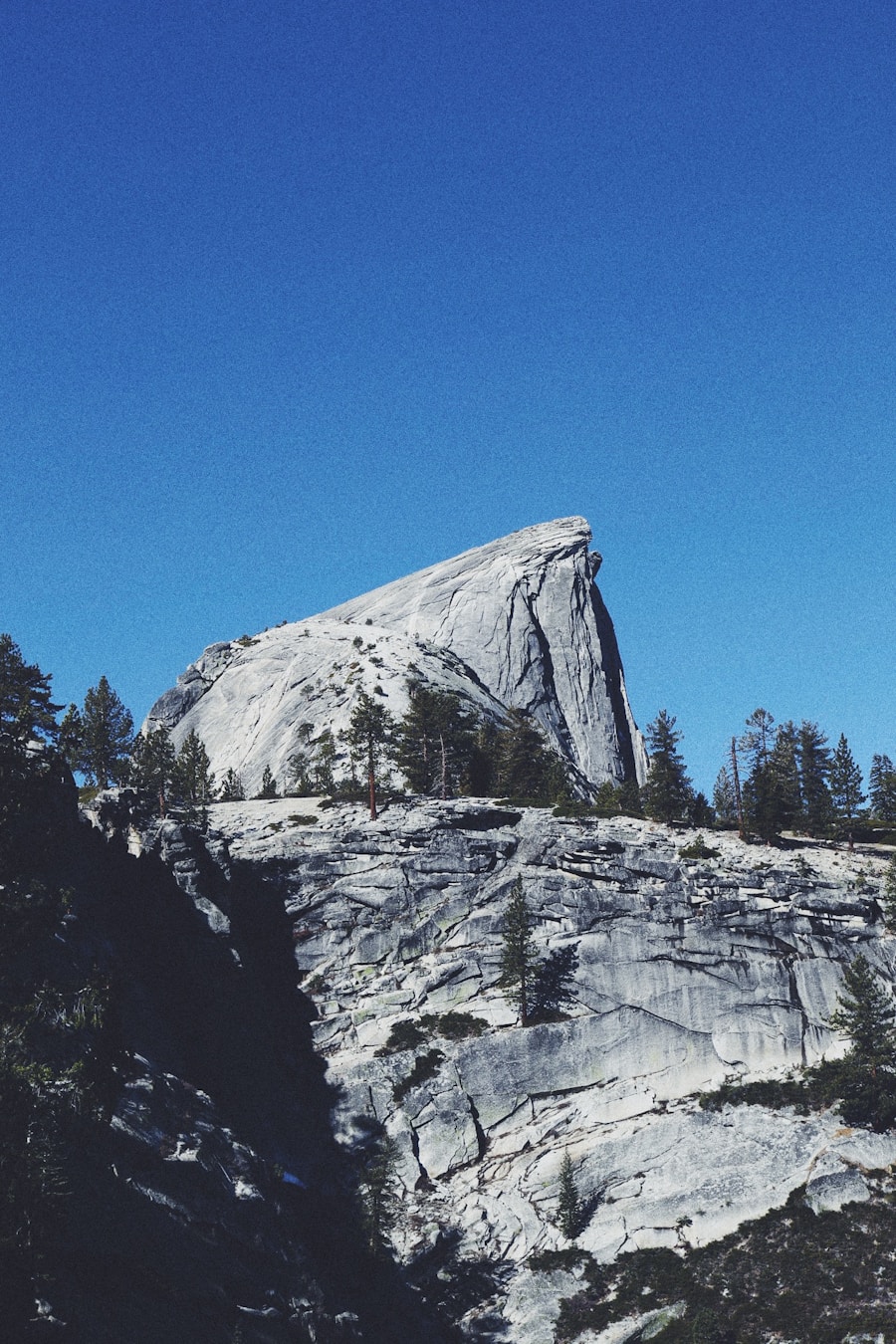
Backpacking can turn a Half Dome trip into an overnight wilderness experience, but the rules are different from those for a normal day hike. Anyone camping overnight in Yosemite Wilderness needs a wilderness permit.
Little Yosemite Valley is the most popular backcountry camping area for Half Dome trips. It is the first legal camping area on the route from Yosemite Valley toward Half Dome; camping is not permitted between Yosemite Valley and Little Yosemite Valley.
If your wilderness permit begins from a Half Dome-eligible trailhead, you can request Half Dome access for qualifying members of your group under the National Park Service’s backpacker permit system. Eligible starting trailheads include Happy Isles to Little Yosemite Valley and several other routes identified by the park.
Wilderness permits are highly competitive. Under the current reservation system, 60% of reservable permits are released beginning 24 weeks ahead, while another 40% become available seven days before the trip. Remaining availability can vary considerably.
Yosemite also operates seasonal backpackers campgrounds for wilderness permit holders. A qualifying wilderness permit holder may generally spend one night in an open backpackers campground before the wilderness trip and one night after it. A Half Dome day-hike permit by itself does not qualify a visitor to use a backpackers campground.
Warning: Do not assume a Half Dome day-hike permit allows you to sleep in Little Yosemite Valley. Overnight wilderness camping requires the appropriate wilderness permit.
Half Dome is roughly a 14- to 16.4-mile round-trip hike with about 4,800 feet of elevation gain, and most hikers need 10 to 12 hours.
Nearby Hotels and Resorts
If Yosemite Valley lodging is full, staying outside the park can work. The key is understanding how much driving you are adding before and after an already demanding hike.
| Property | Area | Best For | Half Dome Consideration |
| Yosemite View Lodge | El Portal | Staying close to the Arch Rock Entrance | One of the most practical hotel choices outside the park |
| Mariposa Lodge | Mariposa | More restaurants and town services | Longer morning drive than El Portal |
| Best Western Plus Yosemite Gateway Inn | Oakhurst | South Entrance travelers | Less convenient for a pre-dawn Half Dome start than Yosemite Valley |
| Tenaya at Yosemite | Fish Camp | Full-service resort amenities near the South Entrance | A significantly longer trip to Yosemite Valley than an in-park stay |
Mariposa sits west of Yosemite along Highway 140 and offers restaurants, shops, motels, and hotels. It can be a good compromise when Yosemite Valley and El Portal are unavailable, although Half Dome hikers need to account for the extra morning travel.
Oakhurst lies south of the park on Highway 41. The Best Western Plus Yosemite Gateway Inn is one established lodging choice there. Oakhurst works well for travelers combining Yosemite with destinations south of the park, but it is not as efficient as Yosemite Valley or El Portal for a very early Half Dome start.
Glamping and Luxury Camping Options
Travelers who want an outdoor atmosphere without traditional tent camping also have upscale options outside Yosemite National Park.
AutoCamp Yosemite offers Airstream accommodations and other lodging at its property in Midpines on Highway 140. Despite its Yosemite name, the property is outside the national park. Guests get more comfort than a standard campground, but Half Dome hikers still need to drive into Yosemite Valley.
Tenaya at Yosemite is a full-service resort in Fish Camp near Yosemite’s South Entrance. Its rooms, resort facilities, pools, activities, and dining can work well for a broader Yosemite vacation. For Half Dome specifically, the trade-off is the longer drive to the Valley compared with staying inside the park.
Rustic and Historic Lodging Options
Yosemite’s lodging history is part of the park experience. The Ahwahnee, opened in 1927, combines historic architecture with a central Yosemite Valley location. For Half Dome hikers who want premium lodging inside the Valley, its location is much more practical than staying in a distant gateway town.
White Wolf Lodge is a seasonal high-country property along Tioga Road with cabins and canvas-sided tent cabins. It can be attractive for travelers exploring northern Yosemite and the high country, but it is roughly 30 miles from Yosemite Valley and is therefore not the most convenient base for a Half Dome day hike.
The historic Wawona Hotel also remains an important part of Yosemite’s lodging heritage. At present, however, the hotel complex is closed for rehabilitation because of structural concerns. Travelers should check the National Park Service lodging and closure pages before assuming it has reopened.
Accommodations in the Surrounding Towns and Cities
Visitors who cannot find accommodation close to Yosemite have additional choices in Mariposa, Oakhurst, Midpines, Groveland, Merced, and Fresno. These areas can reduce lodging costs or provide more restaurant and shopping choices, but distance matters more for Half Dome than for a casual sightseeing trip.
Fresno has a large selection of hotels, including the DoubleTree by Hilton Hotel Fresno Convention Center. It can be useful for travelers flying through Fresno or beginning a broader Sierra Nevada road trip, but it is too far away to be an ideal base immediately before an early Half Dome start.
Merced is another gateway city with accommodations such as Hampton Inn & Suites Merced. Merced offers convenient highway, rail, and regional transportation connections, but it is also far enough from Yosemite Valley that most Half Dome hikers will prefer to stay closer to the park for the night immediately before the hike.
For hikers who need to sleep outside Yosemite, El Portal is usually the first area to check. Mariposa and Midpines provide more alternatives farther west along Highway 140, while Oakhurst and Fish Camp serve travelers approaching from Highway 41.
Budget-Friendly Lodging Options
Camping is usually the most affordable way to stay close to Half Dome, but availability is highly competitive. Yosemite Valley’s Upper Pines, Lower Pines, North Pines, and Camp 4 all put hikers much closer to the trail than most inexpensive motels outside the park.
Camp 4 is a walk-in, tent-only campground in Yosemite Valley. During the main season, reservations are released on a shorter booking window than many other Yosemite campgrounds, making it worth checking even when the Pines campgrounds are full.
Backpackers with a valid wilderness permit may also be eligible for the seasonal Yosemite Valley backpackers campground for one night before and one night after their wilderness trip. This option is not available simply because someone holds a Half Dome day-hike permit.
Outside the park, hostel-style and rustic accommodations around Midpines and the Highway 140 corridor can cost less than major hotels. Check the property’s exact location carefully before booking because lodging marketed as “Yosemite” can still be a substantial drive from Happy Isles.
Note: Yosemite lodging can be reserved up to 366 days ahead through the park concessioner. Campground reservation windows vary by campground, so lodging and camping should be planned separately.
Half Dome Permits and Reservation Timing
Day Hikers
A permit is required to ascend Half Dome when the cables are up. The cables are normally installed around late May and remain available until around the second Monday in October, but exact dates depend on conditions.
Most day-hike permits are distributed through the preseason lottery, with a smaller daily lottery available during the cable season. A Half Dome permit does not include lodging or camping.
Backpackers
Anyone spending a night in Yosemite Wilderness needs a wilderness permit. Backpackers beginning at designated Half Dome-eligible trailheads can request Half Dome access under the backpacker permit system.
Little Yosemite Valley is a designated wilderness campground and requires a qualifying wilderness permit. It cannot be used as an informal overnight stop by someone holding only a Half Dome day-hike permit.
2026 Park Entrance Reservations
For 2026, Yosemite National Park does not require a separate reservation simply to enter the park. The normal entrance fee still applies. Entrance policies have changed in previous years, so travelers planning for 2027 or later should verify the rules on the National Park Service website before departure.
Food Storage and Overnight Safety
Food storage rules apply throughout Yosemite because black bears actively seek human food. In developed campgrounds and tent-cabin areas, food, drinks, toiletries, trash, and other scented items must be stored as directed in the provided food lockers.
Backpackers face stricter wilderness requirements. The National Park Service requires an approved bear-resistant food canister for food and scented items throughout Yosemite Wilderness. Hanging food from a tree is not a legal substitute in normal Yosemite wilderness conditions.
Warning: Never leave food, drinks, trash, sunscreen, toothpaste, or other scented items unattended in a tent. Follow Yosemite’s food-storage rules even if you do not see bears nearby.
Half Dome also demands careful preparation. Carry a reliable headlamp, sufficient water and food, suitable footwear, and the navigation equipment you know how to use. Check current trail conditions and the weather before leaving. Do not continue onto exposed granite or the cables when thunderstorms or unsafe wet conditions threaten.
For most hikers, the best overall strategy is simple: secure the Half Dome permit first, book Yosemite Valley lodging or camping as early as possible, and use El Portal or another gateway community as a fallback. More luxurious or distant accommodations can be enjoyable for a longer Yosemite vacation, but proximity becomes especially valuable on the night before a strenuous Half Dome hike.
Separate travel-planning resource: If you are also planning a trip to Australia, see Best Time to Visit Sydney: A Seasonal Guide.
Frequently Asked Questions
What are the best accommodation options when hiking Half Dome?
For a Half Dome day hike, Yosemite Valley is the most convenient area. Options include Curry Village, Yosemite Valley Lodge, The Ahwahnee, Housekeeping Camp, Upper Pines, Lower Pines, North Pines, and Camp 4. El Portal is one of the closest practical alternatives outside the park.
Are there campgrounds near Half Dome?
Yes. Upper Pines, Lower Pines, North Pines, and Camp 4 are in Yosemite Valley and are the most practical front-country campgrounds for Half Dome day hikers. Little Yosemite Valley is a backcountry campground and requires a wilderness permit.
What lodges or hotels are available near Half Dome?
Inside Yosemite Valley, the main hotel-style choices include Yosemite Valley Lodge and The Ahwahnee, while Curry Village offers cabins and tent cabins. Outside the park, El Portal has some of the closest hotel accommodations to Yosemite Valley.
Can I rent a vacation rental near Half Dome?
Vacation rentals are available in gateway communities and private areas around Yosemite. Check the exact driving route to Yosemite Valley before booking because a property advertised as being near Yosemite may still be a long drive from the Half Dome trailhead.
Can I camp in Little Yosemite Valley with a Half Dome day-hike permit?
No. A Half Dome day-hike permit does not authorize overnight camping. Little Yosemite Valley requires an appropriate wilderness permit.
Do I need a Yosemite entrance reservation in 2026?
No separate entrance reservation is required for Yosemite National Park in 2026, although the normal entrance fee applies. This rule can change in future years, so check the National Park Service before your trip.
How early should I book accommodation for Half Dome?
Book as soon as your plans are firm. Yosemite lodging reservations can open far in advance, while campground reservation windows vary by campground. Popular Yosemite Valley lodging and campsites often fill quickly, although cancellations can create later openings.
Sources
- National Park Service — Half Dome Permits for Day Hikers — permit requirements, cable season, quotas, and camping limitations.
- National Park Service — Yosemite Campgrounds — current campground locations, opening dates, reservation windows, fees, and amenities.
- National Park Service — Yosemite Lodging — current in-park lodging names, locations, and operating status.
- National Park Service — Wilderness Permit Reservations — current wilderness permit release system and fees.
- National Park Service — Half Dome and Little Yosemite Valley — legal camping locations and Little Yosemite Valley requirements.
- National Park Service — Wilderness Regulations — overnight permit rules and mandatory bear-resistant food storage.

