
Last Updated on July 25, 2026 by Daniel Globe
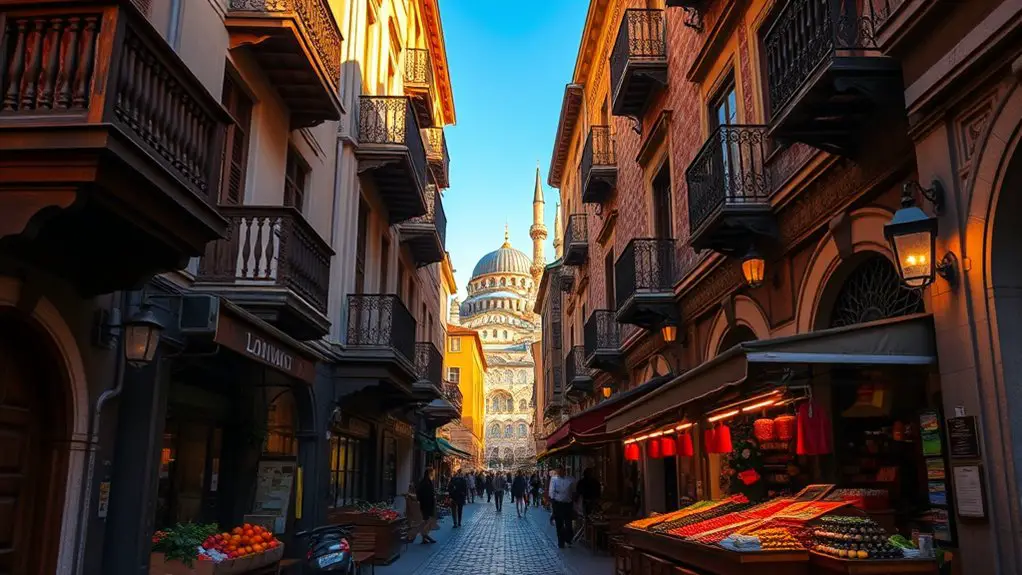
Fatih packs many of Istanbul’s most photogenic landmarks into the Historic Peninsula and the neighborhoods along the Golden Horn. You can frame the domes of Hagia Sophia and the Blue Mosque, photograph Balat’s colorful houses, capture market details in the Spice Bazaar and Grand Bazaar, or finish the day with skyline views from Süleymaniye Mosque and the Eminönü end of Galata Bridge. The key is knowing where to go, when the light is best, and which visitor rules apply.
Quick Answer
The best Instagrammable spots in Fatih include Hagia Sophia, the Blue Mosque, Sultanahmet Square, Balat and Fener, Kariye Mosque, the Grand Bazaar, Spice Bazaar, Basilica Cistern and Süleymaniye Mosque. For softer outdoor light and fewer crowds, start early in Sultanahmet and save Golden Horn viewpoints for late afternoon or sunset.
Key Takeaways
- Start around Sultanahmet for Hagia Sophia, the Blue Mosque and Basilica Cistern before the busiest part of the day.
- Balat and Fener are best for colorful streets, steep lanes, historic houses and neighborhood-scale photography.
- Süleymaniye Mosque and the Eminönü side of Galata Bridge offer some of the strongest Golden Horn and skyline compositions.
- Hagia Sophia and Kariye are active mosques with specific visitor, dress and photography rules, so treat them as places of worship rather than photo sets.
Disclosure: As an Amazon Associate I earn from qualifying purchases. Some links on this page are affiliate links, at no extra cost to you.
The Magnificent Hagia Sophia
Hagia Sophia Grand Mosque is one of the defining sights of Fatih and one of the most important monuments in Istanbul’s UNESCO-listed Historic Areas. The present structure was completed in the sixth century under Emperor Justinian, and its immense central dome helped shape the development of monumental architecture for centuries. UNESCO describes Hagia Sophia as one of the exceptional architectural masterpieces of Istanbul’s Byzantine and Ottoman heritage.
Its history is layered rather than simple. Hagia Sophia began as an imperial church, became a mosque after the Ottoman conquest, later operated as a museum, and returned to mosque use in 2020. It should therefore not be described as a museum today. You can read more about its architectural history through UNESCO’s Historic Areas of Istanbul listing.
For photography, the exterior gives you the most flexibility. Try a wide composition from Sultanahmet Square, use fountains or trees as foreground elements, or photograph the domes and minarets against early-morning light. Inside the designated visitor area, look for the contrast between Byzantine mosaics, the vast dome and later Ottoman additions.
Note: Hagia Sophia uses separate arrangements for worshippers and cultural visitors. Türkiye’s Ministry of Culture and Tourism introduced the current visitor-management system on January 15, 2024, including a ticketed gallery route for foreign tourists. Admission prices and operating arrangements can change, especially during restoration or religious observances.
Personal-use photography and short video are allowed in the designated visitor area under current visitor regulations, but commercial or news photography requires prior permission and flash is strongly discouraged. Keep your phone silent, follow staff instructions and remember that the building remains an active place of worship.
The Stunning Blue Mosque
Across Sultanahmet Square, the Blue Mosque, officially Sultanahmet Mosque, creates another of Fatih’s signature photographs. Built between 1609 and 1616, it remains an active Ottoman-era mosque. Its six minarets, cascading domes and broad courtyard make it particularly effective for symmetrical architectural compositions.
Architectural Marvel Details
The interior is famous for its blue-dominated İznik tile decoration. According to Türkiye’s official tourism portal, the lower levels contain more than 20,000 tiles in dozens of tulip designs. Those patterns, the chandeliers and the scale of the prayer space offer very different photographic details from the monument’s exterior.
Rather than calling the building simply a mixture of Byzantine and Ottoman architecture, it is more accurate to see it as a major work of Ottoman mosque design that also sits in visual dialogue with the nearby Hagia Sophia.
Perfect Photo Opportunities
The courtyard is ideal for strong leading lines and balanced shots of the domes and minarets. Early morning generally gives you more breathing room, while late-afternoon light can add warmth to the pale stone.
Inside, avoid treating worshippers as background props. Concentrate on tile patterns, arches, chandeliers and architectural symmetry when photography is permitted. Do not use flash, and avoid blocking circulation while composing a shot.
Pro Tip: For one of the classic Fatih compositions, photograph across Sultanahmet Square so that gardens, fountains or trees create a foreground and the mosque rises behind them. A slightly lower camera position can make the domes and minarets feel more imposing without needing an ultra-wide lens.
The Charming Streets of Balat
Balat trades monumental architecture for steep lanes, weathered facades, colorful houses and street-level detail. It is one of the strongest places in Fatih for photographs that feel more intimate than the grand monuments around Sultanahmet.
Balat works best when the neighborhood remains part of the picture: stairs, balconies, shopfronts and everyday street life give the colorful houses their sense of place.
Türkiye’s official tourism guide specifically highlights the historic streets, steep staircases and colorful cumba houses of Fener and Balat. Merdivenli Yokuş, whose name means “slope with stairs,” is one of the neighborhood’s recognizable social-media photo locations.
Three subjects are especially worth looking for:
- Historic houses: Look for projecting enclosed balconies, rows of colorful facades and steep streets that create natural leading lines.
- Street art and small details: Murals, doors, signs, stairways and shopfronts make useful close-up subjects between wider architectural shots.
- Cafés and neighborhood scenes: Outdoor tables and colorful storefronts can add context, but ask before staging photographs on private property or photographing people at close range.
Balat is a lived-in neighborhood, not an outdoor studio. Keep doorways clear, avoid climbing onto private steps or windowsills, and be considerate when photographing homes.
The Historic Sultanahmet Square
Sultanahmet Square is the most efficient starting point for a Fatih photography day because several major sights sit within the same compact historic area. Hagia Sophia and the Blue Mosque dominate the views, while the former Hippodrome area, fountains, obelisks and surrounding gardens provide foreground detail.
Iconic Landmarks Nearby
Three major photography stops are clustered around the square:
- Hagia Sophia Grand Mosque: A sixth-century architectural landmark with Byzantine and Ottoman layers. It is an active mosque today, not a museum.
- Blue Mosque: An active seventeenth-century mosque known for six minarets and more than 20,000 İznik tiles.
- Basilica Cistern: A sixth-century underground reservoir whose columns, reflections and carefully lit interior create a completely different visual style.
These monuments form part of Istanbul’s extraordinary historic landscape, which has been on the UNESCO World Heritage List since 1985.
Perfect Photo Opportunities
For outdoor photography, early morning gives you a better chance of cleaner foregrounds before tour groups fill the square. Late afternoon can be attractive as well, especially when warm light catches the domes and minarets.
Try changing height rather than taking every photo at eye level. A lower viewpoint can emphasize the mosque silhouettes, while fountains, benches, flowers and trees can create foreground layers. Longer focal lengths are useful when you want to visually compress Hagia Sophia, the Blue Mosque and street activity.
Vibrant Cultural Atmosphere
Sultanahmet is both a major visitor district and an active religious and civic space. Its atmosphere changes throughout the day as worshippers, residents, tour groups and independent travelers move through the square.
You may encounter seasonal events or public programs, but these vary rather than following one guaranteed year-round festival schedule. For a more authentic travel-photo set, include details such as tea carts, food vendors, gardens and people moving through the public space without intruding on anyone’s privacy.
The Colorful Fener and Balat Neighborhoods
Fener and Balat reward slower photography. Instead of racing between famous landmarks, look for balconies, doors, stairways, religious buildings, cafés and layered streetscapes.
Fener also adds a different architectural character. The official GoTürkiye neighborhood guide highlights the Orthodox Patriarchate, St. George’s Church and the distinctive red silhouette of the Fener Rum High School, often called the Red School.
| Fener Photo Subjects | Balat Photo Subjects |
|---|---|
| Red School silhouette and historic religious architecture | Colorful cumba houses and steep streets |
| Winding lanes and old facades | Stairs, doors, murals and shopfront details |
| Golden Horn neighborhood context | Cafés and lively street scenes |
The strongest photos often combine architecture with the slope of the streets. Instead of centering every colorful house, step back and let the road, stairs or neighboring buildings lead the viewer through the frame.
The Picturesque Spice Bazaar
The Spice Bazaar, or Mısır Çarşısı, shifts the focus from large buildings to color and detail. Built in the seventeenth century as part of the New Mosque complex, it remains one of Eminönü’s best-known markets. The official GoTürkiye Spice Bazaar guide describes rows of spices, teas, dried fruit and other colorful food products.
Three subjects work especially well:
- Spice displays: Photograph repeated shapes and color contrasts instead of trying to capture an entire stall in one frame.
- Traditional products: Tea, dried fruit, sweets and hanging goods add texture and tell more of the market’s story.
- Market activity: Wider shots can show shoppers and vendors interacting, but ask before taking close portraits of individual sellers.
Indoor lighting can be mixed and uneven, so a modern phone’s night mode or a camera with good low-light performance can be more useful than flash. Keep aisles clear and avoid holding up foot traffic while composing photos.
The Scenic Galata Bridge
The Galata Bridge is best understood as a gateway photo spot rather than a landmark located completely inside Fatih. It crosses the Golden Horn and links Eminönü in Fatih with Beyoğlu on the opposite side. GoTürkiye notes that the current bridge dates to 1994 and provides broad views of Istanbul’s skyline and Golden Horn traffic.
From the Eminönü side, you can photograph ferries, fishermen, the water and the mosque-filled Historic Peninsula skyline. Toward evening, the changing sky and city lights create an entirely different look from daytime market photography.
Try framing anglers in the foreground with the Süleymaniye Mosque skyline beyond, or use the bridge railings as leading lines. Reflections become stronger when the water is calm, while ferries and smaller boats can add motion to long or carefully timed exposures.
Because this is a busy transport and pedestrian route, step out of the main flow before stopping to photograph.
Kariye Mosque (Former Chora Church)
In Edirnekapı, Kariye Mosque preserves some of the Historic Peninsula’s most important Byzantine mosaics and frescoes. The building is also widely known by its earlier name, the Church of the Holy Saviour in Chora, or simply Chora.
The present monument incorporates centuries of history, but its celebrated mosaics and frescoes are particularly associated with the fourteenth-century artistic program commissioned by Theodore Metochites. The Anastasis fresco and narrative mosaics depicting episodes from the lives of Christ and the Virgin Mary are among its defining works.
The site’s current status needs to be clear: after restoration, Kariye Mosque reopened for worship and visitors on May 6, 2024. It should therefore not be presented simply as a functioning church or conventional museum.
Three details deserve special attention:
- Narrative mosaics: Look carefully at the sequences of figures, architectural backgrounds and gold surfaces rather than photographing only one wide interior.
- The Anastasis fresco: This dramatic composition in the parekklesion is one of Kariye’s best-known works.
- Architecture and decoration together: Wider compositions can show how mosaics, vaults and arches form a continuous visual program.
Warning: Kariye is an active mosque. Current visitor regulations require appropriate dress and allow personal-use photography and short video in visitor areas, but commercial or news photography needs prior written permission. Flash photography is strongly discouraged, and visiting access can be restricted around worship programs.
Süleymaniye Mosque and Golden Horn Views
Süleymaniye Mosque deserves a place on any list of Fatih’s best photography locations. It stands on Istanbul’s Third Hill and overlooks the Golden Horn, giving you both monumental Ottoman architecture and broad city views in one stop.
The official GoTürkiye guide highlights its domes, four minarets, courtyard, stained-glass windows and elevated position. Architect Mimar Sinan designed the complex for Sultan Süleyman the Magnificent in the sixteenth century.
For photography, use the courtyard for symmetry and architectural details, then move toward the outer terraces for city views. Late-afternoon light can work particularly well here because you can photograph the Golden Horn, rooftops and distant skyline as the light softens.
As with every active mosque, visit outside busy prayer periods when sightseeing, dress respectfully, keep noise down and never position a camera where it interferes with worship.
The Grand Bazaar
The Grand Bazaar gives you a completely different set of photographs: vaulted passageways, hanging lamps, carpets, jewelry, ceramics, signs and tightly packed shop displays. It is one of the Historic Peninsula’s defining commercial spaces and traces its core development back to the fifteenth century.
According to the official Grand Bazaar visitor guide, the covered market has 22 gates and a network of historic commercial passages.
Instead of photographing every shop straight on, look for repetition: rows of lanterns, archways receding into the distance, hanging textiles or patterns in ceramic displays. Wider passageway compositions are particularly effective when a person walking through the frame provides scale.
Businesses are private spaces even when the passages are public-facing. Ask before taking close-up photographs of shopkeepers, customers or merchandise inside a store, especially when using larger cameras.
The Basilica Cistern
The Basilica Cistern is one of Fatih’s best indoor photography stops. Built during the reign of Justinian I in the sixth century, the enormous underground reservoir contains hundreds of marble columns and the famous carved Medusa-head bases.
The official GoTürkiye guide highlights its columns, arches and reflected light, which give the space its distinctive atmosphere.
This is a place to think about contrast and reflection rather than bright color. Look for repeated columns disappearing into the distance, reflections in the water and silhouettes of visitors against illuminated architecture.
Low light can challenge both phones and cameras. Hold your device steadily, use image stabilization where available and follow the venue’s current photography rules rather than relying on flash.
Best Times for Photography in Fatih
There is no single perfect hour for every location. Match the time to the subject:
- Early morning: Best for cleaner exterior views around Hagia Sophia, the Blue Mosque and Sultanahmet Square.
- Late morning to afternoon: Useful for bazaars and indoor attractions where exterior sunlight matters less.
- Late afternoon: Good for Fener, Balat and Süleymaniye, particularly when angled light adds texture to facades.
- Sunset and blue hour: Strongest around Golden Horn viewpoints and the Eminönü side of Galata Bridge.
Golden hour can create attractive warm light, but famous sites may still be crowded. In many cases, arriving early is more useful than chasing perfect sunset color because it gives you cleaner compositions and more freedom to change position.
A Practical Fatih Photography Route
Fatih covers a large area, so grouping locations is more efficient than jumping back and forth across the district.
Sultanahmet Cluster
Begin with Hagia Sophia and the Blue Mosque, then photograph Sultanahmet Square and visit the Basilica Cistern. These sights are close enough to cover as one compact photography session.
Bazaar and Eminönü Cluster
Continue toward the Grand Bazaar, then work downhill through the historic commercial streets toward the Spice Bazaar. From Eminönü, finish with waterfront photographs and views from the Fatih side of Galata Bridge.
Fener, Balat and Kariye Cluster
Give Fener and Balat their own block of time rather than squeezing them between Sultanahmet sights. Photograph the historic houses and steep streets first, then continue inland toward Kariye Mosque if your schedule and current visiting hours allow.
Süleymaniye Sunset Option
Süleymaniye works well as a late-afternoon alternative to Galata Bridge. Its elevated setting gives you broad Golden Horn views while still keeping one of Fatih’s greatest Ottoman monuments in the foreground.
Photography Etiquette at Mosques, Markets and Neighborhoods
Good travel photography depends as much on behavior as camera technique.
- At mosques: Dress modestly, respect prayer times, silence your phone and follow staff instructions.
- With flash: Avoid it where rules discourage or prohibit it, particularly around historic interiors and worship spaces.
- With professional equipment: Do not assume that personal photography rules cover commercial shoots, tripods, lighting setups or organized productions.
- In markets: Ask before taking close portraits of vendors or photographing inside a shop for an extended period.
- In Balat and Fener: Remember that colorful houses are homes. Do not block doorways, climb onto private property or stage photographs without permission.
Note: Historic-site hours, prayer-related closures, restoration work and ticket prices can change. Check official venue information close to your visit, especially when interior photography is an essential part of your plans.
Frequently Asked Questions
What is the best time to visit Fatih for photography?
Early morning is usually best for cleaner photographs around Hagia Sophia, the Blue Mosque and Sultanahmet Square. Late afternoon and sunset work well around Süleymaniye Mosque and the Golden Horn. Indoor markets and the Basilica Cistern can be photographed during the middle of the day when outdoor light is harsher.
Are there entrance fees for the attractions in Fatih?
It depends on the site. Public streets, squares and exterior viewpoints are generally free to explore, and active mosques have worship arrangements, but museums and designated sightseeing areas can charge admission. Hagia Sophia introduced a ticketed gallery visitor route for foreign tourists in January 2024, while Kariye also has a designated visitor area. Check official current rates because ticket prices can change.
Is it safe to walk around Fatih at night?
Many people visit central Fatih after dark, but no urban district is risk-free. Stay aware of your surroundings, secure phones and wallets in crowded tourist areas, avoid demonstrations, use well-traveled routes and follow current official travel advice. The U.S. State Department currently advises travelers to exercise increased caution in Türkiye and to remain alert in tourist sites and crowded public spaces.
Where can I find local food near these Instagram spots?
Sultanahmet and the streets toward Eminönü have restaurants, bakeries and street-food options close to the main monuments. Around the Spice Bazaar, look for Turkish sweets, nuts, cheeses and other market foods, while Eminönü is well known for quick local meals such as fish sandwiches. Fener and Balat also have numerous neighborhood cafés where you can take a break between street-photography stops.
Can I take professional photos inside the religious sites?
Do not assume that permission for personal photography also covers professional or commercial work. Current Hagia Sophia and Kariye visitor regulations allow personal-use photography and short video in designated visitor areas but require prior written permission for commercial or news photography. Flash is strongly discouraged. Other mosques may apply different rules, so follow posted instructions and staff directions.
Which Fatih photo spots are easiest to combine in one walk?
Hagia Sophia, the Blue Mosque, Sultanahmet Square and Basilica Cistern form the easiest cluster. The Grand Bazaar, Spice Bazaar and Eminönü can form a second route. Fener, Balat and Kariye are better treated as another cluster because they sit farther west along and inland from the Golden Horn.
Is Galata Bridge actually in Fatih?
The bridge connects two districts. Its Eminönü end is in Fatih, while the opposite end reaches Beyoğlu. That makes the Eminönü side useful for a Fatih itinerary, particularly for skyline, ferry and Golden Horn photography.
Sources
- UNESCO World Heritage Centre — Historic Areas of Istanbul — supports the heritage status and historical significance of Hagia Sophia, Sultanahmet and other Historic Peninsula monuments.
- Republic of Türkiye Ministry of Culture and Tourism — Hagia Sophia visitor-management announcement — supports the January 2024 sightseeing-route and admission changes.
- GoTürkiye — Kariye Mosque (Chora) — supports Kariye’s history, mosaics and May 6, 2024 reopening.
- GoTürkiye — Fener and Balat Neighbourhoods — supports Balat’s historic houses, Merdivenli Yokuş and Fener photography subjects.
- GoTürkiye — Süleymaniye Mosque — supports the mosque’s architecture and Golden Horn setting.
- U.S. Department of State — Türkiye Travel Advisory — supports current travel-safety guidance for crowded and tourist areas.
