

Last Updated on September 27, 2026 by Caleb Warren
Choosing between electric bike brands in the USA means looking beyond advertised motor power and maximum range. The five models below cover city commuting, fat-tire riding, longer trips, and folding designs. Compare their battery capacity, motor ratings, comfort features, and warranty coverage before deciding which electric bike fits your needs.
Quick Answer
Among these five electric bikes, the Gotrax Dolphin offers a straightforward city-riding option, the Vefreedom emphasizes longer assisted range, and the 1500W fat-tire model targets rougher terrain. Compare continuous motor power, battery watt-hours, frame fit, warranty support, and verified electrical safety certification. Higher advertised wattage does not automatically mean a better or road-legal bike.
| 1500W Electric Bike with Fat Tire & Dual Suspension | Off-Road Performance | Motor Power: 1500W advertised | Battery Voltage/Capacity: 48V 20Ah (960Wh) | Max Speed: 31 mph advertised | VIEW LATEST PRICE | Read Our Analysis | |
| Vefreedom 1500W Electric Fat Tire Bike with 70-Mile Range | Long-Range Cruiser | Motor Power: 750W (1500W peak) | Battery Voltage/Capacity: 48V 20Ah (960Wh) | Max Speed: Not specified | VIEW LATEST PRICE | Read Our Analysis | |
| 1000W Electric Mountain Bike with 48V Battery | Versatile Trail Option | Motor Power: 500W (1000W peak) | Battery Voltage/Capacity: 48V 374.4Wh | Max Speed: 21.7 mph advertised | VIEW LATEST PRICE | Read Our Analysis | |
| Gotrax Dolphin 26″ Electric Bike for Adults (500W 30-Mile Range) | Budget-Friendly Commuter | Motor Power: 350W rated | Battery Voltage/Capacity: 280.8Wh | Max Speed: 20 mph | VIEW LATEST PRICE | Read Our Analysis | |
| Electric Bike for Adults 1800W Motor 86 Mile Range Foldable | Foldable Option | Motor Power: 1800W peak | Battery Voltage/Capacity: 52V 18.2Ah (946.4Wh) | Max Speed: 20 mph | VIEW LATEST PRICE | Read Our Analysis |
The figures above are advertised specifications, not independent road-test results. Maximum range varies with rider weight, hills, speed, temperature, tire pressure, and pedal-assist level.
More Details on Our Top Picks
-
1500W Electric Bike with Fat Tire & Dual Suspension
This fat-tire electric bike combines a powerful advertised motor, dual suspension, and a large battery for riders who expect rougher surfaces. Its listed 31 mph maximum speed also makes its legal classification an essential buying consideration.
The 48V 20Ah removable battery provides 960 watt-hours of nominal capacity. Its 20-inch fat tires offer a wider contact area, while front and rear suspension help absorb bumps on uneven roads and trails.
Dual disc brakes provide braking at both wheels. However, braking performance still depends on tire grip, brake condition, road surface, and rider technique.
The aluminum frame has a stated 330-pound load limit. Adjustable components may help accommodate different riders, but you should confirm the manufacturer’s fit range before ordering.
The advertised one-year warranty and included assembly tools add convenience. This model is more appropriate for riders prioritizing motor performance and rough-road comfort than those seeking a lightweight city bicycle.
Important limitation: A claimed 31 mph maximum speed may place the bike outside standard bicycle-class limits. Confirm its continuous motor rating, operating modes, and classification before using public roads or shared trails.
- Motor Power:1500W advertised
- Battery Voltage/Capacity:48V 20Ah (960Wh)
- Max Speed:31 mph advertised
- Tire Size/Type:20-inch fat tires
- Riding Modes:Not specified
- Warranty Period:1-year
- Additional Feature:Dual suspension system
- Additional Feature:330 lb weight limit
- Additional Feature:All-season versatility
-
Vefreedom 1500W Electric Fat Tire Bike with 70-Mile Range
The Vefreedom targets riders who want a large battery, upright riding comfort, and flexible assistance. Its advertised maximum range reaches 70 miles, although that figure should not be treated as a guaranteed daily commuting distance.
The bike combines a 750W rated motor with a 1500W peak rating. Its 48V 20Ah removable battery provides 960Wh of nominal capacity.
The 20 x 4.0-inch fat tires offer traction on loose surfaces, while the step-through frame makes mounting and dismounting easier. Integrated LED lighting improves visibility.
Three riding modes include pure electric, pedal assist, and conventional pedaling. Five assist levels let you adjust motor support to suit your route.
The stated charging time is five to six hours. The bike arrives approximately 90% assembled, although final assembly and a full safety inspection are still necessary.
Its advertised 12-month warranty covers the motor, battery, charger, and controller. Confirm the exact coverage, exclusions, and available replacement parts with the seller.
Best suited to: Riders prioritizing an accessible frame, larger battery capacity, and comfortable mixed-surface travel.
- Motor Power:750W (peak 1500W)
- Battery Voltage/Capacity:48V 20Ah (960Wh)
- Max Speed:Not specified
- Tire Size/Type:20″ x 4.0 fat tires
- Riding Modes:3 modes (pure electric, pedal assist, classic bike)
- Warranty Period:12 months (motor, battery, charger, controller)
- Additional Feature:Step-through frame design
- Additional Feature:70-mile maximum advertised range
- Additional Feature:5–6 hour advertised charging time
-
1000W Electric Mountain Bike with 48V Battery
This electric mountain bike combines a 500W rated motor, 1000W peak output, and several riding modes. It is worth considering if you want a conventional mountain-bike layout rather than a compact fat-tire frame.
Its removable 48V 374.4Wh battery is smaller than the batteries in the two preceding models. The advertised range is 25–30 miles in electric-only mode and 40–50 miles with pedal assistance.
The seller lists a maximum speed of 21.7 mph, five working modes, and a four-to-five-hour charging time.
Comfort features include a front suspension fork, cushioned seat, fenders, headlight, LCD display, and seven-speed drivetrain.
The battery is advertised with IPX5 water resistance, and the product listing describes UL safety certification. However, the exact certificate and model coverage should be confirmed before purchase.
The bike is listed as 85% preassembled and includes a 12-month warranty with lifetime technical support. Check whether that support includes replacement parts or only troubleshooting assistance.
Best suited to: Riders seeking a conventional bicycle feel, multiple assistance modes, and front suspension for uneven surfaces.
- Motor Power:500W (peak 1000W)
- Battery Voltage/Capacity:48V 374.4Wh
- Max Speed:21.7 mph advertised
- Tire Size/Type:Not specified (mountain bike tires)
- Riding Modes:5 modes (Throttle, PAS, Pedal, Cruise, Booster)
- Warranty Period:12-month warranty + lifetime technical support
- Additional Feature:UL safety certification claimed by seller
- Additional Feature:Five working modes
- Additional Feature:IPX5 waterproof battery rating claimed by seller
-
Gotrax Dolphin 26″ Electric Bike for Adults (500W 30-Mile Range)
The Gotrax Dolphin is a practical choice for city streets, neighborhood riding, and shorter commutes. Its 26-inch wheels and adjustable riding position offer a more traditional bicycle layout than the compact fat-tire options.
The motor is rated at 350W continuous power, with a higher advertised peak rating. The maximum assisted speed is 20 mph.
Its 280.8Wh removable battery provides up to 15.5 miles in pure electric mode and more than 30 miles with low-level pedal assistance, according to the advertised specifications.
The bike includes three riding modes, five pedal-assist levels, and a seven-speed drivetrain. A boost function provides approximately 3.7 mph walking assistance when moving the bike.
Dual disc brakes and front suspension help with braking and comfort. The adjustable seat and handlebar allow you to refine your riding position.
The product listing advertises UL 2849 certification and 365-day parts coverage. Confirm that the certification and warranty apply to the exact model and seller supplying your bike.
Best suited to: Riders who want basic electric assistance for regular city travel without prioritizing high speed or extreme battery range.
- Motor Power:350W rated
- Battery Voltage/Capacity:280.8Wh
- Max Speed:20 mph
- Tire Size/Type:26″
- Riding Modes:3 modes (Pure Electric, Pedal-Assist, normal bike)
- Warranty Period:365-day parts assurance
- Additional Feature:Boost mode feature
- Additional Feature:Height-adjustable seat
- Additional Feature:Five pedal-assist levels
-
Electric Bike for Adults 1800W Motor 86 Mile Range Foldable
This folding electric bike combines a step-through frame, fat tires, and a large removable battery. It targets riders who want compact storage without giving up the comfort of a wider tire.
The motor carries an advertised 1800W peak rating. Its continuous rated output should be confirmed separately, since peak wattage does not establish the bike’s legal classification.
The 52V 18.2Ah battery provides approximately 946Wh of nominal capacity. The listing claims up to 86 miles with pedal assistance and 43 miles in electric-only mode.
A seven-speed drivetrain, 20 x 3.0-inch tires, dual disc brakes, and LED lighting support everyday riding. The manufacturer also advertises a 30-degree climbing capability.
The folding step-through frame makes storage easier, although a folding e-bike can still be heavy. Check its folded dimensions, total weight, and whether your vehicle or bike rack can safely carry it.
The listing states that the bike arrives 95% assembled and includes a one-year warranty, round-the-clock support, and a 30-day return policy. Read the return conditions before purchase.
Best suited to: Riders who need folding storage, a low step-through frame, and a large battery for longer journeys.
- Motor Power:1800W peak
- Battery Voltage/Capacity:52V 18.2Ah (946.4Wh)
- Max Speed:20 mph
- Tire Size/Type:20 x 3.0 fat tires
- Riding Modes:Not specified
- Warranty Period:1-year warranty
- Additional Feature:Foldable step-thru frame
- Additional Feature:86-mile maximum advertised range
- Additional Feature:Smart BMS protection
Factors to Consider When Choosing Electric Bike Brands in the USA
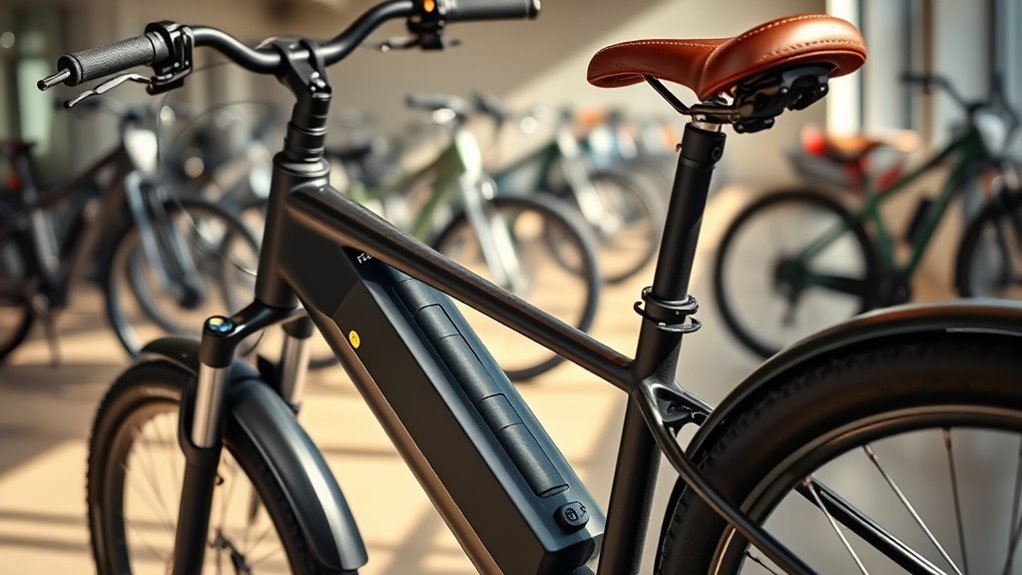
Choosing an electric bike starts with the type of riding you plan to do. Motor power, battery capacity, terrain, frame size, safety certification, and after-sales service all affect how well a bike meets your needs.
Motor Power Options
Motor power affects acceleration, climbing ability, and how much assistance you receive. However, the largest advertised wattage is not always the most useful measure.
Electric bike listings commonly show both rated and peak power. Rated power describes normal operating output, while peak power refers to a higher output available under certain conditions.
For example, the Vefreedom lists a 750W motor with a 1500W peak rating. The Gotrax Dolphin uses a 350W rated motor, making it more suited to everyday assistance than maximum acceleration.
Motor performance also depends on torque, gearing, controller settings, and the combined weight of the rider and bike. A powerful motor paired with a small battery may deliver less useful range than a lower-powered system.
Battery Range Capacity
Battery capacity determines how much electrical energy your bike can store. Watt-hours (Wh) offer a clearer comparison than voltage or amp-hours alone.
Calculate nominal capacity by multiplying battery voltage by amp-hours. A 48V 20Ah battery, for example, provides 960Wh.
| Electric bike | Battery capacity | Advertised range |
|---|---|---|
| 1500W fat-tire model | 960Wh | Not specified |
| Vefreedom | 960Wh | Up to 70 miles |
| 1000W mountain bike | 374.4Wh | 40–50 miles with assistance |
| Gotrax Dolphin | 280.8Wh | More than 30 miles with assistance |
| 1800W folding model | 946.4Wh | Up to 86 miles with assistance |
These figures show why advertised range and battery size should be considered together. The REI electric bike buying guide explains how motor output, riding conditions, and battery capacity affect range.
For daily commuting, estimate the distance of your complete round trip and leave extra capacity for hills, wind, detours, and battery aging. Using lower assistance levels generally extends your riding distance.
Terrain Compatibility Needs
The right tires, suspension, and motor depend on where you ride most often. A bike intended for smooth pavement does not need the same equipment as one used on loose gravel or rough trails.
Fat tires offer a larger contact area and can improve comfort on uneven surfaces. However, they may add weight and rolling resistance compared with narrower commuter tires.
Front suspension helps absorb bumps at the front wheel. Dual suspension can provide additional comfort over rough ground, although it also increases mechanical complexity.
For steep hills, consider motor torque and gearing alongside wattage. For paved commuting, pay more attention to frame fit, efficient tires, manageable weight, lighting, and predictable brakes.
A folding bike may suit limited storage or road trips, but its folded size and actual weight matter more than the folding feature alone.
Safety Feature Standards
Electrical certification, reliable brakes, suitable tires, and proper lighting should be central to your buying decision. These features address different risks and should not be treated as interchangeable.
UL 2849 evaluates the electrical system of an e-bike, including the drive system, battery, and charger combination. UL 2271 addresses batteries used in light electric vehicles.
These standards focus on electrical and fire-related hazards. They do not guarantee that a bicycle will handle well or prevent rider injuries.
Look for certification covering the exact bicycle model. A certified battery alone does not establish that the complete electrical system has been certified.
When a seller advertises certification, request the relevant certificate or file number. You can investigate UL certification claims using UL Product iQ.
Warning: Never charge an e-bike battery while sleeping or away from home. Use only the manufacturer-approved charger and replacement battery. Stop using a battery that is damaged, unusually hot, swollen, or behaving abnormally.
The U.S. Consumer Product Safety Commission recommends supervised charging and following the manufacturer’s battery instructions.
Warranty Coverage Terms
Warranty coverage varies by manufacturer and component. A one-year warranty does not necessarily cover every part of the bicycle or include labor.
Before purchasing, identify the warranty terms for the frame, motor, battery, controller, display, and charger.
Some manufacturers provide longer battery coverage, while others offer limited parts replacement or technical support. Shipping charges and labor costs may remain your responsibility.
Also consider the availability of replacement batteries, brake components, tires, and compatible chargers. A low purchase price offers less value if essential parts become unavailable.
Check whether the manufacturer has authorized service partners and whether local bike shops will work on the model. Keep your order confirmation and warranty documentation.
Electric Bike Classes and Road Legality
Electric bike laws differ across the United States. A model’s advertised speed or peak wattage does not automatically establish its legal classification.
The National Park Service electric bicycle guidance describes the three commonly used classes:
| Class | Motor operation | Maximum assisted speed |
|---|---|---|
| Class 1 | Pedal assistance only | 20 mph |
| Class 2 | Motor can propel the bicycle without pedaling | 20 mph |
| Class 3 | Pedal assistance only | 28 mph |
The federal consumer-product definition in 15 U.S.C. § 2085 uses a motor rating below 750W and a motor-only speed below 20 mph under specified test conditions. State rules governing public-road and trail use are separate considerations.
High-powered models advertised at 1500W or 1800W require particular attention. Peak output and rated output are different, and bikes exceeding applicable limits may face additional restrictions.
Before buying, confirm the bicycle’s rated motor output, maximum assisted speed, throttle configuration, class label, and the rules applying to your intended routes.
Frequently Asked Questions
Do Electric Bikes Require Special Insurance Coverage?
Most standard electric bicycles do not require the same insurance as motor vehicles, but requirements depend on local law and classification. Homeowners or renters insurance may offer limited protection. Dedicated e-bike insurance can provide additional theft, damage, and liability coverage.
Can I Ride E-Bikes in National Parks Legally?
Yes, electric bicycles may be permitted on designated national park roads and trails where conventional bicycles are allowed. Individual parks can restrict particular classes or locations. E-bikes are prohibited in designated wilderness areas, and high-powered models outside the standard classes may be treated differently.
How Long Do Lithium Batteries Typically Last?
Lithium e-bike batteries commonly last around three to five years or approximately 500–1,000 charge cycles before substantial capacity loss. Actual lifespan depends on battery quality, temperature, charging habits, and storage conditions. Follow the manufacturer’s instructions and replace damaged or deteriorating batteries with approved alternatives.
Are E-Bike Motors Waterproof for Rainy Rides?
Most e-bike motors are water-resistant rather than fully waterproof. Their protection depends on the specific model and IP rating. Light rain may be acceptable when the manufacturer permits it, but avoid deep water, pressure washing electrical components, and charging wet connectors.
What’s the Average Annual Maintenance Cost?
Routine e-bike maintenance may cost approximately $150–$300 annually, depending on mileage, service rates, and component wear. Common expenses include brake adjustments, tires, chains, and inspections. Battery replacement, motor repairs, and major electrical faults can increase costs considerably.
Are 1500W Electric Bikes Street Legal in the USA?
A 1500W electric bike is not automatically legal for ordinary bicycle use on public roads. Its classification depends on continuous motor rating, assisted speed, operating configuration, and state or local rules. Check the exact model’s specifications and applicable regulations before riding.
For insurance decisions, Progressive’s e-bike insurance guidance explains how dedicated coverage can differ from homeowners and renters policies.
Conclusion
The right electric bike depends on your route, storage space, comfort needs, and local riding rules. The Gotrax Dolphin offers a simpler commuting setup, while the larger-battery models emphasize longer rides and wider tires.
Before purchasing, compare rated motor output rather than peak wattage alone. Confirm the actual battery capacity, frame fit, electrical certification, warranty terms, and legal classification. Those details matter more than an impressive headline speed or maximum range claim.
Sources
- REI Expert Advice: Electric bike selection, battery capacity, motor performance, and riding range.
- National Park Service: Electric bicycle classifications and national park riding regulations.
- 15 U.S.C. § 2085: Federal definition of a low-speed electric bicycle.
- UL Solutions: UL 2849 electrical system certification and safety standards.
- UL Product iQ: Product certification verification.
- U.S. Consumer Product Safety Commission: E-bike battery safety, charging, and replacement guidance.
- Progressive: Electric bicycle insurance and coverage considerations.
