
Last Updated on July 27, 2026 by Daniel Globe
Compression socks can be useful hiking gear for some people, especially if their lower legs tend to feel swollen, heavy, or tired after long days on their feet. They apply graduated pressure to the lower legs, but they are not a proven shortcut to better hiking speed, endurance, or injury prevention. The biggest benefits are more likely to involve comfort, swelling control, and possibly recovery.
Quick Answer
Yes, compression socks can be good for hiking if they improve your comfort or reduce lower-leg swelling. However, research does not show a reliable boost in athletic performance. Choose the correct size and pressure, keep your feet dry, and stop wearing them if you develop pain, numbness, discoloration, or worsening swelling.
Key Takeaways
- Graduated compression socks apply the most pressure near the ankle and less pressure higher on the leg, which can help limit blood pooling and lower-leg swelling.
- Current evidence does not show a consistent improvement in running or endurance performance from wearing compression socks during exercise.
- Compression garments may provide a small recovery benefit for some people after demanding exercise, but results vary.
- Compression socks are not ankle braces and should not be relied on to prevent sprains on uneven trails.
- Fit, compression level, moisture control, cushioning, and compatibility with your hiking shoes matter as much as the compression itself.
- People with certain circulation, skin, swelling, or sensation problems should get medical advice before using compression stockings.
Disclosure: As an Amazon Associate I earn from qualifying purchases. Some links on this page are affiliate links, at no extra cost to you.
How Compression Socks Work
Most compression socks used for exercise are graduated compression socks. They are tightest around the ankle and gradually apply less pressure farther up the lower leg. This external pressure can limit fluid buildup and help blood return toward the heart rather than pooling in the legs.
Cleveland Clinic notes that compression stockings can improve circulation, decrease swelling, and reduce blood pooling. These effects are well established in several medical and everyday situations.
Hiking adds an important detail, though: your calf muscles are already contracting every time you walk. That muscle activity helps move venous blood upward. Compression socks may add comfort or swelling control, but that does not mean they automatically make the muscles work harder, deliver dramatically more oxygen, or improve hiking performance.
Note: A compression sock can feel supportive around the ankle and calf, but it is not the same as an ankle brace. Do not rely on an ordinary compression sock to prevent a sprain on rocky or uneven terrain.
Potential Benefits of Compression Socks for Hiking
Less Lower-Leg Swelling and Heaviness
This is one of the most reasonable reasons to try compression socks on the trail. Graduated compression can reduce fluid accumulation in the lower legs, which may make the legs feel less heavy or swollen after hours of walking or standing.
The benefit can be especially noticeable for hikers who already know that their ankles or lower legs tend to swell during long days. However, new, severe, unexplained, or one-sided swelling should not simply be treated with a tighter sock.
Possible Post-Hike Recovery Benefits
Compression garments have also been studied as a recovery tool. A 2025 systematic review and meta-analysis found small improvements in recovery of muscle strength and power after exercise-induced fatigue.
That does not mean every hiker will wake up pain-free after a hard trek. Recovery effects vary between studies and individuals. Sleep, nutrition, hydration, training level, terrain, pack weight, and the difficulty of the hike can all matter more.
Comfort During Long Travel to the Trailhead
Compression stockings have stronger evidence in a different situation: prolonged immobility during travel. The CDC Yellow Book explains that long periods of cramped sitting can contribute to venous stasis and increase the risk of venous thromboembolism in susceptible travelers.
A Cochrane review found that graduated compression stockings reduced asymptomatic DVT and leg swelling in people on long flights. This evidence applies to prolonged travel and should not be interpreted to mean that active hiking itself creates the same risk.
Choosing the Right Compression Socks for Hiking
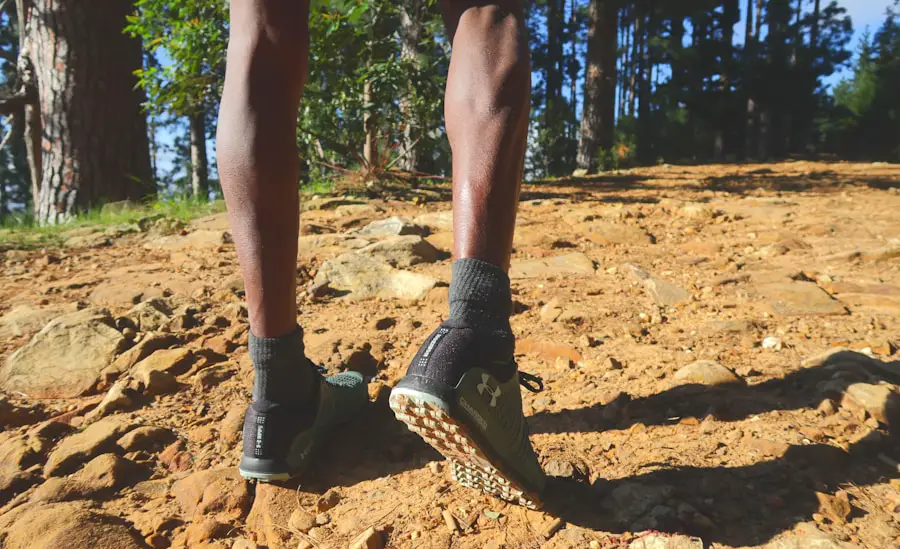
The best compression sock is one that fits correctly, works with your footwear, and does not create new pressure points. More compression is not automatically better.
Choose an Appropriate Compression Level
Compression is measured in millimeters of mercury, or mmHg. Cleveland Clinic lists common ranges as follows:
| 8–15 mmHg | Mild compression |
| 15–20 mmHg | Moderate compression |
| 20–30 mmHg | Firm compression |
| 30–40 mmHg | Extra-firm, medical-grade compression that should be used with professional guidance |
A healthy recreational hiker trying compression primarily for comfort does not automatically need firm medical compression. When compression is being used to manage a diagnosed medical problem, the pressure level should be selected with a healthcare professional rather than by guessing.
Measure Your Legs Instead of Guessing the Size
Compression depends on fit. Follow the manufacturer’s measurement chart, which may ask for ankle circumference, calf circumference, and lower-leg length. Measurements are often easiest to take before significant daily swelling develops.
A correctly fitted sock should feel snug and even. It should not bunch behind the knee, dig sharply into the skin, wrinkle inside the shoe, or cause numbness in the toes.
Check the Fit Inside Your Hiking Shoes
A thick compression sock can change how a hiking shoe or boot fits. Make sure your toes still have room to move and that your heel does not slip. Extra fabric or an overly tight shoe can create pressure and friction even when the compression level itself is appropriate.
Prioritize Moisture Management
Breathability and drying performance are especially important on warm or long hikes. A study of 203 long-distance hikers found that hiking in wet socks was associated with a higher risk of foot blisters. The study did not find that natural versus synthetic fiber content alone determined blister risk. The study is available through PubMed.
Pro Tip: For an all-day hike, carry a dry spare pair. Changing out of a soaked compression sock may do more for blister prevention than focusing on fiber marketing alone.
The Science Behind Compression Socks for Hiking
There is much more research on compression garments in running, sport, recovery, medical care, and long-distance travel than on hiking itself. That distinction matters when interpreting the evidence.
| 2025 running systematic review and meta-analysis | Included 28 trials and 600 runners. Compression socks did not provide meaningful advantages over regular socks for physiological measures, running performance, perceived exertion, or lower-limb soreness during running. |
| 2025 exercise-recovery meta-analysis | Found small beneficial effects on recovery of muscle strength and power after exercise-induced fatigue, suggesting compression may be more useful after exercise than as a direct performance enhancer. |
| 2021 Cochrane long-flight review | Found less asymptomatic DVT and less leg swelling among travelers wearing graduated compression stockings. This evidence concerns prolonged air travel, not active hiking. |
The best current evidence supports compression socks more strongly for circulation, swelling control, and some recovery uses than for making a healthy hiker faster or more enduring on the trail.
The practical takeaway is that compression socks can still be worthwhile without being a performance enhancer. Comfort alone may matter on a long hike. Just keep expectations realistic.
Potential Drawbacks of Compression Socks for Hiking
Compression socks can create problems when the size, pressure, fabric, or footwear combination is wrong. A sock that is too tight may cause pain or sensory changes, while one that is too loose may slide, wrinkle, or provide little useful compression.
Knee-high models may also feel warmer than ordinary hiking socks in hot weather. Moisture buildup can increase friction, so hikers who sweat heavily should prioritize drying performance and consider carrying a spare pair.
Warning: Remove compression socks and seek medical advice if they cause persistent pain, numbness, tingling, skin discoloration, skin damage, or worsening swelling. Talk with a healthcare professional before using compression stockings if you have peripheral artery disease, severe or unexplained swelling, markedly reduced sensation in the legs, open wounds, fragile skin, or a skin infection.
Compression Socks Are Not Treatment for Sudden Leg Symptoms
Do not assume that unusual leg swelling or pain after travel or hiking is ordinary muscle fatigue. Deep vein thrombosis can cause swelling, unexplained pain or tenderness, warmth, and skin discoloration, although some DVTs cause no obvious symptoms.
Chest pain, sudden difficulty breathing, coughing up blood, fainting, or other symptoms that could suggest a pulmonary embolism require urgent medical evaluation.
Tips for Using Compression Socks Effectively While Hiking
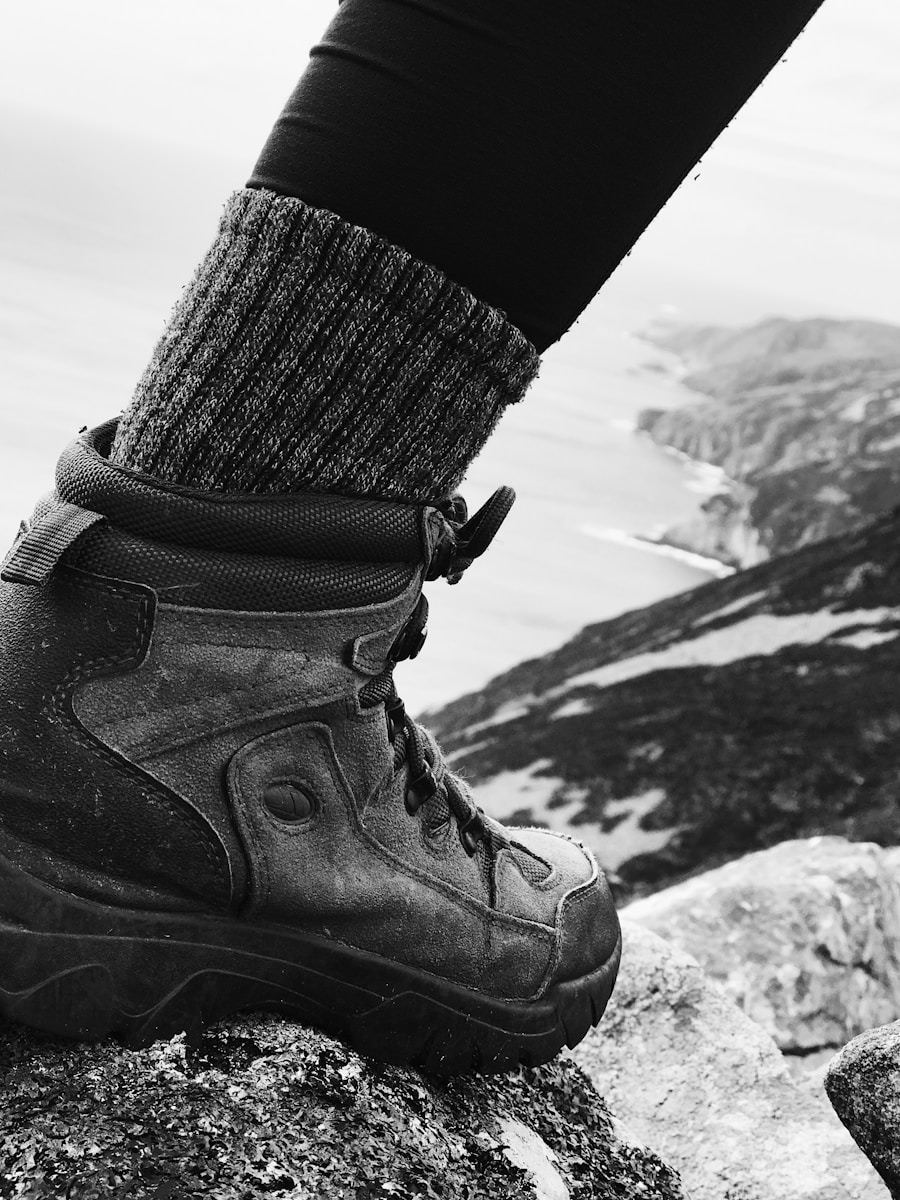
Compression socks work best when they become part of your normal footwear system rather than something you try for the first time at the trailhead.
- Test them on a short walk first. Make sure they stay comfortable after an hour or two before trusting them on an all-day hike.
- Put them on smoothly. Avoid folds, rolled cuffs, or wrinkles that concentrate pressure on one area.
- Check your hiking-shoe fit. Your footwear should not become cramped around the toes or forefoot when the compression socks are on.
- Pay attention to sensation and skin color. Persistent numbness, tingling, pain, or color changes are not signs that the compression is “working harder.”
- Keep your feet as dry as possible. Change into a dry pair if the socks become soaked during a long outing.
- Use post-hike compression only if it feels comfortable. Some hikers prefer wearing compression garments during recovery rather than throughout the hike.
- Do not automatically sleep in them. Unless a healthcare professional has told you otherwise, compression stockings are generally removed before bed.
Real-Life Experiences With Compression Socks for Hiking
Hikers’ experiences vary because the reasons for wearing compression socks vary. Someone whose ankles regularly swell after hours on the trail may notice an obvious comfort difference. Another hiker may notice little or no change compared with a good pair of ordinary technical hiking socks.
Fit is often the deciding factor. A well-fitted compression sock can feel pleasantly supportive, while the wrong size can become distracting within a few miles. Heat, sweat, calf shape, shoe volume, pack weight, and terrain can also change how comfortable a pair feels.
That is why a short local hike is a better test than wearing a brand-new pair on a multi-day backpacking trip. Treat compression socks the same way you would new hiking shoes: test the complete system before relying on it far from the trailhead.
Are Compression Socks Effective for Hiking?
Compression socks can be effective hiking gear when the goal is to control lower-leg swelling, reduce a heavy-leg feeling, or possibly support recovery after demanding exercise. They may also be useful during a long flight or drive before a hike for travelers who have been advised to use them.
They are much less convincing as a direct performance aid. A 2025 systematic review and meta-analysis found no meaningful improvement in physiological responses, running performance, perceived exertion, or soreness during running compared with regular socks.
Compression socks also should not be treated as protective ankle braces. For uneven terrain, appropriate footwear, conditioning, balance, previous-injury rehabilitation, pacing, and careful foot placement remain more important injury-prevention considerations.
For a healthy hiker, the simplest test is practical: choose a properly fitted pair with a sensible pressure level, wear it on a short hike, and compare comfort with your normal hiking socks. Keep using compression if it genuinely makes your legs or feet feel better without creating pressure, heat, numbness, or skin problems.
If your hiking trip begins with several hours on an airplane, train, bus, or car, keep the two situations separate in your mind. Compression during prolonged sitting may address travel-related circulation concerns, while wearing the same socks on the trail is primarily a question of hiking comfort and personal preference.
Frequently Asked Questions
What are compression socks?
Compression socks are elastic garments that apply pressure to the legs. Graduated compression socks apply the greatest pressure near the ankle and progressively less pressure higher up the leg, helping reduce blood pooling and fluid buildup.
Are compression socks good for hiking?
They can be. Some hikers find them useful for lower-leg swelling, heaviness, or post-exercise recovery. However, current research does not show that compression socks reliably improve athletic performance, so comfort and fit are better reasons to wear them than promises of greater speed or endurance.
What compression level is best for hiking?
There is no single pressure that is best for every hiker. Common ranges include mild 8–15 mmHg, moderate 15–20 mmHg, and firm 20–30 mmHg. Higher medical-grade compression should be selected with professional guidance, especially when treating a health condition.
Do compression socks prevent ankle sprains while hiking?
Ordinary compression socks should not be considered ankle braces. Although they may feel supportive, evidence does not establish them as a reliable way to prevent hiking ankle sprains. Hikers with previous ankle injuries may need rehabilitation, balance training, bracing, or professional guidance instead.
How do I know if compression socks are too tight?
They should feel snug but not painful. Remove them if you develop persistent pain, numbness, tingling, skin discoloration, skin damage, or worsening swelling. Also check that the fabric is not rolled, folded, or digging sharply into the skin.
Should I wear compression socks after hiking?
You can if they are comfortable. Research on compression garments suggests that they may provide a small recovery benefit after strenuous exercise. They are not essential, however, and normal recovery habits such as adequate food, fluids, rest, and sleep remain important.
Can I sleep in compression socks after a hike?
Most people using ordinary compression socks for exercise do not need to sleep in them. Unless your healthcare professional has recommended overnight use for a specific reason, remove them before bed.
Sources
- Cleveland Clinic — What You Need To Know About Compression Socks — compression levels, circulation benefits, sizing, contraindications, and warning symptoms.
- Telles GF et al. — Wearing Compression Socks During Running Does Not Change Physiological, Running Performance, and Perceptual Outcomes — 2025 systematic review and meta-analysis of compression socks during running.
- Li X et al. — Effects of Compression Garments on Muscle Strength and Power Recovery Post-Exercise — 2025 systematic review and meta-analysis of post-exercise recovery.
- CDC Yellow Book — Deep Vein Thrombosis and Pulmonary Embolism — travel-related VTE risks, symptoms, and preventive guidance.
- Cochrane — Compression Stockings for Preventing DVT in Airline Passengers — evidence on asymptomatic DVT and leg swelling during long-distance air travel.
- Chicharro-Luna E et al. — The Influence of Sock Composition on the Appearance of Foot Blisters in Hikers — evidence linking wet socks with increased blister risk during long-distance hiking.

