Last Updated on July 30, 2026 by Caleb Warren
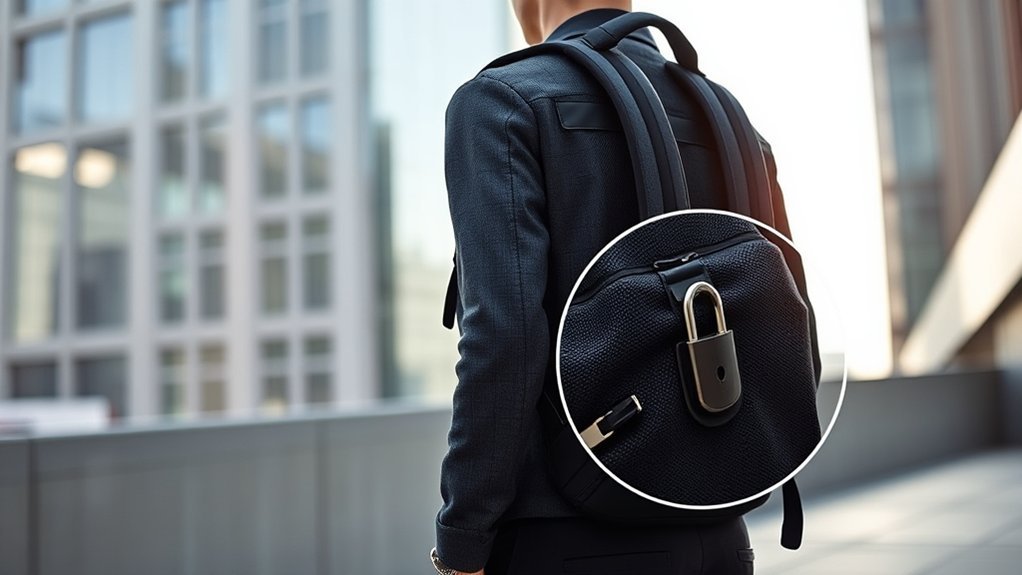
Anti-theft backpacks add barriers that make quick, unnoticed access more difficult. Depending on the model, those barriers may include secured zipper pulls, concealed openings, body-side pockets, reinforced panels, cut-resistant straps, or RFID-blocking compartments. They can be useful for commuters and travelers, but they work best as part of careful carrying habits rather than as a guarantee against theft.
Quick Answer
Anti-theft backpacks can reduce easy access and make opportunistic theft harder, especially in crowds. The most useful features are secure zipper clips, hidden body-side pockets, reinforced panels or straps, and an anchor point. They are not theft-proof, and good carrying habits still matter more than any single feature.
Key Takeaways
- Anti-theft features are designed to delay or discourage quick, opportunistic theft—not stop every determined thief.
- Lockable zipper pulls and hidden body-side pockets usually offer more everyday value than an RFID pocket alone.
- Look for reinforced coverage in the panels and straps; a high fabric denier does not automatically make a bag slash-resistant.
- A security feature only helps when it is easy enough to use every time you enter a crowd or leave the bag beside you.
- Keep the bag closed, in sight, and close to your body, and never place all cash, cards, identification, and backup devices in one compartment.
Disclosure: As an Amazon Associate I earn from qualifying purchases. Some links on this page are affiliate links, at no extra cost to you.
Understanding Anti-Theft Backpacks
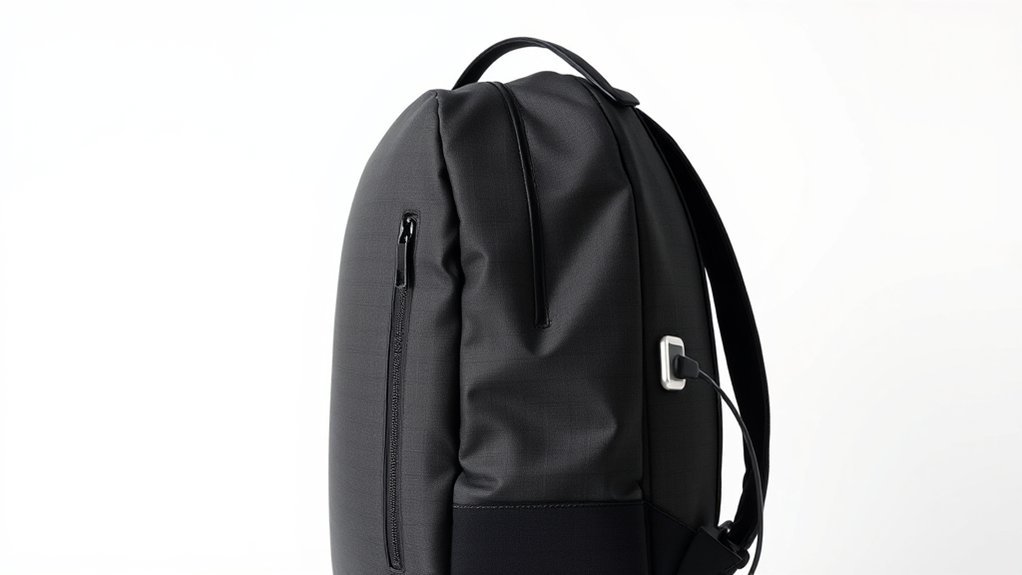
An anti-theft backpack is a bag designed to create more time, effort, or visibility for someone trying to reach its contents. It may conceal the main zipper, connect zipper pulls to a clip, place valuable-item pockets against your back, reinforce vulnerable fabric areas, or let you attach the bag to a fixed object.
These features are most relevant in places where distraction and close contact are common, such as public transportation, airports, festivals, queues, tourist attractions, cafes, and busy shopping areas. Official police guidance warns that even an ordinary zipped bag can be opened gradually by someone walking behind its owner, which is why bag position and awareness remain important. See the Metropolitan Police pickpocket-prevention guidance.
The term anti-theft does not mean theft-proof. A reinforced bag may frustrate a quick zipper-opening or cut-and-run attempt, but it cannot guarantee protection from bag snatching, robbery, prolonged tool use, an unattended-bag theft, or every type of zipper attack.
A good anti-theft backpack adds time, friction, and visibility to an attempted theft. It does not eliminate the need to watch and control the bag.
Key Features of Anti-Theft Backpacks
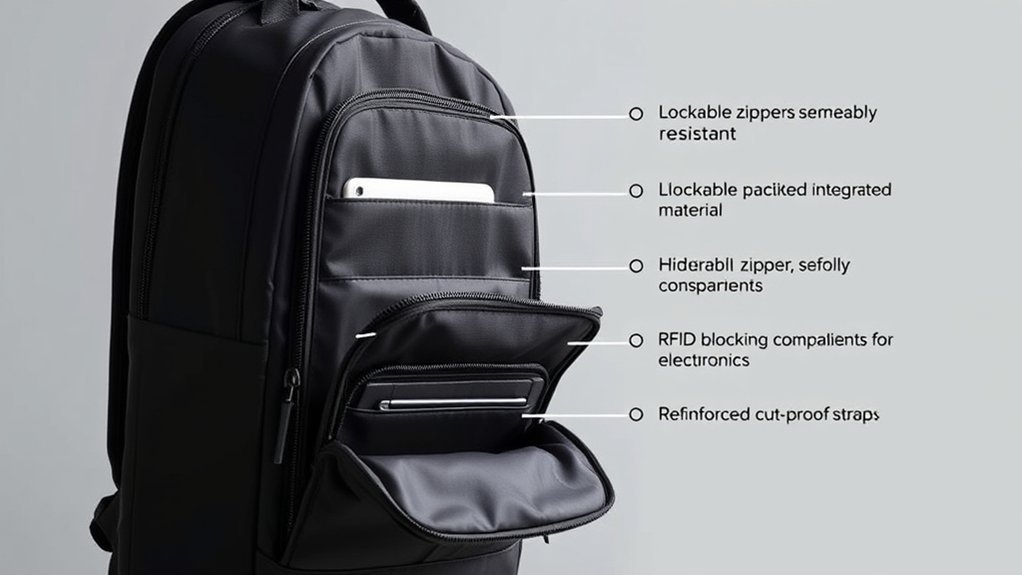
Anti-theft backpacks use different combinations of security features. No single feature is best for everyone, and some low-cost bags use “anti-theft” as a marketing label without reinforcing the areas that are most exposed.
| Feature | What It Helps Deter | Important Limitation |
|---|---|---|
| Lockable zipper pulls | Fast, unnoticed opening of the main compartment | Must be secured correctly and may slow your own access |
| Concealed or body-side zipper | Direct access while the bag is worn | May be inconvenient when the bag is packed tightly |
| Hidden body-side pocket | Quick access to a wallet, passport, or phone | The item may still be lost if the whole bag is taken |
| Reinforced panels or straps | Some cutting and strap-slashing attempts | Protection depends on materials, construction, and coverage |
| Anchor strap or locking cable | Quick removal of the entire bag from a chair or luggage rack | Should never be relied on for unattended storage |
| RFID-blocking pocket | Some unwanted radio-frequency communication | Does not prevent physical theft or every form of payment fraud |
Manufacturer designs illustrate how varied these systems can be. Some use embedded stainless-steel mesh, reinforced straps, locking clips, zipper tabs, or self-locking zipper pulls. These are examples of construction methods, not proof that every product advertised as anti-theft provides the same coverage. See Pacsafe’s anti-theft technology overview for examples.
Locking Zippers: An Essential Security Measure
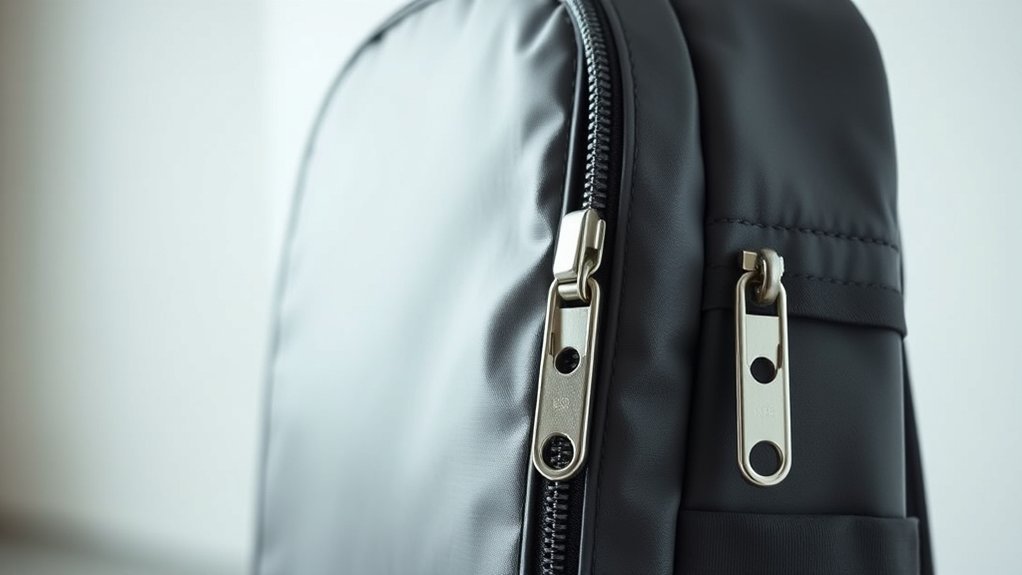
Lockable zippers are among the most practical anti-theft features because they make it harder to open a compartment in one quick movement. Designs vary. Some zipper pulls hook into a clip, some slide beneath a fabric tab, some interlock, and others accept a small padlock. A limited number of models use a self-locking mechanism.
| Zipper System | Benefit | Best Use |
|---|---|---|
| Clip or hook | Fast to secure without carrying a separate lock | Daily commuting and sightseeing |
| Interlocking pulls | Keeps both pulls together and may accept a padlock | Travel and longer transit journeys |
| Covered or concealed pulls | Makes the opening point less obvious | Crowds and public transportation |
| Small padlock | Adds a separate opening step | Long journeys or compartments opened less often |
Before buying, operate the lock several times with one hand. If the mechanism is frustrating, stiff, or slow, you may stop using it. Also inspect the zipper track and surrounding fabric. Securing the pulls does not prevent every zipper-puncture or destructive attack.
Pro Tip: Place items you need often, such as a transit card or water bottle, in a low-value quick-access area. Keep your passport, wallet, backup card, and primary electronics in the secured compartment so you do not repeatedly leave it unlocked.
TSA-Recognized Locks and Backpacks
A TSA-recognized lock is designed so baggage screeners can open and relock checked luggage during an inspection. The designation does not mean that the lock is stronger than every other lock, and it is not a special theft-resistance certification for a backpack worn in public.
The TSA travel checklist advises travelers who buy a checked-baggage lock to look for a TSA-recognized model. For a daily backpack or carry-on that remains with you, ease of use, zipper construction, and how the pulls attach usually matter more than the TSA symbol.
RFID-Blocking Compartments for Digital Safety
RFID-blocking compartments contain conductive material intended to weaken or block radio-frequency communication with compatible cards or documents. Shielding is a recognized security technique; the National Institute of Standards and Technology’s RFID security guidance discusses conductive screens and films as possible controls against unauthorized reading.
The card or document should be placed fully inside the designated pocket. Direct contact with the lining is not the key requirement. Effectiveness depends on whether the pocket covers the item, blocks the relevant frequency range, and remains free of large gaps, damaged seams, or worn shielding material.
RFID protection should also be kept in perspective. Modern contactless payment systems include transaction security controls. For example, Visa states that each contactless transaction uses a one-time code. An RFID pocket may provide an added privacy barrier, but it does not replace account alerts, card controls, strong phone security, or prompt reporting of a lost card.
Travel documents also differ. The U.S. Department of State’s document-security information explains that the wallet-size U.S. passport card uses RFID for compatible border lanes. Check which cards and documents you actually carry before treating an RFID compartment as essential.
Note: A phone-based test may show whether a particular NFC card can be read through the pocket, but it does not verify every RFID frequency or document type. Treat it as a basic check rather than laboratory proof of complete shielding.
The Importance of Slash-Resistant Materials
Slash-resistant construction is intended to slow cutting attacks against the body or straps of a bag. Depending on the product, manufacturers may use embedded metal mesh, reinforced fibers, internal cables, layered panels, or cut-resistant strap components.
Use the term slash-resistant, not slash-proof. Any material may eventually fail under enough force, time, wear, or tool use. The practical goal is to make a fast cut-and-run attempt more difficult.
Enhancing Safety Against Theft
Reinforcement is most useful when it covers areas a thief could reach while the bag is worn or placed beside you. Check the front, sides, base, and straps rather than assuming one small reinforced panel protects the entire backpack.
Reinforced straps may help against a quick strap-cutting attempt. However, they do not prevent someone from grabbing the bag, forcing you to remove it, or taking it after it has been left unattended.
Material Durability and Longevity
Fabric denier can help describe the mass of the yarn used in a textile, but a higher denier does not by itself prove that a backpack resists knives or razors. Weave, fiber type, layers, backing, seam construction, and reinforcement coverage all affect performance.
Inspect the bag periodically for broken internal wires, exposed reinforcement, split seams, worn straps, damaged zipper tape, and delaminating coatings. Follow the manufacturer’s cleaning instructions because harsh bleach, high heat, and aggressive scrubbing may damage coatings or specialized fibers.
Design Integration in Backpacks
Good security design should be integrated without making the backpack unpleasant to carry. Reinforcement can add weight and stiffness, while complicated locks can slow normal access. A balanced backpack combines security with padded shoulder straps, a stable back panel, sensible organization, and a size that fits the wearer.
Look for clear manufacturer descriptions showing which panels and straps are reinforced. Vague phrases such as “military grade,” “indestructible,” or “slash-proof” are less useful than a specific explanation of materials, construction, coverage, warranty, and testing.
Warning: Do not physically resist an armed robber or hold onto a bag when doing so could cause injury. Anti-theft features protect property only; your personal safety takes priority.
Hidden Pockets: Concealing Valuables
Hidden pockets keep important items away from obvious exterior openings. The most useful designs sit against your back or underneath a strap, making them harder to reach while the backpack is being worn correctly.
Importance of Concealment
Concealment helps because opportunistic thieves often seek items that can be reached quickly. A body-side pocket can hold a passport, wallet, room key, or backup payment card without advertising its location.
A hidden pocket is not a substitute for separating valuables. Avoid storing your passport, all payment cards, all cash, and your only phone in the same compartment. Losing the entire backpack would remove every backup at once.
Strategic Pocket Placement
| Pocket Position | Suitable Contents | Caution |
|---|---|---|
| Body-side back panel | Passport, wallet, backup card | May be uncomfortable if overfilled |
| Shoulder strap pocket | Transit card or small amount of cash | Check that the closure cannot open while walking |
| Interior zipped pocket | Keys, medication, small electronics | Only useful if the main compartment is secured |
| Exterior quick-access pocket | Tissues, snacks, maps, cables | Avoid placing a phone, wallet, or passport here |
Enhancing Security Measures
Hidden pockets work best when combined with other layers. Close the pocket, secure the main compartment, keep the bag on your body or between your feet, and place the opening toward you when seated. In a dense crowd, moving the backpack to your front can improve visibility and control.
Do not leave a backpack hanging from the back of a chair. Police guidance recommends keeping belongings close and in sight because a thief may take the entire bag rather than attempting to open it. When available, an integrated anchor strap can add a temporary barrier around a chair leg or fixed rail, but the bag should still remain supervised.
Effectiveness of Anti-Theft Features
There is no reliable evidence that every anti-theft backpack reduces theft by a fixed percentage. Effectiveness depends on the type of threat, the quality of the bag, whether all vulnerable areas are protected, and how consistently the owner uses the security features.
Anti-theft features are most likely to help with fast, low-effort attempts such as:
- Opening an exposed zipper while the wearer is distracted
- Reaching into an obvious exterior pocket
- Cutting an ordinary strap or thin outer panel quickly
- Lifting an unsecured bag from a chair or luggage rack
- Scanning a compatible RFID item that is properly enclosed in an effective shielded pocket
They are less reliable against:
- Theft of an unattended backpack
- Robbery involving threats or force
- A determined attack with time and tools
- Damage to an unreinforced zipper track, seam, base, or strap
- Loss caused by forgetting the bag
- Online fraud, account takeover, phishing, or theft of card details from another source
The bag should therefore be viewed as one layer in a broader routine: carry fewer valuables, separate backups, use device locks, enable card and account alerts, keep copies of important travel information, and maintain control of the backpack.
Comparing Anti-Theft Backpacks to Regular Backpacks
| Consideration | Regular Backpack | Anti-Theft Backpack |
|---|---|---|
| Zipper access | Usually exposed and easy to open | May use clips, tabs, interlocking pulls, or concealed openings |
| Valuable-item storage | Often includes standard front or interior pockets | More likely to include body-side or concealed pockets |
| Cut resistance | Depends on ordinary fabric construction | Some models reinforce panels or straps |
| Weight and stiffness | May be lighter and more flexible | Reinforcement and locking hardware may add weight |
| Convenience | Fast access | Security mechanisms can slow access |
| Price | Wide range | May cost more when specialized materials and hardware are included |
A regular backpack can still be used safely when it has sturdy zippers, sensible pocket placement, and a careful owner. An anti-theft model becomes more useful when you regularly carry expensive electronics or important documents through crowded locations and will consistently use its security mechanisms.
How to Use an Anti-Theft Backpack Correctly
- Place high-value items deep inside. Keep wallets, passports, phones, and primary electronics away from exposed exterior pockets.
- Secure the main zipper. Attach the pulls to the built-in clip, tab, or lock before entering a crowd.
- Wear the bag close to your body. Adjust loose straps so the backpack does not swing or leave large gaps.
- Move it to the front in dense crowds. This gives you better control and visibility on packed trains, buses, escalators, and queues.
- Keep the opening toward you when seated. Place the bag between your feet or on your lap rather than behind a chair.
- Use an anchor only as a temporary barrier. Secure the bag to a suitable fixed object while it remains within sight.
- Separate backups. Keep a backup payment method and emergency information somewhere other than the main backpack.
- Check the locks before moving. Confirm that clips are engaged and zippers are fully closed after every stop.
How to Choose an Anti-Theft Backpack
Check the Security Coverage
Find out exactly which panels and straps are reinforced. A bag with one cut-resistant strap is not the same as a model with reinforced straps, front, sides, and base. Product descriptions should explain the construction instead of relying only on broad marketing terms.
Test the Zipper System
Open and secure the main compartment several times. The system should be difficult for a stranger to operate unnoticed but simple enough for you to use throughout the day. Inspect the zipper track, pull tabs, stitching, and any plastic or metal clips.
Match the Size to Your Load
Measure your laptop or tablet rather than relying only on the advertised screen size. Check the compartment’s internal dimensions and confirm that the device does not press against the zipper. The backpack should hold your normal load without bulging, which can stress seams and make zippers harder to secure.
Consider Comfort and Weight
Reinforcement can make a backpack heavier. Look for padded adjustable straps, a stable back panel, breathable padding, and a shape that keeps the load close to your back. A secure bag that causes pain or is too heavy for daily use is not a practical choice.
Check Weather Protection
Water resistance and anti-theft construction are separate qualities. Read the product specifications for coated fabric, protected zippers, seam construction, and any tested water-resistance rating. Use an internal waterproof sleeve or dry bag for electronics when heavy rain is possible.
Review Repairs and Warranty
Check whether the manufacturer covers zipper hardware, lock components, straps, and reinforced materials. Also consider whether replacement zipper pulls, buckles, or lock parts are available. Specialized hardware can be harder to repair than a standard zipper.
Who Should Invest in an Anti-Theft Backpack?
An anti-theft backpack may be worthwhile for:
- Public-transport commuters who regularly stand in dense crowds
- Travelers carrying passports, phones, cameras, or other important items
- Students transporting laptops and tablets across busy campuses
- Urban workers who move through stations, sidewalks, cafes, and shared offices
- Festival and event visitors who expect close contact and frequent distractions
- Hostel guests who want lockable compartments in addition to using an appropriate locker
A standard backpack may be enough when you carry few valuables, spend little time in crowded places, and can keep the bag under direct control. The better choice is the one whose security features, weight, organization, comfort, and price match your actual routine.
What to Do if Your Belongings Are Stolen
- Move to a safe location. Do not chase or confront a thief.
- Contact local police. Request a report number if you need documentation for insurance or replacement documents.
- Lock or erase your phone. Use the device maker’s lost-device service and contact your carrier.
- Freeze payment cards. Use your bank’s app or emergency phone number and review recent transactions.
- Change exposed passwords. Prioritize email, banking, cloud storage, and accounts that can reset other passwords.
- Report a stolen passport. Contact the issuing authority and the nearest embassy or consulate when abroad.
- Notify your insurer. Keep receipts, serial numbers, photographs, and the police report where required.
Frequently Asked Questions
Can anti-theft backpacks be stylish and functional at the same time?
Yes. Security features can be integrated into business, casual, minimalist, and outdoor designs. Check the bag’s lock operation, pocket layout, comfort, and reinforcement coverage rather than choosing only by appearance.
How do I choose the right size for my anti-theft backpack?
List what you carry on a normal day and measure your largest device. Compare those measurements with the backpack’s internal dimensions. Choose enough room to close the zippers without forcing them, but avoid a bag so large that your belongings shift or the load becomes uncomfortable.
Are anti-theft backpacks waterproof or water-resistant?
Not automatically. Anti-theft describes security features, while waterproofing describes protection from water. Many models are water-resistant, but seams and zippers may still admit water. Check the manufacturer’s rating and use an internal waterproof sleeve for sensitive electronics.
What materials are commonly used in anti-theft backpacks?
Common outer materials include polyester and nylon. Some security-focused models add metal mesh, reinforced fibers, internal cables, layered panels, or cut-resistant strap components. Material names alone do not prove performance, so check which areas are reinforced and how the manufacturer describes their construction.
How do I maintain my anti-theft backpack for longevity?
Empty the bag, follow its care label, and clean it with the method approved by the manufacturer. Avoid bleach and high heat unless specifically allowed. Inspect zipper tracks, clips, lock parts, seams, straps, coatings, and internal reinforcement regularly. Stop using damaged security hardware until it is repaired.
Are anti-theft backpacks completely theft-proof?
No. They can delay or discourage certain quick theft attempts, but they cannot guarantee protection from robbery, bag snatching, an unattended-bag theft, or a determined attack with enough time and tools.
Do I need an RFID-blocking compartment?
It can provide an extra privacy layer for compatible cards or documents, but it is not essential for every user. Physical access controls, careful carrying habits, card alerts, and prompt reporting of lost items usually address a wider range of common risks.
Does a TSA-recognized lock make a backpack more secure?
Not necessarily. TSA recognition means authorized baggage screeners can open and relock the lock during checked-luggage inspection. It does not guarantee that the lock is stronger than other designs. For a daily backpack, focus on secure zipper attachment, construction quality, and ease of use.
Conclusion
An anti-theft backpack can be a worthwhile upgrade when you regularly carry valuable items through crowded or unfamiliar places. Lockable zipper pulls, concealed pockets, reinforced panels, secure straps, and anchor points can make fast opportunistic theft more difficult.
The strongest design is still only one layer of protection. Keep the bag closed, close to your body, and within sight; separate backup cards and information; and avoid carrying more valuables than necessary. Choose a backpack whose security features are clearly described, comfortable to use, and simple enough that you will secure them every time.
Sources
- Metropolitan Police — Pickpocketing Prevention — supports guidance on zipped bags, awareness, and keeping belongings in sight.
- Transportation Security Administration — Travel Checklist — supports the explanation of TSA-recognized checked-baggage locks.
- NIST SP 800-98 — Guidelines for Securing RFID Systems — supports the explanation of conductive RFID shielding and its limitations.
- Visa — Contactless Payment Security — supports the statement that contactless transactions use a one-time code.
- U.S. Department of State — Design and Security of Travel Documents — supports current information about RFID use in U.S. passport cards.
- Pacsafe — Anti-Theft Technology — provides manufacturer examples of locking clips, reinforced panels, straps, and RFID-blocking materials.