
Last Updated on September 11, 2026 by Daniel Globe
A portable door lock can add a temporary inside barrier when you stay in a hotel, rental, apartment, or dorm. The HNHMT set combines an inward-opening-door lock with a separate, battery-powered door stop alarm. It is compact and tool-free, but correct fit, quick emergency removal, and realistic expectations matter more than marketing claims.
Quick Answer
The HNHMT portable door lock set is worth considering as a low-cost, temporary security layer for compatible inward-opening doors. The lock needs room at the latch-side seam, while the alarm needs a suitable gap under the door and one 9-volt battery. Neither device replaces a strong permanent lock or an emergency plan.
Key Takeaways
- The portable lock works only from inside on compatible doors that open inward.
- The lock and alarm have different gap requirements, so test each device separately.
- The alarm is manufacturer-rated at 120 dB, has three sensitivity settings, and requires one 9-volt battery that is not included.
- Use the set as supplemental protection, not as a certified forced-entry device or a replacement for a deadbolt.
- Practice releasing the lock quickly and never use it in a way that could block evacuation or needed emergency access.
At a Glance
| Time Required | About 2–5 minutes for the first fit check; seconds after you know the door is compatible |
| Difficulty | Easy, but the door and frame must fit correctly |
| Tools Needed | No installation tools; one 9-volt battery is needed for the alarm and is not included |
| Cost | About $9–$11 for the set when checked July 28, 2026; seller prices can change |
Disclosure: As an Amazon Associate I earn from qualifying purchases. Some links on this page are affiliate links, at no extra cost to you.
What Is a Portable Door Lock?
A portable door lock is a removable device that you install from inside a room. A common latch-style model places a metal plate in the door’s strike opening before the door closes. An attached handle or locking body then limits how far the door can move inward.
Because the device uses the existing strike area, it does not require drilling or permanent hardware. That makes it useful for travel, short-term rentals, dorm rooms, and bedrooms where you cannot alter the door.
It is still an extra barrier, not a complete security system. Its performance depends on the door, frame, strike plate, latch opening, installation, and the strength of the device itself. The HNHMT listing does not provide an independent forced-entry rating or ANSI/BHMA security grade.
Note: “Portable” does not mean “universal.” Many hotel and apartment doors have tight seams, unusual strike plates, automatic closers, weather seals, or outward-opening designs that prevent this type of lock from fitting.
Why a Portable Door Lock Adds Security
A portable lock can create another obstacle after the built-in latch is closed. This may delay someone who has a key, bypasses the normal latch, or tries to push the door inward. The separate alarm can add noise if pressure is applied to the door.
| Benefit | What It Can Do | Important Limit |
|---|---|---|
| Extra resistance | Adds an inside barrier at the latch area | No independent force rating is supplied |
| Portable design | Fits in a small travel bag or backpack | It works only while you are inside the room |
| Fast installation | Requires no screws, drilling, or permanent changes | Poor fit can stop the door from closing or make the lock unstable |
| Audible alert | The separate wedge alarm can sound when the door presses it | It needs a battery, suitable floor grip, and the correct bottom gap |
The strongest approach is layered security: use the property’s latch and deadbolt, inspect the room, keep a phone nearby, know the exit route, and use a portable device only when it fits and can be released immediately.
How the HNHMT Portable Door Lock Works
The HNHMT set contains two separate devices: a latch-side portable lock and a wedge-shaped door stop alarm. They do not connect to each other, and each has its own fit requirements.
Locking Mechanism
The lock’s stainless-steel plate goes into the strike opening on the door frame. After the door closes, the red locking body attaches to the plate from inside the room. The body rests against the door and limits inward movement.
The seller lists two locking openings—approximately 0.78 inch and 1.18 inches—to accommodate different strike-plate and screw arrangements. These measurements describe the lock’s openings, not the required thickness of the door.
| Part | Purpose | Check Before Use |
|---|---|---|
| Metal plate | Hooks into the strike opening | Must sit flat without bending or blocking the latch |
| Locking body | Braces the closed door from inside | Must engage fully and remain easy to release |
| Door and frame | Provide the structure that supports the barrier | Avoid damaged, loose, badly misaligned, or unusually flexible frames |
Quick Setup
Installation can take seconds after you have confirmed compatibility. Open the inward-swinging door, place the metal plate in the strike opening, close the door without forcing it, and connect the locking body from inside.
Do not assume that a lock fitting one hotel door means it will fit the next. Strike plates, seals, frame shapes, and latch clearances vary from room to room.
Will It Fit Your Door?
The first question is not the door’s thickness. It is whether the door opens inward and has a compatible latch-side strike opening. The current HNHMT listing says the door seam must be more than approximately 3.1 mm wide for the lock’s metal plate.
The alarm has a separate requirement: the gap between the bottom of the door and the floor should be approximately 0.2 to 1.38 inches. A gap outside that range may prevent the wedge from engaging correctly.
Door Gap Requirements
Check both areas before relying on the set:
- Latch-side seam: Look at the space between the door edge and frame near the latch. The seller specifies more than about 3.1 mm for the lock plate.
- Strike opening: Confirm that the metal plate can sit in the opening without covering the latch path or bending.
- Bottom gap: For the alarm, measure the floor-to-door gap. The seller specifies about 0.2 to 1.38 inches.
- Floor surface: Confirm that the alarm’s non-slip base grips the floor instead of sliding away.
- Door movement: Make sure weather seals, carpet, swelling, and automatic closers do not change the fit.
The listing does not provide a verified 1.3-to-2.2-inch door-thickness requirement for this set, so that measurement should not be used as a buying rule.
Inward-Opening Door Fit
The HNHMT lock is intended only for a hinged door that swings inward toward the person installing it. According to the current listing, it is not suitable for:
- Outward-opening doors
- Double doors
- Folding doors
- Sliding doors
- Rolling gates
- Doors without a compatible strike opening
Warning: Never force the door closed around the metal plate. Forcing it can damage the door, frame, latch, weather seal, or device. Stop if the door binds, will not latch normally, or requires unusual pressure.
Portable Door Lock Features That Matter Most
Compatibility and safe release matter more than bold security language. Use this checklist when comparing the HNHMT set with other portable door locks:
- Correct door fit: The plate should sit flat in the strike area and allow the door to close normally.
- Simple release: You should be able to remove the device quickly with one hand, including in low light.
- Solid construction: Stainless steel can resist corrosion, but material alone does not prove forced-entry performance.
- Protected contact points: Smooth covers can reduce scratching and make the device easier to handle.
- Realistic size and weight: The current HNHMT listing reports 5.12 × 1.65 × 0.5 inches and an item weight of 8 ounces for the two-piece listing.
- Alarm controls: The alarm should have an accessible on/off switch and sensitivity setting.
- Battery availability: Confirm the required battery type and carry a tested spare if the alarm is important to you.
- Current return terms: Check the seller, return window, and recent fit-related reviews before ordering.
What the HNHMT Set Includes
The current HNHMT Amazon listing describes a two-piece kit:
| Listing Detail | Verified Listing Information |
|---|---|
| Package contents | One portable door lock and one door stop alarm |
| Material | Stainless steel with a plastic-covered locking body |
| Listing dimensions | 5.12 × 1.65 × 0.5 inches |
| Listing weight | 8 ounces |
| Alarm rating | Manufacturer-rated at 120 dB with low, medium, and high sensitivity settings |
| Alarm battery | One 9-volt battery required; not included |
| Lock compatibility | Compatible inward-opening door with more than approximately 3.1 mm of latch-side seam clearance |
| Alarm compatibility | Approximately 0.2–1.38 inches of space between the door bottom and floor |
These are seller and marketplace specifications, not independent laboratory results. Product details can also change, so compare the delivered item with the current listing before use.
How to Set Up the Portable Door Lock Fast
Do the first installation while you are calm and the room is well lit. A proper test takes longer than the seller’s “seconds” claim, but it helps you confirm that the device fits, releases, and does not damage the door.
Quick Setup Steps
- Inspect the door: Confirm that it opens inward and that the frame, latch, and strike plate appear secure and undamaged.
- Open the door: Choose the smaller or larger lock opening that best matches the strike setup.
- Place the plate: Insert the metal plate into the strike opening without forcing or bending it.
- Close the door slowly: Make sure the door closes and latches normally around the plate.
- Attach the locking body: Connect it to the metal plate from inside and press it into its locked position.
- Check stability: Apply only light hand pressure to the door. Stop if the lock shifts sharply, the door flexes, or the frame moves.
- Practice removal: Release and remove the lock several times before relying on it overnight.
Pro Tip: Test the lock in daylight, then repeat the release motion with the room lights off. Keep luggage, shoes, and charging cables away from the door so you have a clear exit path.
Fast Emergency Removal
To leave, release the red locking body, pull it away from the metal plate, and open the door normally. The exact hand motion can feel different depending on door pressure, frame alignment, and how tightly the device is seated.
Do not wait for an emergency to learn the motion. Practice until you can remove the lock without searching for instructions. Anyone else staying in the room should also know how it works.
Warning: A portable lock can delay hotel staff, a companion, or emergency responders who need to enter from outside. Use it only when you can release it immediately from inside. Do not use it if property rules prohibit it, if another person may need authorized access, or if it could interfere with evacuation or emergency assistance.
How to Set Up the Door Stop Alarm
- Install a fresh 9-volt battery. The battery is not included with the current listing.
- Use the test switch or briefly press the plate to confirm that the alarm sounds before placing it near your ears.
- Choose low, medium, or high sensitivity. Start with medium and adjust if normal vibration causes false alarms.
- Place the thin end of the wedge under the closed door from inside the room.
- Confirm that the door bottom is approximately 0.2 to 1.38 inches above the floor.
- Make sure the non-slip base grips the floor and that pressure from the opening door will contact the alarm plate.
- Turn the alarm on and perform a gentle test from inside.
When switched off, the alarm can serve as an ordinary door wedge. Do not leave it positioned where it creates a trip hazard or blocks your exit.
Portable Door Lock Troubleshooting
| Problem | Likely Cause | What to Do |
|---|---|---|
| Door will not close | Seam is too tight, plate is misaligned, or the strike opening is incompatible | Remove the device. Do not force the door or bend the plate. |
| Locking body will not attach | Wrong opening selected or plate is not seated fully | Reopen the door and try the other opening. Stop if neither fits naturally. |
| Lock feels loose | Large clearance, unusual frame shape, damaged strike plate, or poor engagement | Do not rely on it. Use the built-in lock and another compatible security method. |
| Lock is hard to remove | Door pressure is loading the device or the frame is misaligned | Relieve gentle pressure on the door while releasing it. Discontinue use if removal is not immediate and dependable. |
| Alarm does not sound | Dead battery, reversed battery, power switch off, or poor contact | Check battery orientation, install a fresh 9-volt battery, and test the plate again. |
| Alarm slides across the floor | Smooth floor, dust, incorrect angle, or too much bottom clearance | Clean and dry the base and floor. If it still slides, do not rely on the alarm as a barrier. |
| Frequent false alarms | Sensitivity is too high or the door vibrates in its frame | Reduce sensitivity and reposition the wedge while keeping the exit clear. |
Portable Door Lock vs. Door Stop Alarm
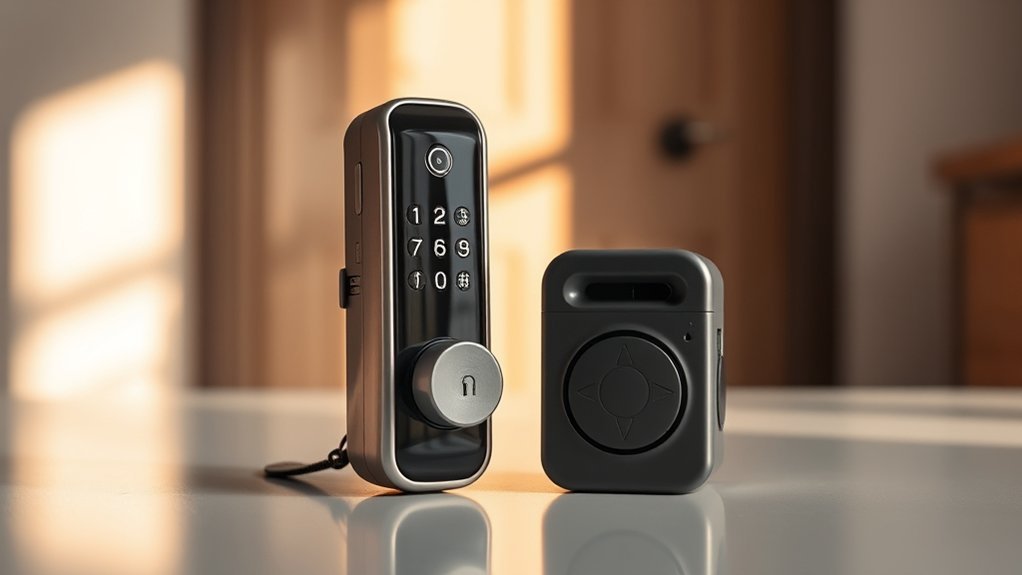
The portable lock and door stop alarm solve different problems. The lock creates a physical obstruction at the latch side. The alarm provides a loud warning and limited wedge resistance at the floor.
| Option | Main Function | Best Fit | Main Limitation |
|---|---|---|---|
| HNHMT portable lock | Adds a latch-side physical barrier | Compatible inward-opening door with suitable strike clearance | No alarm and no verified forced-entry rating |
| HNHMT door stop alarm | Sounds a manufacturer-rated 120 dB alert and acts as a wedge | Door with a 0.2–1.38-inch bottom gap and a gripping floor | Requires a 9-volt battery and can slide on unsuitable flooring |
| Security bar | Braces the door between the floor and knob or handle | Rooms with enough floor space and a compatible handle | Bulkier for travel and still dependent on floor grip |
| Permanent deadbolt | Provides everyday exterior-door security | Owned homes or approved permanent installations | Requires installation and is not portable |
Using the lock and alarm together can provide both resistance and noise when both fit correctly. However, two devices also mean two release actions and a greater chance of obstructing the doorway. Keep emergency exit speed as the priority.
When to Use a Portable Door Lock
A portable lock may be useful when you are inside a compatible room and want another temporary layer beyond the existing latch. Common situations include:
- A hotel or motel room with an inward-opening hinged door
- A short-term rental where permanent hardware changes are not allowed
- A private bedroom in shared housing
- A dorm room with a compatible strike plate and no policy against supplemental devices
- An apartment bedroom or interior room where authorized occupants do not need outside access
Before installing it, inspect the existing lock, locate the nearest exit, keep your phone accessible, and follow the property’s safety and occupancy rules.
When Not to Use a Portable Door Lock
Do not use this lock on an incompatible door or in any situation where it could create more risk than benefit. Avoid it when:
- The door opens outward, slides, folds, rolls, or lacks a compatible strike opening.
- The door or frame is damaged, loose, badly aligned, or difficult to open normally.
- The device makes emergency removal slow or uncertain.
- A child, roommate, caregiver, hotel employee, or companion may need authorized access from outside.
- The room is being used by someone who may not understand or physically operate the release.
- The property prohibits supplemental locks or the device conflicts with local fire or building rules.
- The door is a marked fire exit, shared exit, or any door that must remain readily openable.
NFPA egress guidance emphasizes that occupied-space doors should remain readily openable from the egress side. A portable device should therefore be simple to release and should never become an obstacle during evacuation.
What Buyers Say About HNHMT’s Lock
Marketplace reviews can help identify recurring fit and quality issues, but they are not a safety certification. Door geometry varies so much that one buyer’s easy installation may not predict how the lock will work on your door.
The current Amazon listing highlights portability, stainless-steel construction, tool-free setup, a manufacturer-rated 120 dB alarm, and three alarm sensitivity levels. The seller also states that it aims to respond to customers within 24 hours, but that service statement has not been independently verified.
For balance, Amazon currently marks the listing as a “Frequently returned item.” The warning does not explain each return, so examine the newest reviews for repeated comments about door fit, lock release, alarm reliability, missing batteries, finish quality, and differences between the listing and delivered product.
Note: A high star rating measures buyer satisfaction, not resistance to forced entry. Look for specific descriptions, photos, door types, verified-purchase labels, and recent review dates.
Is the HNHMT Portable Door Lock Worth Buying?
The HNHMT set can be worth buying when you want an inexpensive lock-and-alarm combination, understand the fit limits, and are willing to test it before travel. It is less suitable if you need a certified high-security device, own doors that open outward or slide, or want a product that works without a separate alarm battery.
| Decision Factor | HNHMT Set | Verdict |
|---|---|---|
| Portability | Listing reports an 8-ounce, two-piece set | Good for a backpack or suitcase |
| Installation | No drilling or tools | Easy only after compatibility is confirmed |
| Protection type | Physical latch-side barrier plus audible wedge alarm | Useful as supplemental protection, not a security guarantee |
| Door coverage | Inward-opening hinged doors only for the lock | Limited compared with universal marketing language |
| Alarm readiness | Requires a separately purchased 9-volt battery | Plan for the added battery cost and testing |
| Purchase risk | Amazon return eligibility may apply, but the listing is currently marked frequently returned | Confirm current seller and return terms before buying |
Bottom line: Buy it for portable, low-cost, inside-the-room supplemental security—not because you expect universal fit or certified forced-entry protection. Test both devices at home, pack a working battery, and return the set if the lock does not engage and release cleanly.
Frequently Asked Questions
What is the best portable door lock?
There is no single best model for every door. The best portable lock is one that fits your specific strike plate, closes without force, releases immediately from inside, uses sturdy materials, and has clear return terms. A portable lock with an independent test rating would provide stronger evidence than material or marketing claims alone.
How does a portable travel door lock work?
A metal plate sits in the door frame’s strike opening before an inward-opening door closes. A removable locking body then attaches from inside and limits the door’s inward movement. It works only while someone is inside and only when the strike area has the correct shape and clearance.
What locks do police recommend for exterior doors?
Recommendations vary by agency, but official crime-prevention guidance commonly favors a solid exterior door, a quality deadbolt with about a one-inch throw, and a reinforced strike plate secured with long screws. For example, King County Sheriff guidance recommends quality Grade 1 or Grade 2 locks, a one-inch deadbolt throw, and three-inch strike-plate screws. A portable travel lock is not a substitute for that permanent hardware.
Is a portable door lock TSA approved?
“TSA approved” is not normally the right term for a portable room lock. TSA guidance says locks may be transported in carry-on and checked baggage, but the final decision at the checkpoint rests with the TSA officer. Check the current TSA item guidance and your airline before travel.
Does the HNHMT lock fit outward-opening or sliding doors?
No. The current HNHMT listing says the lock is not suitable for outward-opening, double, folding, sliding, or rolling doors. It needs a compatible inward-opening hinged door and suitable clearance at the latch-side strike opening.
Does the HNHMT door alarm include a battery?
No. The current product listing says the alarm requires one 9-volt battery and that the battery is not included. Install and test the battery before travel, and replace it if the alarm sounds weak or inconsistent.
Can I use a portable door lock in a hotel or rental?
It may fit some hotel and rental doors, but permission and safety rules vary. Check the property’s policy, make sure the device does not damage the door, and never use it in a way that blocks evacuation or necessary emergency access. Remove it whenever you leave the room.
Conclusion
The HNHMT portable door lock and alarm set offers two compact forms of supplemental protection: a latch-side barrier and a battery-powered audible wedge. Its value depends on fit. Confirm an inward-opening door, test the strike opening, check the alarm’s bottom-gap range, install a fresh 9-volt battery, and rehearse removal before relying on either device.
It can be a practical travel accessory, but it is not universal, independently force-rated, or a replacement for a strong permanent lock. Keep the exit clear, follow property rules, and choose quick emergency egress over any extra security device that is difficult to remove.
Sources
- HNHMT Portable Door Lock and Door Stop Alarm Amazon Listing — package contents, dimensions, weight, door compatibility, alarm rating, sensitivity settings, gap range, and battery requirement
- Transportation Security Administration: Miscellaneous Items — current baggage guidance for locks
- Transportation Security Administration: What Can I Bring? — searchable item guidance and final-officer decision notice
- National Fire Protection Association: Permissible Egress Door Locking Arrangements — readily openable egress principles
- King County Sheriff: Doors and Locks — permanent exterior-door, deadbolt, and strike-plate security guidance

