
Last Updated on September 11, 2026 by Daniel Globe
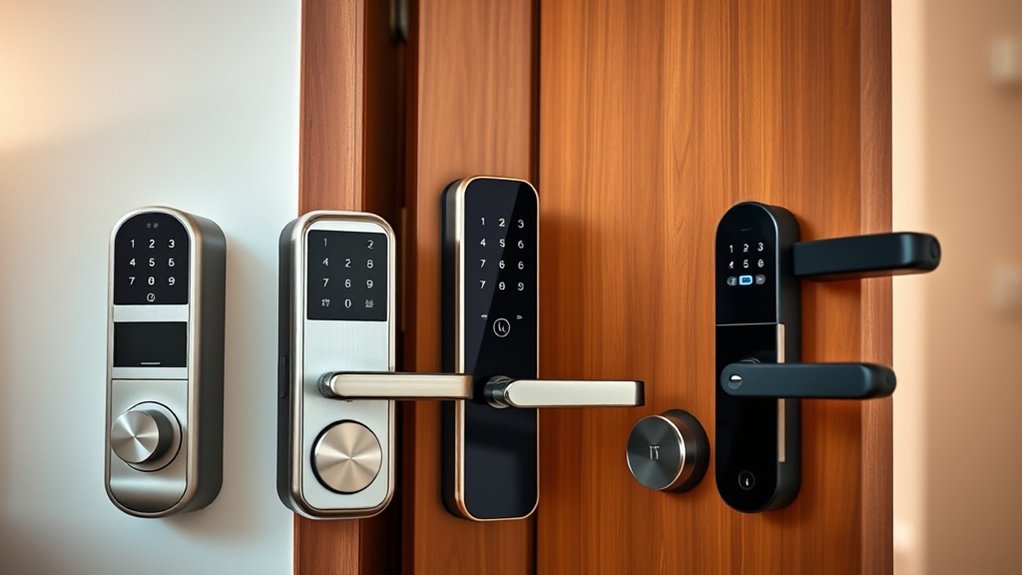
If you’re choosing a digital lock in India in 2026, prioritize fingerprint, PIN, RFID, or app access based on how your home works. You should also compare Wi-Fi and Bluetooth models, battery backup, emergency power ports, and tamper alerts. Check your door material, thickness, and backset before buying, since fit affects security and installation. Prices usually start near ₹5,000 and rise to ₹20,000, with better features at each tier. The right choice becomes clearer from here.
Why Digital Locks Make Sense in Indian Homes
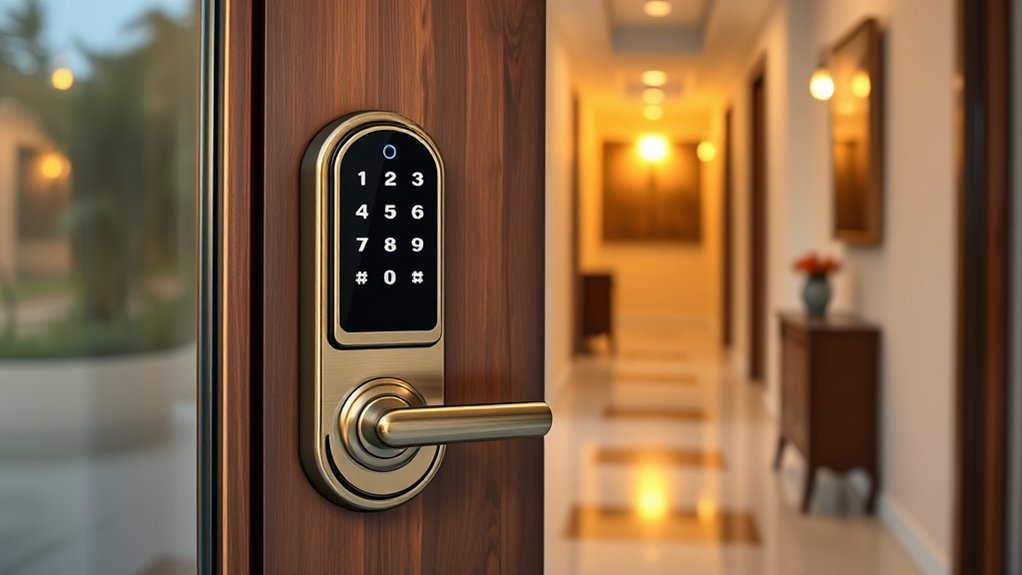
Digital locks make sense in Indian homes because they combine stronger access control with practical everyday convenience: you can gain entry with a fingerprint, PIN, RFID card, or mobile app, which gives households more flexibility than a single mechanical key. For your home security, that means fewer key-sharing risks and tighter control over who enters. Technology integration with Alexa, Google Assistant, and broader home automation lets you manage access without friction, while battery alerts and emergency power ports keep the lock usable during outages. You’ll also find them suited to apartments and independent houses, so they fit varied living patterns. The installation process is usually straightforward, and simple maintenance tips like checking batteries and updating app permissions help you stay reliable. With market trends pointing toward strong growth, cost effectiveness improves as consumer preferences shift from luxury to essential protection and user convenience.
Fingerprint, PIN, RFID, or App Access?
You’ll get the fastest and most secure entry with fingerprint access, which typically grants access in under 0.5 seconds and works well for repeated family use. PIN codes give you more flexibility for temporary sharing, while RFID tags make tap-to-grant access practical for renters and guests in apartments. If you want maximum control, app-based access adds remote granting and live entry logs, and many digital locks combine all four methods to balance security and convenience.
Fingerprint Vs PIN Access
When comparing fingerprint vs PIN access, the key difference is speed, security, and how you plan to share access. You’ll notice fingerprint systems *open* in under 0.5 seconds, so you get fast, touch-based entry with strong biometric protection.
- Fingerprint accuracy matters when you want minimal friction.
- PIN convenience works better when you need temporary sharing.
- Security preferences often favor biometrics for personal entry.
- User demographics and access flexibility shape your choice.
A PIN uses a 4–8 digit code, giving guests or staff controlled access without handing over a physical token. If you value liberation from key management, fingerprint suits daily use; if you need simple delegation, PINs win. Smart locks now reflect technology trends by supporting both, letting you match access method to your routine and risk tolerance.
RFID And App Control
Beyond fingerprint and PIN access, RFID and app control add another layer of convenience to smart locks. You can tap an RFID card or tag for quick entry, which is one of the key RFID benefits for guests, delivery staff, and service teams in apartments or independent houses. With app control, you can gain access remotely, review entry logs, and share temporary codes from your phone, so you stay in charge even when you’re away. This flexibility matters because different entry scenarios demand different levels of speed, control, and privacy. When you combine RFID and app control with fingerprint and PIN, you get a system that supports freedom without sacrificing security. For best user convenience, choose a lock that offers at least three access methods.
WiFi or Bluetooth Digital Locks?
If you need remote control from anywhere, WiFi locks let you manage access through your smartphone and integrate with Alexa or Google Assistant for smarter automation. If you mainly want fast, nearby entry, Bluetooth locks give you reliable local access without depending on internet connectivity, and BLE helps preserve battery life. In practice, you’ll often find dual-mode models like DG 104 and DG 202, which combine both options to balance convenience, control, and efficiency.
WiFi Lock Benefits
WiFi-enabled digital locks give you the strongest mix of convenience and control, especially if you need to manage access remotely from anywhere. You get real-time remote access, so you can open, monitor, and revoke permissions without being onsite, which supports true freedom of movement. For security management, WiFi locks deliver entry logs and instant alerts, helping you audit every action with precision.
- Remote control from your phone
- Real-time notifications for every entry
- Integration with Alexa and Google Assistant
- Works well in smart home automation
Models like the DG 104 and DG 202 often combine WiFi with Bluetooth, giving you flexible connectivity. If you travel often or supervise multiple users, WiFi helps you stay informed, responsive, and in command.
Bluetooth Lock Benefits
Bluetooth digital locks are a strong choice when you want fast, local access without depending on internet connectivity, which makes them especially practical for everyday residential use. You get immediate access near the door, and low-energy Bluetooth helps preserve battery life while keeping the connection stable. That means you can move freely without worrying about network outages. Many models also support smart home platforms like Alexa and Google Assistant, so you can add them to a broader automation setup without losing control. For security management, temporary access codes and entry logs let you track who entered and when. If you value user convenience and autonomy, Bluetooth locks deliver responsive, reliable control for your home.
Digital Lock Power Backup for Power Cuts
Digital locks in India are typically battery-powered, so they keep working even during power cuts, which makes them a practical choice for homes in outage-prone areas. You get independence from the grid, and that autonomy matters when you want secure access without interruption. Most models send low-battery alerts through app notifications and audible beeps, so you can act before failure. In practice, strong battery longevity means 6,000 to 10,000 operations on many units like the DG 406 and DG 402.
- Track battery status regularly
- Replace cells on time
- Use emergency release ports when needed
- Test alerts after maintenance
Some locks also support a 9V emergency access through a power port, giving you temporary entry during sudden outages. To keep performance reliable, check batteries routinely and replace them before depletion. That simple discipline preserves control, reduces lockout risk, and keeps your entry system ready when the power isn’t.
Check Door Type and Thickness First
Before you compare features and brands, measure your door’s thickness and hardware layout, because most digital locks are built for standard door widths of about 30 mm to 50 mm. That first check determines door compatibility and saves you from buying a lock that can’t fit or function correctly. You should also verify the backset, usually 2.5 inches to 2.75 inches, so the latch aligns cleanly with the frame.
Next, assess the door material. Solid wood and metal doors usually meet installation requirements with minimal adjustment, while hollow core doors may need reinforcement to support the lock body and resist force. Inspect existing hardware too; handles, old mortise fittings, or reinforcement plates can interfere with mounting or spindle alignment.
Finally, examine the door’s condition. A warped, cracked, or damaged door can compromise both performance and security, no matter how advanced the lock is. When you start with the door itself, you choose with precision, not guesswork.
Digital Lock Features That Matter Most
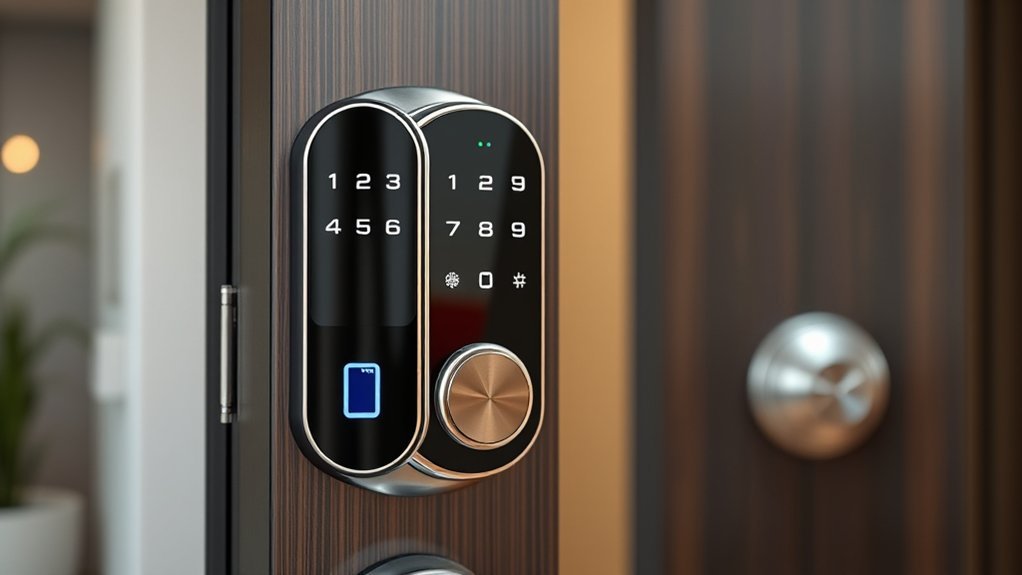
What features actually matter when you compare digital locks in India? You should prioritize control, resilience, and visibility, because smart lock innovations only help when they’re reliable in daily use. Look for user-friendly interfaces that let you act fast without friction.
- Multiple access modes: fingerprint, PIN, RFID, and app control
- Battery endurance: up to 12 months with low-battery alerts
- Security intelligence: tamper alerts and cloud intrusion logs
- Connectivity and build: Wi‑Fi, Bluetooth, and weather resistance
These features free you from dependence on a single key or a single failure point. Wi‑Fi and Bluetooth let you gain entry locally or remotely, while app access supports smart home integration. Tamper alerts expose intrusion attempts in real time, and logs help you audit entry patterns. Durable construction matters too, because heat, humidity, and dust can degrade weaker locks quickly. Choose a lock that balances access flexibility with hardened security.
Digital Lock Price Ranges in India
Once you’ve narrowed a lock by access modes, battery life, and security alerts, price becomes the next filter. In India, digital locks start near ₹5,000, where budget options usually give you fingerprint and PIN access. These models suit you if you want core control without paying for extras. Move into the ₹8,000 to ₹12,000 band, and you’ll see the best value for most homes: multiple entry methods, often WiFi connectivity, and better app-based management. If you want at least three entry methods, this range often makes sense.
Above ₹12,000, you enter premium territory. Here, ₹12,000 to ₹20,000 buys luxury features like video integration, tamper alerts, and stronger security layers. You’re paying for more than convenience; you’re investing in autonomy, traceability, and harder access control. As demand rises, India’s digital lock market could hit ₹1,800 crores by 2030, so every price tier is expanding fast.
IPSA and Other Indian Brands to Consider
If you want an Indian smart lock that’s built for local doors and weather, IPSA is one of the strongest names to evaluate first. You get IPSA features tuned for wooden doors, humidity, and daily wear, so your lock’s performance stays consistent. The lineup scales cleanly:
- Series 85: ₹7,990, fingerprint and PIN access for essential protection.
- Series 75: ₹9,990, adds RFID access for guests and service staff.
- Series 60: ₹14,990, adds video integration and tamper alerts for premium control.
- Indian competitors: many now match on price, but they usually keep to core access modes.
That means you can choose a model that fits your security posture without paying for unnecessary complexity. If you want autonomy over entry, delivery, and family access, IPSA gives you a practical, locally engineered path. Other Indian competitors are expanding fast, so compare build quality, features, and after-sales support before you decide.
Which Digital Lock Fits Your Home?
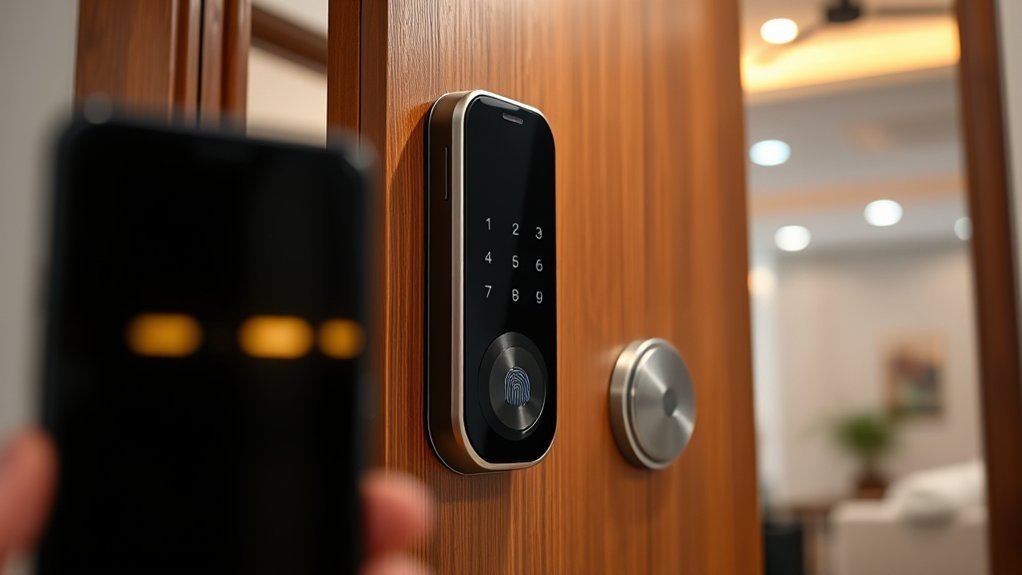
To choose the right digital lock for your home, start with the door itself: wooden, glass, and metal doors need different lock designs, mounting methods, and compatibility checks to guarantee reliable installation and day-to-day performance. You should verify door material compatibility before smart lock installation, because a model built for timber may fail on toughened glass or steel. Next, match release methods to your household: fingerprint, PIN, RFID, or app control can free you from key dependency while still serving children, elders, and guests. If you live where outages happen, choose battery backup plus emergency power access so the lock stays functional. Then set your budget, since smart locks in India usually range from ₹5,000 to ₹20,000, with higher tiers adding richer controls. Finally, insist on ISI/CE certification, tamper alerts, and encryption. That’s how you pick a lock that protects autonomy without compromising resilience, access, or security.
Frequently Asked Questions
How Do Digital Locks Handle Guest Access Codes?
You create guest access by generating temporary codes that grant access only during approved windows. You can set expiry, limit entries, and revoke them instantly, so you control who enters without surrendering long-term access.
Can Digital Locks Work During Internet Outages?
Yes—like a resilient sentinel, you can rely on digital locks during internet outages if they offer battery backup and offline functionality. You’ll still access locally, while cloud sync and remote access pause until connectivity returns.
Are Digital Locks Compatible With Rental Homes?
Yes, you can fit digital locks in rental homes if you choose reversible installation options. You’ll improve rental security without permanent modifications, and you can remove the lock later, preserving access control and your lease terms.
How Secure Are Digital Locks Against Hacking?
Hackers face a tough nut to crack: you’re protected by biometric security and strong encryption methods, but no lock’s invincible. You should update firmware, use unique codes, and choose models with tamper alerts for stronger defense.
Do Digital Locks Need Professional Installation?
You don’t always need professional installation, but it often guarantees correct alignment, wiring, and calibration. Installation benefits include stronger reliability and warranty compliance; installation alternatives like DIY suit simpler models if you’re technically confident.
Conclusion
Choosing the right digital lock in India comes down to your door, access method, and daily usage. You’re not just buying convenience—you’re improving control and security. Nearly 73% of urban homeowners now prefer smart access over traditional keys, which shows how fast adoption is growing. Before you decide, compare power backup, build quality, and app reliability. If you match the lock to your home’s needs, you’ll get stronger protection and fewer hassles.
