
Last Updated on September 11, 2026 by Daniel Globe
A portable stove can make camping, backpacking, tailgating, emergency meal preparation, or small-space cooking much easier—but the right stove depends on where and how you plan to use it. Fuel type, burner output, weight, wind performance, cookware compatibility, safety, and local fire rules all matter more than simply choosing the model with the highest power rating.
Quick Answer
For most car campers, a two-burner propane stove offers simple controls and room for normal cookware. Backpackers usually benefit from a compact isobutane-propane canister stove or integrated cooking system. Liquid-fuel stoves are worth considering for very cold conditions or remote travel, while electric and induction burners make more sense when reliable electrical power is available.
Key Takeaways
- Choose a stove for your actual use: backpacking, car camping, emergency cooking, RV use, or indoor countertop cooking.
- Do not compare stoves by BTU alone. Wind protection, burner design, cookware, pressure regulation, and simmer control also affect real-world performance.
- Fuel-burning camping stoves can create deadly carbon monoxide and generally belong outdoors, not inside tents, vehicles, garages, campers, or homes.
- Induction burners need compatible magnetic cookware and access to a suitable electrical circuit.
- Check local wildfire restrictions before using any outdoor stove, especially wood, alcohol, or other open-flame models.
Disclosure: As an Amazon Associate I earn from qualifying purchases. Some links on this page are affiliate links, at no extra cost to you.
Understanding Portable Stoves: What They Are and Why You Need One
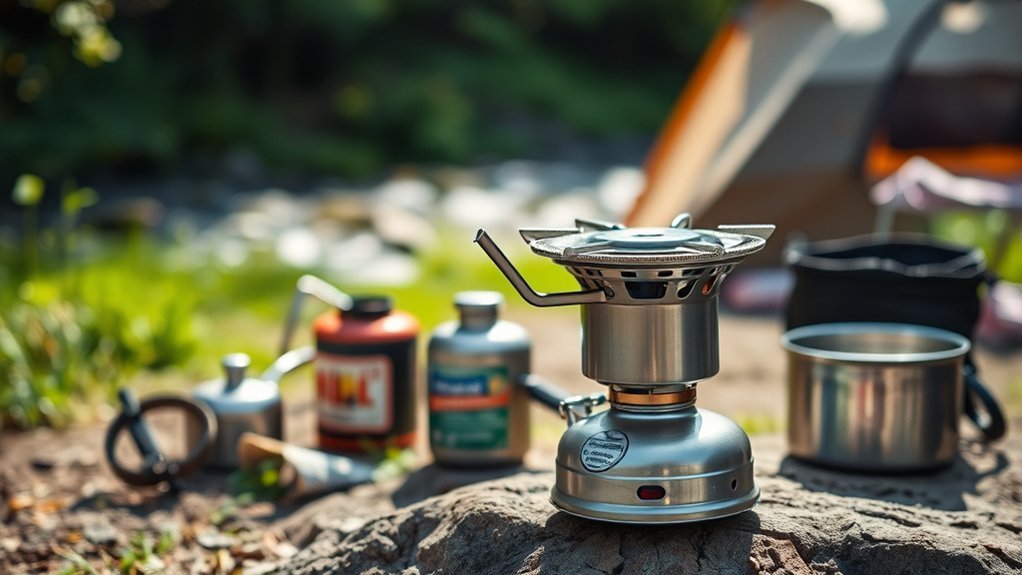
A portable stove is a compact cooking appliance designed to be moved more easily than a permanent kitchen range. The category includes tabletop propane stoves, small backpacking burners, integrated canister systems, liquid-fuel stoves, multi-fuel stoves, alternative-fuel models, and portable electric or induction cooktops.
That variety matters because a stove that works well beside a vehicle may be a poor choice for a backpacking trip. A large two-burner propane stove gives you room for separate pots and pans but can weigh more than 10 pounds. A tiny backpacking burner may weigh only a few ounces but usually supports one small pot at a time.
Portable stoves are useful for camping, picnics, outdoor events, emergency preparedness, RV travel, and situations where you need an extra cooking surface. The key is to match the stove’s design, approved environment, fuel, and cooking capacity to the job rather than assuming every portable stove works the same way.
Portable Stove Types: Gas, Liquid Fuel, Alternative Fuel, and Electric
The original gas-versus-electric comparison leaves out several important outdoor stove categories. According to REI’s backpacking-stove guidance, outdoor stoves can broadly include canister, liquid-fuel, and alternative-fuel designs, while larger camping setups also commonly use propane and electric cooking appliances.
| Stove Type | Best For | Main Advantages | Main Trade-Offs |
|---|---|---|---|
| Tabletop propane | Car camping, tailgating, outdoor emergency cooking | Simple controls, strong heat, full-size cookware options | Too heavy for most backpacking; cylinders add bulk |
| Canister stove | Backpacking and lightweight camping | Compact, quick to light, easy flame control | Cold temperatures can reduce canister pressure; fuel availability varies |
| Integrated canister system | Fast water boiling for backpacking | Efficient heat transfer and compact nesting design | Often optimized for boiling rather than elaborate pan cooking |
| Liquid-fuel / multi-fuel | Cold weather, longer trips, remote or international travel | Good cold-weather performance; some models accept multiple fuels | Heavier, requires priming and more maintenance |
| Alcohol, tablet, or wood-burning | Specialized ultralight or minimalist trips | Can be very light and mechanically simple | Slower cooking, wind sensitivity, and more fire-restriction concerns |
| Electric or induction | Homes, RV hookups, cabins, dorm-style or countertop cooking | No liquid or gas fuel to carry; precise controls on many models | Requires reliable electricity; induction requires magnetic cookware |
If you mainly camp beside a vehicle, a propane stove is convenient because weight matters less and larger burners can handle normal pots and pans. If every ounce matters, a compact canister stove is usually easier to carry. For cold-weather expeditions, a suitable liquid-fuel stove or a regulated canister system may be more dependable than a basic upright canister stove.
Electric portable stoves solve a different problem. They are useful where electrical power is available, but they are not a substitute for a self-contained camp stove in a remote location. Induction models can heat efficiently, but the cookware must have a magnetic base.
Essential Features to Consider When Choosing a Portable Stove
Choosing the right portable stove goes beyond fuel type. Start with the size of your group and the meals you expect to prepare. A single burner can be enough for boiling water or making a simple one-pot meal, while two independently controlled burners are much more convenient for family camping.
Then look at the complete carry weight, not just the burner. Include the fuel container, regulator or hose, cooking pot, wind protection, and storage case. A backpacking setup may need to stay extremely light, while a 10- to 15-pound tabletop stove can still be perfectly portable when you are traveling by car.
For gas models, burner output is useful, but it should not be the only deciding factor. Simmer control, burner spacing, pot support, wind resistance, and fuel regulation can matter just as much. For electric models, check wattage, outlet requirements, cord length, and whether the appliance is approved for the location where you plan to use it.
Safety features are model-specific. Some portable stoves include pressure protection, cartridge-ejection systems, flame controls, automatic pan detection, or automatic shutoff functions, while others do not. Check the actual manufacturer’s manual instead of assuming a feature is standard across the category.
Choosing Your Perfect Portable Stove
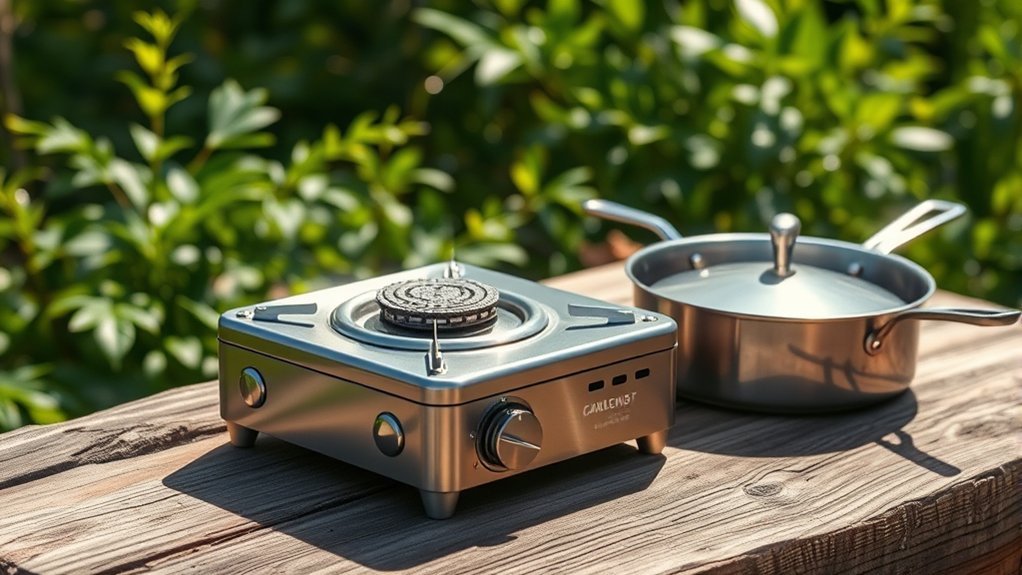
When choosing your portable stove, start with where you will use it, how far you must carry it, how many people you cook for, and whether you need to boil water quickly or prepare full meals. Those questions are more useful than simply looking for the lightest stove or the highest BTU number.
Key Features to Consider
- Cooking capacity: One burner is compact; two burners make multi-pot meals much easier.
- Packability: Backpackers should consider both stove and fuel weight, while car campers can prioritize cooking area and stability.
- Flame or power control: Good low-end control matters for simmering, not just boiling.
- Wind performance: Wind can dramatically increase boil times and fuel consumption on outdoor gas stoves.
- Pot support: A broad, stable support is important when using larger cookware.
- Ignition: Piezo or rotary ignition is convenient, but carrying a backup lighter or matches is still sensible for outdoor trips.
- Safety systems: Check the exact model for pressure protection, automatic gas shutoff, cartridge ejection, pan detection, or child locks.
Pro Tip: Match the pot to the burner. An oversized pan on a tiny stove can be unstable, while a very small pot on a broad high-output burner can waste heat. Follow the stove manufacturer’s cookware-size limits.
Fuel Types and Efficiency
Propane is popular for tabletop camping stoves because the cylinders are easy to connect and the fuel performs well for general car camping. Backpacking canister stoves more commonly use blends that include isobutane and propane.
Liquid-fuel stoves often run on white gas, and some multi-fuel models can also use other fuels approved by their manufacturer. Their advantage is versatility and dependable operation in conditions where a simple canister stove may struggle, but priming, pumping, cleaning, and occasional part replacement add complexity.
For cold weather, do not assume every gas stove performs equally. Canister pressure falls as temperatures drop. Some regulated canister systems are designed to maintain steadier output, while liquid-fuel stoves are a common choice for sustained winter use. Follow the manufacturer’s temperature and fuel guidance.
Alternative fuels such as alcohol, solid tablets, and wood can reduce stove weight or simplify the system, but they often cook more slowly and can face stricter fire restrictions. Check current rules before your trip.
Weight and Portability Options
There is no universal “under 5 pounds” rule for a portable stove. A tiny backpacking burner can weigh only a few ounces, while a sturdy two-burner camp stove can weigh around 12 pounds and still be highly portable when transported in a vehicle.
- For backpacking, consider total system weight: stove, fuel, pot, lid, stabilizer, and accessories.
- For car camping, prioritize stable pot supports, burner spacing, wind protection, and carrying convenience.
- For electric cooking, consider appliance dimensions, storage space, outlet requirements, and cookware compatibility.
BTUs Explained: Their Impact on Cooking
A BTU, or British Thermal Unit, is a unit of energy. Gas-stove manufacturers commonly express burner heat input in BTU per hour. A larger BTU/h number means the burner can release more heat, but it does not automatically mean that a stove will boil water proportionally faster or cook better.
Wind, burner-to-pot distance, pot diameter, heat exchangers, flame pattern, ambient temperature, and pressure regulation all influence how much of that heat reaches your food. That is why an efficient integrated backpacking system with a relatively modest burner can still boil water quickly.
| Output Example | What It Tells You | What It Does Not Tell You |
|---|---|---|
| 8,000 BTU/h single gas burner | Maximum rated gas heat input | Exact boil time or wind performance |
| 20,000 BTU/h total two-burner stove | Combined rated output across the stove | Whether each burner provides half the total unless the manufacturer specifies it |
| 40,000 BTU/h total two-burner stove | High combined heat capacity for a tabletop camp stove | Simmer quality, efficiency, or fuel economy |
| 1,800 W induction burner | Maximum electrical power draw/output setting | Direct BTU-for-BTU comparison with a gas flame in real cooking |
For example, the Coleman Classic two-burner stove is rated at 20,000 total BTU/h. The Camp Chef Everest 2X uses two 20,000-BTU burners for 40,000 BTU/h total. Those numbers help compare raw heat capacity, but burner control and wind performance still matter.
Why Portability Matters in Portable Stoves
Portability is not just about scale weight. It includes packed dimensions, fuel bulk, how easily the stove fits in your vehicle or backpack, whether accessories nest together, and how stable the stove is once you arrive.
- Ultralight backpacking burners may weigh only a few ounces but generally offer a small cooking platform.
- Integrated canister systems can pack the burner and accessories inside the cooking vessel.
- Two-burner tabletop models are heavier but can fold into a suitcase-like shape for vehicle transport.
- Portable induction units are compact enough for countertop storage but need electricity and compatible cookware.
A backpacker may accept a small burner and one pot to save weight. A family traveling by SUV may value two burners, wind panels, and room for a frying pan far more than saving several pounds.
Staying Safe: What to Know About Using Portable Stoves

Warning: Do not use a portable fuel-burning camping stove inside a home, tent, vehicle, garage, or other enclosed space unless the appliance is specifically designed and instructed for that use. Carbon monoxide is colorless and odorless and can reach dangerous levels even when a door or window is open.
The CDC specifically warns against using portable gas camp stoves indoors. The U.S. Consumer Product Safety Commission likewise warns against portable fuel-burning camping equipment inside homes, garages, vehicles, or tents unless it is specifically designed and instructed for enclosed use.
For outdoor fuel-burning stoves:
- Set the stove on a firm, level, nonflammable surface.
- Keep dry grass, leaves, fabric, paper, fuel containers, and other combustible materials away from the flame and hot stove.
- Inspect the fuel connection, hose, valve, and seals before lighting.
- Do not move the stove while it is operating or still hot.
- Keep children and pets away from the cooking area.
- Turn the stove off before changing or disconnecting fuel.
- Allow the appliance to cool before packing it.
- Follow the manufacturer’s instructions for wind protection.
Be especially careful with windscreens. A windscreen can improve some remote-canister and liquid-fuel stove setups, but surrounding an upright fuel canister with a tight windscreen can trap heat and overheat the canister. Use only the wind protection approved for your stove.
Portable electric and induction cooktops do not create carbon monoxide from combustion, but they have their own hazards. Use them on the electrical supply specified by the manufacturer, keep cords away from hot surfaces and water, provide adequate clearance, and never use a damaged cord or plug.
A portable stove is only safe when its fuel, ventilation, cookware, surface, and operating environment match the manufacturer’s instructions.
Maintenance Tips for Long-Lasting Efficiency
Regular maintenance helps a portable stove operate consistently and can reveal problems before they become safety hazards. The right maintenance depends on the stove type.
- Gas tabletop stoves: Let the unit cool, remove food residue, inspect burner ports, and check the regulator, hose, O-rings, and fuel connections for damage.
- Canister stoves: Keep burner ports clean, inspect threads and seals, and protect folding supports from bending.
- Liquid-fuel stoves: Follow the manual for cleaning the jet and fuel line and replacing worn seals or O-rings. These systems usually require more maintenance than canister stoves.
- Electric or induction: Unplug and cool the unit before cleaning. Keep vents clear and avoid allowing liquid into the controls or electrical housing.
For liquid-fuel systems, some experienced users prime with alcohol to reduce soot where the stove manufacturer permits that practice. Do not substitute unapproved fuels.
White gas can degrade during storage. If old fuel has changed color or contains sediment, do not assume it is suitable for continued use. Follow the fuel and stove manufacturer’s storage and disposal guidance.
Do not store a stove with a leaking connection, cracked hose, damaged seal, or clogged burner. Replace worn parts with the correct manufacturer-approved components.
Top Portable Stoves for Different Needs
There is no single best portable stove for every user. The following established models illustrate how different designs fit different cooking styles. Prices change frequently, so choosing by use case and verified specifications is more useful than assigning permanent “budget” categories.
| Stove Model | Best Fit | Verified Highlights | Consider Before Buying |
|---|---|---|---|
| Coleman Classic 2-Burner | Family and car camping | Two independently adjustable burners; 20,000 total BTU/h; WindBlock panels; propane fuel | About 11.65 lb, so it is a vehicle-camping stove rather than a backpacking model |
| Duxtop 9600LS Induction | Indoor countertop or powered RV/cabin use | Up to 1,800 W; 20 power levels; pan detection; timer and safety lock | Requires 120V power and magnetic induction-compatible cookware |
| Jetboil Flash 1.0L | Fast water boiling for backpacking | 1-liter integrated system; manufacturer-rated average boil time of 120 seconds per 0.5 L; 5,300 BTU/h | Primarily optimized for fast boiling rather than multi-pan cooking |
| Gas One GS-3400P | Flexible single-burner outdoor cooking | 8,000 BTU/h; supports 8 oz butane canisters or 16.4 oz propane cylinders; piezo ignition; cartridge pressure protection | Single burner and lower total output than large two-burner camp stoves |
| Camp Chef Everest 2X | High-output car camping | Two 20,000-BTU burners; 40,000 BTU/h total; matchless ignition; 215-square-inch cooking area | About 12 lb and larger than a backpacking stove |
Current manufacturer information is available from Coleman, Jetboil, Gas One, Camp Chef, and Secura/Duxtop.
Portable Stove Buying Checklist
Before choosing a portable stove, compare your cooking needs with the stove’s approved use, fuel, size, and safety requirements.
- Cooking location: Will you be backpacking, car camping, using an RV hookup, cooking outdoors during an outage, or adding a burner to an indoor kitchen?
- Group size: Solo travelers can often manage with one burner; families may appreciate two burners.
- Fuel availability: Make sure you can obtain the exact fuel your stove requires at your destination.
- Weight and packed size: Include fuel and cookware in your calculation.
- Cooking style: Fast-boil systems are excellent for hot water, while wider burners and better simmer control suit pan cooking.
- Safety features: Look for the specific protections provided by the exact model rather than assuming all stoves have automatic shutoff.
- Cookware compatibility: Confirm pot-size limits and, for induction, use cookware with a magnetic base.
- Accessories: Consider stabilizers, approved windscreens, carrying cases, compatible pots, and backup ignition.
Travel, Fuel Storage, and Fire Restrictions
Portable stoves are easy to move by road, but airline travel requires more preparation. The U.S. Transportation Security Administration states that camp stoves may be carried in checked or carry-on baggage only when they are completely empty of fuel and cleaned so no fuel vapors or residue remain. Spare gas cartridges and fuel refills are not permitted in passenger baggage under the cited TSA guidance. Airline and destination-country rules can be stricter, so check them before traveling.
Note: Fire restrictions can change quickly during hot, dry, or windy conditions. A park may prohibit wood or charcoal fires while still allowing certain pressurized-gas stoves, or it may impose additional requirements. Check the current land-management agency rules for your exact destination immediately before using a stove.
Fuel should be stored in the container approved for it, away from heat, flame, and direct sun. Never leave pressurized fuel canisters where temperatures could become extreme, such as beside a fire or on a hot cooking surface.
Frequently Asked Questions
What’s the best portable stove?
The best portable stove depends on the trip. A two-burner propane model is usually more practical for family car camping, a compact canister or integrated system is easier for backpacking, a liquid-fuel stove can be useful for cold or remote trips, and an induction burner is convenient where reliable electricity is available.
What are some common camping stove problems?
Common problems include weak flames, clogged burner ports or jets, leaking or damaged seals, poor cold-weather canister pressure, failed piezo igniters, wind-related flame loss, and unstable cookware. Stop using the stove if you smell fuel, see a damaged connection, or cannot control the flame normally.
Does white gas go bad in a camp stove?
White gas can degrade during storage. Old fuel that changes color or contains sediment may contribute to poor performance or clogging. Store fuel in an approved sealed container and follow the fuel and stove manufacturer’s instructions for storage, inspection, and disposal.
What features should a camp stove have?
Look for stable pot supports, suitable burner output, good flame control, an appropriate fuel system, manageable packed weight, and useful wind protection. Depending on the model, features such as pressure regulation, piezo ignition, cartridge protection, or automatic shutoff may add convenience or safety.
Can I use a camping stove inside a tent or vehicle?
Do not use a typical fuel-burning camping stove inside a tent, vehicle, garage, home, or other enclosed space. Carbon monoxide can build up to dangerous levels, and open flames also create a serious fire risk. Follow the appliance manufacturer’s approved-use instructions.
Can I take a camping stove on an airplane?
Under current TSA guidance, a camp stove may be allowed in carry-on or checked baggage only when it is completely empty of fuel and cleaned so no fuel vapors or residue remain. Fuel cartridges and refills are not permitted in passenger baggage. Always confirm your airline’s rules and the regulations at your destination.
Do induction portable stoves work with every pot?
No. Induction cooking requires cookware with a magnetic base. Cast iron and many magnetic stainless-steel pans work, while some aluminum, copper, glass, and nonmagnetic stainless cookware will not work unless it has an induction-compatible base.
Conclusion
A portable stove can be one of the most useful pieces of cooking equipment you own, but the best choice depends on the setting. Backpackers usually need low weight and efficient fuel use, car campers can benefit from larger two-burner propane models, and electric or induction burners work well where dependable power is available.
Compare the entire system rather than relying on one specification. Burner control, fuel availability, stability, wind performance, cookware compatibility, packed size, and safety all matter. Most importantly, follow the manufacturer’s instructions and current local fire rules every time you cook.
Sources
- U.S. Consumer Product Safety Commission — Carbon Monoxide Fact Sheet — carbon-monoxide and enclosed-space safety guidance.
- REI — How to Choose a Backpacking Stove — stove categories, fuel types, cold-weather considerations, maintenance, and usage guidance.
- Coleman — Classic Propane Gas Camping Stove — current burner, BTU, fuel, weight, and wind-protection specifications.
- Jetboil — Flash 1.0L Fast Boil System — current boil-time, power, capacity, weight, and fuel specifications.
- Gas One — GS-3400P Dual Fuel Camp Stove — dual-fuel compatibility, output, ignition, and cartridge-safety specifications.
- Camp Chef — Everest 2X — current total output, burner count, cooking area, weight, and dimensions.
