

Last Updated on September 11, 2026 by Daniel Globe
An airline receipt may show several reference numbers, and they are not always interchangeable. The label “receipt ID” may refer to a booking reference, confirmation code, e-ticket number, order number, or a payment receipt number. Knowing which code you have helps you find the trip, prove purchase, request a refund, or contact support without delay.
Quick Answer
An airline receipt ID is not one universal aviation code. Check the label beside the number. A booking reference or record locator usually opens the reservation, while a 13-digit e-ticket number identifies the issued ticket. A third-party order ID may work only on the agency or booking site that created it.
Key Takeaways
- “Receipt ID” is a general label, not a single standardized airline identifier.
- Use the booking reference or confirmation code to open and manage a reservation.
- Use the e-ticket number for ticket-specific receipts, credits, refunds, and some support requests.
- A travel agency may issue its own order ID in addition to the airline’s confirmation code.
- Keep booking codes and ticket numbers private because they can help someone access trip details.
At a Glance
| Time Required | About 5 to 10 minutes |
| Difficulty | Easy |
| Tools Needed | Confirmation email, airline app or website, passenger name, and booking account if available |
| Cost | $0 |
Disclosure: As an Amazon Associate I earn from qualifying purchases. Some links on this page are affiliate links, at no extra cost to you.
What Is an Airline Receipt ID?
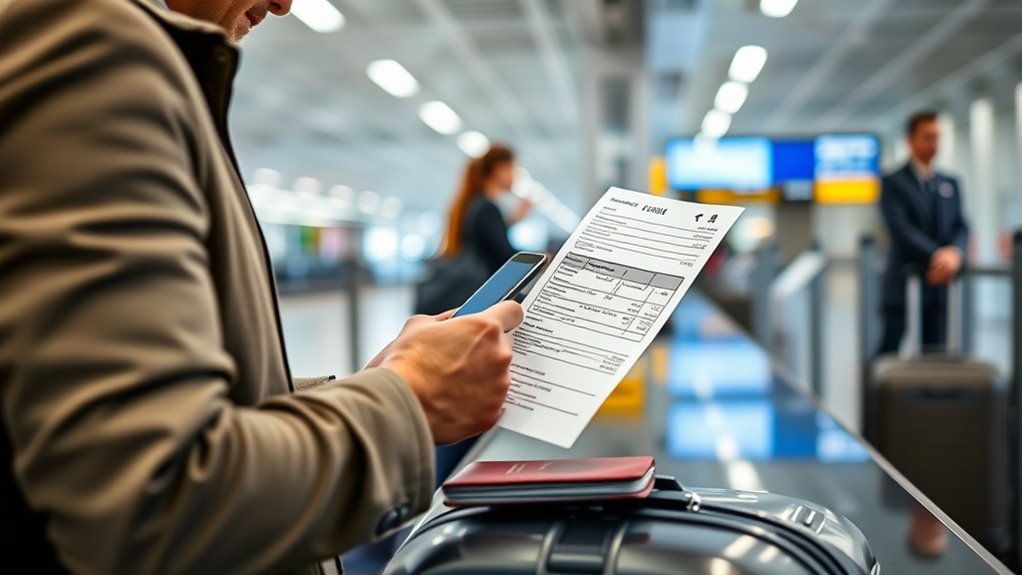
An airline receipt ID is usually a reference number printed on an itinerary, e-ticket receipt, payment receipt, or booking confirmation. However, airlines do not use that phrase in one consistent way. The safest approach is to read the exact label beside the number.
For example, American Airlines distinguishes between a six-letter confirmation code, also called a record locator, and a 13-digit ticket number. The confirmation code helps retrieve and manage the reservation. The ticket number identifies the issued travel document.
A receipt may also include a payment transaction number, invoice number, agency booking ID, baggage receipt number, or separate document number for a paid seat or other extra. Those numbers may prove a purchase, but they may not open the flight reservation.
Note: If a website or form specifically asks for a “Receipt ID,” use the number identified by that exact label on the same company’s receipt or help page. Do not automatically enter your booking reference or ticket number.
Receipt ID vs. Booking Reference vs. Ticket Number
The right number depends on what you are trying to do. This comparison covers the most common identifiers:
| Identifier | Typical Appearance | Main Use |
|---|---|---|
| Booking reference, confirmation code, or record locator | Often six letters or a mix of letters and numbers, depending on the airline | Open the trip, select seats, add services, check in, or request changes |
| E-ticket number | Usually 13 digits on a traditional e-ticket, often beginning with a three-digit airline prefix | Identify the issued ticket, retrieve a receipt, trace a refund, or apply certain travel credits |
| Agency or booking-site order ID | Format chosen by the travel agency or online booking site | Find the order on the seller’s website or contact the seller |
| Payment or receipt number | Varies by airline, merchant, and payment processor | Document a charge, invoice, tax receipt, or extra service purchase |
| Baggage file or claim number | Issued after a delayed, lost, or damaged bag report | Track a baggage case, not the flight booking itself |
The booking reference finds the reservation; the ticket number identifies the issued ticket; an agency order ID may work only with the seller.
How to Find Your Receipt ID
Start with the email or document created when you paid for the trip. Look near the passenger name, itinerary, payment summary, or heading that says “Booking Reference,” “Confirmation Number,” “Record Locator,” “Ticket Number,” “Document Number,” “Order ID,” or “Receipt Number.”
- Search your email. Try the airline or agency name with terms such as “confirmation,” “itinerary,” “e-ticket,” “flight receipt,” or “booking.” Check spam and trash folders too.
- Open the complete receipt. A short confirmation message may show only the booking code, while an attached PDF or detailed receipt may show the ticket number and payment breakdown.
- Check the airline account or app. Open “My Trips,” “Manage Booking,” or a similar section and review the trip details and payment page.
- Check the booking site. If you used a travel agency or online booking service, sign in there and look for both its order ID and the airline’s confirmation code.
- Contact the seller. Ask for the airline record locator and, where applicable, the 13-digit e-ticket number. Have the passenger name, travel date, route, and payment method ready.
Pro Tip: When contacting support, name the exact document you need. Ask for “the airline confirmation code,” “the 13-digit e-ticket number,” or “an itemized receipt” instead of asking only for a receipt ID.
How to Verify That Your Ticket Was Issued
A reservation can have a booking reference, but that code alone may not prove that a traditional e-ticket was issued. Open the detailed confirmation and look for the passenger’s name, flight segments, fare amount, payment method, and a ticket or document number.
Then retrieve the trip on the airline’s official website. Confirm that the passenger name, dates, airports, flight numbers, and ticket status match what you purchased. The U.S. Department of Transportation also advises travelers to review the itinerary or confirmation as soon as it arrives and correct errors promptly.
If the airline cannot find the trip, the payment is still pending, or the receipt says “on request,” “held,” or “not ticketed,” contact the company that accepted the payment. Do not buy a duplicate ticket until you understand whether the first booking was completed.
Where to Check Booking Details and Fare Rules
Use the airline’s official “Manage Trip” page for the current itinerary, seat assignments, check-in status, and available changes. Use the detailed e-ticket receipt or fare conditions for the price, taxes, ticket number, baggage allowance, change restrictions, and refund terms.
Do not rely on the receipt alone for live flight status. Schedules, gates, aircraft, and operating carriers can change. Check the airline’s app or website before leaving for the airport.
If a third party sold the ticket, the airline may direct payment, refund, or receipt questions back to that seller. Keep both the seller’s order ID and the airline’s booking reference because each company may use a different record.
How Your Receipt ID Affects Changes

The booking reference is usually the fastest code for opening a reservation and reviewing change options. However, the e-ticket number may be needed for a ticket-specific refund, unused ticket value, receipt request, or support case.
The code does not decide whether a change is free. Your fare conditions, airline policy, route, ticketing carrier, and reason for the change determine the available options and any price difference.
For flights to, from, or within the United States, the U.S. Department of Transportation explains when an automatic refund is owed after a cancellation or significant schedule change if the traveler does not accept the changed trip, rebooking, credit, or other alternative. Voluntary changes remain subject to the ticket’s fare rules.
Note: Paid seats, bags, upgrades, and other extras may have separate document or receipt numbers. Save those receipts until the trip and any refund are complete.
What to Do If the Number Does Not Work
- Check the format. Do not add spaces, hyphens, or the airline prefix unless the form requests them.
- Use the correct surname. Enter it exactly as shown on the booking, including multiple last names when the airline instructs you to do so.
- Try the airline locator, not the agency ID. A seller’s order number may not work on the airline’s website.
- Check the operating and ticketing airlines. A codeshare itinerary may show more than one airline and more than one locator.
- Confirm the trip is ticketed. Ask the seller for the e-ticket number if the airline cannot find an issued ticket.
- Request a fresh receipt. Airlines often provide a receipt lookup or email option for past travel and extra purchases.
How to Keep Your Booking Information Safe
Treat your confirmation code, ticket number, passenger name, and itinerary as private travel information. Some airline trip-lookup pages use a confirmation code plus the traveler’s last name, so a public screenshot can expose more access than you expect.
Warning: Do not post an uncensored boarding pass, confirmation email, or e-ticket receipt online. Hide the booking reference, ticket number, barcode, passenger name, loyalty number, and payment details before sharing an image.
Use only the airline’s official website, app, verified phone number, or the travel agency that sold the ticket. Be cautious with unsolicited messages asking for your booking code, payment card, password, or one-time security code.
When to Contact Airline Support
Contact the airline or ticket seller when you cannot retrieve the trip, the passenger name or route is wrong, payment was taken without an issued ticket, or an online change fails. Also reach out quickly after a cancellation, major schedule change, or missed connection so you can review rebooking and refund options.
For delayed, lost, or damaged baggage, report the problem before leaving the airport when possible and keep the baggage file reference and receipts for reasonable expenses. The booking reference identifies the trip, but the baggage file number tracks the claim.
Before calling or chatting, gather the passenger name, travel date, origin and destination, booking reference, ticket number, seller’s order ID, and last four digits of the payment card if requested through a verified channel. This reduces back-and-forth and helps the agent find the correct record.
Frequently Asked Questions
Is an airline receipt ID the same as a confirmation number?
Not always. Some systems may use “receipt ID” loosely, but a confirmation number or record locator usually identifies the reservation. A receipt number may identify a payment or document instead. Follow the exact label and instructions on the airline or seller’s page.
Where is the e-ticket number on an airline receipt?
Look for “Ticket Number,” “E-ticket Number,” or “Document Number” near the passenger name, payment details, or fare summary. On many traditional airline tickets, it is a 13-digit number with a three-digit airline prefix.
Can I manage a flight with only the ticket number?
Sometimes. Some airlines let you retrieve a trip with a ticket number, while others prefer a confirmation code and passenger name. Use the lookup options shown on your airline’s official “Manage Trip” page.
What Is ASP in Aviation?
ASP can mean different things in different aviation documents. In the FAA airport acronym list, ASP means Arrival Sequencing Program. Other specialized documents may use the same letters differently, so check the glossary for the source you are reading. “Aircraft Service Provider” is not a universal meaning.
Which Airline Has the Code AA?
AA is the IATA airline designator for American Airlines. Its IATA accounting code is 001, which is why many American-issued ticket numbers begin with that prefix.
Which Airline to Stay Away From?
There is no single airline everyone should avoid. Service can vary by route, airport, season, and fare type. Compare the total price, schedule, baggage rules, connection risk, refund terms, and recent performance. For U.S. carriers, the DOT’s Air Travel Consumer Reports provide regularly updated data on delays, baggage, oversales, and complaints.
What Airlines Fly Directly to Aspen?
The Aspen/Pitkin County Airport lists American, Delta, and United as airline partners. Nonstop routes and frequencies change by season, so check the airport’s current flight schedule and the airline’s booking page for your travel dates.
Conclusion
An airline receipt ID can refer to more than one number, so the label matters. Use the booking reference to open the reservation, the e-ticket number for ticket-specific records, and the seller’s order ID for a third-party purchase. Save the full receipt, verify the itinerary after booking, protect the codes from public view, and contact the airline or seller when the records do not match.
Sources
- American Airlines: Find Your Trip — confirmation code, record locator, ticket number, and trip-management uses.
- U.S. Department of Transportation: Refunds — current refund rights for covered U.S. air travel.
- U.S. Department of Transportation: Air Travel Consumer Reports — airline delay, baggage, oversales, and complaint data.
- Federal Aviation Administration: Airport Acronyms — FAA meaning of ASP.
- International Air Transport Association: American Airlines — AA designator and 001 accounting code.
- Aspen/Pitkin County Airport: Airline Partners — current airlines serving Aspen.
