
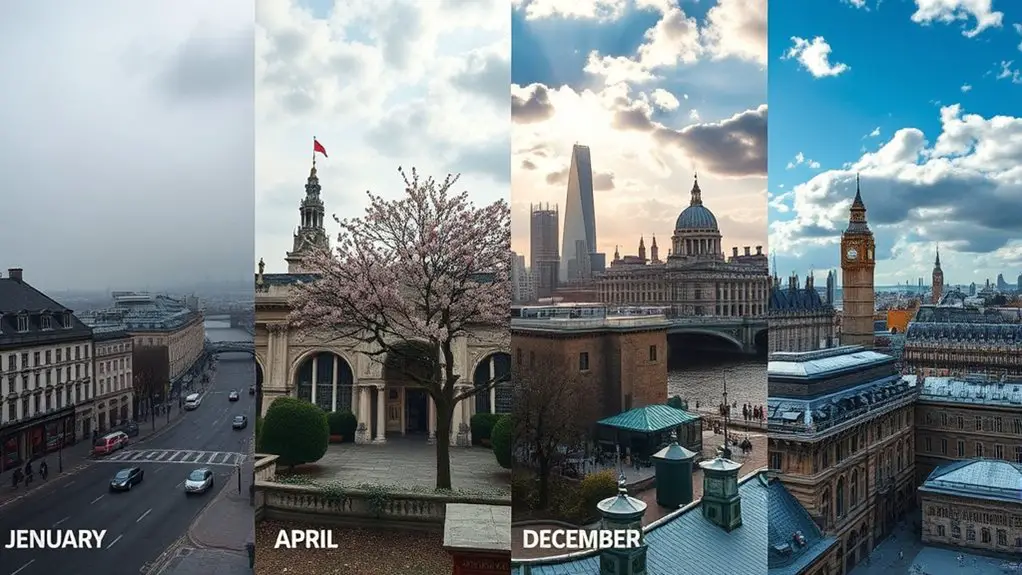
London’s weather shifts a lot through the year. Cold winter days can turn into mild afternoons, and summer can flip from sun to showers in minutes. If you like planning ahead, it helps to know what each month is usually like. Here’s a month-by-month guide to help you make the most of your time in the city.
Note: The temperature, rainfall, and sunshine figures below use Met Office long-term averages for Heathrow (1991–2020) as a practical London reference point. Central London can be a little warmer.
Key takeaways
- London is mild but changeable all year. Bring layers and a light rain shell in every season.
- Summer has the longest days and the most sunshine, but quick showers and humid spells still happen.
- Autumn and winter have short daylight and more damp days, so it helps to mix in indoor plans.
Products Worth Considering

WATERPROOF JACKET: Crafted from a waterproof nylon shell durable enough to withstand anything from drizzle to downpour at a moment's notice
Packability and Portability: 33,000ft packable rain jacket women is super lightweight, with packable carrying pouch, easy to keep in your handbag, travelling bag, suitcase or car. It's intelligently designed to allow minimal space occupation.Ultra-light weight only 250g.
High quality special waterproof and windproof fabric offers a breathable and comfortable wear experience in any kinds of weather condition
January: Cold and Crisp
January feels like classic London winter. Days are short and often grey, with occasional bright, crisp spells. Those clear moments are great for a brisk walk along the Thames or through Hyde Park or Regent’s Park.
Typical daytime highs are around 8°C, with nights near 3°C. Drizzle is common, so keep an umbrella handy. After a cold day outside, London’s cafes and pubs are an easy place to warm up.
February: The Last of Winter’s Chill
February still has winter’s bite, but the city starts to inch toward spring. Daytime highs are often around 9°C, and nights sit near 3°C. Cold snaps can bring sharp winds through the streets.
Rain stays frequent, often as drizzle or light showers. Some mornings can be foggy too. Days get a little longer, but it still feels wintry most of the time.
March: Signs of Spring
March brings the first real hints of spring. You’ll see longer days, more breaks of sun, and early buds in the parks. It can still feel cool, especially in the morning.
| Weather Features | Typical Details |
|---|---|
| Temperature Range | Highs around 11–12°C; lows around 4–5°C |
| Sunshine | Often 3–5 hours a day (on average) |
| Rainfall | Light showers, occasional drizzles |
By late March, outdoor plans feel easier, but it’s still smart to dress in layers.
Products Worth Considering
【Size Recommend】: This raincoat has a relaxed fit which runs large. If you're not layering more, or prefer a slimmer fit, consider one size down. Model in picture is 5'9" (174 cm), 114.64 lbs (52kg), size small fits well. Note that size measurements refer to jacket itself, not body measurements.
MATERIAL: 100% Polyester Waterproof Material With Striped Cotton Lined, Breathable, Soft Touch, Windproof, Easy To Package.
【Material】: This windbreaker jacket for women is made of super waterproof material. it's lightweight, packable, comfortable to wear. The raincoat will keep you dry and warm in rainy and windy day. Easy to carry on the road, folded up small enough to be tucked into a backpack.
April: Showers and Blooming Flowers
April is famous for showers, and London earns that reputation. The upside is that parks and gardens look great. You’ll see spring color everywhere, especially in large green spaces.
April Rainfall Patterns
April weather can change fast. Showers often arrive in short bursts, so an umbrella helps. Across the month, rainfall is often around 40–45mm, with a mix of drizzle and heavier downpours.
Blooming Spring Flowers
As the rain feeds the soil, London’s parks and gardens brighten up. Tulips, daffodils, and hyacinths are common highlights in April.
Outdoor Activities Options
You can still enjoy plenty of outdoor time in April. Try a market visit, a riverside walk, or a park stroll between showers.
| Activity | Location | Feelings |
|---|---|---|
| Flower Viewing | Kew Gardens | Awe at nature’s artistry |
| Picnicking | Hampstead Heath | Comfort in nature’s embrace |
| River Walks | Thames Path | Serenity and adventure |
May: Warmer Days and Longer Evenings
May is one of the easiest months for exploring on foot. Days are warmer and evenings stay light for longer. Parks, streets, and outdoor cafes fill up fast when the sun is out.
Average daytime highs are around 18°C, with nights closer to 9°C. Rain is still possible, but it’s often less persistent than in early spring.
June: Early Summer Warmth
June brings early summer weather and long days. Daytime highs average around 22°C and nights around 12°C. It can feel cooler near the river or after rain.
Warm Days and Sunshine
Many June days are bright and mild. It’s a great time for parks, gardens, and day trips.
Occasional Rain Showers
Showers still pop up in June. They are often brief and followed by clearer skies.
Longer Daylight Hours
Near the summer solstice, sunrise is roughly 4:45 AM and sunset is around 9:20 PM. That gives you plenty of daylight for sightseeing.
July: Peak Summer Temperatures
July is usually London’s warmest month. Average daytime highs are around 24°C. Heatwaves can push temperatures to 30°C or above.
Plan shade breaks, drink water, and wear lighter clothes in the middle of the day. Thunderstorms can roll through after humid spells, which can cool things down fast.
August: Warm and Occasionally Humid
August stays warm, with daytime highs around 23°C and mild nights near 14°C. Some days feel muggy when the air is still.
Rainfall can be hit-or-miss. You might see a quick shower, then sun again. Evenings are often comfortable for outdoor dining or a river walk.
September: Transition Into Autumn
September is a gentle step toward autumn. Daytime highs average around 20°C, and nights cool to around 12°C. Mornings and evenings feel crisp compared with August.
Rain becomes a bit more common again, usually as light showers. Parks also start to show the first signs of color change.
October: Cooler Days and Fall Foliage
October feels cooler and more autumnal. Daytime highs are often in the mid-teens Celsius early on, then trend down. Rain is also more likely, so a small umbrella is useful.
| Early October | Mid to Late October |
|---|---|
| Cooler mornings | Brisker evenings |
| Showers become more common | Leaves peak in color |
| Mild daytime temps | More layers needed |
| Foliage intensifies | Early winter feel on some days |
The changing leaves make London’s parks especially photogenic in October.
Products Worth Considering
Durable Design to Windproof: This is Durable umbrella for men and women. The SY Compact umbrella have Black aluminum frame and 8 Fiberglass Ribs ensure resistance to wind gusts. Even when flipped inside out it will flip back without any damage.
【Mini Portable Umbrella】Our travel essentials umbrella compact with a 40.2" arc can be folded to merely 6.9" long making it tiny enough to be concealed in totes without occupying excess space. It can shield you from sun and rain in all outdoor activities and anywhere. The mini umbrella for travel is easy to open and close so that even elder people and kids can use it with ease.
AWARD-WINNING WINDPROOF DESIGN: Engineered to outperform ordinary umbrellas, this compact folding umbrella withstands extreme conditions with reinforced fiberglass ribs, a vented canopy, and strong fabric. Tested to 85MPH, Repel is resistant to flipping and breaking where others fail. Portable and sturdy, it expands wide for large coverage against rain, UV light, and storms, making it the strongest and most dependable travel essential accessory or a classic gift.
November: Darker Days and Cozy Indoor Plans
November leans into late autumn. Days are shorter and damp spells are common. Daytime highs are often around 12°C, with nights near 5°C.
This is a good month to mix outdoor walks with indoor plans. Think museums, theatres, markets, and long pub lunches when rain sets in.
Products Worth Considering
【Sturdy & Windproof】The travel umbrella compact perfectly combines upgraded aluminum shafts and fiberglass ribs. The kids umbrella forms a strong structure that protects you from wind and rain. Besides, the high-density flexible fabric of the mini umbrella adds an extra layer of durability, so you can easily handle sudden changes in weather.
Dog Umbrella for Small Dogs: Perfectly sized for small dogs under 20 inches in length, this 2-in-1 dog umbrella combines leash control and weather protection in one. The generously sized umbrella canopy delivers full coverage, shielding the dogs from rain, sleet, and wind on wet days.
UPF 50+ Certified UV Umbrella Blocks 99% of Harmful Rays: This UV umbrella is made with 210T UPF 50+ certified fabric, offering maximum protection by blocking over 99% of UVA & UVB rays. Whether you're walking, traveling, golfing, or enjoying a sunny day outdoors, your skin stays protected. A sun umbrella for walking or a compact travel umbrella with true sun defense
December: Festive Lights and Winter Weather
December feels wintery, even if extreme cold is uncommon. Daytime highs average around 9°C and nights around 3°C. With very short daylight, it helps to do outdoor sightseeing earlier in the day.
Snow is possible, but it often falls as a brief dusting or sleet. Whether it settles can vary a lot by year and by neighborhood.
Products Worth Considering
Warm but Not Bulky – Designed for Everyday Winter Wear. Soft faux lamb wool fleece lining provides cozy warmth without the heavy, oversized feel of bulky winter coats. Ideal for daily wear, commuting, and casual cold weather layering
❄All-Round Warmth & Cold Protection: Designed for harsh winter, this long winter coat combines windproof fabric with a plush fleece-lined upper body to effectively block cold winds and lock in body heat. The unique quilting technique not only secures the insulation but also enhances overall warmth, keeping you stylish and cozy even on freezing days.
Premium Warmth & Style: GOLDLADIES women’s winter coats combine luxury and functionality. The waterproof, windproof long design with detachable faux fur hood ensures all-day warmth, while the sleek silhouette keeps you stylish in snow or rain
Frequently Asked Questions
What Is the Average Annual Rainfall in London?
London’s annual rainfall is modest for the UK. Long-term averages for Heathrow (often used as a reference for London) are about 615 mm per year, with rain spread across the seasons.
How Often Does Snow Occur in London?
Snow can happen in London most winters, but it often melts quickly, especially in central areas. When it does fall, it’s most likely between December and March.
When Is the Sunniest Month in London?
On average, July tends to be the sunniest month in London, with the highest typical sunshine totals.
What Are the Coldest Temperatures Recorded in London?
Very cold spells are rare but possible. In the wider England SE & Central S district that includes London, the lowest daily minimum temperature on record is -19.5°C (14 January 1982). Within London itself, exact records vary by station, but sharp frosts can occur during severe winter spells.
How Does Humidity Vary Throughout the Year?
London often feels damper in cooler months, when cloud and drizzle are more common. Summer is often more comfortable, but muggy days can happen during warm spells.
Conclusion
No matter the month, London weather keeps you guessing. You can still enjoy the city in every season. Check the forecast, dress in layers, and keep something waterproof nearby. With a little planning, it’s easy to make the most of each month.