
Last Updated on July 30, 2026 by Daniel Globe
Choosing where to stay in Santa Cruz comes down to what you want outside your door. The Boardwalk and Cowell Beach put you close to rides and sand, Downtown works well for restaurants and nightlife, Pleasure Point suits surf-focused trips, and Capitola or Aptos offer a quieter coastal base. The right choice can also reduce driving, parking costs, and time spent in traffic.
Quick Answer
Stay near the Boardwalk or Cowell Beach for a first visit, family attractions, and a mostly walkable trip. Choose Downtown for dining and nightlife, West Cliff for ocean views, Pleasure Point for surf culture, Capitola for village charm, Aptos for a quieter resort stay, or Scotts Valley for redwoods and road trips.
Key Takeaways
- Boardwalk and Cowell Beach offer the easiest access to the beach, rides, Wharf, and family activities, but summer noise and parking demand can be high.
- Downtown is best for restaurants, shops, live entertainment, and travelers who want fewer beachfront crowds.
- Pleasure Point, Capitola, and Aptos feel more residential or relaxed, though a car is more useful for reaching scattered attractions.
- The Santa Cruzer is a seasonal $1 shuttle, not a year-round free service, while Santa Cruz METRO provides broader county bus coverage.
- Confirm parking fees, room type, pet rules, storage, and cancellation terms directly with the property before booking.
Disclosure: As an Amazon Associate I earn from qualifying purchases. Some links on this page are affiliate links, at no extra cost to you.
Best Areas to Stay in and Around Santa Cruz

Santa Cruz spreads across several beach, residential, and commercial districts. Capitola, Aptos, and Scotts Valley are separate nearby communities, but they are useful alternatives when you want a different pace or easier access to attractions outside central Santa Cruz.
Boardwalk and Cowell Beach: Best for First-Time Visitors and Families
Stay near the Santa Cruz Beach Boardwalk, Main Beach, or Cowell Beach when your priority is being close to the sand and classic attractions. The Boardwalk’s Giant Dipper opened in 1924 and is a National Historic Landmark. The Wharf, beach, arcade games, restaurants, and many family activities are within a compact area.
This is also one of the easiest locations for a short trip without a car. The main drawbacks are summer crowds, event noise, busy roads, and hotel or public parking charges. Rooms facing the ocean may also face active public areas, so light sleepers should ask about room location.
Downtown Santa Cruz: Best for Dining, Shopping, and Nightlife
Downtown centers on Pacific Avenue and nearby streets. It works well for travelers who want restaurants, coffee shops, stores, music venues, and evening activity within walking distance. Abbott Square Market and the surrounding blocks provide several casual food and drink choices.
Downtown is not directly on the sand, but the beach is reachable by walking, local bus, bicycle, rideshare, or the seasonal Santa Cruzer. This area can be more practical than the beachfront when dining and nightlife matter more than waking up beside the ocean.
West Cliff and the Westside: Best for Ocean Views and Coastal Walks
The West Cliff area gives you access to the coastal path, viewpoints, Steamer Lane, the Santa Cruz Surfing Museum, and routes toward Natural Bridges State Beach. It feels quieter than the main Boardwalk zone while remaining close to central Santa Cruz.
West Cliff suits couples, walkers, runners, photographers, and travelers who want to watch surfers. Lodging is more limited than around the Boardwalk, and some residential stretches have fewer restaurants immediately outside the hotel.
Pleasure Point and Live Oak: Best for Surf Culture and a Local Feel
Pleasure Point is one of the strongest choices for travelers planning their trip around surfing, coastal walks, and the cafes and shops around 41st Avenue. The county supports permitted surf instruction at Pleasure Point and The Hook, reinforcing the area’s role as a major local surf zone.
The atmosphere is more residential than Downtown or the Boardwalk. Conventional hotels are limited, so visitors may need to stay near the Pleasure Point–Capitola boundary or choose a licensed vacation rental. A bicycle or car is useful for reaching central Santa Cruz and beaches farther along the coast.
Capitola: Best for Couples and Village Charm
Capitola Village offers a compact beachfront setting with colorful buildings, restaurants, shops, Soquel Creek, and a walkable esplanade. It is a strong choice for couples, relaxed family trips, and travelers who would rather spend evenings near a small beach village than a large amusement area.
Parking can be competitive during sunny weekends and events. Capitola is also separate from Downtown Santa Cruz, so plan on a bus, bicycle, rideshare, or car when visiting the Boardwalk, West Cliff, or UCSC.
Aptos, Rio del Mar, and Seascape: Best for a Quiet Beach Retreat
Aptos and its nearby beach communities suit travelers who want quieter mornings, longer beach walks, resort-style accommodations, or access to the Forest of Nisene Marks State Park. This area feels more spread out than central Santa Cruz and is better for a slower trip than for nightlife.
A car is recommended if you plan to combine Aptos with the Boardwalk, Downtown, redwood parks, or multiple beaches. Santa Cruz METRO does serve Aptos, but a vehicle gives you more flexibility for early starts, trailheads, luggage, and evening meals.
Scotts Valley: Best for Redwoods and Highway 17 Access
Scotts Valley is inland rather than beachfront. It can make sense when your itinerary includes Henry Cowell Redwoods State Park, Roaring Camp, the Santa Cruz Mountains, San Jose, or frequent Highway 17 travel.
The tradeoff is that you must drive or take transit to reach the beach. It is not the best location for a traveler who wants to walk from the hotel to the Boardwalk or Wharf.
Pro Tip: Choose the place where you expect to spend most evenings. Driving to an attraction during the day is usually easier than repeatedly finding parking near your hotel after dinner or a busy beach event.
Top Hotels and Unique Stays by Category

Hotel prices in Santa Cruz change substantially by weekday, season, room type, school calendar, and local event dates. The categories below focus on each property’s location and format rather than treating “luxury,” “mid-range,” or “budget” as permanent price labels.
| Best For | Recommended Stay and Main Tradeoff |
|---|---|
| Full-service beachfront stay | Dream Inn Santa Cruz — ocean-facing accommodations beside Cowell Beach and close to the Wharf and Boardwalk. Expect premium pricing on popular dates and confirm parking costs. |
| Boardwalk access and family facilities | Beach Street Inn & Suites — steps from the sand and adjacent to the Boardwalk and Wharf, with a pool, hot tub, guest laundry, and some rooms with kitchens. The surrounding beach district can be lively. |
| Boutique character and couples | West Cliff Inn — a Victorian-style inn near Cowell Beach that currently advertises breakfast and an afternoon wine offering. It has fewer resort facilities than a large beachfront hotel. |
| Cottages, kitchens, and longer stays | Ocean Echo Inn & Beach Cottages — about 100 feet from Sunny Cove Beach, with rooms and cottages that sleep two to six; many cottages have kitchens. It is outside the central Boardwalk zone. |
| Quiet resort-style escape | Seascape Beach Resort — suite-style resort accommodations in Aptos with Monterey Bay views and resort amenities. A car is useful for central Santa Cruz attractions. |
| Modern hotel near Downtown | Hotel Paradox, Autograph Collection — a modern property on Ocean Street near Downtown. Compare the walking route and distance to your planned attractions because it is not directly on the beach. |
| Redwoods and road trips | Hilton Santa Cruz/Scotts Valley — an inland hotel with mountain access, a pool, restaurant, and convenient routes toward Henry Cowell Redwoods State Park. The Boardwalk requires a drive or transit trip. |
| Basic motel-style lodging | Ocean Gate Inn — a straightforward option on Ocean Street near the beach district. Compare current room photos, recent guest feedback, parking terms, and the final after-tax price before reserving. |
What to Check Before Booking
- Total price: Look beyond the advertised nightly rate and check taxes, parking, resort or destination fees, and refundable deposits.
- Exact room category: “Ocean view,” “partial view,” and “oceanfront” can refer to different sightlines.
- Parking: Confirm whether parking is included, limited, valet-only, or charged per night.
- Noise: Ask about street-facing, pool-facing, elevator-adjacent, and Boardwalk-facing rooms if you sleep lightly.
- Climate control: Verify whether your room has air conditioning rather than assuming all coastal properties do.
- Food storage: Families and longer-stay guests may value a refrigerator, microwave, kitchenette, or full kitchen.
- Gear storage: Ask specifically about secure bicycle and surfboard storage; do not assume oversized equipment may be kept in the room.
- Pet policy: Confirm allowed species, size limits, cleaning fees, room restrictions, and whether pets may be left unattended.
- Accessibility: Confirm step-free access, elevator availability, bathroom configuration, parking, and the route from the property to nearby attractions.
- Cancellation terms: Read the deadline in the property’s local time and check whether parking or package charges are refundable.
Note: Summer weekends, holidays, UCSC events, festivals, and major Boardwalk dates can increase demand. Booking a refundable rate early gives you more room choices while preserving flexibility.
Practical Tips for Getting Around Santa Cruz
Do You Need a Car?
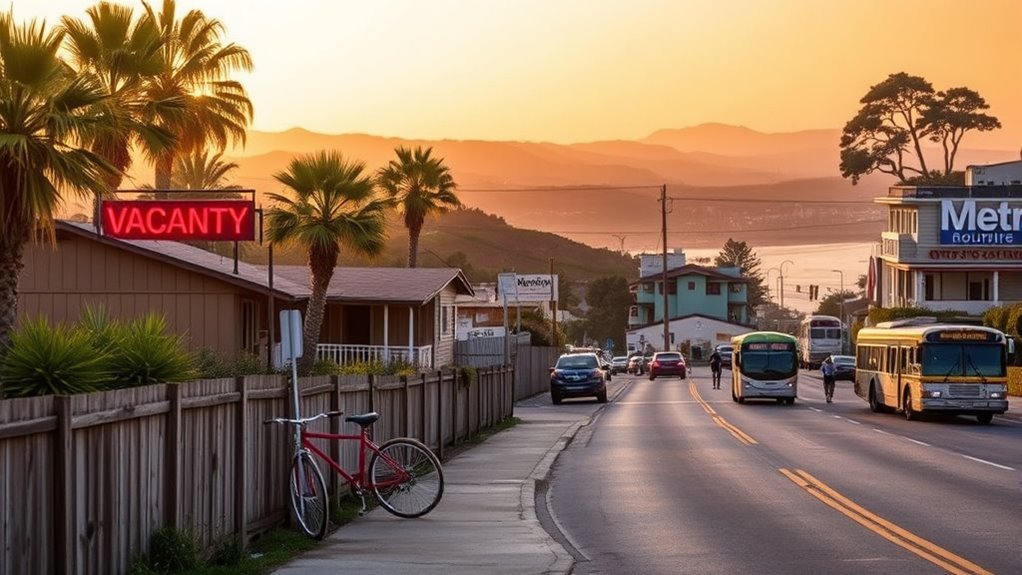
You can manage a short stay without a car when you book near the Boardwalk, Cowell Beach, West Cliff, or Downtown and plan to focus on central attractions. Walking, buses, bicycles, rideshares, and the seasonal shuttle can cover many common trips.
A car becomes more useful when you want to visit Aptos, multiple state beaches, mountain parks, dispersed trailheads, wineries, or several communities in one day. It also helps with luggage, early departures, and evening travel when bus frequency is lower.
Using the Santa Cruzer Shuttle
The Santa Cruzer Beach & Downtown Shuttle connects Downtown with the beach and Wharf area. As of July 2026, it operates from noon to 8 p.m. on weekends and holidays between Memorial Day weekend and Labor Day. The regular fare is $1 per ride, although a limited number of complimentary tickets may be available at designated visitor locations.
Because its schedule is seasonal and may change for special events, check the city page before depending on it for a hotel transfer or timed reservation.
Using Santa Cruz METRO
Santa Cruz METRO connects Santa Cruz with Capitola, Aptos, Scotts Valley, Live Oak, Watsonville, the San Lorenzo Valley, and other parts of the county. It also operates Highway 17 service toward San Jose.
As of July 30, 2026, the listed adult local cash fare is $2 for one ride and $6 for a day pass. Fares, routes, stops, and payment options can change, so use the official trip planner and service-alert page on the day of travel.
Walking and Cycling
Downtown, the Boardwalk district, the Wharf, Cowell Beach, and parts of West Cliff are practical on foot. West Cliff Drive is especially popular for oceanfront walks and bike rides.
Cycling can work well for short coastal trips, but facilities are not continuous on every street. Check your route before leaving, use lights after dark, lock the bicycle securely, and ask the hotel whether it provides indoor or monitored storage.
Parking and Rideshares
Beach parking becomes more competitive on sunny weekends and event days. Boardwalk parking prices vary by operating schedule and date, while Downtown garages may be useful when paired with walking or the Santa Cruzer.
Before driving, compare your hotel’s overnight parking charge with public parking limits. Never leave luggage, electronics, surf equipment, or other visible valuables in a parked vehicle. For late-night or one-way trips, a rideshare may be simpler than retrieving a car from a busy beach lot.
Warning: Santa Cruz surf can be cold and unpredictable. Rip currents, large waves, slippery rocks, and sudden surges can occur even on clear days. Check posted warnings and lifeguard coverage, keep children close, stay back from wet rocks, and never turn your back on the ocean.
When to Visit and What to Pack
Late spring through early fall brings the strongest beach-trip demand, more Boardwalk activity, and the greatest pressure on beachfront rooms and parking. Weekdays are generally easier than sunny weekends. Fall and winter can feel quieter, but rain, wind, shorter days, and reduced attraction schedules may affect plans.
Santa Cruz can be cool and foggy near the water even when inland California is hot. Pack layers, a light wind-resistant jacket, comfortable walking shoes, sun protection, and a reusable water bottle. Bring warmer clothing for sunset, morning whale-watching trips, and shaded redwood parks.
Frequently Asked Questions
Are there pet-friendly beaches or dog parks nearby?
Yes, but each location has its own rules. The City of Santa Cruz allows dogs off leash at Mitchell’s Cove before 10 a.m. and after 4 p.m. It also lists designated areas at DeLaveaga, Mimi De Marta, Pacheco, Branciforte, Grant Street, Ocean View, and University Terrace. At Seacliff State Beach, dogs must be attended and kept on a leash no longer than six feet. Dogs are not allowed at Cowell Beach, Main Beach, or the Wharf. Check the current city rules before visiting.
What is the best time of year for whale watching?
The best timing depends on the species. Gray whales migrate south through Monterey Bay in winter, and cow-calf pairs may travel north close to shore from March through May. Humpback whales begin arriving around March and may feed in the sanctuary through November. Wildlife is never guaranteed, so check recent sightings and marine conditions before booking.
Are grocery stores or grocery-delivery services close to hotels?
Most central Santa Cruz, Live Oak, Capitola, and Aptos lodging areas are within a short trip of a supermarket, neighborhood market, or convenience store. Delivery coverage depends on the hotel address and provider. Ask whether the front desk accepts grocery deliveries and whether your room includes a refrigerator, microwave, kitchenette, or dishes.
Do hotels offer bicycle or surfboard storage?
Some do, but policies vary. Ask whether storage is indoors, locked, monitored, and available overnight. Also confirm whether there is a fee, a reservation requirement, a size limit, or a rule against bringing bicycles and surfboards into guest rooms.
How safe is late-night walking in Downtown Santa Cruz?
Conditions can vary by street and time, so avoid relying on a blanket safety rating. Use well-lit and active routes, keep your phone and valuables out of sight, remain aware of your surroundings, and travel with another person when possible. Use a rideshare or taxi when a route feels isolated or you are uncomfortable walking.
Can you stay in Santa Cruz without a car?
Yes. A car-free stay is most practical near the Boardwalk, Cowell Beach, West Cliff, or Downtown. Walking, Santa Cruz METRO, rideshares, bicycles, and the seasonal Santa Cruzer can cover many central trips. A car is more useful for Aptos, mountain parks, remote trailheads, and multi-stop coastal itineraries.
Which area is best for families?
The Boardwalk and Cowell Beach are the most convenient for families focused on rides, sand, the Wharf, and short walks. Beach Street Inn & Suites is useful when a pool, laundry, or kitchen-equipped room matters. Capitola can suit families seeking a smaller village atmosphere, while Aptos works better for a quiet beach-centered stay with a car.
How many nights should you spend in Santa Cruz?
Two nights are enough for the Boardwalk, Downtown, West Cliff, and one nearby beach. Three or four nights give you time for Capitola, Aptos, redwood parks, a whale-watching trip, or a slower beach day without packing every activity into one schedule.
Conclusion
The best place to stay in Santa Cruz is the area that removes the most friction from your plans. Choose the Boardwalk or Cowell Beach for attractions and walkability, Downtown for food and evening activity, West Cliff for views, Pleasure Point for surfing, Capitola for village charm, Aptos for a quieter resort trip, or Scotts Valley for redwoods and Highway 17 access.
Compare the final hotel price rather than the room rate alone, confirm parking and storage before arrival, and check current transit and beach rules. Pack layers, respect the ocean, and allow enough time to enjoy both the coast and the redwoods.
Sources
- City of Santa Cruz — Santa Cruzer Beach & Downtown Shuttle — current shuttle route, operating season, hours, fare, and parking information.
- Santa Cruz METRO — Routes and Schedules — county bus coverage and trip-planning information.
- City of Santa Cruz — Dog Off-Leash Areas — approved dog parks, Mitchell’s Cove hours, and prohibited locations.
- California State Parks — Natural Bridges State Beach — ocean, tide-pool, pet, and visitor-safety guidance.
- Monterey Bay National Marine Sanctuary — Seasons in the Sanctuary — seasonal gray-whale, humpback-whale, and other wildlife patterns.
- Santa Cruz Beach Boardwalk — Giant Dipper — opening year and National Historic Landmark status.

