
Last Updated on July 24, 2026 by Daniel Globe
Choosing where to stay in Los Angeles can shape almost every day of your trip. The best base depends less on finding one “perfect” neighborhood and more on staying close to the places you plan to visit most. West Hollywood works well for nightlife and central sightseeing, Santa Monica puts the beach at your doorstep, Beverly Hills favors luxury and shopping, and Universal City or Burbank can simplify a studio-focused trip.
Quick Answer
For most first-time visitors, West Hollywood is a strong all-around base because dining, nightlife, Beverly Hills, Museum Row, and Hollywood are within practical reach. Choose Santa Monica for a beach-first trip, Universal City or Burbank for studio attractions, Beverly Hills for luxury, or Los Feliz and Silver Lake for a more local feel.
Key Takeaways
- Choose your base around your must-do attractions. Crossing Los Angeles repeatedly can waste more time than staying a few miles closer to the places you care about.
- West Hollywood is a balanced choice for nightlife, dining, shopping, and access to central LA attractions, although it does not have a Metro Rail station.
- Santa Monica is best for a beach-focused stay and has direct E Line rail service toward central Los Angeles.
- Universal City and nearby Burbank make sense for studio trips, while Beverly Hills is better suited to travelers prioritizing luxury and Rodeo Drive.
- Check short-term-rental rules before booking. Santa Monica, the City of Los Angeles, and neighboring cities do not all regulate vacation rentals the same way.
Note: Travel guides often use “Los Angeles” to describe the broader visitor region. West Hollywood, Beverly Hills, Santa Monica, Burbank, and Malibu are separate cities or municipalities rather than neighborhoods inside the City of Los Angeles.
Disclosure: As an Amazon Associate I earn from qualifying purchases. Some links on this page are affiliate links, at no extra cost to you.
Deciding Where to Stay in Los Angeles: Key Considerations
LA’s size and traffic make location unusually important. Before booking, list the three or four attractions that matter most and group them geographically. A traveler planning Griffith Observatory, Hollywood, Museum Row, and West Hollywood has different lodging needs from someone planning Santa Monica Beach, Venice, Malibu, and the Getty Villa.
For a broadly central trip, West Hollywood, Beverly Hills, Los Feliz, and Silver Lake can all work, but they serve different styles. West Hollywood puts nightlife, dining, Melrose, and the Sunset Strip close at hand. Beverly Hills favors luxury and shopping. Los Feliz and Silver Lake offer a more residential, local atmosphere and better access to Griffith Park than to the coast.
For a beach-first itinerary, Santa Monica is the easiest of these bases to recommend. You can walk to the beach, Pier, restaurants, and shopping while also using Metro’s E Line for trips inland. Malibu is better treated as a coastal destination or day trip for many visitors because its attractions are spread along the coast and a car is much more useful there.
Downtown LA works particularly well when your plans center on museums, concerts, sports, conventions, Little Tokyo, the Historic Core, or events near the central rail network. Universal City, Studio City, and nearby Burbank become more practical when Universal Studios Hollywood or studio-related attractions dominate the schedule.
Pro Tip: Put your must-see attractions into a map before choosing a hotel. A less glamorous hotel that sits inside your main sightseeing cluster can give you a better trip than a famous property that requires long cross-city drives every day.
Where to Stay in Los Angeles: Central, Beach, or Attraction-Focused?
There is no single best area for every Los Angeles trip. Use this comparison as a starting point, then check your own itinerary before booking.
| Area | Best For | Main Trade-Off | Transit Snapshot |
| West Hollywood | First trips, nightlife, dining, shopping | Higher hotel rates; no Metro Rail station | Bus, rideshare, taxi, or car |
| Beverly Hills | Luxury, Rodeo Drive, polished surroundings | Premium prices | D Line reaches Wilshire/La Cienega; central Beverly Hills rail construction continues |
| Santa Monica | Beach, walking, coastal dining | Farther from Universal, Griffith, and eastern LA | E Line plus Big Blue Bus |
| Universal City / Burbank | Universal Studios and studio-focused trips | Poor choice for a beach-led itinerary | B Line at Universal City/Studio City; hotel shuttles available |
| Los Feliz / Silver Lake | Local feel, food, indie nightlife, Griffith Park | Longer coastal trips | Bus, rideshare, car; rail access varies by exact location |
| Hollywood | Walk of Fame, classic sights, first-time sightseeing | Busy and tourist-heavy in core areas | Strong B Line access |
| Downtown LA | Culture, events, sports, transit | Less convenient for beaches and some westside sights | Excellent regional rail and Metro connections |
| Koreatown | Food, nightlife, central-city access | Dense streets and limited beach convenience | Buses plus B/D Line access depending on location |
Staying in West Hollywood
West Hollywood is one of the strongest all-around bases for travelers who want restaurants, nightlife, shopping, and a relatively central position. The Sunset Strip runs through the city’s northwest side, while Robertson Boulevard, Melrose Avenue, the Design District, and the Rainbow District add shopping, dining, and nightlife within a compact area.
The hotel lineup ranges from large luxury properties to intimate stays. One important 2026 update: the former Pendry West Hollywood now operates as The Sun Rose West Hollywood. The London West Hollywood remains an all-suite luxury option, while Petit Ermitage offers a smaller, secluded atmosphere. The Charlie Hotel is another distinctive choice, with historic cottage-style suites and a quieter residential setting.
West Hollywood also works well for trips that include LACMA, the Academy Museum, Beverly Hills, Melrose, and Hollywood. Griffith Observatory and the Hollywood Sign are farther east, so they should be planned as separate outings rather than assumed to be around the corner.
The main trade-offs are cost and transportation. West Hollywood is walkable within its own commercial districts, but it does not currently have a Metro Rail station. Buses, rideshares, taxis, and cars remain important for trips beyond the immediate area. Late-night activity along the Sunset Strip and other nightlife corridors may also be a drawback for travelers who prioritize quiet evenings.
Staying in Beverly Hills
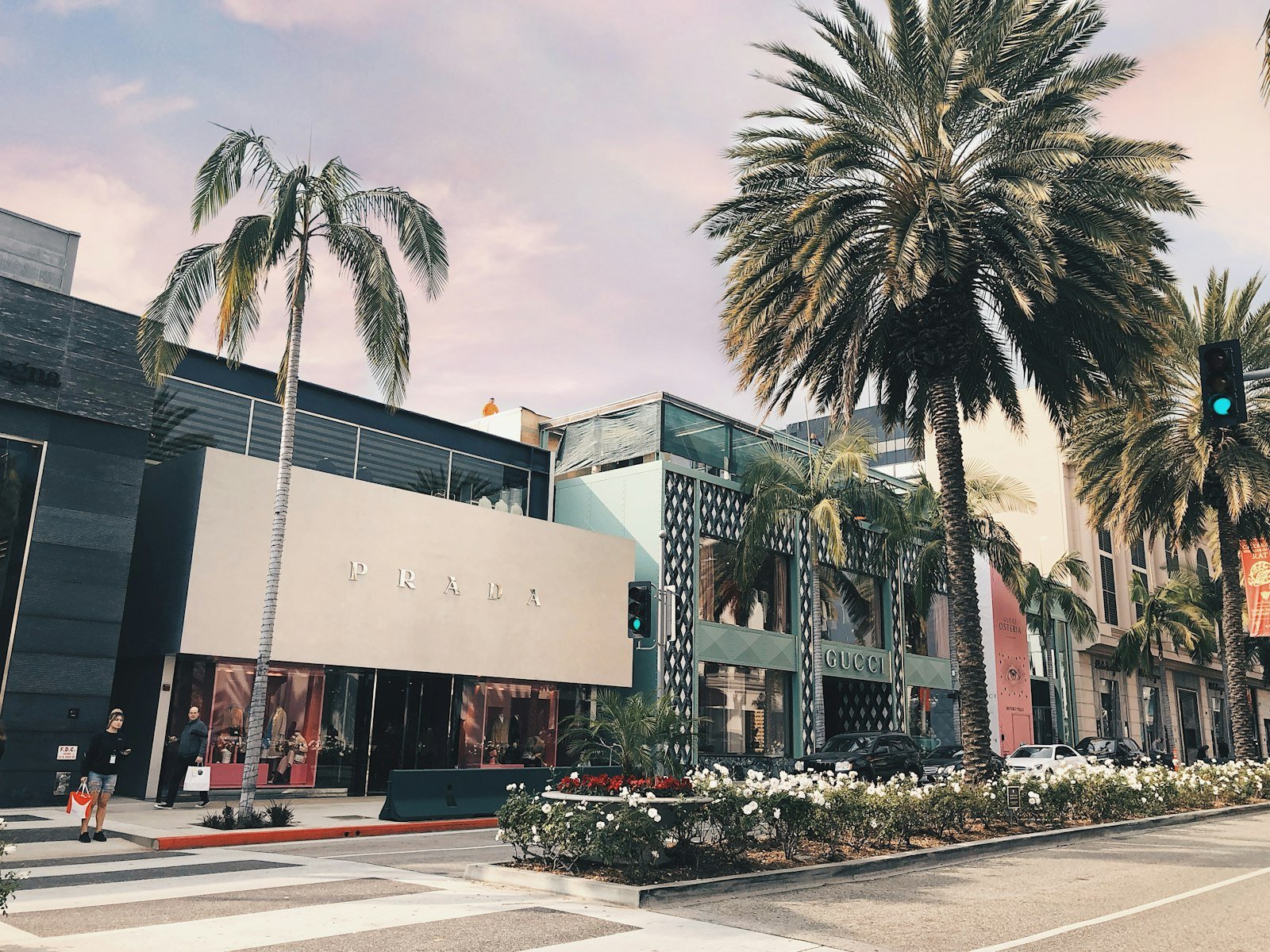
Beverly Hills makes the most sense when luxury hotels, upscale shopping, polished streets, and fine dining are priorities. The Beverly Hills Hotel, The Peninsula Beverly Hills, and The Maybourne Beverly Hills remain leading high-end options, while Rodeo Drive anchors the city’s best-known shopping district.
The location is also useful for culture-focused travelers. LACMA and the Academy Museum are east along the Wilshire corridor, while West Hollywood, Melrose, Bel Air, and Century City are all practical additions to a Beverly Hills itinerary. LACMA is particularly notable in 2026 because its new David Geffen Galleries are now open.
Public transit has also improved. As of July 2026, Metro’s D Line extension reaches Wilshire/La Cienega on the eastern side of Beverly Hills. Construction continues farther west, including the future central Beverly Hills and Century City stations, so travelers staying around Rodeo Drive should not assume that rail reaches the heart of the shopping district yet.
Beverly Hills is a convenient premium base, but it is not the best match for travelers who want budget lodging, beach access outside the hotel each morning, or nightlife immediately outside their door.
Staying in Santa Monica
Santa Monica is one of the easiest places to recommend for travelers who want the coast to be part of daily life. Santa Monica Beach, the Pier, Ocean Avenue, beachfront walking and cycling paths, restaurants, and shopping can all be combined without spending the whole day in a car.
Santa Monica Proper is a design-forward option around Wilshire Boulevard and 7th Street, while Viceroy Santa Monica sits closer to the beach on Ocean Avenue. Montana Avenue offers another walkable shopping and dining area north of Downtown Santa Monica.
The location is particularly useful for coastal outings. Malibu and the Getty Villa are natural day-trip options, and Venice is easy to pair with Santa Monica. The trade-off is distance from Universal Studios, Griffith Observatory, Silver Lake, and other inland or eastern attractions, where road travel can become lengthy during busy periods.
Santa Monica also has one of the clearer transit advantages among LA’s beach areas. Metro’s E Line terminates in Downtown Santa Monica and connects east toward central Los Angeles, while the city’s Big Blue Bus network provides additional local and regional connections.
Note: Do not assume that an entire-home short-term vacation rental is legal in Santa Monica. The city prohibits unhosted short-term vacation rentals. Legal stays of 30 consecutive days or less generally fall under regulated home-sharing in which the host remains on-site. Hotels are the simplest option; for a home-share, verify that the listing complies with current city requirements.
Staying in Universal City & West Burbank
If Universal Studios Hollywood is one of the main reasons for your trip, Universal City and nearby parts of the Valley can save a great deal of backtracking. Hilton Los Angeles/Universal City sits adjacent to Universal Studios and offers a complimentary shuttle, making it a straightforward park-focused choice.
The Garland is another useful option. It is located in North Hollywood rather than Universal City itself and runs a complimentary trolley to Universal Studios and the Universal City Metro station. This is more dependable planning information than assuming a fixed drive time in traffic.
In nearby Burbank, The Tangerine provides a smaller boutique alternative near major production facilities. Burbank is especially convenient for travelers with plans involving Warner Bros., Disney, or other studio-related destinations.
Studio City and Toluca Lake are also worth considering if you prefer a residential setting or need more space. Ventura Boulevard supplies a long corridor of restaurants and shops, while Laurel Canyon Boulevard links the area toward Hollywood.
Vacation rentals are available in some parts of the City of Los Angeles, but they are regulated. Legal short-term listings should comply with the city’s Home-Sharing program and display a city-issued registration number when required.
Metro’s B Line serves Universal City/Studio City, giving this area a direct rail connection to Hollywood and Downtown LA. The main downside is coastal access: Santa Monica, Venice, and Malibu are much less convenient from here than from a westside hotel.
Staying in Los Feliz & Silver Lake
Los Feliz and Silver Lake are good choices when you want restaurants, cafés, nightlife, and a stronger neighborhood feel without making the biggest tourist districts your home base.
In Los Feliz, Hillhurst Avenue and nearby Vermont Avenue provide plenty of dining and shopping. Barnsdall Art Park and Frank Lloyd Wright’s Hollyhock House sit nearby, while Griffith Park and Griffith Observatory are much easier to incorporate from this part of the city than from Santa Monica.
Hotel Covell describes its location as the Los Feliz/East Hollywood area, making it a useful boutique option near Hollywood Boulevard. In Silver Lake, Sunset Boulevard and the Sunset Junction area support an active restaurant, bar, music, and indie-shopping scene. Silver Lake Pool & Inn remains one of the neighborhood’s most recognizable boutique hotels, with an elevated pool deck and on-site dining.
These areas are less convenient for a beach-focused itinerary. A trip to Santa Monica or Malibu can take substantially longer during busy traffic periods, so travelers planning daily beach time are usually better off staying farther west.
Staying in Hollywood
Hollywood deserves separate consideration from West Hollywood. They are different places with different strengths. Hollywood is the more practical base for travelers who want the Walk of Fame, TCL Chinese Theatre, Dolby Theatre, Pantages Theatre, Hollywood Bowl, and classic entertainment landmarks close by.
Staying near the Hollywood/Highland area also puts you on Metro’s B Line, which makes it easier to reach Universal City to the north and Downtown LA to the southeast. That rail connection can be valuable if you would rather not drive for every outing.
The drawback is atmosphere. Hollywood’s busiest tourist corridors can feel crowded and commercial, and conditions can change noticeably from block to block. Check the exact hotel location instead of booking based only on a “Hollywood” address. West Hollywood is usually the stronger choice for restaurant and nightlife variety, while Hollywood wins for iconic sights and rail access.
Other Good Areas to Stay in Los Angeles
Koreatown
Koreatown is worth considering for food-focused travelers who want a dense, central-city base with late-night dining and useful transit. Depending on the exact hotel, B and D Line stations can make Downtown and parts of central LA easier to reach. It is less convenient for travelers whose itinerary revolves around the beach.
Culver City
Culver City can provide a middle-ground option between the coast and central Los Angeles. Its restaurants, entertainment businesses, and E Line access make it useful for travelers who want westside access without staying directly on the beach.
Venice & Marina del Rey
Venice offers a livelier, more eclectic coastal atmosphere than Santa Monica, with the beach, Ocean Front Walk, Abbot Kinney, and the canals nearby. Marina del Rey is quieter and better suited to travelers drawn to the waterfront and marina environment. Both are less convenient for Universal Studios, Griffith Park, and many eastside attractions than a central LA base.
Staying in Downtown Los Angeles
Downtown Los Angeles can be a very practical base when your itinerary is actually downtown-focused. Grand Central Market, The Broad, Angels Flight Railway, Little Tokyo, the Arts District, performance venues, sports arenas, and major transit connections can all justify staying here.
Walkability varies by district and by your exact hotel. Bunker Hill also has steep grades, so attractions that look close on a map can involve more elevation than expected. Metro Rail, buses, and DASH services can reduce the need to move a car between downtown destinations.
Downtown is especially useful for travelers attending a convention, concert, sporting event, or performance, and Union Station provides regional rail connections. The LAX FlyAway service also links Union Station with Los Angeles International Airport.
For a broader sightseeing trip, DTLA can work as part of a split stay, pairing a few nights downtown with West Hollywood, Beverly Hills, or Santa Monica. It is less efficient as a single base when most of your plans involve Malibu, Santa Monica, Beverly Hills, and other westside destinations.
General Planning Considerations for LA Stays
The smartest LA lodging choice usually comes from working backward from your itinerary rather than choosing the most famous neighborhood.
- Group attractions by area. Do Hollywood and Griffith together, Museum Row with Beverly Hills or West Hollywood, and Santa Monica with Venice or Malibu instead of crisscrossing the region repeatedly.
- Check current transit before booking. Metro’s network changed significantly in 2026 with the opening of the first D Line extension stations. The B Line is useful for Hollywood and Universal City, while the E Line reaches Downtown Santa Monica.
- Decide how much you actually want to drive. A rental car is useful for many itineraries, but hotel parking can be expensive. Compare parking, valet, and mandatory destination or amenity fees before judging a hotel’s nightly price.
- Check the exact block, not just the neighborhood name. Large districts such as Hollywood and Downtown can change noticeably within a short distance.
- Consider your airport. LAX generally fits westside and coastal itineraries better geographically, while Hollywood Burbank Airport can be particularly convenient for Burbank, Universal City, Studio City, and parts of the Valley when your flight options make sense.
- Verify short-term-rental legality. Santa Monica, Los Angeles, West Hollywood, Beverly Hills, and other nearby cities have their own rules. Do not assume that a listing is legal simply because it appears on a booking platform.
If your trip is long enough and you want both intensive beach time and several days around Hollywood, Universal, or Downtown, a split stay can be more comfortable than commuting across the region every day. A few nights near the coast followed by a few nights in central LA can turn long transfers into shorter sightseeing days.
Conclusion
The best place to stay in Los Angeles depends on what you want your days to look like. West Hollywood is a flexible choice for many first-time trips, Beverly Hills suits luxury and shopping, Santa Monica is strongest for daily beach access, and Universal City or Burbank simplifies studio-focused itineraries. Los Feliz and Silver Lake provide a more local atmosphere, while Hollywood and Downtown make sense when their specific sights or transit connections match your plans. Choose the area closest to your priorities, and LA becomes much easier to enjoy.
Sources
- LA Metro — Schedules and System Information — current B, D, and E Line service.
- LA Metro — D Line Subway Extension — 2026 Wilshire corridor opening and ongoing Beverly Hills/Century City construction.
- City of Santa Monica — Residential Rentals and Home-Sharing — current rules for short-term stays and prohibited vacation rentals.
- Los Angeles City Planning — Home-Sharing — City of Los Angeles short-term-rental registration requirements.
- Visit West Hollywood — Hotels — current West Hollywood lodging information and hotel names.
- Los Angeles County Museum of Art — current museum information and the 2026 opening of the David Geffen Galleries.
