
Last Updated on July 30, 2026 by Daniel Globe
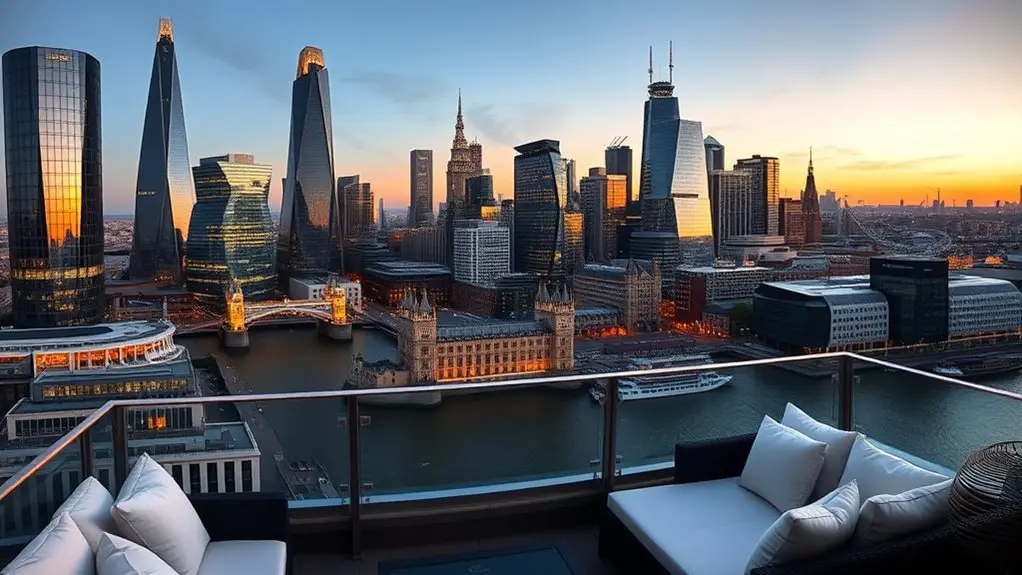
Choosing where to stay in the City of London is easier once you understand the Square Mile’s distinct areas. St Paul’s and Blackfriars suit sightseeing, Bank and Monument put you in the historic financial core, Liverpool Street offers the strongest transport links, and Tower Hill works well for landmark views. Your best base depends on whether you value atmosphere, nightlife, accessibility, space, or a short commute.
Quick Answer
For a first visit, stay near St Paul’s, Blackfriars, Bank, or Monument for walkable landmarks and easy transport. Choose Liverpool Street for the Elizabeth line and nearby nightlife, Tower Hill for historic sights and river access, or Barbican and Smithfield for culture and a quieter neighborhood feel.
Key Takeaways
- St Paul’s and Blackfriars are strong all-round choices for first-time visitors who want historic sights and convenient transport.
- Bank and Monument place you in the heart of the Square Mile, but the business district can feel quiet on weekends.
- Liverpool Street is best for the Elizabeth line, mainline trains, restaurants, and quick access to Spitalfields and Shoreditch.
- Tower Hill and the eastern edge work well for the Tower of London, Tower Bridge, river walks, and selected landmark-view rooms.
- Hostels are limited inside the City boundary, so compact budget hotels often provide more realistic low-cost options.
- Check the exact room view, hotel accessibility, station entrance, and weekend atmosphere before booking.
Note: The City of London is the historic Square Mile, not the whole of central London. Covent Garden, the South Bank, King’s Cross, Paddington, and The Shard are useful reference points but are outside the City’s administrative boundary. The City stretches approximately from Temple and Chancery Lane in the west to Liverpool Street and the Tower area in the east.
Disclosure: As an Amazon Associate I earn from qualifying purchases. Some links on this page are affiliate links, at no extra cost to you.
Best Areas to Stay in the City of London
The City is compact enough to cross on foot, but each part has a different atmosphere. The table below compares the most practical bases for leisure and business travelers.
| Area | Best For | Useful Stations | Main Tradeoff |
|---|---|---|---|
| St Paul’s and Blackfriars | First visits, sightseeing, couples, Tate Modern access | St Paul’s, Blackfriars, City Thameslink | Less nightlife than the West End |
| Bank and Monument | Historic core, business trips, short walks to major City sights | Bank, Monument, Cannon Street | Very busy at weekday commuting times and quieter on Sundays |
| Liverpool Street and Bishopsgate | Heathrow access, dining, nightlife, rail connections | Liverpool Street, Moorgate | Crowded around the station and nearby entertainment streets |
| Barbican and Smithfield | Culture, longer stays, quieter evenings, architecture | Barbican, Moorgate, Farringdon | Concrete walkways and multilevel routes can be confusing at first |
| Tower Hill and Minories | Tower sights, families, river walks, landmark views | Tower Hill, Tower Gateway, Fenchurch Street | Some nearby hotels and attractions sit just outside the City boundary |
| Fleet Street and Temple | Quiet historic streets, legal district, West End access | Temple, Blackfriars, City Thameslink | Smaller accommodation selection than Liverpool Street |
The Historic Core: St Paul’s, Bank, and Monument
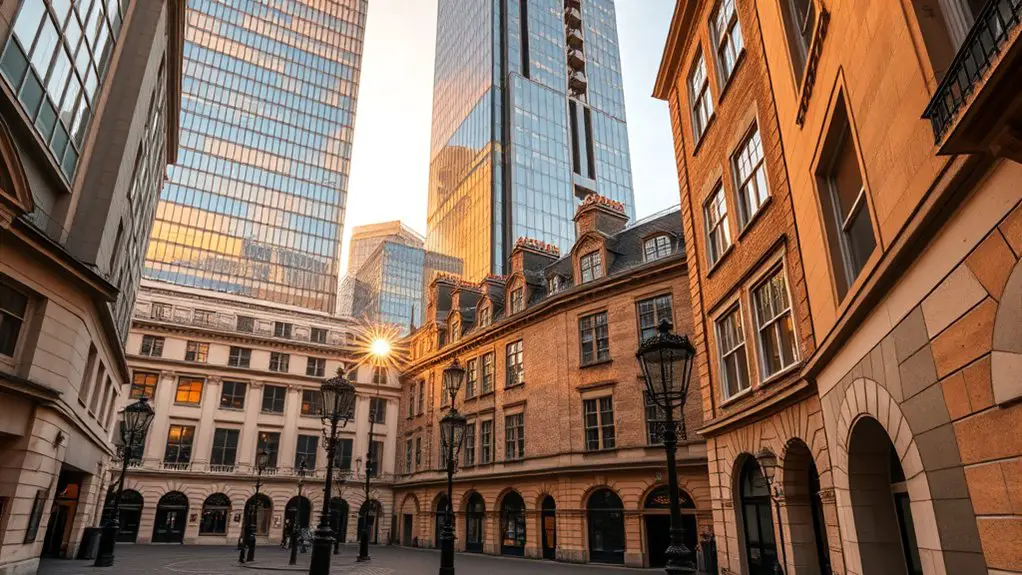
The City of London’s historic core blends Roman remains, medieval lanes, Christopher Wren churches, Victorian commercial buildings, and modern offices. Staying near St Paul’s, Bank, Monument, or Cannon Street puts you within walking distance of Guildhall, Leadenhall Market, the Monument, the Thames, and St Paul’s Cathedral.
St Paul’s and Blackfriars are especially convenient for leisure trips. You can walk across the Millennium Bridge to Tate Modern and the South Bank while keeping your hotel inside the City. Blackfriars also offers National Rail and Underground connections.
Bank and Monument suit travelers who want the financial district at their door. The streets are energetic during the working week, and restaurants around Bloomberg Arcade, the Royal Exchange, and Cannon Street are easy to reach. However, some lanes become much quieter after office hours and on Sundays.
Fleet Street and Temple provide a calmer western base near historic legal institutions and the boundary with Westminster. This area works well when you want to divide your time between the City, Covent Garden, and the West End without staying in their busiest streets.
Pro Tip: Check the hotel’s restaurant and room-service schedule when booking a weekend stay. Some businesses in the financial core reduce their Saturday or Sunday hours, even though major visitor areas around St Paul’s, Tower Hill, and Liverpool Street remain active.
Bank, Bishopsgate, and the Skyscraper District

The eastern City skyline rises around Bishopsgate, Leadenhall Street, and Fenchurch Street. Notable buildings include 22 Bishopsgate, 20 Fenchurch Street, the Leadenhall Building, and 8 Bishopsgate. The Shard is visible across the Thames but stands at London Bridge in Southwark rather than inside the City.
Where to Stay for Skyline Views
Liverpool Street and Bishopsgate offer the strongest combination of modern architecture, transport, restaurants, and high-end accommodation. Pan Pacific London, at 80 Houndsditch, is a verified luxury option in the Square Mile near Liverpool Street station.
For the most impressive views, do not assume that a tall building or expensive room automatically faces the skyline. Hotels divide rooms by floor, orientation, landmark, and view type. A standard room may face an internal courtyard or neighboring building even when promotional photographs show a panorama.
Pro Tip: Reserve a room category that explicitly says “river view,” “Tower view,” “city view,” or “high floor.” Save the category description in your confirmation and ask the hotel whether the view is guaranteed or only requested.
Rooftop Views Without Booking a View Room
You can also enjoy the skyline without paying for a premium hotel room. Horizon 22 at 22 Bishopsgate has a public viewing platform on Level 58, while 20 Fenchurch Street contains the Sky Garden. Advance reservations and admission arrangements can change, so check the official pages before visiting.
The best City skyline experience may come from a public viewing gallery rather than an expensive hotel room with an uncertain orientation.
Cultural Areas and Boutique Stays
For arts, architecture, and a more residential atmosphere, look north and west of the financial core. The Barbican is known for its performing-arts complex, conservatory, brutalist architecture, and elevated walkways. Smithfield combines market history, restaurants, St Bartholomew’s Church, and convenient access to Farringdon.
The former Museum of London building at London Wall is closed. The renamed London Museum at Smithfield is scheduled to open its permanent galleries on November 28, 2026. Before that date, visitors can use the Barbican, Guildhall Art Gallery, local churches and historic sites, or travel to London Museum Docklands.
Travelers wanting historic interiors can consider The Ned, housed in a former bank at 27 Poultry. Its appeal is the grand banking hall, restaurants, hotel facilities, and period character rather than guaranteed Thames views.
Fleet Street and Temple offer another form of historic atmosphere. Their lanes, churches, courtyards, and legal buildings feel removed from the glass towers even though Bank and St Paul’s remain within walking distance.
Note: Smithfield’s cultural offer changes on November 28, 2026, when the new London Museum is scheduled to open. Travelers visiting earlier should not plan around the museum being available.
Riverside Stays and Thames Views
The City’s southern edge follows the Thames, but only a limited number of accommodations sit directly beside the river. Blackfriars, Queenhithe, Broken Wharf, and Tower Hill provide the most practical access to riverside walks.
A river-facing room can provide views toward Tate Modern, Shakespeare’s Globe, the Millennium Bridge, Tower Bridge, or The Shard. The exact scene depends on the property, floor, and direction of the room. Trees, neighboring buildings, bridges, and construction can also affect the view.
| Verified Property | Location and Style | View Advice |
|---|---|---|
| Locke at Broken Wharf | Serviced apartments near St Paul’s and the Millennium Bridge | Book the named City Studio River View category rather than a standard studio. |
| Four Seasons Hotel London at Tower Bridge | Luxury hotel at Ten Trinity Square near Tower Hill | Selected rooms and residences offer Tower, bridge, or skyline views; verify the booked category. |
| Premier Inn London Bank (Tower) | Value-focused hotel near Monument and Cannon Street | Some rooms are marketed with views, but the exact outlook should be confirmed before booking. |
Warning: “Near the Thames” and “river view” are not the same. A hotel may be a short walk from the waterfront while having no guest rooms that face the river.
Budget Hotels and Hostels
The City is one of London’s most expensive central districts, and traditional backpacker hostels are limited within the Square Mile itself. Travelers on a tighter budget will usually find more compact chain hotels than large social hostels.
Verified lower-cost options include hub by Premier Inn London City Bank, near Bank, Cannon Street, and Monument, and hub by Premier Inn London Tower Bridge. Their compact rooms can suit short sightseeing or business stays when location matters more than floor space.
For a hostel atmosphere, broaden the search slightly beyond the formal City boundary toward Aldgate, Spitalfields, Southwark, or the area north of Liverpool Street. Check the walking route carefully because a property marketed as “City,” “Liverpool Street,” or “Tower Bridge” may sit in an adjacent borough.
How to Save on a City of London Stay
- Compare weekday and weekend rates. Business demand can make midweek stays expensive, while some City hotels discount quieter weekends.
- Check whether breakfast is included or available nearby at a lower cost.
- Compare refundable and nonrefundable rates before choosing the cheapest headline price.
- Look at the total price, including taxes, deposits, breakfast, parking, extra beds, and pet fees.
- Consider a compact room for a one- or two-night stay, but review the floor area when traveling with large luggage.
- Search Blackfriars, Farringdon, Aldgate, London Bridge, and Southwark when rates inside the Square Mile are too high.
Luxury Hotels in Prime City Locations
Luxury hotels in the City range from grand historic buildings to modern properties near Liverpool Street. The best option depends on whether you prefer heritage, wellness facilities, restaurants, transport access, or landmark views.
- The Ned suits travelers who value historic interiors, restaurants, wellness facilities, and a central Bank location.
- Pan Pacific London works well for modern luxury, Liverpool Street access, and the eastern financial district.
- Four Seasons Hotel London at Tower Bridge offers a landmark setting near Tower Hill, the Tower of London, and the Thames.
Luxury labels do not guarantee that every facility is included. Rooftops, pools, lounges, private clubs, breakfast, spa treatments, and late checkout may have access rules or additional charges. Review the rate conditions and guest entitlements before paying.
Serviced Apartments for Extended Stays
Serviced apartments combine hotel-style support with features that make longer visits easier. They are especially useful for business assignments, family trips, dietary needs, or stays lasting more than a few nights.
A typical apartment may include a kitchenette or full kitchen, a dining area, laundry access, and more living space than a standard hotel room. Housekeeping frequency varies, so a property described as serviced may not clean the apartment every day.
| Feature | Benefit | What to Verify |
|---|---|---|
| Equipped kitchen | Prepare meals and reduce restaurant spending | Oven, hob, microwave, cookware, and refrigerator size |
| Housekeeping | Less daily maintenance during a longer stay | Daily, weekly, or request-only service |
| Laundry access | Pack fewer clothes for an extended trip | In-room machine, shared laundry, detergent, and fees |
| Living space | More room for work, meals, or family time | Actual floor area, bed type, doors, and occupancy limit |
Locke at Broken Wharf is a verified riverside aparthotel near St Paul’s. Four Seasons also operates residences at Ten Trinity Square. Compare minimum stays, cancellation terms, housekeeping, and kitchen facilities rather than assuming every serviced apartment follows the same model.
Best Areas for Transport Connections
Most City hotels are close to several stations, but the most convenient hub depends on your route.
- Liverpool Street: Best for the Elizabeth line, Stansted services, mainline trains, Underground lines, and nearby dining.
- Bank and Monument: Useful for the Central, Northern, Waterloo & City, District, and Circle lines, plus the DLR. The connected complex is large, so allow extra interchange time.
- Blackfriars: Helpful for Thameslink, National Rail, the District line, the Circle line, and walking across the river.
- Farringdon: Strong for the Elizabeth line, Thameslink, Heathrow, and trips north or south through London.
- Tower Hill and Tower Gateway: Convenient for the eastern City, the Tower area, the District and Circle lines, and the DLR.
- Cannon Street: Practical for Bank, Monument, St Paul’s, and southeastern rail services.
Liverpool Street is particularly useful for Heathrow because the Elizabeth line provides a direct cross-London route. Airport journey times and service patterns can change during engineering work, so check the route on the day of travel.
Accessibility and Step-Free Travel
Do not judge accessibility only by the distance from a hotel to a station. Confirm the entire route from street to platform and from platform to train. At Bank, the Cannon Street entrance provides step-free access to the Northern line and DLR, but that does not make every route through the large Bank–Monument complex step-free.
Blackfriars and Tower Hill have lifts, while Liverpool Street and Farringdon provide important step-free connections, including Elizabeth line access. Lift outages can still disrupt a planned route.
Warning: Check TfL’s current accessibility information before each journey. A station can have lifts while still having a step or gap between the platform and train, restricted access to particular lines, or a temporary lift closure.
Which City Area Is Best for Your Trip?
First-Time Visitors
Choose St Paul’s, Blackfriars, Bank, or Monument. These areas provide a strong mix of historic landmarks, river access, restaurants, and transport without placing you at the noisiest edge of central London.
Business Travelers
Stay near the office or meeting venue whenever possible. Bank, Moorgate, Bishopsgate, Liverpool Street, and Fenchurch Street minimize commuting time to the main financial clusters.
Families
St Paul’s and Tower Hill offer recognizable sights, riverside walks, and straightforward sightseeing. Check room occupancy carefully because some London rooms cannot accept an extra bed even when the hotel welcomes children.
Couples
St Paul’s and Broken Wharf work well for evening walks along the Thames, while Bank and Bishopsgate provide restaurants, rooftops, and historic architecture. Fleet Street offers a quieter alternative.
Restaurants and Nightlife
Liverpool Street and Bishopsgate provide the easiest access to City restaurants as well as Spitalfields and Shoreditch immediately beyond the boundary. The historic core is generally quieter late at night.
Longer Stays
Consider Broken Wharf, Barbican, Smithfield, or Farringdon. These areas offer grocery access, apartments, cultural venues, and transport without requiring every trip to pass through the busiest financial streets.
City of London Accommodation Booking Checklist
- Confirm the boundary: Check the full street address rather than relying on a broad marketing label such as “City,” “Tower Bridge,” or “Liverpool Street.”
- Map the door-to-door route: Include the correct station entrance, not just the station name.
- Check the weekend atmosphere: Decide whether you prefer quiet streets or late-night activity.
- Verify the room size: Compact City rooms may have limited luggage or workspace.
- Reserve the exact view: Choose a named room category and confirm whether it is guaranteed.
- Read breakfast terms: Check the price, serving hours, and whether it is included.
- Review accessibility: Confirm steps, lifts, bathroom layout, door width, and emergency procedures directly with the property.
- Check family occupancy: Verify cot, extra-bed, connecting-room, and child-age rules.
- Check pet rules: Confirm accepted animals, size limits, deposits, cleaning fees, and areas where pets are permitted.
- Compare the total cost: Include cancellation terms, taxes, deposits, parking, and other extras.
Driving and Overnight Parking
Public transport is usually easier than driving in the Square Mile. Hotels with on-site parking are uncommon, and motorists must account for parking restrictions, the Congestion Charge, and ULEZ requirements.
As of July 2026, the standard Congestion Charge is £18 when paid in advance or on the day. Charging hours and discounts are subject to current TfL rules. The Ultra Low Emission Zone operates 24 hours a day throughout London except on Christmas Day; a noncompliant vehicle can incur a separate charge.
The City Corporation operates official facilities including Tower Hill, Baynard House, Minories, and London Wall car parks. Availability, height limits, tariffs, charging facilities, and overnight terms vary, so consult the official Square Mile car park directory before arrival.
Warning: A hotel advertising “off-site parking” may refer to a separate commercial facility several streets away. Confirm the address, opening hours, re-entry rules, vehicle-height limit, and total overnight cost before driving.
Frequently Asked Questions
Are there family-friendly accommodations in the City of London?
Yes. Several hotels offer family rooms, cots, connecting-room options, or residences with multiple bedrooms. Premier Inn London Bank (Tower), for example, lists family rooms. Always check the property’s maximum occupancy, child-age rules, cot availability, breakfast policy, and whether an extra bed physically fits in the selected room.
Which City of London hotels offer good Thames or landmark views?
Locke at Broken Wharf has a named river-view studio category, while selected rooms or residences at Four Seasons Hotel London at Tower Bridge offer Tower, bridge, river, or skyline outlooks. A view is not guaranteed unless it is part of the booked room description, so confirm the orientation before paying.
Do any stays provide a unique historic experience?
Yes. The Ned occupies a former bank at 27 Poultry, while Four Seasons Hotel London at Tower Bridge occupies the former Port of London Authority headquarters at Ten Trinity Square. Fleet Street, Temple, St Paul’s, and Smithfield also place you among historic streets and buildings even when the hotel itself is modern.
Are pet-friendly hotels available within the City of London?
Some properties accept pets, but policies vary widely and can change. Ask about species, weight limits, the number of animals, cleaning fees, deposits, pet beds or bowls, restaurant restrictions, and nearby walking areas. Do not rely only on a booking-site filter; confirm the policy directly with the hotel.
What are the best options for overnight parking?
Official City facilities include Tower Hill, Baynard House, Minories, and London Wall car parks. Check the current tariff and opening information before arrival. Drivers may also need to pay the Congestion Charge and a ULEZ charge if their vehicle does not meet the emissions standard.
Is the City of London a good place for a first visit?
Yes, especially if your priorities include St Paul’s Cathedral, the Tower area, historic streets, modern architecture, or easy transport. It is less convenient for travelers whose trip centers almost entirely on the West End, Buckingham Palace, Kensington, or late-night theater.
Is the City of London quiet on weekends?
Parts of Bank, Moorgate, and the office district become quieter after the working week. St Paul’s, Tower Hill, Liverpool Street, the Barbican, and riverside routes continue to attract visitors. The quieter atmosphere can be an advantage, but check restaurant hours if you want everything close to the hotel.
Which area is best for traveling to Heathrow?
Liverpool Street and Farringdon are convenient because both connect with the Elizabeth line. Choose the one that also suits your sightseeing plans, and check for engineering work before departure.
Conclusion
The best place to stay in the City of London depends on the trip you are planning. St Paul’s and Blackfriars offer the strongest all-round base for sightseeing, Bank and Monument place you in the historic financial center, Liverpool Street provides excellent rail and airport links, and Tower Hill suits landmark-focused visits. Barbican, Smithfield, Fleet Street, and Broken Wharf provide quieter or more spacious alternatives.
Before booking, confirm the full address, exact room category, weekend atmosphere, station entrance, accessibility route, and total cost. Those checks are more useful than choosing a hotel from promotional photographs alone and will help you find a City stay that matches your priorities.
Sources
- City of London Corporation — Visit the City — official overview of the Square Mile’s history, attractions, and character.
- City of London Corporation — Our Role in London — guidance on the City’s position and approximate boundaries.
- London Museum — Smithfield — official November 28, 2026 opening information.
- Transport for London — Wheelchair Access and Avoiding Stairs — current step-free journey guidance.
- Transport for London — Pay to Drive in London — current Congestion Charge, ULEZ, and road-charging information.
- City of London Corporation — Car Parks in the Square Mile — official parking locations, availability, and tariff links.
