
Last Updated on July 25, 2026 by Daniel Globe
Balat is one of Istanbul’s most character-filled places to stay, but choosing the right part of the area matters. Its colorful streets rise steeply from the Golden Horn, neighboring Fener blends heritage sites with workshops and cafés, and the waterfront offers the easiest access to trams and ferries. Sultanahmet, meanwhile, is a separate neighborhood and should be treated as a nearby alternative rather than part of Balat.
Quick Answer
Stay in central Balat for colorful streets, cafés, and neighborhood atmosphere; choose the Golden Horn waterfront for easier tram and ferry access; or stay near Fener for historic sites and creative workshops. Sultanahmet is not part of Balat, but it is a better base if your main priorities are Hagia Sophia, the Blue Mosque, and Topkapı Palace.
Key Takeaways
- Central Balat is the best fit for travelers who want colorful historic streets, cafés, small shops, and an atmospheric residential base.
- The Golden Horn waterfront is convenient for the T5 tram and ferry services and involves less hill climbing than accommodation farther uphill.
- Fener sits beside Balat and works well for travelers interested in religious heritage, historic architecture, crafts, and quieter streets.
- Sultanahmet is not in Balat. Consider staying there instead when being within easy reach of Istanbul’s best-known Historic Peninsula landmarks matters more than Balat’s local atmosphere.
- Check the building as carefully as the location. Historic accommodation may have steep stairs, no elevator, limited vehicle access, or street noise.
Disclosure: As an Amazon Associate I earn from qualifying purchases. Some links on this page are affiliate links, at no extra cost to you.
Best Areas to Stay in Balat at a Glance
There is no single best place for every visitor. The most useful way to choose is to match the location with the kind of Istanbul trip you are planning.
| Area | Best For | Main Advantage | Main Trade-Off |
| Central Balat | Cafés, photography, neighborhood atmosphere | Easy access to colorful streets and small local businesses | Upper streets can be steep |
| Fener side | History, architecture, workshops | Close to major Fener heritage sites and creative businesses | Some streets remain steep and narrow |
| Golden Horn waterfront | Transit, luggage, families, easier walking | T5 tram and ferry access | Less intimate than the hill streets |
| Sultanahmet, outside Balat | First-time sightseeing | Closer to Hagia Sophia, the Blue Mosque and Topkapı Palace | You will not actually be staying in Balat |
| Karaköy/Beyoğlu, outside Balat | Nightlife and full-service hotels | Broader evening entertainment and accommodation selection | Requires travel to Balat |
Sultanahmet: A Nearby Alternative, Not Part of Balat
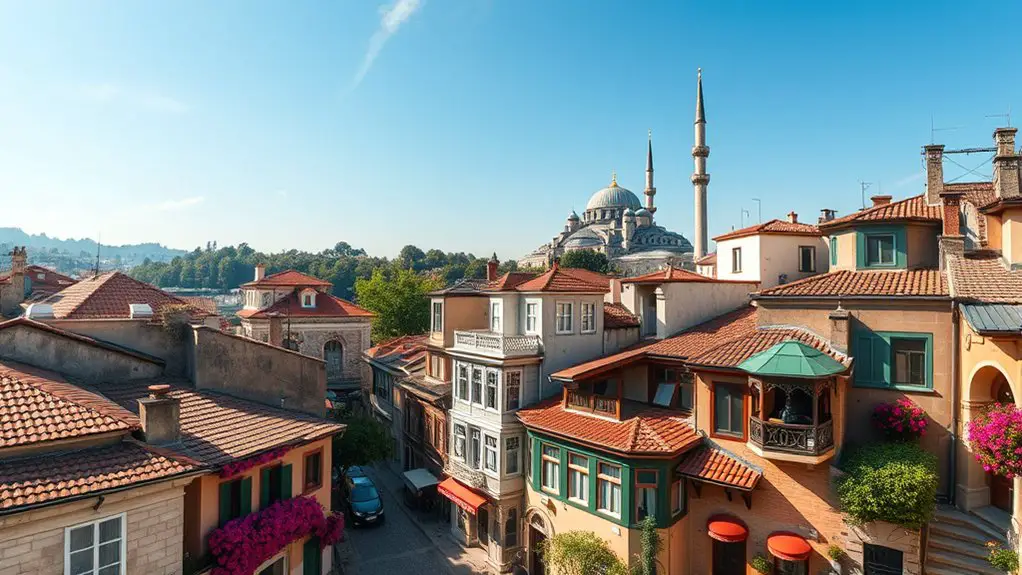
One of the most important distinctions to make when booking is that Sultanahmet and Balat are separate neighborhoods. Fatih Municipality identifies both independently within Istanbul’s Historic Peninsula. You can review the municipality’s neighborhood information on the Fatih Municipality history page.
Sultanahmet is the stronger base when your trip centers on major Historic Peninsula landmarks. Hagia Sophia, Sultanahmet Mosque, the Hippodrome area, and Topkapı Palace are concentrated around this part of the peninsula.
Balat provides a different experience. It sits along the Golden Horn and is better suited to travelers who want colorful residential streets, cafés, historic houses, religious heritage, small shops, and a slower neighborhood atmosphere.
Note: Staying in Sultanahmet can still work well for visiting Balat. The T1 tram serves Sultanahmet and connects at Eminönü with the T5 tram, which serves Fener and Balat.
Choose Sultanahmet instead of Balat when walking to the best-known monuments is your top priority. Choose Balat when you care more about neighborhood character and do not mind using public transport for the major sights.
Exploring the Artistic Side: Fener District
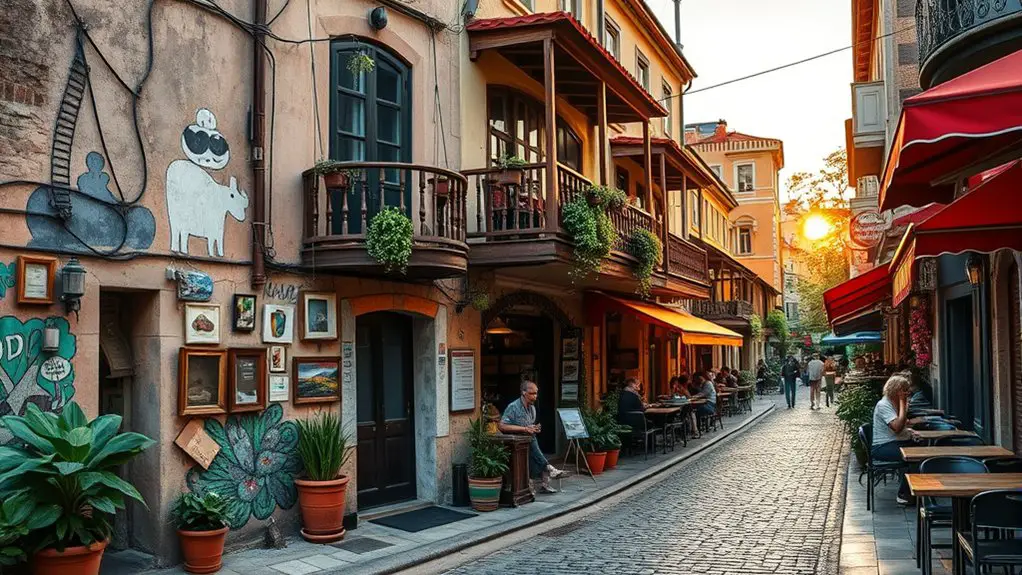
Fener and Balat are commonly explored together because their historic streets flow into one another along the Golden Horn. Fener is especially appealing to visitors interested in religious history, architecture, crafts, and small creative businesses.
Istanbul’s official visitor information describes Balat as a present-day center for artists and craftspeople, with glass and ceramic workshops, cafés, vintage shops, and collectible businesses alongside its historic housing. That makes this side of the area a good choice when you prefer cultural exploration over a conventional hotel district.
Historic Buildings, Workshops, and Creative Spaces
Rather than expecting rows of formal galleries or centuries-old studios open to tourists, look for a mixture of working craft spaces, small galleries, workshops, vintage stores, and converted historic buildings.
The appeal comes from seeing older urban fabric used in contemporary ways. A café may occupy a restored building, while a small ceramic or design business may sit a few doors from a religious landmark or traditional neighborhood shop.
Staying nearby allows you to explore early in the day before visitor traffic builds and return easily after sightseeing elsewhere in Istanbul.
Color, Street Art, and Everyday Architecture
Fener and Balat contain plenty of visual interest, but the strongest attraction is broader than murals alone. Painted facades, bay windows, narrow lanes, stairways, shopfronts, workshops, and historic religious buildings create the neighborhood’s distinctive street scene.
Remember that many photogenic buildings are still homes. Avoid blocking entrances, photographing residents at close range without permission, or treating private doorways and courtyards as tourist attractions.
Pro Tip: Staying close to the Fener or Balat T5 stations gives you a useful compromise: you can explore the historic streets on foot while keeping an easy tram connection to Eminönü and the rest of the Historic Peninsula.
Central Balat: Colorful Streets, Cafés, and Local Life
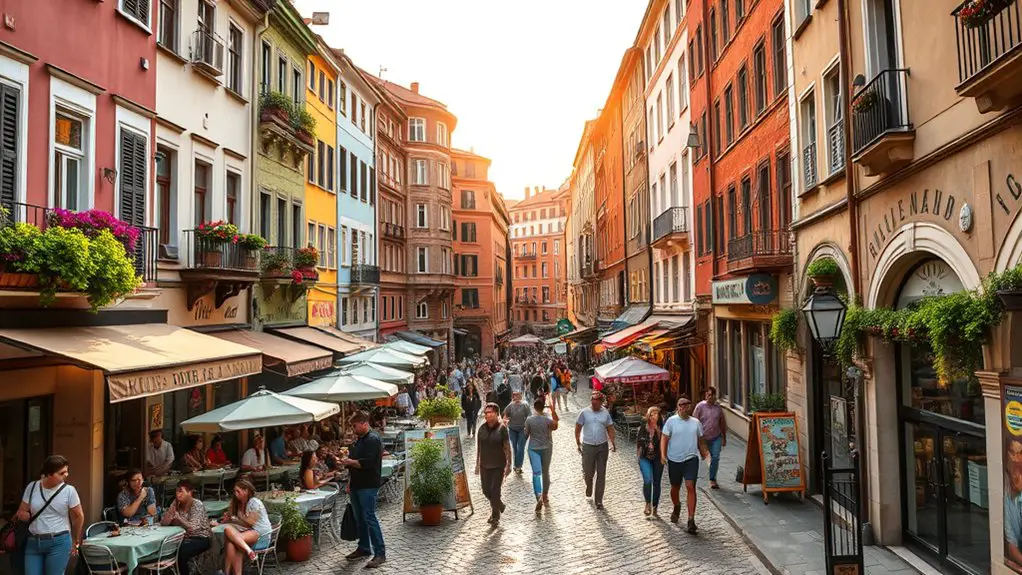
Balat does not need a single “main square” to function as a visitor hub. Its appeal is spread across a network of narrow streets filled with historic buildings, cafés, workshops, neighborhood businesses, and colorful facades.
This is the part of Balat to consider when you want to step outside your accommodation and immediately feel immersed in the neighborhood rather than beside a major road or transport interchange.
Colorful Historic Buildings
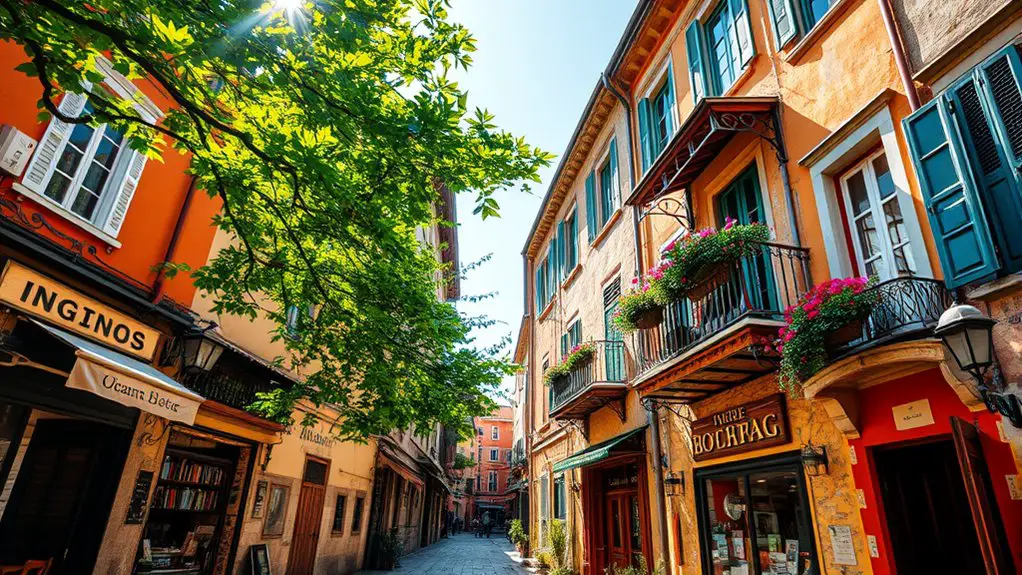
Balat is well known for colorful streets and historic houses climbing the slope above the Golden Horn. The Istanbul Governor’s office highlights the area’s long hills, colorful streets, historic buildings, cafés, churches, mosques, and synagogues as defining features of the neighborhood.
The visual character makes central Balat particularly appealing to photographers and travelers who enjoy exploring slowly on foot. The trade-off is terrain: the prettiest uphill streets can also mean more climbing each time you return to your accommodation.
Local Art, Crafts, and Small Shops
Instead of expecting a formal gallery district, look for independent creative businesses mixed into the residential streets. Glass and ceramic workshops, vintage and retro shops, collectible stores, small exhibitions, and crafts all contribute to the area’s current creative identity.
Opening days and hours can vary, so treat these places as discoveries rather than building an entire itinerary around one unverified shop.
Cozy Cafés and Bistros
Balat’s café scene is one of the easiest reasons to enjoy staying in the neighborhood. Coffee, tea, breakfast, pastries, and casual meals are readily woven into a day of exploring.
A room close to busy café streets is convenient during the day, but it may also bring more conversation and street noise. Read recent guest reviews for comments about windows, soundproofing, and nighttime noise before booking.
Near the Golden Horn: Balat’s Waterfront Area
The lower edge of Balat meets the Golden Horn, the natural harbor along the northern side of Istanbul’s Historic Peninsula. Staying closer to the waterfront trades some of the intimate hill-street atmosphere for easier transportation and less climbing.
This is especially useful when you have rolling luggage, a stroller, limited mobility, or a schedule that involves frequent trips to other parts of Istanbul.
| Waterfront Advantage | What It Means for Your Stay |
| T5 tram | Both Fener and Balat are served by the Eminönü–Alibeyköy line. |
| Ferry service | Scheduled Şehir Hatları services call at Balat and Fener; check the current timetable before travel. |
| Flatter terrain | The shoreline is easier to negotiate than accommodation several blocks uphill. |
| Golden Horn views | Waterfront walks and open views are close by, though not every room has a water view. |
Metro Istanbul’s T5 line information confirms stations at both Fener and Balat. Current ferry calls can be checked through Şehir Hatları.
For many visitors, being a few minutes closer to the T5 tram is more useful than having the most photogenic street directly outside the hotel.
Hidden Gems: Narrow Streets and Quiet Corners
One pleasure of staying in Balat is having time to explore beyond the busiest photo stops. Side streets reveal old facades, neighborhood stores, plants, doorways, religious buildings, workshops, and everyday residential life.
The important distinction is that these are lived-in streets rather than a themed attraction. Explore respectfully and assume that courtyards, doorways, gardens, and staircases are private unless they are clearly open to visitors.
Serene Alleyways and Residential Streets
The quieter lanes can offer a welcome break from busier café streets. Early mornings are particularly pleasant for walking because the neighborhood is still waking up and visitor traffic is lighter.
For accommodation, however, a very narrow lane can have drawbacks. A taxi may not be able to stop directly at the door, and carrying luggage uphill over uneven paving can be tiring.
Authentic Local Encounters
Balat remains a residential neighborhood, and staying overnight gives you a different perspective from visiting for only a few hours. You may shop at small stores, drink tea or coffee nearby, see neighborhood businesses opening in the morning, and return after many day visitors have left.
The best local encounters usually happen naturally. Be courteous, ask before photographing people, keep noise down on residential streets, and support businesses without treating residents as part of the scenery.
| Good Local Experience | Respectful Approach |
| Visit small cafés and bakeries | Order normally rather than using the business only as a photo set |
| Browse workshops and shops | Check that visitors are welcome before entering work areas |
| Photograph architecture | Avoid blocking doors or photographing residents without permission |
Family-Friendly Areas in Balat
Families can enjoy Balat’s colorful streets, cafés, heritage buildings, waterfront, and short sightseeing walks, but accommodation location matters more when traveling with young children.
For a stroller or frequent public-transport use, consider staying closer to the Golden Horn and the T5 tram. Balat rises steeply inland, and some historic lanes have uneven surfaces that can make repeated uphill trips tiring.
Before booking, check whether the property has an elevator, whether the family room is reached by stairs, and whether a vehicle can stop near the entrance. A beautiful historic building can be charming for adults but inconvenient when carrying a sleeping child, stroller, and luggage up several flights.
Families should also consider room layout, air conditioning during warm weather, window security, breakfast availability, and the amount of evening street noise reported by recent guests.
Budget-Friendly Accommodations in Balat
Travelers looking to control accommodation costs can compare guesthouses, apartments, small hotels, and hostel-style options in and around Balat. Prices vary significantly with season, weekends, room type, and cancellation terms, so a fixed claim that one street is always cheapest would be misleading.
Do not compare room rates alone. Check whether the final price includes taxes and fees, whether breakfast is included, and whether the booking can be canceled without a large penalty.
Location also has a financial value. A slightly higher rate close to the T5 tram may save time and reduce taxi use during a multi-day stay.
Pro Tip: Read the newest guest reviews specifically for stairs, hot water, air conditioning, street noise, Wi-Fi, cleanliness, and check-in. Those details are more useful than a property’s marketing description.
Boutique Hotels With Local Charm
Small boutique properties and converted historic buildings are a natural match for Balat’s character. They can offer decorative tiles, vintage furniture, traditional details, compact courtyards, or individually designed rooms rather than a standardized chain-hotel feel.
The same historic features that create charm can produce practical limitations. Older buildings may have narrow staircases, small rooms, limited sound insulation, or no elevator.
Before booking a boutique stay, confirm:
- Which floor your room is on
- Whether there is an elevator
- Whether reception operates 24 hours
- Whether late check-in must be arranged
- Whether a taxi can reach the entrance
- Whether the room has air conditioning
- Whether the windows have effective soundproofing
- Whether breakfast is included or available nearby
A property that answers these questions clearly is usually a safer choice than one relying entirely on atmospheric photos.
Luxury Stays in and Around Balat
Travelers seeking luxury should separate the idea of an attractive boutique room from a conventional full-service luxury hotel. Balat’s strongest appeal is its historic residential scale rather than a concentration of large international luxury properties.
If your definition of luxury includes a spa, concierge, extensive room service, large fitness facilities, valet service, multiple restaurants, or a large suite inventory, compare properties in nearby parts of central Istanbul as well.
Sultanahmet can make sense when heritage sightseeing is the priority, while Karaköy and the wider Beyoğlu area provide easy access to restaurants, nightlife, cultural venues, and a broader range of upscale accommodation.
You can then visit Balat by public transport without sacrificing the services you expect from a larger hotel.
Getting Around From Balat
Public transport is one of the strongest reasons Balat has become easier to use as a base.
T5 Tram
The T5 Eminönü–Alibeyköy Tram Line serves both Fener and Balat. Metro Istanbul states that the line uses low-floor vehicles and station entrances designed with ramps suitable for disabled access.
At Eminönü, the T5 connects with the T1 Kabataş–Bağcılar tram. The T1 serves Sultanahmet, so this is a practical rail connection when you want to combine a Balat stay with Historic Peninsula sightseeing.
Golden Horn Ferries
Şehir Hatları services currently call at Balat and Fener on Golden Horn routes. Ferries can be a scenic alternative to road travel, but timetables can change by day and season, so check the official schedule before relying on a particular departure.
Taxis and Luggage
A taxi may be useful when arriving with heavy luggage, but narrow streets can prevent door-to-door access at some properties. Ask the accommodation where a taxi normally drops guests and how far you will need to walk.
This is particularly important if your room is high on the slope.
Accessibility, Hills, and Mobility
Balat’s waterfront transportation is relatively easy to use, but that does not mean every historic street is equally accessible. Fatih Municipality describes the Balat area as rising sharply from the Golden Horn, and long slopes are part of the neighborhood’s physical character.
Travelers who use a wheelchair, have limited walking endurance, or need a stroller should favor accommodation closer to the waterfront and verify the exact route between the station and hotel.
Caution: Do not assume a property is step-free because it is close to an accessible tram stop. Ask the hotel to confirm entrance steps, elevator dimensions, bathroom access, the route from the street, and whether steep pavement or stairs are unavoidable.
Tips for Choosing the Best Location for Your Stay
The best location depends less on a generic neighborhood ranking and more on the trips you expect to make every day.
| Your Priority | Where to Focus | What to Check Before Booking |
| Photogenic streets and cafés | Central/upper Balat | Hill gradient and nighttime noise |
| Easy public transport | Near Fener or Balat T5 stops | Actual walking route, not straight-line distance |
| Reduced hill climbing | Golden Horn waterfront | Entrance steps and road noise |
| Major Historic Peninsula sights | Sultanahmet rather than Balat | Whether you still want to commute to Balat |
| Nightlife | Consider Karaköy/Beyoğlu | Late-night transportation back to accommodation |
Check the Exact Building
Two accommodations only a few hundred feet apart can offer very different experiences if one sits at street level and another is halfway up a steep lane. Look at the map, recent exterior photos, guest reviews, and the property’s own accessibility description.
Think About Nighttime, Not Just Daytime
A café-lined street that feels ideal at noon may be noisier in the evening. On the other hand, an isolated-looking lane may be inconvenient when returning late. Check recent reviews for comments about lighting, noise, vehicle access, and the immediate surroundings.
Use Current Safety Guidance
Avoid relying on claims that one Balat street is automatically “very safe” while another is “moderate.” Conditions can change and risk is not measured that way.
Use normal city precautions: watch valuables in crowded areas, stay aware around transport hubs and tourist sites, avoid demonstrations, and review current government travel guidance before departure. The U.S. State Department’s current Türkiye advisory can be found on its Türkiye Travel Advisory page.
Frequently Asked Questions
Which Balat area is best for nightlife and entertainment?
Balat is better known for cafés, restaurants, neighborhood evenings, and some meyhane-style dining than for a dense nightclub scene. If clubs, late-night bars, and a wider entertainment selection are your priority, consider staying in Karaköy or Beyoğlu and visiting Balat during the day or early evening.
Are there eco-friendly accommodation options in Balat?
Do not assume a hotel is environmentally certified based only on marketing language. Türkiye operates an official sustainability program for accommodation facilities using GSTC-recognized criteria. When sustainability matters, verify the current certificate for the specific property rather than relying on general claims about solar power, recycling, or waste reduction.
How accessible is Balat for travelers with mobility issues?
The T5 tram uses low-floor vehicles and accessible station entrances, but Balat itself contains steep and uneven historic streets. Travelers with limited mobility should favor the lower waterfront, confirm the route from the station to the property, and ask the accommodation directly about entrance steps, elevators, and accessible bathrooms.
Which hotels in Balat have the best panoramic views?
Views depend on the exact building and room rather than the neighborhood name. Look for verified room photographs showing the Golden Horn or skyline, then confirm that the room category you are booking includes that view. Do not assume every “sea view,” “city view,” or rooftop photo represents the room you will receive.
Are there family-friendly activities near Balat accommodations?
Yes. Families can explore the colorful streets, historic buildings, waterfront, cafés, and cultural landmarks in Balat and Fener. For younger children, staying closer to the waterfront and T5 tram can reduce repeated climbs with a stroller. Check room configuration, stairs, elevator access, and street noise before booking.
Is Balat a good place to stay for a first visit to Istanbul?
It can be, especially if you prefer neighborhood character over being directly beside Istanbul’s most famous attractions. First-time visitors focused heavily on Hagia Sophia, the Blue Mosque, Topkapı Palace, and the Grand Bazaar may find Sultanahmet more convenient. Balat works better for travelers comfortable using trams and ferries.
How do you get from Balat to Sultanahmet?
A straightforward public-transport option is to take the T5 tram from Balat or Fener toward Eminönü and transfer there to the T1 tram, which serves Sultanahmet. Check Metro Istanbul for current operating hours, disruptions, and service changes on the day you travel.
Conclusion
The best place to stay in Balat depends on what you value most. Choose central Balat for colorful streets, cafés, and neighborhood character; stay closer to the Golden Horn waterfront for easier T5 tram and ferry access; or consider the Fener side for heritage and creative spaces.
Do not confuse Balat with Sultanahmet. Sultanahmet is a separate neighborhood and can be the better choice when your priority is walking to Istanbul’s headline Historic Peninsula landmarks. Travelers seeking concentrated nightlife or large full-service luxury hotels should also compare Karaköy and Beyoğlu.
Whichever base you choose, check the exact building rather than relying only on the neighborhood name. Hills, stairs, elevator access, noise, taxi drop-off points, and proximity to the T5 tram can affect your stay as much as the view from the window.
Sources
- Fatih Municipality — Fatih in History — Balat and Sultanahmet geography, neighborhood boundaries, and Balat’s steep topography.
- Metro Istanbul — T5 Eminönü–Alibeyköy Tram Line — Fener/Balat stations, accessibility, and transport integration.
- Şehir Hatları — Golden Horn Ferry Service — current Fener and Balat ferry calls and schedules.
- UNESCO World Heritage Centre — Historic Areas of Istanbul — Historic Peninsula and Golden Horn geographic and heritage context.
- Türkiye Tourism Promotion and Development Agency — Sustainability Program — official accommodation sustainability certification framework.
- U.S. Department of State — Türkiye Travel Advisory — current government travel-safety guidance.
