
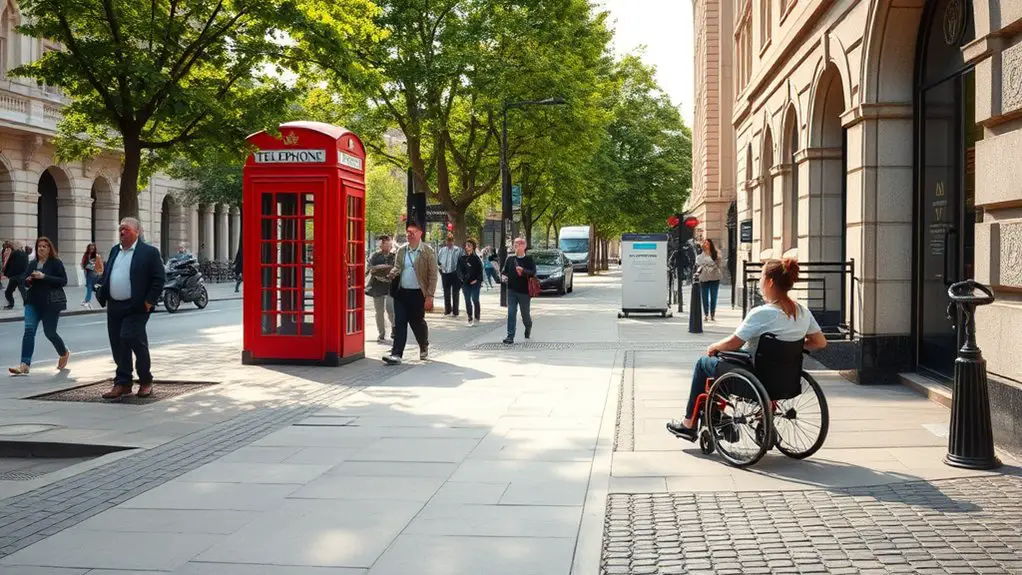
Last Updated on July 25, 2026 by Daniel Globe
If you’re searching for wheelchair accessible attractions in London, there are excellent options, but accessibility varies widely between modern museums, historic landmarks, parks, markets and entertainment venues. The most important step is checking the exact route you need before visiting, including entrances, lifts, surfaces, toilets, wheelchair dimensions and any advance-booking requirements.
Quick Answer
London has many wheelchair-accessible attractions, but access varies by venue. Museums such as the British Museum and Science Museum have step-free routes and accessible toilets, while historic sites like the Tower of London retain cobbles and stairs. Check each venue’s access page and TfL step-free status before you travel.
Key Takeaways
- Modern museums such as the British Museum, Science Museum, V&A and Design Museum provide strong step-free access, lifts and accessible toilets.
- Historic attractions need more planning. The Tower of London has cobbles, stairs and areas that wheelchair users cannot reach.
- Buckingham Palace offers a step-free route, but it must be arranged in advance for applicable visits.
- TfL buses are low-floor and ramp-equipped, while Tube accessibility varies by station and platform.
- Always check lift status, wheelchair or scooter restrictions, accessible toilets and the venue’s latest access guide shortly before travelling.
Disclosure: As an Amazon Associate I earn from qualifying purchases. Some links on this page are affiliate links, at no extra cost to you.
What “Wheelchair Accessible” Means in London
An attraction described as accessible may still have features that matter to you, such as a steep ramp, cobbled courtyard, narrow historic doorway, platform-to-train gap or lift that cannot accommodate a large mobility scooter.
Before choosing a venue, check whether access is step-free from the street to the entrance, whether all areas you want to see can be reached by lift, and whether your wheelchair or scooter meets any size restrictions.
Warning: Never assume that “step-free station” or “accessible attraction” means every part of the journey is level. Historic buildings may have unavoidable stairs or uneven ground, while a step-free rail station can still have a gap between the platform and train.
For detailed measurements and photographs of entrances, toilets and routes, AccessAble can also help you decide whether a particular venue suits your individual needs.
Iconic Landmarks With Accessibility Features
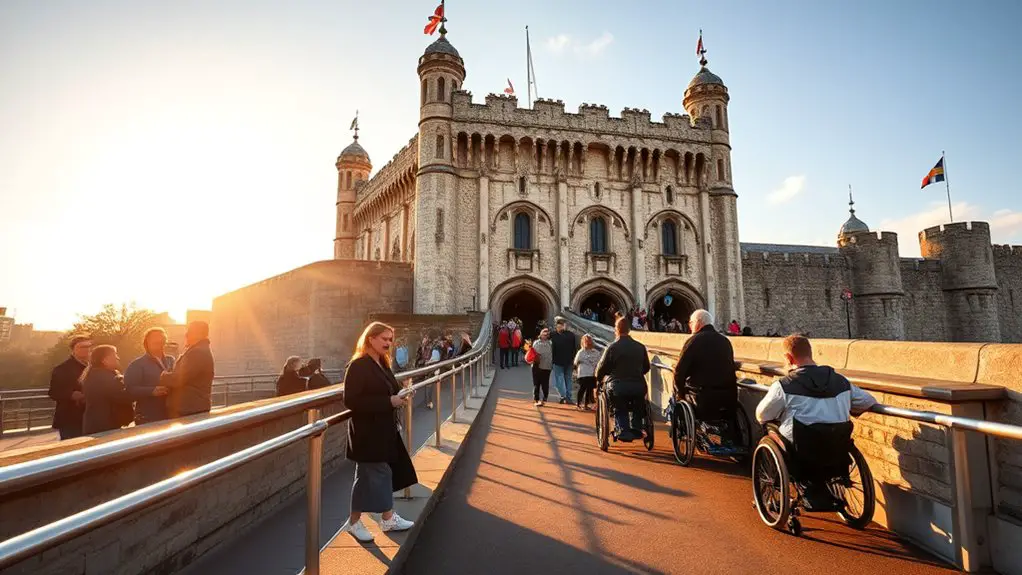
London’s historic landmarks offer very different levels of access. Some have well-developed step-free routes, while others retain unavoidable barriers because of their age and layout.
Tower of London
The Tower of London accessibility guide makes clear that wheelchair access is limited. Expect cobbled and uneven ground, difficult stairs, narrow passageways and some low doorways.
The Jewel House, home of the Crown Jewels, has level access. A platform lift serves the Chapel Royal of St Peter ad Vincula, and there is limited lift access associated with the White Tower basement shop. Ramps are also available in selected areas.
However, there is no lift or ramp access to several historic spaces, including the Battlements and Bloody Tower. Digital access tours are available for some locations that cannot be reached physically.
Pro Tip: Download the Tower’s official access map before buying tickets. It is much more useful than simply asking whether the attraction is “wheelchair accessible” because it shows which individual areas you can reach.
Buckingham Palace
Buckingham Palace provides a step-free access route for applicable public visits, but visitors who need it must contact the Royal Collection Trust’s Specialist Sales team in advance.
Visitors using the access route enter through a different entrance at the front of the Palace and then join the main visitor route. The approach includes the gravel forecourt and quadrangle, which may be worth considering if you use a manual wheelchair.
Manual wheelchairs can also be borrowed for visits, subject to availability. A free Access Companion ticket is available for disabled visitors under the Palace’s current access arrangements.
The outdoor Changing the Guard ceremony is a separate experience from a Buckingham Palace admission visit. Crowds, road closures and viewing positions can make the area difficult to navigate, so allow extra time and check the latest ceremony arrangements before travelling.
UK Parliament and the Palace of Westminster
UK Parliament provides step-free visitor access, although some parts of the historic Palace require alternative routes.
The Cromwell Green visitor entrance is step-free. Where the standard route contains stairs, staff can escort wheelchair users via lifts and alternative corridors. Most of the standard tour route can be made step-free, and wheelchairs can be borrowed or reserved.
Accessible toilets are available around the Parliamentary Estate, including a Changing Places toilet. Visitors with specific mobility requirements should contact Visitor Services before arriving so the appropriate route can be arranged.
Top Museums and Cultural Venues
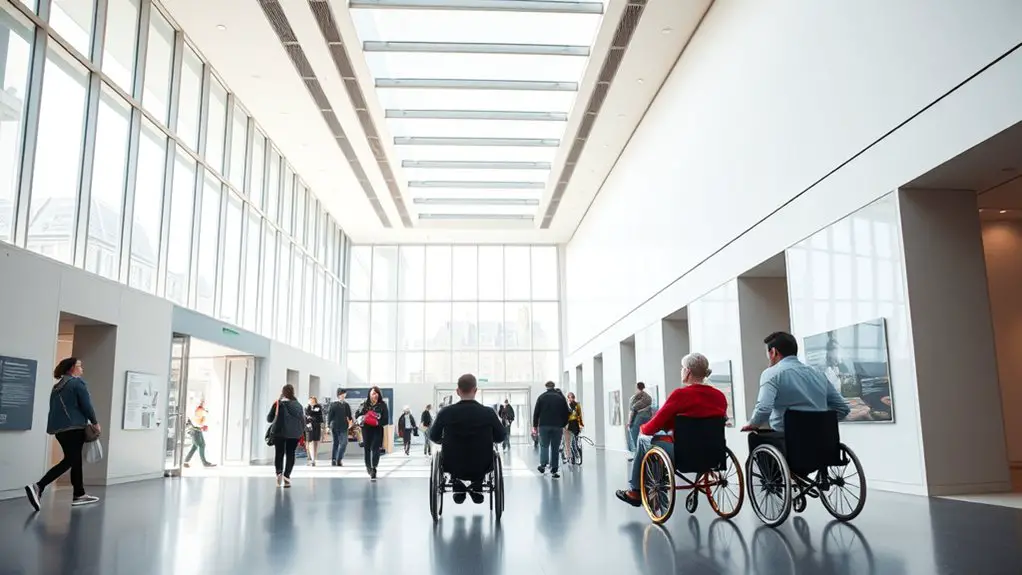
London’s major museums are among the easiest attractions to plan around because most publish detailed access information covering entrances, lifts, toilets, mobility aids and sensory resources.
British Museum
The British Museum has a step-free easy-access route at its Great Russell Street entrance as well as step-free access from Montague Place. Lifts connect the main gallery levels.
A limited number of manual wheelchairs can be reserved free of charge, and disabled visitors can also find accessible toilets, sensory resources, accessible events, touch tours and other support.
Tate Modern
Tate Modern provides wheelchair access throughout its main visitor buildings using lifts, along with accessible toilets and a Changing Places facility. Wheelchairs and mobility scooters may also be available to borrow or reserve.
Because temporary exhibitions and installations can have individual access restrictions, check the specific exhibition information rather than assuming every artwork can be experienced in exactly the same way.
Science Museum
The Science Museum accessibility guide lists wheelchair-accessible lifts through most of the building, accessible toilets on all levels and a Changing Places toilet.
Manual wheelchairs can be reserved in advance or borrowed on the day subject to availability. The museum also provides sensory maps, visual stories, ear defenders, Braille and raised-line resources, touchable objects and hearing loops.
Its Early Birds and Night Owls programmes provide scheduled quieter visits for people who benefit from a less busy environment. These are special events rather than permanent daily “sensory-friendly hours.”
Victoria and Albert Museum
The V&A South Kensington provides step-free routes through different parts of the building, with lifts clearly marked on its maps.
Wheelchairs and walking sticks can be borrowed, with advance booking recommended. The museum currently lists 13 accessible toilets throughout the building.
Design Museum
The Design Museum has street-level entrance access, lifts serving its public floors and wheelchair-accessible exhibitions and shops. Wheelchairs can also be reserved in advance for use inside the museum.
For wheelchair users, London’s modern museums are generally easier to plan than medieval or historic sites because their access pages provide detailed entrances, lift routes, toilets and mobility-aid information.
Green Spaces and Parks for All
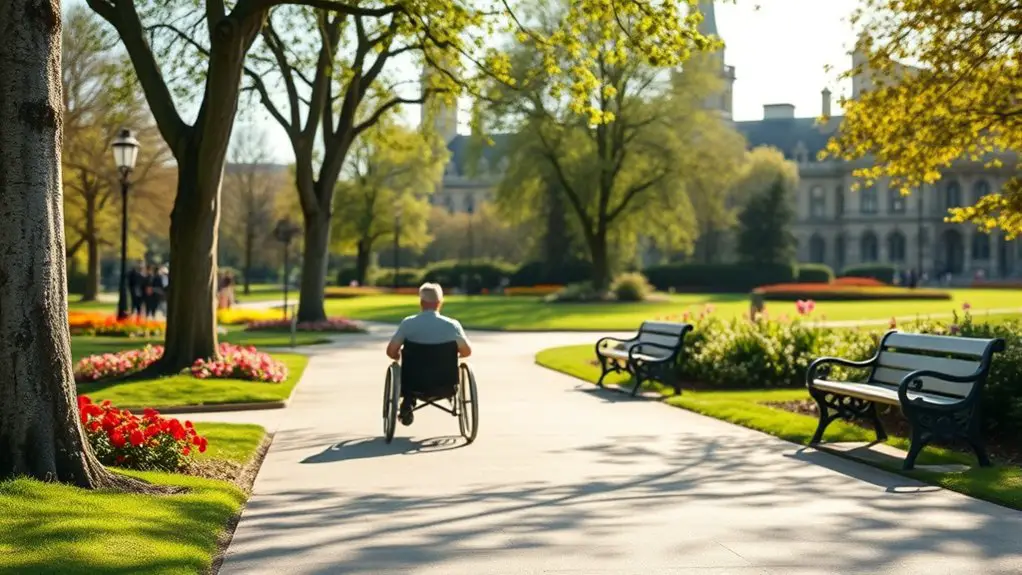
London’s parks can provide a welcome break from crowded indoor attractions. Paved paths and open spaces can work well for wheelchair users, but gradients, gravel, weather and the distance between entrances and toilets can still affect a visit.
| Park Name | Wheelchair Access Considerations |
|---|---|
| Hyde Park | Extensive surfaced paths, accessible toilets in selected facilities and Blue Badge parking. Check your planned entrance and route because the park is large. |
| Regent’s Park | Many surfaced routes and step-free leisure facilities. Individual gardens, attractions and nearby Primrose Hill can involve different gradients or surfaces. |
| Kew Gardens | Largely flat with tarmac paths in most places, but some buildings, upper floors and attractions have wheelchair or mobility-scooter restrictions. |
Kew Gardens
The official Kew Gardens accessibility guide says the gardens are largely flat and have tarmac paths in most places.
Limited wheelchairs are available at public gates, while mobility scooters can be booked in advance. Accessible toilets are located near the main gates, cafés and attractions.
There are important exceptions. For example, the upper floor of the Princess of Wales Conservatory is not accessible to wheelchairs or mobility scooters, and some historic buildings have narrow corridors or other restrictions.
Note: A large park can technically be wheelchair accessible while still being tiring for a manual wheelchair user. Check distances, gradients, toilet locations and the nearest suitable gate before deciding on your route.
Entertainment and Shopping Destinations
London also offers accessible theatres, concert venues, markets and shopping areas, but accessibility can vary much more between individual businesses than it does at major museums.
Southbank Centre
The Southbank Centre provides step-free routes to its performance and exhibition spaces, wheelchair positions, accessible toilets and a Changing Places toilet in the Royal Festival Hall.
Its Access Scheme can help visitors with specific seating requirements, and accessible performances can include captioning, audio description, British Sign Language interpretation, touch tours and relaxed performances.
Lift maintenance or refurbishment can occasionally alter the usual route, so check the current access page shortly before your performance.
Borough Market
Borough Market is laid out primarily on one ground-floor level, and accessible toilets are available during trading hours.
However, the historic market contains cobbled and other uneven surfaces, passageways vary in width, and peak periods can become extremely crowded. These conditions can make manoeuvring harder, particularly with a large powered chair or mobility scooter.
Pro Tip: For markets and busy shopping districts, visiting earlier in the day can make manoeuvring easier. Check the venue’s own access guidance rather than assuming every shop in Oxford Street, Covent Garden or another district has a step-free entrance.
Tips for Navigating London in a Wheelchair
Maneuvering London in a wheelchair is much easier when you plan the complete journey rather than checking only whether your destination has an accessible entrance.
Use London Buses When the Tube Route Is Difficult
Transport for London states that all its bus routes are served by low-floor vehicles with an access ramp and a dedicated wheelchair space.
The wheelchair space is prioritised for wheelchair and mobility-scooter users. Buses can also lower their suspension to reduce the step between the pavement and vehicle.
Understand Step-Free Tube Access
TfL currently lists 93 Tube stations as step-free. All 41 Elizabeth line stations, all DLR stations and all tram stops also have step-free access.
TfL currently lists 93 Tube stations as step-free, but “step-free” does not automatically mean level boarding between every platform and train.
Some stations are step-free from the street to the platform but still have a gap or step when boarding. At selected stations, boarding ramps or mini ramps can bridge this gap.
Use TfL’s step-free maps and Journey Planner to check the exact journey rather than relying only on the standard Tube map.
Warning: Lift failures can temporarily make an otherwise step-free journey inaccessible. Check TfL service information shortly before leaving and again before your return journey.
Consider Black Cabs and River Services
London’s licensed black cabs have wheelchair ramps, making them useful when a rail route is impractical. Some private-hire vehicles are also wheelchair accessible, but this should be confirmed when booking.
Many London river services and piers offer step-free access or boarding ramps. Accessibility varies by pier, vessel and river operator, so check the specific journey before travelling.
Check Wheelchair and Mobility-Aid Options
You do not always need to arrange a city-wide rental. Several attractions lend wheelchairs for use during a visit.
- The Tower of London has a limited wheelchair available on a first-come, first-served basis.
- Buckingham Palace can provide manual wheelchairs subject to its current booking arrangements and availability.
- The British Museum allows limited manual wheelchairs to be reserved in advance.
- The Science Museum offers advance wheelchair booking and limited on-the-day borrowing.
- The V&A recommends booking mobility aids at least 24 hours in advance.
- Kew Gardens has limited wheelchairs at public gates and bookable mobility scooters.
Private wheelchair and mobility-equipment hire companies also operate in London. Before paying, confirm the chair width and weight, battery range if powered, delivery and collection arrangements, insurance terms, and whether your accommodation can store and charge the equipment safely.
Plan for Accessible Toilets
Standard accessible toilets and Changing Places toilets are not the same. Changing Places facilities provide more space and additional equipment such as a hoist and adult-sized changing bench.
Changing Places facilities are available at locations including UK Parliament, the Science Museum and Southbank Centre. Check the venue map before your visit because the most convenient toilet may be on another floor or in a different building.
Check the Route Before You Leave
For each attraction, check:
- whether the entrance you plan to use is step-free;
- whether step-free access must be booked in advance;
- lift availability and any temporary closures;
- wheelchair or mobility-scooter size restrictions;
- cobbles, gravel, steep gradients or long outdoor distances;
- accessible and Changing Places toilet locations;
- whether a wheelchair or mobility scooter can be borrowed;
- whether a companion or carer ticket is available;
- the exact step-free transport route in both directions.
Booking accessible accommodation early also gives you more choice. Confirm important room features directly with the property, such as doorway width, bed clearance, bathroom layout, roll-in shower dimensions and lift access, rather than relying only on an “accessible room” label.
Emergency and Access Assistance
For a life-threatening emergency in London, call 999 or 112. Both numbers connect to the UK’s emergency services. For an urgent medical problem that is not life-threatening, NHS 111 is available by calling 111, and online support is also available.
At an attraction, tell staff immediately if a lift failure, evacuation procedure or other problem prevents you from using the standard route. Major venues usually have alternative evacuation or assistance procedures for disabled visitors.
Sources
- Transport for London — Wheelchair Access and Avoiding Stairs — step-free travel, buses, ramps, taxis and wheelchair-access information.
- Historic Royal Palaces — Tower of London Accessibility — wheelchair routes, cobbles, lifts, ramps and inaccessible areas.
- Royal Collection Trust — Buckingham Palace Mobility Access — advance booking, step-free entrance and mobility aids.
- UK Parliament — Accessibility — step-free visitor routes, tours and facilities.
- Science Museum — Accessibility — lifts, accessible toilets, wheelchairs and accessible events.
- Royal Botanic Gardens, Kew — Accessibility — path surfaces, wheelchairs, scooters, toilets and attraction restrictions.
Frequently Asked Questions
Are There Wheelchair Rental Services Available Across London?
Yes. Private wheelchair and mobility-equipment hire companies serve London, although rental periods, delivery areas and equipment vary. Several attractions also lend wheelchairs for use on-site, including the British Museum, Science Museum, Kew Gardens and other major venues. Reserve one in advance when the venue allows it because supplies are limited.
Which Public Transportation Options Are Most Accessible for Wheelchair Users?
London buses are often the simplest option because TfL bus routes use low-floor vehicles with ramps and a dedicated wheelchair space. The Elizabeth line, DLR and trams also offer extensive step-free access. Tube accessibility varies by station, so check whether your route is step-free from street to platform and from platform to train before travelling.
Are Guided Tours Available Specifically for Wheelchair Users?
Accessible and adaptable tours are available at a number of London attractions. UK Parliament, for example, can adapt tour routes using alternative step-free access, while museums run various accessible tours and events. Private tour companies vary, so confirm vehicle access, route surfaces, toilet stops and whether the guide has experience with your specific mobility requirements before booking.
How Accessible Are London’s Historic Sites and Their Facilities?
Accessibility varies significantly. Buckingham Palace and UK Parliament provide arranged step-free routes, while the Tower of London has substantial barriers including cobbles, stairs and inaccessible historic areas. Check the attraction’s official access guide rather than assuming that one accessible entrance means the entire site is step-free.
What Are the Best Resources for Emergency Assistance in Accessible Locations?
Call 999 or 112 for a life-threatening emergency in London. For urgent medical help that is not life-threatening, call NHS 111. Inside an attraction, contact venue staff immediately if you need evacuation assistance, an alternative accessible route or help because a lift or other access feature is unavailable.
Do I Need to Book Wheelchair Access in Advance?
Sometimes. Buckingham Palace requires advance arrangements for its step-free access route, while several museums recommend reserving loan wheelchairs ahead of time. Other venues allow wheelchair access without advance notice. Check the official access page for every attraction on your itinerary because policies can change.
Conclusion
Exploring London in a wheelchair can be rewarding, but the best experience comes from choosing attractions based on their specific access features rather than broad labels. Modern museums, Kew Gardens, Southbank Centre and many public-transport services offer strong accessibility options, while historic sites such as the Tower of London require more careful planning.
Before each visit, check the venue’s current access guide, confirm any advance-booking requirements, review your step-free transport route and check for lift disruptions. With those details settled before you leave, you can spend more of your time enjoying London and less of it dealing with unexpected barriers.
