

Last Updated on September 11, 2026 by Tyler Morgan
United Airlines is generally considered safe to fly in 2026, but the most accurate answer needs context. United remains a large, regulated U.S. carrier with an independent 7/7 safety rating and an IATA operational-audit registration. However, recent accidents, maintenance events, and a federal audit of FAA oversight deserve a clear and balanced explanation before you book.
Quick Answer
Yes, United Airlines appears generally safe to fly in 2026. It operates under FAA rules, uses a required Safety Management System, remains IOSA-registered, and has a 7/7 private safety rating. Still, no airline is risk-free, and current NTSB investigations and federal oversight concerns should be acknowledged rather than dismissed.
Key Takeaways
- United currently holds a 7/7 safety score from AirlineRatings, but that private rating is not a guarantee from the FAA.
- United reported 1,066 mainline aircraft with an average age of 15.3 years at the end of 2025.
- A February 2026 federal audit identified weaknesses in the FAA office responsible for overseeing United’s maintenance practices.
- A May 2026 United 767 accident at Newark remains under NTSB investigation, so its final cause has not been determined.
- Fare rules, bags, Wi-Fi, lounge access, and seat charges can vary by route, aircraft, ticket date, and fare category.
Is United Airlines Safe to Fly in 2026?

Based on the available evidence, United Airlines is generally safe to fly in 2026. It is a large U.S. airline operating under Federal Aviation Administration rules, and it must maintain an FAA-required Safety Management System for identifying hazards, controlling risk, and checking whether its safety controls work.
AirlineRatings gives United a 7/7 safety score. The rating considers factors such as IOSA registration, recent fatal accidents, operating standards, pilot-related events, and whether an airline is subject to European Union bans.
That score is a useful independent indicator, but it is not a government certification and cannot guarantee the outcome of a future flight. It also does not mean that United has no maintenance problems, emergency landings, runway events, or active investigations.
Note: An airline can be considered generally safe while still experiencing reportable incidents and accidents. The important questions are how serious each event was, what caused it, how the crew responded, and what investigators or regulators required afterward.
United Airlines Safety Record and Accident History
United’s overall record supports the conclusion that it is a mainstream regulated carrier rather than an airline travelers should automatically avoid. However, broad statements such as “no fatal accident in more than three decades” can be misleading unless they define the period, operating certificate, regional affiliates, mergers, hijackings, and type of event included.
A more useful approach is to review current audit status, documented accidents, regulatory oversight, fleet data, and the airline’s response to identified risks.
| Safety indicator | Current information | What it means |
|---|---|---|
| AirlineRatings score | 7/7 | A positive private rating based on selected safety criteria, not a government guarantee. |
| IOSA status | Registered | United participates in the IATA Operational Safety Audit system. |
| Mainline fleet | 1,066 aircraft at December 31, 2025 | A very large operation in which raw event counts need flight-volume and severity context. |
| Average mainline fleet age | 15.3 years at December 31, 2025 | Age alone does not determine safety; maintenance, inspections, modifications, and operations matter more. |
| Boeing 787 fleet | 81 aircraft at December 31, 2025 | United operated 12 787-8s, 48 787-9s, and 21 787-10s. |
| Current regulatory concern | FAA oversight-resource weaknesses identified in 2026 | The federal audit calls for stronger oversight resources and access, not an automatic finding that United is unsafe. |
What the 7/7 Safety Rating Means
United receives the maximum current score from AirlineRatings because it meets the site’s selected criteria. These include IOSA status, recent fatal-accident history, pilot-related events, operating standards, and access to European airspace.
The score should be treated as one data point. It does not measure every maintenance discrepancy, compare the severity of all reported events, or predict what will happen on your flight. It also comes from a private aviation website rather than the FAA, NTSB, or Department of Transportation.
Incidents Versus Accidents
The words incident and accident have specific meanings in aviation. The NTSB generally classifies an accident as an event involving death, serious injury, or substantial aircraft damage. An incident is another safety-related occurrence that does not meet that accident threshold.
This distinction matters because a precautionary diversion, bird strike, warning light, engine shutdown, runway excursion, and substantially damaged aircraft should not be counted as identical events. A total event count without consistent definitions can create a misleading picture.
IATA recorded 51 accidents among approximately 38.7 million commercial flights worldwide in 2025, an all-accident rate of 1.32 per million flights.
Does an Older Fleet Mean an Unsafe Airline?
No. A fleet’s average age can affect maintenance workload, fuel efficiency, cabin design, and replacement planning, but it is not a stand-alone safety score. Properly maintained older aircraft can continue operating safely, while a newer aircraft can still experience manufacturing, maintenance, or operational problems.
United’s 2025 annual report listed a mix of newer aircraft, including Boeing 737 MAX and Airbus A321neo jets, and older Boeing 757, 767, 777, Airbus A319, and Airbus A320 aircraft. Each aircraft must remain within its approved maintenance and airworthiness requirements.
What Recent United Incidents Mean for Flyers
United has experienced several widely reported events since 2024, including runway excursions, lost wheels or components, engine problems, emergency returns, and maintenance-related diversions. These events should not be dismissed, but they also should not be combined into an unsupported mathematical “incident rate” that treats every event as equally serious.
United Flight 2477, a Boeing 737 MAX 8, left the paved surface while exiting a wet runway in Houston on March 8, 2024. The aircraft sustained damage, but the passengers and crew were evacuated without reported injuries. Investigators examine factors such as runway conditions, braking, crew decisions, and aircraft performance before reaching a final conclusion.
A more recent event occurred on May 3, 2026. According to the NTSB’s preliminary information, United Flight 169, a Boeing 767-400ER arriving from Venice, struck a light pole while approaching Runway 29 at Newark Liberty International Airport. Debris from the pole struck a tractor-trailer on the New Jersey Turnpike.
The aircraft landed and taxied to the gate. None of the passengers or crew members was injured, but the truck driver sustained a minor injury. The information remains preliminary, and the NTSB has not issued a final probable cause.
Warning: Do not treat a preliminary report, viral video, emergency declaration, or raw incident count as a final safety verdict. Accident causes can involve aircraft condition, maintenance, weather, airport infrastructure, air traffic control, crew decisions, or several factors together.
The current evidence does not show that passengers should categorically avoid United. It does show why the airline, FAA, airport operators, and investigators must continue addressing recurring maintenance, runway, and operational risks.
United’s Maintenance and Pilot Training
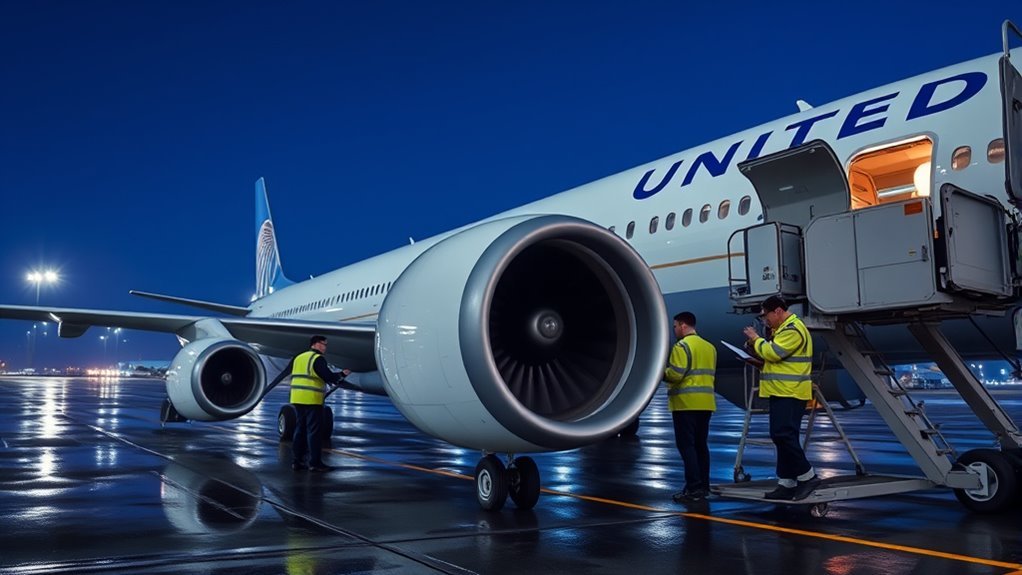
Training and maintenance are central to airline safety, but they should be judged through documented procedures, audits, corrective actions, and operational results rather than company promises alone.
United announced additional pilot and technician training measures in 2024 after a series of publicized events. Those measures included an extra day of in-person training for pilots and a centralized curriculum for newly hired maintenance technicians.
These are positive steps, but the existence of a training program does not by itself prove that every hazard has been resolved. Regulators and the airline must also verify that procedures are followed consistently across a large fleet and workforce.
Pilot Training Upgrades
Airline pilots complete recurrent training and simulator checks that cover normal operations, abnormal conditions, emergency procedures, crew coordination, and decision-making. United’s added in-person training can give instructors more time to discuss real events and reinforce standard procedures.
Training is especially important when an airline introduces new aircraft or updated systems. Crews must understand the differences among aircraft types, but the presence of a Boeing 737 MAX, Boeing 787, Airbus A321neo, or Airbus A321XLR does not independently make a flight safe or unsafe.
What matters is whether pilots are properly qualified, current on the aircraft, supported by clear procedures, and willing to discontinue an unstable approach or reject an unsafe operation.
Maintenance Oversight Challenges
United’s size creates a demanding maintenance and oversight environment. At the end of 2025, the airline reported 1,066 mainline aircraft and 424 regional aircraft. The aircraft are maintained at multiple facilities and may also rely on approved outside suppliers and contractors.
On February 18, 2026, the U.S. Department of Transportation Office of Inspector General published an audit of the FAA’s oversight of United’s maintenance practices.
The audit found that the FAA office responsible for United lacked enough inspectors, had weaknesses in workforce planning, sometimes relied on virtual inspections, and did not always have adequate access to carrier safety data. It also found that several earlier recommendations involving Safety Management System oversight remained open.
These findings concern the adequacy of FAA oversight. They do not establish that every United aircraft is poorly maintained or that United is unsafe to fly. However, they are significant and should be included in any honest 2026 safety review.
Safety Lessons Applied
Effective safety management requires more than reacting to a dramatic event. Airlines must identify hazards, assess risk, introduce controls, measure whether those controls work, and revise them when evidence shows a weakness.
- Flight data can identify unstable approaches or unusual aircraft behavior.
- Maintenance records can reveal recurring defects or repeat repairs.
- Instructor-led training can turn investigation findings into realistic scenarios.
- Employee reporting systems can surface risks before they lead to an accident.
- Regulatory inspections can check whether written procedures match actual practice.
The FAA requires Part 121 airlines such as United to maintain a Safety Management System. That structure supports continuous risk management, but it remains effective only when the airline and regulator have reliable data, sufficient staff, and a strong reporting culture.
Pro Tip: Check the “operated by” line before booking. A flight sold by United may be operated by United Airlines, a United Express regional carrier, or a partner airline. The operating carrier controls the aircraft, crew, and operating certificate for that flight.
United Economy Options Compared
United’s economy choices affect your price, seat selection, bags, boarding, flexibility, and comfort. They do not meaningfully change the airline’s basic operational-safety obligations.
Basic Economy and standard Economy use the regular economy cabin. Economy Plus is not a separate premium cabin with different service. It is an extra-legroom seating area, generally located closer to the front of the economy cabin.
| Option | Main tradeoff | Best for |
|---|---|---|
| Basic Economy | Lowest starting fare with more restrictions on seats, bags, boarding, and changes | Travelers who can follow the exact fare rules and pack lightly |
| Economy | Higher fare with fewer restrictions and broader seat-selection options | Most travelers who want a standard carry-on and greater flexibility |
| Economy Plus | Extra legroom for an additional charge or eligible status benefit | Taller travelers and passengers on longer flights |
Basic Economy carry-on rules are not identical on every itinerary. Some routes and eligible travelers receive exceptions. Review United’s current Basic Economy terms for the specific ticket rather than relying on a general summary.
Seat prices also change by flight, location, demand, status, and time of purchase. Economy Plus can be worthwhile on a long flight, but there is no reliable universal upgrade price.
United Polaris and Business Class
United Polaris is the airline’s premium business-class brand for eligible long-haul international travel and, under United’s evolving 2026 structure, selected transcontinental and longer Hawaii routes.
United began introducing base, standard, and flexible premium-fare categories in 2026. These categories can change what is included, such as seat selection, checked bags, flexibility, refunds, and lounge access. Read the fare details shown during booking instead of assuming every Polaris ticket has identical benefits.
Polaris Lie-Flat Seats
United’s standard Polaris seats convert into fully flat beds and generally provide direct aisle access. United’s seat comparison information describes Polaris beds as up to 6 feet 6 inches long.
Saks Fifth Avenue bedding, including a duvet, day blanket, pillow, and cooling gel pillow, supports sleep on many Polaris flights. Exact amenities can vary by aircraft, route, and catering location.
- Lie-flat positioning can make overnight rest easier.
- Direct aisle access reduces the need to step over another passenger.
- Seat layouts and storage differ among aircraft.
- Newer Polaris Studio suites are available only on selected aircraft and routes.
Check the aircraft seat map before booking. An equipment swap can change the exact seat design even when the cabin is still sold as Polaris.
Lounge Access and Dining
Polaris Lounge access is not provided simply because you hold MileagePlus status. Eligibility depends on your cabin, fare, route, operating carrier, same-day itinerary, and the lounge-access rules that apply to your ticket.
Eligible Polaris Lounge visitors may receive access to dining, beverages, quiet seating, work areas, and shower facilities. However, not every United Club is a Polaris Lounge, and a standard United Club pass does not provide Polaris Lounge entry.
United’s 2026 premium-fare categories make checking the exact benefit especially important. For example, United has stated that on selected transcontinental and longer Hawaii routes, a base Polaris fare may include United Club access while standard or flexible options may include Polaris Lounge access.
Onboard meal selection and presentation vary by route, flight length, departure station, time, and aircraft. Polaris usually offers a more complete meal service than Economy, but menus and availability can change.
United Fees for Bags, Wi-Fi, and Seats
United’s optional fees can materially increase the total cost of a trip. The article’s former $35 and $45 bag figures are no longer reliable for current bookings, and no single fee applies to every route.
United calculates checked-bag charges using factors such as:
- Origin and destination
- Ticket purchase date
- Cabin and fare category
- MileagePlus Premier status
- Eligible United credit-card benefits
- Bag weight, dimensions, and quantity
- Whether you prepay or pay close to departure
Use United’s official checked-bag fee calculator for the current itinerary-specific amount. The calculator also shows whether an eligible traveler receives complimentary bags.
The lowest displayed fare is not always the lowest total trip cost after bags, seat assignments, changes, and lounge benefits are included.
United is also replacing older inflight internet systems with Starlink. Starlink access is free for MileagePlus members on equipped aircraft, and joining MileagePlus is free. Aircraft that have not yet received Starlink may continue using legacy systems with different prices and performance.
United has said it plans to provide Starlink across its fleet by 2027. Until the rollout is complete, check your flight details rather than assuming the internet will be free or that every aircraft will offer the same speed.
Seat-selection charges are dynamic. Preferred seats and Economy Plus prices can change based on route, seat location, demand, status, and purchase timing. Compare the total cost of Basic Economy, standard Economy, and a seat upgrade before paying for each item separately.
Should You Book United for International Travel?
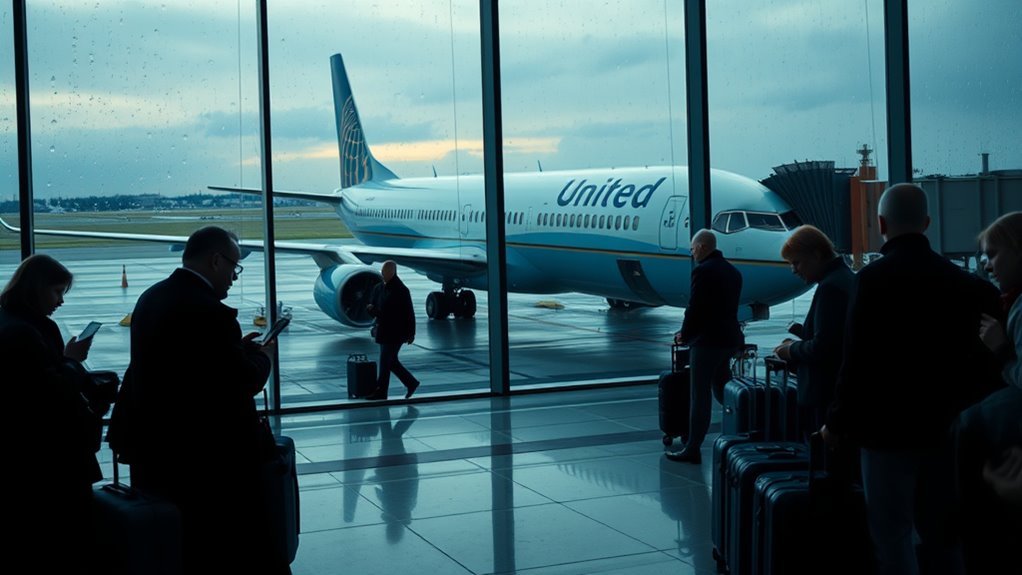
United can be a practical international choice when its route network, schedule, Star Alliance connections, or MileagePlus benefits fit your trip. Its large network can reduce the need to combine unrelated tickets, which may make missed-connection and baggage handling easier to manage.
Safety alone is not a strong reason to reject United based on the current evidence. However, service quality, seat comfort, airport connection times, fare restrictions, and optional charges can vary widely.
Use this checklist before booking:
- Confirm the operating carrier: Look for “operated by” beside every segment.
- Check the aircraft and seat map: Cabin products can differ across aircraft.
- Read the fare inclusions: Do not assume bags, seat selection, changes, or lounge access are included.
- Allow enough connection time: Immigration, security, terminal changes, and weather can delay transfers.
- Compare the total price: Include bags, seats, Wi-Fi, airport transfers, and change flexibility.
- Review current travel alerts: International schedules and airspace conditions can change.
United is most attractive when its nonstop or one-stop schedule is clearly better than the alternatives. Another carrier may offer better value when it provides a more suitable seat, easier connection, included baggage, or more flexible fare for a similar total price.
Frequently Asked Questions
How safe is it to fly on United Airlines?
United is generally considered safe to fly. It operates under FAA requirements, maintains an airline Safety Management System, is IOSA-registered, and currently holds a 7/7 private AirlineRatings score. Recent accidents and federal oversight findings should still be monitored because no airline or rating can guarantee a risk-free flight.
Which airline is the safest to fly in the United States?
No U.S. government agency names one airline as the official safest carrier. Private rankings use different methods and may change each year. Compare regulatory status, recent accident investigations, IOSA registration, operating history, and the actual carrier operating your flight instead of relying on one list.
What is the 3-1-1 rule on United Airlines?
The 3-1-1 rule is a TSA security rule rather than a United policy. Most carry-on liquids, gels, aerosols, creams, and pastes must be in containers of 3.4 ounces or 100 milliliters or less, and the containers must fit in one quart-size clear bag. Medically necessary liquids, breast milk, and infant-feeding items have separate exceptions.
Which airline should you stay away from?
Avoid choosing an airline solely from a viral incident or a customer-service complaint. Check whether the carrier is permitted to operate in your market, whether it appears on relevant safety-ban lists, who operates the flight, and whether recent regulator or accident reports reveal unresolved systemic concerns.
Does United’s older aircraft make the airline unsafe?
Not by itself. Aircraft age can increase maintenance needs, but an older aircraft can continue operating safely when it receives required inspections, repairs, modifications, and component replacements. Maintenance quality and regulatory compliance matter more than the manufacturing year alone.
Are all United Express flights operated by United Airlines?
No. United Express is a brand used for regional flights operated by contracted regional airlines. The booking page and boarding pass should identify the operating carrier. That carrier supplies the aircraft and crew and operates under its own FAA certificate.
Conclusion
United Airlines appears generally safe to fly in 2026, but the strongest answer is not a simple promise that nothing can go wrong. United remains a regulated major carrier with IOSA registration, a 7/7 private safety score, recurrent training, a required Safety Management System, and a large maintenance operation.
At the same time, the February 2026 audit of FAA maintenance oversight and the ongoing investigation into United Flight 169 are important. They should be presented accurately rather than ignored or used to imply a conclusion investigators have not reached.
For most travelers, the booking decision will come down to schedule, operating carrier, total fare, cabin, connection time, and included benefits. Check the exact aircraft and fare rules, keep your seat belt fastened whenever you are seated, and review current airline and government information before departure.
Sources
- AirlineRatings United safety profile — supports the current independent 7/7 rating and its component criteria.
- U.S. Department of Transportation Office of Inspector General — supports the February 2026 findings about FAA oversight resources, inspections, workforce planning, and data access.
- National Transportation Safety Board investigation DCA26FA194 — supports the preliminary facts concerning United Flight 169 on May 3, 2026.
- United Airlines 2025 annual report — supports the reported mainline and regional fleet totals, aircraft types, and average fleet ages.
- IATA 2025 Annual Safety Report release — supports global accident-rate context and IOSA comparisons.
- Transportation Security Administration travel tips — supports the current 3-1-1 liquids rule.
