

Last Updated on August 26, 2026 by Daniel Globe
Traveling with a 3-month-old can be manageable when you plan around your baby’s feeding, sleep, diapering, and safety needs rather than trying to maintain a packed itinerary. Bring more essentials than you expect to use, confirm your airline and accommodation policies before departure, and plan plenty of time for feeds, diaper changes, and unexpected delays.
Quick Answer
When traveling with a 3-month-old, pack diapers, wipes, extra clothes, feeding supplies, medications, a changing pad, and an age-appropriate car seat. For flights, check airline rules in advance, declare breast milk or formula at TSA screening, use safe infant-sleep practices, and consider an aircraft-approved child restraint for the safest ride.
Key Takeaways
- Pack plenty of diapers, wipes, burp cloths, extra clothes, feeding supplies, and at least a few extras for delays.
- A typical 3-month-old still relies on breast milk, infant formula, or both; solid baby food is generally introduced around 6 months, not at 3 months.
- For air travel, the FAA recommends securing a young child in an approved child restraint system rather than holding the child on your lap.
- Keep every sleep space firm, flat, and free of pillows, loose blankets, stuffed animals, and other soft objects.
- Check your baby’s health, airline policies, destination risks, and ground-transportation plans before leaving home.
At a Glance
| Planning Time | Check airline, accommodation, feeding, medical, and transportation needs before departure. |
| Difficulty | Moderate; build extra time into every stage of the trip. |
| Essentials | Diaper bag, feeding supplies, extra clothing, changing pad, medications, stroller or carrier, and an appropriate child restraint. |
| Cost | Varies by transportation, infant ticketing, baggage fees, accommodation, and whether you need to buy or rent baby equipment. |
Warning: This guide provides general travel information, not individualized medical advice. Ask your baby’s pediatrician about travel if your child was born prematurely, has heart or lung problems, has a weakened immune system, is currently ill, or will visit a destination with special infectious-disease or vaccine requirements.
Disclosure: As an Amazon Associate I earn from qualifying purchases. Some links on this page are affiliate links, at no extra cost to you.
Before Traveling With a 3-Month-Old
Start with your baby’s health, transportation arrangements, and destination. According to the CDC Yellow Book, air travel is safe for most newborns and infants, but babies with certain heart, lung, blood, or other health conditions may need medical advice before flying.
If you are traveling internationally, discuss the itinerary with your baby’s healthcare professional. At 3 months, your baby is too young for some vaccines that may be recommended or required for older travelers. For example, the CDC’s early MMR recommendation for international travel begins at 6 months of age. Destination risk therefore matters, and postponing or changing some trips may be appropriate when an infant cannot yet receive a needed vaccine.
Before leaving, also confirm the airline’s policies for infant age, ticketing, identification, baggage, gate-checking strollers, car seats, bassinets, and family seating. TSA does not require identification from children under 18 for domestic U.S. screening, but airlines can have their own document requirements.
What to Pack When Traveling With a 3-Month-Old
A well-organized diaper bag makes the biggest difference during delays, feeds, and quick changes. A practical rule of thumb is to carry at least one diaper for each expected hour of travel plus several extras, but adjust that number to your baby’s normal pattern and the chance of delays.
- Diapering: diapers, wipes, diaper-rash cream, disposable bags, and a portable changing pad.
- Clothing: several baby outfits, socks, bibs or burp cloths, and at least one spare top for the caregiver.
- Feeding: breast milk or infant formula, bottles, clean nipples, cooling supplies if needed, and any pumping equipment you normally use.
- Comfort while awake: a pacifier if your baby uses one, a soft rattle, or another lightweight age-appropriate toy.
- Health: prescribed medicines, health-insurance details, pediatrician contact information, and a thermometer if appropriate for your trip.
- Transport: stroller or baby carrier plus a correctly fitted rear-facing car seat for road transportation.
- Sleep: arrange a separate firm, flat, safety-compliant sleep surface such as an appropriate crib, bassinet, or play yard.
Note: Most 3-month-olds should not be eating solid baby food. The CDC and American Academy of Pediatrics recommend introducing foods other than breast milk or formula at about 6 months, and introducing solids before 4 months is not recommended.
Products Worth Considering

EASY TO CARRY: Our Changing Pad wipes clean and folds flat to 7x10 inches for easy storage, and clips to strollers or diaper bags with a secure snap-loop handle—lightweight and ready wherever you go.

Soft & Comfortable Changing Surface: The Ubbi On-The-Go Diaper Changing Baby Mat provides a soft, cushioned surface for your baby during diaper changes, ensuring comfort and support wherever you go.

Diaper Changing Pad Travel: Compact diaper changing kit for home or on-the-go use.
Tips for Navigating Airport Security With a Baby
Arrival and Preparation
Arrive early enough that a feed, diaper change, additional screening, or stroller issue will not immediately put you behind schedule. Keep liquids and feeding supplies where you can reach them without unpacking your entire carry-on.
Security Checkpoint
Tell the TSA officer at the beginning of screening that you are carrying breast milk, infant formula, water for your baby, or related feeding supplies. Under current TSA rules, formula and breast milk can be carried in quantities greater than 3.4 ounces or 100 milliliters and do not need to fit inside the normal quart-size liquids bag. Cooling accessories such as ice packs and freezer packs are also permitted for these medically necessary liquids.
TSA recommends removing these liquids from your carry-on so they can be screened separately. Officers may need to perform additional screening, so transparent bottles and an organized bag can make the process easier.
Screening of Baby Items
Strollers, car seats, carriers, and other baby equipment still need to go through the required security process. How an item is screened can depend on its size and the checkpoint equipment, so follow the TSA officer’s directions rather than assuming every airport will handle a stroller or car seat in exactly the same way.
A baby carrier can be useful for moving through the terminal and keeping your hands free, but follow security staff instructions about whether the baby must be removed from it during screening.
Pro Tip: Put one complete diaper change, one spare outfit, and the next feeding supplies at the top of your bag. You should be able to handle the baby’s most likely immediate needs without opening your main luggage.
Flying Safely With a 3-Month-Old
In the United States, children younger than 2 may legally travel as lap children on many flights, but the Federal Aviation Administration strongly recommends placing a young child in an approved child restraint system in their own purchased seat. Unexpected turbulence can make it impossible for an adult to safely hold an unrestrained infant.
If you bring a car seat aboard, check its label to confirm that it is certified for aircraft use and follow both the restraint manufacturer’s directions and the airline’s seating rules. Baby carriers are not approved as substitutes for an aircraft child restraint during taxi, takeoff, or landing.
For children under age 2, the FAA says the safest place on a U.S. airplane is in an approved child restraint system or approved device rather than on an adult’s lap.
Helping With Ear Pressure
Pressure changes can make babies uncomfortable, especially during descent. Swallowing can help equalize pressure, so the CDC suggests nursing or offering a bottle when appropriate. A pacifier may also encourage sucking and swallowing. Do not give an infant decongestants or antihistamines simply to prevent airplane ear discomfort unless your child’s clinician has specifically instructed you to do so.
Choosing Baby-Friendly Accommodations
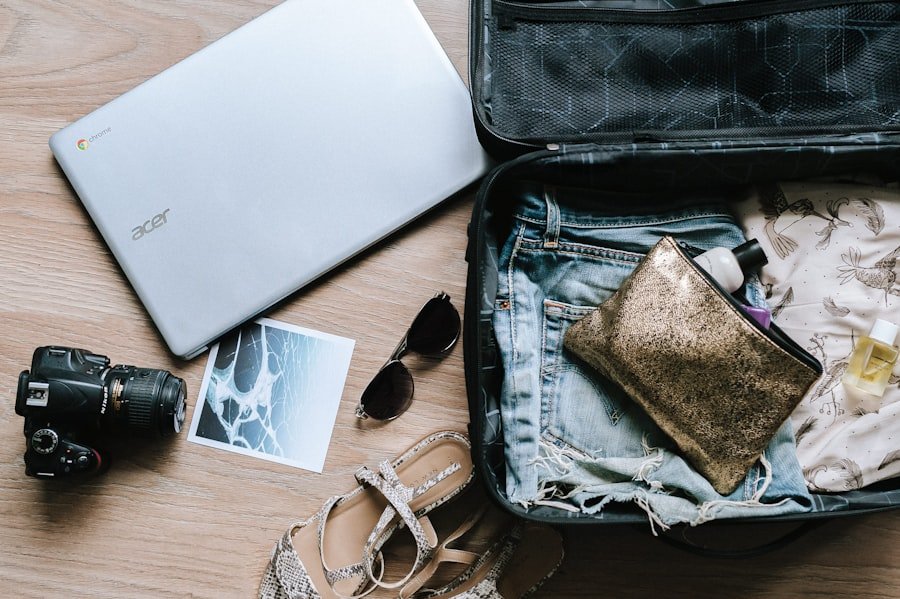
Selecting the right accommodation is important when traveling with a 3-month-old. Look for a hotel or rental that can provide an appropriate crib, bassinet, or play yard, but confirm exactly what equipment is supplied rather than assuming that “baby-friendly” means the sleep setup meets your needs.
A refrigerator can be helpful when safely storing expressed breast milk or prepared formula. Easy access to clean water and a sink also makes bottle and pump-part cleaning easier.
Location matters as much as amenities. Staying close to the places you plan to visit reduces long transfers and makes it easier to return for feeds, naps, or an unexpected clothing change. Nearby grocery stores and pharmacies can also be useful.
Products Worth Considering
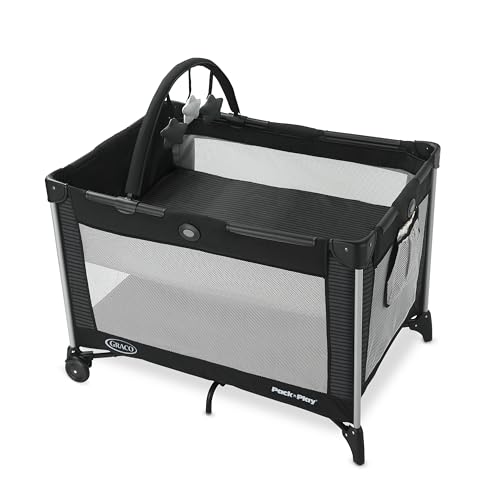
Bassinet designed to fold with your playard for easy setup and take-down

2-in-1 portable baby bassinet and play space, perfect for use at home, outside, or while traveling
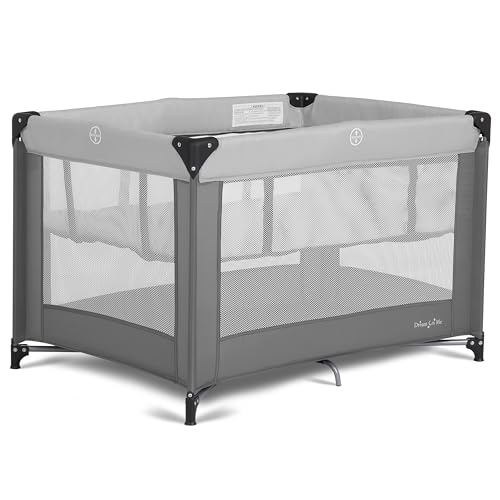
2-in-1 DESIGN WITH DETACHABLE BASSINET – Includes an easily removable bassinet that provides a comfortable, elevated sleeping space for newborns. Recommended for infants up to 15 lbs, 5 months of age, or until your baby begins to roll over.
Check the Sleep Space Yourself
Do not rely only on a hotel’s description of a crib. Inspect the sleep space when you arrive. A 3-month-old should sleep on their back on a firm, flat surface with a fitted sheet and no pillows, loose blankets, stuffed animals, bumper pads, or other soft objects. The American Academy of Pediatrics’ safe-sleep guidance applies while traveling just as it does at home.
Managing Your Baby’s Sleep Schedule While Traveling
At 3 months, many babies still have irregular sleep patterns, so it is more realistic to preserve familiar cues than to expect an exact bedtime and wake time. Babies this age commonly sleep in several stretches throughout the day and night.
| Location | Sleep Approach | Common Challenge |
|---|---|---|
| Home | Follow your baby’s usual feeding and sleep cues. | Normal day-to-day variation. |
| Hotel | Keep familiar routines while using a separate safe sleep surface. | New lighting, sounds, and surroundings. |
| Grandparents’ or relatives’ home | Reduce stimulation near normal rest periods and provide a safe sleep space. | Visitors, excitement, and household noise. |
Use simple, familiar signals such as dimming the room, feeding, changing the diaper, speaking quietly, or using your normal bedtime routine. White noise at a safe volume can help reduce unfamiliar background sounds.
A familiar blanket or stuffed animal can be comforting while your baby is awake and directly supervised, but remove it before placing the baby down to sleep. Do not put a pillow, cushion, loose blanket, or plush toy in a 3-month-old’s sleep space.
Feeding and Diapering on the Go
At 3 months, feeding normally means breast milk, infant formula, or a combination of the two. Solid foods usually are not appropriate yet unless your baby’s healthcare professional has given specific instructions.
Products Worth Considering
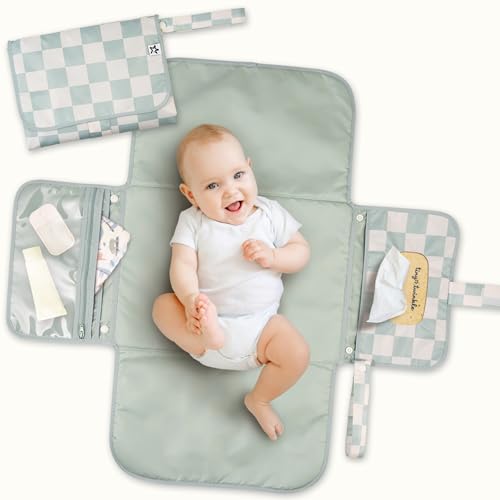
EASY TO CARRY: Our Changing Pad wipes clean and folds flat to 7x10 inches for easy storage, and clips to strollers or diaper bags with a secure snap-loop handle—lightweight and ready wherever you go.

EASY TO CARRY: Our Changing Pad wipes clean and folds flat to 7x10 inches for easy storage, and clips to strollers or diaper bags with a secure snap-loop handle—lightweight and ready wherever you go.

EASY TO CARRY: Our Changing Pad wipes clean and folds flat to 7x10 inches for easy storage, and clips to strollers or diaper bags with a secure snap-loop handle—lightweight and ready wherever you go.
Breastfeeding and Expressed Milk
Plan stops or extra airport time so you do not feel pressured to delay feeds. If you carry expressed breast milk through a U.S. airport, TSA treats it as a medically necessary liquid and permits quantities larger than the standard carry-on liquid limit. Cooling packs used with breast milk are also permitted.
Using Infant Formula
If your baby uses powdered formula, wash your hands before preparation, use a clean bottle, use water from a safe source, and follow the formula container’s exact water-to-powder measurements. Do not add extra water to stretch a bottle.
According to CDC formula-preparation guidance, prepared formula should generally be used within 2 hours of preparation and within 1 hour after feeding begins. Discard formula left in the bottle after a feed because saliva can introduce bacteria.
Parents who prefer ready-to-feed formula may find it convenient during travel because it does not need to be mixed with water. Whatever feeding method you use, bring enough for expected feeds plus delays.
Diapering Away From Home
Many airports and large public facilities have family restrooms or changing tables, but carry a portable changing pad in case the available surface is unsuitable. Keep diapers, wipes, rash cream, and disposal bags together so you can complete a change without unpacking the whole bag.
Wash your hands with soap and water after diaper changes whenever possible. Keep one hand on your baby when using an elevated changing table.
Entertainment and Comfort for Baby During Travel

Choosing the Right Toys
A 3-month-old does not need a large collection of travel toys. A soft rattle, high-contrast cloth book, or another lightweight age-appropriate toy can provide stimulation during waits. Avoid items with small detachable parts.
Simple Games and Comfort
Singing, talking, smiling, making faces, and simple games can be more engaging than toys at this age. A familiar pacifier can also help soothe a baby who normally uses one.
Familiar blankets and soft toys can be used for awake, supervised comfort but should never remain in the baby’s crib, bassinet, or other sleep space.
Travel Essentials
A lightweight stroller or properly fitted baby carrier can make it easier to move through terminals and crowded areas. Do not use a pillow or cushion as an improvised infant sleep surface. When the baby needs to sleep, move them to an appropriate firm, flat sleep surface or an approved restraint being used according to its instructions.
Traveling by Car With a 3-Month-Old
A 3-month-old should ride in a rear-facing car seat that is appropriate for the baby’s height and weight. The National Highway Traffic Safety Administration recommends rear-facing travel for children under age 1 and continuing rear-facing until the child reaches the seat manufacturer’s height or weight limit.
Install the seat according to both the car-seat manual and vehicle owner’s manual. Harness straps should lie flat and snug, and bulky coats or thick padding should not be placed underneath the harness.
If you will use taxis, rideshares, rental cars, or relatives’ vehicles, decide before the trip how the infant will be safely restrained. Do not assume a driver or rental company will automatically provide a suitable seat.
Dealing With Potential Health and Safety Concerns
Review your baby’s health before traveling, especially for international trips. Make sure routine care is current for the baby’s age and discuss destination-specific risks with a pediatrician or travel-medicine professional when relevant.
A 3-month-old cannot simply receive every travel vaccine recommended for adults or older children. For example, CDC guidance recommends an early MMR dose for international travelers beginning at 6 months, not at 3 months. Some destinations may therefore require a different itinerary or additional discussion with your baby’s clinician.
Good hygiene is particularly important around a young infant. Wash your hands before feeding or preparing formula and after diaper changes. Keep frequently handled feeding equipment clean, and avoid exposing your baby unnecessarily to people who are visibly ill.
Before departure, identify where you could obtain pediatric medical care at the destination and keep your insurance information and important medical contacts accessible. Seek prompt professional medical advice if your baby develops symptoms that concern you, particularly breathing difficulty, unusual lethargy, poor feeding, signs of dehydration, or another significant change from normal behavior.
Making the Most of Your Travel Experience With a 3-Month-Old
Traveling with a 3-month-old works best when the itinerary leaves room for feeding, sleep, diaper changes, and unpredictable stops. Plan fewer activities than you would on an adults-only trip and build in easy opportunities to return to your accommodation.
A quiet park, short walk, relaxed meal, or brief sightseeing stop may work better than a full day of scheduled attractions. If the baby becomes overtired or feeding runs late, changing the plan is usually easier than trying to force the original schedule.
Photos and short journal notes can help preserve memories of these early family trips. Keep the focus on a safe, comfortable pace rather than trying to fit every attraction into one visit.
If someone else in your travel party uses or is considering mobility equipment, this separate guide to the best travel scooter may also help with broader transportation planning.
Frequently Asked Questions
Is it safe to travel with a 3-month-old baby?
Travel is generally possible for a healthy 3-month-old. CDC guidance states that air travel is safe for most newborns and infants. Ask your baby’s healthcare professional before travel if the baby was premature, is ill, has heart or lung problems, has a weakened immune system, or will visit a destination with special health risks.
What should I consider before traveling with a 3-month-old baby?
Consider your baby’s health, feeding method, normal sleep pattern, destination risks, transportation, safe sleeping arrangements, car-seat needs, airline policies, travel documents, nearby medical care, and the amount of time needed for feeds and diaper changes.
What are the best tips for traveling with a 3-month-old?
Pack more diapers, clothes, and feeding supplies than you expect to use; keep essentials easy to reach; maintain familiar sleep and feeding cues; leave extra time at airports; keep the itinerary flexible; and arrange safe infant restraints and sleep spaces before departure.
Can I fly with a 3-month-old baby?
Most healthy 3-month-olds can fly, but check your airline’s current infant-age, ticketing, and document policies before booking. If your child has a medical condition or was born prematurely, ask the baby’s healthcare professional whether flying is appropriate.
What should I pack when traveling with a 3-month-old?
Pack diapers, wipes, a changing pad, diaper-rash cream, multiple changes of clothes, burp cloths, breast milk or formula supplies, bottles if used, a pacifier if your baby takes one, prescribed medicines, a stroller or carrier, and an appropriate rear-facing car seat. Arrange a firm, flat, separate sleep space at the destination.
Does a 3-month-old need baby food while traveling?
Usually no. A typical 3-month-old gets nutrition from breast milk, infant formula, or both. CDC and AAP guidance recommends introducing foods other than breast milk or formula at about 6 months, and solid foods should not be introduced before 4 months unless a qualified healthcare professional gives individualized guidance.
Can I take formula or breast milk through TSA security?
Yes. TSA allows formula and breast milk in quantities greater than 3.4 ounces or 100 milliliters in carry-on baggage. Tell the officer at the beginning of screening and remove the items for separate screening. Related ice packs and cooling accessories are also allowed.
Should my baby have a separate airplane seat?
The FAA strongly recommends that young children travel in an approved child restraint system or approved device in their own seat. Although U.S. rules permit many children under 2 to travel on an adult’s lap, an approved restraint provides better protection during turbulence or an emergency.
How can I help my baby’s ears during a flight?
Swallowing can help equalize middle-ear pressure, especially during descent. Nursing, bottle-feeding, or sucking on a pacifier when appropriate may help. Do not give a young infant decongestants or antihistamines for airplane ear pressure unless a healthcare professional has specifically prescribed or recommended them.
How should a 3-month-old sleep in a hotel?
Place the baby on their back on a firm, flat sleep surface intended for infants, with only a fitted sheet. Keep pillows, loose blankets, stuffed animals, bumper pads, and other soft objects out of the sleep space.
Sources
- Transportation Security Administration — What Can I Bring? — infant formula, breast milk, water, and baby-equipment screening rules.
- Federal Aviation Administration — Child Safety — aircraft child-restraint guidance.
- CDC Yellow Book — Traveling Safely With Infants and Children — infant air travel, ear pressure, medical considerations, and international travel preparation.
- American Academy of Pediatrics — Safe Infant Sleep Guidance — safe sleep surface and removal of loose or soft objects.
- CDC — When, What, and How to Introduce Solid Foods — age guidance for introducing foods other than breast milk or formula.
- National Highway Traffic Safety Administration — Car Seats and Booster Seats — rear-facing car-seat recommendations and correct restraint selection.
