

Last Updated on July 27, 2026 by Daniel Globe
Travel after spinal fusion surgery takes more planning than an ordinary vacation or business trip. Your spine is still healing, sitting may be uncomfortable, lifting can be restricted, and recent surgery can increase your risk of complications such as blood clots. The safest time to travel depends on your procedure, recovery progress, medications, mobility, and your surgeon’s instructions.
Quick Answer
After spinal fusion surgery, there is no single safe date for travel. Short passenger car rides may be possible early, but longer trips and flights should wait until your surgeon clears you based on wound healing, pain control, mobility, medications, and blood-clot risk. Avoid prolonged sitting, heavy luggage, and trips that interfere with follow-up care.
Medical Note: This article provides general information, not personal medical advice. Your surgeon’s discharge instructions and postoperative restrictions take priority because spinal fusion procedures and recovery timelines vary widely.
Key Takeaways
- Get your surgeon’s approval before long-distance travel or flying after spinal fusion.
- Being able to walk, change position, control pain, manage the incision, and follow lifting restrictions matters more than reaching one specific calendar date.
- Recent surgery and prolonged immobility can raise the risk of deep vein thrombosis (DVT) and pulmonary embolism (PE).
- Do not lift heavy luggage, bend or twist beyond your restrictions, or drive while taking medications that impair alertness.
- Choose a destination with easy transportation, accessible lodging, reasonable walking demands, and reliable medical care.
- Postpone travel and contact your medical team if you develop signs of infection, worsening neurologic symptoms, significant calf swelling or pain, chest pain, or shortness of breath.
At a Glance
| Time Required | Recovery clearance is individualized; plan the trip only after reviewing it with your surgical team. |
| Difficulty | Moderate — early travel requires careful seating, mobility, medication, luggage, and rest planning. |
| Tools Needed | Prescribed medications, surgeon contact information, brace or mobility aid if prescribed, supportive pillow, and a plan for luggage assistance. |
| Cost | Varies by transportation, lodging, insurance, mobility needs, and whether medical or evacuation coverage is purchased. |
Understanding Recovery After Spinal Fusion
Spinal fusion joins two or more vertebrae so they can heal into a more stable segment of the spine. Hardware may provide immediate mechanical support, but the biological fusion itself takes much longer. MedlinePlus spine-surgery guidance notes that good bone healing after fusion takes at least several months and that healing can continue for a year or longer.
That does not mean you must stay home until the fusion is completely mature. It does mean that travel plans must respect the restrictions your surgeon gives you while bone, muscle, nerves, and the surgical incision recover.
Early recovery can include pain, stiffness, fatigue, numbness, weakness, and difficulty sitting for long periods. Your activity normally increases gradually, often beginning with short walks. Physical therapy may also be part of recovery depending on the operation and your surgeon’s plan.
Recovery is not always perfectly linear. You may tolerate more activity one day and feel more sore or tired the next. Use your surgeon’s restrictions and your actual function—not vacation dates or another patient’s experience—to judge readiness.
Being able to travel comfortably is not the same as having a fully healed spinal fusion. Travel clearance is based on your current safety and function while the longer healing process continues.
Consulting with Your Surgeon Before Travel
Your surgeon is the best person to decide whether your specific trip is reasonable. A single-level cervical fusion, a multilevel lumbar fusion, and a complex revision surgery can have very different recovery needs.
What Your Surgeon Should Review
Before approving a significant trip, your surgeon may consider:
- How well your incision is healing.
- Whether you have fever, drainage, or other signs of infection.
- Your current pain level and medication needs.
- Your ability to sit, stand, walk, and change positions safely.
- Any new or ongoing numbness, weakness, or balance problems.
- Your personal risk factors for DVT or PE.
- Whether you are using a brace or mobility aid.
- Your lifting, bending, and twisting restrictions.
- The length and mode of travel.
- Whether the trip would interfere with postoperative appointments, imaging, suture or staple removal, or physical therapy.
Do Not Use Someone Else’s Recovery Timeline
Online timelines can be useful for understanding what questions to ask, but there is no universal rule that every spinal-fusion patient can fly, drive, or take a long trip after the same number of weeks. The CDC’s air-travel guidance specifically recommends medical evaluation for travelers with recent surgery before flying.
Pro Tip: When asking for travel clearance, give your surgeon the actual itinerary. A 30-minute passenger ride, a six-hour road trip, and an international flight create very different mobility and medical-access challenges.
Assessing Your Physical Abilities

Before you commit to a trip, assess what you can comfortably do now rather than what you expect to be able to do by departure day.
Consider how long you can sit before pain or stiffness increases. Think about how far you can walk, whether stairs are difficult, how easily you can get in and out of a vehicle, and whether you need a walker, cane, brace, or another aid.
Early spine-surgery instructions commonly limit prolonged sitting. MedlinePlus, for example, advises some patients to avoid sitting longer than about 20 to 30 minutes at a time during early recovery. Your own restrictions may differ, so follow the schedule provided by your surgical team.
Also consider whether you can safely manage the practical parts of travel. You should not plan to lift a suitcase into an overhead bin, twist while pulling heavy luggage, rush between airport gates, or walk long distances merely because those activities were easy before surgery.
Travel by Car, Plane, Train, or Bus
Products Worth Considering
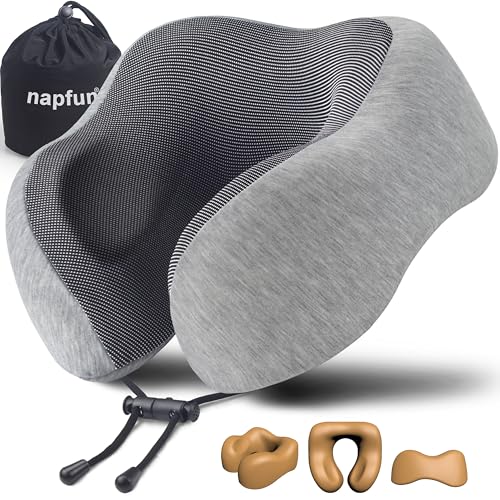
CHIN SUPPORT TRAVEL NECK PILLOW - This airplane pillow can better wrap your neck and free your chin, prevents the head from falling forward, relieves neck pain during travel.
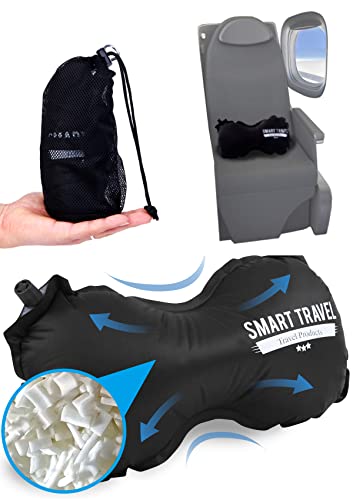
ERGONOMIC BACK SUPPORT FOR LONG SITTING: Our 3D inflatable lumbar pillow gently supports your lower, mid, or upper back. Balanced pressure distribution helps reduce discomfort and encourages natural S-curve alignment for better posture during long flights, commuting, or desk work.

Scientifically Proven Travel Neck Pillow - Experience next-level travel comfort with the updated trtl pillow. Our patented internal support system keeps your head upright while you nap, helping to prevent aches, strains, and pains.
Car Travel as a Passenger
Short passenger trips are generally easier to manage than long road trips because you can control the seat position and stop when needed. MedlinePlus recommends keeping early passenger travel short and, when a longer ride is unavoidable, stopping periodically to stand and stretch.
Set the seat so your spine feels supported and you do not have to twist when entering or leaving the vehicle. A small pillow or rolled towel may improve comfort if your surgeon approves it.
On longer drives, schedule movement breaks rather than waiting until you are extremely stiff. A travel companion should handle heavy luggage and other lifting.
Driving After Spinal Fusion
Driving requires more than being able to sit in a car. You need enough mobility and reaction speed to steer, brake suddenly, enter and exit the vehicle, and check traffic safely.
MedlinePlus gives two weeks as a general example of an initial no-driving period after spine surgery, followed by short trips only if the surgeon approves. That is not a universal spinal-fusion deadline.
Do not drive if pain, weakness, a cervical collar, limited neck movement, fatigue, or sedating medications make safe vehicle control difficult. Ask your surgeon specifically when you may resume driving.
Flying After Spinal Fusion Surgery
There is no single evidence-based waiting period that applies to every spinal-fusion patient. Flying requires prolonged sitting, walking through terminals, security screening, baggage handling, and sometimes long periods without easy access to your surgeon.
Recent surgery is also a recognized risk factor for venous thromboembolism. The CDC Yellow Book explains that prolonged immobility during long-distance travel can add to this risk.
Before booking a flight, ask your surgeon:
- Whether your incision and general recovery are stable enough for travel.
- How often you should stand or walk.
- Whether calf exercises are appropriate.
- Whether you need an aisle seat.
- Whether graduated compression stockings are appropriate for you.
- Whether your medications or clot history change the plan.
Warning: Do not start aspirin, an anticoagulant, or another blood-thinning medication solely for a trip unless the clinician managing your postoperative care specifically recommends it. Clot-prevention medication must be balanced against bleeding risk.
Train and Bus Travel
Train travel may allow more room to stand and change position than some cars or planes, but the same concerns about prolonged sitting still apply. Bus travel can be harder because stops and walking opportunities may be limited.
For either mode, choose a seat that makes it easy to stand, minimize luggage, and plan safe movement breaks consistent with your surgeon’s restrictions.
Understanding Blood-Clot Risk During Travel
Deep vein thrombosis occurs when a clot forms in a deep vein, usually in the leg. A pulmonary embolism occurs when part of a clot travels to the lungs. PE can be life-threatening.
The CDC lists recent surgery and limited mobility among important VTE risk factors. Long-distance travel adds another period of restricted movement, so postoperative travelers deserve more careful risk assessment than healthy travelers with no other risk factors.
For people at increased risk, CDC-reviewed guidance supports measures such as frequent ambulation, calf-muscle exercises, and—in selected patients—properly fitted graduated compression stockings. Medication-based prevention should be decided individually by a clinician.
Staying normally hydrated is sensible during travel, especially if your medications or destination make dehydration more likely, but hydration should not be presented as a substitute for movement or individualized clot-risk management.
Products Worth Considering
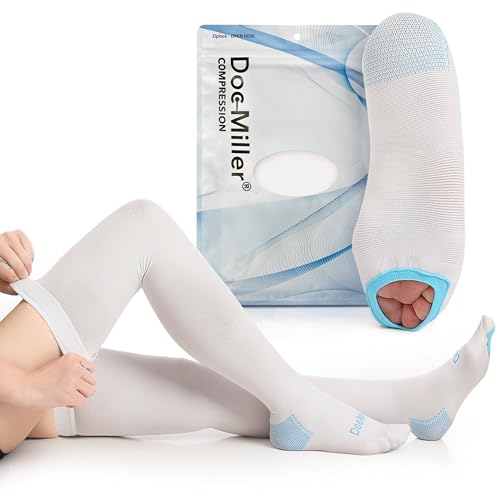
15-20 mmHg Moderate Compression: Provides graduated compression support that gradually decreases up the leg to aid comfort and circulation

Stay Supported Stay Active – 6 ankle compression rings and reinforced arch support keeps you stable. Whether you're running working or recovering these socks help fight foot fatigue and plantar fasciitis pain.

Truform 0868; Medical support hose; Unisex style durable knit; 20-30 strength graduated compression
Choosing the Right Destination
A destination that was easy before surgery can feel very different during recovery. Instead of ranking locations mainly by attractions or cost of living, evaluate how easily you can protect your spine and obtain care if needed.
| Factor to Consider | What to Look For | Priority |
|---|---|---|
| Medical Access | Hospital, urgent care, pharmacy, and a practical plan for contacting your surgical team | Very High |
| Walking and Terrain | Short walking distances, elevators, minimal steep hills, accessible entrances | High |
| Transportation | Door-to-door transportation, short transfers, accessible vehicles, limited standing | High |
| Lodging | Supportive bed, elevator access, walk-in shower if needed, nearby dining | High |
| Climate | Conditions that do not make walking, hydration, wound care, or mobility unnecessarily difficult | Moderate |
| Schedule Flexibility | Refundable or changeable plans and enough downtime to rest | High |
A relaxing destination close to reliable care is generally easier to manage than one built around long hikes, rough roads, remote excursions, or hours of daily walking.
Planning for Comfortable Travel
Good travel planning can reduce unnecessary strain even after your surgeon has cleared the trip.
Products Worth Considering
![[US Fast Arrival] Foldable Wheelchairs for Adults, (13lbs)Utral-Lightweight Transport Wheelchair, Easy to Travel, Portable Travel Wheelchair for Seniors, Wheel Chair with Flip-up Armrest Black & White](https://m.media-amazon.com/images/I/41ftRaHGW+L._SL500_.jpg)
Foldable & Portable: This lightweight foldable transport wheelchair features a folding frame with a simple folding structure, allowing for rapid folding or unfolding in just one second.Weighing only 13.66lbs.

DURABLE STEEL FRAME: This sturdy steel transport chair supports up to 250 lbs.; weighs 30 lbs. No assembly required with easy-clean nylon seat, armrests and backrest

Portable and Foldable - This transport chair is designed for easy use, folding and unfolding in just 1 second, and its small size can easily fit into most car trunks. The retractable handle makes it easier to carry when traveling, and it can be taken on public transportation such as airplanes, subways, buses, trains, etc. It is easy to pull even for elderly users with weaker physical strength.
Choose Seating That Makes Movement Easier
On an airplane, an aisle seat can make it easier to stand without climbing over another passenger. In a car, adjust the seat before departure so you can maintain a comfortable position without twisting.
Do Not Handle Heavy Luggage
Spine-surgery discharge instructions often restrict lifting during early fusion recovery. Do not test your recovery by lifting a suitcase into a trunk or overhead bin. Use rolling luggage and ask a companion, hotel employee, or airline staff member for help.
Arrange Airport Assistance When Needed
If your postoperative limitations substantially restrict walking or another major activity, you may qualify for disability-related assistance. The U.S. Department of Transportation explains that airlines must provide requested wheelchair or guided assistance to eligible passengers with disabilities.
Request assistance when making the reservation when possible, then identify yourself to airline staff at the airport. This can reduce long walks through terminals and unnecessary standing in lines.
Keep Important Medication With You
Keep essential prescriptions in your carry-on rather than relying only on checked luggage. For U.S. airport screening, the Transportation Security Administration allows medications and medically necessary liquids, although extra screening or declaration may be required for some items.
For international travel, check the destination country’s medication rules before departure. A prescription that is legal at home may be restricted elsewhere.
Pro Tip: Carry a current medication list, your surgeon’s office information, your postoperative instructions, and enough medication for unexpected delays. Keep them where you can reach them without digging through a heavy suitcase.
Considering Travel Insurance

Travel insurance becomes more important when a recent operation could force you to cancel a trip, change plans, or seek treatment away from home. However, coverage is not automatic simply because a policy includes medical benefits.
Ask the insurer specifically how it treats your recent spinal fusion, postoperative complications, pre-existing conditions, trip cancellation for medical reasons, and medical evacuation. Read the exclusions and obtain clarification before purchasing.
For international trips, the U.S. Department of State’s international travel checklist recommends reviewing your health coverage and considering travel medical and evacuation insurance because ordinary U.S. health coverage may provide limited or no benefits abroad.
Also identify hospitals or clinics near your destination. Keep your insurer’s emergency contact information with you rather than leaving it only in your hotel room or checked luggage.
Making Necessary Precautions
A safer postoperative trip begins before departure. Review the following checklist with your surgical team when appropriate:
- Confirm that the trip will not interfere with a required postoperative visit.
- Ask exactly how often you should change position or walk.
- Confirm your current lifting, bending, and twisting restrictions.
- Ask whether you should wear your prescribed brace during travel.
- Discuss personal DVT risk and whether compression stockings or medication are appropriate.
- Pack enough medication for the trip plus possible delays.
- Keep medication, mobility aids, and important medical information accessible.
- Arrange luggage and airport assistance rather than lifting or rushing.
- Identify medical facilities near the destination.
- Build rest periods into each day instead of scheduling nonstop activities.
Protect the Fusion While It Heals
Do not use a trip as a reason to ignore your postoperative lifting or movement limits. Early spine-surgery guidance commonly restricts heavy lifting, bending at the waist, and strenuous activities until the surgeon advances activity.
If you were prescribed a brace, use it according to your surgeon’s instructions. Do not stop wearing it merely because it is inconvenient during a flight or road trip.
Avoid Tobacco During Fusion Recovery
Tobacco use can slow healing after spine surgery and is especially concerning when a fusion or bone graft must heal. MedlinePlus specifically advises avoiding smoking and tobacco after spine surgery. Follow your surgical team’s guidance about nicotine products as well.
Plan International Health Requirements Separately
For international travel, routine or destination-specific vaccines and preventive medications depend on where you are going and your health history. Do not assume spinal fusion itself creates a standard vaccination schedule. Review destination guidance and ask an appropriate healthcare professional well before departure.
When to Postpone Travel or Seek Medical Help
Do not push ahead with a trip simply because reservations are nonrefundable. New postoperative symptoms can be more important than the itinerary.
Warning: Contact your surgical team promptly for concerning wound drainage, increasing redness or swelling, fever, worsening pain, new or changing numbness or weakness, significant calf pain or swelling, or new difficulty controlling urination or bowel movements. Chest pain, unexplained shortness of breath, fainting, or other symptoms of a possible pulmonary embolism require urgent medical evaluation.
MedlinePlus also advises patients to contact their surgeon for worsening postoperative pain, significant wound changes, severe headaches that do not improve, and neurologic changes after spine surgery.
If symptoms develop while you are already traveling, do not wait until you return home if urgent assessment is warranted. Use local emergency services when appropriate and contact your surgical team as soon as practical.
Enjoying Your Trip Safely
Once your surgeon has cleared travel, keep expectations realistic. Your goal is not to prove that you can travel exactly as you did before surgery.
Choose low-impact activities that fit your current restrictions. A short walk, scenic drive, museum with seating, or relaxed meal may be more appropriate than hiking, amusement rides, carrying beach equipment, or spending all day on your feet.
Take planned rest breaks before you become exhausted. Change positions as directed, take medications exactly as prescribed, eat and drink normally unless your clinician has given different instructions, and protect your incision according to your postoperative plan.
Be willing to change the itinerary if pain, stiffness, weakness, or fatigue increases. A flexible trip is far more likely to be enjoyable than a rigid schedule that forces you to exceed your current abilities.
Frequently Asked Questions
What is spinal fusion surgery?
Spinal fusion is an operation that joins two or more vertebrae so they can heal into a more stable section of the spine. Bone graft is commonly used, often with screws, rods, plates, or other hardware. The bone-healing process continues for months even after pain and mobility begin to improve.
When can I travel after spinal fusion surgery?
There is no universal date. Short necessary passenger trips may be possible before long-distance travel, but your surgeon should decide when longer car rides or flights are appropriate. Clearance depends on the type and extent of fusion, wound healing, pain control, medications, mobility, neurologic status, and blood-clot risk.
Can I fly after spinal fusion surgery?
Possibly, but flying soon after fusion should be cleared by your surgeon. Recent surgery can increase blood-clot risk, and a flight may involve prolonged sitting, airport walking, luggage, and limited access to your normal medical team. Your surgeon may recommend specific movement or clot-prevention measures based on your individual risk.
How should I handle a long car ride after spinal fusion?
Get approval for the trip first. Ride as a passenger until you have been cleared to drive, support your spine in a comfortable position, and stop often enough to stand or walk according to your postoperative instructions. Have another person handle luggage and avoid twisting while entering or leaving the vehicle.
Should I wear compression socks when traveling after surgery?
Not automatically. Graduated compression stockings can be useful for some long-distance travelers with increased blood-clot risk, but their use should be based on your individual risk and medical history. Ask your surgeon whether they are appropriate and what compression level and fit to use.
What restrictions matter most while traveling after spinal fusion?
Follow the restrictions given by your surgeon. Early precautions often involve limiting prolonged sitting, heavy lifting, bending, twisting, and strenuous activity. Use a brace or mobility aid exactly as prescribed, and do not lift heavy suitcases or overhead luggage until your medical team says it is safe.
Can I carry my medications and medical supplies on a flight?
In the United States, TSA permits medications and medically necessary liquids, although some items require declaration or additional screening. Keep essential medication in your carry-on. For international trips, also check the destination country’s rules because some prescription drugs that are legal in the United States are restricted elsewhere.
What symptoms mean I should postpone travel after spinal fusion?
Postpone travel and contact your healthcare team for concerning fever, worsening incision redness or drainage, increasing postoperative pain, new numbness or weakness, calf pain or swelling, or new bladder or bowel-control problems. Chest pain, unexplained shortness of breath, fainting, or other signs of a possible pulmonary embolism need urgent medical evaluation.
Sources
- MedlinePlus — Spine Surgery: Discharge — postoperative fusion healing, sitting, activity, car travel, wound care, tobacco, and warning signs.
- CDC Yellow Book — Deep Vein Thrombosis and Pulmonary Embolism — travel-related VTE risk and prevention guidance.
- CDC Yellow Book — Air Travel — pre-flight medical considerations after recent surgery.
- U.S. Department of Transportation — Wheelchair and Guided Assistance — airport and airline mobility assistance.
- Transportation Security Administration — TSA Travel Tips — medication, medical-liquid, and disability-screening information.
- U.S. Department of State — International Travel Checklist — insurance, medical coverage, medications, and international preparation.
