

Last Updated on July 27, 2026 by Daniel Globe
An approved Form I-140 is an important step in an employment-based green card case, but it does not by itself give you permission to leave the United States and return. For many applicants, the key question is whether a Form I-485 adjustment-of-status application is pending and what immigration status or travel document they will use when they return.
Quick Answer
I-140 approval alone does not make you eligible for ordinary adjustment-based Advance Parole. If you have a pending Form I-485, you can generally request Advance Parole by filing Form I-131. Some H-1B/H-4 and L-1/L-2 applicants can travel without Advance Parole if they meet the applicable requirements for returning in that status.
Key Takeaways
- An approved I-140 is not a travel document and does not itself grant immigration status or permission to return to the United States.
- For the employment-based situation covered here, Advance Parole is normally tied to a pending Form I-485, not simply to I-140 approval.
- USCIS uses Form I-131, Application for Travel Documents, Parole Documents, and Arrival/Departure Records, for an Advance Parole request.
- Certain qualifying H-1B/H-4 and L-1/L-2 adjustment applicants can travel without Advance Parole without abandoning the I-485 when they satisfy the applicable rules for returning in that classification.
- Advance Parole does not guarantee parole or entry. U.S. Customs and Border Protection makes the decision at the port of entry.
- Check the current USCIS form edition, filing address, fee schedule, and your individual immigration history before leaving the United States.
At a Glance
| Time Required | Preparation time varies; USCIS adjudication time varies by filing category and workload. Check the live USCIS processing-time tool. |
| Difficulty | Moderate; higher if you have prior immigration violations, criminal issues, removal proceedings, or another complicated history. |
| Tools Needed | Current Form I-131, I-485 receipt evidence, applicable status documents, two passport-style photos, and the required payment method or proof of fee exemption. |
| Cost | USCIS currently lists a $630 paper filing fee for an Advance Parole request based on a pending Form I-485, subject to exemptions. Certain applicants with a qualifying I-485 filed before April 1, 2024 may owe $0. Always recheck Form G-1055 before filing. |
Note: This article provides general immigration information, not legal advice. International travel can have case-specific consequences. Anyone with a removal or deportation order, criminal history, prior unlawful presence, status violations, prior fraud or misrepresentation issues, or another complicated immigration history should obtain individualized advice from a qualified immigration attorney before departing the United States.
Eligibility for a Travel Document After I-140 Approval
The first point to understand is that I-140 approval and Advance Parole eligibility are different issues. Form I-140 establishes eligibility for an employment-based immigrant classification. Approval does not by itself give the beneficiary lawful permanent resident status, a new nonimmigrant status, or travel permission.
For most employment-based applicants seeking Advance Parole in the United States, the important filing is Form I-485, Application to Register Permanent Residence or Adjust Status. A person with a pending I-485 can generally request an Advance Parole Document by filing Form I-131 with U.S. Citizenship and Immigration Services.
Does I-140 Approval Alone Qualify You for Advance Parole?
No. If your I-140 is approved but you have not filed Form I-485, the approved I-140 alone is not the usual basis for an adjustment-of-status Advance Parole request.
This distinction matters when an employment-based priority date is not current. An approved I-140 may exist for months or years before the beneficiary can file I-485. Employment-based applicants generally need an immigrant visa to be available before they can properly file for adjustment, although qualifying applicants may file I-140 and I-485 concurrently when visa availability and the applicable category permit it.
The practical rule is simple: an approved I-140 is not your permission to travel. Confirm whether you have a pending I-485 and what document or status you will use to return before you leave.
What If You Are in H-1B or L-1 Status?
Some adjustment applicants have an important exception. USCIS instructions state that qualifying people in H-1/H-4 or L-1/L-2 classifications can travel while an I-485 is pending without Advance Parole and without having the adjustment application treated as abandoned, provided they remain eligible for the applicable classification and satisfy the requirements for returning in that status. USCIS also identifies certain K-3/K-4 and V nonimmigrants in its abandonment exceptions.
This exception is not a reason to assume every H or L traveler is automatically safe to depart. Visa validity, continued employment, dependent status, removal proceedings, admissibility, and other facts can affect the analysis.
Warning: Do not leave the United States merely because your I-140 or Form I-131 has been filed. Unless a specific exception applies to you, departing while your I-485 is pending without first obtaining the required travel authorization can cause USCIS to treat the adjustment application as abandoned.
How to Apply for a Travel Document After I-140 Approval

If you have a pending employment-based I-485 and need Advance Parole, the application process centers on Form I-131. USCIS currently calls it Form I-131, Application for Travel Documents, Parole Documents, and Arrival/Departure Records.
1. Confirm That Advance Parole Is the Correct Travel Document
Form I-131 covers several different documents, including reentry permits, refugee travel documents, and Advance Parole. An employment-based adjustment applicant with a pending I-485 normally requests an Advance Parole Document rather than a refugee travel document or reentry permit.
2. Download the Current Form I-131
Use the current form and instructions from the USCIS Form I-131 page. Form editions and filing instructions can change, so do not rely on an old copy saved to your computer.
3. Complete the Section for Your Filing Category
Answer the form based on your actual immigration circumstances. For an adjustment applicant, include the information USCIS requests about the pending I-485 and your proposed travel.
4. Gather the Supporting Evidence
For an adjustment-based Advance Parole request, the supporting package typically includes evidence of the pending I-485, documentation showing your current immigration circumstances as applicable, and the required photographs. Follow the current I-131 checklist rather than relying on a generic visa-document list.
5. Confirm the Filing Fee
The USCIS fee schedule currently lists a $630 paper filing fee for an Advance Parole request based on a pending I-485. However, USCIS provides a fee exemption for certain applicants who filed Form I-485 after July 30, 2007 and before April 1, 2024, paid the required I-485 fee, and still have that I-485 pending.
Because immigration fees can change, verify the amount on the USCIS Fee Schedule immediately before filing.
Pro Tip: Check three things on the day you prepare the filing: the accepted Form I-131 edition, the current fee or exemption, and the current “Where to File” instructions. A correct form sent with the wrong fee or to an outdated location can create avoidable delays or rejection.
6. File Using the Current USCIS Instructions
Follow the filing location shown by USCIS for your category and circumstances. Do not assume that every I-131 goes to the same service center or lockbox.
7. Save Your Receipt and Track the Case
After USCIS accepts the filing, keep the receipt notice and receipt number. You can use USCIS Case Status Online to monitor case updates.
Required Documentation for a Travel Document Application
| Document Type | Required / When It Applies |
| Current, signed Form I-131 | Yes. Use the current accepted edition and complete the Advance Parole section that matches your circumstances. |
| Form I-485 receipt notice | Normally central evidence for an Advance Parole request based on a pending adjustment application. |
| Evidence of current immigration status or USCIS documentation | As applicable under the current I-131 instructions, such as relevant USCIS-issued status documents or Form I-94 information. |
| Two passport-style photographs | USCIS I-131 instructions require two identical color passport-style photographs for an Advance Parole applicant filing from inside the United States. |
| Filing fee or evidence of fee exemption | Yes, unless your filing category qualifies for a $0 fee. Verify the current Form G-1055 schedule before filing. |
| Approved Form I-140 notice | Not a universal I-131 requirement merely because the case is employment-based. Include it if the current instructions or your particular case call for it. |
| Visa application form, proof of funds, or airline booking | Not universal requirements for an ordinary I-485-based Advance Parole application. Provide travel-purpose evidence when the applicable I-131 instructions or your circumstances require it. |
USCIS may request additional evidence when needed to decide a particular application. Foreign-language documents submitted as evidence generally need a complete certified English translation.
Keep a complete copy of everything you send, along with proof of delivery if you file by mail.
Processing Time for a Travel Document Application
There is no dependable single processing time for every Form I-131 Advance Parole case. Timing varies with the filing category, USCIS workload, case complexity, transfers, and whether USCIS requests additional evidence.
Use the processing-time information available through USCIS rather than planning a trip around an old estimate. Your receipt number also lets you monitor the individual case through Case Status Online.
Products Worth Considering
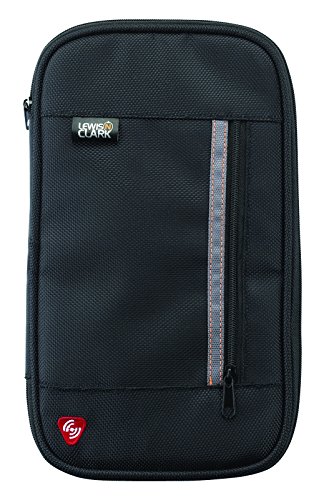
RFID BLOCKING TECHNOLOGY: RFID lined wallet pouch protects and against BLOCKS UNWANTED SCANS, ensuring that your cards and personal information remain private and confidential
What If You Need to Travel Urgently?
USCIS has procedures for expedited or emergency travel-document requests when there is a pressing or critical need to travel. Its emergency-travel guidance says applicants with a pending I-131 may request expedited adjudication, and a local field office may issue an emergency travel document when the circumstances qualify.
USCIS advises people with a pressing or critical need to travel by a certain date to request expedited processing sufficiently ahead of departure when possible. Emergency requests require evidence supporting the urgent need.
See the USCIS Emergency Travel guidance for current procedures.
Warning: Buying a nonrefundable ticket does not give you permission to return to the United States. Unless you qualify to return in another valid status, do not depart simply because Form I-131 is pending or because you expect approval before the return flight.
Travel Document Restrictions and Limitations

Advance Parole Does Not Guarantee Entry
An Advance Parole Document does not guarantee that you will be allowed into the United States. It generally permits you to travel to a U.S. port of entry and ask to be paroled into the country. U.S. Customs and Border Protection inspects arriving travelers and makes the applicable decision at the port of entry.
CBP specifically warns that Advance Parole does not guarantee admission or parole. Travelers remain subject to the inspection process.
Traveling While an Adjustment-of-Status Application Is Pending
As a general rule, an adjustment applicant who leaves the United States without the required Advance Parole can have the I-485 treated as abandoned. The principal exceptions relevant to many employment-based cases include qualifying H-1/H-4 and L-1/L-2 travelers who satisfy the requirements for returning in those classifications.
Before departure, verify which document you plan to present for your return. Do not mix assumptions about Advance Parole with assumptions about an H or L visa; the consequences can differ depending on how you return and whether you still qualify for that classification.
Advance Parole Does Not Fix Inadmissibility or Other Immigration Problems
Approval of Form I-131 does not erase criminal, immigration, fraud, removal, or other admissibility issues. A person can possess an unexpired Advance Parole Document and still face significant problems at the border or elsewhere in the immigration process.
Anyone with a prior removal or deportation order, arrest or conviction, past unlawful presence, unauthorized entry, previous immigration fraud or misrepresentation, or other unusual history should get individual legal advice before traveling.
Check the Document Before Every Trip
When USCIS issues Advance Parole, review the document itself before booking or beginning travel. Confirm:
- The document has not expired.
- Your identifying information is correct.
- The permitted travel dates cover the trip.
- The document authorizes the number of entries you need.
- Your passport and any other required travel documents will remain valid for the trip.
- Your pending immigration case has not changed in a way that affects your travel plan.
Note: Advance Parole is not a substitute for every passport, visa, airline, transit-country, or destination-country requirement. Check the entry and transit requirements imposed by every country on your itinerary.
Travel Document Renewal Process
Advance Parole has a limited validity period. If your I-485 remains pending and you expect to need international travel after the current document expires, plan ahead and file a new Form I-131 when appropriate under the current USCIS instructions.
A new Advance Parole request is not automatically approved merely because USCIS approved a previous one. USCIS evaluates the new filing under the rules and facts in effect at that time.
Do Not Plan to Renew Ordinary Advance Parole From Abroad
USCIS generally advises travelers to apply for and obtain the travel document they need before leaving the United States. Do not depart with an expiring document on the assumption that you can simply obtain an ordinary adjustment-based replacement after it expires overseas.
If you are already abroad and a previously issued Green Card, reentry permit, or Advance Parole document was lost, stolen, or destroyed, a different procedure such as Form I-131A carrier documentation may be relevant in limited circumstances. That process is not the same as routinely renewing adjustment-based Advance Parole from abroad.
Alternatives to a Travel Document After I-140 Approval
Some people with an approved I-140 have other lawful ways to travel, depending on their status and where they are in the permanent-residence process.
Travel in Qualifying H-1B or L-1 Status
A qualifying H-1B or L-1 adjustment applicant may be able to leave and seek admission in that nonimmigrant classification without using Advance Parole and without abandoning the pending I-485, provided the regulatory requirements are met. The same concept can apply to qualifying H-4 and L-2 dependents.
Because the exception depends on the traveler’s continued eligibility and return documents, confirm the details before departure rather than relying only on the fact that an old H or L approval notice exists.
Remain in the United States Until Advance Parole Is Approved
If you do not qualify for a travel exception and your I-485 is pending, postponing international travel until you receive the required Advance Parole may be the safest practical option.
Consular Processing
Consular processing is a separate route to permanent residence, not simply another type of travel document. An employment-based beneficiary who will complete immigrant-visa processing abroad follows the Department of State consular process rather than adjusting status through a pending I-485 in the United States.
Switching between adjustment of status and consular processing can have procedural consequences, so it should not be treated as a quick substitute for Advance Parole merely to accommodate a trip.
Frequently Asked Questions
What is a travel document?
“Travel document” is a broad term. USCIS issues several types through Form I-131, including Advance Parole Documents, refugee travel documents, and reentry permits. Advance Parole is the type most relevant to many applicants who have a pending Form I-485 and need authorization to travel while adjustment of status is pending.
Can I apply for a travel document after my I-140 is approved?
Possibly, but I-140 approval alone is not the ordinary basis for adjustment-related Advance Parole. If you have filed Form I-485 and it remains pending, you can generally request Advance Parole using Form I-131. Other categories have different eligibility rules.
What are the eligibility requirements after I-140 approval?
For the common employment-based adjustment scenario, you normally need a pending Form I-485 to request Advance Parole on that basis. An approved I-140 does not itself grant status or travel permission. Your exact eligibility also depends on your immigration history and the filing category selected on Form I-131.
How do I apply for Advance Parole after I-140 approval?
If you have a qualifying pending I-485, file the current Form I-131 with USCIS, provide the required supporting evidence and photographs, and submit the correct fee unless an exemption applies. Follow the current Form I-131 page for the accepted form edition and filing location.
How long does it take to receive Advance Parole?
There is no reliable single processing time for every I-131 case. USCIS processing varies by category, office, workload, and individual case circumstances. Check the current USCIS processing-time information and track your receipt number through Case Status Online.
Can I leave the United States while Form I-131 is still pending?
Do not assume that filing Form I-131 makes departure safe. Unless you qualify for a specific exception such as qualifying travel in H-1/H-4 or L-1/L-2 status, leaving without the required approved travel authorization can cause a pending I-485 to be treated as abandoned.
Do H-1B holders need Advance Parole with a pending I-485?
Not always. USCIS recognizes an exception for qualifying H-1/H-4 and L-1/L-2 adjustment applicants who satisfy the requirements for returning in the applicable nonimmigrant classification. Confirm that you meet every condition before traveling.
Does Advance Parole guarantee that CBP will let me back in?
No. Advance Parole allows you to travel to a U.S. port of entry and request parole. CBP still inspects you and makes the applicable decision when you return.
What is the Form I-131 fee for a pending I-485 applicant?
The current USCIS fee schedule lists a $630 paper filing fee for an Advance Parole request based on a pending I-485. A $0 exemption applies to certain qualifying applicants whose I-485 was filed after July 30, 2007 and before April 1, 2024, with the required I-485 fee and remains pending. Always verify the current Form G-1055 before submitting payment.
Sources
- USCIS — Form I-131, Application for Travel Documents, Parole Documents, and Arrival/Departure Records — current form, filing instructions, eligibility categories, and filing information.
- USCIS — Instructions for Form I-131 — Advance Parole purpose, adjustment-abandonment rules, H/L exceptions, evidence, and photograph requirements.
- USCIS — Form G-1055 Fee Schedule — current I-131 filing fees and qualifying fee exemptions.
- USCIS — Emergency Travel — expedited and emergency travel-document procedures and pre-departure guidance.
- U.S. Customs and Border Protection — Advance Parole — port-of-entry inspection and the warning that Advance Parole does not guarantee admission.
- USCIS — Case Status Online — tracking a pending Form I-131 using the receipt number.
