
Last Updated on July 27, 2026 by Daniel Globe
Visiting Topkapi Palace is like stepping into the working heart of the Ottoman Empire. The complex combines royal apartments, government rooms, gardens, treasury displays, sacred relics, and wide views over the Bosphorus. A little planning matters: the palace is large, the Harem adds significant time, and current ticket and opening rules can affect how you structure the day.
Quick Answer
Plan about 3–4 hours for Topkapi Palace, or longer if you want a slow visit to the Harem, Hagia Irene, Treasury, Sacred Relics, and fourth-courtyard terraces. The palace is currently closed on Tuesdays. Arrive near opening time, buy the correct combined ticket, and wear comfortable shoes for the extensive stone paths.
Key Takeaways
- Topkapi Palace is closed on Tuesdays; the official ticket office currently operates from 09:00 to 17:00, with visitor information listing the site to 17:30.
- The current combined ticket includes Topkapi Palace, Hagia Irene, and the Harem; Harem and Hagia Irene have special Müzekart exclusions.
- Prioritize the Harem, Imperial Treasury, Sacred Relics, Imperial Council, Palace Kitchens, and fourth-courtyard pavilions if time is limited.
- For photos inside the grounds, morning after opening and late afternoon before closing are more realistic than sunrise or sunset; follow posted photography restrictions in exhibit areas.
- Topkapi is only partly easy to navigate for visitors with limited mobility because historic surfaces, thresholds, steps, and narrow passages vary by section.
At a Glance
| Time Required | About 3–4 hours; allow 4–5 hours for a slower visit with the Harem and Hagia Irene. |
| Difficulty | Easy to moderate walking, with extensive stone surfaces and some steps or thresholds. |
| Tools Needed | Comfortable shoes, phone or camera, water for use where permitted, and a charged phone for tickets/maps. |
| Cost | As checked July 27, 2026, the official foreign-visitor combined ticket is 2,750 TL. Prices can change. |
Disclosure: As an Amazon Associate I earn from qualifying purchases. Some links on this page are affiliate links, at no extra cost to you.
Plan Your Visit: Hours, Tickets, and Getting There
Before you set out, check the official National Palaces Topkapi Palace page. As checked on July 27, 2026, Topkapi Palace is closed on Tuesdays. The ticket office opens at 09:00 and closes at 17:00, while current visitor information lists the palace visit window to 17:30. Holiday schedules can differ.
| Ticket | Current Price | What It Covers |
|---|---|---|
| Combined — foreign visitor | 2,750 TL | Topkapi Palace + Hagia Irene + Harem |
| Combined — domestic visitor | 500 TL | Topkapi Palace + Hagia Irene + Harem |
| Harem — foreign visitor | 1,050 TL | Harem section |
| Hagia Irene — foreign visitor | 1,050 TL | Hagia Irene |
Note: Ticket prices are time-sensitive. The prices above were checked against the official National Palaces listing on July 27, 2026. Müzekart is not valid for the Harem or Hagia Irene, so check what your ticket includes before entering.
For public transport, the T1 Kabataş–Bağcılar tram stops at both Gülhane and Sultanahmet. Either can work for the palace depending on where you are coming from. Sultanahmet is convenient if you are combining Topkapi with Hagia Sophia or the Blue Mosque; Gülhane is useful if you are approaching from Eminönü or Sirkeci.
Pro Tip: If Topkapi is a priority, arrive shortly before opening with your ticket plan already decided. The palace is large, and time spent sorting out separate Harem or Hagia Irene access can cut into the quietest part of the morning.
History of Topkapi Palace
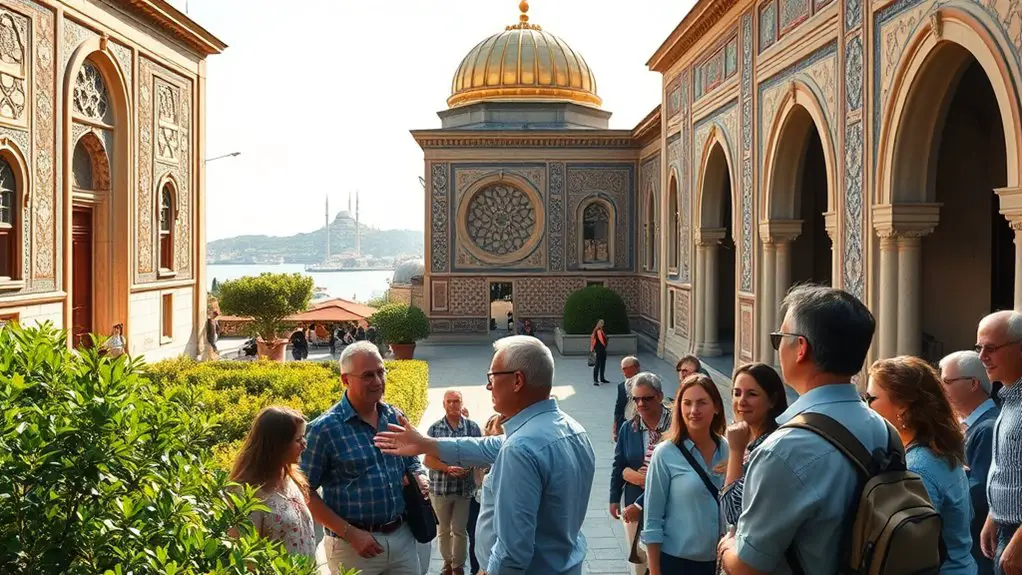
Topkapi Palace has a rich history that stretches across centuries. According to the National Palaces administration, Sultan Mehmed II began building the complex after the conquest of Constantinople, with major construction taking place from 1460 to 1478. Later sultans continued to add pavilions, chambers, gardens, and service buildings.
For nearly four centuries, the palace served as the main royal residence and a center of Ottoman government, education, ceremony, and art. By the mid-19th century, the imperial court shifted to Dolmabahçe Palace, which better suited changing needs of protocol and administration.
As you move through its courtyards, the layout becomes part of the story. The first spaces handled service and ceremony; deeper courts became progressively more restricted. The Imperial Council, Palace School, Harem, Treasury, and private pavilions show how government, household life, and court ritual were organized within one complex.
Topkapi became a museum on April 3, 1924. Today, its buildings, collections, archives, gardens, and views preserve the atmosphere of a dynasty that shaped Istanbul and a vast part of the surrounding region.
Topkapi Palace is part of UNESCO’s Historic Areas of Istanbul, inscribed on the World Heritage List in 1985.
Key Attractions Within the Palace
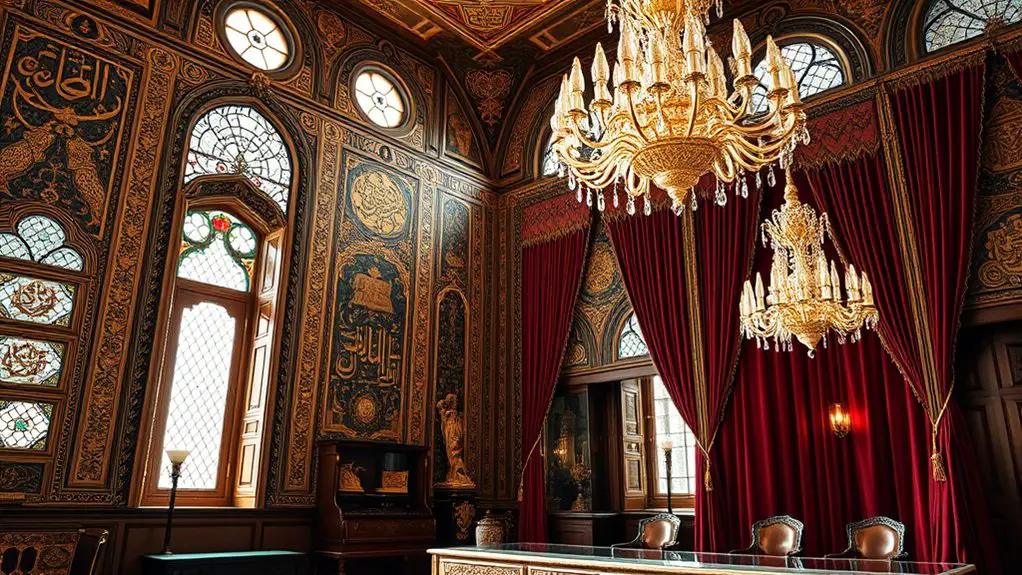
As you wander through Topkapi Palace, the Imperial Harem is one of the most revealing sections. It was not simply a luxurious residence; it was a tightly organized private household with rooms for the sultan, the valide sultan, consorts, children, female attendants, and the officials who served the Harem.
Don’t miss the Sacred Relics Collection, where objects associated by tradition with the Prophet Muhammad and other important figures of Islamic history are preserved and displayed.
The Imperial Treasury, Council spaces, Palace Kitchens, courtyards, pavilions, and Bosphorus-facing terraces add political, artistic, and everyday context to the palace story.
Imperial Harem Exploration
Stepping into the Imperial Harem feels like entering a city within the palace. Its narrow corridors, tiled rooms, courtyards, baths, and private chambers show how rank and privacy shaped daily life. The Harem evolved over centuries, so what you see is a layered complex rather than a single-period interior.
| Key Feature | Why It Matters |
|---|---|
| Courtyard of the Black Eunuchs | A key transition point into the controlled interior of the Harem. |
| Kadınefendiler and Concubines Courtyard | A major domestic area that reopened with expanded interpretation after restoration in 2026. |
| Valide Sultan Apartments | Rooms associated with the sultan’s mother, one of the most powerful figures in the palace household. |
| Imperial Hall | A ceremonial Harem space with rich decoration and a strong sense of court hierarchy. |
| Privy Chamber of Murad III | One of the Harem’s finest surviving private royal interiors. |
| Golden Road | A narrow passage linking important Harem spaces and the palace’s inner courts. |
In May 2026, National Palaces announced that the restored Kadınefendiler and Concubines Courtyard had opened with additional rooms and displays. The expanded route adds roughly 20 minutes to a thorough Harem visit.
Don’t rush this section. The Harem makes much more sense when you pay attention to how rooms connect and how the architecture separates service, family life, ceremony, and privacy.
Sacred Relics Collection
Within Topkapi Palace, the Sacred Relics Collection is one of the most spiritually significant parts of the visit.
Here, you’ll encounter objects traditionally associated with the Prophet Muhammad and other important figures in Islamic history. The collection is presented with a reverent tone, so this is a place to slow down and be mindful of other visitors.
National Palaces states that the collection includes the Mantle of the Prophet, letters, a sword, beard relics, a footprint, and other objects connected by tradition to the Prophet, along with items associated with the early Islamic community and the holy sites.
The palace’s conservation teams use specialist methods to preserve these fragile textiles, metalwork, manuscripts, and ceremonial objects. You can read more on the National Palaces Sacred Relics page.
You may feel a sense of reverence here even if you are visiting primarily for art or history. Treat the room as both a museum display and a place of deep religious meaning for many visitors.
Imperial Treasury and Courtyards
The palace’s treasury displays are another must-see. Famous objects associated with Topkapi include the Topkapi Dagger, the Spoonmaker’s Diamond, and ceremonial thrones and jeweled objects. Exhibits can rotate, so focus on the collection as a whole rather than assuming every named object will always be on view.
The courtyards help you understand how the palace worked. In the second courtyard, the Imperial Council and Tower of Justice reflect the machinery of government. Deeper inside, the third and fourth courtyards become more private, with the Audience Chamber, collections, pavilions, gardens, and terraces.
Hagia Irene and Palace Kitchens
Hagia Irene stands in the first courtyard and is included in the current Topkapi combined ticket. It is one of the most important surviving Byzantine churches in Istanbul and adds a pre-Ottoman layer to the site.
The Palace Kitchens in the second courtyard help balance the article’s focus on royalty with a look at the enormous service operation that supported the court. Even when you are short on time, the kitchens, Council area, and courtyard sequence are worth seeing because they explain how the palace functioned beyond its ceremonial rooms.
Tips for Navigating the Palace Grounds
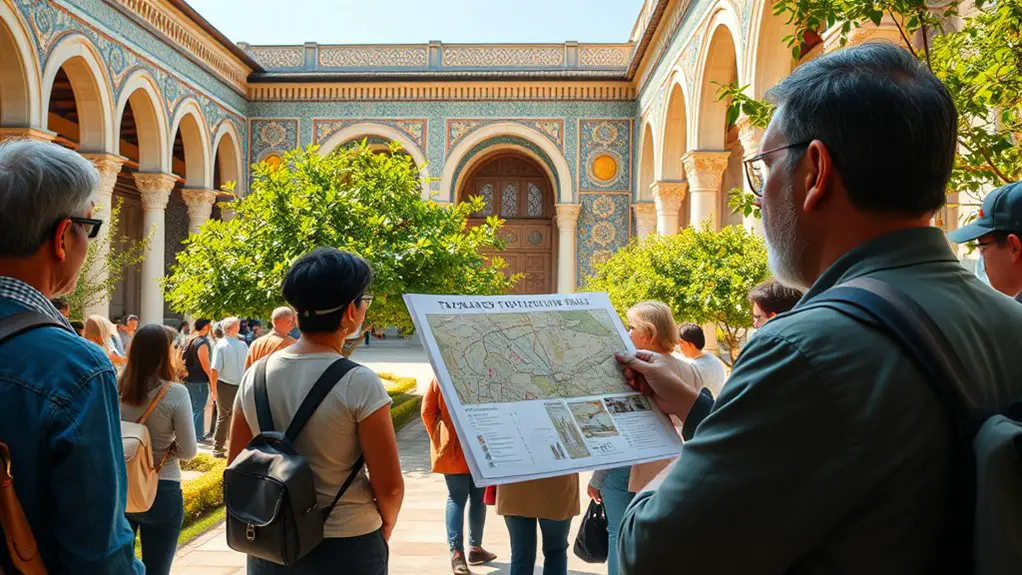
Maneuvering the sprawling grounds of Topkapi Palace can feel overwhelming, but a simple route keeps the visit manageable. Use the posted map and signs near the entrance to understand how the four main courtyards connect.
Prioritize your must-see areas before you start. If the Harem and Treasury are most important to you, see them before museum fatigue sets in rather than leaving both until the end.
For crowd management, early morning is usually the best bet. Later in the afternoon can also feel calmer, but remember that the ticket office closes before the end of the visitor window.
Don’t hesitate to ask staff for directions, especially around the Harem entrance and inner courts. The palace has many branching rooms, and restoration work can occasionally alter the normal visitor route.
As you reach the fourth courtyard, slow down and enjoy the pavilions, gardens, and views toward the Bosphorus. This is a good place to take a mental break before deciding whether to revisit a collection or move on to nearby Sultanahmet sights.
Suggested Route: Imperial Gate and first courtyard → Hagia Irene → second courtyard and Palace Kitchens → Imperial Council → Harem → third-courtyard collections and Sacred Relics → fourth-courtyard pavilions and terraces.
Warning: Do not assume every section is fully wheelchair accessible. Historic paving, steps, thresholds, narrow passages, and restoration work can make some routes difficult. Visitors with mobility needs should ask staff at the entrance for the current accessible route before buying add-on access.
Best Times to Visit
When planning your visit to Topkapi Palace, the most comfortable seasons are usually spring and fall, when Istanbul is generally milder than in the hottest part of summer or the coldest part of winter.
For the quietest practical start, arrive close to the 09:00 opening. Late morning through early afternoon is often busier because tour groups and day visitors overlap. Late afternoon can be pleasant, but leave enough time for the Harem and indoor collections before closing.
| Season | Best Time to Visit | What to Expect |
|---|---|---|
| Spring | Early morning | Comfortable walking weather and greener gardens. |
| Summer | Opening time or later afternoon | More heat, stronger sun, and heavier visitor traffic. |
| Fall | Morning or later afternoon | Milder temperatures and attractive seasonal light. |
| Winter | Mid-morning | Cooler, wetter conditions but often fewer visitors. |
Photography Tips for Capturing the Beauty
To capture the beauty of Topkapi Palace, timing and a light setup matter more than carrying a large amount of gear.
Inside the palace grounds, the most useful light is usually just after opening and during the later part of the afternoon. True sunrise or sunset often falls outside normal visitor hours, especially in summer.
Focus on courtyards, framed doorways, tile work, domes, gardens, and the layered skyline beyond the terraces. Always follow posted rules in galleries and rooms where photography may be restricted.
Best Times to Shoot
At opening time, lower-angle light can give the stone courtyards and façades more texture while visitor numbers are still building.
The classic golden hour can be excellent for exterior views around Sultanahmet, Gülhane Park, and the palace walls, but it is not a reliable plan for photography inside Topkapi because the palace does not open at sunrise and may close before sunset.
Spring flowers and autumn foliage can add color to wider compositions. In summer, strong midday light creates hard contrast, so look for shaded arcades, doorways, and interior courtyards instead of forcing every shot into full sun.
Late afternoon can produce longer shadows and richer textures, but keep one eye on the time so you are not rushing through the Harem or Treasury to chase a photograph.
Essential Gear Recommendations
Wear comfortable footwear because you will cover a large area on stone and uneven surfaces. Carry only the camera equipment you genuinely use; a smaller kit is easier in crowded galleries and narrow Harem passages. Bring water for use where permitted and keep your phone charged for tickets, maps, and transit.
| Gear Item | Purpose | Tips |
|---|---|---|
| DSLR or Mirrorless | Higher image quality and lens flexibility | A standard zoom is more useful than carrying several lenses. |
| Tripod | Stability in approved areas | Treat it as optional; formal shoots have separate National Palaces procedures, and exhibit-area rules can vary. Follow staff directions. |
| Extra Batteries | Power for a long visit | Charge them before entering so you do not have to manage power banks in tight spaces. |
| Lens Cloth | Keep lenses clean | Useful in humid, dusty, or rainy weather. |
National Palaces publishes separate procedures for formal filming and commemorative photography. Ordinary visitors should still obey any room-by-room signs or staff instructions about cameras, flash, or equipment.
Framing Iconic Views
How can you make the most of the breathtaking views at Topkapi Palace? Use the architecture itself to build stronger compositions:
- Use natural elements: Incorporate trees, garden edges, or arches to create depth and context.
- Change your angle: Try a lower or higher viewpoint where allowed instead of taking every image from eye level.
- Use available soft light: Morning and later-afternoon light are usually more flattering than harsh midday sun inside the grounds.
- Focus on details: Photograph tile work, calligraphy, doors, fountains, and carved surfaces as well as wide palace views.
Nearby Attractions to Explore
Exploring the area surrounding Topkapi Palace reveals a dense cluster of Istanbul’s best-known historical and cultural sites.
Just a short walk away, Hagia Sophia dominates Sultanahmet with its enormous dome and layered Byzantine and Ottoman history.
Topkapi works best as part of a wider Historic Peninsula day: palace history, Byzantine monuments, Ottoman mosques, gardens, markets, and the waterfront all connect within the same compact district.
Wander through Sultanahmet Square for views of Hagia Sophia and the Blue Mosque, or continue downhill into Gülhane Park for a greener, calmer break.
Don’t miss the Basilica Cistern if you want a dramatic change of atmosphere: its underground columns, low light, and water create one of the city’s most distinctive interiors.
For a taste of local commerce, head toward the Spice Bazaar, where shops sell spices, sweets, dried fruit, tea, and souvenirs.
If you still have energy for shopping, the Grand Bazaar offers a vast network of covered lanes filled with textiles, jewelry, leather goods, ceramics, and other wares.
Finally, consider a Bosphorus cruise on a separate block of your day. Seeing the historic peninsula from the water adds useful geographic context to the palace’s strategic position.
Each site adds another layer to Istanbul’s story, but Topkapi itself can easily take half a day, so avoid packing too many major attractions into the same morning.
Visitor Etiquette and Accessibility
Topkapi Palace is a museum-palace rather than a mosque, and the current National Palaces visitor page does not publish a general shoulders-and-knees dress rule for all visitors. Comfortable, respectful clothing is sensible, especially in the Sacred Relics rooms, but the original claim of a strict palace-wide modest-dress code is too broad.
Food and drink rules can vary by space. Do not plan to eat inside exhibit rooms; use designated rest or refreshment areas where available, and follow security or staff instructions about bottles and food.
Accessibility is partial rather than universal. Wide courtyards may be manageable, but historic stone paving, thresholds, stairs, and narrow Harem passages can make some sections difficult for wheelchairs, walkers, or visitors who tire easily.
For the smoothest visit, keep bags light, wear shoes with good grip, and build in rest stops. If mobility is a concern, ask at the entrance which sections are accessible that day before committing to a long route.
Frequently Asked Questions
Is there a dress code for visiting Topkapi Palace?
There is no palace-wide shoulders-and-knees dress code published on the current National Palaces visitor page. Topkapi is a museum-palace, not a mosque. Wear comfortable, respectful clothing, and be especially considerate in the Sacred Relics rooms.
Are guided tours available at Topkapi Palace?
Yes. Group and private guided tours are widely available, and a knowledgeable guide can make the palace hierarchy, Harem, Treasury, and courtyards much easier to understand. Check whether admission is included before booking a third-party tour.
Can I bring food and drinks inside the palace?
Do not plan to eat or drink inside galleries or historic rooms. Security and room-specific rules can restrict food, beverages, or bottles. Use designated refreshment or rest areas where available and follow posted instructions.
Is there wheelchair access throughout the palace grounds?
No. Accessibility is partial. Some courtyards and exhibition areas are easier to reach, while uneven paving, steps, thresholds, and narrow Harem passages can make other sections difficult. Ask staff for the current accessible route when you arrive.
How long should I plan to spend at Topkapi Palace?
Plan at least 3–4 hours for the major courtyards, collections, Harem, and views. Allow 4–5 hours if you want to move slowly, read exhibits, visit Hagia Irene, take photographs, and rest along the way.
Is the Harem included in the Topkapi Palace ticket?
The current official combined ticket includes Topkapi Palace, Hagia Irene, and the Harem. Separate Harem tickets are also listed. Müzekart does not cover the Harem or Hagia Irene.
What day is Topkapi Palace closed?
Topkapi Palace is currently closed on Tuesdays. Holiday openings can vary, so use the official National Palaces visitor page for the latest schedule before traveling.
Sources
- Republic of Türkiye Directorate of National Palaces — Topkapi Palace — history, opening days, ticket-office hours, ticket prices, and Müzekart rules.
- National Palaces — 2026 Harem restoration and reopening — current Harem route and added visitor time.
- National Palaces — Sacred Relics Department — collection details and conservation information.
- UNESCO World Heritage Centre — Historic Areas of Istanbul — World Heritage context for Topkapi Palace and the Historic Peninsula.
- Metro Istanbul — T1 Kabataş–Bağcılar Tram Line — current station list including Gülhane and Sultanahmet.
Conclusion
Visiting Topkapi Palace is one of the best ways to understand how Ottoman government, ceremony, family life, art, and religion intersected in Istanbul. Give the site enough time, arrive near opening, choose the correct ticket, and prioritize the Harem, Treasury, Sacred Relics, courtyards, and Bosphorus-facing pavilions. With realistic expectations about crowds, photography, and accessibility, the palace becomes far easier to navigate—and much more rewarding to explore.
