
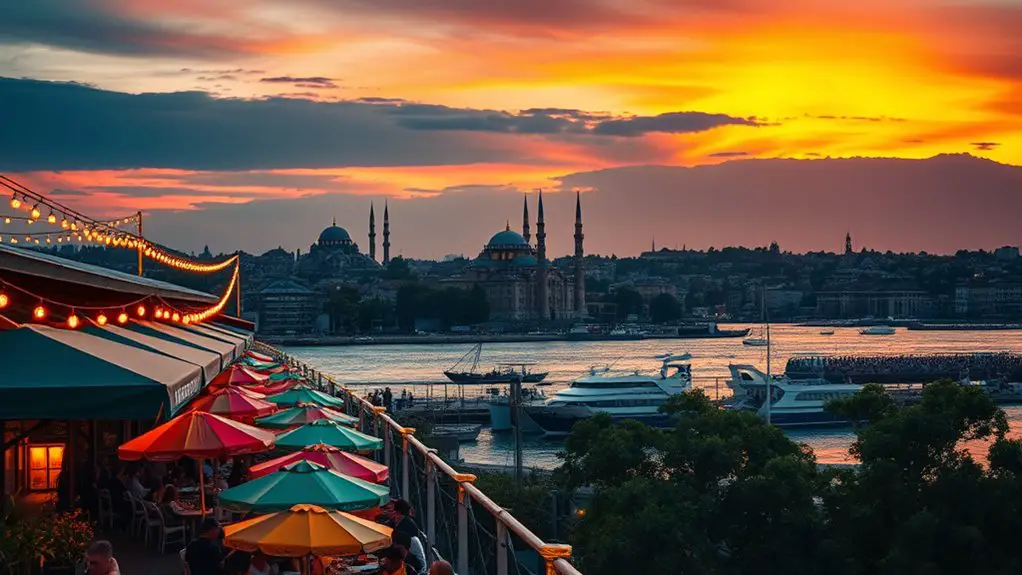
Last Updated on July 25, 2026 by Daniel Globe
Discover the Golden Horn’s most Instagrammable spots by following a route through colorful Balat, historic Fener, sacred Eyüp, panoramic Pierre Loti Hill, and the lively Galata Bridge. These places offer more than attractive backgrounds: you can photograph 19th-century houses, landmark religious buildings, everyday street life, sweeping water views, and Istanbul’s skyline while moving between neighborhoods by tram or ferry.
Quick Answer
The Golden Horn’s best Instagram spots include Balat’s colorful cumba houses and Merdivenli Yokuş, Fener’s landmark churches and red-brick school, Eyüp Sultan Mosque, Pierre Loti Hill’s panorama, and Galata Bridge at sunset. Use the T5 tram to move between Fener, Balat, and Eyüp, then choose one viewpoint for your main sunset shoot.
Key Takeaways
- Balat: Go beyond random colorful walls and look for Merdivenli Yokuş, historic bay-window houses, cobbled lanes, and small street details.
- Fener: Photograph major landmarks such as the Ecumenical Patriarchate area, Fener Greek High School, and Sveti Stefan Church.
- Eyüp and Pierre Loti: Combine respectful architectural photography at Eyüp Sultan Mosque with a wide Golden Horn panorama from the hill above.
- Getting around: The T5 tram directly serves Fener, Balat, and Eyüpsultan Teleferik, while Golden Horn ferries provide a more scenic alternative.
Disclosure: As an Amazon Associate I earn from qualifying purchases. Some links on this page are affiliate links, at no extra cost to you.
Colorful Streets of Balat
Nestled beside the Golden Horn, the colorful streets of Balat combine historic residential architecture with steep lanes, small cafés, painted walls, and everyday neighborhood life. Instead of simply wandering until you find a bright façade, give yourself a few specific photographic targets.
Merdivenli Yokuş and the Cumba Houses
One of the most useful places to begin is Merdivenli Yokuş. Türkiye’s official tourism site specifically highlights this slope for its colorful cumba houses, the traditional homes with projecting enclosed bay windows. You can read more about the area’s architecture in the official GoTürkiye guide to Fener and Balat.
The slope gives you something a flat street cannot: natural layers. Stand lower on the hill and use the road or stairs as leading lines, letting the façades rise through the frame. A wider lens works well when you are close to the buildings, while a longer focal length can compress several colorful fronts into a tighter pattern.
As you wander farther through the neighborhood, look for pastel façades, old balconies, shutters, murals, doorways, cobbles, and winding alleys. The strongest photographs often include a small piece of daily life rather than only a wall of color.
Vibrant murals and historic façades turn Balat’s alleys into a changing street-level canvas, but the neighborhood is also a real residential community.
Pro Tip: Visit Balat earlier in the day if you want cleaner street compositions. When photographing houses, stay on public walkways, keep entrances clear, and avoid posing on residents’ steps or blocking narrow lanes with tripods.
Every corner can still present a visual surprise, but having a few known anchors makes the neighborhood far easier to photograph than relying on chance. Capture the color, then slow down and look for textures and small architectural details that reveal more of Balat’s character.
The Majestic Eyüp Sultan Mosque
A visit to Eyüp Sultan Mosque takes you into one of Istanbul’s most important religious areas. The first mosque complex here dates to the reign of Mehmed II, while the present main structure reflects later rebuilding. Türkiye’s official Culture Portal entry for Eyüp Sultan Mosque describes its central dome, courtyard, minarets, fountain, and adjoining tomb complex.
The mosque is visually impressive, but its importance goes far beyond architecture. The complex is associated with Abu Ayyub al-Ansari, known in Turkish as Eyüp Sultan, and remains an active place of worship and pilgrimage.
In the courtyard, look for balanced compositions using the arcades, dome, minarets, fountain, and mature plane tree. Around the tomb, decorative tilework adds another layer of color and detail. Inside permitted visitor areas, calligraphy and architectural ornament are better photographic subjects to describe than the “detailed mosaics” sometimes incorrectly associated with the mosque.
The surrounding cemetery and lanes toward Pierre Loti Hill also provide quieter frames, with Ottoman gravestones, trees, and changing elevations giving the area a very different mood from Balat’s bright streets.
Note: Eyüp Sultan Mosque is an active religious site. Dress respectfully, keep your voice low, follow posted instructions and staff guidance, and avoid photographing worshippers without permission. If a prayer or religious gathering is underway, put the camera away rather than disrupting it for a shot.
Views From Pierre Loti Hill
After exploring the Eyüp Sultan area, continue uphill to Pierre Loti Hill for one of the Golden Horn’s classic elevated views. The viewpoint looks across the water toward the layered urban landscape, giving you a completely different scale from the close street scenes of Balat.
You do not have to walk the entire steep route. A cable car links Eyüp with the upper viewpoint, while walkers can climb through the historic cemetery. The official GoTürkiye Pierre Loti Hill guide describes both options.
Once at the top, avoid taking only one straight-on panorama. Try several compositions:
- Wide panorama: Include the curve of the Golden Horn and several layers of the city.
- Foreground frame: Use trees, railings, or café details to add depth.
- Compressed city view: A longer lens can pull distant buildings together and emphasize the density of Istanbul.
- Blue-hour shot: Stay after sunset as city lights begin to appear if conditions and your schedule allow.
The golden hour can produce warm light across the water, but sunset is not the only worthwhile time. Clear morning conditions can give cleaner detail, while evening light is better if atmosphere and city lights are your priority.
Pro Tip: If you also want a Galata Bridge sunset, choose which location matters more for golden hour. Photograph Pierre Loti in daylight and continue to Galata Bridge for sunset, or stay on the hill and make the panorama your sunset finale.
The Historic Fener and Balat Districts: Landmark Architecture
Winding through the historic Fener and Balat districts, you move between colorful residential streets and much larger landmarks tied to Istanbul’s Greek Orthodox, Bulgarian, Jewish, Armenian, Muslim, and Ottoman history.
The vivid Balat architecture remains a strong subject, but Fener gives you several specific buildings that make this part of the Golden Horn much more than a collection of painted houses.
Balat’s vibrant architecture weaves a lively mosaic of streets and façades, while Fener adds monumental landmarks that change the scale of your photographs.
Fener Greek High School
The massive red-brick Fener Greek High School, also widely known in English as the Phanar Greek Orthodox College or the “Red School,” dominates the hillside from many nearby streets. Instead of trying to photograph it only from immediately outside, look for a lower street where the building rises behind older houses. This creates a much stronger sense of scale.
Ecumenical Patriarchate and St. George’s Church
Fener is also home to the Ecumenical Patriarchate and St. George’s Church. The complex is an important religious site, so treat interior photography the same way you would at a mosque: follow current signs and staff instructions, remain quiet, and never assume that every area may be photographed.
Sveti Stefan Bulgarian Church
Along the Golden Horn waterfront, Sveti Stefan Bulgarian Orthodox Church provides a very different composition. Its pale exterior can be photographed with open sky or water around it, helping it stand apart from Fener’s tighter urban streets.
The official GoTürkiye Fener and Balat guide identifies these neighborhoods for their historic houses, churches, synagogues, and distinctive architecture.
Sunset at the Galata Bridge
Leaving the tighter streets of Fener and Balat, your journey finds a broader urban perspective at the iconic Galata Bridge. It spans the Golden Horn near Eminönü and Karaköy and brings together water, ferries, fishermen, minarets, waterfront activity, and the surrounding skyline.
As the sun drops, changing light can turn the bridge into a strong silhouette and reflect across the water. Evening lights then create a second shooting window after the brightest sunset color has faded.
- Perfect Composition: Use the bridge as a leading line rather than placing it flat across the center of every frame.
- Color Palette: Expose for the sky during strong sunset color so highlights do not wash out.
- Cultural Vibe: Fishermen provide one of the bridge’s most recognizable foreground subjects, but ask before taking close portraits of identifiable people.
- Skyline Layers: Change sides and elevations to place domes, minarets, Galata, boats, or waterfront buildings behind the bridge.
The bridge is especially useful because you can keep shooting as daylight fades. Wide skyline photographs work first; silhouettes and reflections often become stronger later.
A Practical Golden Horn Photography Route
You can link the article’s main locations in one long day without repeatedly crossing Istanbul. The most efficient order depends on which location you want for sunset.
- Start in Fener and Balat. Photograph the residential lanes and Merdivenli Yokuş while you still have energy for the hills and cobbled streets.
- Photograph Fener’s landmarks. Work around the Patriarchate area, the red-brick Fener Greek High School, and the waterfront near Sveti Stefan.
- Continue to Eyüp. Visit Eyüp Sultan Mosque respectfully, then explore the surrounding square and cemetery.
- Go up Pierre Loti Hill. Take the cable car or walk if you are comfortable with the climb.
- Choose your sunset. Stay at Pierre Loti for a Golden Horn panorama, or return toward Eminönü and Galata Bridge for silhouettes, fishermen, ferries, and city lights.
For public transport, the T5 Eminönü–Alibeyköy tram is particularly useful because it serves Fener, Balat, and Eyüpsultan Teleferik.
A scenic alternative is the Golden Horn ferry. Official Şehir Hatları Golden Horn timetables include services calling at locations such as Fener, Balat, and Eyüpsultan. Check the current timetable on the day you travel because schedules can change.
Photography Etiquette and Practical Tips
The Golden Horn is photogenic because it is a living part of Istanbul, not a purpose-built photo set. A little care produces better photographs and a better experience for everyone.
- Wear comfortable shoes. Balat and Fener include cobbled surfaces, slopes, and steps.
- Keep residential entrances clear. Colorful houses are often private homes.
- Ask before close portraits. A street scene does not automatically make every person in it a willing portrait subject.
- Use tripods carefully. Narrow streets and busy bridge walkways are poor places to block pedestrian traffic.
- Respect religious sites. Follow dress requirements, signs, staff instructions, and worship schedules.
- Carry a simple lens setup. A phone or wide lens handles narrow Balat streets, while a telephoto lens is useful for Pierre Loti panoramas and layered skyline shots.
- Protect your highlights. Around sunset, slightly darker exposure often preserves more sky color and gives you greater editing flexibility.
Frequently Asked Questions
What Is the Best Time of Day to Visit the Golden Horn?
Early morning is useful for quieter street photography in Fener and Balat. Late afternoon and the period around sunset work particularly well for Pierre Loti Hill and Galata Bridge. Because the two sunset viewpoints are some distance apart, choose one as your main golden-hour location rather than rushing between them.
Are There Any Guided Tours Available Around the Golden Horn?
Yes. Walking tours commonly cover Fener and Balat, and broader itineraries may continue toward Eyüp. If historical interpretation matters to you, look for a properly licensed professional guide rather than choosing only by social-media advertising or the promise of photo stops.
How Can I Reach the Golden Horn Using Public Transportation?
The T5 Eminönü–Alibeyköy tram is one of the easiest options for this itinerary because it directly serves Fener, Balat, and Eyüpsultan Teleferik. Golden Horn ferries also call at several waterfront stops. If you are coming on the T1 tram from Sultanahmet, travel to Eminönü and transfer rather than treating T1 as the direct Balat or Eyüp line.
What Are Some Popular Cafes or Restaurants Near the Golden Horn?
The café area at Pierre Loti Hill is the classic choice when the view matters as much as the drink. Balat has many small cafés along its central streets, while Balat Sahil Restoran is one waterfront dining option mentioned in the area. Restaurant hours, menus, and ownership can change, so check a venue’s current information before making a special trip.
Is There Any Entrance Fee for Visiting Attractions Around the Golden Horn?
Walking the public streets of Fener and Balat, crossing Galata Bridge, and enjoying public outdoor views does not require a sightseeing ticket. Public transport, the cable car, cafés, and meals have their own charges. Religious buildings operate as places of worship, so visitor access can also change around prayers, services, or special events.
Where Is the Best Place to Photograph Balat’s Colorful Houses?
Merdivenli Yokuş is one of the best-known locations for colorful historic houses and is specifically highlighted by GoTürkiye for photography. Explore the surrounding streets as well, because changing light, parked vehicles, construction, and normal residential life can make a nearby lane more photogenic on the day you visit.
Can I Take Photos Inside Eyüp Sultan Mosque?
Photography rules can depend on the area, worship activity, and instructions in place when you visit. Follow posted signs and staff directions, avoid flash where prohibited, do not interrupt prayers, and never take close photographs of worshippers without permission.
Conclusion
The Golden Horn gives you far more than one postcard view. Start among the colorful streets of Balat, look for the historic landmarks of Fener, slow down at Eyüp Sultan Mosque, and climb or ride to Pierre Loti Hill for the panorama. Then, if your route allows, finish beside the water at Galata Bridge as daylight fades.
The best photographs will not come from rushing through every location. Pick a few strong compositions, respect the people who live and worship here, and give yourself time to notice the small details between the famous viewpoints. That is where the Golden Horn’s character comes through most clearly.
Sources
- GoTürkiye — Fener and Balat Neighbourhoods — historic architecture, major landmarks, and Merdivenli Yokuş.
- Türkiye Culture Portal — Eyüp Sultan Mosque — mosque history, architectural features, courtyard, and tomb complex.
- GoTürkiye — Pierre Loti Hill — viewpoint, Golden Horn panorama, walking route, and cable-car access.
- Metro Istanbul — T5 Eminönü–Alibeyköy Tram Line — current stations serving Fener, Balat, and Eyüpsultan.
- Şehir Hatları — Golden Horn Ferry Service — current Golden Horn ferry stops and timetable information.
- Istanbul Tourist Guides Chamber — official information on professional tourist guides operating in Istanbul.
