
Last Updated on September 10, 2026 by Daniel Globe
The best hiking socks are the ones you barely notice once you start walking. They should fit without wrinkles, protect your skin from your footwear, manage sweat, and provide enough cushioning without making your shoes or boots tight. Material matters, but fit, sock height, cushioning, footwear volume, and weather all work together.
Quick Answer
The best hiking socks fit snugly without wrinkles, rise above your footwear cuff, and use moisture-managing fibers such as merino wool, polyester, or nylon. Choose lighter cushioning for warm conditions and more cushioning for colder trips, but never make your boots tight. Avoid cotton for long hikes, and change damp socks early.
Key Takeaways
- Match sock height to your footwear: the sock should protect any skin that would otherwise rub against the shoe or boot cuff.
- Merino-wool blends and synthetic blends are the main choices for hiking because they manage moisture better than cotton.
- Choose cushioning for both weather and footwear volume. A thick sock is not helpful if it makes a properly fitted boot too tight.
- A hiking sock should feel snug, with its heel cup aligned to your heel and no loose folds around the toes.
- Footwear fit comes first for blister prevention. Liner socks can help some hikers, but they are optional rather than universally necessary.
Disclosure: As an Amazon Associate I earn from qualifying purchases. Some links on this page are affiliate links, at no extra cost to you.
How to Choose Hiking Socks in 5 Steps
- Check your footwear height. Choose a sock tall enough to sit above the shoe or boot cuff so the cuff does not rub bare skin.
- Choose the cushioning level. Light cushioning favors lower bulk and warmer weather; medium cushioning adds comfort and warmth; heavy cushioning is mainly useful for cold conditions, mountaineering, or footwear with enough room for the extra thickness.
- Pick a moisture-managing material. Merino-wool blends, polyester, nylon, and other performance synthetics are common choices. Avoid relying on 100% cotton for sustained hiking.
- Check the fit. The sock should be snug without pinching. The heel pocket should sit on your heel, and there should be no bunching at the toes or wrinkles underfoot.
- Test the socks with your hiking footwear. Walk around before a long trip. Thick socks can change the fit of a boot enough to create new pressure points.
REI’s hiking-sock guidance similarly recommends choosing by height, cushioning, fabric, and fit.
Pro Tip: Do not choose the thickest sock simply because a hike is difficult. The correct sock is the thickest one your footwear can comfortably accommodate without squeezing your toes, heel, or instep.
Different Types of Hiking Socks and Their Features
Hiking socks vary mainly by height and cushioning. Neither category has one universally “best” option; the right combination depends on your footwear, temperature, terrain, and personal preference.
Sock Height
No-show socks sit below or close to the shoe collar. They can work with low-cut trail-running or light hiking shoes, but they provide little protection from a higher footwear cuff.
Ankle socks usually cover the ankle bone and work well with many low- and some mid-cut hiking shoes.
Crew and micro-crew socks extend higher up the lower leg. They are common with hiking boots because they keep the boot cuff from rubbing directly against the skin.
Knee-high or mountaineering socks provide more coverage and warmth for tall boots and cold alpine conditions.
Note: A taller hiking sock can protect your skin from a boot cuff, but the sock itself does not provide the structural ankle support that comes from footwear design and fit.
Cushioning Levels
No-cushion or ultralight socks minimize bulk and are most useful in warm weather, close-fitting footwear, or as liner socks.
Light-cushion socks add modest padding, often under the heel and ball of the foot, while staying relatively breathable.
Medium-cushion socks add more padding and warmth and are a versatile choice for hiking and backpacking when the footwear has enough room.
Heavy or maximum-cushion socks are the thickest and warmest options. They make the most sense for cold-weather hiking, mountaineering, or roomy boots rather than hot-weather hiking.
Materials Used in Hiking Socks and Their Benefits
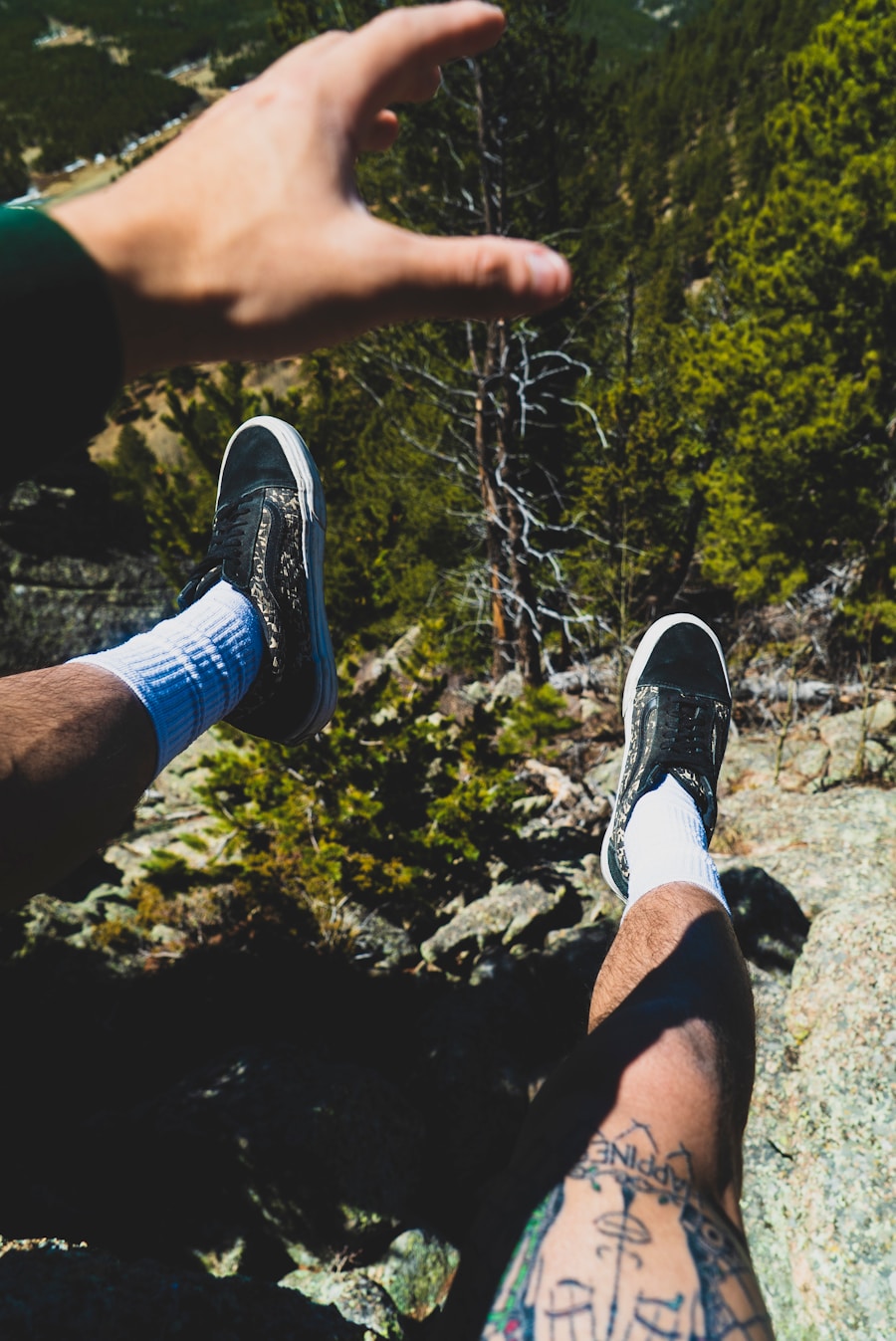
Most modern hiking socks are blends rather than garments made from a single fiber. Blending lets manufacturers balance moisture management, warmth, stretch, durability, and drying time.
Merino Wool
Merino wool is popular in hiking socks because it helps regulate temperature, handles moisture well, provides natural cushioning, and tends to retain less odor than many purely synthetic fabrics. Hiking socks commonly combine merino with nylon and elastane or spandex to improve durability, stretch, and shape retention.
Merino is useful in both warm and cool conditions, but it generally does not dry as quickly as the fastest synthetic fibers.
Polyester, Nylon, Acrylic, and Other Synthetics
Synthetic fibers are widely used because they can be durable, quick drying, stretchy, and effective at moving moisture away from the skin. Polyester is common for moisture management, while nylon is often added for durability. Elastane or spandex helps a sock stay snug and reduces bunching.
Some hiking socks rely mostly on synthetic fibers, while others use them to reinforce a merino-wool blend.
Silk
Silk is lightweight and smooth and is sometimes used in thin liner socks. It is less common as the main material in a rugged hiking sock because it is not as durable as the fibers normally used for trail socks.
Why Cotton Is Usually a Poor Hiking Choice
Cotton readily absorbs sweat and dries slowly. Once damp, a cotton sock can remain wet against the skin, which may increase discomfort and make friction-related blister problems more likely. For sustained hiking, choose wool or moisture-managing synthetic fibers instead.
For blister prevention, start with footwear that fits correctly. Good socks support that fit; they cannot rescue a boot that is too tight, too loose, or creating a pressure point.
How to Properly Fit Hiking Socks
A hiking sock should feel snug but not restrictive. It should move with your foot rather than sliding, twisting, or forming folds inside the shoe.
- Heel: The sock’s heel pocket should line up naturally with your heel.
- Toes: There should be no loose material bunching around the toes.
- Arch and instep: The sock may feel gently supportive, but it should not leave painful pressure marks or make the footwear tight.
- Cuff: It should stay up without painfully constricting the lower leg.
- Inside the shoe: Walk around and check for slipping, wrinkles, seams, or new pressure points.
Start with the manufacturer’s size chart. Be careful if you deliberately bought hiking footwear larger than your measured foot size for extra toe room; blindly matching the sock to that larger shoe size can sometimes result in a sock that is too long.
Thickness matters just as much as labeled size. A boot that fits correctly with a light sock may become cramped with a heavy sock. If your toes feel squeezed or the top of your foot develops pressure, a thinner sock may fit better even in cool weather.
Note: Elastic arch bands in hiking socks mainly help the sock stay in place. They should not be treated as a replacement for correctly fitted, supportive footwear or an appropriate insole.
Best Hiking Socks for Different Weather Conditions
Hot Weather
For hot hikes, begin with a lightweight or light-cushion sock that fits your footwear well. Merino blends and synthetic performance socks can both work. Mesh zones and lower bulk may improve comfort, but fit is still more important than choosing the thinnest sock available.
If your feet sweat heavily, changing to a dry pair during a long day can be more useful than simply switching to an extremely thin sock.
Cold Weather
In colder conditions, medium, full, or heavy cushioning can provide more insulation. Smartwool, for example, currently describes its Hike Full Cushion Crew as using cushioning throughout the sock to increase warmth and protection.
However, warmth should not come at the cost of circulation or footwear fit. If a thick sock makes a boot tight, it can create pressure and discomfort instead of improving the hike.
Wet Weather
A merino or quick-drying synthetic hiking sock works well when occasional dampness is expected. Carrying a spare dry pair is also useful if your socks become soaked.
For persistent rain, mud, or repeated exposure to shallow water, a waterproof/breathable sock can add another barrier. Waterproof models such as those from Sealskinz use a membrane between inner and outer layers to keep external water from passing through the body of the sock while allowing water vapor to move outward.
Warning: Waterproof does not mean unlimited submersion protection. Water can enter from above the cuff, especially if the sock is submerged beyond the waterproof portion. For deeper stream crossings, plan around the crossing itself rather than assuming a waterproof sock will keep your foot dry.
Tips for Preventing Blisters and Hotspots with Hiking Socks
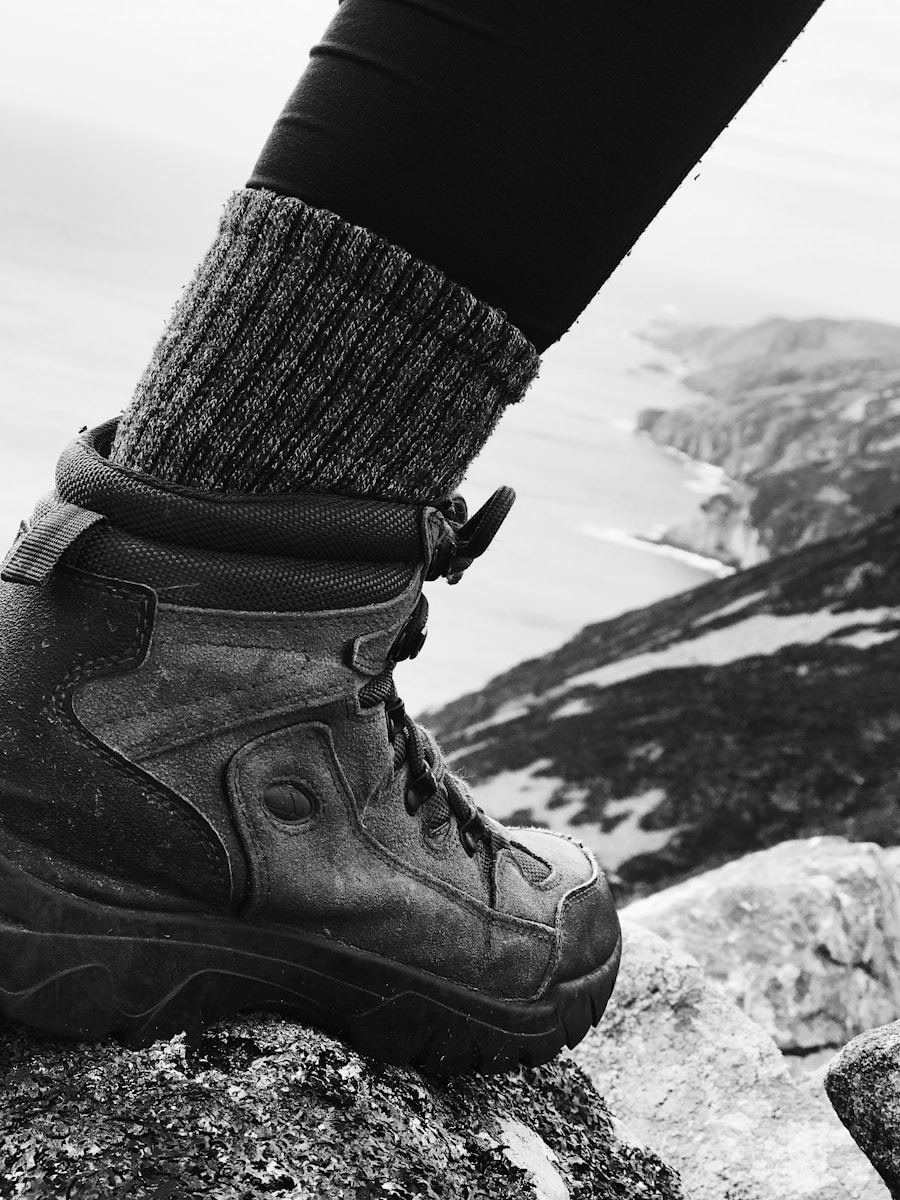
Blisters commonly develop where friction, pressure, heat, and moisture act on the skin. Socks are part of the solution, but footwear fit is the foundation of blister prevention.
Start With Correctly Fitted Footwear
A boot that lets your heel slide repeatedly can create friction. A boot that is too tight can create pressure points. Test new footwear and sock combinations on shorter walks before committing to a long hike.
Keep Socks Smooth and Dry
Loose socks can wrinkle and rub, while socks that are too small can create pressure or slide out of position. Choose a snug fit and change into a dry pair if your socks become soaked with sweat or water.
Deal With Hot Spots Early
A burning or irritated “hot spot” is an early warning that friction is becoming a problem. Stop rather than waiting for it to turn into a full blister. Remove your footwear, check for wrinkles or debris, dry the area, adjust the sock or lacing, and protect the irritated skin with an appropriate blister bandage or tape when needed.
Mayo Clinic’s blister guidance also recommends moisture-wicking socks, changing into dry socks when needed, properly fitted shoes, and treating hot spots promptly.
Are Liner Socks Necessary?
Liner socks can still be useful, especially for hikers who already know that a two-sock system works for their feet. A thin liner may move some friction away from the skin and can be easier to wash and dry on a multi-day trip.
However, a liner is not required for every hiker. Modern hiking socks often manage moisture and fit well enough to be worn alone. Adding another layer can also make footwear too tight if there is not enough room.
Warning: Seek medical care if a blister develops signs of infection such as increasing pain, warmth, pus, or spreading skin changes. People with diabetes, poor circulation, neuropathy, or other conditions that affect foot healing should follow their clinician’s foot-care guidance.
Maintenance and Care of Hiking Socks
Correct washing helps hiking socks retain their fit and performance, but there is no single laundry rule for every brand and fiber blend. Always check the care label first.
General Care Tips
- Turn socks inside out when the manufacturer recommends it so sweat and dirt trapped against the skin side can wash out more easily.
- Use a gentle cycle when specified on the care label.
- Avoid bleach unless the manufacturer specifically permits it.
- Avoid fabric softener on products whose manufacturer warns against it, because residues can interfere with performance fibers.
- Use low dryer heat only when the product label permits tumble drying.
- Make sure socks are completely dry before storing them.
Care instructions vary even among major merino brands. Darn Tough currently recommends washing its socks inside out in cold water on a gentle cycle and allows either low tumble drying or hang drying. Smartwool allows warm or cool gentle washing for many merino products and low tumble drying where the label permits it.
Inspect socks before trips. Thin spots, stretched cuffs, persistent bunching, damaged seams, or holes can reduce comfort. Replacing or repairing a worn pair before a long trek is easier than discovering the problem several miles from the trailhead.
Top Hiking Sock Brands to Consider
No single brand fits every foot, so treat brand reputation as a starting point rather than the final decision. Fit, material blend, cushioning, and footwear compatibility matter more than the logo.
| Brand | Typical Material | Thickness / Cushioning | Size | Price |
|---|---|---|---|---|
| Darn Tough | Merino-wool and synthetic blends are common in its hiking line | Lightweight through heavyweight options | Men’s, women’s, and unisex size ranges vary by model | Varies by model and retailer |
| Smartwool | Merino-wool blends with nylon and elastane are common | Targeted, light, full, extra, and other cushion levels depending on model | Use the product-specific size chart | Varies by model and retailer |
| Thorlo | Synthetic and wool-blend constructions depending on model | Known for highly cushioned options | Product-specific sizing | Varies by model and retailer |
Darn Tough
Darn Tough produces a wide range of merino-blend hiking socks in different heights, weights, and cushioning levels. Its socks are backed by the company’s Unconditionally Guaranteed for Life program, subject to the company’s warranty terms.
Smartwool
Smartwool’s current Hike line includes multiple heights and cushioning levels, with many models combining merino wool, nylon, and elastane. Features vary by model and can include mesh ventilation zones, flatter toe construction, and elastic fit systems.
Thorlo
Thorlo is worth comparing if you prefer substantial cushioning. Its hiking range includes synthetic and wool-blend models, including maximum-cushion options.
Wigwam and REI Co-op
Wigwam and REI Co-op are additional brands hikers commonly compare. As with Darn Tough, Smartwool, and Thorlo, choose a specific model based on how it fits your foot and footwear rather than assuming every sock from the brand will perform the same way.
If your trip also includes winter-sports travel, the existing guide to the best ski travel bag covers another part of organizing and protecting outdoor equipment. For hiking socks themselves, use the fit, material, cushioning, and weather criteria above rather than choosing by brand or season alone.
Frequently Asked Questions
What are hiking socks?
Hiking socks are socks designed for use with trail shoes and hiking boots. They typically combine moisture-managing fibers, a close fit, durable construction, and strategically placed cushioning to improve comfort and reduce rubbing during walking.
What are the best materials for hiking socks?
Merino-wool blends and synthetic blends are the most useful all-around choices. Merino offers good temperature and moisture management with odor resistance, while polyester and nylon can improve durability and drying speed. Many of the best-performing socks combine several fibers.
What features should I look for in hiking socks?
Look for a height that protects your skin from the footwear cuff, enough cushioning for your conditions without making the footwear tight, moisture-managing fibers, a snug heel pocket, minimal bunching, and comfortable toe construction.
How do I choose the right size of hiking socks?
Use the manufacturer’s size chart and then check the sock on your actual foot. The heel pocket should line up with your heel, the toe should not contain loose folds, and the sock should feel snug without pinching. Always test the final combination inside your hiking footwear.
What are some popular brands of hiking socks?
Darn Tough, Smartwool, REI Co-op, Thorlo, and Wigwam are established options. Compare individual models rather than brands alone because material blends, sock height, cushioning, fit, and sizing vary within each company’s range.
Do I need liner socks for hiking?
Not necessarily. Liner socks can help hikers who prefer a two-layer system or need a thin, fast-drying layer on longer trips, but many modern hiking socks work well by themselves. Do not add a liner if the extra layer makes your footwear too tight.
Are cotton socks okay for hiking?
Cotton is not a good first choice for sustained hiking because it absorbs moisture and dries slowly. Merino-wool blends or moisture-managing synthetic socks are generally better for keeping dampness under control and reducing friction-related discomfort.
Sources
- REI Co-op — How to Choose Hiking Socks — sock height, cushioning, materials, fit, and liner-sock guidance.
- Mayo Clinic — Blisters: First Aid — blister causes, prevention, hot-spot care, and warning signs.
- Darn Tough — Product & Sock Care — manufacturer washing and drying instructions.
- Smartwool — How to Wash Merino Wool — merino care, odor resistance, fabric-softener guidance, and drying instructions.
- Sealskinz — How Waterproof Socks Work — waterproof membrane construction and breathability.
