

Last Updated on September 10, 2026 by Daniel Globe
Choosing the best airline to work for involves more than finding the company with the most recognizable name or the longest list of travel perks. The right employer depends on your job, preferred base, schedule needs, career goals, willingness to relocate, and the rules that apply to your workgroup.
Quick Answer
There is no single best airline for every employee. Delta and Alaska have recent workplace recognition, Southwest advertises unusually broad family travel privileges, and United, American, and Emirates offer strong network and career options. Compare the exact role, base, schedule, contract, benefits eligibility, and advancement path before accepting an offer.
Key Takeaways
- The best airline depends on your occupation, base, schedule, seniority, and long-term goals.
- Travel privileges are valuable, but many are standby or space-available rather than guaranteed confirmed tickets.
- Benefits can differ by workgroup, union agreement, employment status, location, and length of service.
- Operational employees should expect nights, weekends, holidays, irregular hours, or reserve duty in many entry-level roles.
- Use rankings and online reviews as supporting evidence, not as a substitute for checking the actual job posting and contract.
Disclosure: As an Amazon Associate I earn from qualifying purchases. Some links on this page are affiliate links, at no extra cost to you.
What Makes an Airline a Good Employer?
A strong airline employer offers competitive total compensation, safe working conditions, useful training, fair advancement opportunities, and benefits that match the employee’s needs. However, those qualities can look very different from one position to another.
A pilot may care most about seniority progression, fleet plans, retirement contributions, crew bases, and upgrade time. A flight attendant may focus on reserve rules, monthly guarantees, trip trading, commuter policies, and base availability. A mechanic may place greater value on shift premiums, certification support, tools, overtime rules, and retirement benefits.
When comparing airlines, examine these factors:
- Base and location: Determine where you may be assigned and whether you can afford to live or commute there.
- Pay structure: Compare guaranteed pay, hourly or flight-hour rates, per diem, overtime, bonuses, and profit sharing.
- Schedule rules: Review reserve obligations, shift bidding, weekends, holidays, overnight trips, and minimum rest.
- Benefits eligibility: Confirm when medical coverage, retirement contributions, paid leave, and travel privileges begin.
- Career progression: Ask how transfers, promotions, fleet changes, training, and seniority affect advancement.
- Employment protections: Determine whether the role is covered by a collective bargaining agreement and read the current contract when available.
Best Airlines to Work For: Current Options to Compare
No ranking can identify the right airline for every applicant. Employee experiences vary by occupation, airport, department, manager, and seniority. The following airlines are useful starting points because they publish substantial career and benefit information.
| Airline | Notable Advertised Offerings | What Applicants Should Check |
| Delta Air Lines | Delta’s career-benefits page highlights unlimited standby travel where Delta flies, discounted confirmed fares, training, mentorship, and internal mobility. | Benefit eligibility, available bases, seasonal status, workgroup rules, and the cost of commuting to an assigned base. |
| Southwest Airlines | Southwest’s benefits page advertises free unlimited Southwest travel for employees and eligible dependents, a 401(k) match, possible profit sharing, and employee-recognition rewards. | The applicable retirement terms, station or base options, schedule rules, and whether the airline’s route network fits your travel and career goals. |
| Alaska Airlines, Hawaiian Airlines, and Horizon Air | The group’s benefits page highlights travel privileges, health and leave programs, retirement support, and employee-assistance resources. | Carrier-specific bases, training location, relocation expectations, workgroup integration, and the exact benefits attached to the position. |
| United Airlines | United’s benefits page lists unlimited standby travel, discounted airfare, medical options, insurance, and a 401(k) company match. | Base availability, reserve duration, hub commuting, international-route opportunities, and workgroup-specific contracts. |
| American Airlines | American’s perks and benefits page describes travel privileges, health coverage, well-being programs, and retirement-plan access. | Job-specific eligibility dates, base and station needs, union terms, monthly guarantees, and transfer policies. |
| Emirates Group | Emirates Group Careers advertises medical insurance, concessional travel, at least 30 calendar days of annual leave, and accommodation or an allowance for some roles. | Dubai relocation, visa and housing terms, home-country tax obligations, family benefits, end-of-service benefits, and the employment laws governing the offer. |
Note: Glassdoor’s 2026 U.S. Best Places to Work list placed Delta Air Lines at No. 26 and Alaska Airlines at No. 38. That recognition is useful, but it should be treated as one data point rather than proof that either airline is best for every role.
Benefits of Working for a Major Airline
Travel privileges are one of the most recognizable airline benefits. Depending on the employer and workgroup, employees may receive standby travel, discounted confirmed fares, interline discounts, or privileges for eligible relatives and travel companions.
Standby travel is not the same as a confirmed reservation. Employees generally board only when eligible seats remain, and priority rules may depend on the airline, employee category, itinerary, and date of hire. Taxes, service charges, dress rules, and embargoes may also apply.
Other common benefits may include:
- Medical, dental, vision, disability, and life insurance
- 401(k), pension, provident-fund, or end-of-service benefits
- Paid vacation, sick leave, parental leave, and employee-assistance programs
- Profit sharing, incentive pay, or performance bonuses
- Tuition support, professional training, and leadership development
- Discounts on hotels, rental cars, cruises, and other travel services
Pro Tip: Ask for the benefits guide that applies to your exact workgroup and employment status. A general careers page may describe company-wide offerings that do not begin on the same date or apply equally to seasonal, part-time, union, nonunion, domestic, and international employees.
Company Culture at Airline Employers

Airlines often describe their cultures as collaborative, inclusive, safety-focused, and customer-centered. Those values matter, but an applicant should look beyond recruitment language.
A company may have a strong overall reputation while individual experiences differ by station, fleet, department, supervisor, or bargaining unit. Recent reviews from employees in the same role and location are usually more useful than a company-wide rating by itself.
Signs of a healthy workplace may include clear communication, effective safety reporting, fair scheduling procedures, accessible managers, respectful treatment, consistent discipline, useful training, and realistic staffing levels. Research also links a positive workplace culture with stronger organizational outcomes.
Before accepting an offer, ask current or former employees:
- How often are schedules changed with little notice?
- How long do new employees typically remain on reserve or undesirable shifts?
- Does management respond constructively to safety and staffing concerns?
- Are transfers and promotions handled consistently?
- What causes employees in this workgroup to leave?
Career Opportunities at Airline Employers
Airlines employ far more than pilots and flight attendants. Openings may include aircraft maintenance, dispatch, airport operations, cargo, reservations, finance, cybersecurity, engineering, marketing, revenue management, human resources, and customer service.
| Career Area | Typical Considerations | Questions to Ask |
| Flight attendant | FAA certification after employer training, reserve duty, nights away, irregular schedules, customer service, and emergency responsibilities | Is training paid? Which bases are available? How long does reserve commonly last? |
| Pilot | Aircraft qualifications, seniority, crew bases, fleet growth, upgrade time, retirement contributions, and contractual work rules | What is the monthly guarantee? Which fleet and base may be assigned? How is training failure handled? |
| Aircraft maintenance | FAA certification, safety responsibility, physical work, noise exposure, shift bidding, nights, weekends, and holidays | Are tools provided? Are license premiums paid? What shifts are normally assigned to new hires? |
| Airport, ramp, and cargo | Outdoor work, lifting, weather exposure, security requirements, rotating shifts, and operational pressure | Is the role seasonal or permanent? What are the attendance rules and shift-differential rates? |
| Customer service and reservations | Passenger support, irregular operations, performance metrics, call volume, and possible remote or office-based arrangements | Is remote work guaranteed or subject to business needs? How are schedules and performance measured? |
| Corporate and technology | Finance, planning, software, cybersecurity, marketing, legal, analytics, and operations support | Is the role tied to a headquarters office? What promotion, remote-work, and relocation policies apply? |
Do not rely on a fixed number of advertised openings. Vacancy totals change daily as jobs are posted, filled, paused, or limited to certain locations. Check the official career pages for Delta, American, United, Southwest, Alaska, Hawaiian, and Horizon, or Emirates Group.
Employee Satisfaction: What Ratings Can and Cannot Tell You
Employee ratings can reveal repeated concerns about management, schedules, morale, training, staffing, or advancement. They can also highlight departments where employees feel supported and rewarded.
However, a company-wide score may combine reviews from pilots, airport agents, corporate analysts, mechanics, and employees in several countries. That average may not describe the job you are considering.
Use reviews more effectively by filtering for:
- Your occupation or workgroup
- The airport, base, office, or country
- Reviews posted within the last 12 months
- Repeated patterns rather than a single extreme review
- Comments about scheduling, staffing, management, turnover, and promotion
Compare employee reviews with the current job posting, official benefit documents, union contract, regulatory filings, and conversations with people performing the same job.
Training and Development Programs
Role-Specific Onboarding
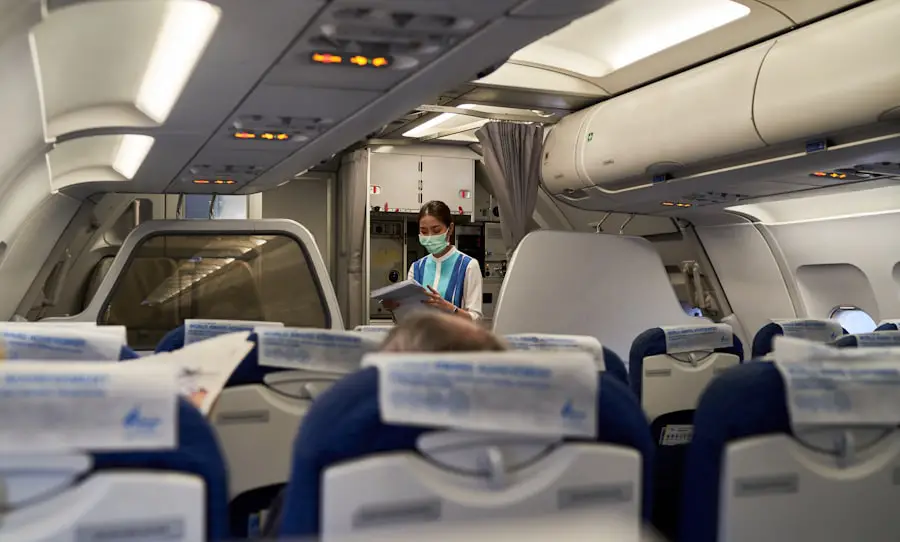
Airline training is not one standard program. Flight attendants receive employer training and must satisfy FAA certification requirements. Pilots complete aircraft and company qualification programs. Mechanics may need FAA-recognized education, experience, and certification. Airport employees receive security, equipment, customer-service, and safety instruction based on their duties.
Ongoing Training Opportunities
Major airlines may provide recurrent safety training, online courses, leadership programs, mentoring, tuition assistance, and preparation for transfers or promotions. Delta, for example, publicly lists mentorship, leadership development, digital learning, and internal mobility among its career-development offerings.
Questions to Ask About Training
- Is training paid, and at what rate?
- Are lodging, meals, uniforms, equipment, or transportation provided?
- Where does training occur, and how long does it last?
- What tests or performance standards must be passed?
- What happens if a trainee does not complete the program?
- Is there a repayment agreement for training or relocation expenses?
Diversity and Inclusion Initiatives
Airlines serve international customers and employ people from many backgrounds, making respectful workplace practices especially important. Published diversity commitments, employee resource groups, accommodation policies, and outreach programs can be positive signals.
Public commitments do not guarantee that every employee has the same experience. Applicants should also look for evidence of fair promotion practices, accessible reporting channels, reasonable accommodations, transparent complaint procedures, and consistent enforcement of workplace policies.
During an interview, ask how managers are trained, how complaints are investigated, and what resources are available to employees at the location where you would work.
Work-Life Balance and Airline Schedules
Work-life balance is one of the hardest parts of airline employment to evaluate. Airlines operate every day of the year, so many operational roles require early mornings, overnight shifts, weekends, holidays, and schedule changes during severe weather or other disruptions.
According to the U.S. Bureau of Labor Statistics, flight attendants often work variable schedules and may spend several nights away from home. New attendants commonly begin on reserve and may have to report with limited notice. Base and route assignments are influenced by seniority.
The BLS also notes that pilot assignments are based on seniority. Aircraft mechanics may work eight- or ten-hour shifts that include nights, weekends, and holidays.
Note: A schedule may improve as you gain seniority, but changing airlines usually means starting near the bottom of a new seniority list. That can affect base choice, routes, days off, vacation priority, and protection during staffing reductions.
Before accepting an operational position, calculate the true cost of commuting. Include airfare or fuel, airport parking, crash-pad or hotel expenses, meals, time away from home, and the risk of missing a report time when flights are full or disrupted.
Employee Wellness Programs
Major airlines commonly advertise medical coverage, employee-assistance programs, mental-health resources, disability insurance, wellness tools, and family-support services. The value of those programs depends on eligibility, provider networks, employee premiums, deductibles, leave rules, and access at the employee’s location.
Ask for written information about:
- The date health coverage begins
- Employee and dependent premiums
- Deductibles and out-of-pocket limits
- Mental-health and substance-use support
- Short-term and long-term disability coverage
- Parental, medical, and family leave
- Support after a workplace injury or critical incident
Safety-sensitive employees should also understand drug and alcohol testing rules, fatigue-reporting procedures, and the resources available when they are not fit for duty.
Recognition and Rewards
Recognition programs can improve morale when they are fair, transparent, and connected to meaningful performance. Airlines may use peer recognition, service awards, customer commendations, bonuses, profit sharing, or points-based reward systems.
Southwest, for example, describes its SWAG recognition platform, which allows employees to recognize peers and redeem points for rewards. Other airlines advertise profit sharing, incentive opportunities, or employee awards.
Recognition should not replace competitive base pay, adequate staffing, safe working conditions, or predictable procedures. When comparing offers, place guaranteed compensation and contractual protections ahead of optional awards.
How to Compare Two Airline Job Offers
Use the same checklist for every offer so an attractive travel benefit does not distract from a weak schedule or expensive base assignment.
- Confirm the employment category. Determine whether the job is full-time, part-time, temporary, seasonal, union, nonunion, hourly, salaried, or paid by flight or credit hour.
- Calculate guaranteed first-year pay. Use the minimum monthly guarantee or expected scheduled hours rather than the highest advertised earning potential.
- Review the base or station. Include housing, commuting, parking, transportation, and relocation expenses.
- Understand the schedule. Ask about reserve, shift bidding, mandatory overtime, holiday work, trip trading, and average days away.
- Verify benefit start dates. Confirm when travel, health, retirement, leave, and dependent benefits become active.
- Read the contract or work rules. Review probation, discipline, attendance, transfers, furlough protection, grievances, and promotion procedures.
- Evaluate training. Confirm the location, duration, pay, housing, testing requirements, and any repayment obligation.
- Assess long-term prospects. Consider fleet plans, base growth, internal transfers, leadership development, and likely seniority progression.
Pro Tip: Create a first-year budget for each offer. A slightly higher pay rate can disappear after commuting flights, airport parking, temporary housing, unpaid training, uniform costs, or relocation expenses.
Warning: Apply through the airline’s official career website and verify every recruiter. The Federal Trade Commission warns that honest employers do not charge applicants to obtain a job or send checks with instructions to buy equipment and return part of the money.
Why the Best Airline Employer Depends on You
Top airline employers can offer travel privileges, health coverage, retirement programs, professional training, and access to a wide range of aviation careers. Those benefits are valuable, but the brand with the strongest general reputation may not provide the best job for your specific role or location.
The most useful comparison is the one made at the workgroup level. Examine the actual pay system, base, schedule, seniority rules, contract, training conditions, and benefits eligibility. Then decide whether the position supports your financial needs, family responsibilities, health, and long-term career plans.
For more information about this website and its editorial approach, visit TakeTravelInfo’s About Us page.
Frequently Asked Questions
What factors make an airline a good place to work?
Important factors include guaranteed pay, benefits, safe working conditions, base options, schedule rules, management quality, training, advancement, job security, and how well the position fits your personal life. The best combination differs by occupation and location.
What are some of the best airlines to work for?
Delta, Southwest, Alaska, Hawaiian, Horizon, United, American, and Emirates are worthwhile employers to compare because they offer broad career options and publish substantial benefit information. Delta and Alaska also appeared in Glassdoor’s 2026 U.S. Best Places to Work list. No airline is best for every employee.
What benefits do airline employees typically receive?
Benefits may include standby or discounted travel, medical insurance, retirement contributions, paid leave, disability coverage, employee-assistance programs, profit sharing, bonuses, and training. Eligibility and start dates vary by airline, country, workgroup, contract, and employment status.
Do airline employees fly for free?
Some airlines offer free standby travel on their own flights, while others provide discounted or concessional tickets. Standby passengers board only when eligible seats remain. Taxes, service charges, priority rules, dependent eligibility, and route restrictions may apply.
What opportunities exist for career advancement?
Employees may advance through seniority, promotion, certification, leadership training, mentoring, or transfers to another department. Common paths include moving from agent to supervisor, first officer to captain, mechanic to lead or inspector, and analyst to management.
Do airline schedules improve with seniority?
They often do in seniority-based workgroups. More senior employees may receive better access to preferred routes, bases, shifts, vacation periods, and days off. Progress depends on hiring, turnover, fleet plans, base staffing, and the applicable contract.
How do airlines protect employee safety and well-being?
Airlines use job-specific safety training, regulatory procedures, equipment standards, reporting systems, rest rules, and recurrent instruction. Many also provide medical coverage, disability insurance, employee-assistance programs, mental-health resources, and workplace-injury support.
How can I avoid an airline job scam?
Find the opening on the airline’s official career website, confirm the recruiter’s identity, and never pay an application or equipment fee. Be suspicious of text-only interviews, immediate offers without screening, requests for banking information, or checks that must be deposited and partly returned.
Sources
- U.S. Bureau of Labor Statistics: Flight Attendants — training, certification, work schedules, reserve duty, seniority, and occupational conditions
- U.S. Bureau of Labor Statistics: Airline and Commercial Pilots — pilot schedules, nonflight duties, seniority, and nights away from home
- U.S. Bureau of Labor Statistics: Aircraft and Avionics Mechanics — certification, job duties, physical conditions, and shift schedules
- Glassdoor Best Places to Work 2026 — current employee-review recognition for Delta Air Lines and Alaska Airlines
- Federal Trade Commission: Job Scams — recruitment-fraud warning signs and safe application practices
- Delta Air Lines Career Benefits — official information about travel privileges, discounts, training, mentorship, and mobility
