

Last Updated on July 31, 2026 by Daniel Globe
Becoming an airline pilot in the United States requires more than earning a commercial pilot certificate. Most civilian pilots progress through a student pilot certificate, private pilot certificate, instrument rating, commercial certificate, multi-engine training, flight-hour building, and an Airline Transport Pilot certificate before completing an airline’s own training program.
The exact route depends on whether you train under Part 61 or Part 141, attend an authorized aviation college, qualify through military experience, or pursue another approved pathway. Your timeline and cost will also depend on weather, aircraft availability, training frequency, prior experience, and how quickly you find paid flying work.
Quick Answer
To become a U.S. airline pilot, earn private, instrument, commercial, and multi-engine qualifications; build the flight experience required for an ATP or restricted ATP; complete ATP-CTP when required; pass the applicable tests; and complete the airline’s ground, simulator, aircraft, and operating-experience training.
Key Takeaways
- A bachelor’s degree is not an FAA requirement, although some airlines prefer one and certain authorized aviation degrees can qualify graduates for reduced-hour restricted ATP pathways.
- Obtain a first-class FAA medical early, before committing large amounts of money to professional flight training.
- A commercial pilot certificate lets you perform certain flying jobs for compensation, but it does not by itself qualify you to fly for a scheduled airline.
- The standard airplane ATP pathway requires 1,500 total hours, while qualifying military and collegiate pilots may be eligible for a restricted ATP at 750, 1,000, or 1,250 hours.
- Airlines normally provide aircraft-specific ground school, simulator instruction, and type-rating training after hiring.
At a Glance
| Time Required | No fixed timeline; initial certificates may be completed relatively quickly with full-time training, while building ATP-qualifying experience often takes the longest. |
| Difficulty | High; requires repeated knowledge tests, practical tests, medical qualification, disciplined study, sound judgment, and substantial flight experience. |
| Tools Needed | FAA-approved training resources, logbook, aviation headset, charts or approved electronic flight bag, testing materials, and access to suitable aircraft and instructors. |
| Cost | Varies widely by school, location, aircraft, training frequency, prior experience, examiner fees, medical costs, and the amount of unpaid hour building required. |
Note: This guide covers the civilian FAA pathway in the United States. Other countries use different licenses, medical standards, experience rules, and airline hiring systems.
Disclosure: As an Amazon Associate I earn from qualifying purchases. Some links on this page are affiliate links, at no extra cost to you.
Steps to Become an Airline Pilot
- Confirm that you can meet the medical and basic eligibility requirements.
- Choose a Part 61, Part 141, collegiate, or military training pathway.
- Obtain a student pilot certificate and begin flight training.
- Earn a private pilot certificate.
- Add an instrument rating.
- Earn a commercial pilot certificate.
- Add multi-engine and, commonly, flight-instructor qualifications.
- Build the required total, cross-country, night, instrument, and pilot-in-command experience.
- Complete ATP-CTP when required and earn an ATP or restricted ATP certificate.
- Pass airline selection and complete company training, a type rating, and operating experience.
Education and Training Requirements
The FAA does not require a college degree to earn private, commercial, or airline transport pilot certificates. A high school education is sufficient to begin many civilian flight-training programs, provided the applicant can meet the applicable age, English-language, testing, experience, and medical requirements.
A degree can still be useful. The U.S. Bureau of Labor Statistics says airline pilots typically need a bachelor’s degree, but employer policies vary. Some airlines accept applicants without one, while others prefer or require a degree under their current hiring standards.
An aviation degree is not automatically better than a degree in another subject. A non-aviation degree may provide a useful backup career, while an authorized aviation degree may help an eligible graduate qualify for a restricted ATP with fewer than 1,500 hours. The reduced-hour benefit applies only when the institution, coursework, and flight training satisfy specific FAA requirements.
Warning: Obtain an FAA first-class medical certificate before taking on major training debt. A person may qualify for recreational or private flying yet be unable to exercise the medical privileges needed for an airline career.
Confirm Medical and Basic Eligibility
Before beginning expensive training, schedule an examination with an FAA-designated Aviation Medical Examiner. Applications are completed through FAA MedXPress and an Aviation Medical Examiner.
A second-class medical is generally the minimum needed to exercise ordinary commercial-pilot privileges. First-class medical privileges are required for specified ATP and airline operations. Airline-bound students should therefore test their ability to obtain a first-class certificate at the start of training rather than waiting until they have invested heavily.
Applicants should disclose their medical history accurately. Some conditions or medications may require additional records, FAA review, or a special-issuance authorization. A diagnosis does not always end a flying career, but hiding material information can create serious certification and enforcement problems.
FAA age requirements depend on the certificate:
- A private pilot applicant for an airplane rating must generally be at least 17.
- A commercial pilot applicant must be at least 18.
- A standard ATP applicant must generally be at least 23.
- An applicant qualifying for a restricted ATP under 14 CFR §61.160 may be at least 21.
Applicants must also be able to read, speak, write, and understand English, subject to limited medical-related exceptions and certificate limitations under FAA rules.
Products Worth Considering

Enhance Course Accuracy: The rotating aviation plotter from Advanced Pilot Products elevates your navigation experience by allowing precise course plotting and easy wind correction, crucial for student pilots striving for perfection in FAA exam preparation; its rotating design enhances accuracy compared to traditional plotters, simplifying flight planning and reducing errors for seamless cross-country journeys.


Aviation Government Logo design. Gifts for ex FAA employee who is now retired or current employee or new hire of the Federal Aviation Administration.
Choose Part 61 or Part 141 Flight Training
Most civilian students train under either Part 61 or Part 141 of the Federal Aviation Regulations. Both can lead to the same FAA certificates, but the structure is different.
Products Worth Considering
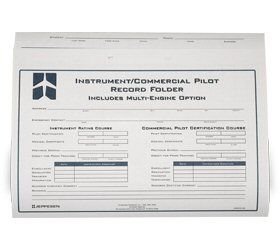
Durable Construction: Made from sturdy cardstock material for long-lasting use.

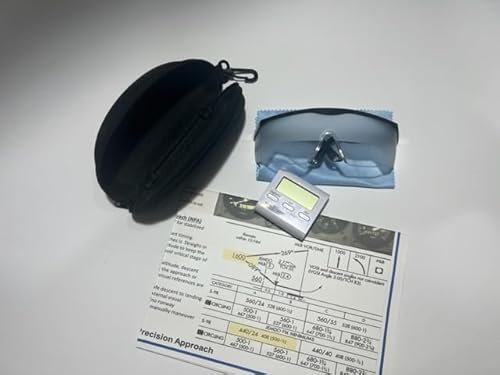
ALL IN ONE: This set includes IFR Flight Training Glasses (Foggles), an Instrument Timer (For Navigation (VFR/IFR), Holding Pattern, and Non-Precision Approach), and an Instrument Pilot Visualised Study Guide Poster, Plus Complimentary Gifts.
Part 61 training
Part 61 training is commonly offered by independent instructors and local flight schools. It can be flexible, making it practical for students who train around work or family obligations. Progress depends heavily on instructor availability, aircraft access, weather, and how often the student flies.
Part 141 training
Part 141 schools operate FAA-approved structured curricula with stage checks and formal training records. Some colleges and universities incorporate Part 141 flight training into aviation-degree programs. Attendance at a Part 141 school alone does not guarantee restricted-ATP eligibility; the degree program and flight curriculum must have the necessary FAA authorization.
Pro Tip: Compare the school’s aircraft availability, instructor turnover, maintenance delays, examiner access, pass rates, refund policy, insurance requirements, and total estimated cost—not just the advertised hourly rental rate.
Obtain a Student Pilot Certificate
A student pilot certificate is needed before a student can fly solo. The application can be processed through the FAA’s Integrated Airman Certification and Rating Application system, commonly called IACRA, with help from an authorized instructor or another approved representative.
A student should begin keeping accurate training and flight records immediately. Logbook errors can become difficult to correct when applying for commercial employment or an ATP certificate years later.
Non-U.S. citizens and non-U.S. nationals seeking covered flight training in the United States may need a Transportation Security Administration security threat assessment and a determination of eligibility through the Flight Training Security Program before training begins.
Earn a Private Pilot Certificate
The private pilot certificate is the foundation for the professional civilian path. Under the standard Part 61 airplane single-engine route, an applicant must log at least 40 hours, including required instructor training, solo flight, cross-country, night, and instrument-reference experience. The FAA notes that many students need more than the regulatory minimum before they are ready for the practical test.
Private pilot training covers aircraft control, takeoffs and landings, navigation, weather, regulations, airspace, emergency procedures, aeronautical decision-making, and flight planning. Applicants must pass an FAA knowledge test and a practical test, commonly called a checkride.
A private certificate allows personal flying within its privileges and limitations. It generally does not allow a pilot to carry passengers or property for compensation or hire.
Add an Instrument Rating
An instrument rating teaches a pilot to operate under instrument flight rules and to control the aircraft primarily by reference to instruments. It is essential preparation for professional flying, where pilots regularly operate in clouds, reduced visibility, and the structured air traffic control system.
For the standard Part 61 instrument-airplane route, the applicant generally needs 50 hours of cross-country pilot-in-command time and 40 hours of actual or simulated instrument time, including specified instructor training and an instrument cross-country flight. Approved training devices may provide limited credit under FAA rules.
The applicant must complete the required ground training, receive instructor endorsements, pass the instrument knowledge test, and pass the instrument practical test.
Gaining Flight Experience
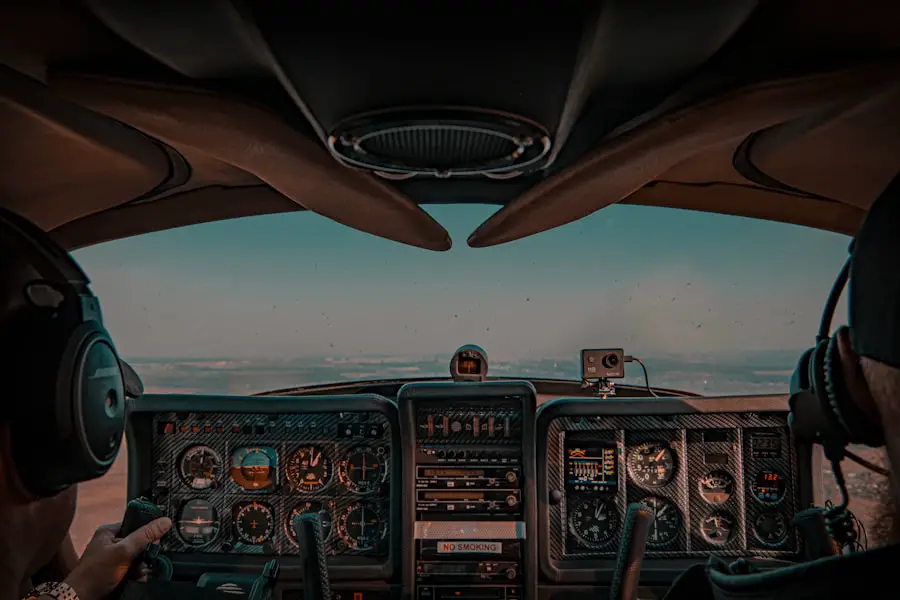
Flight experience should be built with purpose rather than by chasing total time alone. ATP eligibility includes specific categories of experience, such as cross-country, night, instrument, and pilot-in-command time. A pilot who reaches a total-hour threshold but lacks the required experience categories is not yet eligible.
During private, instrument, and commercial training, pilots should seek varied but safe experience in controlled and uncontrolled airspace, daytime and nighttime operations, cross-country planning, changing weather, and different aircraft systems. Every flight should have a training objective and comply with certificate privileges, aircraft requirements, and applicable operating rules.
Obtaining a Commercial Pilot Certificate
A commercial pilot certificate permits a pilot to perform certain operations for compensation or hire. It does not authorize every kind of paid operation, and it does not by itself qualify the holder to serve as a pilot for a scheduled airline.
| Commercial Requirement | Correct FAA Context |
| Minimum Age | 18 years old |
| Prior Certificate | At least a private pilot certificate, unless qualifying through an applicable military provision |
| Flight Experience | Normally at least 250 hours for a Part 61 airplane applicant, with detailed experience categories; approved Part 141 curricula use different course requirements |
| Medical Certificate | At least a second-class medical to exercise most commercial privileges; airline-career candidates should establish first-class eligibility early |
| Knowledge Test | Pass the applicable FAA commercial pilot knowledge test after receiving the required endorsement |
| Practical Test | Pass an oral and flight evaluation with an authorized examiner or inspector |
Commercial training develops greater precision and includes advanced maneuvers, navigation, aircraft-performance planning, systems knowledge, emergency procedures, and professional decision-making. The applicant must demonstrate consistent control and judgment to the applicable Airman Certification Standards.
Add Multi-Engine and Flight-Instructor Qualifications
Airline pilots normally need multi-engine experience because transport-category airliners use more than one engine. A pilot may earn an airplane multi-engine class rating during or after commercial training. The training focuses heavily on aircraft performance and control following an engine failure.
Many commercial pilots also earn one or more flight-instructor certificates:
- CFI: Certificated Flight Instructor
- CFII: Instrument flight instructor
- MEI: Multi-engine flight instructor
Instructing is a common hour-building route because it provides frequent flight experience while strengthening communication, procedures, and aeronautical knowledge. It is not the only option, however.
Building Flight Hours
Commercial pilots may build experience through flight instruction, aerial survey, pipeline or power-line patrol, approved charter operations, cargo flying, skydive operations, ferry flying, or other jobs for which they are legally qualified. Availability and minimum experience vary considerably by employer and insurer.
Keep complete, accurate, and legible records. Track total time as well as airplane, multi-engine, cross-country, night, actual instrument, simulated instrument, pilot-in-command, second-in-command, and turbine time. Review entries regularly rather than attempting to reconstruct years of experience before an airline interview.
The standard airplane ATP path requires at least 1,500 total hours, including 500 cross-country hours, 100 night hours, 75 instrument hours, and specified pilot-in-command or supervised pilot-in-command experience.
Understand ATP and Restricted ATP Pathways
An Airline Transport Pilot certificate is the highest level of FAA pilot certification. Pilots serving in scheduled airline operations must hold the certificate and qualifications required for their assigned position.
| Pathway | Minimum Total Time | Key Conditions |
| Standard ATP | 1,500 hours | Generally age 23 or older and must meet all applicable ATP experience categories |
| Military R-ATP | 750 hours | Qualifying U.S. military pilot training and service documentation |
| Authorized Bachelor’s R-ATP | 1,000 hours | Qualifying aviation bachelor’s degree, approved coursework, approved flight training, and FAA-authorized institution |
| Authorized Associate or Reduced-Credit R-ATP | 1,250 hours | Qualifying associate degree or specified aviation coursework, approved flight training, and FAA-authorized institution |
Restricted ATP applicants must generally be at least 21. An R-ATP allows the holder to serve in eligible second-in-command positions subject to the certificate’s restrictions. The restrictions can be removed after the pilot satisfies the full age and experience requirements.
Note: Simply earning an aviation degree does not guarantee a reduced-hour ATP. Verify the exact institution, degree, coursework, flight-training affiliation, and FAA authorization before enrolling.
Complete ATP-CTP and Earn the ATP Certificate
An applicant seeking an airplane multiengine ATP certificate, or an ATP issued with a multiengine airplane type rating, must complete an authorized Airline Transport Pilot Certification Training Program before taking the applicable ATP knowledge test.
ATP-CTP introduces transport-aircraft aerodynamics, high-altitude operations, automation, adverse-weather operations, leadership, professionalism, and airline operating concepts through academic and flight-simulation training.
The applicant must then satisfy the applicable age, certificate, instrument-rating, aeronautical-experience, knowledge-test, and practical-test requirements. Some airlines sponsor ATP-CTP and complete the ATP practical test with the pilot’s initial type-rating course, while other applicants complete these items before being hired.
Meeting Airline Hiring Requirements
Airline minimum qualifications are not identical. Requirements can change with staffing needs, insurance conditions, fleet plans, and the supply of qualified applicants. Candidates should read each airline’s current job posting rather than relying on an older generic checklist.
An airline application may assess:
- Total and category-specific flight experience
- ATP or R-ATP eligibility
- Multi-engine and turbine experience
- Training and checkride history
- Driving, criminal, employment, and education records
- Technical knowledge and aeronautical decision-making
- Crew resource management and communication
- Logbook accuracy and supporting documents
- Ability to pass required medical, background, drug, and employment checks
Selection may include application screening, interviews, technical questions, personality or aptitude assessments, document review, and a simulator evaluation. Strong preparation matters, but candidates should answer honestly rather than attempting to conceal training failures or other reportable history.
Completing Airline-Specific Training
After hiring, a new pilot enters the airline’s approved training program. Training normally includes company policies, standard operating procedures, aircraft systems, limitations, performance, normal and emergency procedures, crew resource management, security, and applicable regulations.
Simulator sessions allow pilots to practice normal operations, system failures, rejected takeoffs, engine failures, adverse weather, instrument approaches, and emergency procedures in a controlled environment. Pilots must pass required written, oral, and practical evaluations.
The airline usually provides the aircraft type rating required for a large or turbojet aircraft as part of initial qualification. After simulator training, the pilot completes supervised operating experience in revenue service and a line check or equivalent qualification before working without an assigned check airman.
Advancing to Captain
Airline pilots normally begin as first officers. Advancement to captain depends on the airline’s vacancies, seniority system, contract, fleet, base, qualifications, training performance, and the pilot’s ability to meet captain experience requirements.
A captain is responsible for the safe conduct of the flight and must exercise sound judgment, leadership, communication, and crew coordination. Upgrade training includes aircraft-command responsibilities, decision-making, company procedures, simulator evaluations, operating experience, and line qualification.
Reaching the minimum experience level does not guarantee an immediate upgrade. A pilot may remain a first officer for years when captain vacancies are limited or may choose to delay an upgrade to protect schedule, aircraft, or base preferences.
The Importance of Continued Education and Training
Pilot training does not end after the first airline qualification. Airline pilots complete recurrent ground and simulator training, proficiency checks, medical examinations, and experience requirements throughout their careers.
Pilots must stay current on aircraft systems, procedures, regulatory changes, security requirements, weather products, navigation technology, automation, and company manuals. They must also report for duty fit to fly and manage fatigue, illness, medication use, stress, and other factors that can affect performance.
Additional qualifications may include instructor, check-airman, standards, safety, management, or different aircraft type-rating roles. Advancement depends on training records, operational performance, seniority, vacancies, and company needs.
How Long Does It Take to Become an Airline Pilot?
There is no universal four-, five-, or six-year timeline. The FAA establishes training, testing, age, and experience requirements rather than a single calendar schedule.
A full-time student with reliable aircraft access may complete initial certificates faster than a part-time student who flies only a few times per month. Weather, maintenance, instructor changes, checkride availability, finances, and repeated lessons can extend training.
The hour-building stage commonly takes longer than the initial certificate stage. Its duration depends on how soon the pilot qualifies for paid flying work, how many hours the job provides, and whether the pilot qualifies for a reduced-hour R-ATP pathway.
Training Costs and Financial Planning
Total cost varies too much for one figure to apply to every student. Aircraft rental rates, fuel, instructor time, location, training frequency, required repetition, examiner fees, knowledge tests, medical examinations, insurance, equipment, and housing can all affect the final amount.
Before signing an enrollment or financing agreement:
- Request an itemized estimate based on realistic completion times, not regulatory minimums alone.
- Ask which charges are refundable.
- Confirm who owns money placed on account.
- Understand loan interest, origination fees, and repayment start dates.
- Ask how training delays affect housing and living costs.
- Verify whether instructor, examiner, simulator, fuel, and aircraft-surplus charges are included.
- Avoid assuming that an advertised airline partnership guarantees employment.
Pro Tip: Frequent, consistent lessons usually reduce relearning. A lower hourly aircraft rate may not save money when poor availability forces long gaps between flights.
Products Worth Considering
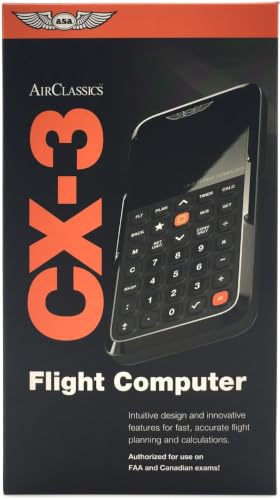
FAA-Approved for Written Exams: Take the CX-3 directly into FAA knowledge tests—no memorization required. Designed to simplify complex calculations so you can focus on understanding, not guessing.
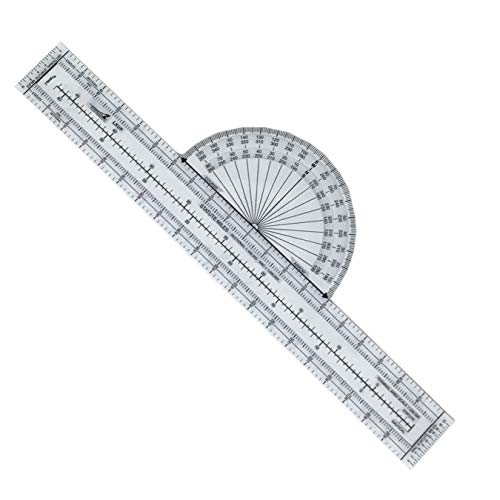
Precision in Every Flight (aviation plotter): Ensure accurate flight planning with our robust aviation plotter, meticulously designed to deliver precision in measuring course, distance, and direction on sectional charts. Enhance your navigation skills with eight versatile scales featuring both statute and nautical mile references, making this an indispensable tool for any pilot or student embracing the skies with confidence.
Navigating the Job Market
Pilot hiring rises and falls with airline finances, aircraft deliveries, retirements, travel demand, training capacity, and economic conditions. Meeting the published minimums makes a pilot eligible to apply; it does not guarantee an interview or job offer.
Maintain a professional résumé, accurate electronic and paper logbook records, current contact information, and copies of certificates, medicals, transcripts, checkride records, and employment documents. Attend career events carefully, build genuine professional relationships, and avoid paying anyone who promises a guaranteed airline job.
A degree, additional turbine time, instructor experience, leadership roles, or a strong training record may improve competitiveness, but airlines weigh qualifications differently. Apply only with complete and truthful information.
Common Mistakes to Avoid
- Delaying the first-class medical: Medical eligibility should be evaluated before major debt is incurred.
- Confusing commercial and airline qualifications: A commercial certificate is an intermediate professional credential, not an airline qualification by itself.
- Choosing a school only by advertised price: Aircraft access, maintenance, instructor stability, and training frequency can matter more.
- Assuming every aviation degree earns a 1,000-hour R-ATP: Only qualifying FAA-authorized programs provide the reduced-hour eligibility.
- Tracking total time but not experience categories: ATP eligibility requires specified cross-country, night, instrument, and command experience.
- Making inaccurate logbook entries: Record only time that can legally be logged and supported.
- Taking on excessive debt based on a hiring forecast: Hiring conditions can change before training is complete.
- Ignoring the lifestyle: Airline schedules may include early starts, late finishes, weekends, holidays, reserve duty, commuting, and nights away from home.
The Rewards of a Career as an Airline Pilot
An airline career can offer challenging technical work, travel, professional development, and the satisfaction of transporting passengers and cargo safely. Pilots work with dispatchers, flight attendants, maintenance teams, air traffic controllers, ground personnel, and other crew members to complete each flight.
The career can also involve irregular schedules, recurrent evaluations, commuting, time-zone changes, reserve assignments, and extended periods away from home. Schedule quality and route selection are strongly affected by seniority.
For pilots who enjoy aviation, structured procedures, teamwork, continuous learning, and substantial responsibility, the work can be highly rewarding. Success requires realistic financial planning, medical eligibility, disciplined training, accurate recordkeeping, and patience throughout the hour-building and hiring process.
Frequently Asked Questions
What are the basic requirements to become an airline pilot?
A typical civilian applicant earns a private pilot certificate, instrument rating, commercial certificate, and multi-engine qualification; builds the experience required for an ATP or restricted ATP; completes ATP-CTP when applicable; passes the required tests; and completes the hiring airline’s training program. Medical, age, English-language, and employer requirements also apply.
Is a bachelor’s degree required to become an airline pilot?
A bachelor’s degree is not required for FAA pilot certification. Some airlines prefer or require one under their hiring policies. Graduates of certain FAA-authorized aviation programs may qualify for a restricted ATP at a reduced total-hour threshold.
How long does it take to become an airline pilot?
There is no fixed timeline. Training frequency, weather, aircraft availability, finances, checkride scheduling, previous experience, and the rate at which a commercial pilot builds ATP-qualifying time all affect the process. The hour-building stage often takes longer than the initial certificate stage.
Do all airline pilots need 1,500 flight hours?
The standard airplane ATP route requires at least 1,500 total hours. Qualifying military pilots may be eligible for a restricted ATP at 750 hours, and qualifying graduates of FAA-authorized aviation programs may be eligible at 1,000 or 1,250 hours. Each pathway has additional conditions and experience requirements.
What medical certificate should an aspiring airline pilot obtain?
A second-class medical is generally sufficient to exercise ordinary commercial-pilot privileges, but specified ATP and airline duties require first-class privileges. Anyone planning an airline career should determine first-class medical eligibility before making a large financial commitment to training.
What is the best way to build flight hours?
Flight instruction is one of the most common methods because it offers frequent flying and reinforces knowledge. Other possibilities include survey, patrol, charter, cargo, skydive, and ferry work. A pilot must hold the qualifications required for the operation and should build the specific experience categories needed for ATP eligibility.
Are there shortcuts to becoming an airline pilot?
There is no legitimate shortcut around medical qualification, required training, experience, knowledge tests, practical tests, or airline training. Accelerated programs may compress the schedule, and military or authorized collegiate pathways may reduce the ATP total-hour threshold, but all applicable requirements still must be met.
Sources
- Federal Aviation Administration: Become a Pilot — overview of FAA pilot certification and starting requirements.
- Federal Aviation Administration: Pilot Schools Information — differences between training providers and approved schools.
- 14 CFR §61.23 — medical-certificate classes, required privileges, and duration.
- 14 CFR §61.65 and 14 CFR §61.129 — instrument-rating and commercial-pilot experience requirements.
- 14 CFR §61.159, 14 CFR §61.160, and FAA ATP Training — standard ATP, restricted-ATP, and ATP-CTP requirements.
- U.S. Bureau of Labor Statistics: Airline and Commercial Pilots — education, training, work environment, advancement, and employment information.
